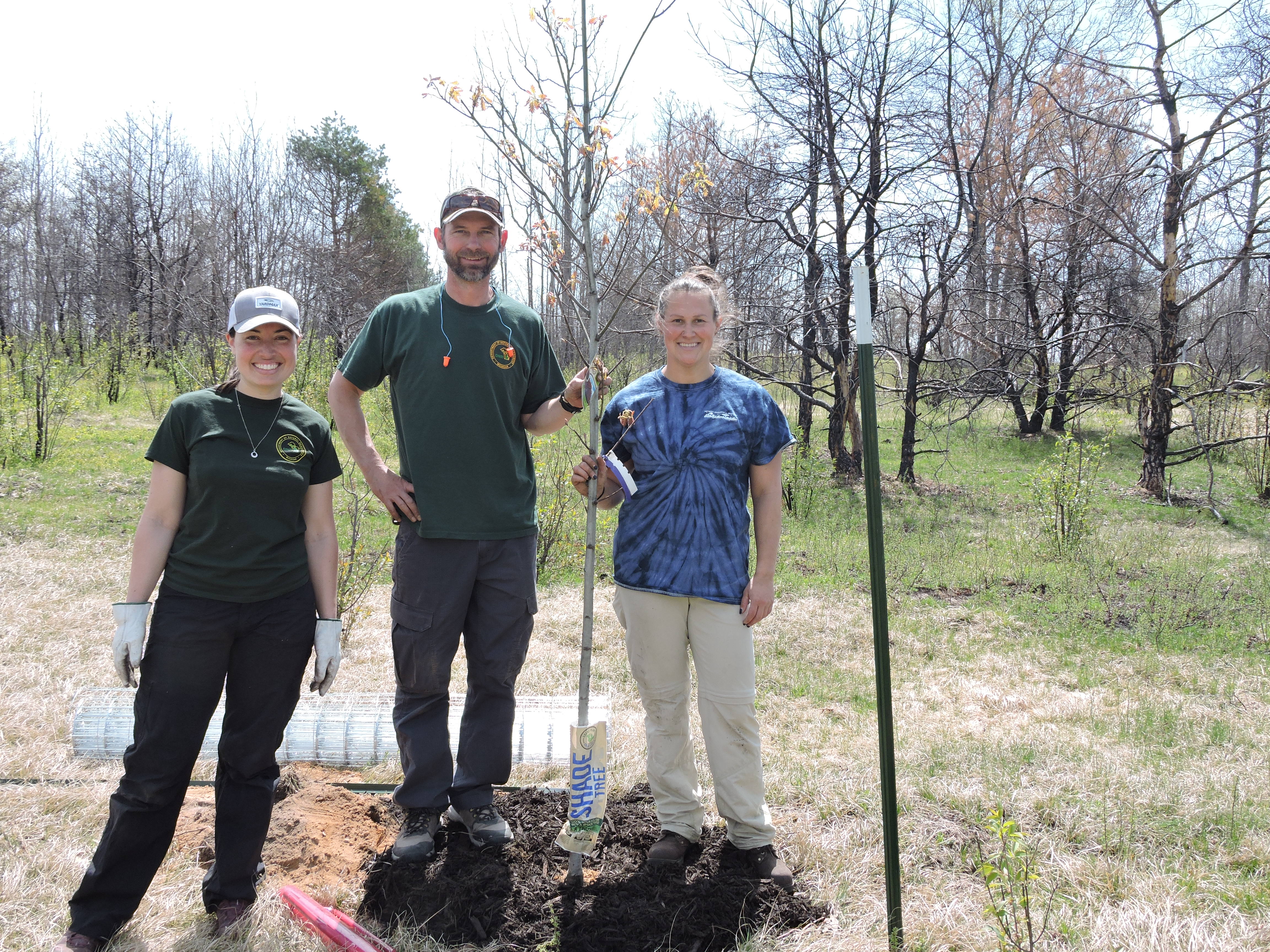
By Melissa Thueme, primate supervisor for the Detroit Zoological Society (DZS)
In 2022, the DZS introduced a new program to staff, the Conservation Action for a Resilient Environment (CARE) grant. The CARE grant program at the Detroit Zoo offers the opportunity for employees to engage in conservation projects that are meaningful to them while addressing conservation and environmental issues in the Detroit metro area and the Great Lakes region. When the grant program was announced in early June, I knew exactly what I wanted my project to be. Just three weeks earlier, a large wildfire devastated northern Michigan, and I knew I could help rebuild some of what was lost there.
Pigeon River Country State Forest (PRC) in Montmorency County, Michigan, the largest block of undeveloped land in the Lower Peninsula, is home to diverse wildlife, including one of the largest elk herds east of the Mississippi. In May 2022, a wildfire caused by a lightning strike impacted 2,516 acres of forest in the PRC. Because of the intensity of the fire, a majority of the trees in the fire zone did not survive. The flames and resulting heat damaged many of the soft mast trees, including trees that produce berries such as apple and hawthorn and younger-aged hard mast that provide food sources such as nuts and acorns. Many native wildlife, such as deer, elk, black bear, squirrels and game birds, rely on both hard and soft mast trees for food.
My passion for involvement in this grant project goes back almost 30 years. Since I was young, my family would drive north to Pigeon River State Forest to go camping for a week during the summer. It was in the PRC that I fell in love with nature, animals and the environment. We got up before sunrise to drive through the most remote areas in search of any animals we could spot. I learned about the elk herd, watched birds through binoculars, looked for frogs at the edges of the lakes, waited for the beavers to swim by in the river, and reclined and watched the stars in the black sky at night. A few years later, my family bought property in the area, and we went up north many weekends from spring to fall, spending holidays and making more memories in the PRC.
In May 2022, we watched news coverage of the fire as it swept through the area. We monitored updates as the area we loved was in flames, without knowing how much damage would occur. Thankfully, DNR firefighters were able to extinguish the wildfire, now named the “Blue Lakes Fire.” I visited the PRC the weekend following the wildfire. As I walked down the road, the transition between the lush forest to the now barren burned areas was dramatic. Places where it had been impossible to see more than a few feet through the foliage were now nearly clear — except for a few char-barked trees trying to hang on to life. Memories of hiking and blueberry picking, and large herds of bull elk standing in these very areas, flooded back. I wondered what the future would bring for this area and how long it would take to recover. In our many years of visiting, we had seen areas of wildfire in the PRC before, but nothing to this magnitude. The devastation from the wildfire was still fresh in my mind when the call for proposals for CARE grants was announced. I knew this was a project that I wanted to pursue and something I was strongly passionate about.
I reached out to the Pigeon River Forest Management Group of the Michigan Department of Natural Resources (DNR) with my idea for the grant project, and their team was eager to collaborate. With the help of Mark Monroe, the PRC forest manager, and Shelby Adams, the PRC wildlife biologist, we started planning what would best be suited for the project. After many phone and Zoom calls, we elected to plant saplings in the wildfire area. The team carefully selected trees that would most benefit the environment and the animals and mapped out the section where we would plant them. The Pigeon River Forest is important to many people, and collaboration is one of the pillars of the DZS conservation strategy, so we decided to involve the community in the project.
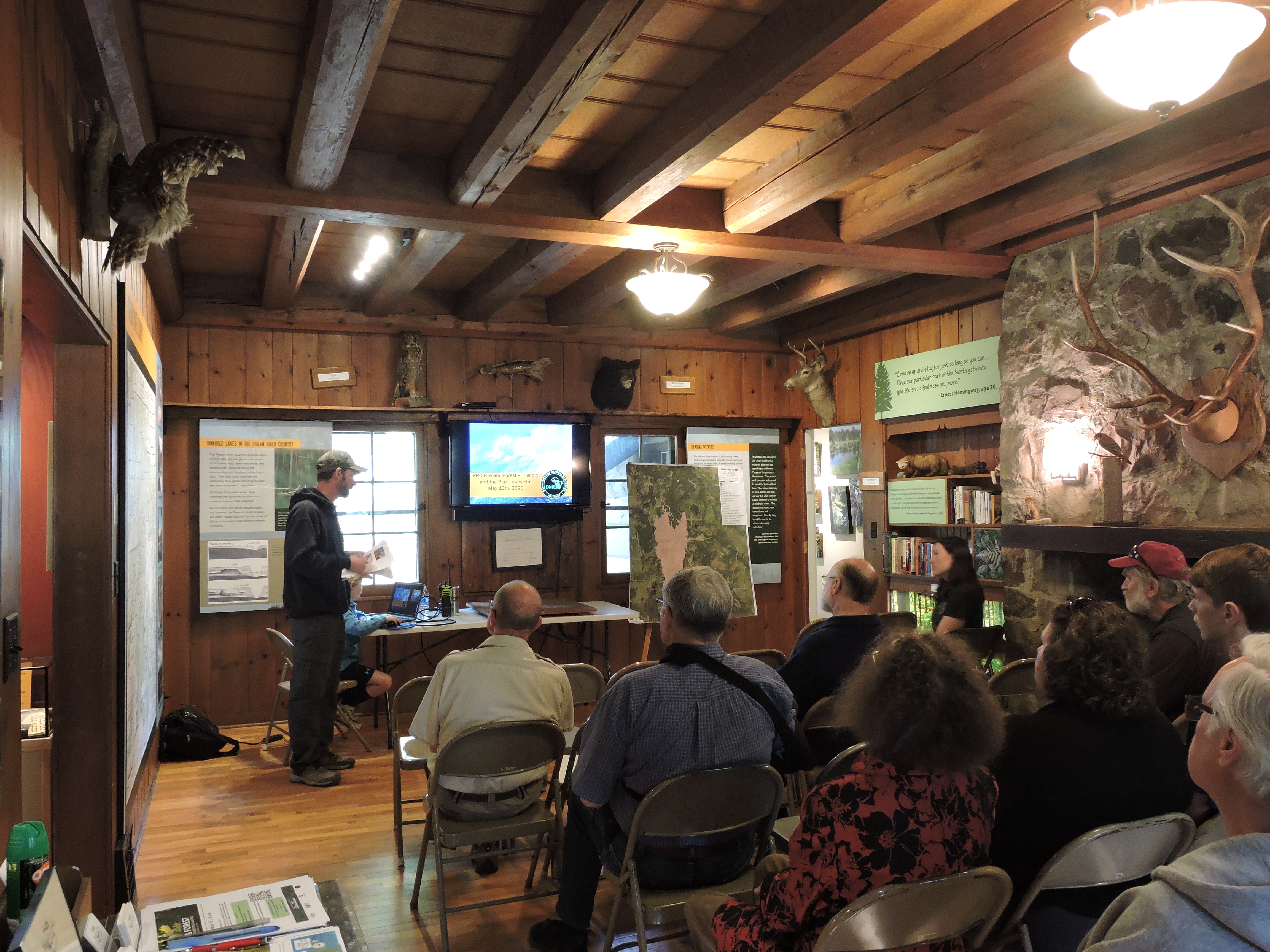
On May 13, 2023, one year after the wildfires, we gathered together in the Pigeon River Discovery Center with members of the community and others who had a connection to the PRC. Mark, also a firefighter with the DNR, was on the front lines the day of the wildfire. He spoke about fire history in the PRC, shared photos and his stories from the days around the fire. Shelby talked about the effects of wildfires on wildlife, including some of the positives, such as the creation of a prime habitat for the Kirkland’s warbler, which thrives in young jack pine forests that grow because of fire. Lastly, I spoke about the Detroit Zoo CARE grant, as well as my connection to the PRC. Everyone loaded up on Smokey the Bear swag items — pencils, stickers, magnets — before going outside to meet some of the other DNR firefighters and explore the equipment used in wildfires. Then we headed to the planting site.
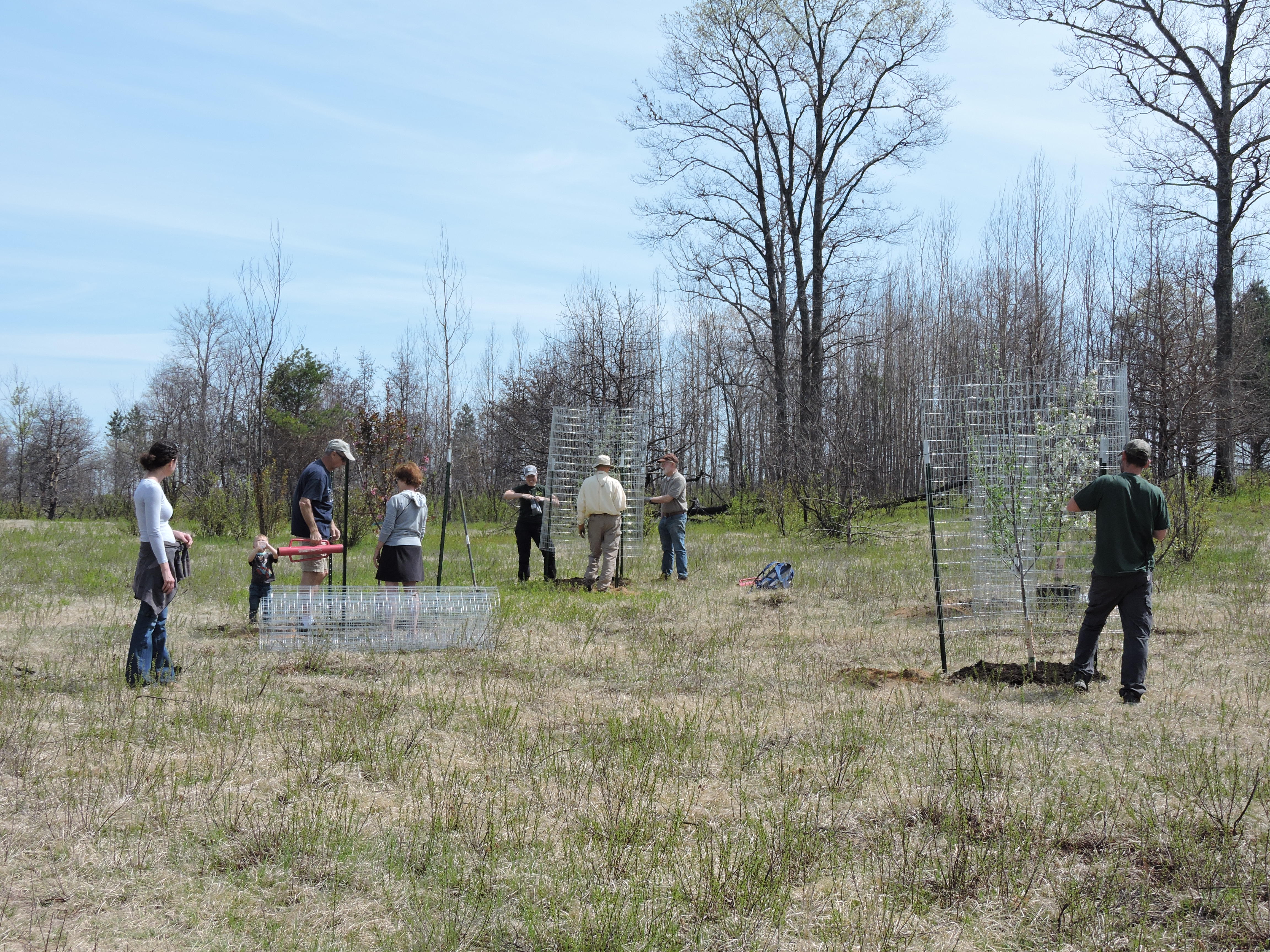
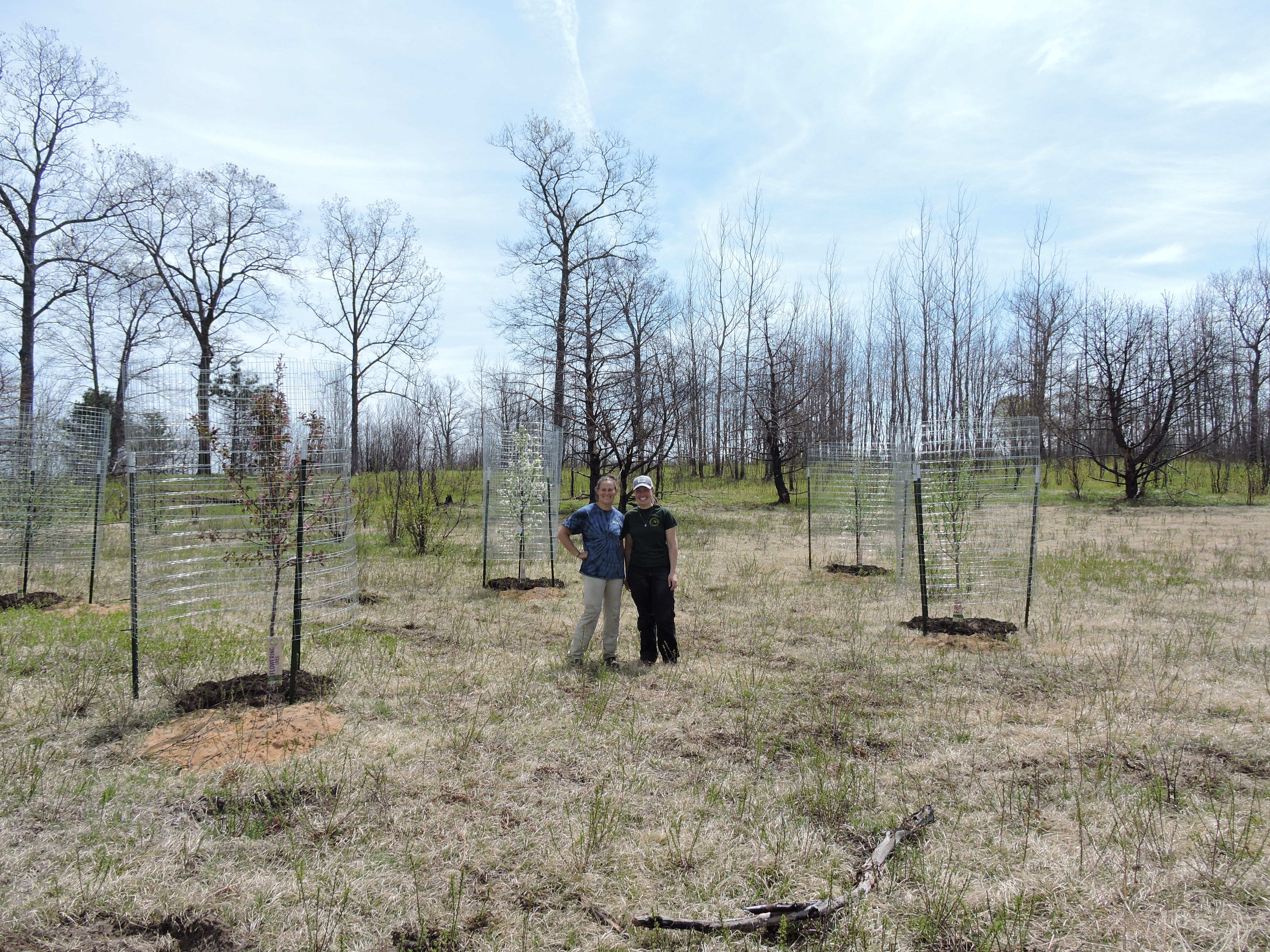
Participants divided up into a few teams and spread out amongst the pre-drilled holes. Mark gave a demonstration of how to set up the trees and everyone got to work. We planted a total of 20 trees in four sections, surrounded them with mulch and fencing to protect them until more established. While the volunteers worked, they shared memories of their favorite experiences in the PRC and thanked us for doing the project and letting them be involved. As we parted ways, I stood back and looked at the trees we planted amongst the low grasses starting to regenerate. It felt good to be a part of something to give back to the forest which has given me so much. I hope that 30 years from now, another young girl is hiking through the Blue Lakes area past these now-mature trees and finds herself just as inspired as I was all those years ago.
 Detroit Zoological Society Blog