Animal Adaptations that Break Boundaries

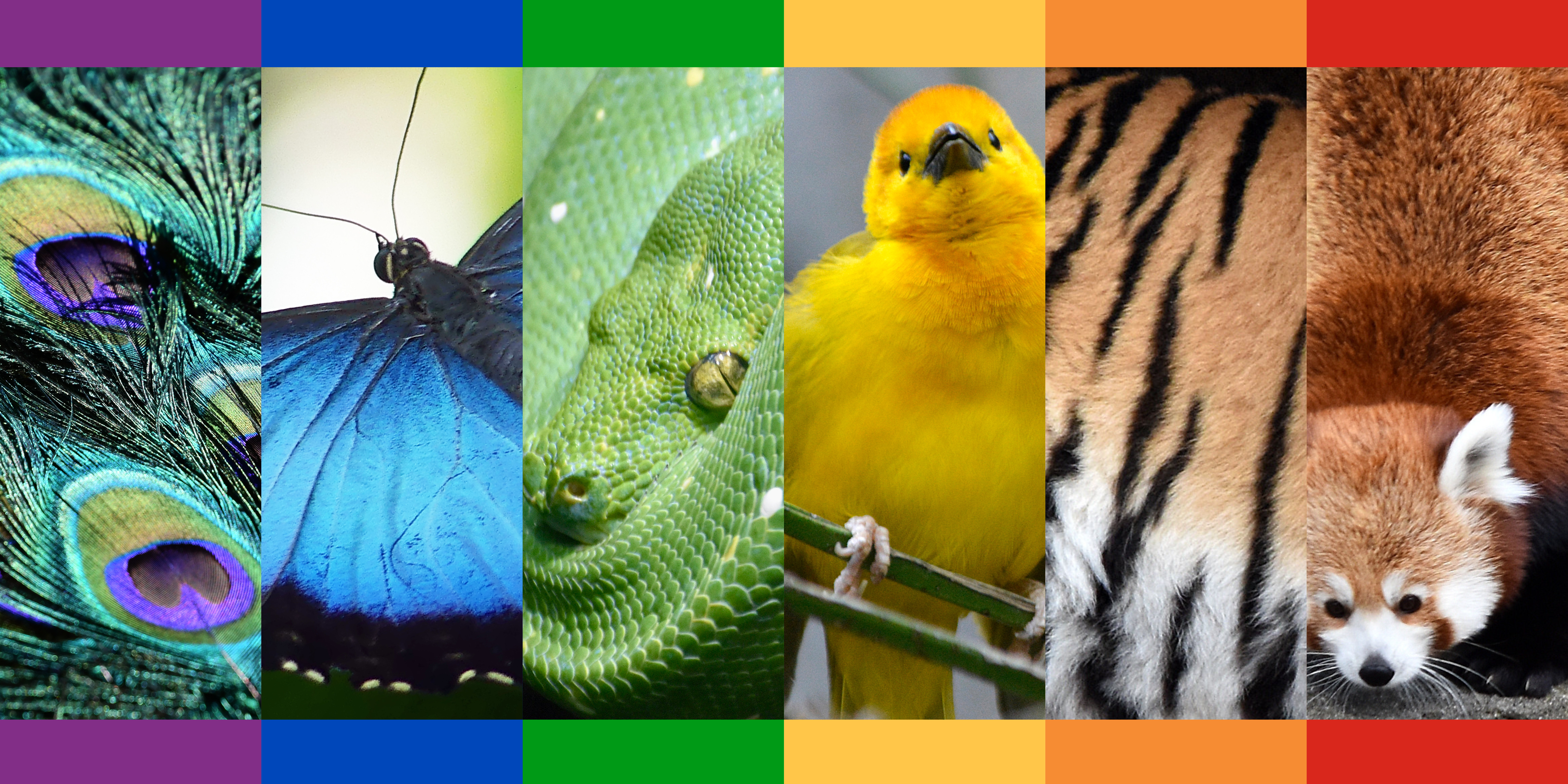
In celebration of Pride Month, we would like to share a colorful exploration of diversity within the animal kingdom. 

A Sparrow With Four Sexes

White-throated sparrows have displayed a fascinating mating system that consists of four sexes. This species is comprised of two distinctive phenotypes: white-striped and tan-striped crown. What makes these birds so interesting is that several genes have been identified and have a direct relationship to their behaviors. White-striped crowns seek multiple partners and invest heavily in securing additional matings at the expense of paternal care. Alternatively, tan-striped males are monogamous and contribute more to parental care. The white and tan versions are genetically determined. White-striped sparrows have an inverted section of chromosome 2, which effectively acts as a second sex chromosome and leads to white-throated sparrows having four sexes. About 98 percent of observed pairings (mated or social) exclusively pair with the opposite phenotype. Because these birds have been observed to only mate with one-quarter of its species, it can be considered that they act as if they have four sexes. 

The Fluidity of Fish

Sex-determination mechanisms are particularly diverse in fish and include many species in which changing sex at least once is a normal and adaptive feature of the fish’s biology. Researchers call this “sequential hermaphroditism” and have documented fish species that change from female to male (protogyny), species that change from male to female (protandry), and species that can change back and forth repeatedly throughout their lifetimes. All these systems have adaptive advantages suited to the fish’s particular environment.

Mom’s Got it Covered

Several lizard species have evolved into all-female unisexual species that reproduce asexually through a process called parthenogenesis, which is essentially cloning. Same-sex courtship and reproductive behavior, generally referred to as “pseudocopulation” by researchers, occurs between females of the exclusively female unisexual whiptail lizard. This behavior increases their ability to reproduce by stimulating ovulation. Research on wild populations of unisexual whiptail lizards found strong evidence that same-sex pseudocopulation between females is not only beneficial to their reproductive success but is the norm for this species and practiced as regularly as copulation in sexual species. Through hormone-mediated processes, about half of the unisexual lizards in an area assume the behavioral role of “males” in these reproductive interactions, then later switch roles. 

Sources:

Tuttle E., 2016, Current Biology 26, Divergence and Functional Degradation of a Sex Chromosome-like Supergene

Hedrick  P., 2018, Negative-Assortative Mating in the White-Throated Sparrow.  Journal of Heredity, Vol. 109, No. 3

Arnold C., 2016, Nature volume 539, The Sparrow with Four Sexes

Kobayashi Y., Nagahama Y., Nakamura M., Diversity and Plasticity of Sex Determination and Differentiation in Fishes. Retrieved from https://karger.com/sxd/article-pdf/7/1-3/115/3552793/000342009.pdf

Crews D., Grassman M., Lindzey J., 1986, Proc.Natl. Acad. Sci. USA, Vol. 83, Behavioral facilitation of reproduction in sexual and unisexual whiptail lizards

Crews D., Young L., 1991, Pseudocopulation in nature in a unisexual whiptail lizard. Article in Animal Behavior

Woolley S. C., Sakata T. J., and Crews D. 2004, Tracing the Evolution of Brain and Behavior Using Two Related Species of Whiptail Lizards: Cnemidophorus uniparens and Cnemidophorus inornatus. ILAR Journal
Polar Bear Denning: A Glimpse into Suka’s Cozy Retreat at the Detroit Zoo

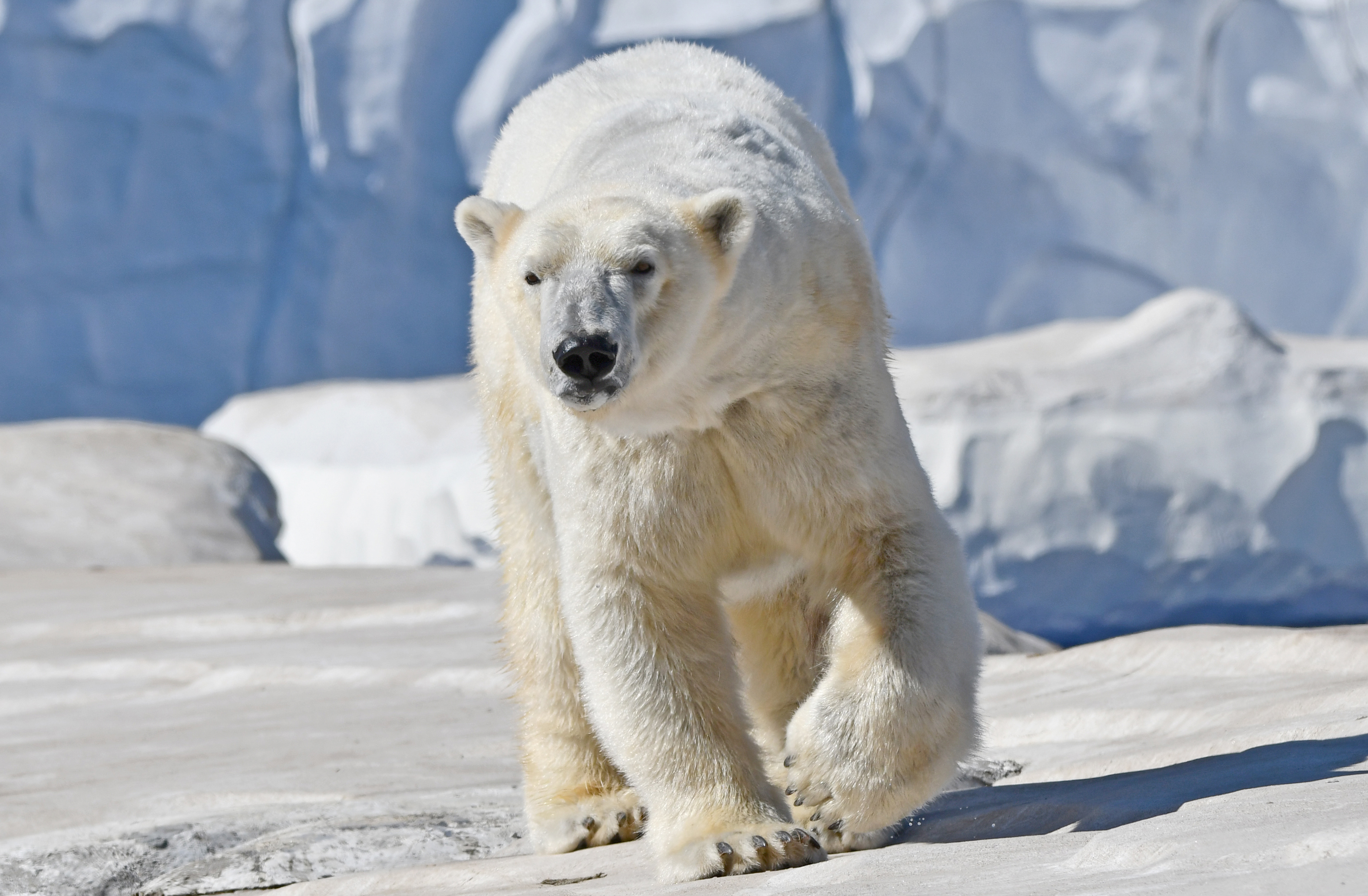
Suka

Humans aren’t the only ones who enjoy cozying up inside when the fall chill takes over — so do some of the animals who call the Detroit Zoo home!

If you are visiting the Zoo this season, you may notice that Suka, a female polar bear, has not been as visible inside the Arctic Ring of Life habitat. But there’s no need to worry, her absence is for a heartwarming reason. This fall and winter, Suka will be nestled in her cozy den behind the scenes in hopes of welcoming a polar bear cub (or two!) into the world.

Last spring, Suka and her male counterpart, Nuka, were observed engaging in an important act of nature — breeding. This pair has successfully mated in the past, resulting in twins Astra and Laerke, who were born in 2020 and moved to the Point Defiance Zoo and Aquarium in June 2023. After their past success, experts with the Association of Zoos and Aquariums — an organization dedicated to animal well-being, conservation and the sustainable management of animal populations in human care — recommended that Suka and Nuka be paired together again. So far, all seems to be going well.

Suka and Nuka

It’s important to note that female polar bears will den whether or not they are pregnant. While we are hopeful Suka and Nuka’s union was successful, unfortunately, our staff has no way to confirm if Suka is indeed pregnant. Polar bear pregnancy tests don’t exist, and polar bear cubs are so tiny in the womb that they cannot be seen via ultrasound. Instead, our dedicated animal care team will be closely monitoring Suka for any subtle signs that might indicate an impending birth. We won’t know for sure if there are cubs on the way until November or December. 

To give this momma bear the best chance of success, Suka must remain undisturbed during her denning period. Denning is a critical phase in the life of a pregnant polar bear, where she seeks seclusion and tranquility to give birth and raise her cubs. Zoo staff is committed to providing Suka with a stress-free environment to ensure her comfort and well-being. Our team is hopeful that Suka will emerge from this denning season as the mother of some new cubs!

While Suka is cozied up in the bear den these next few months, visitors are encouraged to drop by and say “hi” to Nuka and the sea otters who call the Arctic Ring of Life home. And don’t forget to send Suka all your well wishes. 

Update as of January 2024: After months of rest and relaxation under the careful monitoring of our animal care team, Suka emerged from her den. Though we were hopeful for cubs, this was not the case. Suka is now acclimating to life outside the den and will not always be in sight. The team will monitor her closely to determine when she is ready to be reintroduced to male polar bear Nuka. We look forward to a winter full of polar bear fun with Suka and Nuka!

Suka with her past cub, Astra, who was born in 2020.

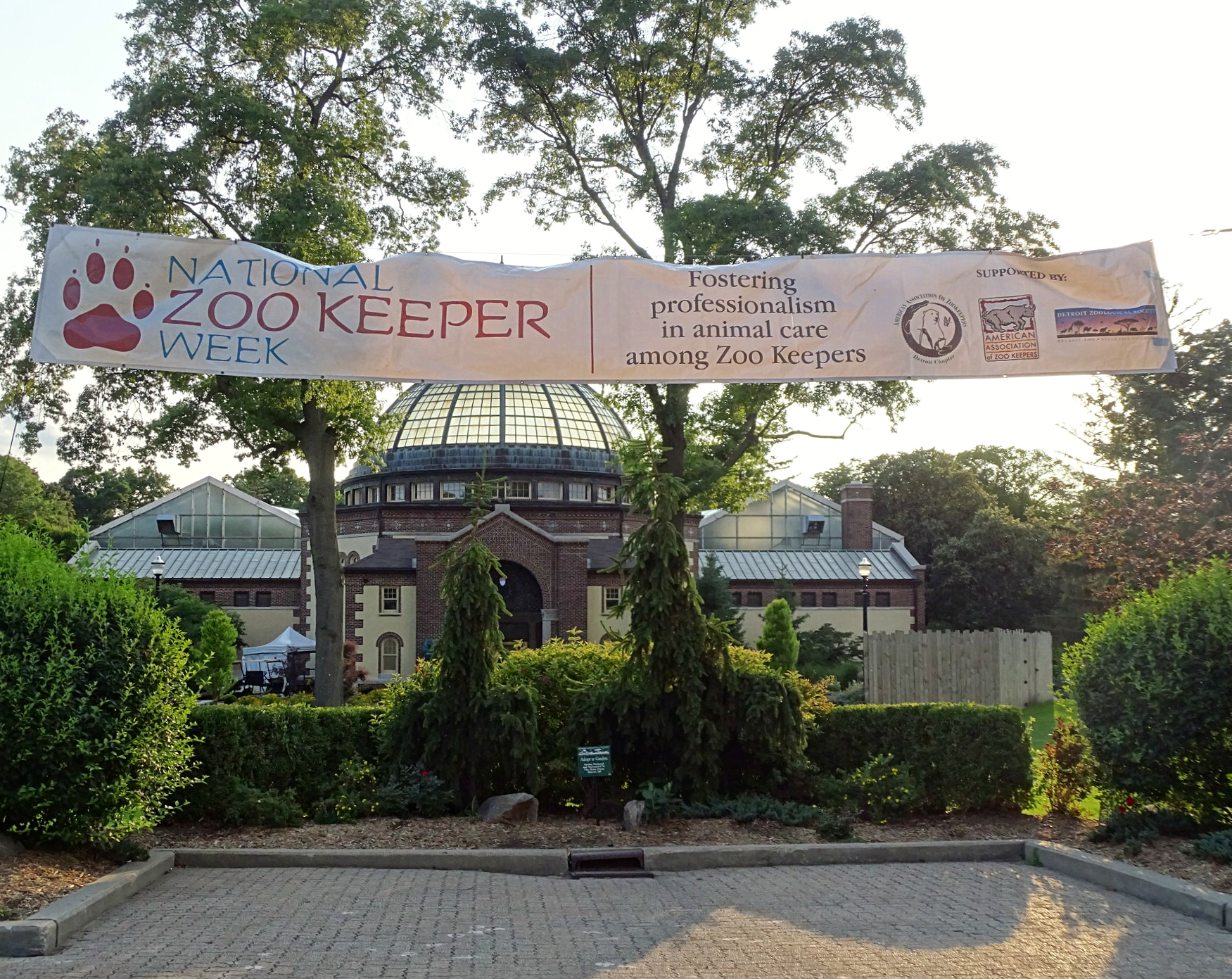
Celebrating National Zoo Keeper Week 2023!


By Mary Humbyrd, coordinator of behavioral husbandry for the Detroit Zoological Society (DZS)

National Zoo Keeper Week starts annually on the third Sunday of July. Representative Susan A. Davis introduced House Resolution 509 on June 21, 2007. This resolution was proposed to encourage individuals on a national level to engage in programs, activities and ceremonies during National Zoo Keeper Week that encourage species conservation and public awareness of the important role of zoos in wildlife conservation.

It is an absolute honor to celebrate our DZS zookeepers. Zookeepers are a unique bunch and have many amazing talents not often seen by zoo guests. Our animal care team is creative, innovative and can build just about anything with some zip ties and duct tape. Zookeepers brave the hottest days of summer and the freezing days of winter. Animal care specialists are on a constant quest for knowledge to improve and raise the bar to provide the best care of the animals they adore. They are involved with the animals from birth to passing and build lifelong relationships. They have their heart and soul in the profession. Zookeepers are advocates, educators, scientists and enjoy sharing their passion with anyone and everyone they encounter. As no day is ever the same, zookeepers have an incredible ability to go with the flow — but with precision and accuracy. Their passion for all living things is inspiring and enlightens all of us who have the privilege of hearing their stories.

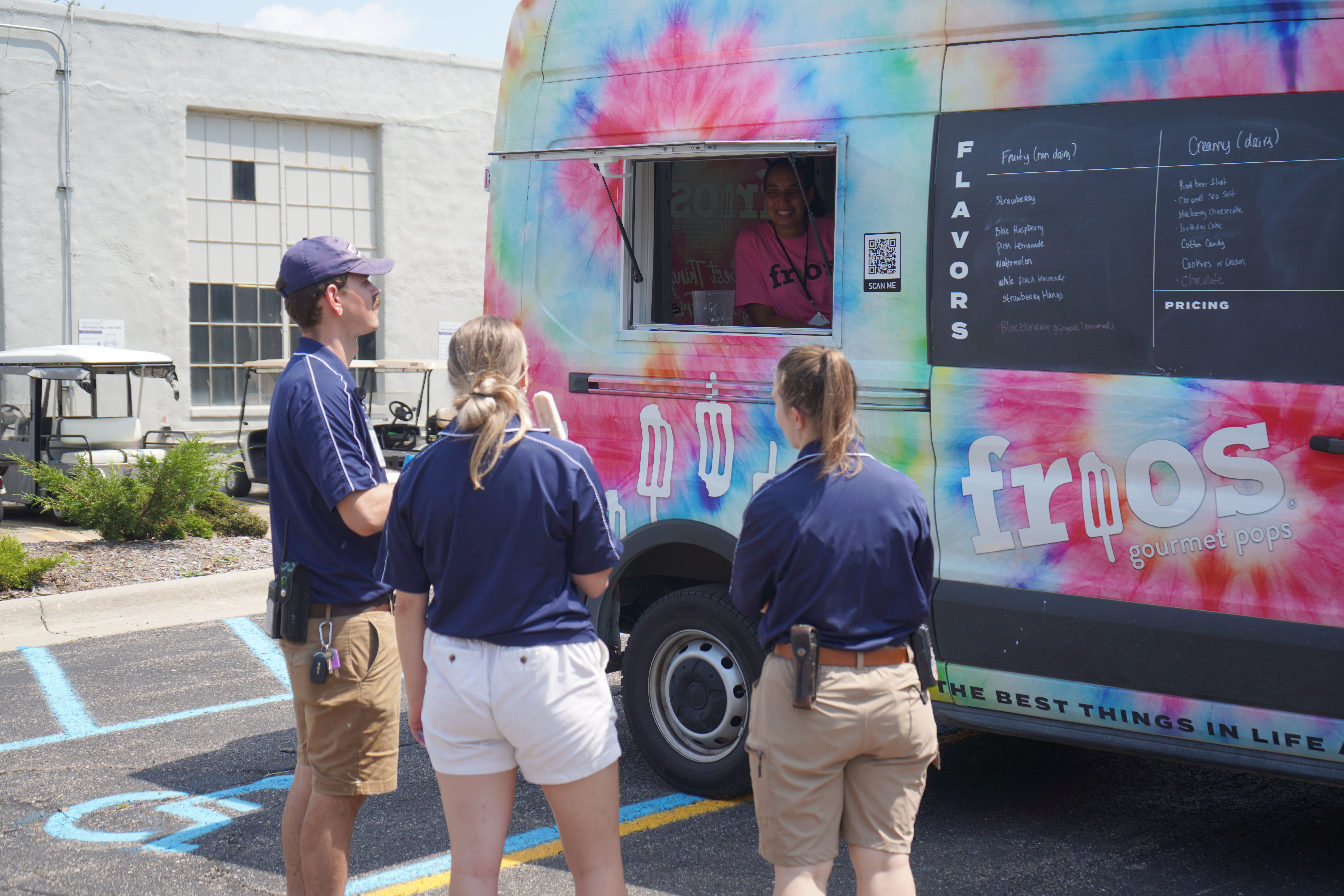
From ice cream socials and cookouts to food trucks and Tigers games, scroll through the gallery below to see how we celebrated the DZS animal care team this past National Zoo Keeper Week! 

Meet the newest sea otter at the Detroit Zoo!

Authored by Dr. Ann Duncan, vice president of life sciences for the Detroit Zoological Society.

We are very excited to report that we recently brought a third rescued sea otter from the Aquarium of the Pacific to the Detroit Zoo — a young male currently named “927.” The DZS is currently hosting a donation-based naming contest to help us pick out a new name for the otter, which we will announce on World Otter Day! Voting closes at 5 p.m. May 26.

Click this link to vote between Finn, Eli, Kai, Misu and Hurely — but before you do, learn more about the newest addition and how he came to the Detroit Zoo. 

An unnamed rescued sea otter has moved to the Detroit Zoo. The DZS is hosting a donation-based contest to help give hime a new name.

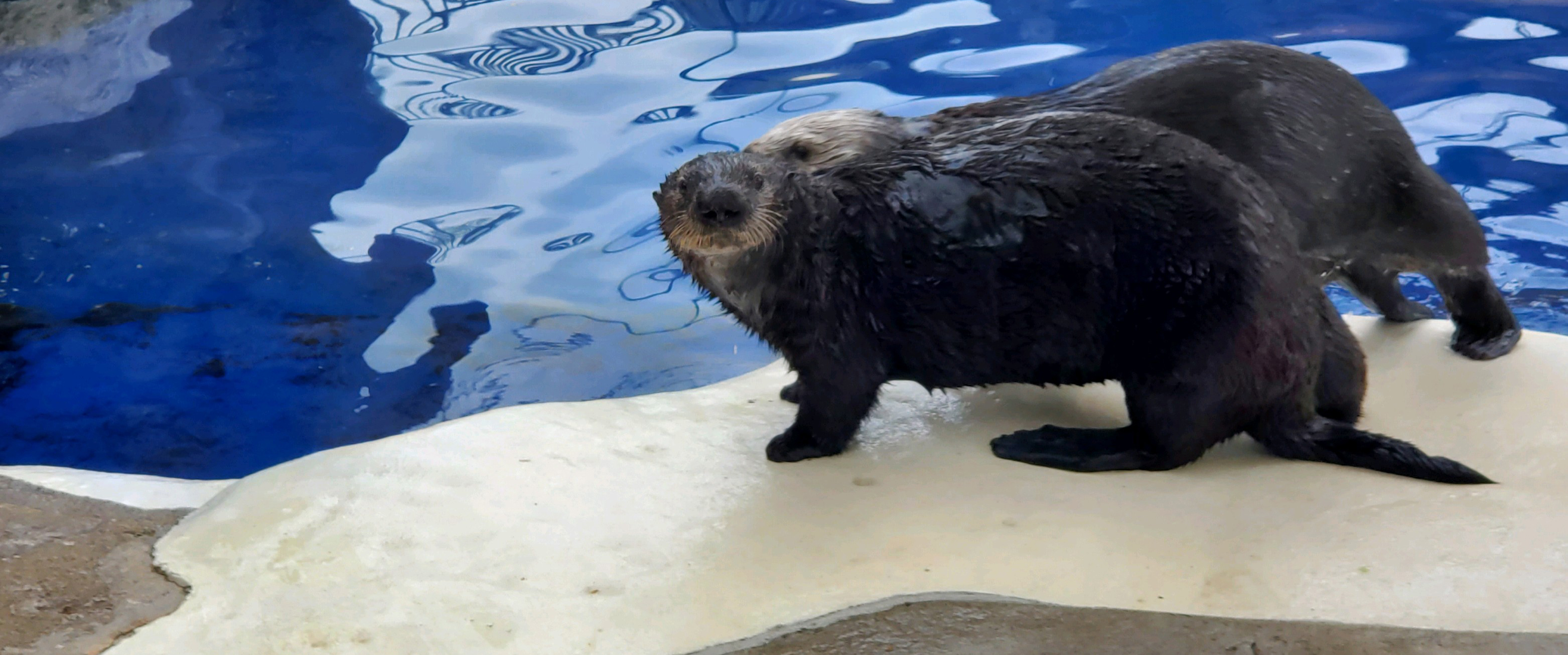
At 3 weeks old, the otter was found stranded in Carmel-By-The-Sea, California. The rescue and rehabilitation team who worked with him could not find a receptive wild female to care for him, so the pup was transferred to an area aquarium. He was later deemed non-releasable by the U.S. Department of Fish and Wildlife. 927 is settling into his new surroundings at Detroit Zoo well and is getting along swimmingly with current sea otter residents Ollie and Monte.

A lot of preparation goes into ensuring the transport and acclimation of a new sea otter goes well. Long before we planned the move, we began working with the animal care staff at the Aquarium of the Pacific (AOP) to develop a plan and analyze every aspect of the move. For starters, we worked with the U.S. Department of Fish and Wildlife permitting team to apply for a permit for 927 to be moved. As he is a marine mammal, several regulations are in place to ensure only zoos and aquariums with excellent facilities and expertise in sea otter care provide homes for sea otters. While waiting for the permit, AOP staff made sure 927 had an opportunity to interact with several different sea otters so that he could learn social skills and become accustomed to making new friends. The veterinary staff at AOP did two examinations and ran several laboratory tests to ensure 927 was healthy and free of any contagious diseases that could pass to other otters. This allowed us to shorten the quarantine period at the DZS so 927 could quickly access the large habitat at the Arctic Ring of Life and the otters already living there.  

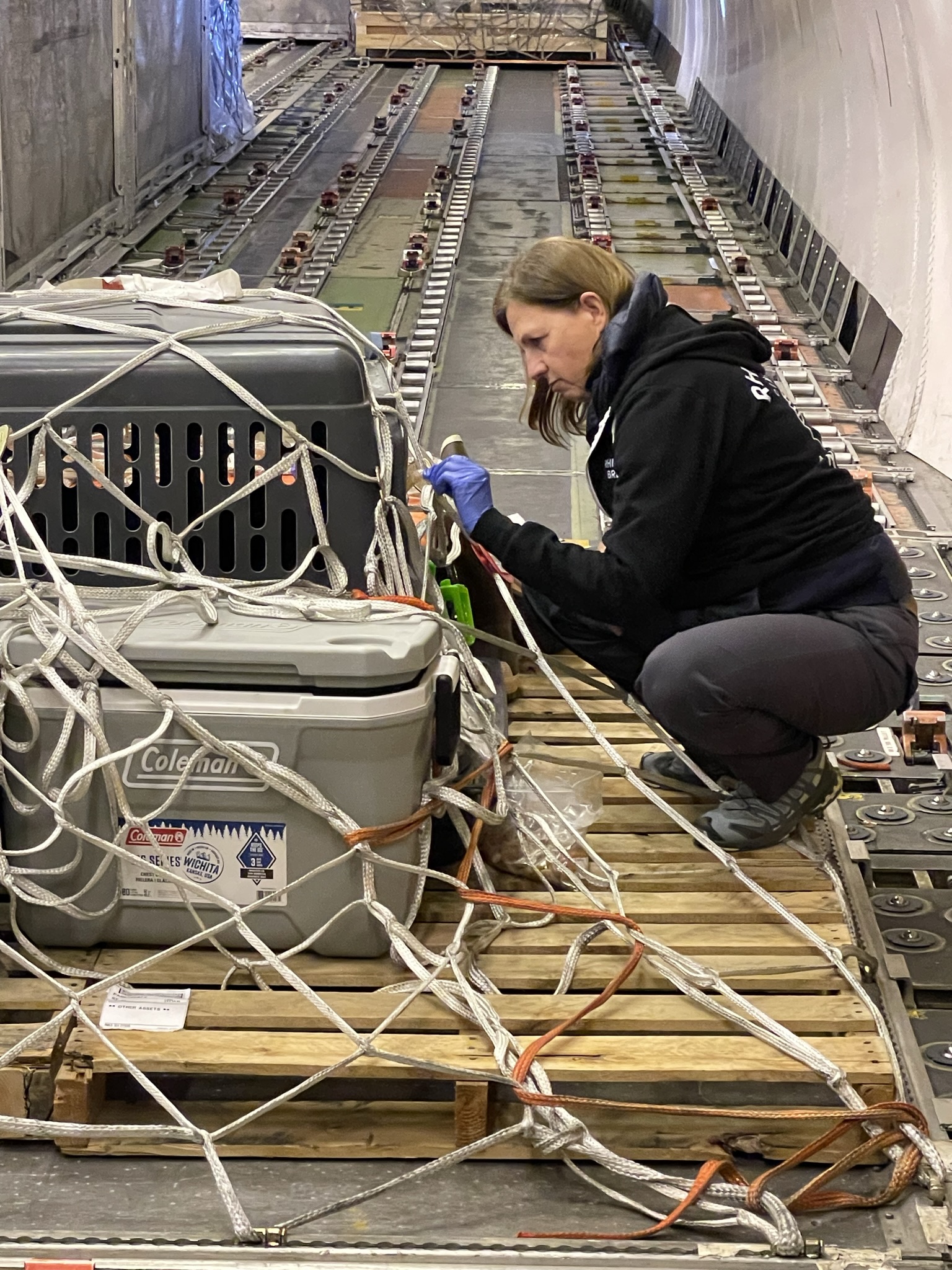
927 traveled by plane from California to Michigan in a kennel similar to a large dog carrier.

There were also lots of preparations for the day of transport. As described in a previous blog, sea otters have many unique physiological adaptations that can make time spent out of their aquatic environment stressful, so transport must be done carefully. To ensure things went smoothly, I traveled to the AOP two days prior to accompany the sea otter and an AOP staff person during transport. The AOP team had prepared two large pieces of luggage containing medical supplies and medications. While we didn’t expect problems, it’s always good to be extra prepared. We also carried two large coolers filled with ice and a day-and-a-half’s supply of the otter’s normal diet.  

On the day of travel, we got an early start at the Aquarium. After loading the supplies into a van, 927 was coaxed into an airline kennel. The kennel had a plastic insert on the bottom, which allowed food and other waste to slide away from the otter’s haircoat. We planned the trip for a time of year when temperatures are cooler throughout the day and placed the kennel in a larger plastic tray so that we could provide lots of ice and water during transport. We traveled on Federal Express cargo airplanes from California to Michigan with a short layover in Memphis. As the attendants, we could pass through a small door to the cargo area whenever we wanted. We checked on him frequently and offered meals every two to three hours. As sea otters have a rapid metabolism, this is incredibly important.

927 was well cared for throughout his journey by DZS VP of Life Sciences Ann Duncan.

927 was an excellent traveler. He was curious about the sights and sounds around him but did not seem overly concerned or agitated. He gobbled up the shrimp, clam and squid we offered at every meal — and especially enjoyed chewing on cubed ice. He also seemed to really enjoy it when a sprayer was used to provide a stream of water for drinking and rinsing.  

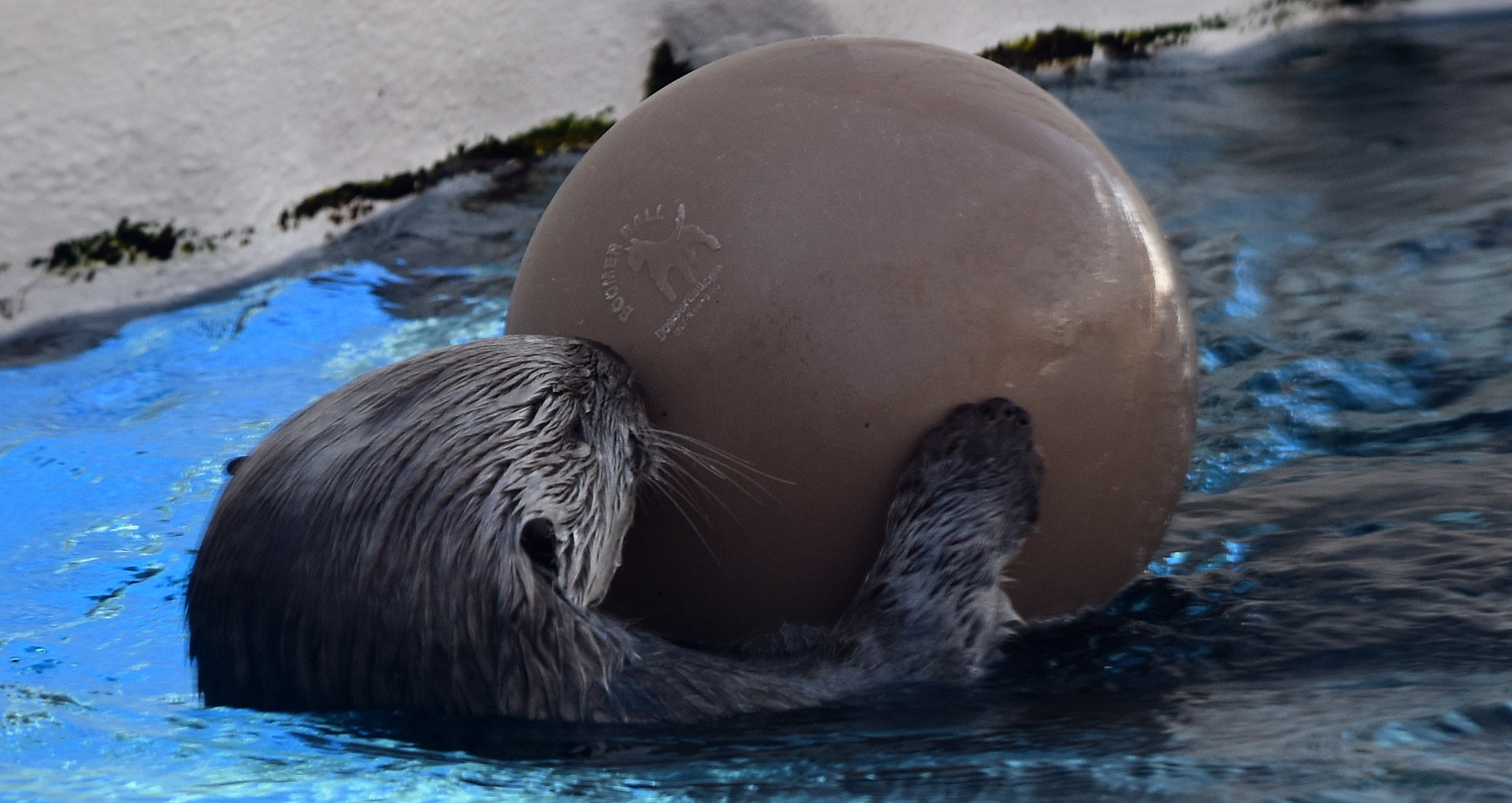
Once we arrived at the Detroit Zoo, we opened the kennel door and released 927 directly into a clean quarantine pool adjacent to the exhibit. He immediately started investigating his new surroundings, eating his diet and playing with toys. We gave him a few days to acclimate to his new keepers and to observe Ollie and Monte through a mesh door before letting him out into the habitat. Since then, he has been playing with Monte, exploring his large habitat and playing with all his toys. 

Visit all three sea otters at the Arctic Ring of Life — and don’t forget to vote for 927’s new name!

927 now enjoys his new habitat and playing with Ollie and Monte. He will receive a new name on World Otter Day, May 31!

Meet the Newest Red Panda at the Detroit Zoo!

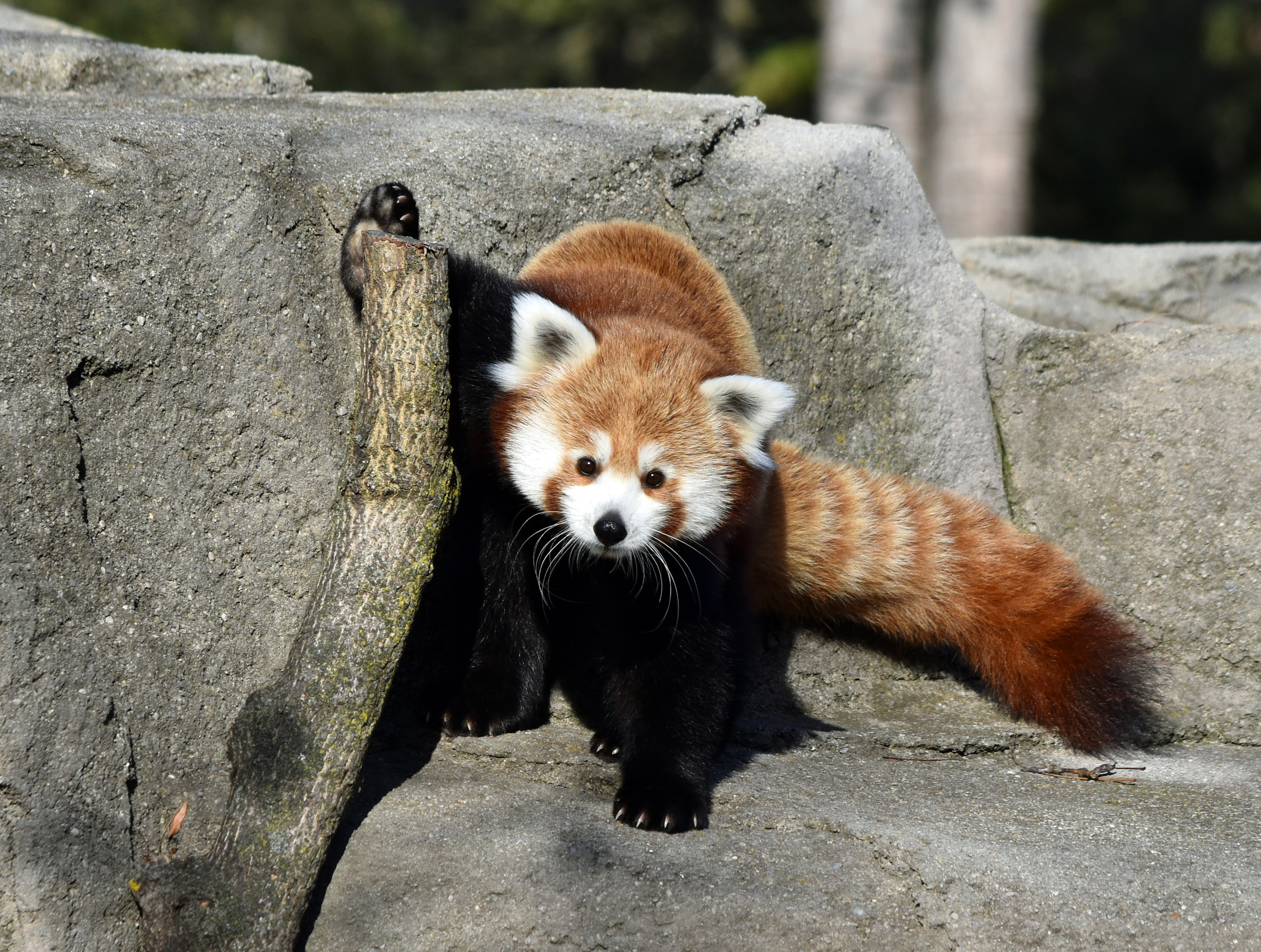
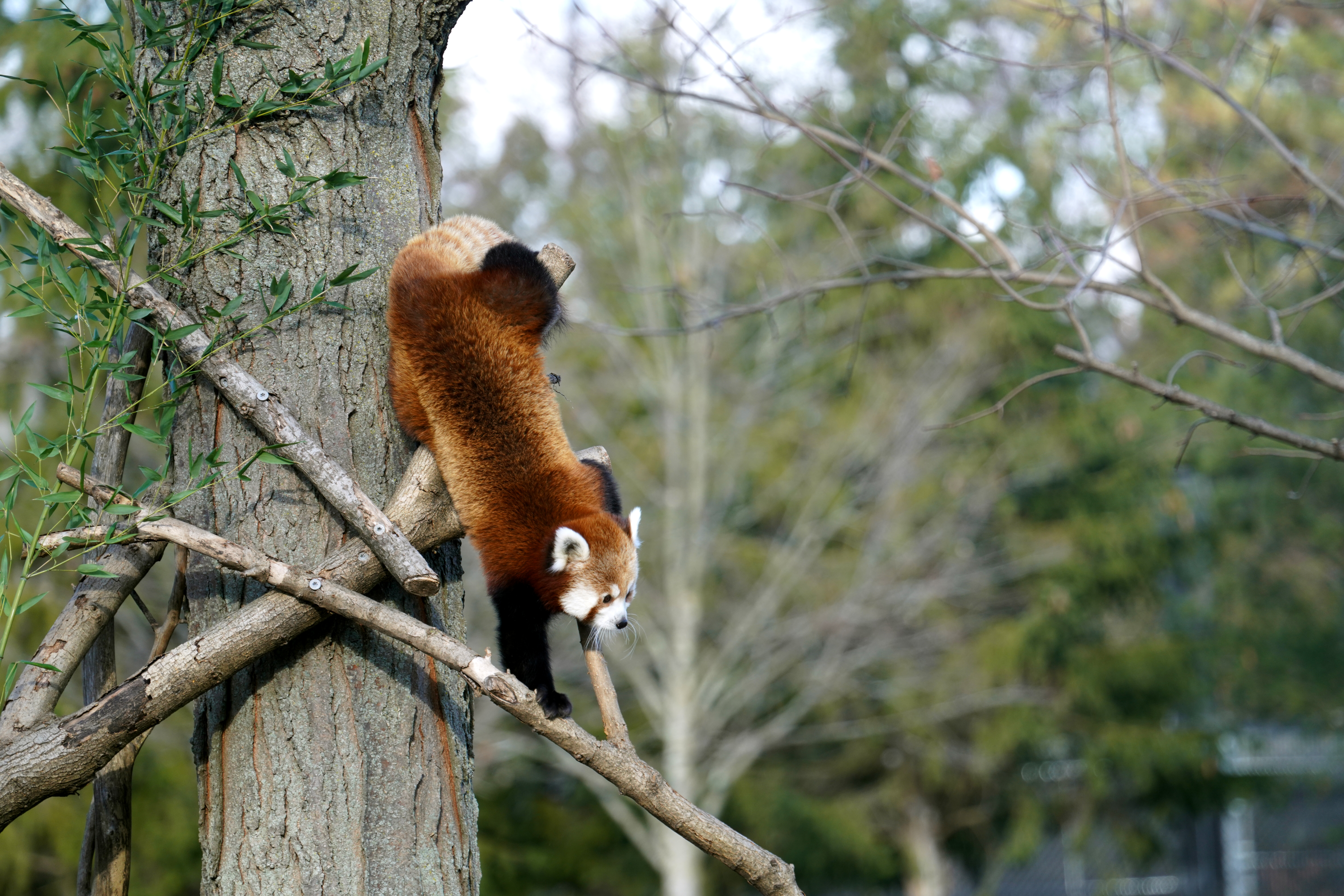
Ginger the red panda moved to The Detroit Zoo in December 2022.

Have you met the newest red panda at the Detroit Zoo? What are you waiting for! Keep reading to meet Ginger, an adorable red panda who has called the Zoo home since late last year.

Sugar and spice and everything nice — that’s how people describe one of the Zoo’s newest residents.

Ginger, a 1-and-a-half-year-old red panda, made her debut in the Holtzman Wildlife Foundation Red Panda Forest in December 2022. Since her arrival, animal care specialists say they have fallen in love with her curious and playful personality.

“She can be a little sassy,” says Sarah Allan, an animal care specialist who works closely with the new arrival. “Ginger seems to be able to get whatever she wants. She is very curious about new things, and she’s quick to investigate if I’m putting out a new toy or treats. I’d say she’s pretty brave.”

Ginger came to the Detroit Zoo on a recommendation from an Association of Zoos and Aquariums Species Survival Plan (SSP), a cooperative population management program that helps ensure the sustainability of healthy captive animal populations. As red pandas are considered endangered by the International Union for Conservation of Nature, the SSP is vital to ensuring the future of this species in zoos.

Zoo officials hope Ginger’s arrival will result in a successful coupling with resident male Ravi. Though Ravi is shier and more reserved than Ginger, the animal care team reports the pair are getting along well.

“Ravi is really polite to her and is more active since Ginger arrived,” Allan says. “Breeding is really important to maintaining a genetically diverse population in a species that is declining in the wild, so we really hope to have some baby red pandas soon.”