Education: Instilling Respect for Gorillas and the Environment in the Congo

I recently had the opportunity to travel to the Gorilla Rehabilitation and Conservation Education Center (GRACE), located in the eastern part of Democratic Republic of Congo (DRC). GRACE is truly a special place – it is the only facility in the world that cares for highly endangered Grauer’s gorillas that have been rescued by wildlife authorities after being illegally captured by poachers and traders.
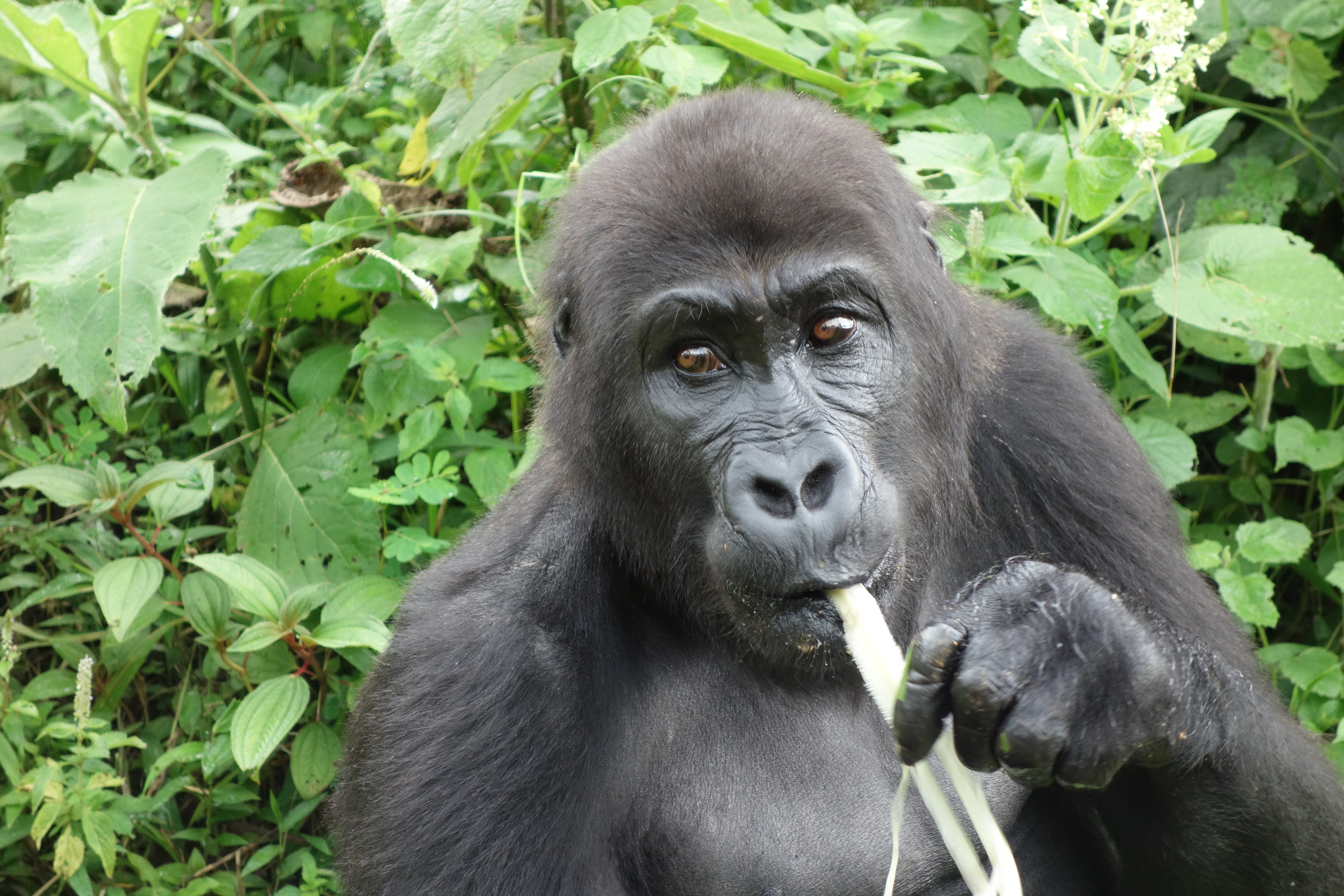
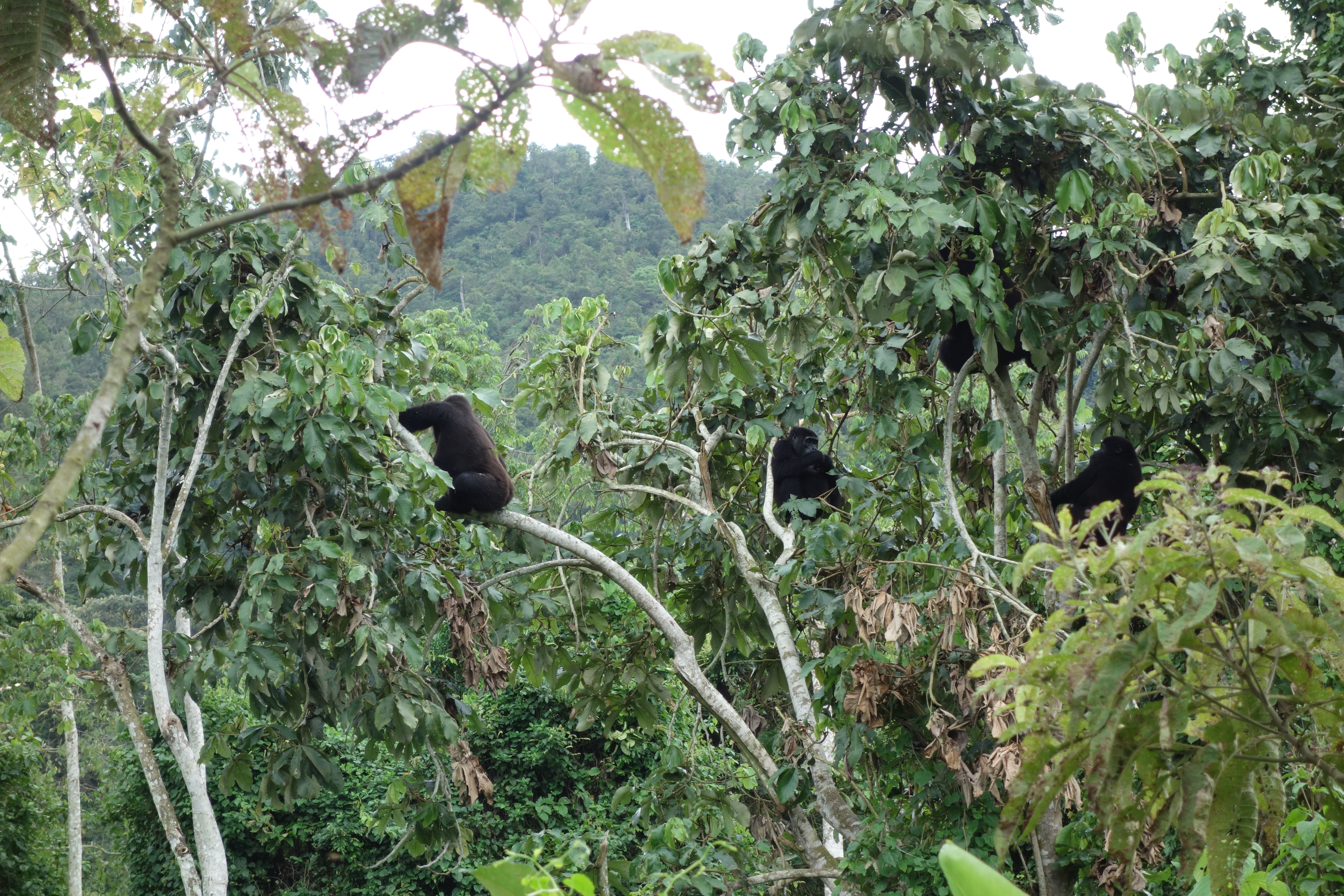
Grauer’s gorillas are endemic to this region and only approximately 4,000 remain in the wild. There are currently 14 gorillas residing at GRACE, where a dedicated Congolese staff provides daily care and monitors the group while they explore a 24-acre forest – the largest gorilla enclosure in the world.

GRACE is overseen by a dedicated board of directors, which includes Ron Kagan, Detroit Zoological Society (DZS) CEO and executive director, who has also served as board chair. In addition to Ron’s valuable leadership, the DZS’s involvement with GRACE also includes financial and staff support. In 2015, Ron helped secure funds for a new night house enclosure for the gorillas, which I was able to see in operation while I was there. Also in 2015, DZS Director of Animal Health Dr. Ann Duncan traveled to the Congo to perform health examinations on 12 gorillas, which had never been done before.
I traveled to the DRC with three staff members from Disney’s Animal Kingdom and the executive director of GRACE as part of the GRACE Education Advisory Group. We carried quite a bit of luggage with us, which included a number of veterinary medicines and supplies provided by the DZS.

While at GRACE, we worked extensively with the Congolese education team. We observed current programs, provided our feedback and facilitated trainings focused on methodology, messaging and differentiating instruction to meet the needs of their various audiences. We also began to draft a strategic plan for their education programming and evaluation efforts as they move forward. The team’s reach is vast; not only do they work with primary and secondary school groups onsite and in local villages, they also conduct programs with community groups and the military, to name a few. GRACE doesn’t have open visitation hours, so all of the groups that they work with have been scheduled by the educators. Throughout all that the team does, there’s a common theme of instilling reverence and respect for not only gorillas, but all animals and the environment. They work with people of all ages to help foster behavioral changes that result in a positive impact for people, animals and their shared home.
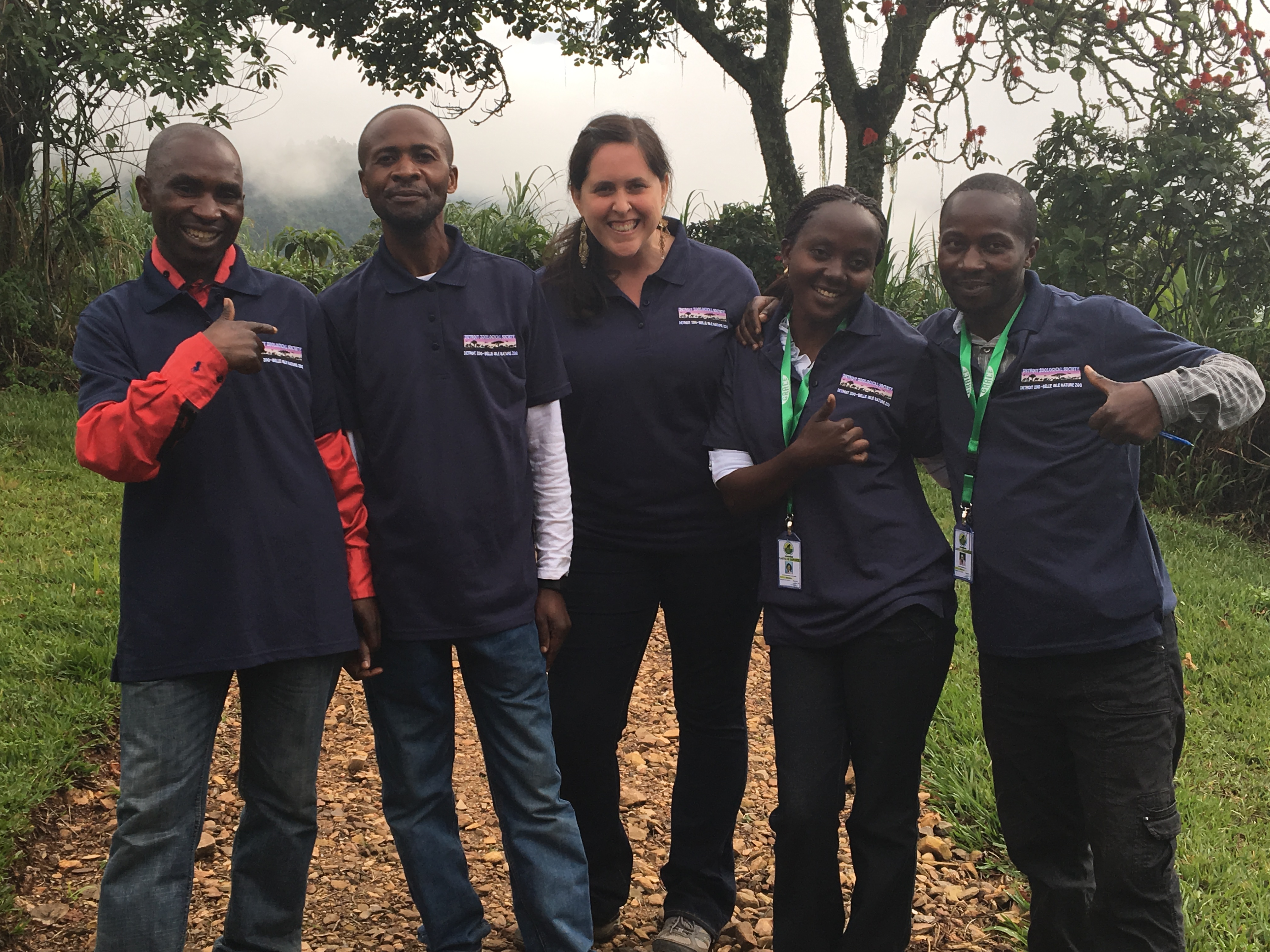
I can’t say enough about the amazing people that I met throughout the course of our visit. The team at GRACE is truly a hard-working, dedicated, passionate group of people and they give tremendous hope for the future. Additionally, on our last day at GRACE, we were fortunate to take part in a tour of the local village, led by the women’s cooperative, where we met many members of the community. We were invited into homes to see cooking demonstrations and to learn about some of the small-scale businesses they own and operate. We also visited Muyisa Primary School, where we were greeted with song and dance and hundreds of smiling faces. Everywhere we went, people were kind and welcoming. They definitely made it difficult for me to leave.
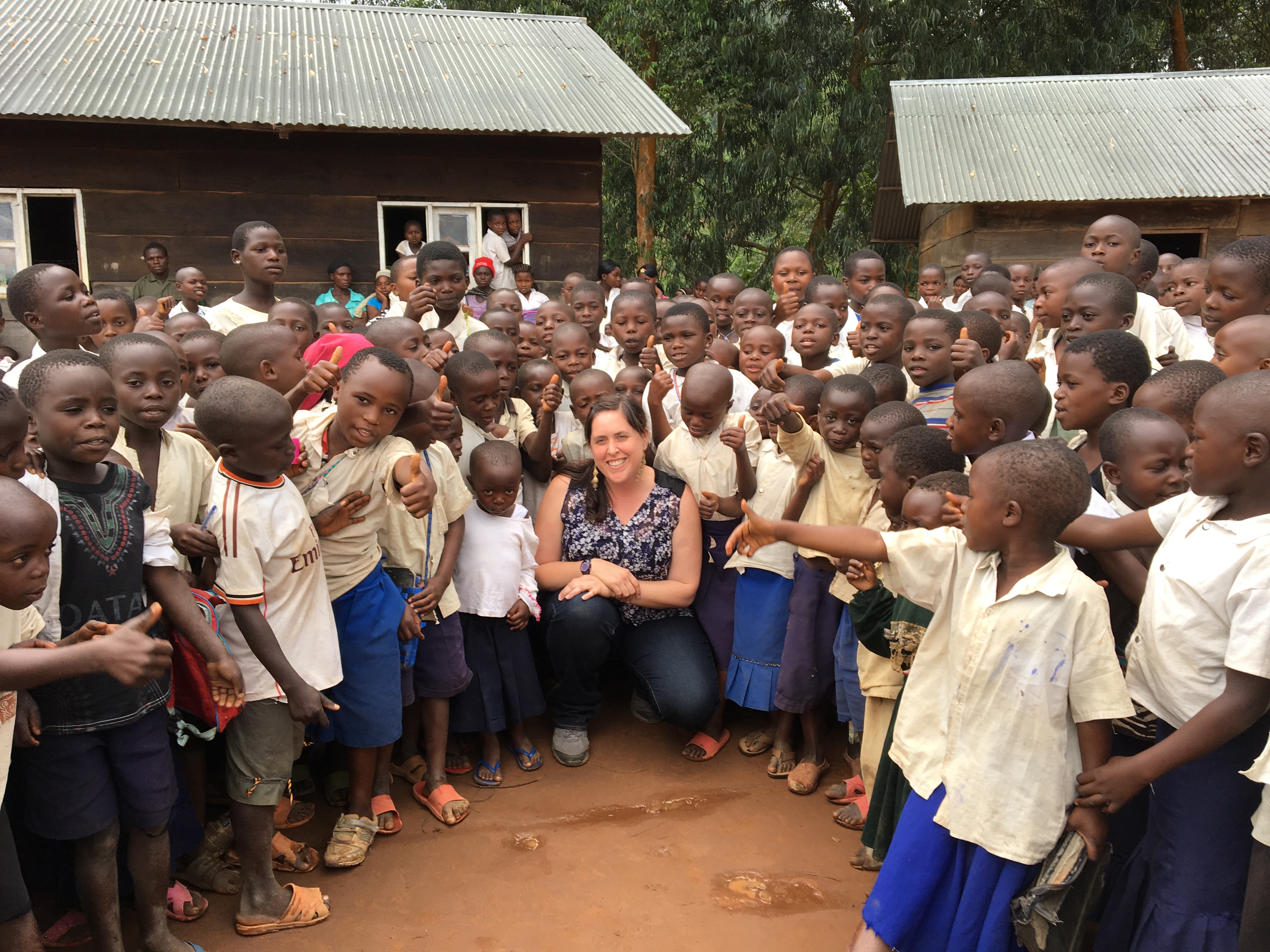
As we move forward, the Education Advisory Group and the Congolese educators will continue to meet by way of monthly conference calls. We’ll continue to advise efforts and offer additional training. I’ll also be working on developing humane education curriculum and projects for the children’s conservation clubs which currently exist in five communities. Stay tuned for more to come on that!

– Lisa Forzley is a curator of education for the Detroit Zoological Society and oversees the Berman Academy for Humane Education.
Notes from the Field: Adopt-A-School Assessments in the Amazon

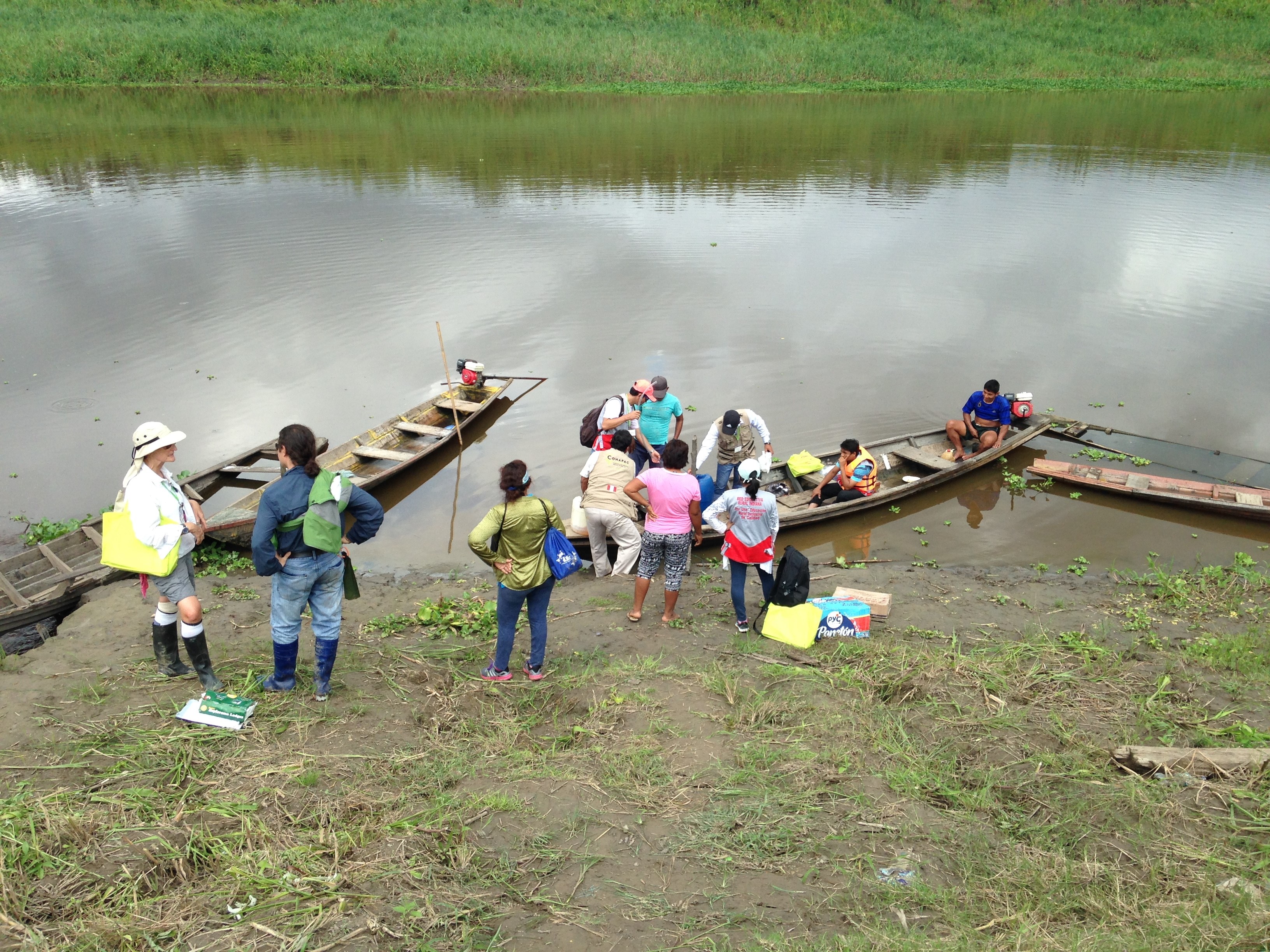
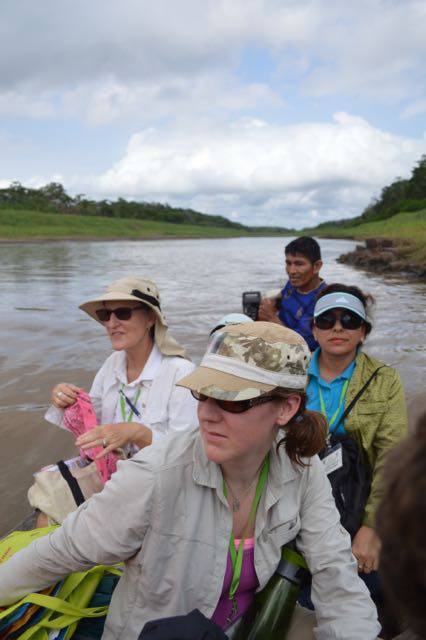
When the boat beached for the third time on a sand bar, we knew we were in for a long day. Late autumn means low water in the Peruvian Amazon, requiring more walking than boating to get around. I was in the rainforest with a Detroit Zoological Society (DZS) colleague, representatives from our Peruvian partner, the Civil Association for Conservation of the Peruvian Amazon Environment (CONAPAC), and several volunteer educators from the nearby city of Iquitos. We were conducting our annual end of the school-year evaluations in the Amazon Rainforest Adopt-A-School program communities and we were in for a long, hot day.

The Adopt-A-School program is a decades-long partnership between the DZS and CONAPAC, using donations to provide educational supplies to schools, teachers and students in rural Amazonia. The program ensures that students have the materials necessary to earn a basic education and build an understanding of the complex and globally important region they call home.

The evaluations we conduct each fall coincide with the end of the school year in Peru – late November to early December – and are a great opportunity to focus on each community’s strengths and challenges.

The experienced boat drivers know when to call it quits and ours realized there was no viable path down the parched river. He dropped off us off on a muddy river bank and we gathered our supplies and trudged up the bank to a path on the jungle’s edge. An easy half hour walk brought us to a familiar animal sanctuary and a long dock that stretched into the tributary we needed to travel up to get to our assigned communities.

The dock stretched toward the water but ended on a muddy beach, not quite reaching the shallow, murky water. At first, the damp mud was easy to traverse, the sand holding firm. Then the river bank dropped off and the choice was to wade through the mucky water or climb the bank and walk through giant grasses that stood 10 to 12 feet tall. We chose the grasses.

After another half hour of battling grass stalks as thick as sapling trees and covered with spines, the river’s edge dropped back down to a sandy pathway. We gratefully slid down and continued our walk. Soon, a wooden boat about 10 feet long with a small outboard motor came towards us. After some negotiation, all 11 of us piled on board. We carefully balanced our bags and ourselves for an easier, albeit slow ride up the shallow river. A full three hours after we set out, my small team and I arrived at one of the communities that we were assigned to evaluate.

Community evaluations are a critical part of the Adopt-A-School program. They confirm that participants are holding true to the contract of sustainable resource use, prioritizing education, and organized leadership in exchange for support from CONAPAC and the DZS. All 55 communities were visited and vetted through a comprehensive rubric that addressed environmental, educational and institutional management. The vast majority of the communities were rated as “good” or “excellent”; three were placed on a watch list and one was unfortunately cut from the program due to a breach of contract.

This community has faced some challenges over the past several years. Record floods wiped out crops and unsteady leadership let the community bakery and drinking-water purification plant fall into disarray. CONAPAC offered support in restarting the bakery to make it a potential profit source. Turning raw materials into a finished product has a higher profit margin and bread is a constant need in surrounding communities. CONAPAC also offered training and materials to restart and refurbish the water purification plant, ensuring there would be clean drinking water available. The community declined both offers.

When the evaluation team arrived to assess the community, they came across a large path of bare earth; huge machines had clear-cut a road into the rainforest. The community acknowledged that they had contracted with a lumber company who had cut a path into the forest, removing dozens of large, old-growth trees for a relatively nominal amount of money. The community leadership was neither remorseful nor willing to work with CONAPAC on other projects that would allow them to profit in an environmentally sustainable way. The evaluation team discussed and unanimously decided to remove the community from the Adopt-A-School program.

There is always an open door for communities removed from the Adopt-A-School program to rejoin. The process is careful and thoughtful, involving several community visits to ensure a change in either leadership or practice has prepared them to be a successful partner again. Many of the 54 communities currently in the program have participated for more than a decade and are both dedicated to protecting the rainforest and appreciative of the educational opportunities it provides for their children.

To learn more about the Adopt-A-School program and how you can make a difference in the life of a child in the Amazon rainforest, please visit https://detroitzoo.org/support/give/ and choose
“Amazon Rainforest Adopt-A-School Program” from the drop-down menu.

Our upcoming volunteer expedition is scheduled from March 25 to April 2, and spots are still available. Volunteers will help deliver donated school supplies to these communities in need along the Amazon and Napo rivers . For more information, visit detroitzoo.org/about/travel-programs/amazon-travel-program/ or contact clannoyehall@dzs.org and/or adewey@dzs.org.

Claire Lannoye-Hall is a curator of education for the Detroit Zoological Society.

Education: 100 Hopeful Days

We could all use a little hope sometimes, especially when it comes to the environment. That’s why the National Network for Ocean and Climate Change Interpretation (NNOCCI) has launched the #100HopefulDays campaign. NNOCCI is a collaborative effort to establish a network of professionals who are skilled in communicating climate science to broad audiences. These efforts are led by the New England Aquarium, in conjunction with some other amazing organizations, including the Association of Zoos & Aquariums (AZA).

The #100HopefulDays campaign will highlight the ways the NNOCCI community is making positive changes in the world. There are people all over this planet who are working together and battling longstanding obstacles to make the world a better place for future generations. We feel it is our responsibility to take care of our natural resources by making practical and feasible choices – however great or small – to protect our environment. Through this campaign, the NNOCCI is sharing all of these actions and aiming to inspire, engage and focus on reasons to hope.

Creating a sustainable future is one of the pillars of the Detroit Zoological Society. Through our Greenprint initiative, our goal is to inspire others to join us on our Green Journey as we continuously look for ways to reduce our ecological footprint. Recent efforts include discontinuing the sale of bottled water on Zoo grounds – keeping 60,000 plastic bottles out of the waste stream annually – and building an anaerobic digester which will convert 400 tons of animal manure annually into methane-rich gas to power the Zoo’s animal hospital.

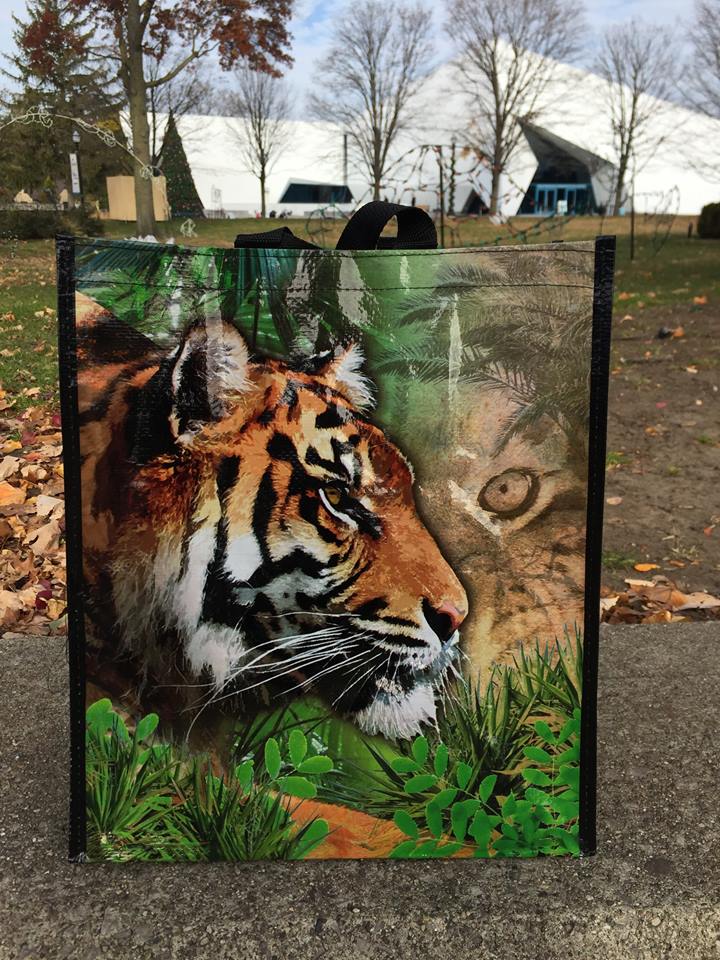
Our 20th annual fundraising 10K/5K event, Run Wild for the Detroit Zoo 2016, became one of the first races in the country to eliminate bottled water – instead, disposable bottles filled with fresh H20 were provided to participants after the race. We also no longer provide plastic bags at our gift shops or souvenir stands; visitors are encouraged to bring their own bags or purchase wildlife-themed reusable bags. We also recently unveiled a new parking lot that uses a progressive green design. Permeable pavement was incorporated into the lot with 215 new spaces, which reduces storm water runoff and improves water quality by filtering pollutants.

For all of these efforts and more, the Detroit Zoo was named one of Michigan’s and the nation’s 2016 Best and Brightest Sustainable Companies by the National Association for Business Resources as well as the 2015 Best-Managed Nonprofit by Crain’s Detroit Business.

Learn more about our Green Journey and download our Shades of Green guide to help lighten your impact on the Earth and the animals that share it with us. If you’re looking for reasons to feel hopeful and be inspired, follow the #100HopefulDays campaign at @_NNOCCI on Twitter. We can all make a difference and we need to start today.

– Carla Van Kampen is a curator of education for the Detroit Zoological Society.

Education: Inuit Artwork in the Arctic Ring of Life

The Detroit Zoological Society’s permanent art collection focuses on making people think about their relationship with animals. Throughout history, humans have always been intrinsically linked with animals in many ways. This could be through worshipping animals, hunting them (both as a food source and as a culturally significant event), anthropomorphizing them, and more.

Dancing Walrus - Adamie Alariaq

Dancing Walrus – Adamie Alariaq

The language of art is universal; it is the language that can bind cultures together and can preserve them. It is the language that can strengthen a multi-cultural society without weakening or emboldening any one of its members. The works of art we have in our collection are designed to show the human relationships and interactions with animals in several cultures.

During the upcoming Wild Winter event on Saturday, January 21, we will provide talks on the Inuit art that is displayed in the Arctic Ring of Life at 11:30 a.m. and 12:30 p.m.

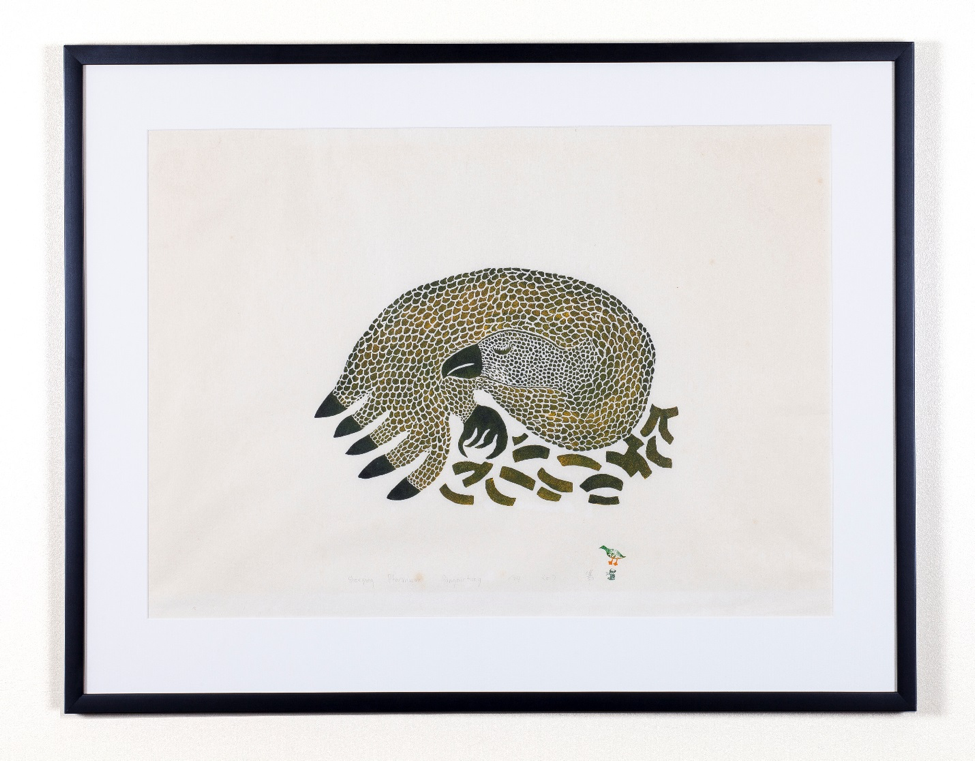
The Arctic Ring of Life houses most of our Inuit art collection, which demonstrates many of the different ways and styles that animals can be showcased in art. Art is used for many things in all cultures, including helping to explain the stories of a culture and support understanding of it. In Inuit culture, animals play a vital role, including in significant events and rituals. Due to this, every piece has a distinct, important and personal story that it illustrates.

Sleeping Ptarmigan - Pangnirtung

Sleeping Ptarmigan – Pangnirtung

Come to the Arctic Ring of Life this Saturday to hear more about the Inuit peoples and how art plays into their lives and to hear more detailed information on two pieces we are going to highlight.

– Sioux Trujillo is the curator of fine and performing arts for the Detroit Zoological Society.

Education: Adopt-a-Beach Program Protects Local Bodies of Water

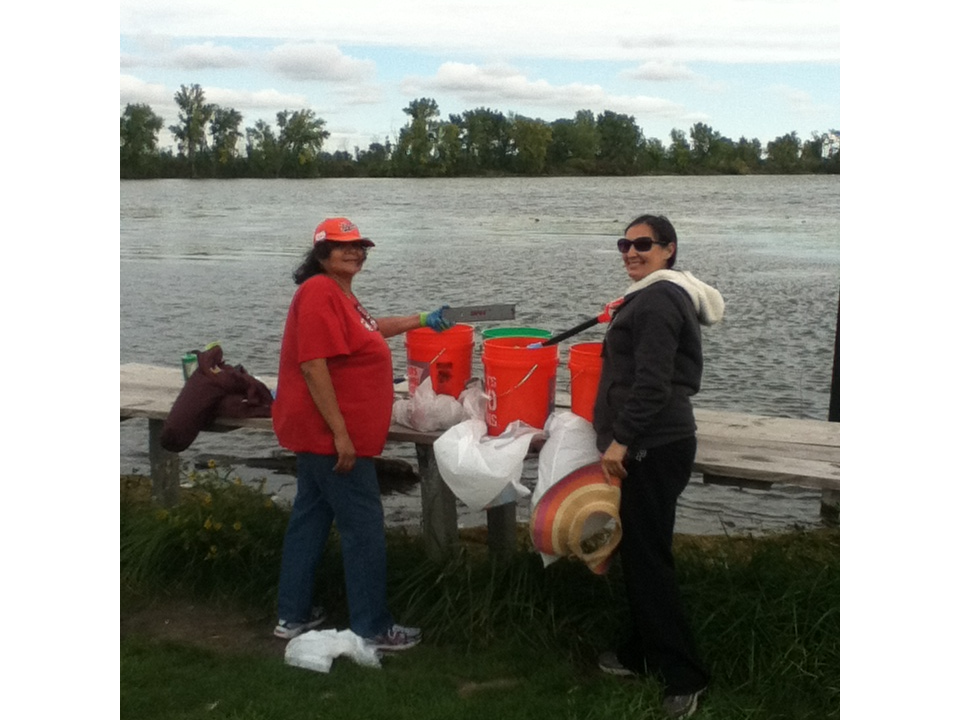
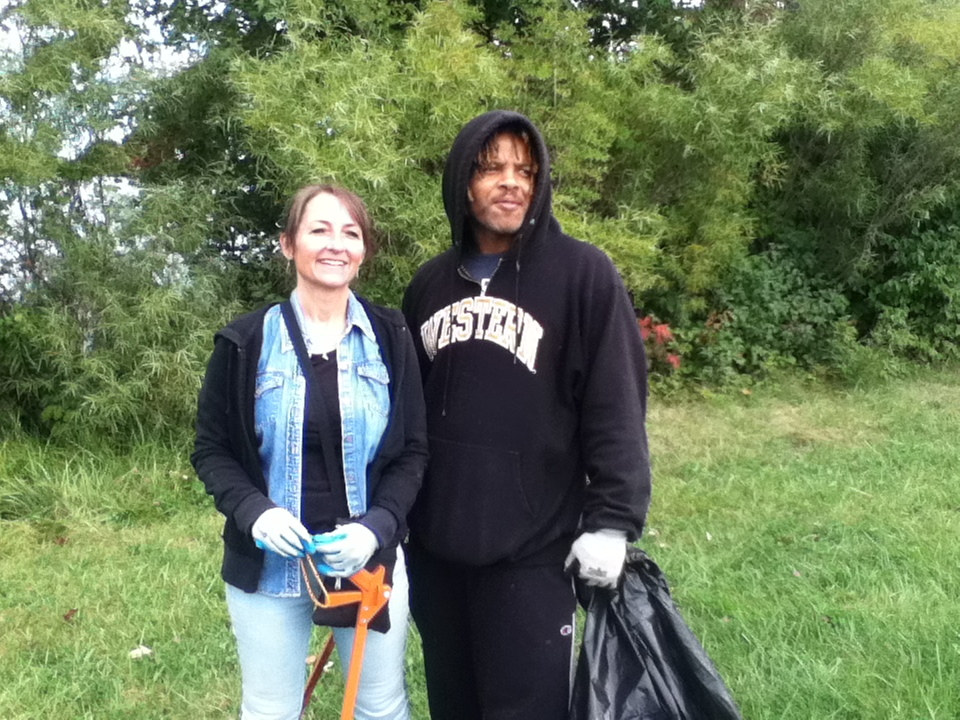
Far too often, the term conservation is perceived as an effort happening in faraway places like Africa or India, but in reality, we can affect change in our own backyards.  By participating in the nationwide Adopt-a-Beach program, the Detroit Zoological Society (DZS) does just that by making conservation local and giving people the opportunity to do something that can directly benefit them.

Contrary to the name, the Adopt-a-Beach program is rarely done on an actual beach. What is actually adopted is a surrounding area or body of water in need of protection, e.g. a drain, a sewer, an isolated body of water or an area around a body of water. It may seem surprising to some, but adopting drains are critical areas because they lead to larger bodies of water, such as lakes and rivers.

The Adopt-a-Beach program is open to people of all ages; you can sign up individually or as a group. Although this program is open to everyone, we are seeing how it is especially beneficial to students because it gives them a chance to connect the science they learn in the classroom to real-life situations. With this hands-on program, students can see how their actions impact the environment while communicating with actual scientists to see the greater picture.

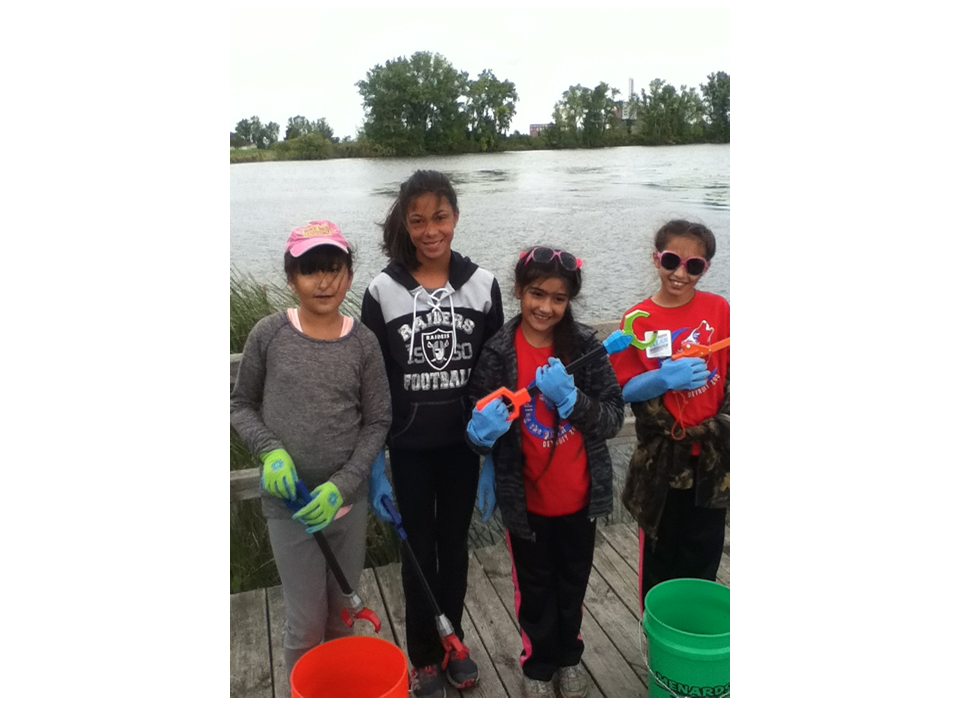
Before a group is able to participate, they must complete on-site training on data collection and debris disposal. After training, the group will go back to the site to collect, record, weigh and remove debris from the area ‒ with recyclables sorted out, of course.

The main goal of this program is to find and identify trends. For example, if a group goes to a beach and finds a large number of dirty diapers, then it is obvious there is a need for a changing area or campaign to discourage people from throwing diapers out in that specific area. By finding trends, there can be campaigns created to contribute to long-term conservation of the adopted areas and will lead to a significant reduction in waste and debris. Other examples of this include cans, cigarette butts and plastic bags.

So surf our website for “shore”-fire ways on how you can help tackle this issue! Whether you’re a Boy Scout, Girl Scout or someone who just wants to make a difference, this program is an opportunity to help the community and learn different ways to clean up the water system.  Email DZS Curator of Education Mike Reed at mreed@dzs.org  to find an upcoming event near you.

Education: Making Less Harmful Choices

Every day we make choices. We decide what to wear, what to eat and which products to use. Each of these actions has an impact with implications we may not immediately think about.

We can consider the impact of our decisions by exploring two questions:

  • What are the effects of this item or activity on animals?
  • Are there any alternatives that may be less harmful or even provide some benefit?

As an example, let’s take a moment to explore coltan. You might not even be aware of its existence, but you likely use it on a daily basis. Coltan, an ore, is an essential component of our smart phones and many other electronic devices that we use, including laptops and game consoles. Unfortunately, the mining of coltan is having devastating effects on the habitat of endangered gorillas and other wildlife living in the Democratic Republic of the Congo (DRC). While it is mined in different areas of the world, a good portion of the world’s reserves are found in and around the DRC.

So what can we do? We can’t avoid using it, but here are a few things to consider:

  • Pass on the opportunity to get a free upgrade unless your cell phone is no longer in good working order
  • Opt to fix your electronics, if possible, rather than buy new
  • Consider buying refurbished electronics
  • Always responsibly recycle your electronics so that the coltan can be used again

When we take a moment to examine the products we’re purchasing, it enables us to make the best choice possible for people, animals and the planet. This enables us to make knowledgeable decisions on how to walk softly and treat the Earth’s creatures gently. Every action we take to help the Earth and its inhabitants is something to be celebrated!

– Lisa Forzley is a curator of education for the Detroit Zoological Society and oversees the Berman Academy for Humane Education.
Nature Play at the Belle Isle Nature Zoo

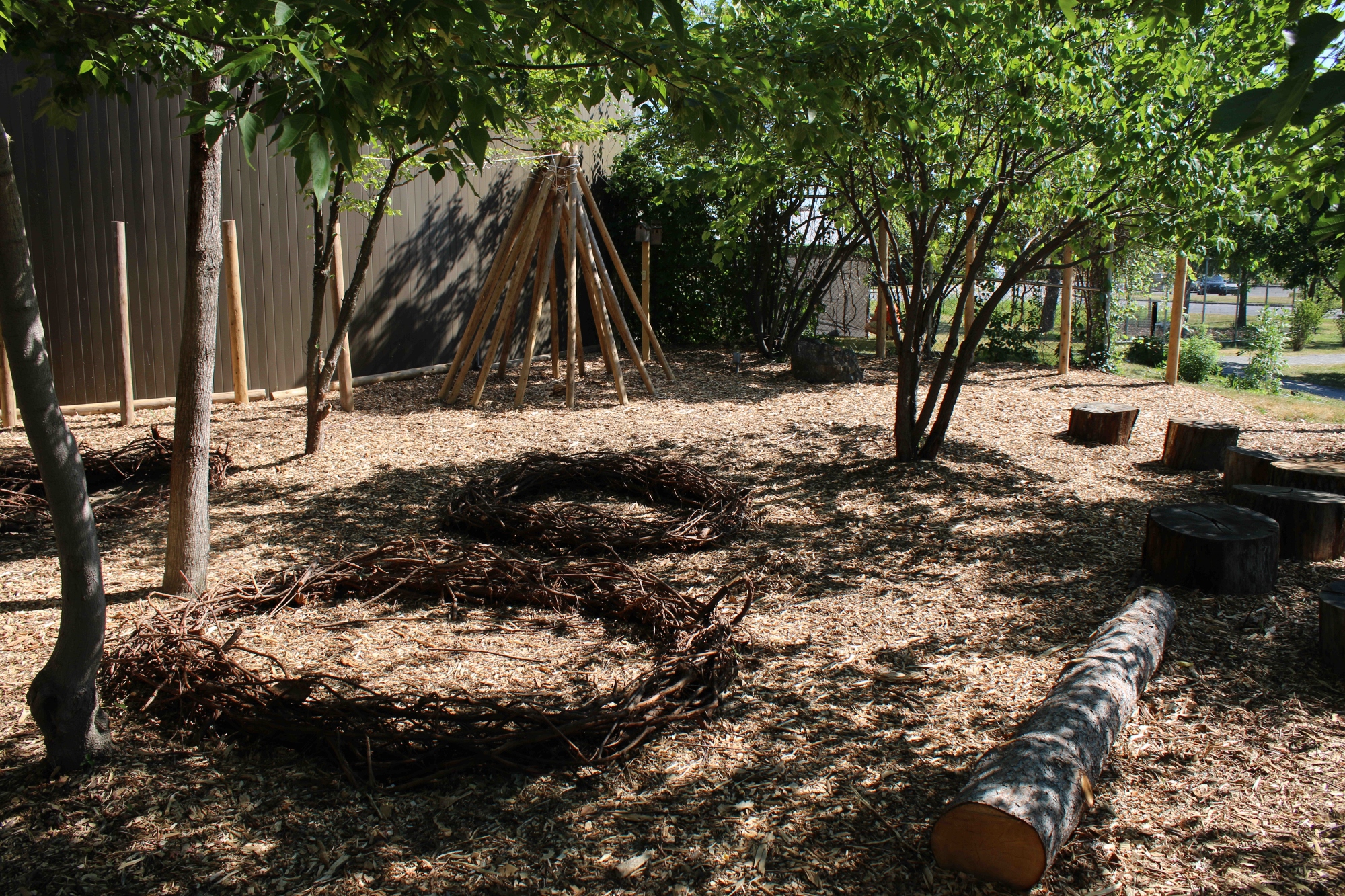
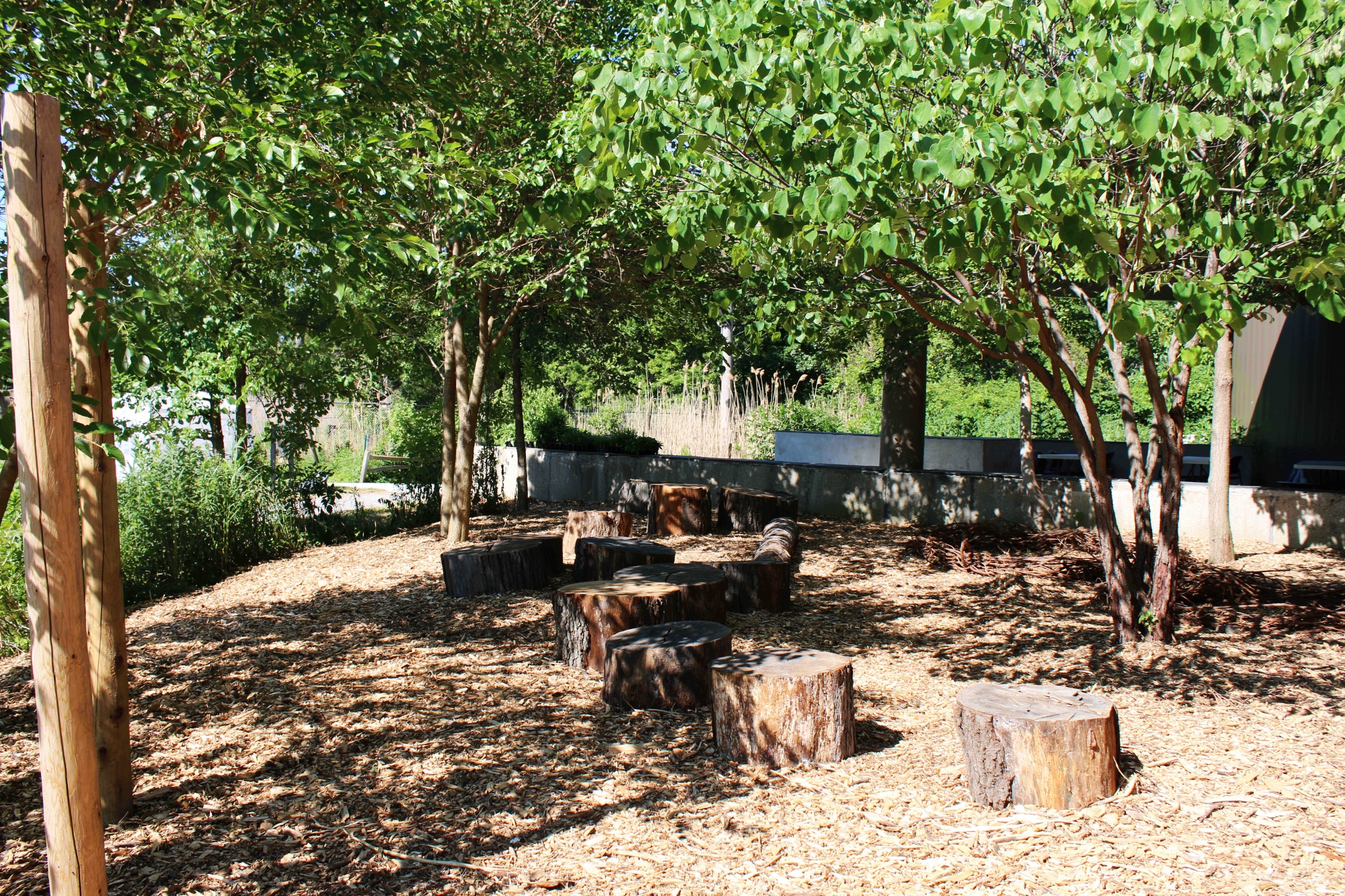
The Belle Isle Nature Zoo’s backyard is undergoing a transformation from au naturel to a natural playground area. While we believe it’s beneficial for our native flora and fauna to have natural places to grow wild and free, we also believe the same is true for local children!

What began as an ordinary space with a lot of potential is becoming an extraordinary space with a lot of possibilities for families to stay and play. While the playground environment remains filled with natural materials, the area now provides an inviting opportunity for children to exercise their imaginations, develop a sense of exploration, and enjoy some physical activity outside. Physical, mental and social health benefits flourish as a result of time spent outdoors, and we are working on designing a space that will sustain and support our guests as well as our environment.

Loose items made from natural materials inspire creative play – a balance beam from a fallen log offers a challenge of skill and concentration of gross motor skills, and a trail of tree stumps is just right for hopping, skipping, or even to be rested upon by visitors of all ages. People-sized nests are constructed and stocked with nature’s toys: sand, pebbles, stones, and “tree cookies”, which are slices of tree branches just perfect for construction play. A wooden teepee stands tall, waiting for hide-and-seekers, pretend campouts and all the creative games our small guests with big imaginations may bring.

Sensory activities are also in the works: Natural looms will build fine motor skills with a chance to use plant material to weave designs. Bamboo chimes and natural drums will inspire our natural musicians to play to the rhythm of the seasons, and colorful textural elements will reflect the beautiful palette of the natural world.

As the occasional chipmunk scampers through the playground and the birds call out their daily activities, they are at home in the natural environment (we’ve left plenty of natural “wild” spaces for our non-human animal friends around here!). Our goal with this playground is to create an opportunity for children to cultivate a sense of comfort and connection in outdoor experiences. Playing outside in nature – with nature – can help children gain respect for their environment and better understand their own place in it. And while the natural play supports the development and strength of our children, the sense of ownership they develop stands to strengthen the future stewardship of our natural world, which is vital to the health and sustainability of our planet.

We invite you to visit the Belle Isle Nature Zoo to check out our natural playground work-in-progress, hop on some logs, feel the textures and hear the sounds of nature. Tell us what you think!

– Amy Greene is a curator of education for the Detroit Zoological Society and oversees the Belle Isle Nature Zoo.

Education: Teaching in the Amazon

The Amazon rainforest is an incredible place, the subject of countless novels and stories. Discovered, explored and exploited for generations, millions of people call this biodiverse and globally important region home. The area is often referred to as the “lungs of the earth” as the plethora of plant life grabs carbon dioxide out of the atmosphere and replaces it with life-essential oxygen. In partnership with a Peruvian non-profit organization, CONAPAC, the Detroit Zoological Society (DZS) is preserving the rainforest, one child at a time.

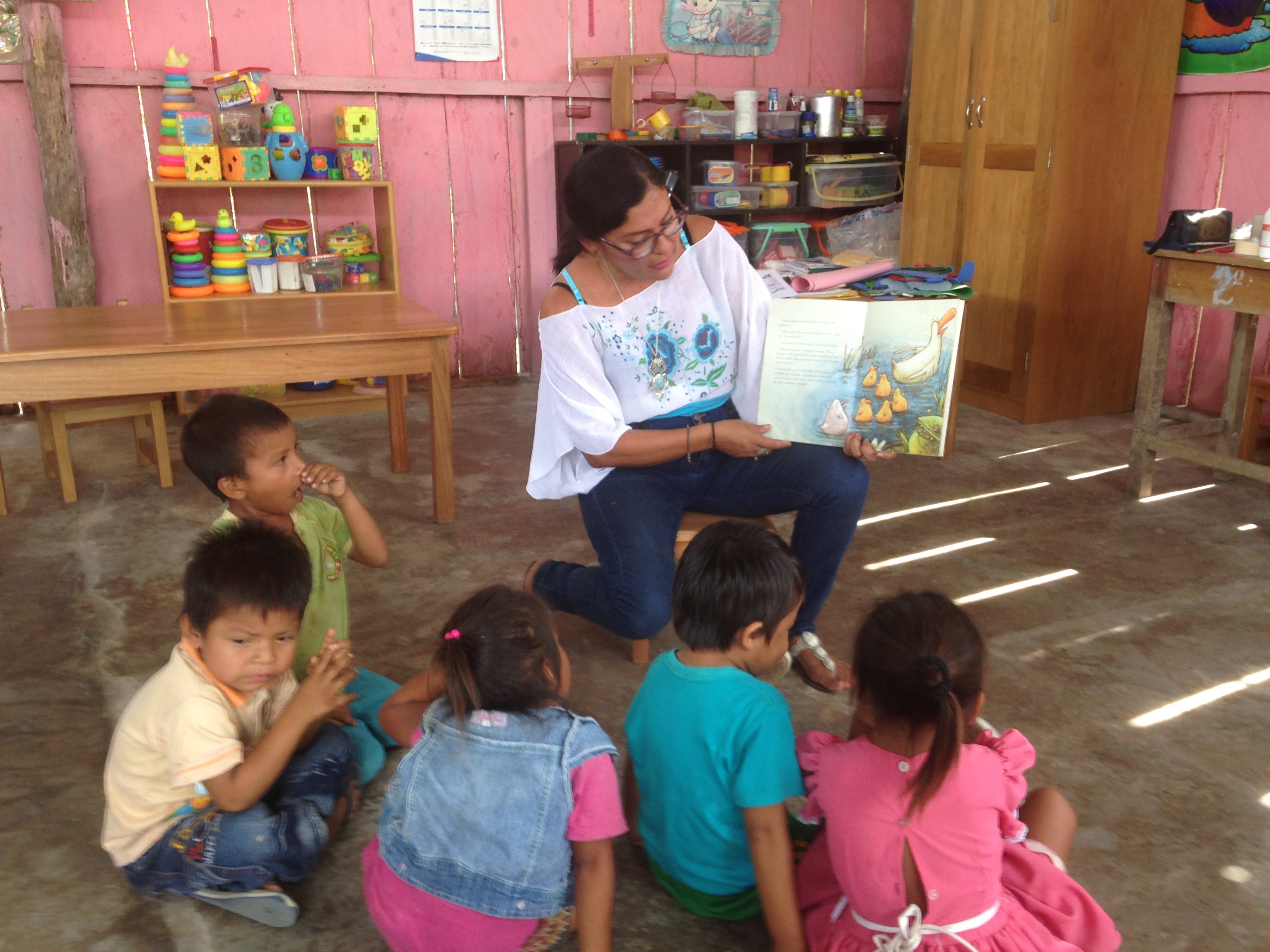
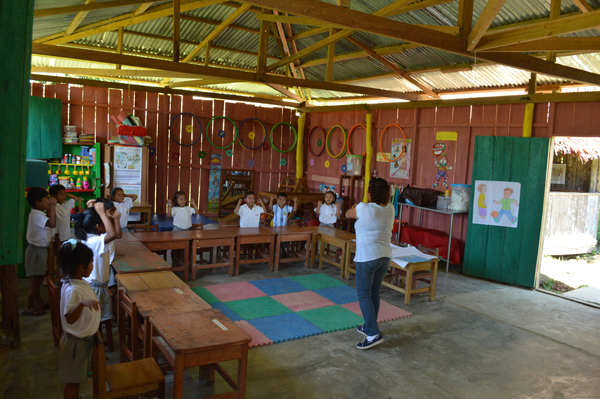
The DZS has partnered with CONAPAC since 1999, supporting children and teachers in rural areas of the rainforest. Each spring, more than 3,000 students and teachers receive a year’s worth of basic school supplies, purchased with money donated by individuals from all over the world. To complement the supplies, all teachers are required to attend a professional development workshop to enhance their teaching skills and increase student literacy.

This year, the teacher workshops were held in the city of Indiana, in Loreto, Peru, during the last week of June. I attended the workshops to observe first-hand what the investment of time, energy and resources was producing. I was incredibly impressed. This year there were two sets of workshops; one for teachers working in communities on the Amazon, the other for teachers who are working in the communities off the Napo River and its tributaries. The non-profit organization, El Conocimiento Se Comparte (which roughly translates to ‘the sharing of knowledge’), facilitated the content of the workshops on mathematics, reading comprehension and linguistics.

El Conocimiento Se Comparte is a U.S. entity, composed of four siblings who were born and raised in Peru. All four moved to the U.S. as adults to pursue their individual careers. Their goal is to share their talent and passion for teaching with a broad audience, including their home country of Peru. The CONAPAC team coordinated the location and logistical aspects of the workshop, and the El Conocimiento Se Comparte group brought their passion and talent.

For the most part, I was a participant of the workshop proceedings. I sat through each session, gleaning as much information as I could, completely immersed in the native language and enjoying every moment of it. I watched as teachers engaged with one another and with the presenters, asking for more explanation when necessary, inquiring about specific student needs and adaptations, and taking copious notes every step of the way.

Over the course of the next month or two, the board of education in the region will visit the teachers in their schools to observe if they have implemented the new teaching strategies. If they have, they will be eligible for a certificate, which could earn them a raise or a future promotion. When the CONAPAC and the DZS team conducts end-of-year evaluations in November, we’ll also be looking for signs that teachers have implemented the strategies and report back to our donors and the team.

The conservation work in the Amazon continues to be incredibly rewarding, yet also challenging. By providing the opportunity for an education based in conservation, we are empowering the next generation of children who call the rainforest home to protect the ecologically vital ecosystem.

For more information on the Amazon Rainforest Adopt-A-School program, including how to participate in annual deliveries or to support a school financially, visit http://detroitzoo.org/support/give/ or email clannoyehall@dzs.org.

– Claire Lannoye-Hall is a curator of education for the Detroit Zoological Society.

Belle Isle Nature Zoo – Little Free Library

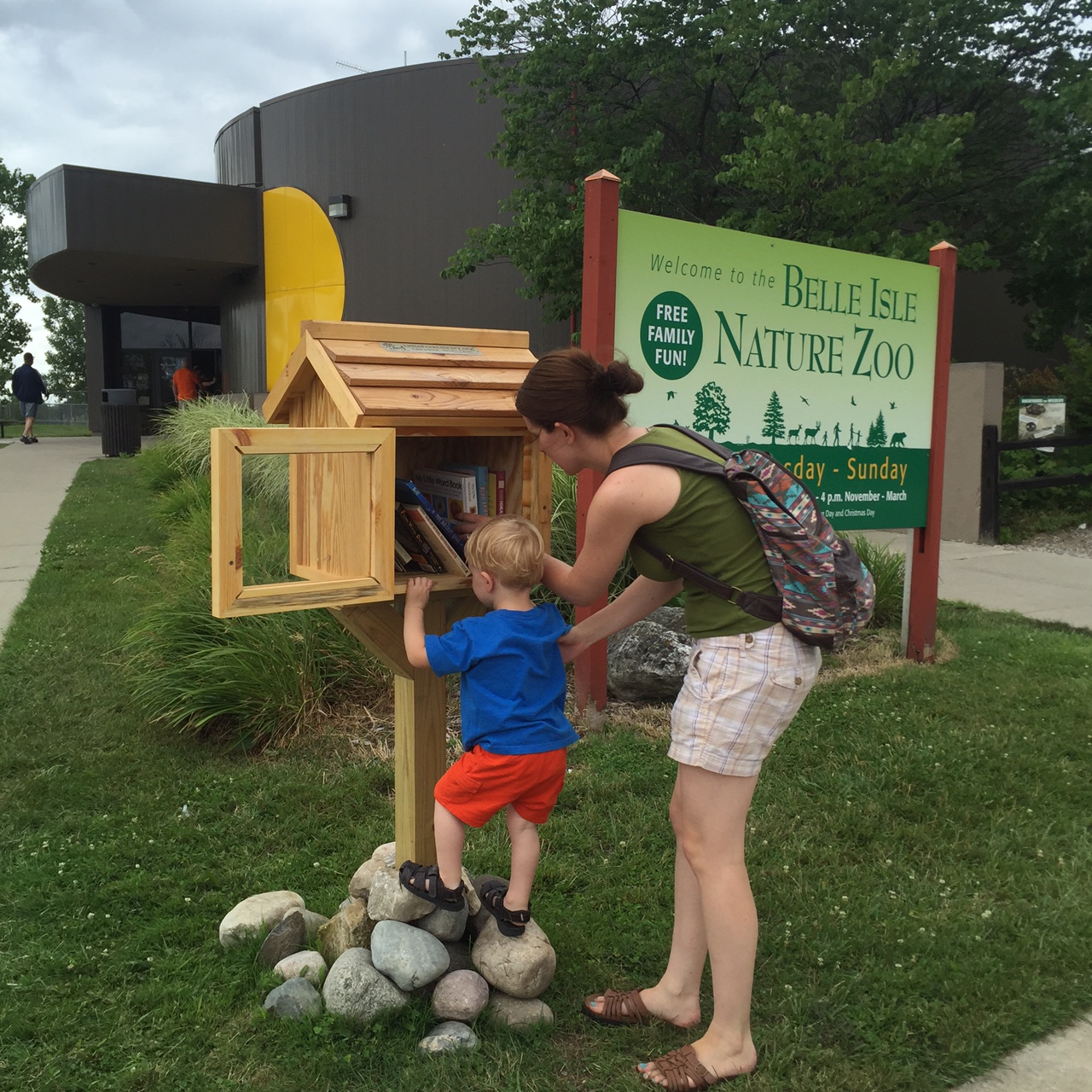
Little Free Libraries are a global phenomenon. These small, front‐yard book exchanges number nearly 40,000 in all 50 states and around the world in 70 countries — from Iceland to Tasmania to Pakistan, and now, the Belle Isle Nature Zoo! We’ve joined the movement to share books, support literacy, bring people together and create communities of readers.

What is a Little Free Library? Little Free Libraries are hand-crafted structures filled with constantly changing collections of books donated and shared by people of all ages and backgrounds. Each year, nearly 10 million books are shared in Little Free Libraries.

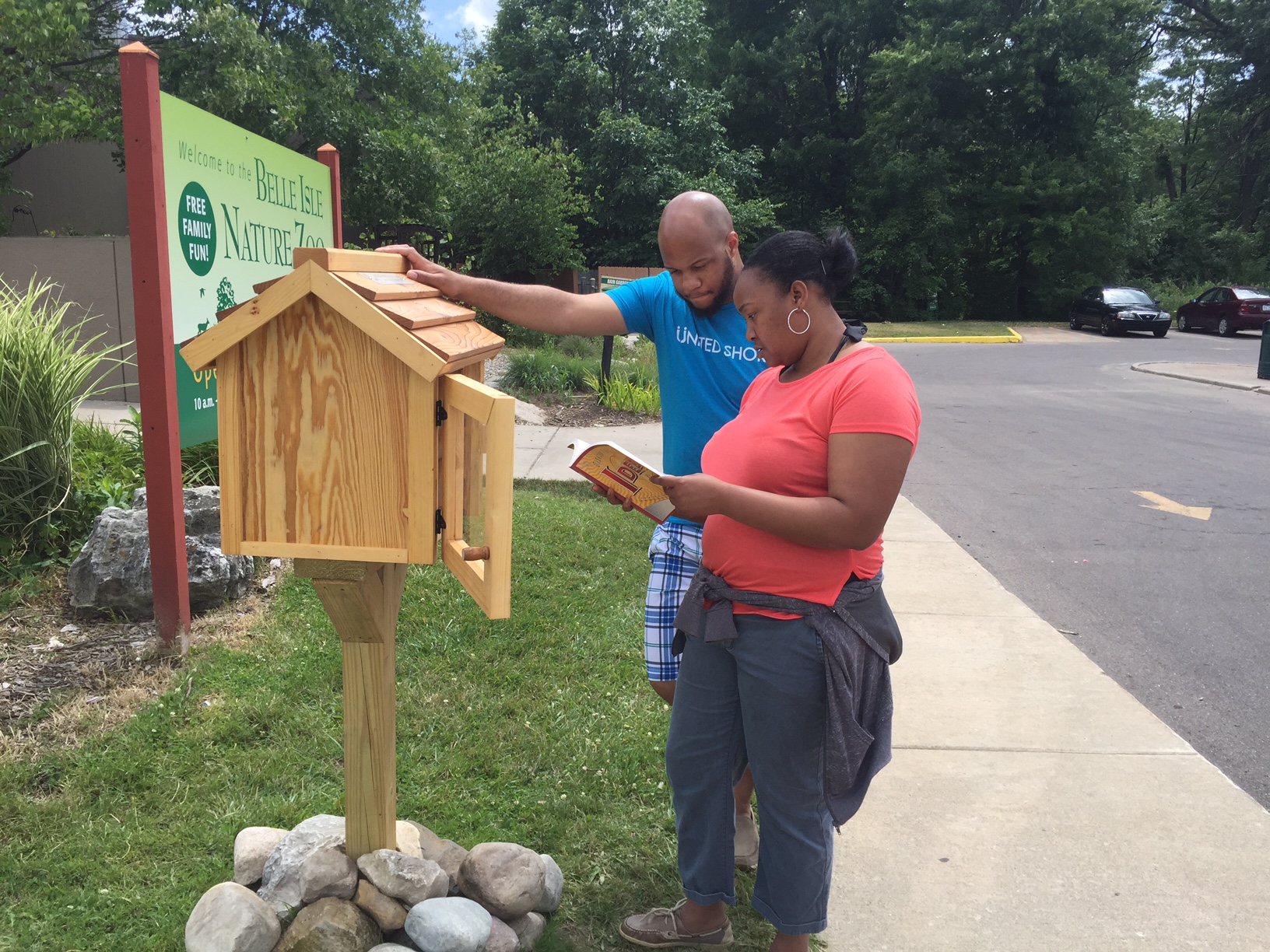
Just a few weeks ago, the Belle Isle Nature Zoo chartered and then planted a Little Free Library and seeded it with books. We’ve already observed the community and literacy-building movement blossom into a fun and shared experience for our visitors. More than 100 books have already gone home with our guests from Metro Detroit and other neighborhoods around Michigan, as well as some out-of-state visitors. Additional books for children and adults have been lovingly placed upon the shelf, shared by friendly donors, and the collection is ever-changing.

We’ve been added to the Detroit Little Libraries map as well, supporting the 313 Little Libraries action plan toward making Detroit the Little Free Library capital of the world. The 313 Little Libraries action plan has a priority of planting libraries in areas with low access to books, with a special focus on places where children congregate, supported by research that shows access to books is a powerful indicator of success in school.

Not only might our guests find a great book to take home and read (and then return or share with friends) the Little Free Library provides an opportunity to give back. It allows people who want to volunteer in some way a chance to donate books and know that they are contributing to the literacy and leisure of their community.

One of the best parts about Little Free Libraries is that they don’t require library cards or late fees, don’t insist that patrons whisper or stay quiet, and don’t mind if you do not return a book.

At the Belle Isle Nature Zoo, we are known for being stewards of nature, providing experiences that build awareness toward our local ecological health and sustainability. We are pleased to also be stewards of our neighborhood literacy and building community, offering opportunities to share good things to read with one another. It’s truly everyone’s library, and the more people who participate, the better!

– Amy Greene is a curator of education for the Detroit Zoological Society and oversees the Belle Isle Nature Zoo.

Belle Isle Nature Zoo: Premier Pollinators in Action

The Belle Isle Nature Zoo is a facility operated by the Detroit Zoological Society that sits on a 5-acre site on Belle Isle surrounded by undisturbed forested wetlands. It provides year-round educational, recreational and environmental conservation opportunities for the community. The facility is free to the public, open daily in the summer, and there are a lot of wonderful opportunities to explore nature and wildlife at the Detroit Zoological Society’s campus on Belle Isle.

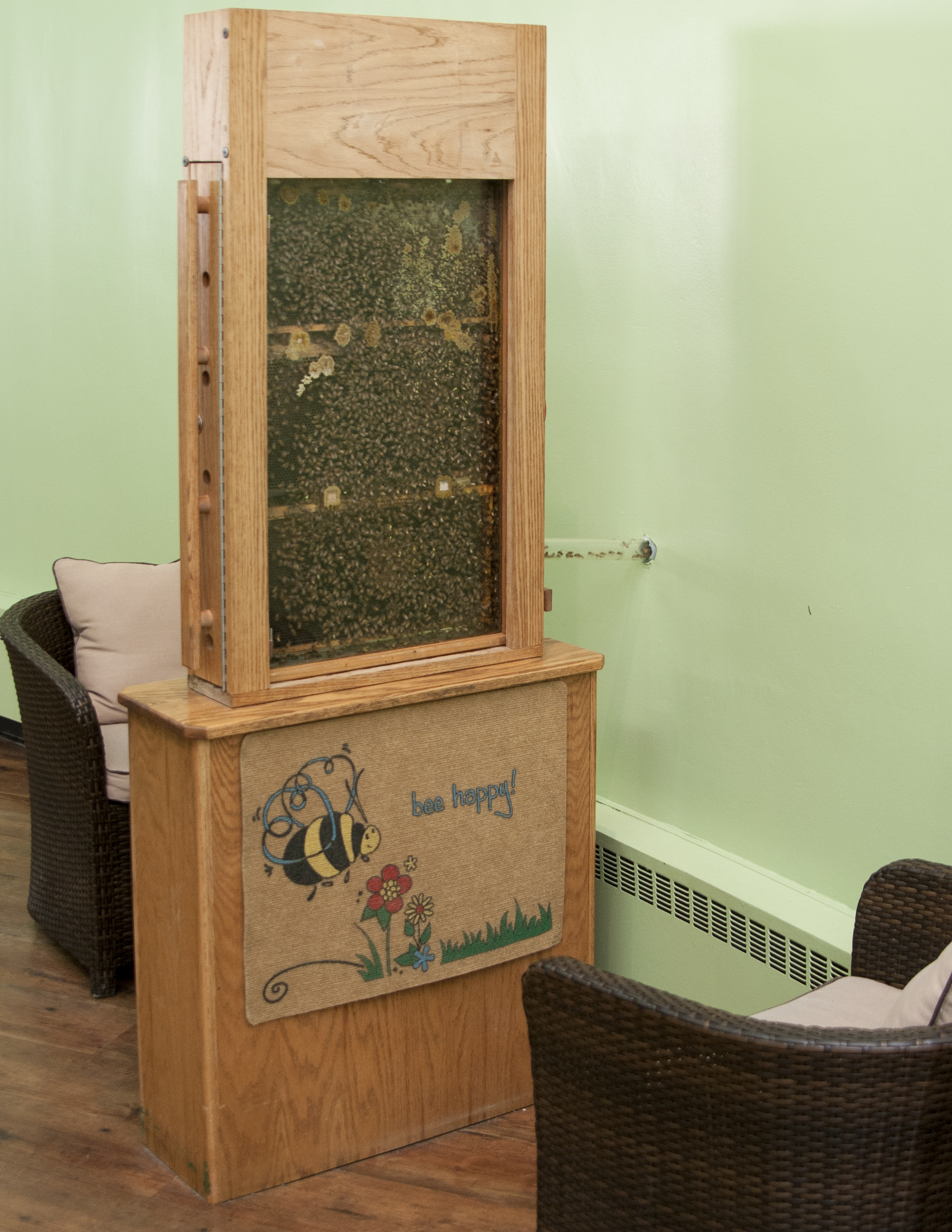
One of these fascinating features is the observation beehive, which provides a behind-the-scenes glimpse into the busy daily life of honeybees. Sealed tightly within a double-sided glass case, and with a tunnel providing the bees year-round access to the great outdoors, our hive invites guests to watch the bees do what they do best: work!

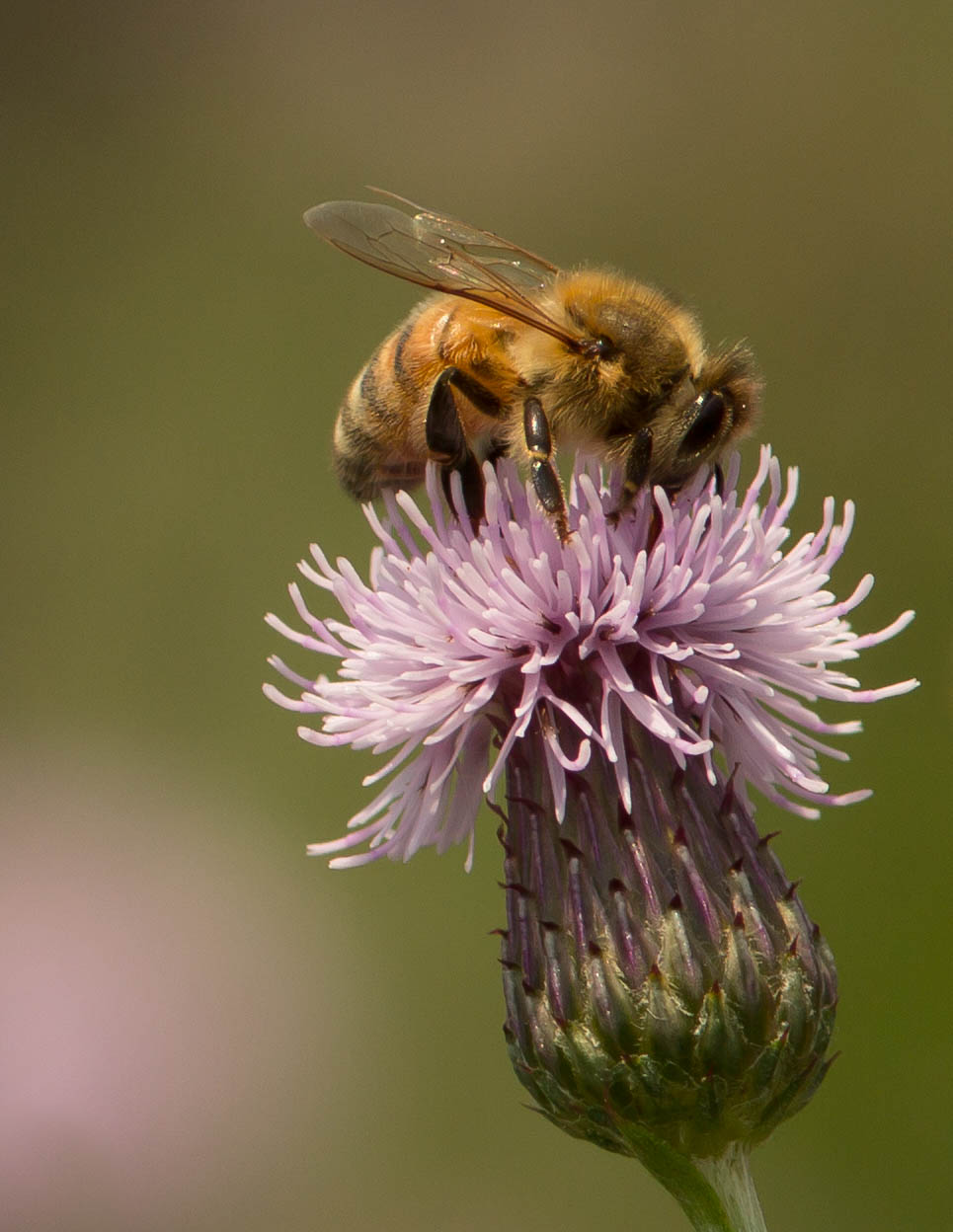
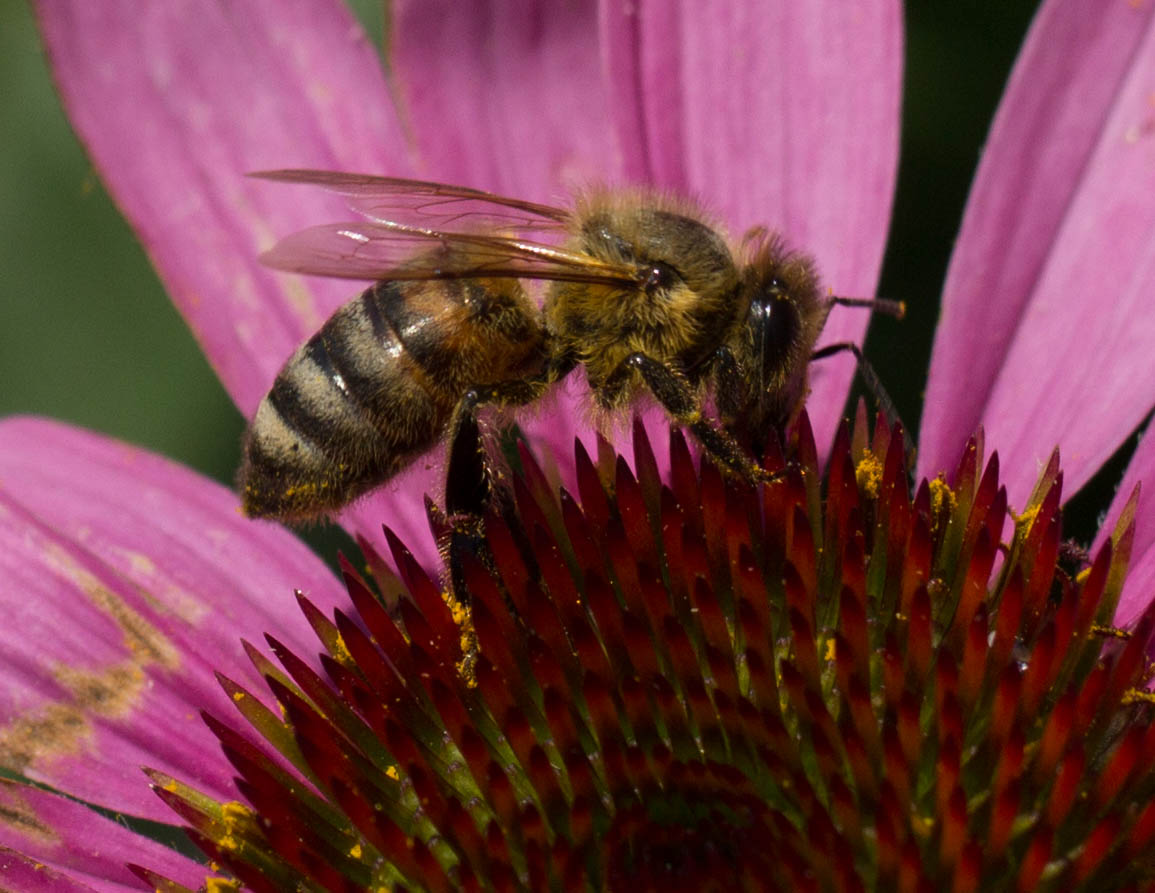
The work that the bees do is often more valuable than we realize. Bees are the most prolific pollinators in the natural world, due in part to their fuzzy bodies and faithfulness in buzzing to and from the same species of plant for an extended period. Pollination is the transfer of pollen from the male part of a plant or flower to the female part, which results in reproduction. In plants, one of the ways of producing offspring is by making seeds or fruit, and that surely benefits the rest of us! It has been stated that we can thank the bees for one out of every three bites of food we eat – and a lot of the good stuff, too, like fruits, vegetables, and even almonds. The pollination of bees also improves the production of the cotton plant, so not only do bees feed us, they clothe us, too!

We recently celebrated National Pollinator Week with our volunteer beekeeper, Steve Burt. He has been taking care of bees since 1974 and brings his passion for pollinators to Belle Isle. Steve maintains the health and wellness of our indoor observation beehive as well as our two outdoor beehives. With a little help from our productive honeybees, Steve bottled more than 40 pounds of delicious Belle Isle Nature Zoo honey last year!

The celebration of National Pollinator Week isn’t only for our gratitude for the fruits (and vegetables!) of the honeybees’ labor. It also helps us raise awareness to the some of the very serious challenges that honeybees are facing these days. Mites, viruses, diseases and especially certain pesticides are all contributing stressors to severe colony decline and death, often referred to as colony collapse disorder. A recent survey by the U.S. Department of Agriculture determined that beekeepers across the country lost more than 40 percent of their honeybee colonies between April 2014 and April 2015.

What can we do to help? We can plant nectar and pollen-bearing plants such as milkweed, goldenrod and aster, herbs including mint, chives, and oregano or fruits and vegetables like strawberries, cucumbers, broccoli and squash. We can encourage local governments and other volunteer groups to plant more pollinator-friendly plants in local spaces such as the areas along roadsides or within public parks. And if you have a bee problem, instead of bringing out a can of bug spray, call a beekeeper organization for species identification and useful advice.

And while you’re here at the Belle Isle Nature Zoo, you can watch our premier pollinators in action. Look for the worker bees dancing to communicate to the other bees where to find a new source of food outside. See if you can find the queen bee (identified by her larger size and a small white dot) laying eggs and being well-taken care of by her colony. You might even find some of the brood, also known as the egg, larva and pupa, or spot some stored honey in our beeswax honeycombs – a great sign that our helpful honeybees will be here for time to come!

There’s a lot of buzz about the upcoming Bee Fest event on National Honeybee Day at the Belle Isle Nature Zoo. This free event will feature demonstrations on how to build and maintain a bee-friendly garden, beekeeper talks, art, music, crafts and a bee costume parade! Buzz on over to Bee Fest on Saturday, August 20 from 10 a.m. to 5 p.m.

– Amy Greene is a curator of education for the Detroit Zoological Society and oversees the Belle Isle Nature Zoo. For more information about this facility, visit www.belleislenaturezoo.org.