Notes from the Field: Passion for Peru

The fall trip to the Peruvian Amazon as part of the Detroit Zoological Society’s Adopt-A-School program has come to a close. Over the course of two weeks, our team of 21 staff members and volunteers were able to visit all 53 communities involved in the program. Even though each of these communities is facing challenges, they have shown their commitment to protecting the rainforest. The families clearly see the value of their children’s education.
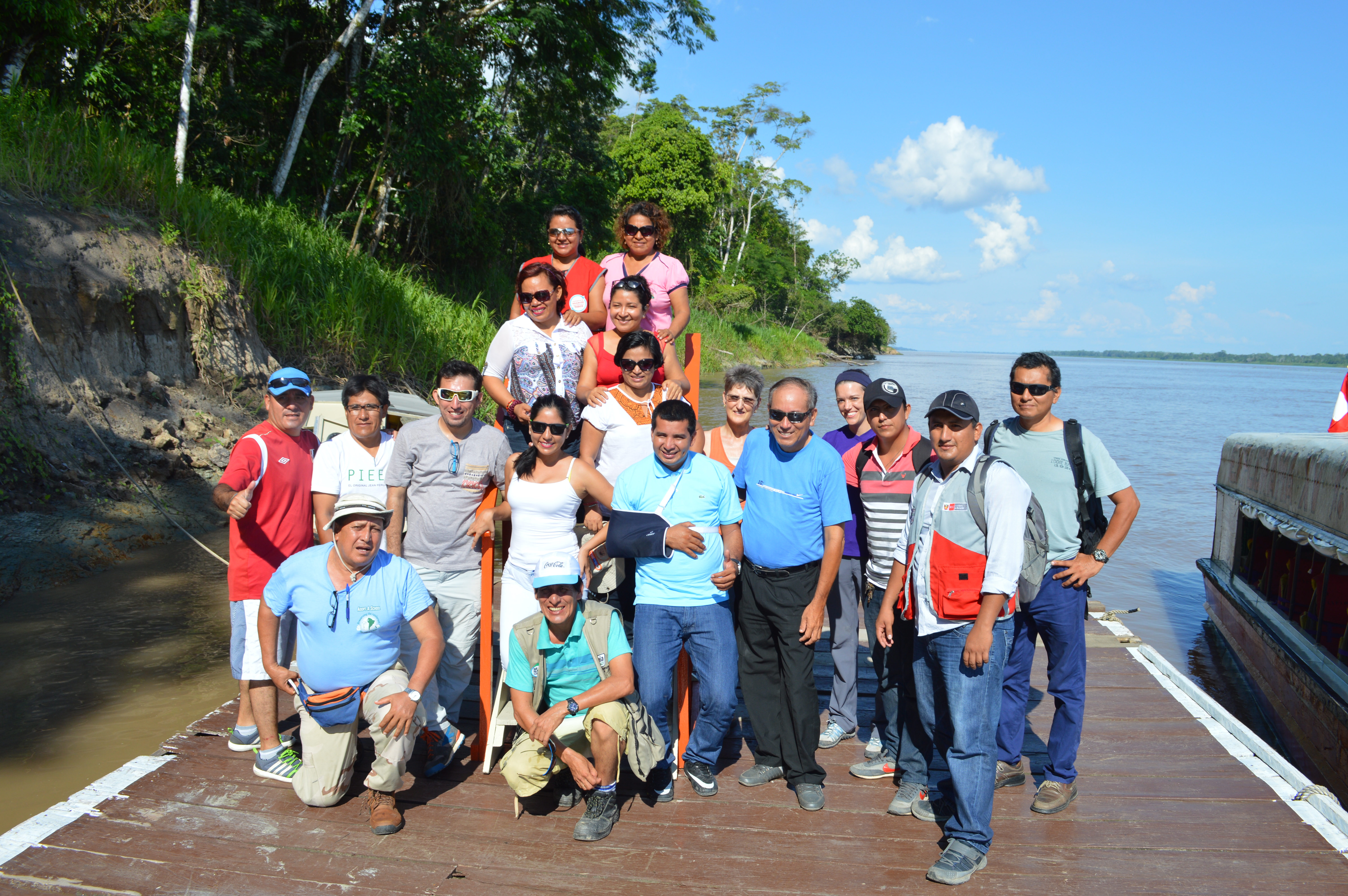
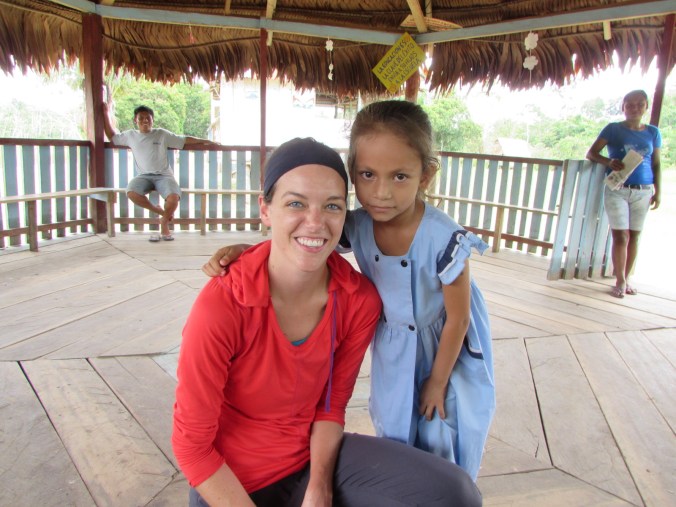
To accomplish the evaluation for all the Adopt-A-School communities in a two-week period, we rely on volunteers from the city of Iquitos. Volunteerism is not a common practice in Peruvian culture; however the concept is growing. The volunteers this year included people in the fields of education, environmental sustainability and agriculture. The team was enthusiastic and dedicated, which was evidenced by the smiles of the children and hugs from community leaders. Their passion shined in the schools where they sang songs, told jokes and played games to help ensure students were comfortable with them before the evaluations began.

Volunteers support this program throughout the year, and now that the evaluations are complete, we are beginning to focus on our plans for next year. The Adopt-A-School program would not be able to function without the support of our volunteers from around the world. Without them and their contributions, we wouldn’t be able to deliver the donated school supplies to the communities at the beginning of the Peruvian school year. Our program volunteers contribute financially through a mandatory trip donation as well as providing their physical support and presence while they are in Peru.

If you’d like experience these beautiful places and meet some incredible people, consider volunteering with the Adopt-A-School program and join us in our travels to the rainforest in the spring: http://conapac.org/2016AmazonRainforestiBookletShort.pdf. If traveling to the Amazon is not for you, and you would like to contribute in a different way, please find a link to donate here: http://detroitzoo.org/support/give/adopt-a-school/.
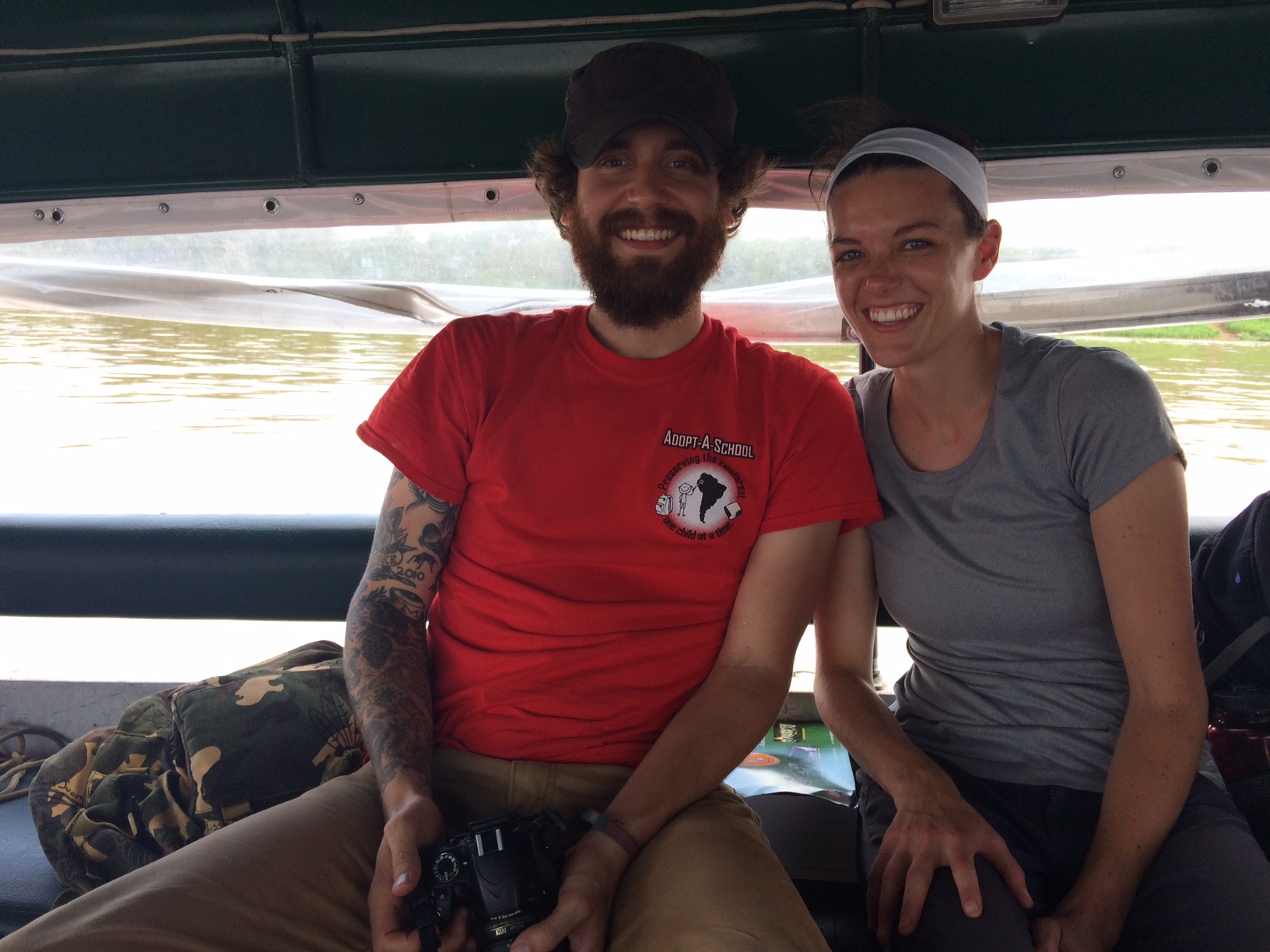
– Carla Van Kampen is a curator of education for the Detroit Zoological Society. The Adopt-A-School program provides donated educational materials and supplies for schools in rural Amazonia. The DZS has partnered with Conservacion de la Naturaleza Amazonica del Peru (CONAPAC) in this conservation and education program since 1999.
Notes from the Field: Visiting Schools Along the Napo River in Peru

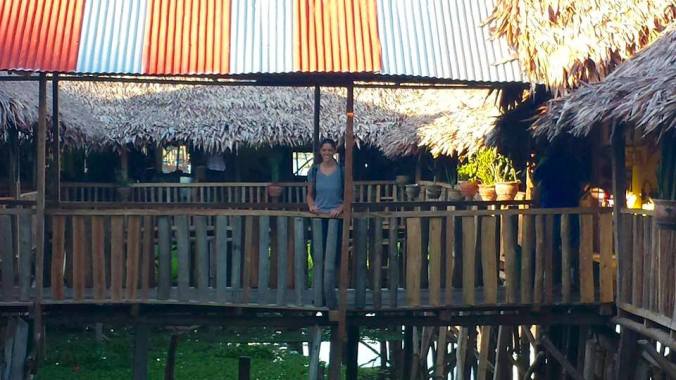
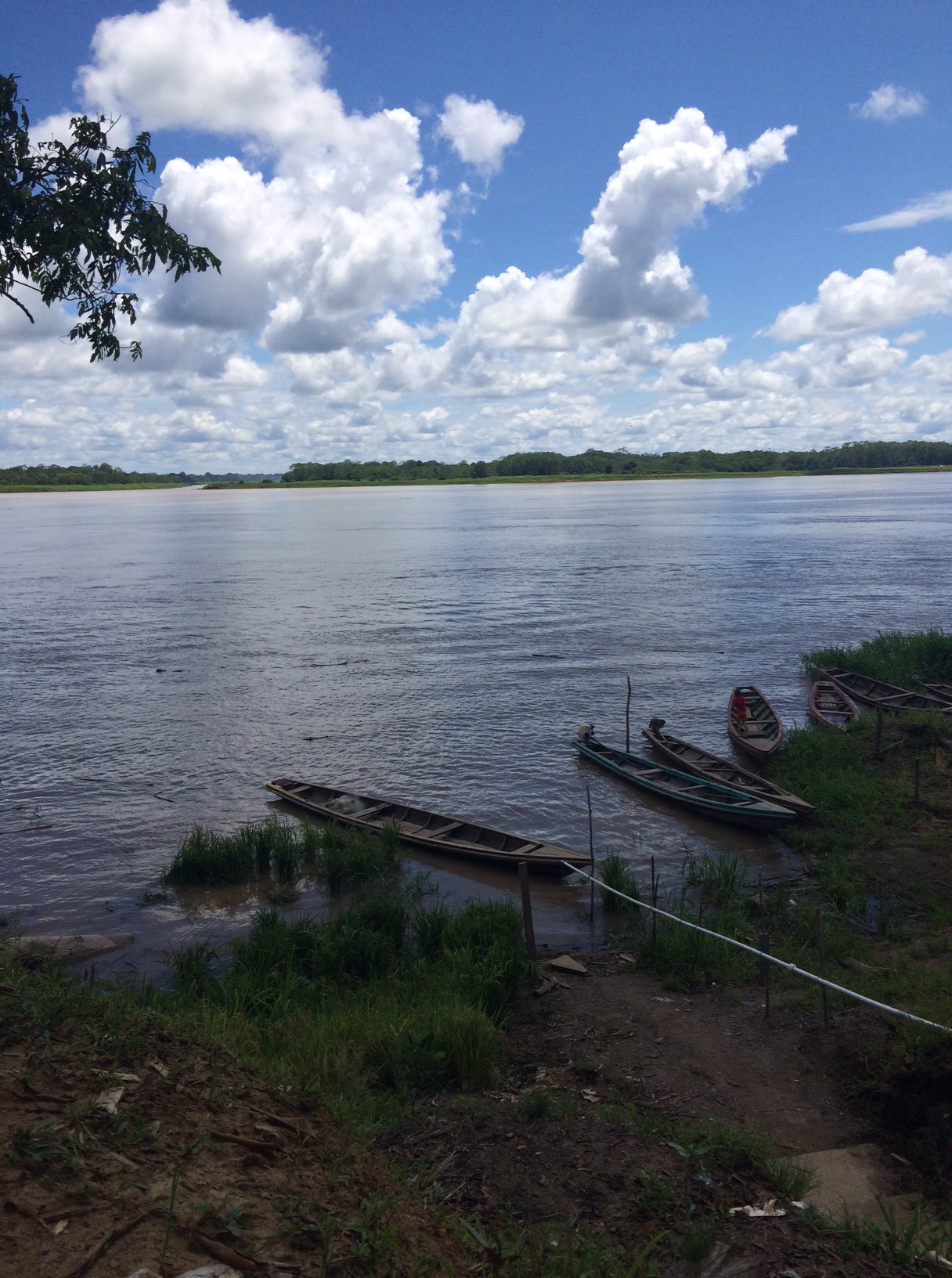
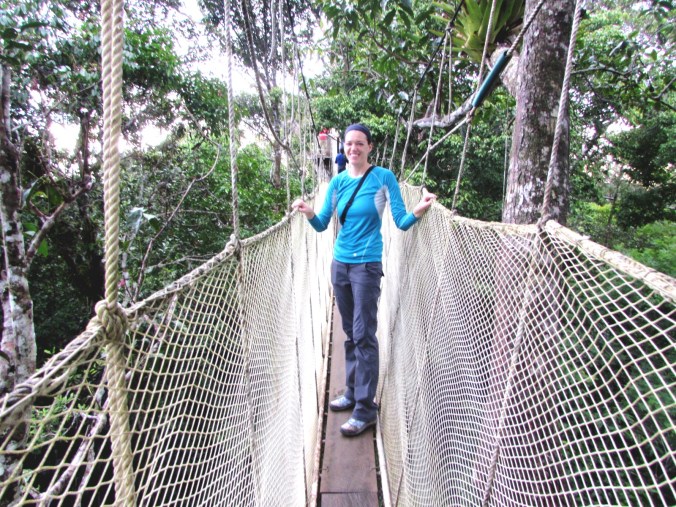
We’ve traded in the “mototaxis” for boats as we moved from Iquitos into the rainforest at Explorama’s Explornapo Lodge along the Napo River in Peru. It’s interesting – when you look straight down at the water, it is a milky shade of brown, but when looking further out, the reflection of the clouds and blue sky give the impression that the Amazon River is actually blue, which it is not. The scenery is green and lush, as we expect, but now that the water level is lower, we can see how aggressive it is when the river rises. We know how fierce yet resilient nature can be. The mud is sculpted like artwork in places high above the current water line. In many places, green plants have taken over the steep mud cliffs, growing where water stands for months of the year. Birds are flying around checking out the water below, and there is a sense of tranquility from the wind and noise from the boat as we travel from place to place.

carla blog entry 2

All of this boat travel means that we’ve completed the first week of evaluations, having visited 29 schools as part of the Detroit Zoological Society’s Adopt-A-School program. We can’t all visit each of these communities in this time frame, so we spread out and meet up every night for a recap of what is happening in each community. Common issues that come up revolve mostly around water. Due to flooding, some schools weren’t able to hold classes for up to four months of this school year. Some don’t have enough time to grow crops between the flooding, and almost all communities are having trouble with proper trash disposal. Being here in the rainforest and immersed in this environment leads me to question what is the best solution for this situation. There aren’t garbage boats that come through these communities to pick up trash, so what are they expected to do with it? This is one of the reasons why this program is so important – we focus on education, including education about sustainability and preservation of the environment.

I’ve enjoyed visiting many communities this week, but Canal Pinto was one of the most impactful experiences for me. It was obvious the two teachers in the community had everything under control. You could tell by looking at the students, the classrooms, and their interactions with students that this community was in good hands. As I looked around the beautiful kindergarten classroom, I noticed something that I hadn’t seen elsewhere. Recycled plastic bottles, cut and painted, neatly labeled with student names. Inside each cup was a toothbrush. Hanging on the shelf next to each toothbrush was a washcloth. The students are learning to take care of themselves and to reuse items they have around them. This shows these children – at a very early age – the importance of helping to conserve items and take care of themselves, hopefully habits that will help them and the environment for years to come.

carla blog entry 2 - 2

We have a few days left of reviews before we head home. We will be soaking in the heat and humidity while we can before coming back to the much cooler north. Adios for now!

– Carla Van Kampen is a curator of education for the Detroit Zoological Society. The Adopt-A-School program provides donated educational materials and supplies for schools in rural Amazonia. The DZS has partnered with Conservacion de la Naturaleza Amazonica del Peru (CONAPAC) in this conservation and education program since 1999. For more information, or to donate to the program, visit: http://detroitzoo.org/support/give/adopt-a-school/
Education: Adopt-A-School in Peru

Most days don’t start with a walk through a construction site and a “mototaxi” ride to get into the office, but today it did. It also included watching an iguana outside of the office window as it rested against the tree branch soaking in the Amazonian heat.

Currently, I am in Iquitos, Peru, preparing for evaluations in 53 rural communities along the Amazon and Napo Rivers. This is part of our Adopt-A-School program that the Detroit Zoological Society (DZS) supports in conjunction with an organization called Conservacion de la Naturaleza Amazonica del Peru, A.C. (CONAPAC), based out of Iquitos.

carla

We work together to bring conservation awareness to these communities as well as provide opportunities for education. Each spring, the DZS leads groups of volunteers down to Peru to deliver school supplies to these communities. In the fall, as the schools wrap up their school year, we send DZS staff to attend these evaluations to check in with communities on how well they are using their supplies, how well the students are learning and how well they are maintaining the environment around their communities. That’s what DZS Education Specialist Adam Dewey and I are here to accomplish.

Although I’ve attended the school deliveries in the past, this is my first opportunity to be here for the evaluation component. I’m looking forward to seeing what the communities look like without the festivities that the school supply deliveries bring. We will see students in school, see how they learn and all that they’ve been able to accomplish this past year. We will talk with leaders within the program to see how well they’ve maintained and supported the service projects that have been completed within their communities. We will also see the new water filtration systems in use in each of the schools. Clean drinking water has been an additional project for CONAPAC, and one that has helped to keep children in these communities healthy, so I am especially looking forward to seeing this in action.

Soon, we will be heading down the river to rustic lodges in beautifully remote areas, where hot water isn’t an option, and electricity is only found in the dining hall. I am looking forward to being immersed in the rainforest for the next two weeks, spending time in these communities and visiting with the amazing people that live here. Check back soon to hear more about the program and our upcoming adventures in the communities!

– Carla Van Kampen is a curator of education for the Detroit Zoological Society.

Education: Compassion Footprint

“Every product, every action and every lifestyle decision can be a choice to harm less.” – Zoe Weil

Every day we make choices. We decide what to wear, what to eat and which products to use. Each of these actions has an impact with implications we may not immediately think about.

Much like we can minimize our ecological footprint and reduce our impact on the planet by making greener choices, we can also work to increase our compassion footprint by making kinder choices.

We can consider the impact of our decisions by exploring two questions:

  • What are the effects of this item or activity, both positive and negative, on animals and the environment?
  • Are there any alternatives that may be less harmful or even provide some benefit?

For example, upon examination, we discover that conventional coffee is grown in areas of the rainforest that have been “clear cut”, which means that the trees have all been removed, which negatively impacts ecosystems and inhabitants. Alternatively, shade-grown coffee is grown under the canopy layer of trees, which not only preserves native trees, this method also conserves habitat for many animals.

When we take a moment to examine the products we’re purchasing, it enables us to make the best choice possible for people, animals and the planet. This enables us to make knowledgeable decisions on how to walk softly and treat the Earth’s creatures gently.

Whether we choose to purchase cruelty-free products, adopt a companion animal or attend an animal-free circus, there are lots of ways to increase our compassion footprint. How have you expanded your compassion footprint by being kind to animals? Share your stories with us!

– Lisa Forzley is the humane education manager for the Detroit Zoological Society and oversees the Berman Academy for Humane Education.

Education: Humane Horticulture with Children’s Village

For more than six years, the Detroit Zoological Society’s Berman Academy for Humane Education has led a gardening program with Oakland County Children’s Village that helps to instill reverence and respect for wildlife and wild places with the 12-17-year-old boys residing there. Children’s Village provides a safe, structured environment for youth that includes secure detention, residential treatment and shelter care services. While there are approximately 16 to 20 teens that participate in the garden program at any given time, the resident population changes regularly, so we’ve had the opportunity to work with hundreds of boys through the course of this program.

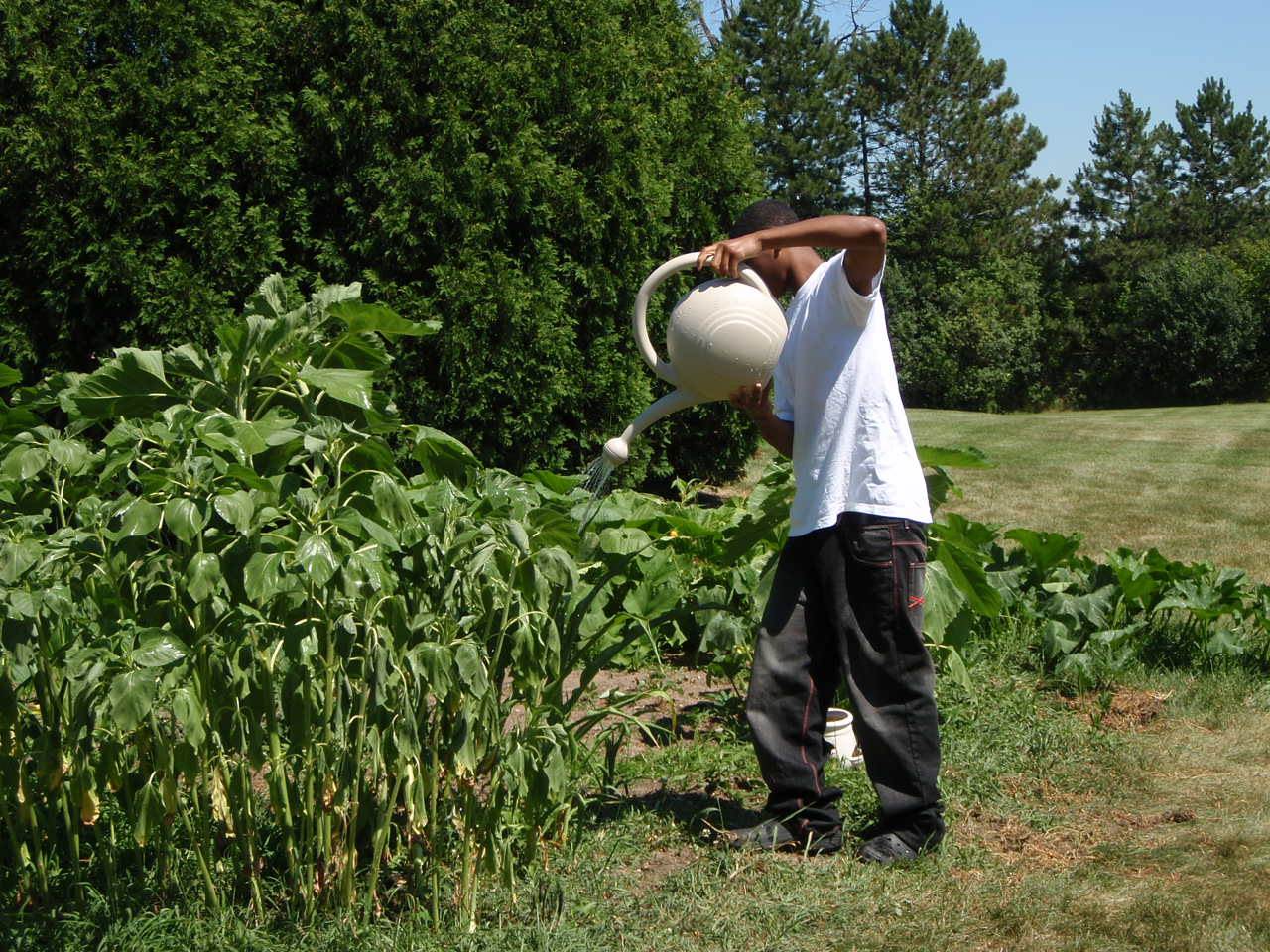
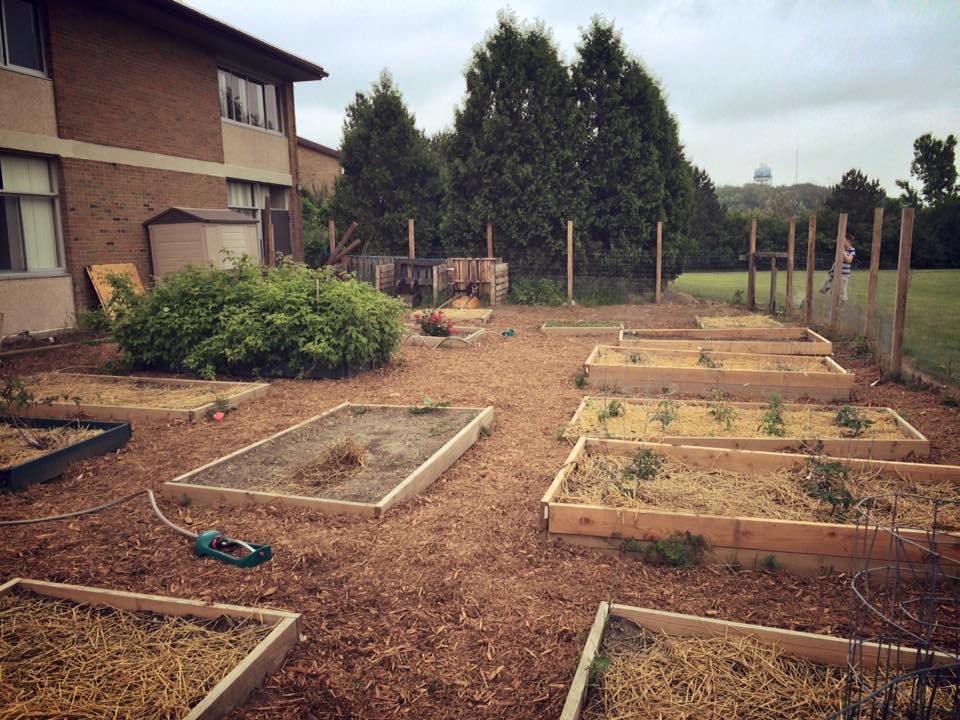
The boys implement the garden from start to finish, and I work right alongside them with Claire Lannoye-Hall, a DZS curator of education. We incorporate a number of projects throughout the year, in addition to cultivating a fruitful harvest. A lot of emphasis is placed on how we can humanely interact with the wildlife that we find in and around the garden, which includes implementing measures that humanely deter wildlife from eating our cherished produce. For example, we’ve built a fence, made wind chimes out of discarded DVDs, and used cayenne pepper flakes to discourage the resident groundhog from nibbling on our plants. The young gardeners learn to avoid some conventional deterrents that are not humane, like predator urines for example, as the urine is often harvested from animals that reside on fur farms in deplorable conditions.

While this program mainly takes place in the summer months, we still visit the boys on a regular basis throughout the rest of the year. It’s important for us to have a consistent presence – for the boys to know that they can depend on us showing up. One of our favorite winter projects is making fleece toys for dogs that reside in local shelters. After the boys finish, I deliver the toys and take pictures of the dogs having fun with their new playthings. The boys take great delight in seeing the pictures and knowing they’ve brought some joy to these pups. Another project we’ve done for the past few years is making Valentine’s Day cards for pediatric patients at Children’s Hospital of Michigan, using pressed flowers from our garden. It’s quite heartwarming to see how thoughtful the boys are when crafting their messages and designing the cards. Our projects are often centered around being kind to others, as there’s research that shows when you’re kind to someone else, it helps to foster empathy within.

One of our favorite projects is our photography project in which the boys take pictures of the garden and surrounding area. It’s amazing to see them take a picture of a bee resting on a sunflower that they’ve planted from seed or a tiny tree frog climbing on the side of a raised bed that they made with their own hands. There’s a lot of delight and wonder that comes from observing nature from behind the lens of a camera.

As you can imagine, our garden program is always one of the highlights of my week. I look forward to see how it continues to unfold in years to come.

Lisa Forzley is the humane education manager for the Detroit Zoological Society and oversees the Berman Academy for Humane Education.

Education: Summer Camp to Remember

Were there any summer camp experiences that changed your life? For one 8-year-old attendee of the Detroit Zoo’s Summer Safari Camp, the world is a lot bigger, his voice more strong.

The Detroit Zoological Society offers many education programs for children of all ages, and Asher, 8, had a particular interest in what is known as the Eco Camp. His mom, Amy, said that while Asher has always been empathetic towards animals, having the opportunity to learn more about the Zoo and the animals residing there was exciting to him.

David Gakure, Detroit Zoological Society education specialist

David Gakure, Detroit Zoological Society education specialist

One aspect of camp in particular stuck out the most for Asher: storytelling time. Education Specialist David Gakure, who was born and raised in the Republic of Kenya, encourages children to find their voice. He aims to create a place where children feel comfortable to speak up and share their stories. David uses a variety of methods to help children feel comfortable and bring out their voice. He encourages children to share stories about animals and nature by prompting them with questions. Every time the opportunity arose to tell a story, Asher always raised his hand. At the end of camp, David encouraged the children to go out and write down their stories. Asher took the idea and ran with it, writing a 12-page short story, titled “The Fox in the Stormy Night”, as well as a book of 14 animal poems, called “The Marching Lion”. He mailed copies of his work to the Detroit Zoo, much to the delight of staff. Asher’s mom, Amy, said he has written 10 more short stories since.

Amy was thrilled with Asher’s experience at the Zoo.

“Asher has always had a natural talent for writing, but his time at the Zoo really helped to bring the talent forward,” she said. “He had an unstructured space to share his stories; it encouraged him to share them in a way where he always felt comfortable. He wasn’t shut down.”

Finding your voice and sharing it with others is not always easy, especially for children. Asher didn’t realize how big his voice truly was until his experience at Summer Safari Camp.

Click here to learn more about the Zoo’s education programs.

Education: Making Thoughtful Pet Choices

Lisa Forzley is the humane education manager for the Detroit Zoological Society and oversees the Berman Academy for Humane Education.

The Detroit Zoological Society frequently Photo by Kurt Schwarzreceives calls from people who have purchased an exotic animal such as an iguana or a parrot and have discovered that they are unable or unwilling to provide the specialized – and often expensive – care the animal needs. In 2014, we received 84 phone calls or emails regarding reptiles alone! We hear comments such as, “I didn’t know that a parrot could live to be almost 100 years old” or “I had no idea that an iguana could grow to be more than 5 feet long.”

Unfortunately, the ever-growing exotic pet trade creates situations that significantly compromise the animals’ welfare and result in people turning to the Detroit Zoo for help. Although we wish we could provide sanctuary for all animals in need, we are unable to accept them in nearly all cases.

Making a good pet choice is important – both for you and for the animal you will potentially be bringing into your home. Here are a few questions to get you started before adopting an animal:

  • Am I able to meet the animal’s physical and psychological needs for his or her entire life?
  • Do I have the time and the money needed to properly take care of this animal?
  • Do local ordinances or laws prohibit owning this kind of animal?
  • Will my veterinarian be able to provide his or her medical care?
  • How much am I able to spend on veterinary costs?
  • What will I do if there is a problem?
  • Will this animal get along with animals that are already in my home?

Remember that dogs and cats have changed over several thousand years of living with humans and are the best nonhuman companions for us. Humane societies and rescue organizations are great resources to find a dog or cat for your family. If you’re ready to adopt, join us this weekend at Meet Your Best Friend at the Zoo, one of the nation’s largest off-site companion animal adoption events, where hundreds of dogs, cats, puppies and kittens will be available for immediate adoption to loving homes. You can also visit http://www.petfinder.com to find rescue organizations located nearby. They’ll be able to support you in finding the perfect companion animal for your family!

– Lisa Forzley

Education: Playing with Nature

Claire Lannoye-Hall is a curator of education for the Detroit Zoological Society.

In a day and age when kids and families are spending more screen time than outdoor time, the Detroit Zoological Society is working on a project to create an outdoor space your kids won’t be able to pass up!

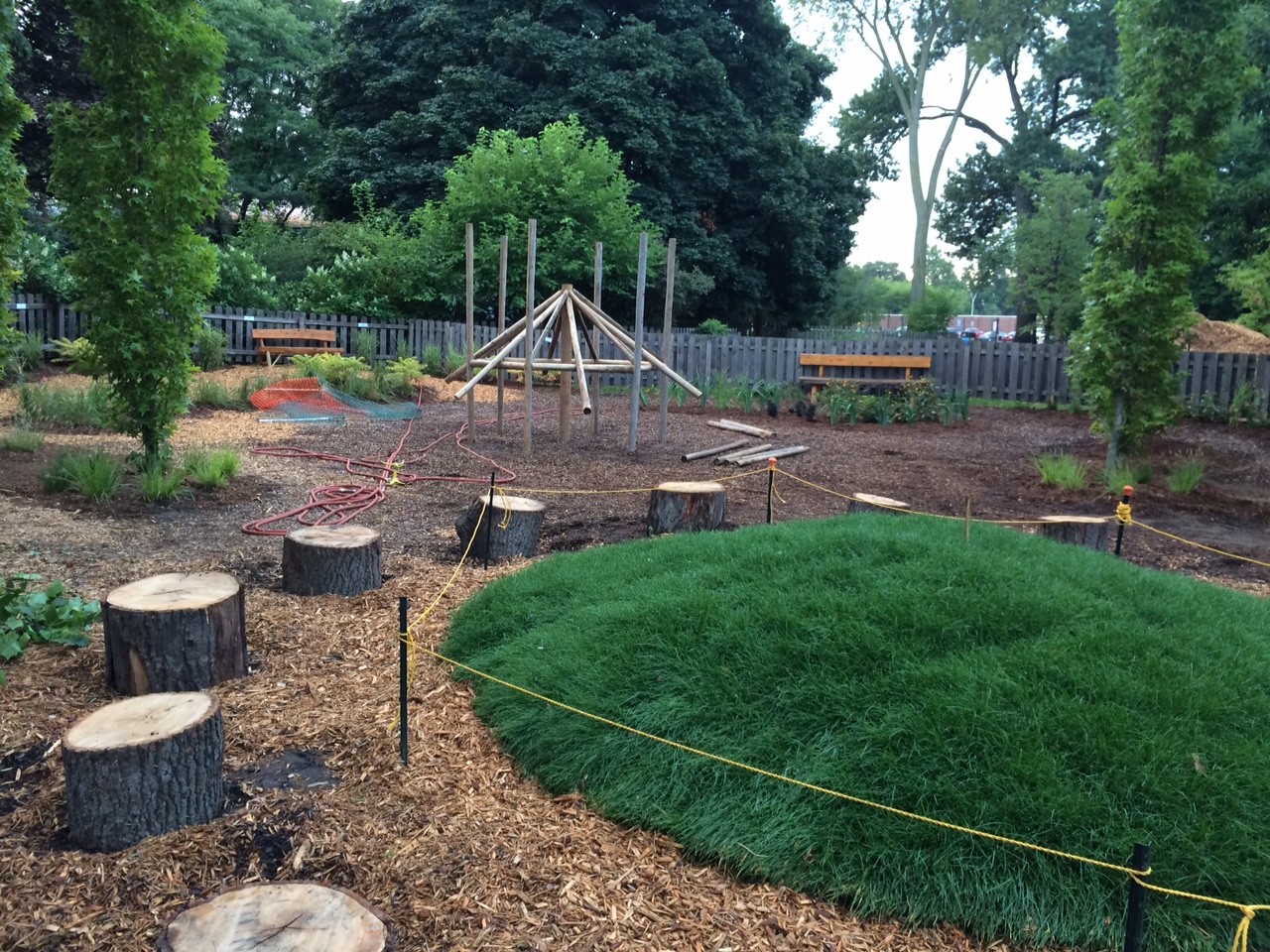
The previous play areas at the Detroit Zoo were both retired over the past two years and a new play structure was installed in the Main Picnic Grove. Our landscape team has done a tremendous job of enhancing and adding to the play area by landscaping with native plants and installing log steppers, toad stools and climbing rocks for kids to play on.Photo by Stephen Bernard

The adventure will continue as we include more natural play opportunities in the area directly east of the play structure. Kids will be able to climb through a spider web, relax in a giant bird nest, crawl through animal burrows and engage in imaginative play throughout the area. Native flowers and trees provide shady spots and smaller pockets for kids to have quiet areas to play in while parents can still easily keep an eye on all the activity from the comfort of benches.Photo by Ashley Boylan

We’re really excited about this new play space and we hope you’ll visit us early this fall to experience all it has to offer!

– Claire Lannoye-Hall

Education: Below the Surface of the Wetlands

Claire Lannoye-Hall is the curator of education for the Detroit Zoological Society.

Ever wonder what might be lurking below the water’s surface? Turns out, there’s much more in there than you might think!

The Cotton Family Wetlands has been providing guests with the opportunity to immerse themselves in a wetland habitat since 2012. The more than 200 feet of Trex decking walkways of the boardwalk (made from recycled plastic grocery bags and reclaimed hardwood) cross the 1.7-acre pond and wetland to bring us to the heart of this incredibly diverse habitat.

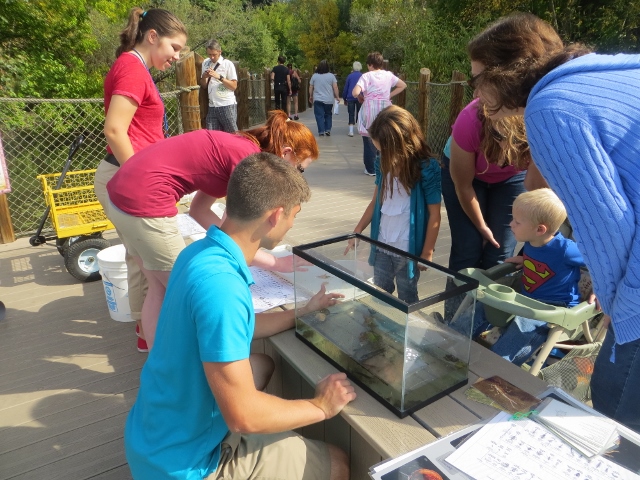
Native fish, frogs, turtles and birds are relatively easy to spot. However, some inhabitants require a closer look. The wetland is teeming with macroinvertebrates – organisms without backbones that live in water habitats. Our Volunteen Zoo Corps has been providing opportunities for guests to observe these incredible creatures through carefully collected water samples from the benthic zone of the wetland. The benthic zone is the lowest level of a body of water. Everything that is collected is returned directly to where it came from at the end of each shift.

Macroinvertebrates are present in pretty much all natural bodies of water. They are bioindicator species, meaning that some species are especially sensitive to changes in their habitat. We can count which species we find and know the general health of a body of water if the more sensitive species are present or absent. Our wetland happens to be in great shape, with a very diverse group of macroinvertebrates.

If you’re interested in learning more, there are several citizen science groups where you can join in on group studies. Friends of the Rouge is a local group that schedules benthic sampling a couple of times a year and recruits volunteers to help: http://therouge.org/fotrprograms/benthic-macroinvertebrate-sampling/.

Our Volunteens will be on the boardwalk during MemberFest and several weekends between now and early October if you would like to explore the Zoo wetland residents. For more information about how to join our Volunteen Zoo Corps Program, visit: http://www.detroitzoo.org/Volunteers/volunteering-detroit-zoo.

– Claire Lannoye Hall

Education: Protect the Pollinators

Claire Lannoye-Hall is a Curator of Education for the Detroit Zoological Society.

Summer vacation is upon us and we can’t wait for you to visit the Detroit Zoo. There are so many new things happening here – the wolves are exploring their new habitat and the dinosaurs are beckoning from the trail.

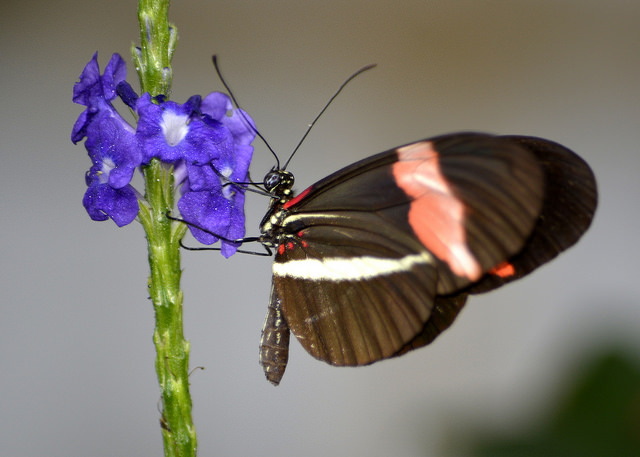
While the summer offers many great Butterfly - Roy Lewisopportunities to visit the Zoo, it also brings out bees, butterflies and other pollinators, which are very important to the environment. They help flowers bloom and fruits and vegetables grow. Without them, there wouldn’t be food for us or for the animals to eat. Fortunately, we can help them in a few simple ways.

Start by avoiding the use of pesticides and herbicides. While they may keep the weeds away and your grass a little bit greener, they are devastating to pollinator populations. Consider pulling weeds by hand or using an organic alternative such as mulch or hot water to eliminate weeds.

Honey BeeYou can also plant a pollinator garden. Native plants are easy to find, easy to take care of and are great for pollinators. For southeast Michigan, try lupine, bee balm, coneflower or cardinal flower. Bees and butterflies will likely find your garden first, but if you’re lucky, hummingbirds may stop by, too! For more suggestions on what to plant, visit: http://pollinator.org/guides.htm.

Monarch butterflies are of special concern due to habitat loss. Here at the Zoo, we have special gardens called “Monarch Waystations” that are certified by Monarch Watch, a nonprofit organization. The plants in these gardens provide food and shelter for monarchs throughout metamorphosis and as they travel to and from their overwintering grounds in Mexico. Next time you’re at the Zoo, look for one of these gardens and see if there are any Monarch butterflies visiting. You can find out more about creating your own certified waystation by visiting: http://www.monarchwatch.org/waystations.

Finally, you can help scientists by making observations and collecting data. Scientists need to know how many and what kinds of pollinators are in your backyard. Becoming a citizen scientist is easier than you might think. Visit some of the sites here for more information: http://pollinatorlive.pwnet.org/teacher/citizen.php.

We look forward to seeing you at the Zoo this summer!

– Claire Lannoye-Hall