Celebrating the Panamanian Golden Frog

By Mark Vassallo, curator of amphibians for The Detroit Zoological Society.

The Panamanian golden frog — or “La Rana Dorada” as it is known in Panama — is an iconic and potentially extinct amphibian from the elevations of the Central portion of the country. The golden frog, known for its bright yellow coloration and association with luck and fortune, has captured the hearts and spirit of the native Panamanian culture. On the upper reaches of “La India Dormida” or “Sleeping Indian” mountain in El Valle, Panama, there is a petroglyph that depicts a frog. This image has been estimated as originating before the 1400s and could represent one of the earliest tributes to one of the region’s most important animals.

El Valle, Panama is a gorgeous town nestled in the crater of an extinct mega volcano that has been dormant for more than 300,000 years. This fertile valley is home to a unique variety of plants and animals and is the former home of La Rana Dorada. El Valle is also the site for the annual Golden Frog Festival, which takes place in August. This event celebrates the golden frog with parades, concerts, educational displays and public offerings of support for this endangered amphibian. This year, I was fortunate enough to witness the events of this extraordinary week of festivities firsthand and was blown away by the pride and respect the Panamanian culture places on the golden frog and conserving the legacy tied to their heritage. 

Since 2015, I have represented the Detroit Zoo while traveling to Panama to assist the El Valle Amphibian Conservation Center Foundation (EVACC) in the establishment and upkeep of a bio-secure population of Panamanian golden frogs on the grounds of Hotel Campestre. This unique facility houses and breeds the golden frog and other threatened and endangered amphibians from Central Panama. The EVACC is a nonprofit organization run by Edgardo Griffith and Heidi Ross, a husband-and-wife team of biologists who have dedicated their lives to preserving the golden frog and the biodiversity of Panama. The EVACC foundation helps organize The Golden Frog Festival.

One of the first days of the event is a parade where all the local school children dress up like the golden frog — their attire is usually yellow with black spots mimicking the tell-tale markings of this cherished animal. As the procession starts, marching bands play, and the whole town comes to see the event. 

As the week progresses, the events include an evening of friendly competition between the various marching band troops from the area. In Panama, these marching bands are not your typical high school variety band. They incorporate stylish moves as they seamlessly mesh several varieties of music into the eye-catching display that brings sound and energy into the night. They wear special uniforms specific to their troop and continuously try to outdo one another with more incredible stunts and inspiring music as they proceed down the parade route to the church of San Jose. Here, the parade comes to an end.

Throughout the week, all people — from Panamanians to Dutch tourists — are allowed to pledge their support publicly through the signing of a mural that announces each person’s intent to preserve the golden frog — and, subsequently, the heritage of the Panamanian people who have inhabited this valley for thousands of years.

It is difficult not to be moved by such a display of national respect and acknowledgment for an amphibian. Coming from a background of zoo and aquarium science, I have seen how multitudes of charismatic megafauna have been widely celebrated and invested in, usually leaving the “little guys” like frogs to fend for themselves in a landscape dominated by “flagship” species like the panda bear or the blue whale. Amphibians are experiencing a crisis that is incomparable to any other taxa. Almost half of the Earth’s amphibian biodiversity is at risk or extinct. In the golden frog, there seems to be some hope for a representative that has comparable significance and also the potential to elevate the plight of amphibians into the public light.

The Panamanian culture has continued to hold the torch for this species, purely as a gesture of respect to the fantastic biodiversity that calls this country home. In celebrating La Rana Dorada, they also celebrate resiliency of a country that has chosen a frog as its champion, a golden frog. As one of the primary slogans of the EVACC foundation says, “salva lo que amas” or “save what you love.”
Celebrate World Migratory Bird Day!

This week, hundreds of millions of birds will leave their winter habitats from as far away as the Amazon rainforest and Andes mountain range on their annual journey to reach their summer breeding grounds across North America and right here in Detroit! Migratory bird species travel along ancestral routes defined by waterways and often travel under the starlight at night. Fluttering along geographic landmarks like the Mississippi River and the shores of the Great Lakes, birds as small as the ruby throated hummingbird head to their summer homes thousands of miles further north. 

Saturday, May 13 is World Migratory Bird Day, which amplifies the critical importance for birds to have access to water throughout their journey.  Waterways serve as sources for food and habitat during migration and year round.  At the Belle Isle Nature Center, birds are celebrated on this day — and every day — through education and conservation practices that promote their right to access food, water and habitat. 

As the month of April came to a close, a time when the frequency of bird migration really picks up in the Detroit area, the Belle Isle Nature Center hosted Michigan Public Radio’s live broadcast event “Bird Nerds Unite.” This event featured a panel of local experts who discussed all things birds: the birds who are migrating through now, those who reside in southeast Michigan all year and tips for noticing birds right near your home.

You can watch or listen to a recording of the presentation here.

Even the youngest among us can appreciate the birds in their neighborhood. Don’t just take our word for it — here’s what Marlin Franklin, Brightmoor community engagement manager with Brilliant Detroit, had this to say about the Belle Isle Nature Center’s after school program, Neighborhood Nature Explorers. 

“Contrary to popular belief, bird watching is not boring! It is amazing fun for kids and adults,” he says. “We celebrated bird day at the Brilliant Detroit Brightmoor site with Micah Blake-Smith from the Belle Isle Nature Center. We learned the proper way to use binoculars. We identified birds that live and forage for food in our neighborhood, and we made feeders for those birds that we hung in the trees. Our little people will grow up to be good stewards of the earth with classes like these.”

If you think that’s something, come experience the excitement that awaits from bird watching during sunset or with the use of audio ID technology at the Belle Isle Nature Center’s free programs.

Nature at Night

A flutter of green, a jolt of red, a fleck of gold – a pheasant ducks through the underbrush in a burst of color. Whether it is the visual rainbow of feathers or a symphony of a bird chorus saluting the setting sun, hikers and bird watchers can find themselves knee deep in renewed prairie while birding on Belle Isle. Our Nature at Night program gives participants an opportunity to discover spaces that burst with life as the sun goes down. Join us for our next free hike from 5 to 9 p.m. Thursday, May 18. Guests are welcome to bring binoculars or borrow a pair from the Nature Center.

Science Hikes

More of a morning bird than a night owl? There is also a daytime Science Hike planned for 2 to 3 p.m. Sunday, May 21. This “technologically enhanced” bird walk utilizes the Merlin Bird ID app. Participants will be provided with iPads and can use the app to help them identify birds from their song. A recent walk on the Nashua Canal Trail, a 1-mile accessible pathway through the heart of Belle Isle, revealed ruby-crowned kinglets, red headed woodpeckers, white-throated sparrows and one very impressive eagle’s nest.

As spring bird migration winds down in June, the community group Black to the Land Coalition will host their annual birding event at the Belle Isle Nature Center called Blacks, Browns and Birds from 10 a.m. to 2 p.m. Saturday, June 3. This allows for Black and Brown families to come together in green spaces, connect with the land through bird watching and enjoy other outdoor activities.

For more information about upcoming, free programs and events, visit our website. The Belle Isle Nature Center is open seven days a week, and we are happy to give tips on where to head for your own bird walk. Celebrate World Migratory Bird Day on Saturday, May 13 or any day of the year by noticing where you find nature in your neighborhood.

This entry was written by a gaggle of geese: Ryan, Luke, Courty, Micah and featuring Marlin Franklin of Brilliant Detroit

Take Your Birding to the Next Level with eBird! 

Many golden-crowned kinglets use Zoo grounds during migration from the end of March just into May and from the end of September into the beginning of November.

Authored by Matthew Porter, bird care team member for the Detroit Zoological Society (DZS).

Happy National Bird Day! To celebrate, let’s talk about how the Detroit Zoo takes part in one of the greatest community science projects on earth, eBird. 

The website ebird.org is home to a giant database of bird observations run by the Cornell Lab of Ornithology. Through this website, there is an abundance of information about birds across the globe.

EBird brings together the community and scientists to understand the ranges and movements of birds around the world. Once involved, we are all scientists at work. This collaborative effort harvests a massive data set that would never be attainable without the efforts of everyone involved. Our efforts compiled together advance avian science and conservation worldwide. Last year, on a single day in October, more than 34,670 people from 185 countries reported 80,000 checklists observing 7,453 bird species!

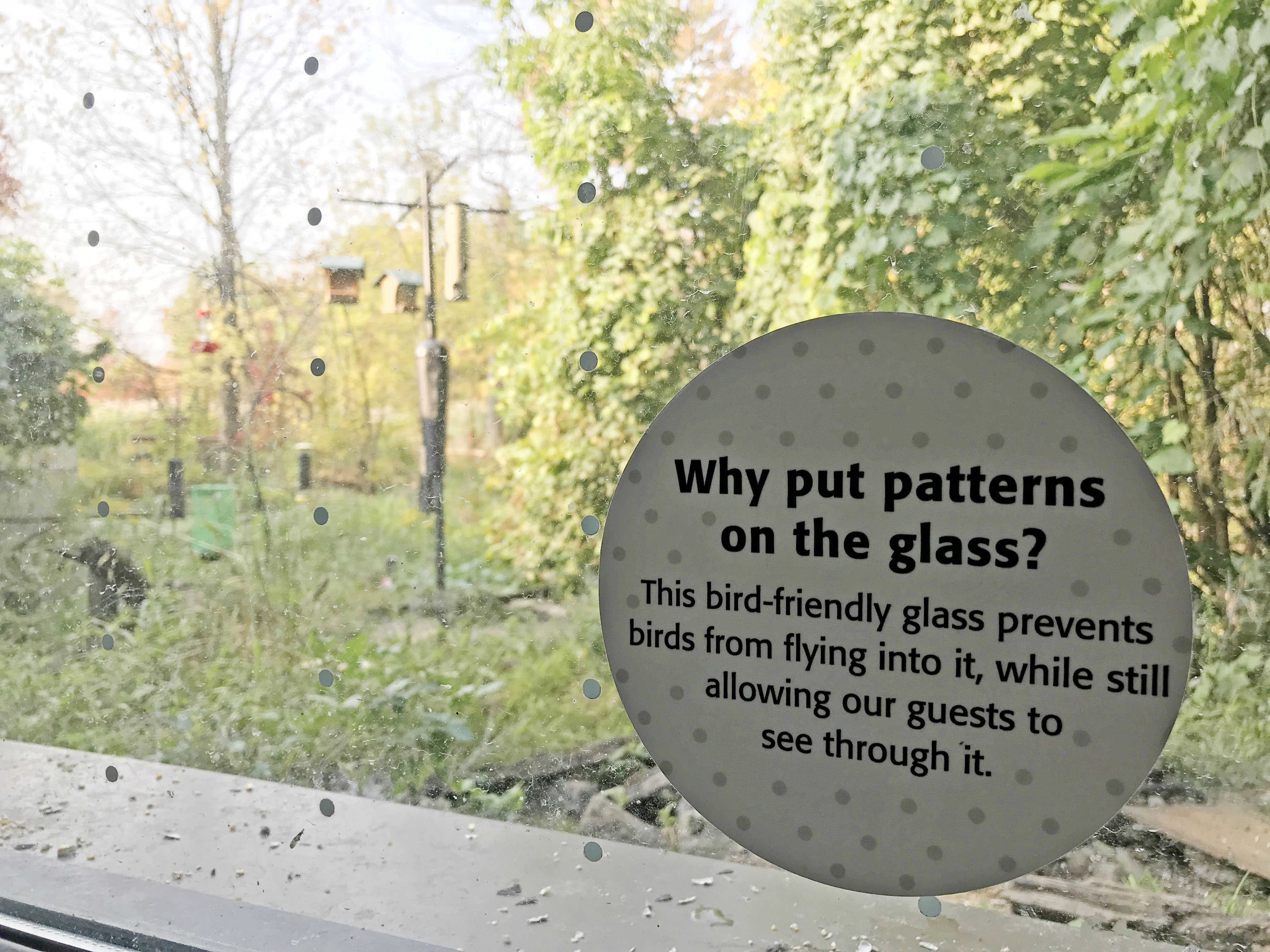
Over the last couple of years, our staff has invested lots of time to help with this worldwide effort. What we have found is that there is more avian diversity than we previously thought at the Detroit Zoo. Some birds call the Detroit Zoo home year-round. Others come here to breed in the summer, while some come here for a winter home. Many species use the Zoo from March through May and August through November as a very important migratory stopover. This land is a green island in the middle of suburbia and a great, safe stopover refuge. Our buildings have bird-friendly glass, and we continue to plant native plants to provide the appropriate food and ecosystem many species need.

Last year, more than 100 species were reported by Zoo staff and citizen scientists surveying Zoo grounds. You can join in on the fun by signing up for an eBird account at ebird.org. The website has lots of information and tutorials on surveying and best practices. There is also an easy-to-use app that can make surveying more efficient. Once enrolled, you can become part of this worldwide effort to assist with bird conservation.

Here at the DZS, we are always looking for more ways to engage with the community so that people, animals and the natural world can thrive together.

Pictured is a common yellowthroat, a species of warbler that routinely uses Detroit Zoo habitat throughout May as a migratory stopover area.

Standing up for Songbirds: How the DZS Supports Bird-Friendly Initiatives  

Photo credit: Kip Kriigel

Authored by Bonnie Van Dam, curator of birds for the Detroit Zoological Society (DZS).

One of the greatest joys of walking outside is listening to the chirps and chatter of songbirds — from the warble of the yellow warbler to the call of the American goldfinch.  

Despite the beauty of their songs, these birds face enormous dangers every day, especially during migration season. Whether it be the reflection of untreated glass windows or the pull of bright city lights, man-made hazards have proved detrimental to local and migrating songbird populations. In this blog, we will explore some of these hazards and what can be done on a legislative, local and personal level to reduce these hazards and stand up for songbirds.  

Photo credit: Patti Truesdell

What are our legislators doing to protect songbirds? 

I recently spoke at a public hearing for Bill B24-0710, which is a Washington, D.C. Council Migratory Local Wildlife Protection Act. This bill would require all new building construction or façade improvements to use bird-friendly materials, like bird-friendly glass, which is specifically designed to make glass a visible obstacle for birds while remaining transparent to humans. A passed bill would also establish a Bird-Friendly Buildings Fund to support building owners as they work to implement these potential changes.  

Untreated, or non-bird-friendly, glass poses a major risk to migratory and local resident birds; between 365 million and one billion birds die each year in the United States when they collide with buildings. This is because the transparency and reflections of untreated glass leaves birds unable to tell the difference between the horizon and a solid building. Birds flying at night may also be attracted to, and therefore confused by, lights inside buildings – which leads to them stopping over, resting and refueling in our cities. Once the birds resume their migration journey, it’s likely they’ll encounter an untimely death after colliding with a glass window. 

These are tragic facts, but legislation like DC Bill B24-0710 can change things. While these types of bills only affect Washington D.C., Illinois, Minnesota and a few other cities nationwide, there are other municipalities looking to enact similar bills into laws as well. Related laws requiring bird-friendly buildings have been passed for New York City, Chicago, Toronto, San Francisco, Portland and other smaller, local jurisdictions – and each one of these acts will save thousands of birds’ lives. As our society continues to construct buildings with glass windows, it is also society’s responsibility to help birds navigate windows, which are silent and invisible hazards to them. 

The DZS uses bird-safe glass on its campuses.

What is the DZS doing to protect songbirds? 

In addition to supporting bills like DC B24-0710, the DZS has been committed to preventing collisions for our local resident and migratory birds for years. Because the state of Michigan has birds migrating from both the Atlantic and Mississippi Flyways, the Detroit Zoo’s campus has 24 buildings equipped with bird-safe glass or retrofitted with film, and we’re constantly educating our guests about the importance of bird-safe glass with graphics and flyers.  

The DZS also focuses on collaboration to meet our conservation goals for songbirds. Our commitment to the Detroit Urban Bird Treaty creates bird-friendly environments and provides everyone, especially kids, with opportunities to connect with nature through birding and conservation. This is thanks to collaborative efforts between federal, state and municipal agencies, as well as non-governmental organizations and academic institutions, that  

reduce work to limit hazards to migrating birds, promote community science activities and provide community education and outreach.  

I am a founding member of North American Songbird SAFE (Saving Animals From Extinction), an Association of Zoos and Aquariums (AZA) conservation program that harnesses the collective strengths of AZA-accredited facilities, alongside other partners, to grow conservation impact and effectively save species. NAS SAFE focuses on more than 300 avian species that migrate through North America to fight population loss that stems from habitat loss, climate change, building collisions and predation from outdoor domestic cats. Our bird collision initiative has gone a long way toward protecting these beautiful birds and setting best practices at the local, state and provincial levels.  

Photo credit: Roy Lewis

What can you do to protect songbirds? 

You don’t have to wait for your city or state to adopt bird-friendly legislation to do your part to keep migrating birds safe! There are plenty of low-cost and low-burden ways to make the glass around you safer for birds, including using bird-safe glass in new construction and treating existing glass with a variety of film products. You can even purchase bird collision prevention products at the Detroit Zoo’s gift shop! 

Additionally, you can: 

• Reduce evening lighting during peak migratory seasons by participating in Lights Out programs 

• Purchase certified Bird Friendly Coffee© to preserve neotropical bird wintering grounds 

• Select grass-fed beef to help save grassland birds 

• Purchase certified sustainable paper products to help preserve the nesting grounds of boreal forest songbirds 

• Participate in native songbird community science projects and Urban Bird Treaty activities in cities 

• Celebrate World Migratory Bird Day  

If we all — individuals, conservation organizations and legislators — work together, we can make a true difference and save the lives of countless migrating songbirds. 

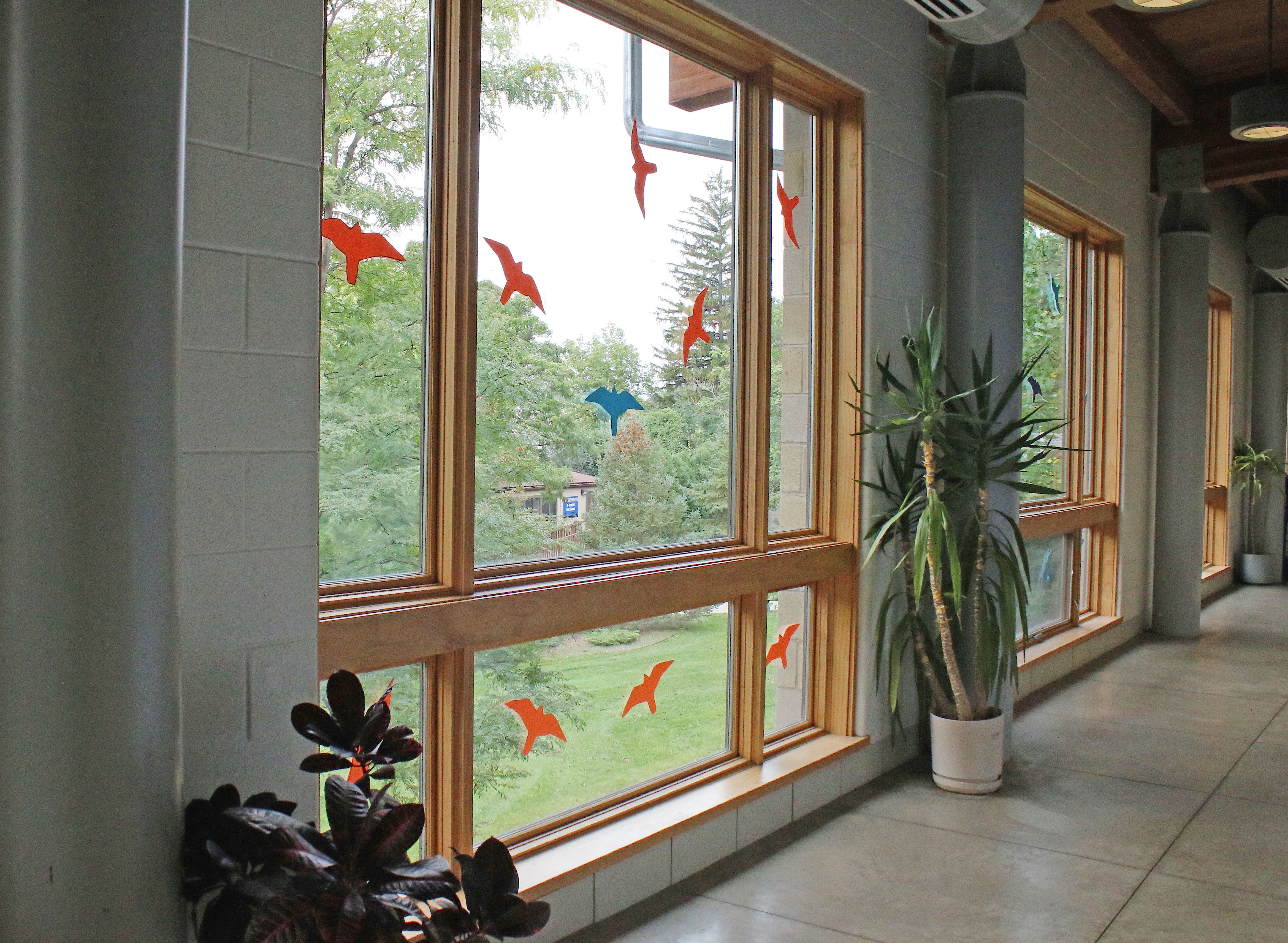
Window decals are a great way to protect birds from building collisions.

Detroit Zoo Welcomes Nearly 100 Bird Species During Spring Migration

Throughout spring migration, the Detroit Zoo’s 125 acres provided refuge to many weary travelers. Now that the season is coming to a close, our staff is looking back at all the feathered friends who used our grounds as a stop on their journeys.

Read more about migration season and how you can help birds arrive at their destinations safely.

Blackpoll warbler

Over the last couple months, Detroit Zoological Society (DZS) team members have spent many hours surveying what bird species have been utilizing the habitats here at the Detroit Zoo. Some of these species live here year-round, while many species have shown up during migration and will spend the summer here breeding on Zoo grounds. Additionally, several species have used the Zoo to rest or refuel for a matter of hours or days on a long journey home to their breeding grounds.

We have seen and heard many species of songbirds, black-crowned night herons, a redhead, spotted sandpipers and much more! From March until the end of May, we accumulated at least 93 species on Zoo grounds.

Canada warbler

The incredible journeys these brave travelers make every year are hard to put into words. Many winter as far south as Central or South America and may head far north of us into the Upper Peninsula or northern Canada to breed. The blackpoll warbler is one of these extraordinary migrants who recharged at the Zoo this May. This tiny, insectivorous species only weighs around 11 grams and sings a very high-pitched song. They often travel more than 10,000 miles round trip — including an Atlantic Ocean crossing — as they head back and forth from South America to northern Canada and Alaska. 

Migrating birds overcome extreme challenges when heading back and forth between breeding and wintering grounds. Besides exhaustion and native predators, there are many human-made challenges.  Fragmented habitats, light pollution, domestic cats and windows are just some of the man-made threats that make migration even harder. Here at the Detroit Zoo, we are proud to provide these birds an excellent, protected habitat on their perilous journeys.

Learn how you can help reduce light pollution and save birds’ lives.

— Matt Porter is a member of the DZS birds animal care staff.