Notes from the Field: Saving the Partula Snail

Paul Buzzard, Ph.D., is the Director of Conservation for the Detroit Zoological Society.

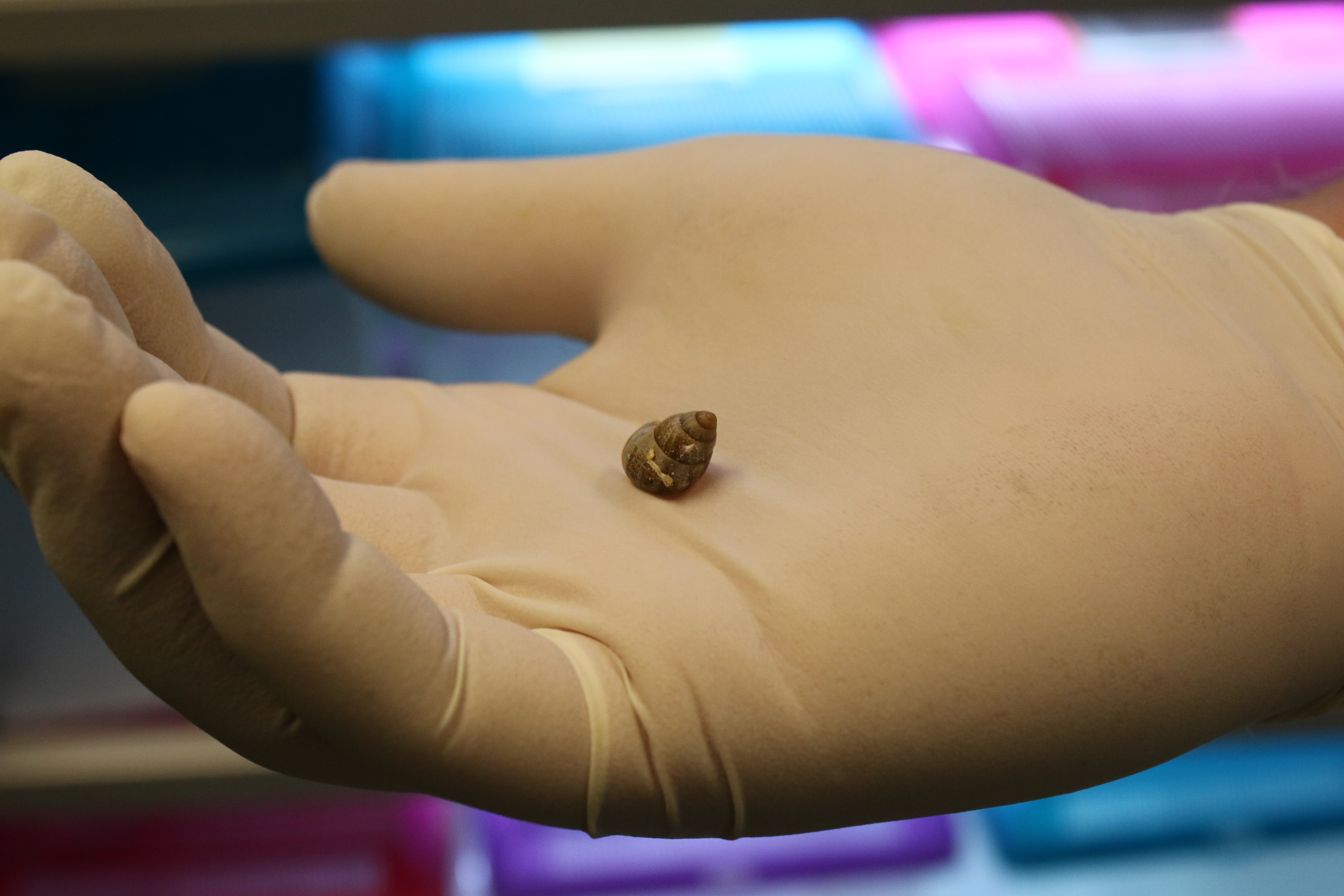
For nearly three decades, the Detroit Zoological Society (DZS) has been breeding a species of Tahitian land snails called Partula nodosa in an off-exhibit area as part of a collaborative effort credited with saving the species from extinction. Recently, 100 of these snails were carefully packaged and delivered to Detroit Metropolitan Airport to embark on a very special trip, returning the species to the tropical island of Tahiti in the south Pacific.Partula Snail - Jennie Miller
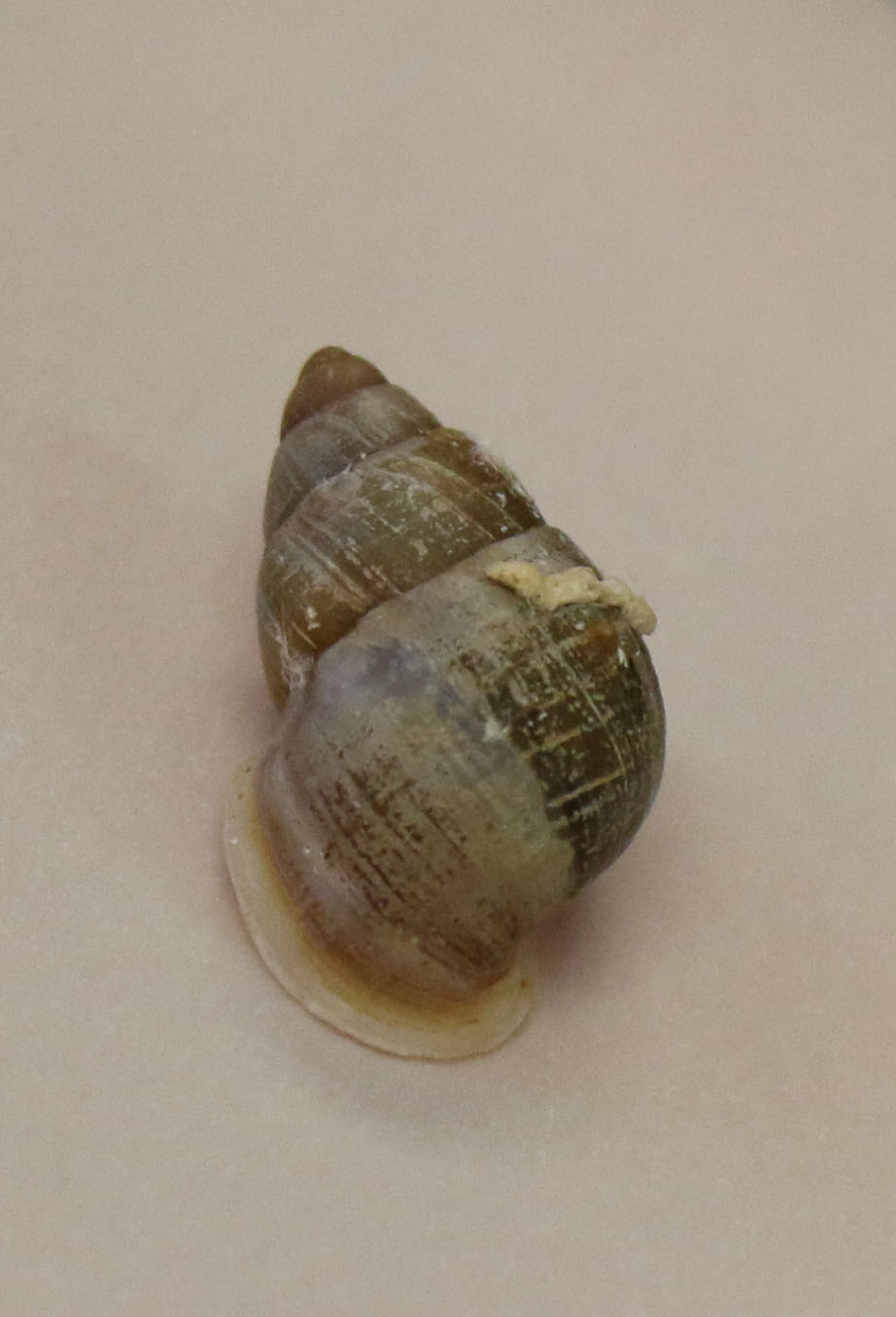
Beginning in 1989 as a project with 115 Tahitian land snails of five different species, the DZS focused its efforts on one species, P. nodosa. At one point all the P. nodosa in the world lived at the Detroit Zoo. Our efforts and successful breeding of the snails resulted in the rescue and recovery of the species – currently there are 6,000 individuals living in North American zoos, all descendants from the Detroit Zoo’s original small group.

P. nodosa snails are interesting because along with other Partulid snails, they were once found across Tahiti and other south Pacific islands in a dazzling array of more than 125 different species. These beautifully striped snails were important in the ceremonial jewelry and decorations of native islanders, and the snails served as an ideal study group to learn more about the evolution of diversity.
Partula Snail - Jennie MillerMuch of the Partulid snail diversity was lost however, because of a botched attempt at what is known as “biological control”, or the control of a pest by the introduction of a natural enemy or predator. In 1967, giant African land snails were introduced to Tahiti and other south Pacific islands to serve as a source of protein for local people. However, some African snails escaped, bred very rapidly, and began eating farmers’ crops, threatening the local economy. To control the African snails, Florida rosy wolf snails were introduced a decade later, but the wolf snails preferred to eat the Partulid snails, which caused the extinction of many of the Partulid species.

Thankfully, before complete extinction, P. nodosa snails were placed at several zoos including the Detroit Zoo, where they’ve been maintained off-exhibit in a collaborative effort of the Bird, Reptile and Amphibian departments. Now that the captive population has grown sufficiently and a protected area has been established on Tahiti, we can officially say that this species has been saved.

– Paul Buzzard
Notes from the Field: Blood Moon in Peru

Hola mis amigas y amigos!

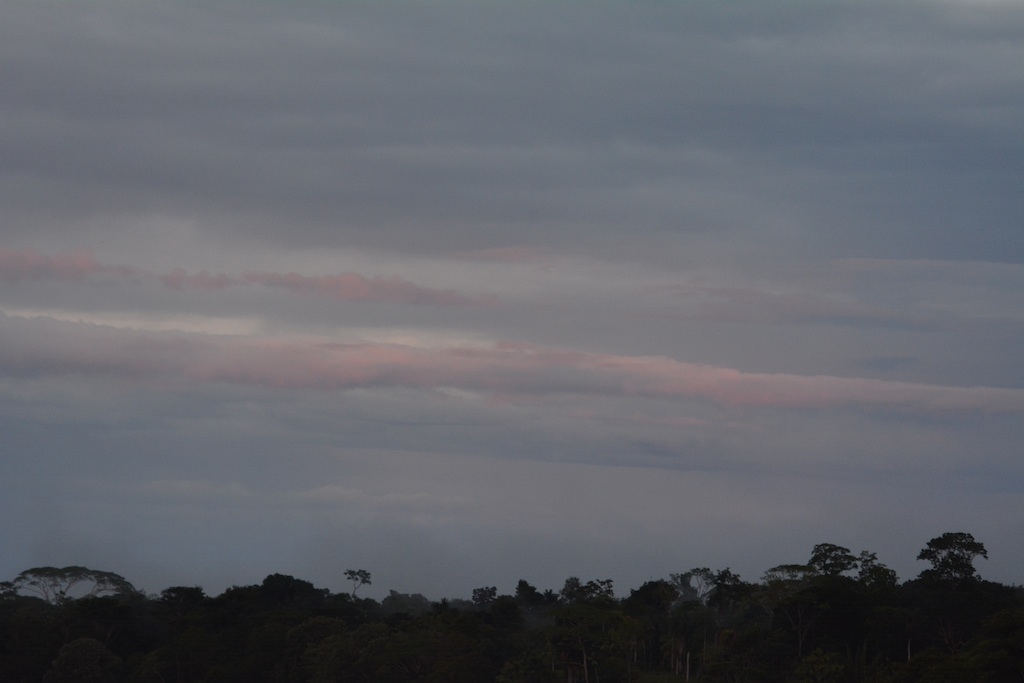
I’m nearing my last days in Peru but I couldn’t have ended on a more delightful note – the lunar eclipse was amazing!  We had a late night observing frogs the evening before and slept a couple of hours before we were back out on the river at 3 a.m.  The morning began with clear skies and the moonBlood Moon was completely visible until 5 a.m., when clouds came in and threatened to ruin our view. We waited for them to dissipate, but it never completely happened.  About 5:50 a.m., we couldn’t see anything so we ended up using a compass to determine where the moonset should occur and watched.  All of it paid off as the reddish hue was projected beautifully for about 30 seconds! The next one isn’t until September, so I was very grateful to have seen this one.

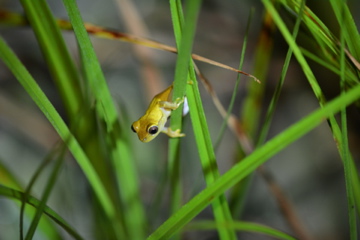
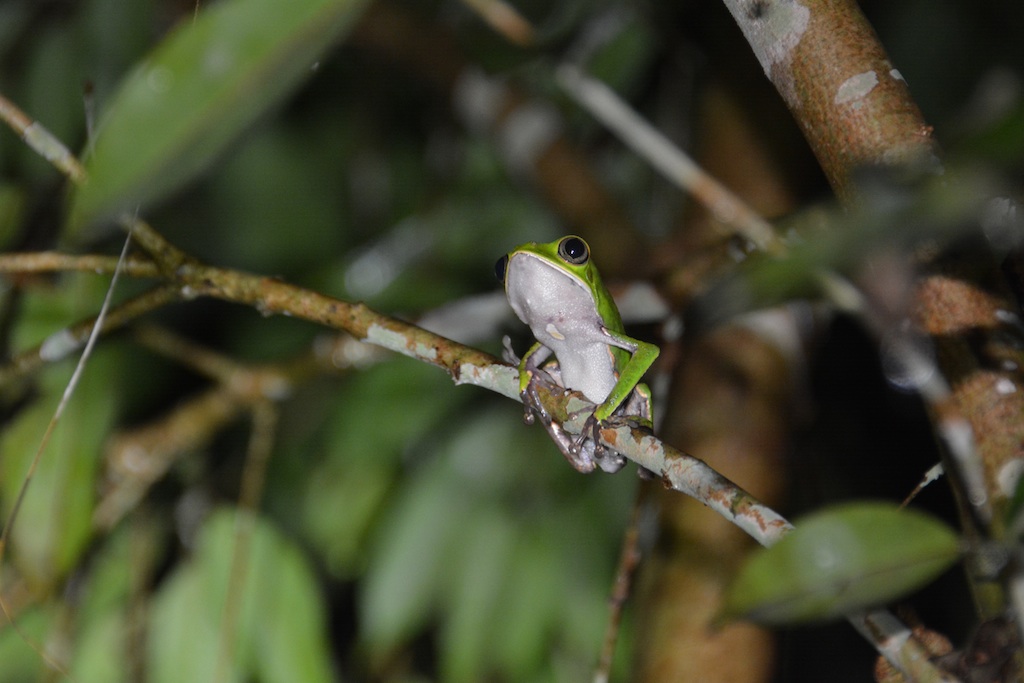
Marcy - PeruThroughout the remainder of the day, we had several electrical storms making for a beautiful night. Once the weather subsided, everything was out in full force: frogs, insects and birds were all calling. One of my favorites here are the Phyllodmedusa species, basically long-legged tree frogs. They are stunning and very interesting to watch as they navigate high in the canopy.

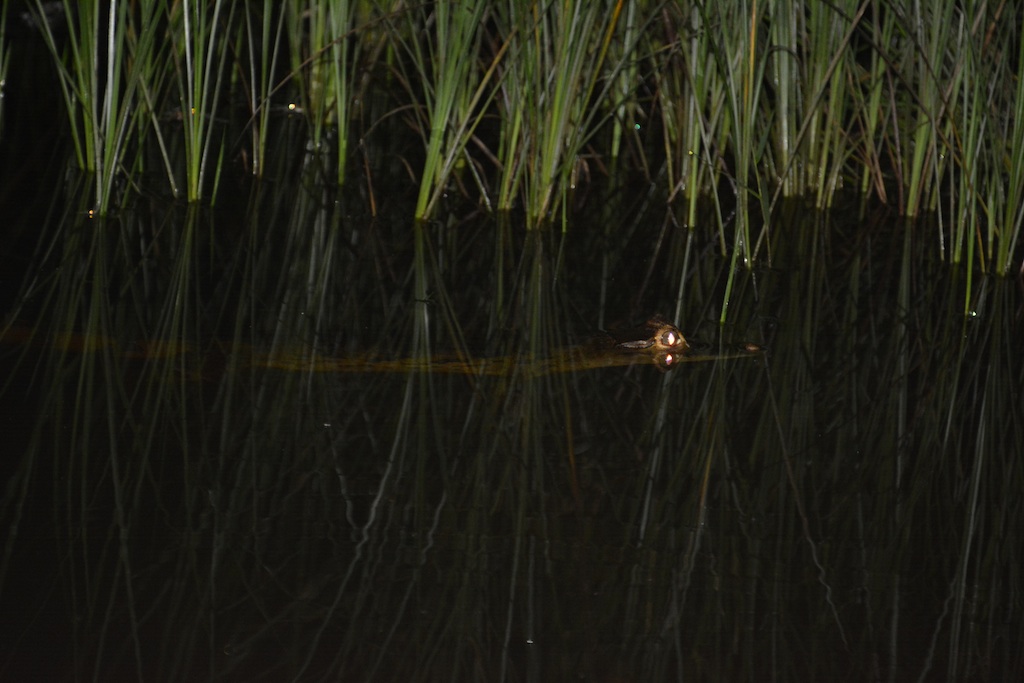
Caiman

Sometimes observations aren’t easy – when you hear calls there is always a strong desire to find what you are listening to. This occasionally leads to us sharing the water with other animals that are also looking for what is calling – more for a feast then to admire its beauty and log for data collection. Although the storms came back, we were still able to squeeze in another four hours of observations before having to call it quits for the night.

Early the next morning, we awoke to the pleasant call of other early risers (or late nighters).  A wonderful way to wrap up another season!  Until next time… Saludos!

– Marcy Sieggreen

Editor’s note: Marcy Sieggreen was the curator of amphibians for the Detroit Zoological Society from 2008 until her passing in 2016. The Detroit Zoological Society established the Sieggreen Amphibian Conservation Fund in Marcy’s memory to continue to advance the work she so passionately championed.

Notes from the Field: Amphibians in Peru

Hola mis amigas y amigos!

I am still in Peru, though my colleague, Paul Buzzard, director of conservation for the Detroit Zoological Society, has returned home. This time of year is high water season, which means that everything is a little different, as animals seek out and share the only dry areas that they can find. This includes snakes, which means they tend to be closer to human living spaces. It’s important to us that we educate people about snakes and explain why they are an important part of the ecosystem. We want to impart that snakes are not to be feared, but rather respected.

The high water doesn’t seem to be negatively affecting anything; however, it is still rising at a steady pace, nearing that of the historical levels set in 2012. Amphibians seem content and in mass abundance near islands that we regularly monitor. When I was here in November, I noticed that few amphibians were seen during the day.  This time, in one of the areas that we frequent, we saw many during the day and very few at night. We also noticed very few insects, which is good for us but bad when you are looking for frogs. It’s hard to narrow down what may be the cause, since so many were found during the daytime.

This weekend there will be a partial eclipse, which is the first one I will experience in the last six years of my travels here. I am looking forward to observing any change in behavior or patterns amphibians may show. Stay tuned… buenas noches!

-Marcy Sieggreen

Editor’s note: Marcy Sieggreen was the curator of amphibians for the Detroit Zoological Society from 2008 until her passing in 2016. The Detroit Zoological Society established the Sieggreen Amphibian Conservation Fund in Marcy’s memory to continue to advance the work she so passionately championed.

Notes from the Field – Bats and Frogs in Peru Part II

Buenos dias from Lima, Peru.  I’ve been here for two weeks with the Detroit Zoological Society’s curator of amphibians, Marcy Sieggreen, to visit the sites being used for our amphibian conservation studies and to investigate the potential for bat conservation projects. It’s been a wonderful and productive trip.

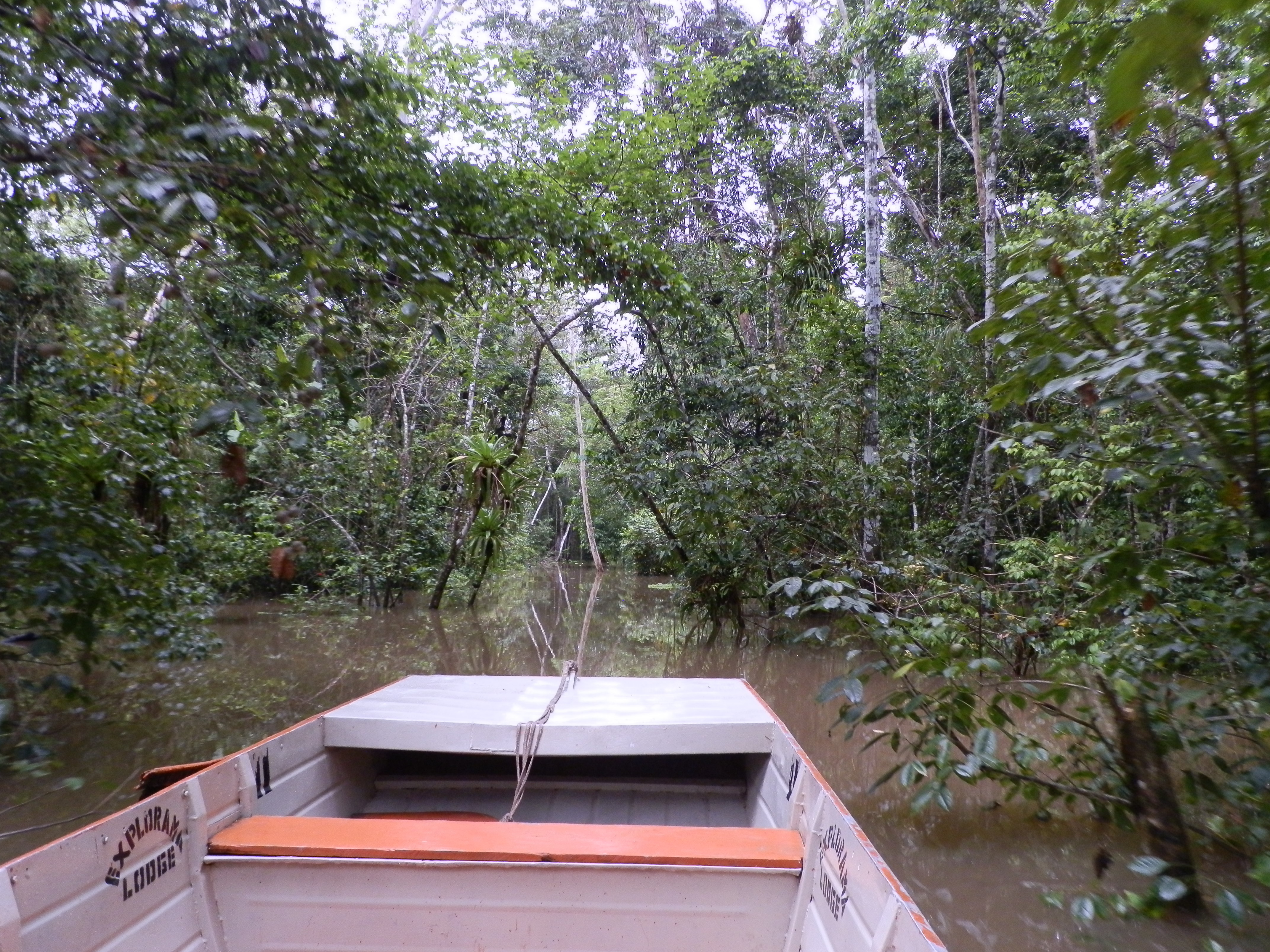
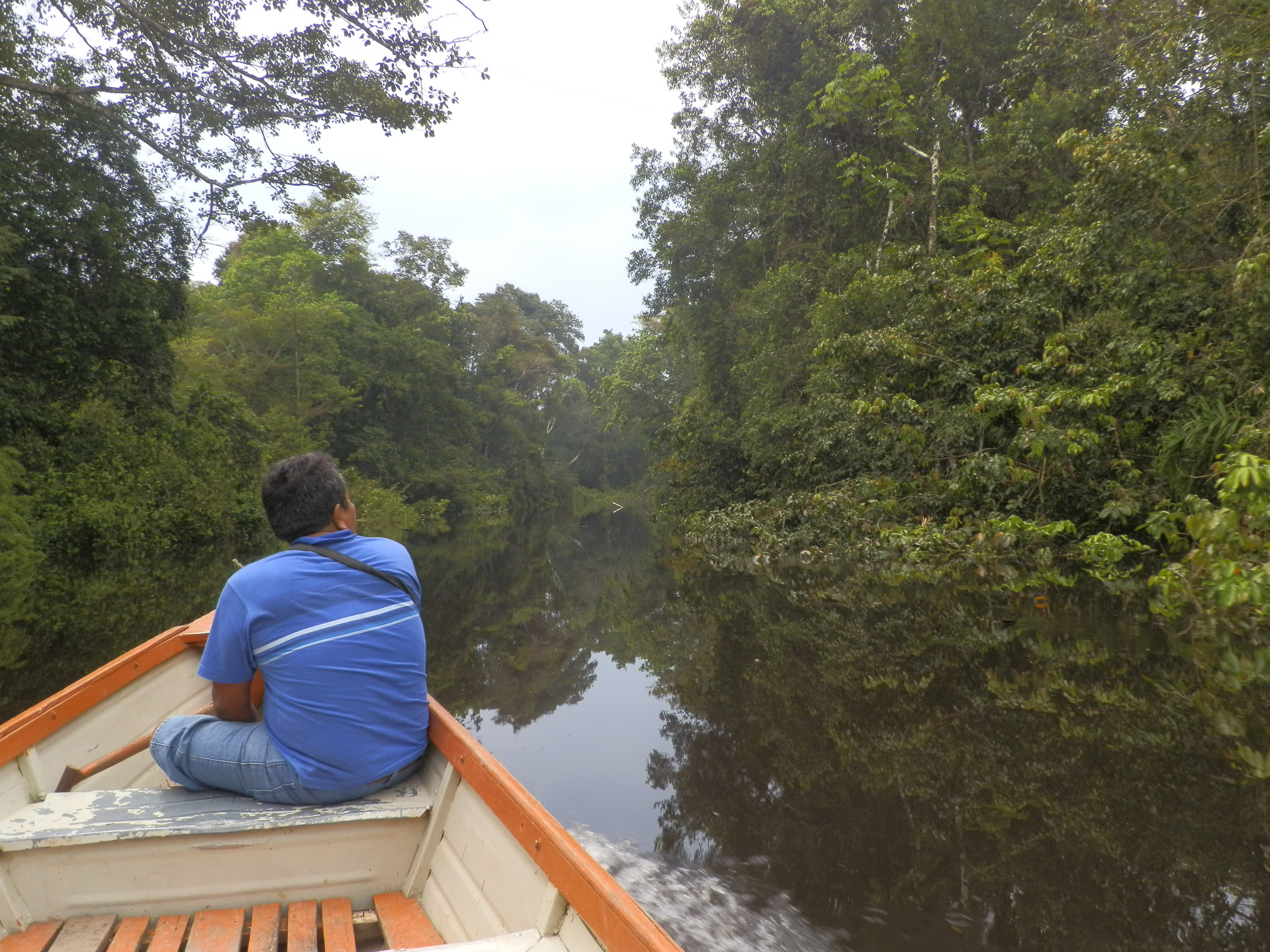
One of our last trips into the rivers and flooded forests started with a little drama but thankfully ended well:  It was 6 a.m. and the sun was rising when Marcy and I climbed into the dug-out canoe with our local guide. These dug-out canoes are carved out of single tree trunks, and they ride very low in the water. I also knew from previous experience that these canoes often let in a little bit of water. But this was a little more than “a little” and right after we left the dock, I informed our guide that a pretty steady stream of water was coming in. He and Marcy laughed and told me to finish my coffee and start bailing out water, which I promptly did. But as the water rose to several inches, we decided it best to turn around and made it back before a morning swim with the piranhas.

We soon found another boat and continued our trip into the forest and observed squirrel monkeys and dusky titi monkeys feeding in the trees. Since I’d already seen both the saddle-backed and black-mantled tamarin monkeys, I was thrilled to see a total of four monkey species during the trip. I also consistently saw new bird species such as the hoatzin – interestingly, the young chicks have claws to climb in trees. We also saw a variety of other interesting wildlife such as tree iguanas, snakes, and three-toed sloths.

I had the chance to join Marcy on some boat trips just after sunset to look for frogs at the edge of rivers/lakes and in floating vegetation. We saw so many that Marcy could barely keep up her documentation as we called out the frogs we saw.  We saw some fishing bats on these trips too.

I also had the chance to meet with a Peruvian bat researcher to discuss a potential collaboration in bat conservation projects.  We had a great meeting, and I think there will be opportunities to get baseline data on bat diversity and the importance of bats as seed dispersers.

– Paul Buzzard, Ph.D., is the Director of Conservation for the Detroit Zoological Society.

Editor’s note: Marcy Sieggreen was the curator of amphibians for the Detroit Zoological Society from 2008 until her passing in 2016. The Detroit Zoological Society established the Sieggreen Amphibian Conservation Fund in Marcy’s memory to continue to advance the work she so passionately championed.

Notes from the Field: Bats and Frogs in Peru

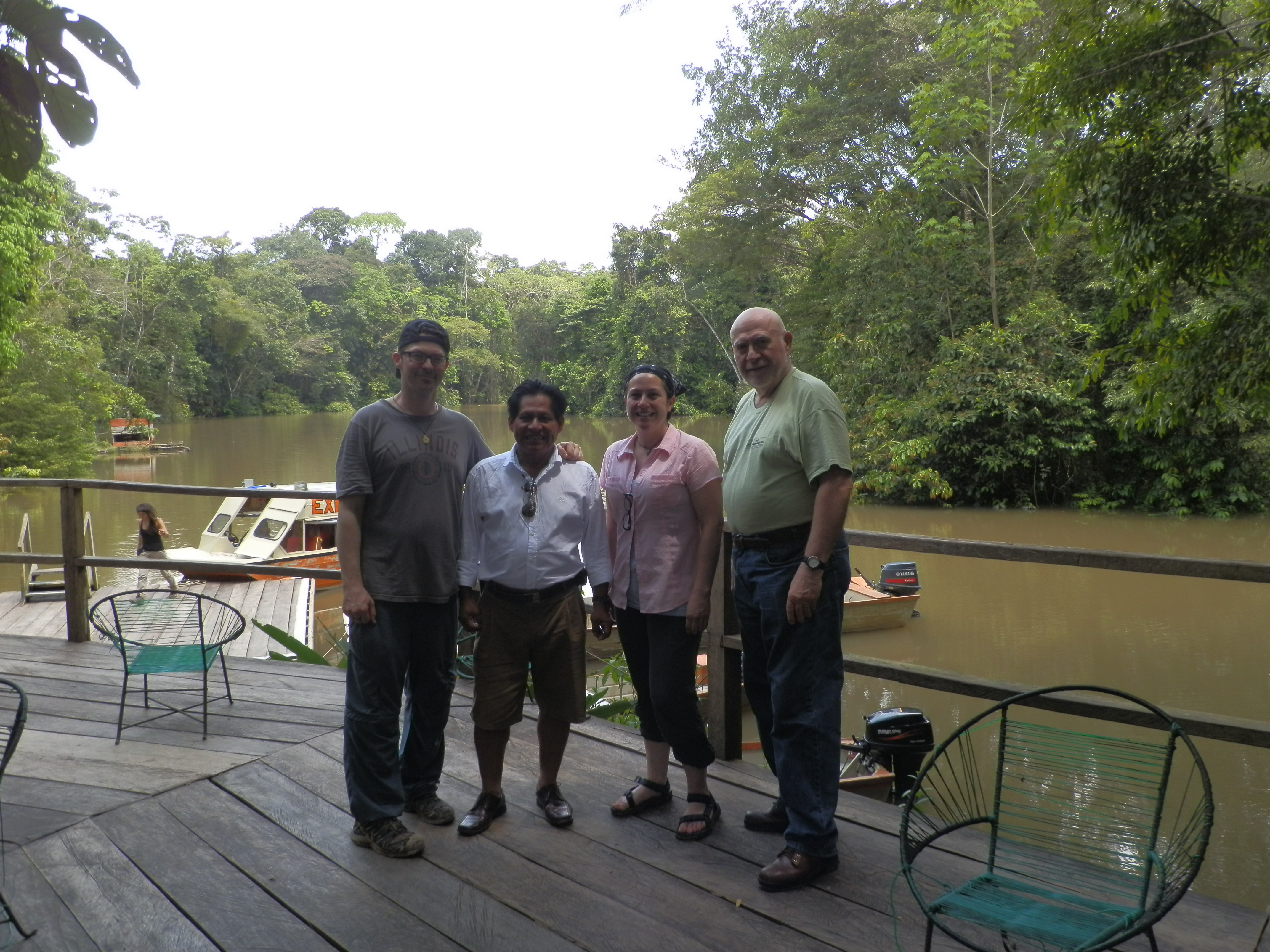
Buenos dias from northeastern Peru. Paul and Marcy in PeruI’ve been here for several days with Marcy Sieggreen, the Detroit Zoological Society’s Curator of Amphibians, to investigate the potential for bat conservation projects and to see the sites being used for our amphibian conservation studies. There was a quick turn around from my work with snow leopards in China – I left Detroit less than a week after returning from the chilly mountains of China, so I was looking forward to the 80-degree temperatures of the tropics. I was thrilled to visit Peru for the first time, and it’s been a wonderful and productive trip thus far.

Our first stop was the city of Iquitos on the banks of the Amazon River to meet with a Peruvian researcher. We had a very productive meeting discussing the potential for bat baseline inventories and the availability of weather data. These data on temperature, rainfall and other factors will be essential to better understanding changes in the amphibian diversity.

Next, we headed up the Amazon and Napo Rivers. Although bats are the focus of my trip, it was great to have the opportunity to see pink river dolphins. Because it is the high water season we were able to visit the flooded forest to see an overwhelming diversity of birds including Amazonian umbrella birds, kingfishers, toucans and even ospreys which also live in Michigan.

Bats seem to be common here, flying in our rooms and flying by our faces on night walks to find frogs and toads. During these night walks I have definitely gained a new respect for the work of amphibian researchers. I am used to walking transects slowly – perhaps 1 kilometer per hour to sight monkeys or look for deer and/or carnivore tracks or scat. But the amphibian pace seemed glacial at first – at a clip of 1 kilometer in four or five hours – because the well-camouflaged frogs and toads are hard to find.

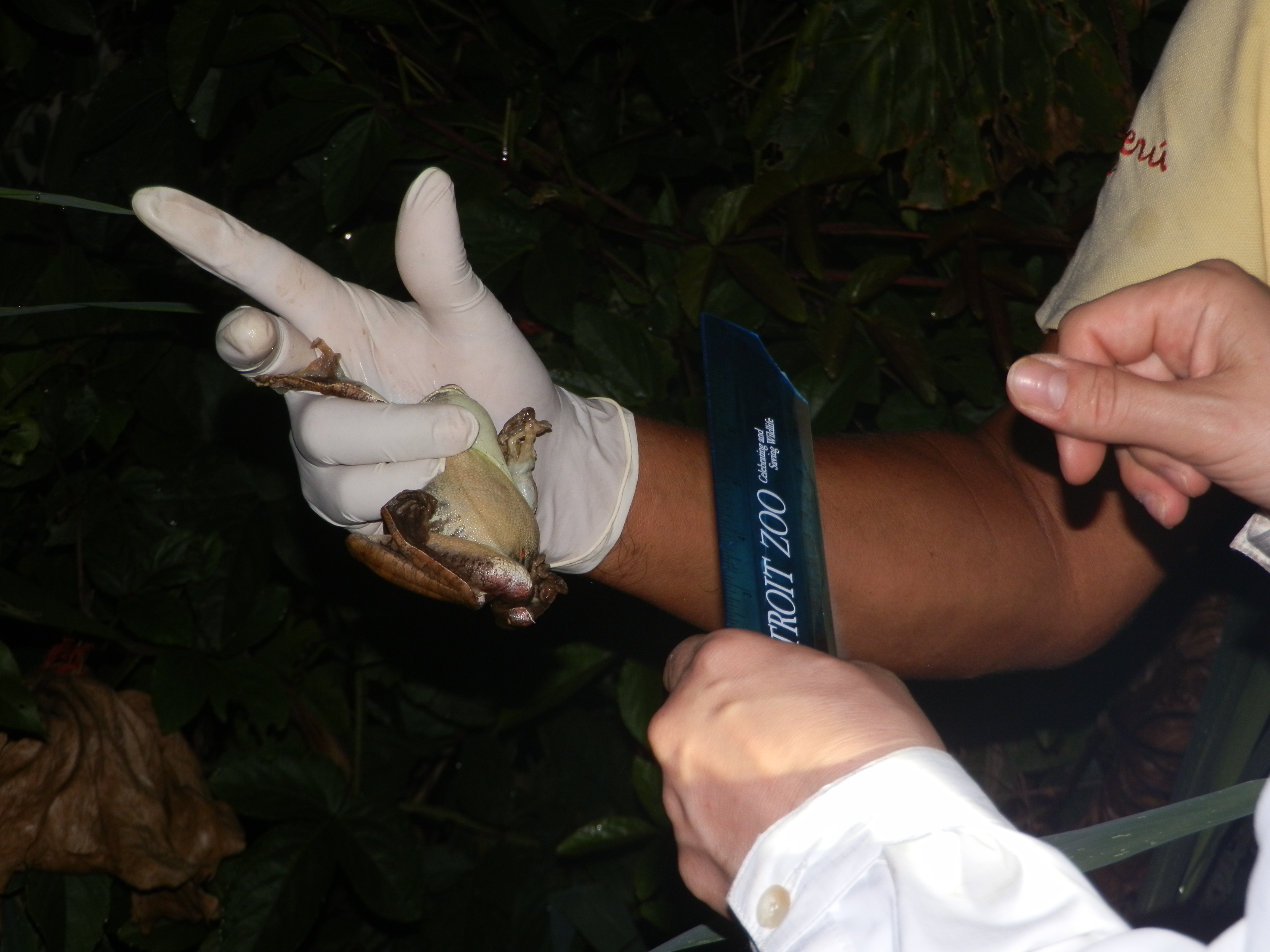
When a frog or toad is found, the delicate dance begins. My task is to catch the squirmy frog and hold it ever-so-gently so Marcy can rub a cotton swab on its belly and feet to test for chytrid fungus – a fungus that has been devastating amphibian populations in many parts of the world.

Between frog finds we can enjoy the incredible diversity of tarantulas and other spiders as well as insects such as katydids, walking sticks and even a beetle that lights up like a lightning bug.

I’ll be here for several more days, visiting more sites and searching for frogs in the flooded forests. I’m also meeting with a Peruvian bat researcher about the potential for future collaboration before returning to Detroit.

Hasta luego!

– Paul Buzzard, Ph.D., is the Director of Conservation for the Detroit Zoological Society.

Editor’s note: Marcy Sieggreen was the curator of amphibians for the Detroit Zoological Society from 2008 until her passing in 2016. The Detroit Zoological Society established the Sieggreen Amphibian Conservation Fund in Marcy’s memory to continue to advance the work she so passionately championed.

Notes from the Field: Urumqi, China

Paul Buzzard is the Director of Conservation for the Detroit Zoological Society.

Ni hao! I am in Urumqi, China, working on our snow leopard conservation project.  Our goal is to learn more about the current status of snow leopards in the Tien Shan Paul Buzzard in Tianshan by MaMing 2015Mountains.  We are using trail cameras and interviewing herders to assess the snow leopard population and the population of their potential prey, including ibex, and to learn about human-leopard conflict. Conflict arises when leopards kill livestock, like sheep, which sometimes results in herders killing leopards.

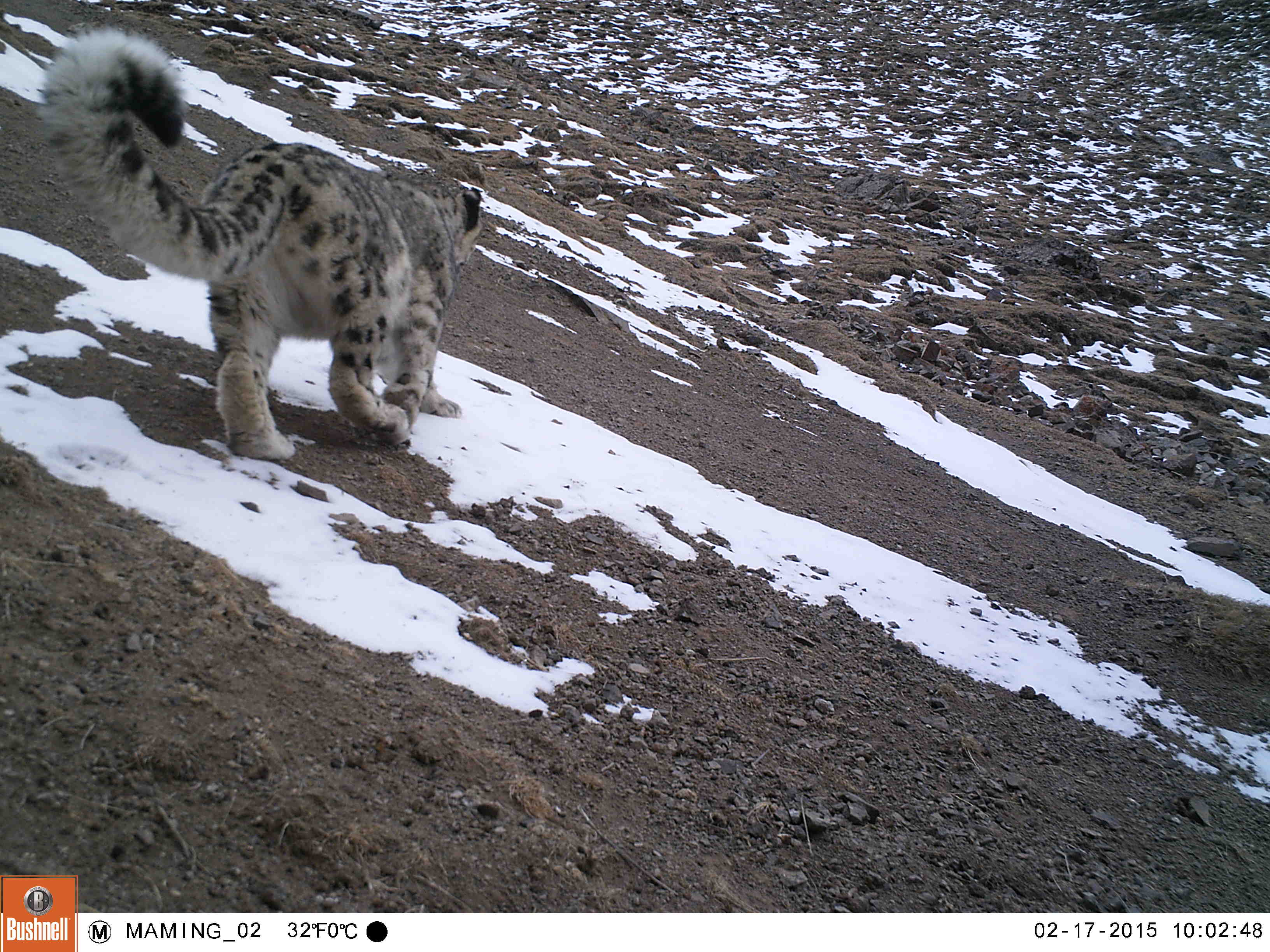
We set up trail Snow leopards trail camera - Chinacameras when I was here in December, so I returned to check them and to set up additional cameras in new areas in the western Tien Shan.

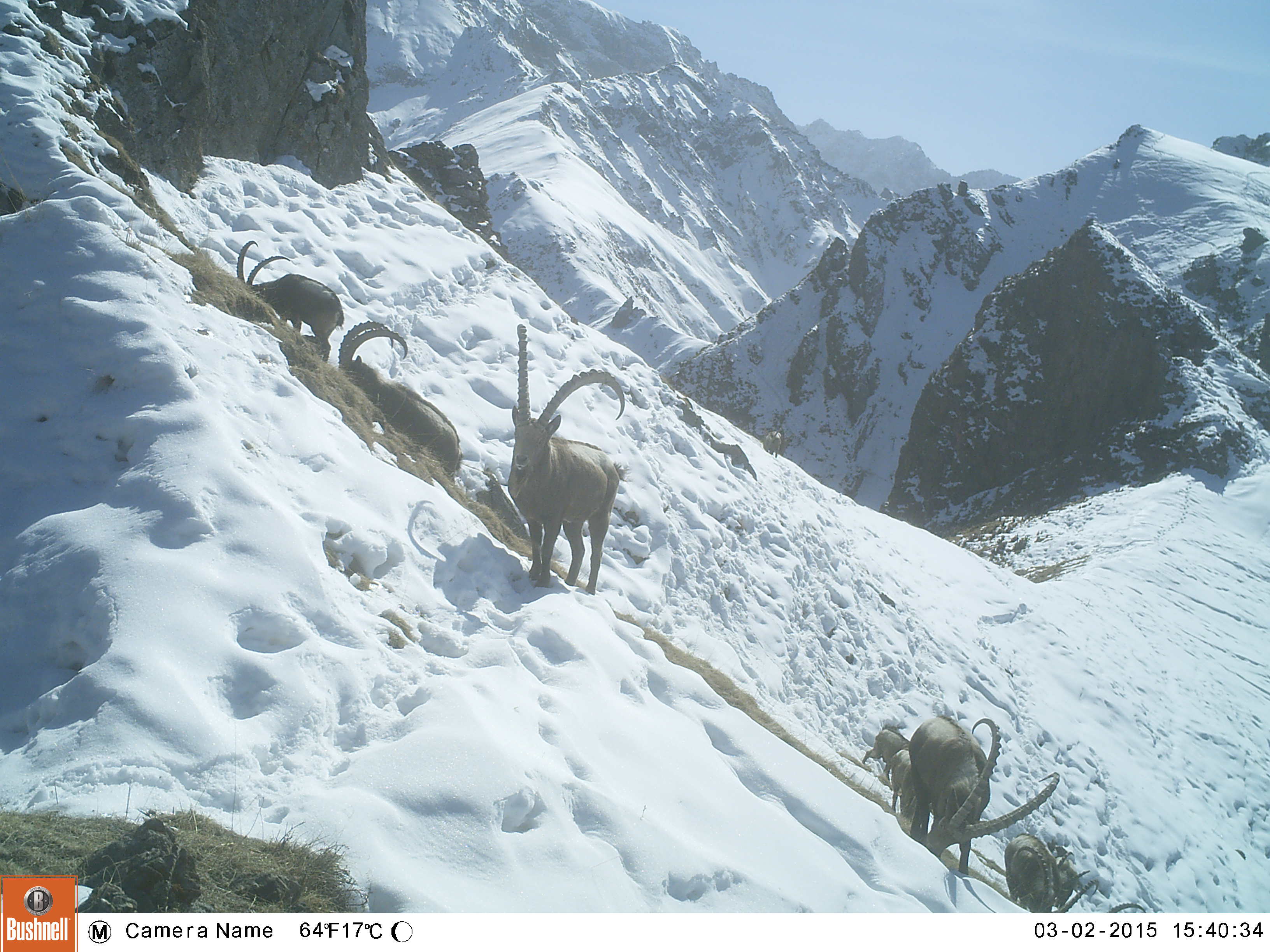
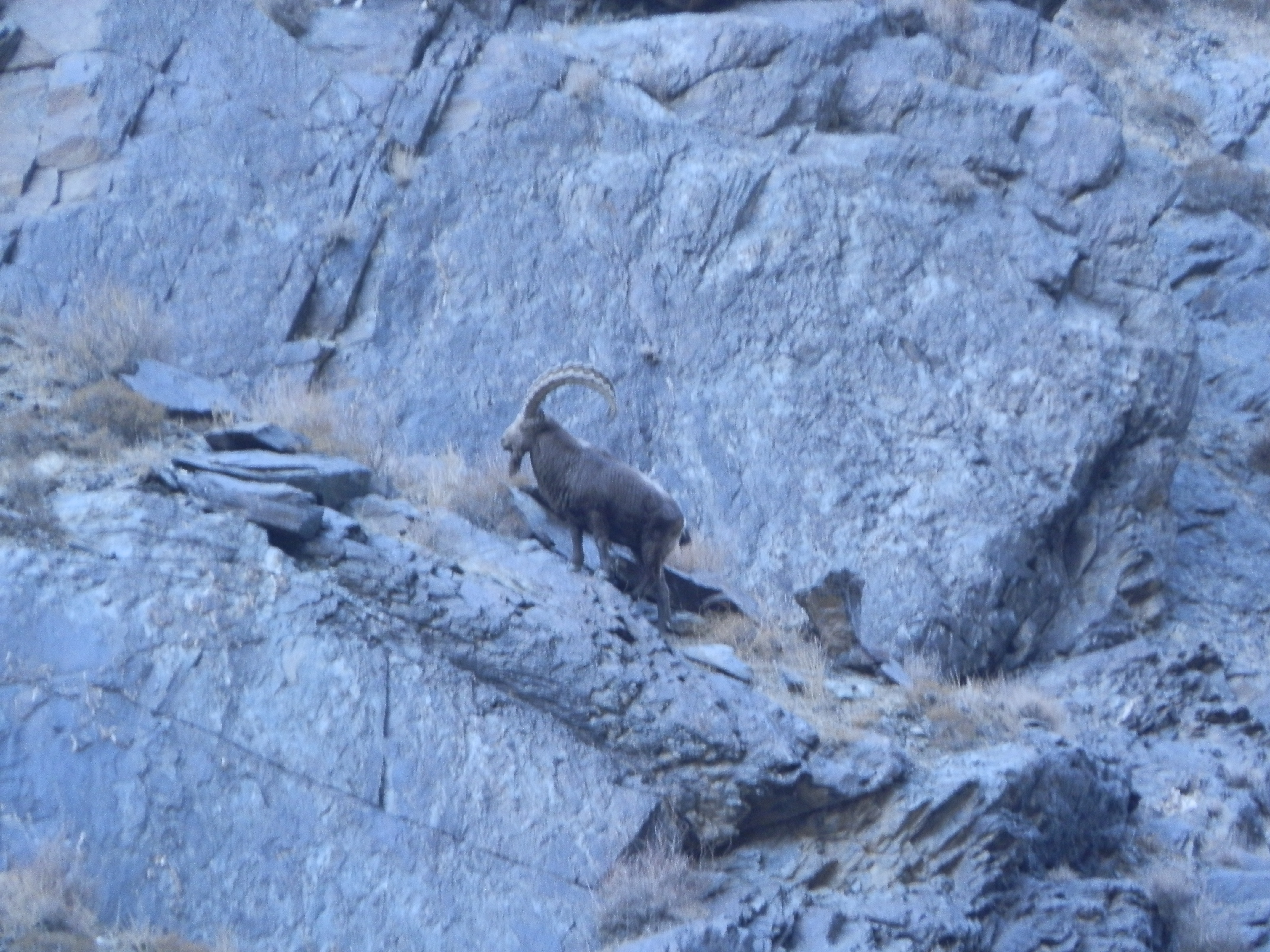
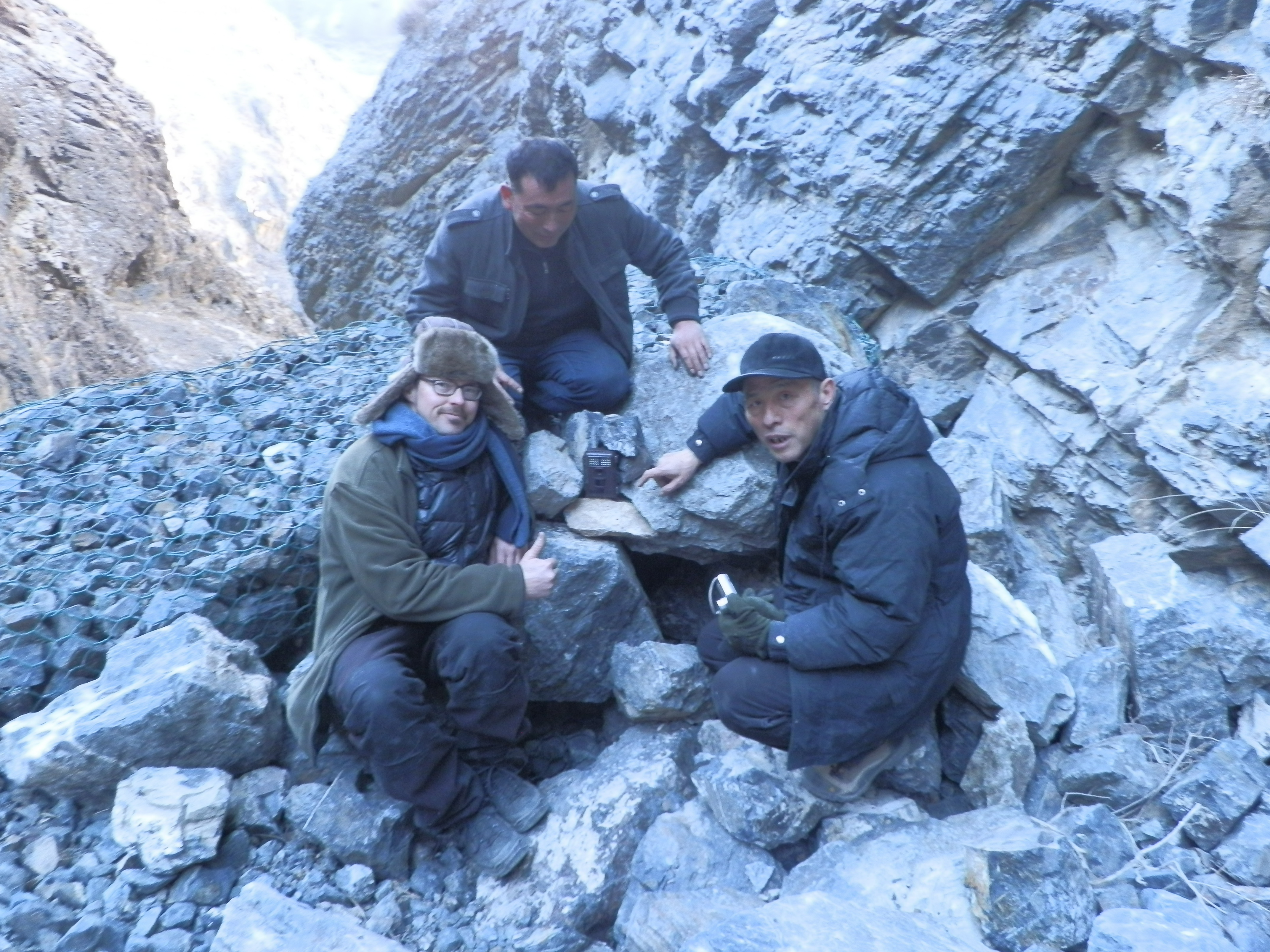
The first two cameras we checked had pictures of snow leopards – including one with two leopards! The next seven cameras didn’t have any pictures of leopards, though most had pictures of other wildlife, including ibex, wolves and foxes. Because of heavy snowfall, we weren’t able to Trail camera - China ibexcheck all of the cameras, but we reset the ones we did and set up additional cameras in other promising areas. We also made plans to move two of the cameras that were unsuccessful in capturing leopard pictures several miles further into the mountains, which we will do on horseback.

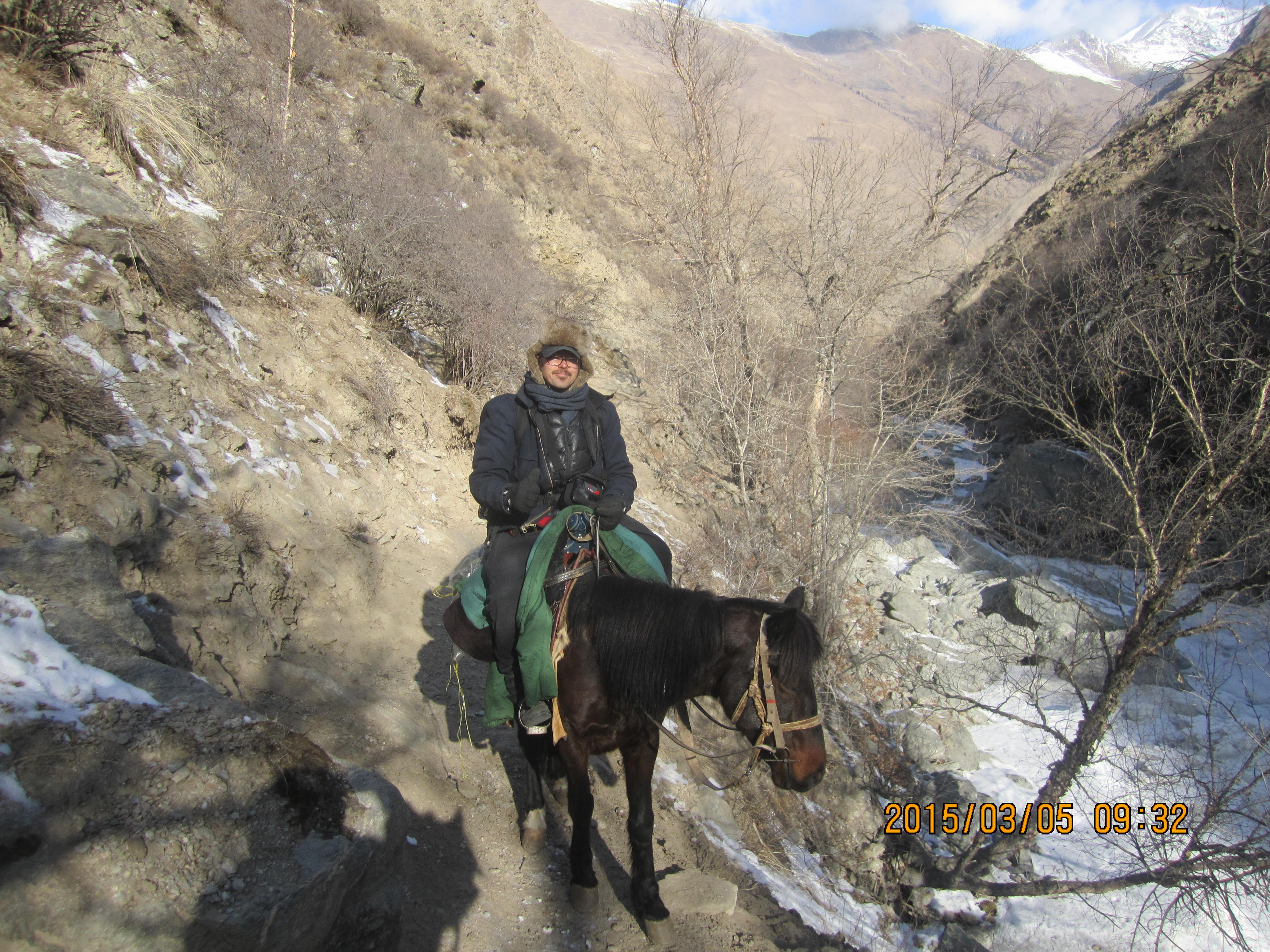
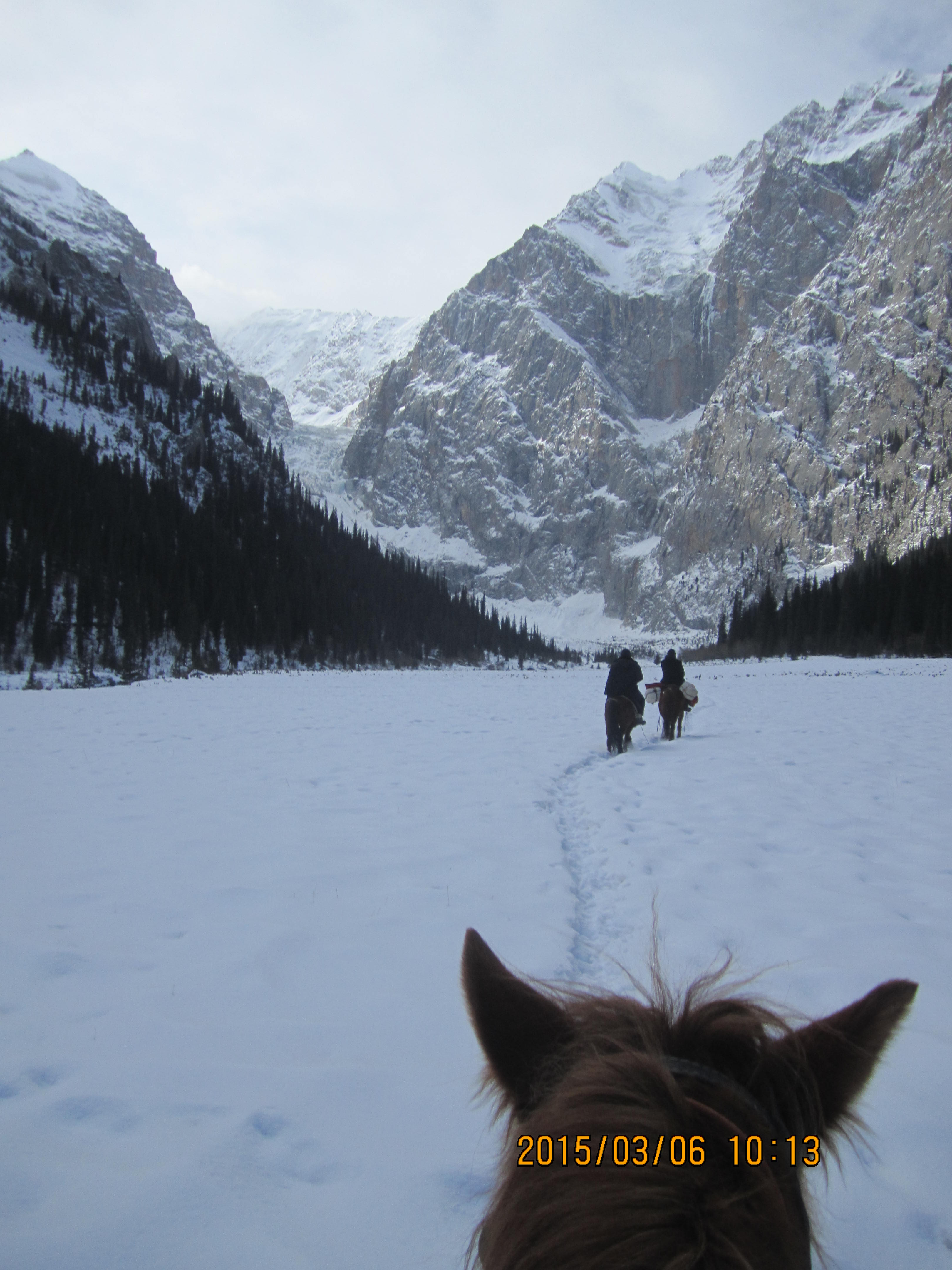
In the west, near the Kazakhstan border, Paul Buzzard - China horsebackit was much, much more remote: I was the second foreigner and the first American to visit the county seat in more than 25 years. It was a four-hour drive to the protection station and then a seven-hour horseback ride to a Kazakh herder winter house. This cozy oasis, though simple, was a warm retreat after trail-riding up and down rocky and icy trails. Plus, the noodles and butter tea really hit the spot.

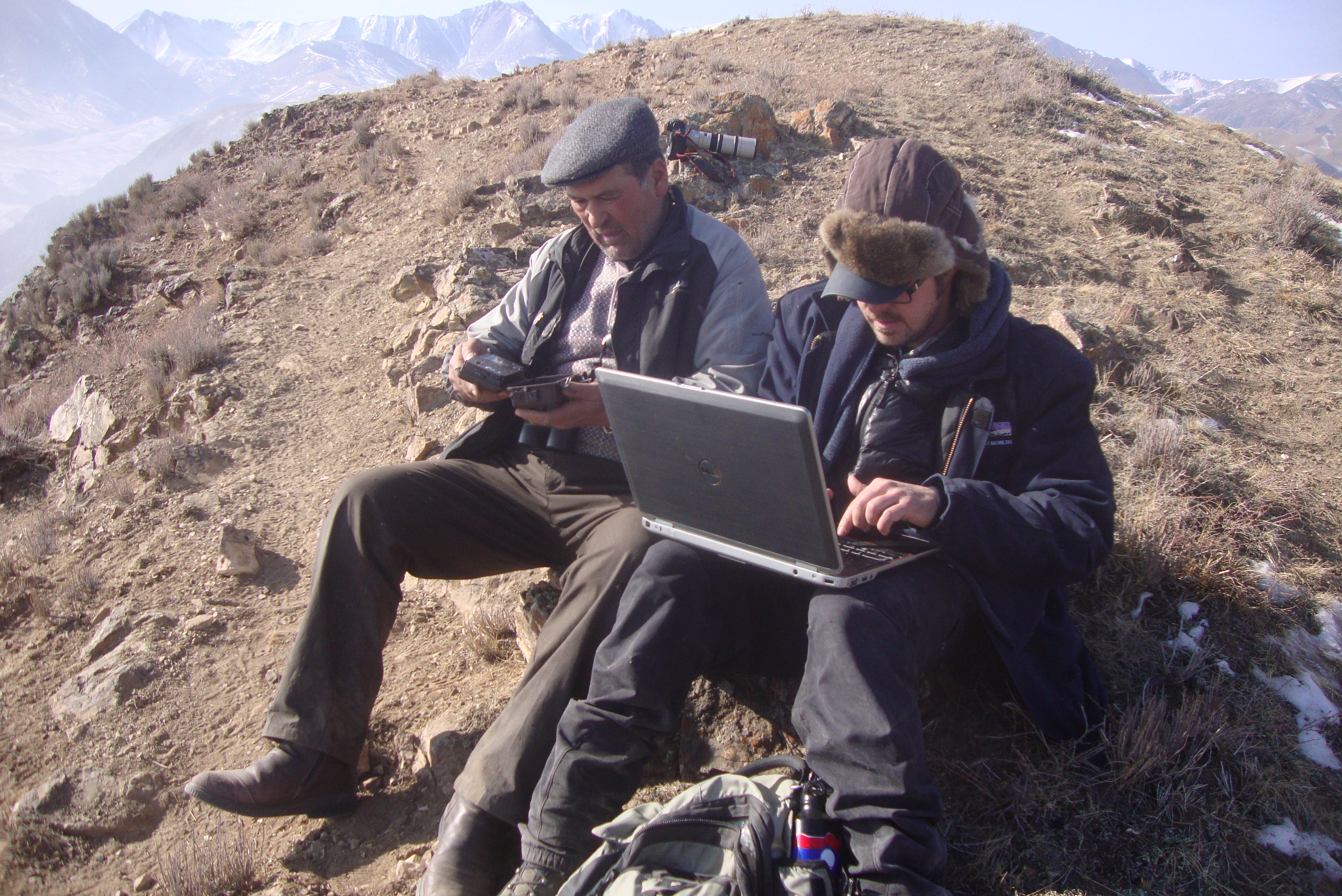
Unfortunately, the accommodations were not particularly restful with six to eight people sleeping side-by-side, some of whom were aggressive snorers. It was ultimately Paul Buzzard in Tianshan by MaMingworth any discomfort because we retrieved cameras containing more snow leopard and ibex pictures and reset the cameras that were on high passes and overlooking some stunning valleys. We left 12 cameras with our Chinese colleagues to set in additional valleys.

The Tien Shan Mountains, from east to west, Paul - China - Mountains on horsebackis clearly an important area for snow leopards. There is much interest from our Chinese colleagues in setting up protected areas, such as provincial or national reserves. To do this, more snow leopard pictures are needed to robustly document the importance of certain regions.  It is also important to address the human-wildlife conflict in some areas.

For example, it was reported in one place that five snow leopards are killed per year for eating approximately 100 sheep per year (out of nearly 200,000 total sheep). Such claims need to be confirmed, but if anywhere near this much conflict is occurring, it needs to be reduced.

– Paul Buzzard

Notes from the Field – Manistee National Forest, MI

Detroit Zoological Society staff, including Director of Conservation Paul Buzzard, are doing fieldwork in the Manistee National Forest in central Michigan.

Greetings from cold and snowy Manistee National Forest in central Michigan.  We are studying the behavioral ecology and conservation of American martens with Grand Valley State University and the University of Michigan-Flint. American martens are small carnivores that are weasel-like and largely arboreal. They were hunted out in Michigan’s Lower Peninsula by the early 1900’s and reintroduced to the Manistee Forest nearly 30 years ago. We are studying the success of the marten reintroduction by looking at marten health, kit survival and habitat use. These data will be used to see how the forest can be better managed by the Forestry service to benefit martens.

Detroit Zoological Society (DZS) veterinarians have helped in the past to put radio-telemetry collars on the martens to track their locations. This technique is very labor intensive, though, and provides information on marten locations only a few times per week. DZS provided funds for GPS collars that use satellite positioning data to record marten locations every half hour and get much more accurate information on marten ranging and habitat use. We are here to help attach the GPS collars, and have for the last several days set up some snug and inviting live traps with plenty of venison for the martens to feast on and lots of straw to make a cozy marten nest. But alas no martens were captured.

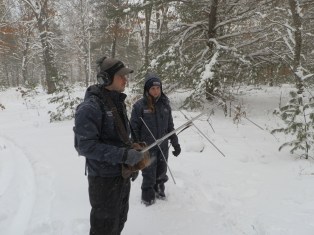
OLYMPUS DIGITAL CAMERAThere has been a lot of snowfall recently and most of the traps had to be visited via snowmobile so the martens are likely not moving much now. However, we were still able to use the radio-telemetry equipment to track down three martens.
One was hunkered down deep in a fallen log; the other two were high up in squirrel nests and we got some good looks at them before they disappeared into the tree canopy.  Despite the disappointment of not catching any martens, it’s great to continue working to help save some of Michigan’s wildlife. We plan to return in the spring and summer.

– Paul Buzzard


Notes from the Field – Xinjiang, China

Detroit Zoological Society Director of Conservation Paul Buzzard is doing fieldwork in Xinjiang, China.

This conservation project in China’s northwest Xinjiang province focuses on getting a better understanding of the snow leopard population in the Tien Shan Mountains. We are interested in estimating how many snow leopards are left in the Tien Shan as well as assessing the local attitudes toward snow leopards and the threats from poaching. To get this information, we use camera traps to get pictures of leopards and the animals they prey on and conduct interviews with the local herders.

It’s been a very successful if short trip to the field this time. My plan was to travel to Xinjiang in northwest China primarily for meetings with local collaborators in snow leopard and wild camel research. We had originally planned to set camera traps for snow leopards near Xinjiang’s capital of Urumqi the day after my arrival. However, when I was picked up at the airport, we decided to head out immediately to a much more interesting area several hours to the west in the Central Tien Shan mountains.  I was very excited to spend the majority of the trip in the field and to visit the Tien Shan for the first time.

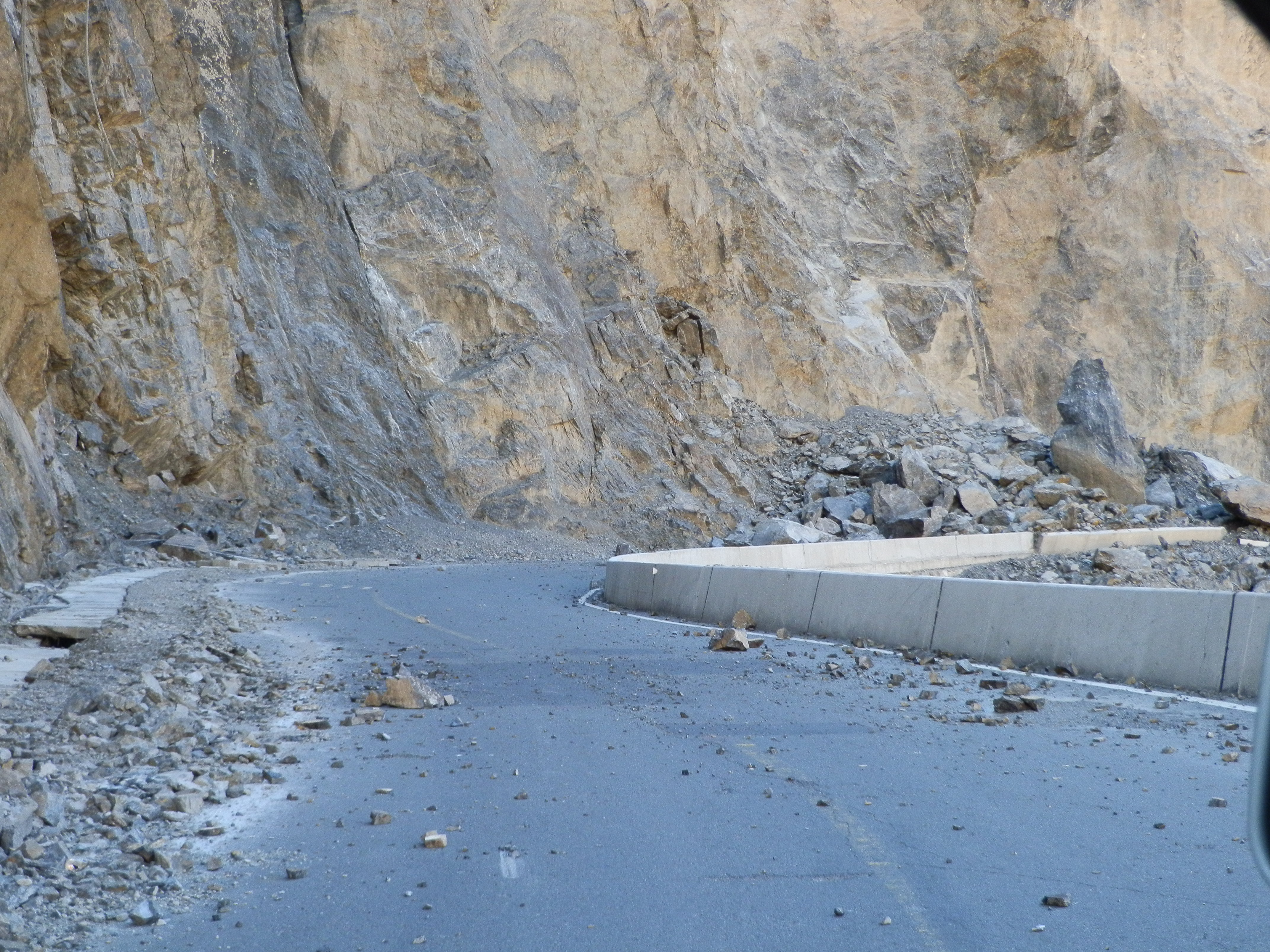
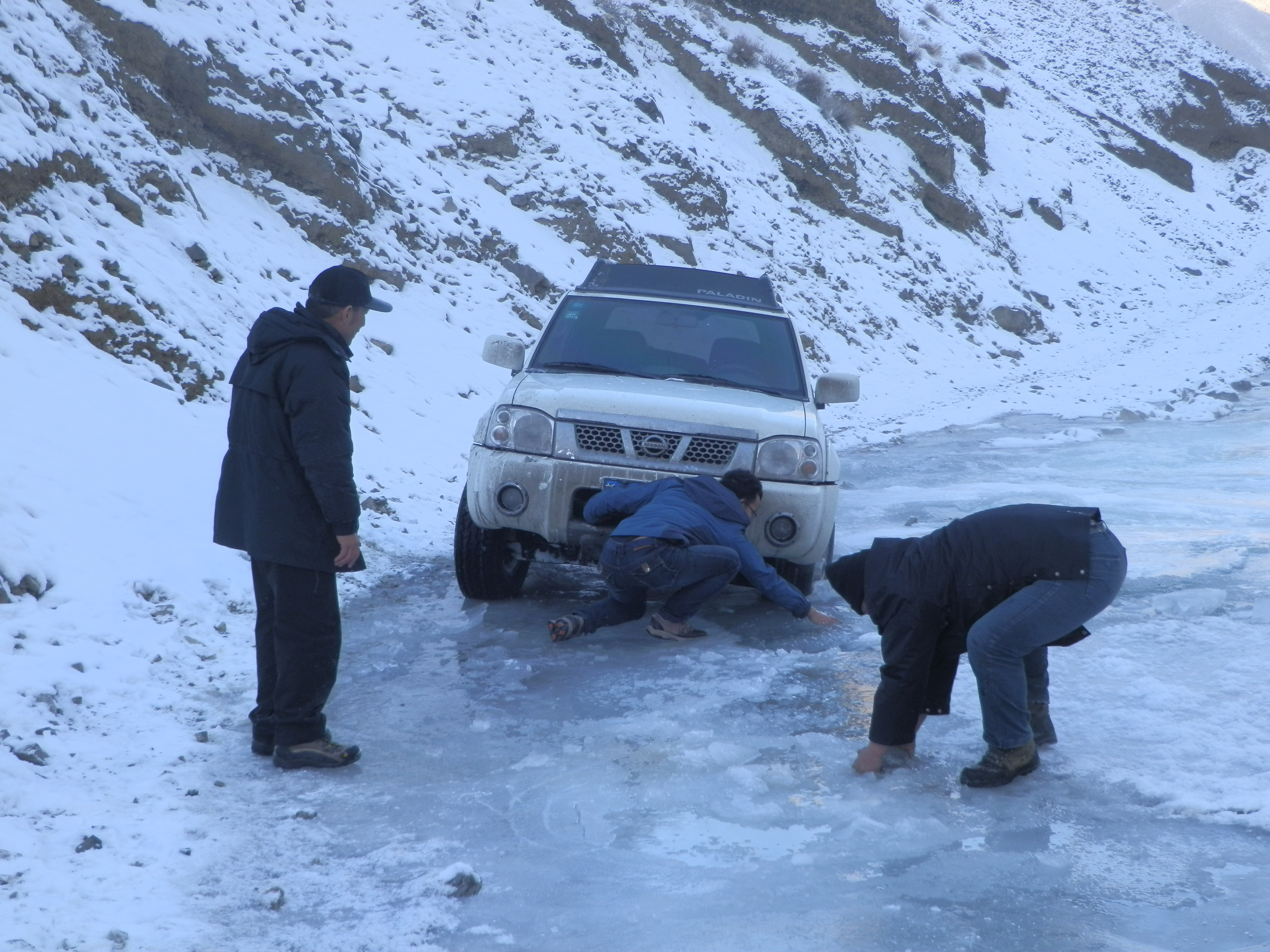
We set up camera traps despite the below zero temperatures, several flat tires and hazardous road conditions. We drove south from the city of Wusu into the valleys until rock slides or icy rivers impeded further progress and then hiked up side valleys to set the traps.

OLYMPUS DIGITAL CAMERA     OLYMPUS DIGITAL CAMERA

OLYMPUS DIGITAL CAMERA    OLYMPUS DIGITAL CAMERA

Once we got into the mountains we almost immediately started seeing herds of Siberian ibex, a wild goat that is a favorite prey of snow leopards.

We also heard reports of many argali big horn sheep, so it definitely appeared to be prime snow leopard habitat. This was confirmed when we saw the remains of an ibex likely killed by a leopard as well as lots of snow leopard tracks and droppings. The ibex were so common that they were literally falling from the sky. One day when we were driving back one of the forestry officials yelled for us to stop because at the side of the road was a dead ibex. It was frozen stiff but it had no puncture wounds from a leopard and it looked like it had slipped and fallen to its death. Ibex are normally very sure footed, so it is possible that it was fleeing from a snow leopard when it lost its footing. We only had time to set up five of the camera traps and the remaining 15 will be set up by colleagues.

OLYMPUS DIGITAL CAMERA

I plan to return next February or March to check the traps and also investigate the conflict between herders and leopards. The Kazak and Uygur herders sometimes lose sheep to leopards and it is necessary to determine if a compensation program can be established so herders are paid for lost livestock and leopards are not killed in retaliation.

Before the return trip to Detroit, I stopped off in Urumqi to meet with the director of the Lop Nur Nature Reserve in southwest Xinjiang. The Lop Nur Reserve has one of the largest sub-populations of the wild Bactrian camel, which is one of the most critically endangered mammals in the world.  We are exploring the potential for the Detroit Zoological Society to collaborate in wild camel research and help save them from extinction. Domestic Bactrian camels, like the ones living at the Detroit Zoo, have been changed from their wild ancestors over two thousand years as humans have bred them to be pack animals. Domestic Bactrian camels are somewhat larger than wild Bactrian camels, and they lack the ability of wild camels to survive drought by drinking saltwater.

– Paul Buzzard

Notes from the Field – Peru

Hola amigas y amigos!

Alas, my work this season is almost completed, today is my last day in the rainforest. Since my last post, I ran into staff from the Detroit Zoological Society education department, who were in Peru for the Adopt-a-School program, and who assisted in an overnight adventure with the amphibian club. We all spent the night at a research station where we were able to enjoy an evening walk through the jungle looking for amphibians, the canopy walkway and the next day a morning walk back to the boats. We saw salamanders, several species of frogs and they have been very busy with their observations while I was back in the states.

Marcy - rainforest     Marcy - canopy rainforest

During November, the season begins where the rain becomes heavier and frequent, almost daily. This is when the rivers start to rise. Since I landed in Peru the river has already had a noticeable increase. However, one of the many lakes we visit in high water was still dry enough we could walk to it.

Last night, we traveled by boat to the edge of the narrow stream to hike to the place called Lorenzo Lake. This is one area that we monitor twice a year and expect to see hundreds of amphibians and calls that are nearly deafening. We were not expecting to see so many of the giant hunting ants (locals call bullet ants for the pain they inflict when they bite), we had to be especially careful passing brush from the narrow path carved out by our machete. Many scorpions and beautiful moths plagued the long hike to lake, but the calls we could hear before we docked could even dock the boat. It was a beautiful night!

– Detroit Zoological Society Curator of Amphibians Marcy Sieggreen is doing fieldwork in Peru, studying amphibians in the lower elevations of the Amazon River to see how they are faring with increased human populations and impacts in their habitats.

Editor’s note: Marcy Sieggreen was the curator of amphibians for the Detroit Zoological Society from 2008 until her passing in 2016. The Detroit Zoological Society established the Sieggreen Amphibian Conservation Fund in Marcy’s memory to continue to advance the work she so passionately championed.

Notes From the Field – Peru

Detroit Zoological Society Curator of Amphibians Marcy Sieggreen is doing fieldwork in Peru, studying amphibians in the lower elevations of the Amazon River to see how they are faring with increased human populations and impacts in their habitats.

Hola mi amigas y amigos!

It has been nearly over a week since my last post and a lot has happened. We have seen several species of frogs at night. There has not been much activity during the day but it is still important to look and make note of what is or is not seen. We have travelled to all of the islands that we usually observe that are surrounded by the Napo but have also found another uninhabited island that is underwater during most of the year.

Marcy - Peru 2      Marcy - Peru

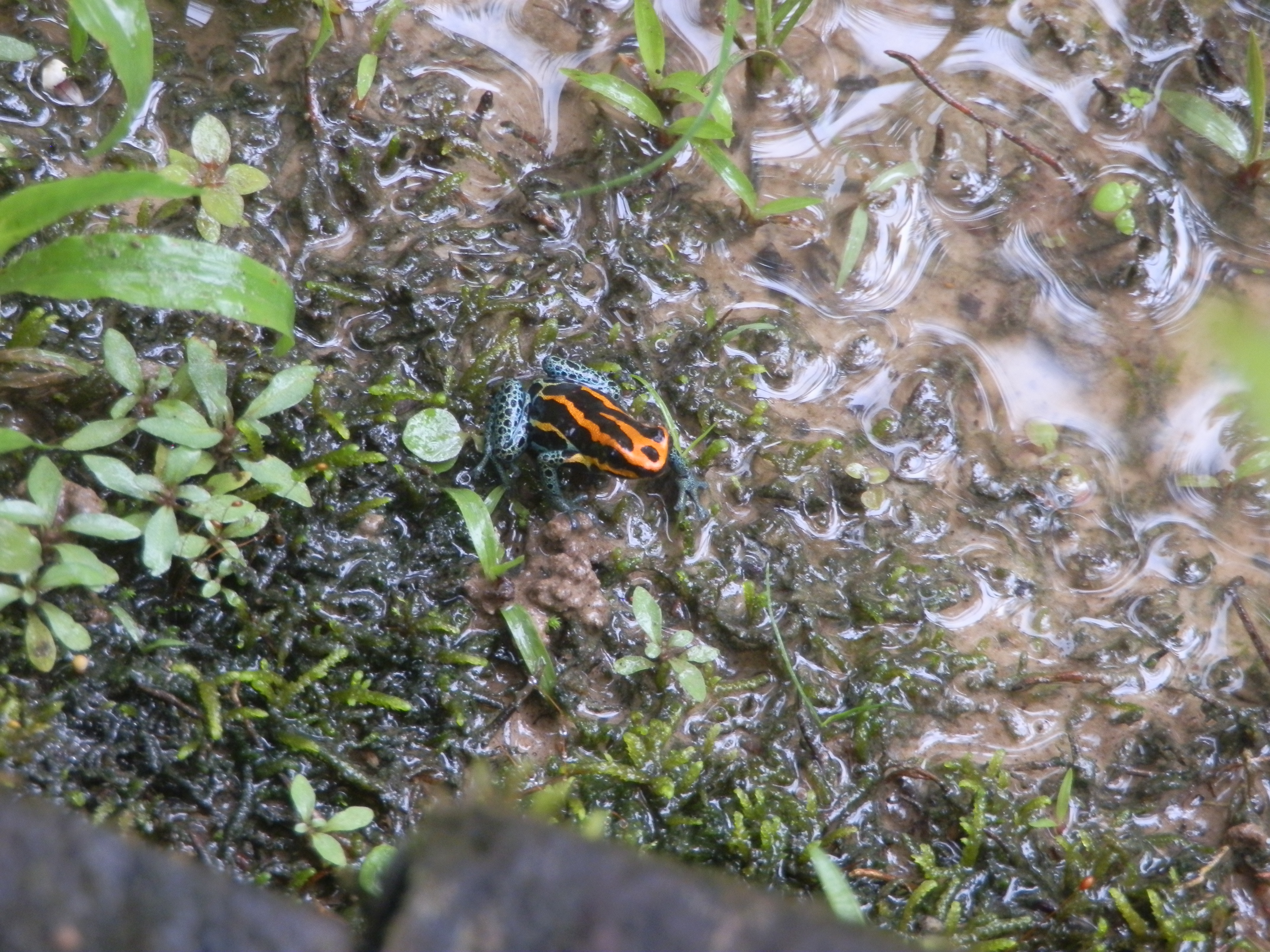
What a pleasure it was to jump out off the boat and find hard sand (like what we know as a beach) with marine toads everywhere. Some of you may have heard that these toads are now found in several places in the world and are considered invasive species, making them a nuisance. Here in South America, they are native and an important part of the ecosystem. Since I had not seen many on this trip, I had a growing concern. The island also had a bog that was home to several tree frogs. There were no species I had not seen before but a positive confirmation that species I would expect to see I had.

I have seen many caimans, snakes and most recently a mammal, which I believed to be a Paca. Animals this size (about the size of a 30 lb dog) is not frequently seen and is very fast. Although amphibians are the most fun to track down, seeing other wildlife is always a treat.

This upcoming week, I will be working with our Amphibian Protectors Club on an overnight observation through a small portion of the rainforest and along the canopy walkway.  My colleagues from the Detroit Zoological Society’s education department are taking time out from their schedule to join us. We are hoping to be able to see lots of animals and document our findings back at the research station. Buenos noches!

– Marcy Sieggreen