Greenprint: Ghosts, Goblins and Going ‘Green’ this Halloween

Halloween is right around the corner, and we’ve found a way to make it both spooky and sustainable. Take a look at what we’re doing to “green” our Halloween and see what you can do at home.

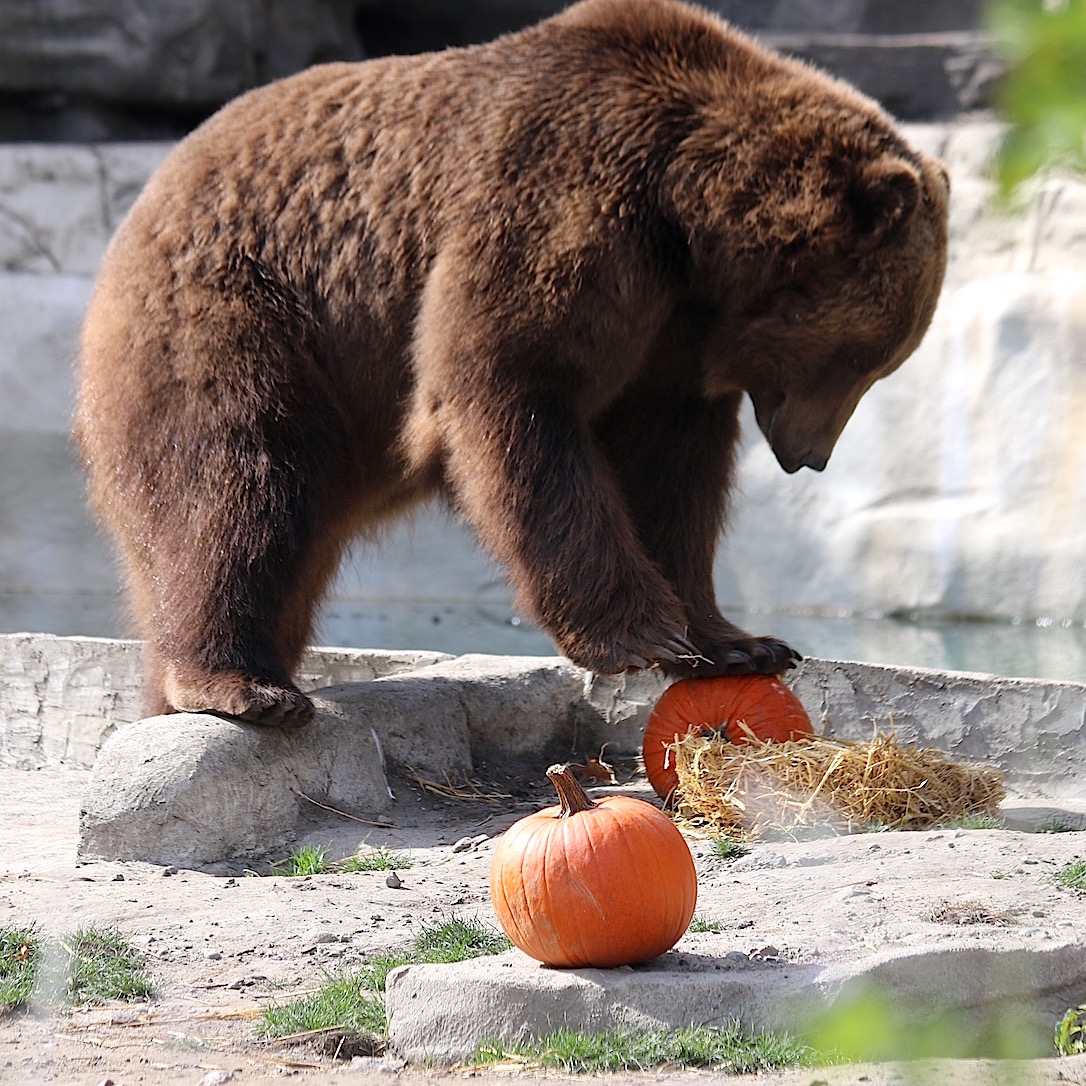
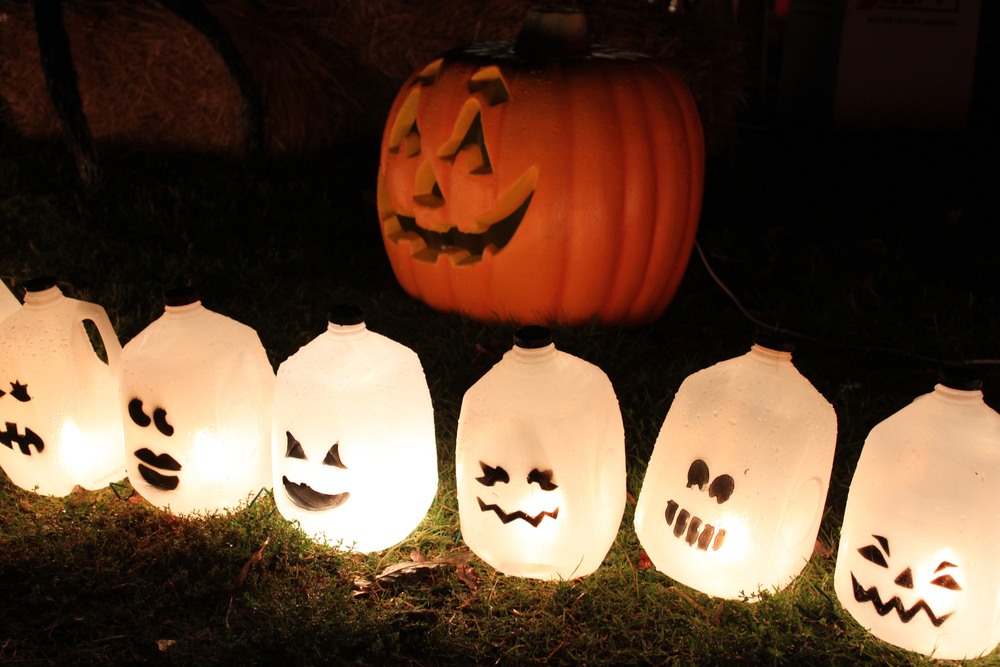
The Detroit Zoological Society (DZS) is preparing for Zoo Boo, our annual Halloween hoopla at the Detroit Zoo during three weekends in October. The events will feature acrobats, story tellers, magic acts, jugglers, live music, extreme pumpkin carving demonstrations and of course, Halloween displays along the “unlucky” 13-station trick-or-treat trail. As part of our Green Journey, trick-or-treat bags will not be provided at the events; guests are asked to bring their own reusable bags. In addition, many of the displays will be made with reusable and repurposed materials such as plastic milk jugs and old tires. We also will have a surplus of pumpkins from Zoo Boo that will be provided to the animals during our annual Smashing Pumpkins event – this year planned for October 10 and 20. Any leftover straw will be donated to local animal shelters to help keep the animals warm in the winter.
You can have a sustainable Halloween at home, too! Here’s how:

  • Support Local Farmers. When it comes to picking that perfect pumpkin to carve, go local. Choosing to buy from nearby farmers not only generates income for the local economy, but it also reduces the amount of carbon dioxide polluting the air. When you purchase from a grocery store, your produce has been shipped from hundreds —sometimes thousands — of miles away, creating more greenhouse gases than your trip to the farmers market. Detroit’s Eastern Market is a great place to start looking for homegrown produce; many communities host farmers markets as well.
  • DIY Your Costume. Packaged Halloween costumes from the store are expensive and are often only worn once. Grab a friend and spend a day going through each others’ closets to see if there’s anything that can make a good DIY costume. Or visit a thrift store to find affordable costume items that can be used again and again.
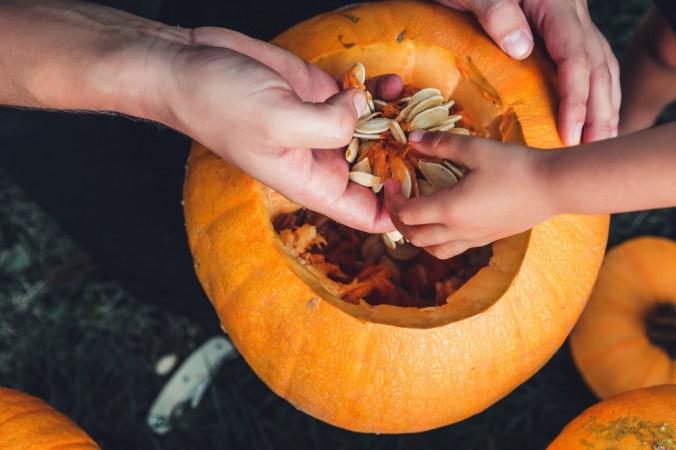
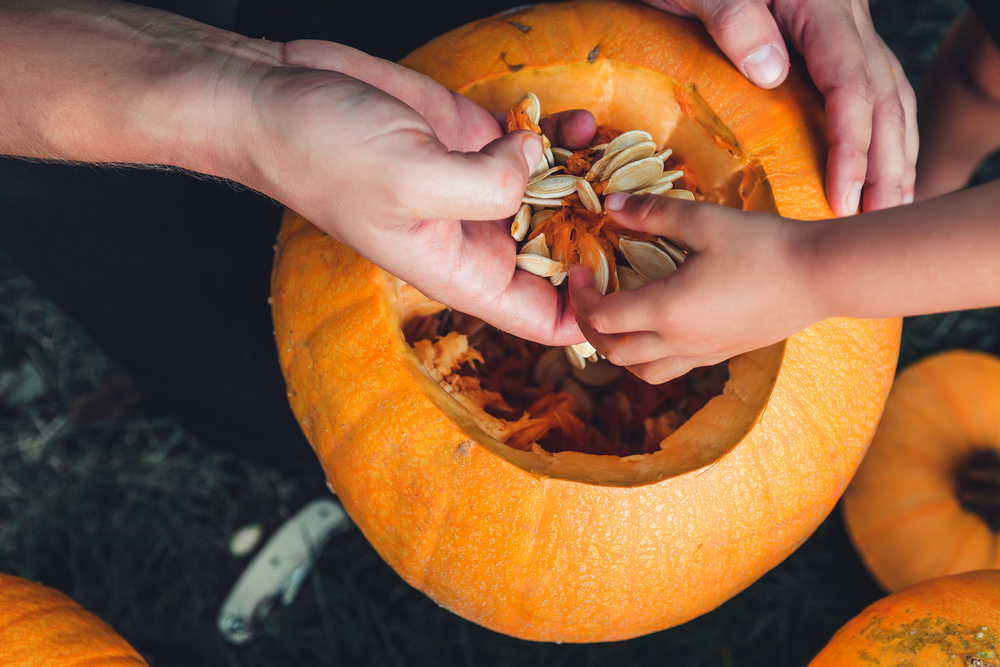
  • Preserve Your Pumpkin. Before you scoop out the inside of your jack-o-lantern and throw it away, think of all the different things that could be done with it. Pumpkin spice recipes are all the rage right now, and there are so many ways you can try it yourself at home. You could roast the pumpkin seeds for a salty snack, or bake some delicious pumpkin muffins or a pumpkin pie.

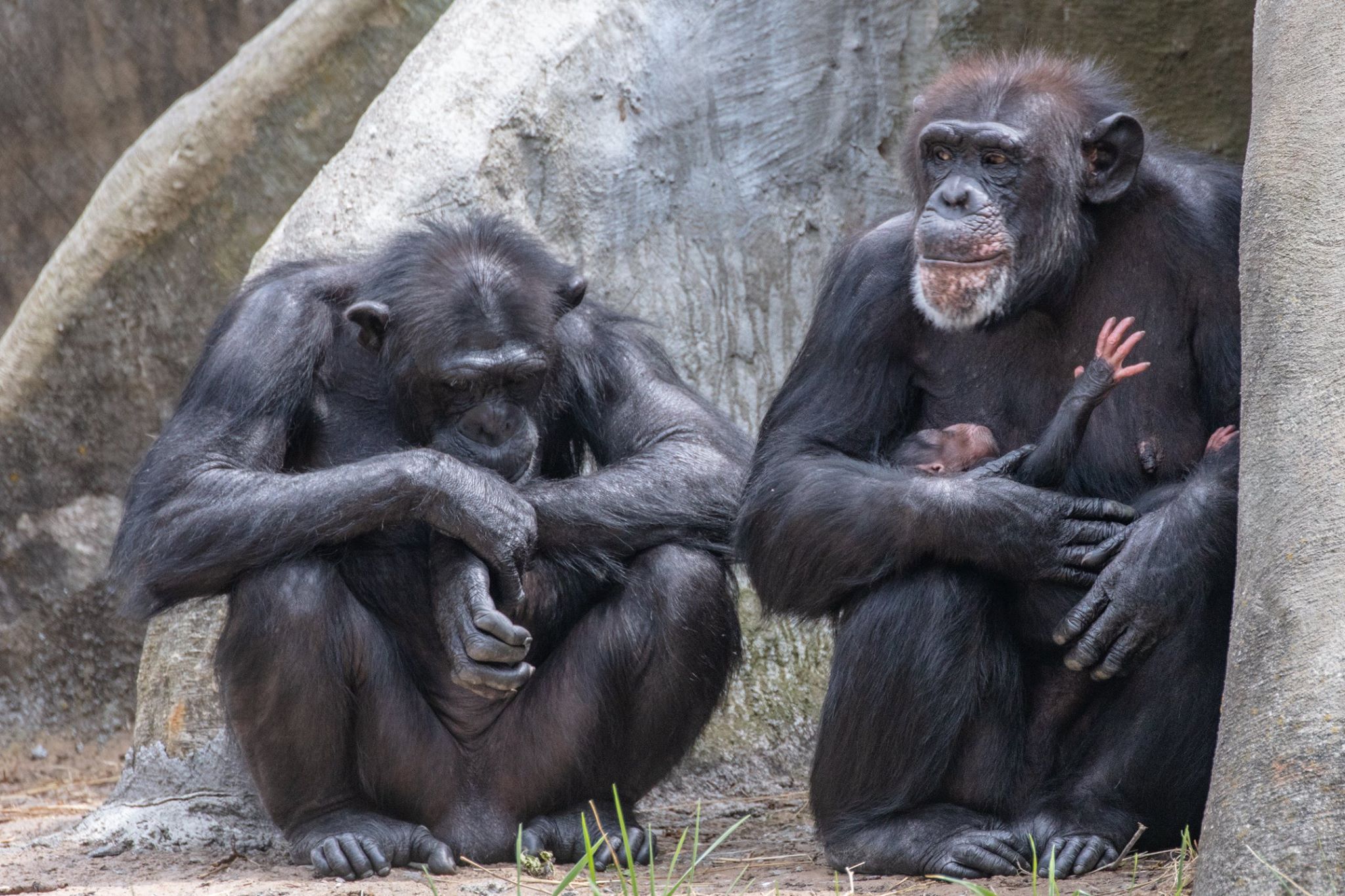
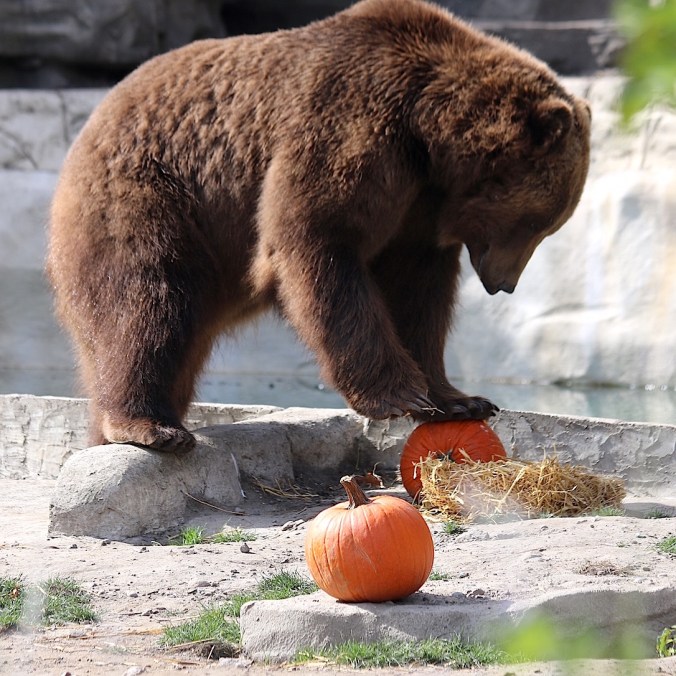
    During our Smashing Pumpkins events, we use the leftover pumpkins from Zoo Boo to provide animals with a festive snack and make sure their habitats are engaging. In addition to pumpkins, the animals receive gourds, cornstalks and other seasonal treats from local Michigan producers. While we are appreciative of those who inquire about donating their own leftover pumpkins, we aren’t able to accept them. Instead, we recommend composting leftover pumpkins. We compost any leftover pumpkins using our anaerobic digester, which converts animal manure and other organic waste into methane-rich gas to help power the Zoo’s animal hospital. Learn more about how to compost at home here. Guests can come and watch the chimpanzees, polar bears, giraffes and many other animals eat, play with, roll around in and smash their pumpkins during Smashing Pumpkins.
Doing your part toward making the Earth a better place doesn’t have to be scary. Every effort counts when making sure that all of us – humans and animals – have a place to call home for years to come.
Detroit Zoological Society Helps Students Explore Alternative Dissection

Millions of frogs are dissected every year in science classrooms across the country and unfortunately, many of these animals are taken from the wild. With more than half of all amphibian species at risk of extinction, it is critical to leave amphibians in their native habitats.

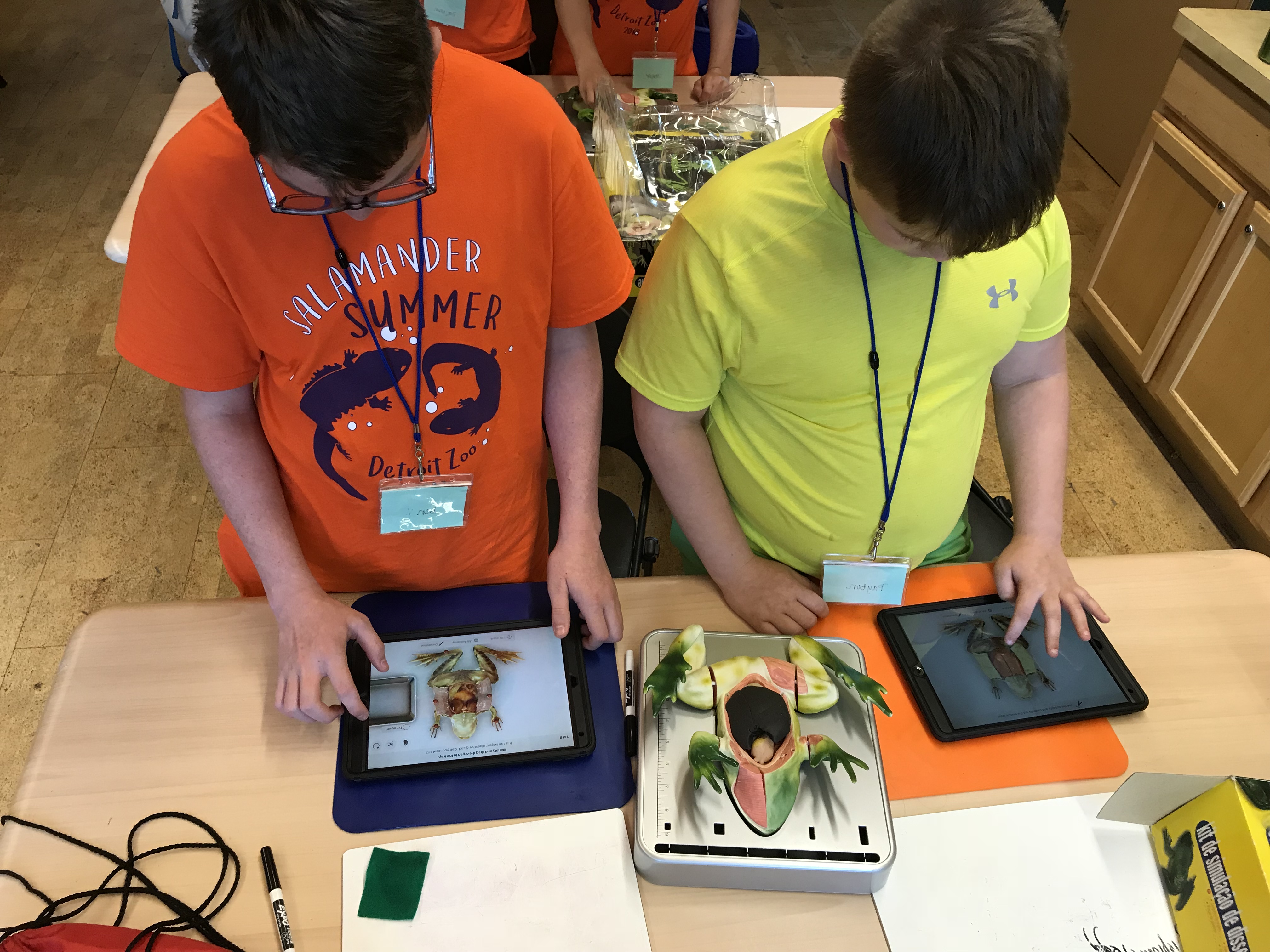
This summer, the Detroit Zoological Society’s Berman Academy for Humane Education purchased state-of-the-art virtual-reality frog dissection software. Combined with 3-D models, students can participate in an engaging, hands-on humane dissection alternative. In its current form, this alternative dissection approach is instilling a better appreciation for amphibians in classrooms, camps and other education programs.

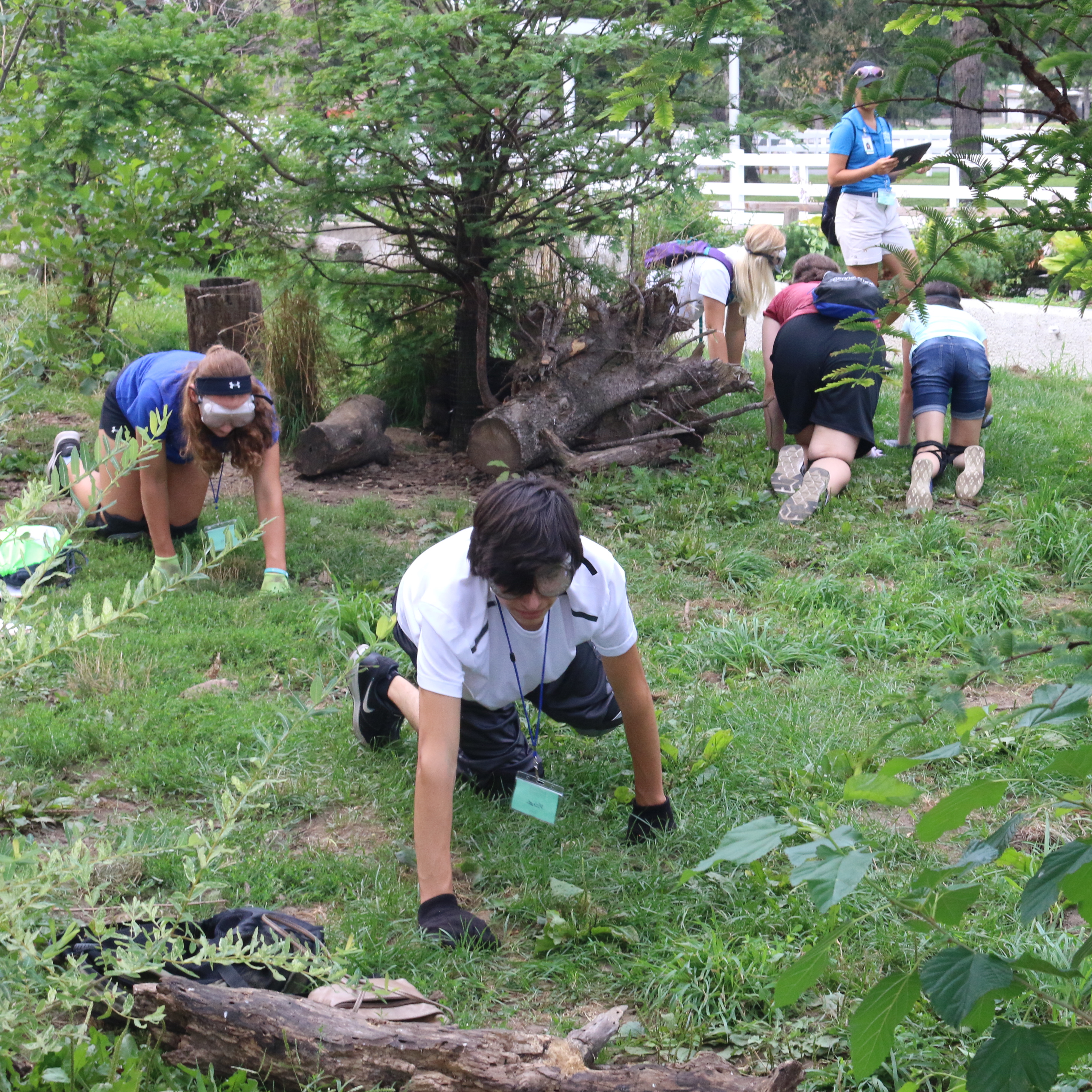
During the DZS’s Summer Safari Camp at the Detroit Zoo this summer, students entering eighth grade focused on veterinary medicine as a potential career. Through this lens, campers used iPads to explore, rotate and connect how a frog’s physiology works beneath the surface. The augmented reality part of the app allows students to zoom in and manipulate the view of the virtual frog on their tables. Hands-on models of the same species of frog allows them to physically take apart and reassemble parts of the frogs’ anatomy. This experience, combined with a guided tour of the National Amphibian Conservation Center, gave campers the opportunity to see frogs in a different light.

Middle school teachers can schedule their class to visit the Zoo to participate in a Learning Lab focused on virtual dissection. In this program, students use the virtual reality software on a classroom set of iPads to learn about frogs and dissect them, without the cost and environmental impact of taking amphibians from the wild. The software also allows students to go through the process multiple times, to better understand frog anatomy while ensuring wild populations of these critically important species are not compromised.

For more information or to schedule a classroom for the Virtual Dissection Learning Lab, visit https://detroitzoo.org/education/school-groups/ or email us at education@dzs.org.

– Carla Van Kampen is a curator of education for the Detroit Zoological Society.

Animal Welfare: Seal of Approval

The Detroit Zoological Society (DZS) is investigating the effect of foraging opportunities on the welfare of the seals who live at the Detroit Zoo. Foraging is a very important behavior category for animals, as it typically involves mentally and physically stimulating behaviors. Wild gray seals may spend up to two-thirds of their time searching for food. Although they do have well-developed hearing and sight, seals often rely on their extremely sensitive whiskers to locate the fish they eat. This is necessary as visual conditions underwater can be poor and swimming fish may not generate much noise as they move. Instead, the fish – and other prey items – create vibration trails in the water and these are the stimuli the seals’ whiskers detect. Research has shown that harbor seals can use their whiskers to distinguish between objects of different sizes and shapes – a skill they can use to select better prey items when hunting.

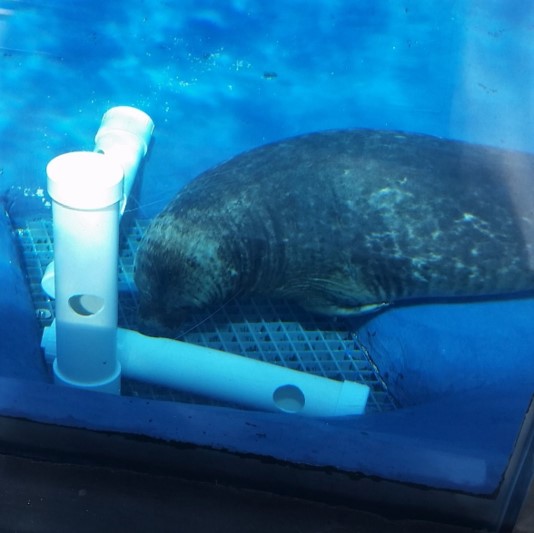
Seals living in zoos and aquariums don’t need to forage in quite the same way as they would in the wild, and thus may not engage in as many complex feeding behaviors. As part of her residency with the Center for Zoo and Aquarium Animal Welfare and Ethics, Sara Zalewski worked with DZS staff to design a project examining the impact of three different ways to increase foraging behavior in the gray and harbor seals living at the Detroit Zoo. The seals were presented with fish frozen in ice, fish placed on top of a floating disk and sunken tubes the seals needed to manipulate to allow fish to fall out of holes in the tube. All three items were used to increase the amount of the work the seals would have to do to get to the food. As part of this research, Sara found that the seals differed by both species and individual in how they used the items.

The gray seals interacted with the items most when they were first presented with them, and the harbor seals’ level of interaction increased as time went on. The likely explanation for this is that the gray seals were younger and more dominant, and thus were able to use the items more easily. Once they had their fill of the food, they would lose interest and the harbor seals could begin to investigate the items. Dealing with dominance hierarchies can create challenges when providing animals with resources, and is therefore something we have to keep in mind when thinking about the welfare of all of the individuals.

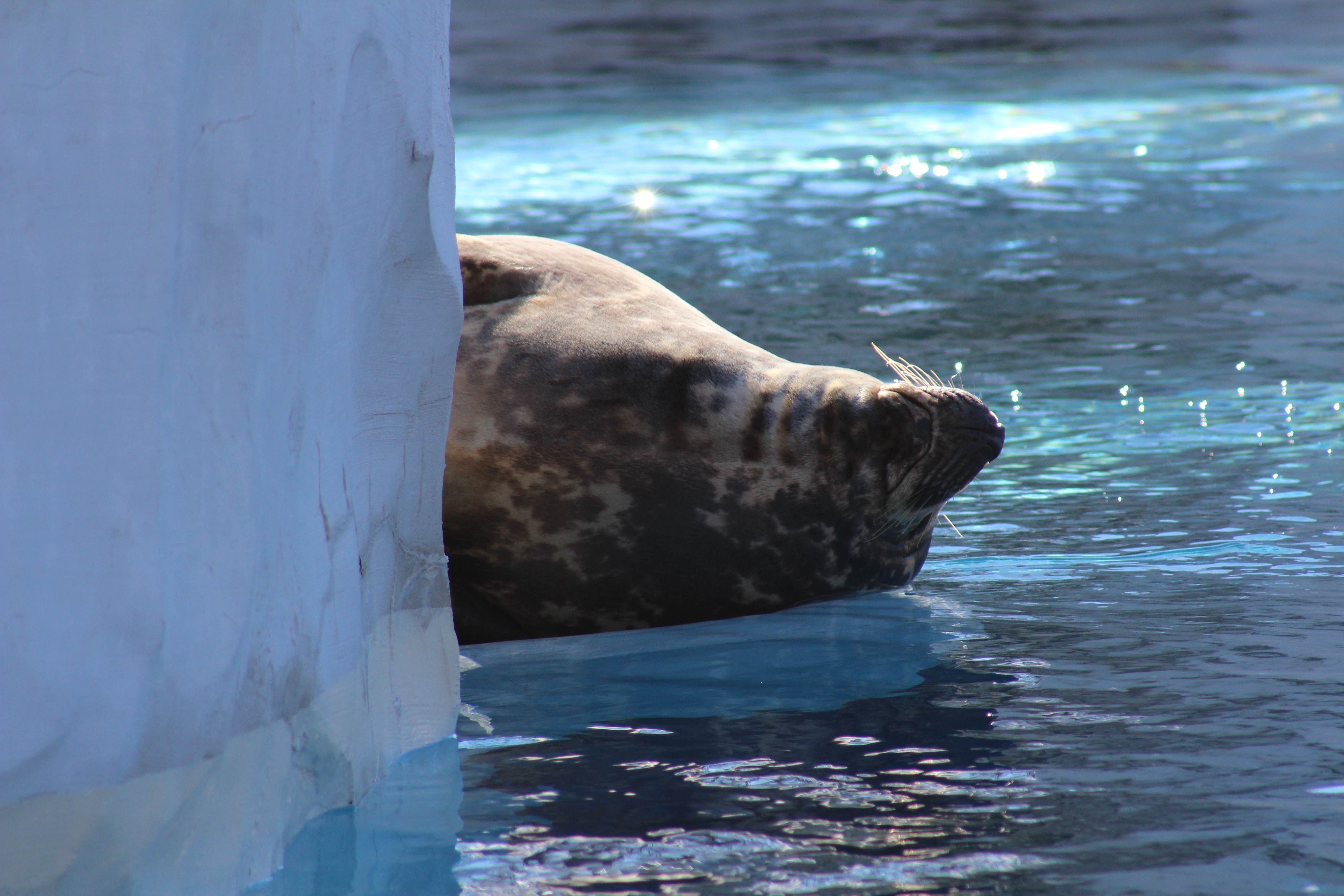
Another challenge was getting the seals to use the items for longer periods of time. It makes sense that less interaction occurs without the motivation of obtaining food, so there is a need for more challenging devices that require the seals to use more of their foraging abilities. One unexpected outcome was that Georgie, one of the female gray seals, would sometimes use a floating disk as a resting place later in the day. However, it could not support her body weight, so she would lay on it on top of something else, such as a ledge in the pool. Other studies have shown that gray seals’ preferred prey, haul out sites, and feeding locations and techniques differ greatly between individuals. Finding ways that items can serve more than one purpose and allow each seal to make use of them as they choose are also goals.

Harbor seals are an especially playful species, including as adults. However, as animals age, play and exploratory behavior tend to decrease, regardless of the species. Additionally, decreases in their sensory abilities may occur. This means that for Sydney, the older male harbor seal, opportunities may be more challenging or potentially less engaging for him.

In order to create more engaging ways for all the seals to forage, Sara worked with DZS staff to refine the items and will observe Georgie and Jersey, the two gray seals, and Sydney, the harbor seal, to see how the modifications affect their behavior. DZS staff members are creating floating devices that the seals can use to rest – as well as interact with for access to fish – and are changing the design of the tubes so that they rest standing up, rather than lying flat on the bottom of the pool. This should make it a bit harder for the fish to fall out, and will be more stimulating for the seals as a result. Finally, Sydney will have some alone time with the items, to ensure the younger and more agile females don’t deplete the food before he has a chance to interact with the foraging devices. During your next visit, you may see these items in the seal pool at Arctic Ring of Life. Although we are only observing the seals at specific times, incorporating these types of behavioral opportunities is part of our daily comprehensive program of ensuring the environments for all the animals at the Detroit Zoo are ever changing and appropriately complex.

– Dr. Stephanie Allard is the director of animal welfare for the Detroit Zoological Society and oversees the Center for Zoo and Aquarium Animal Welfare and Ethics.

Notes from the field: Mitigation of Human-Bear Conflicts in Armenia

The Detroit Zoological Society is conducting ongoing fieldwork in Armenia to assess the population of brown bears and mitigate conflicts that are occurring between humans and bears. Wildlife conservation is an important aspect of the DZS’s mission, and we are renowned for taking a compassionate approach in everything we do. A critical component of this is reducing human-wildlife conflicts around the world. As the human population and land development increases, people are coming into conflict with wildlife more and more from various factors such as predators eating livestock, wildlife raiding crops, and direct threats to human lives.

Armenia is a small country in the south Caucasus Mountains of west Asia between the Black and Caspian seas. Despite its size, Armenia is a hotspot for biodiversity and important for wildlife conservation because of its location at an intersection where wildlife converge from Eurasia, Africa and the Indian sub-continent.

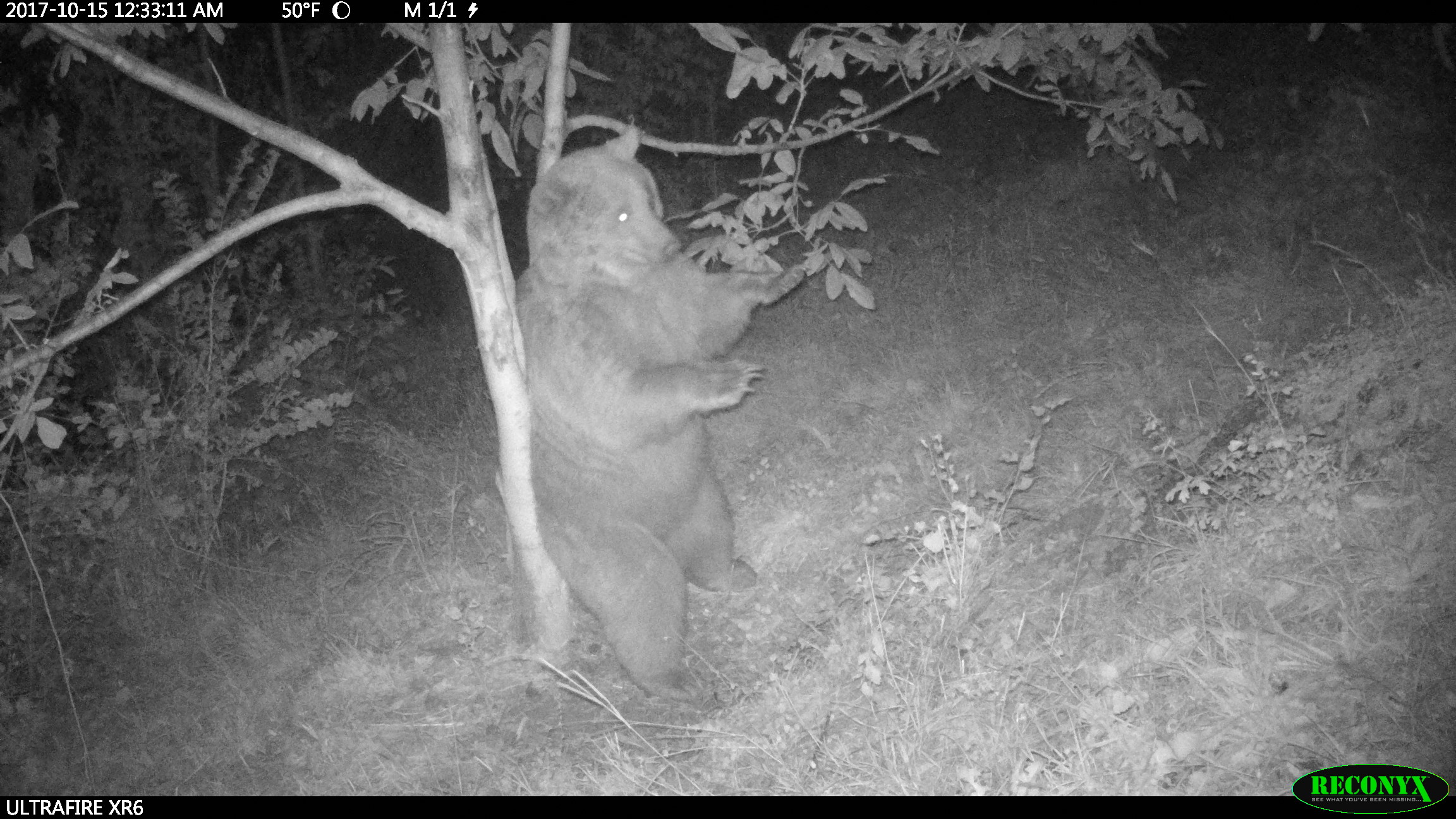
Little is known about brown bears in Armenia; a recent survey of global human-bear conflicts did not include this data, which we think is important. As we are currently involved in wildlife conservation efforts for Eurasian otters in this country, the DZS initiated a project that would assess the distribution and impact of human-bear conflicts in Armenia by conducting interviews and placing trail cameras in and around villages.

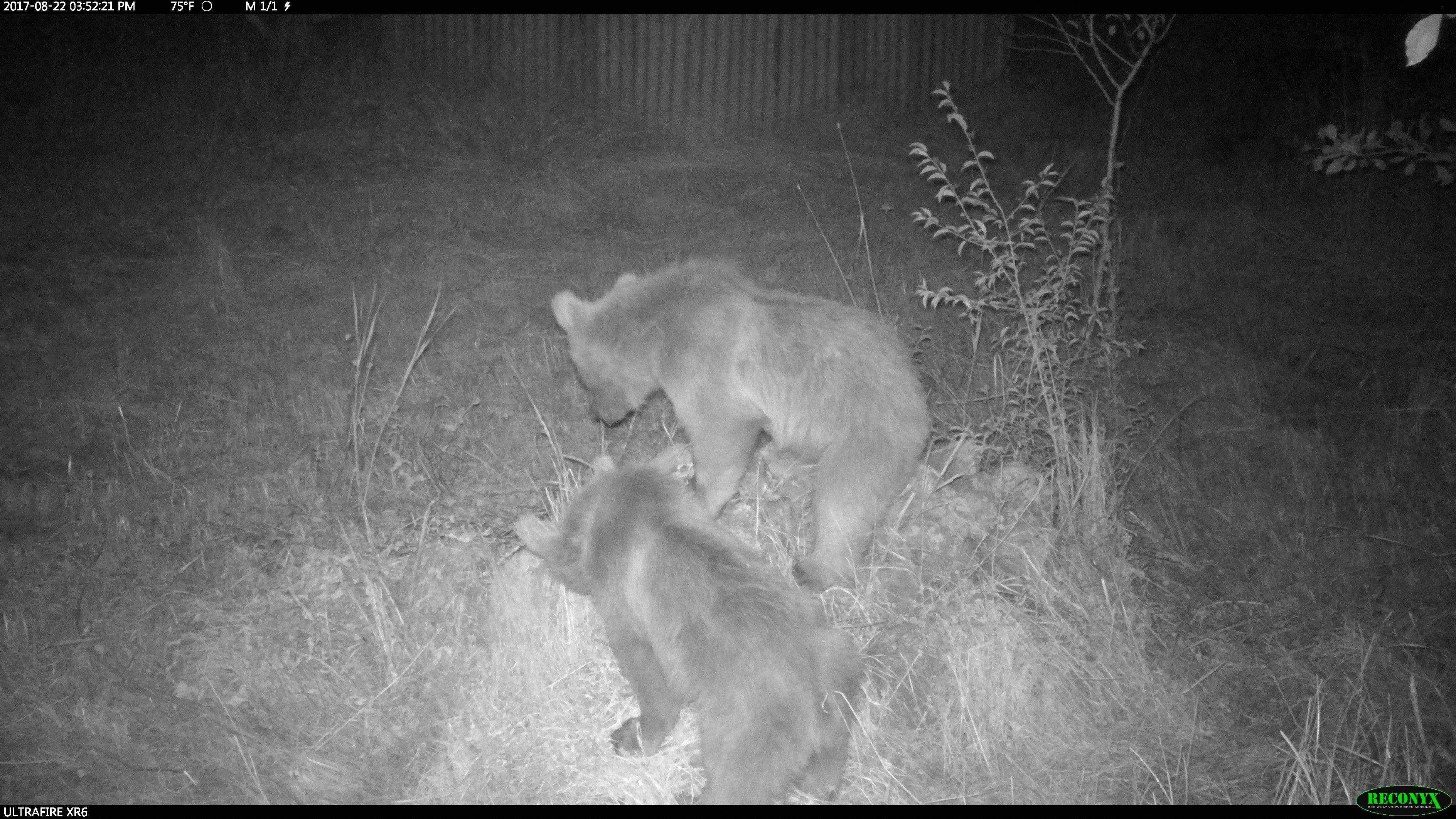
Interviewees indicated that the conflict primarily arose due to bears entering orchards, eating fruit and destroying beehives. At times, bears also killed livestock and posed a threat to humans, and by all accounts, the conflict has increased over the last several years. Data from the trail cameras supported these reports. Many pictures showed bears in villages, including mother bears with twins or triplets, which can pose greater threats to humans, due to a mother bear’s instinct to protect her cubs.

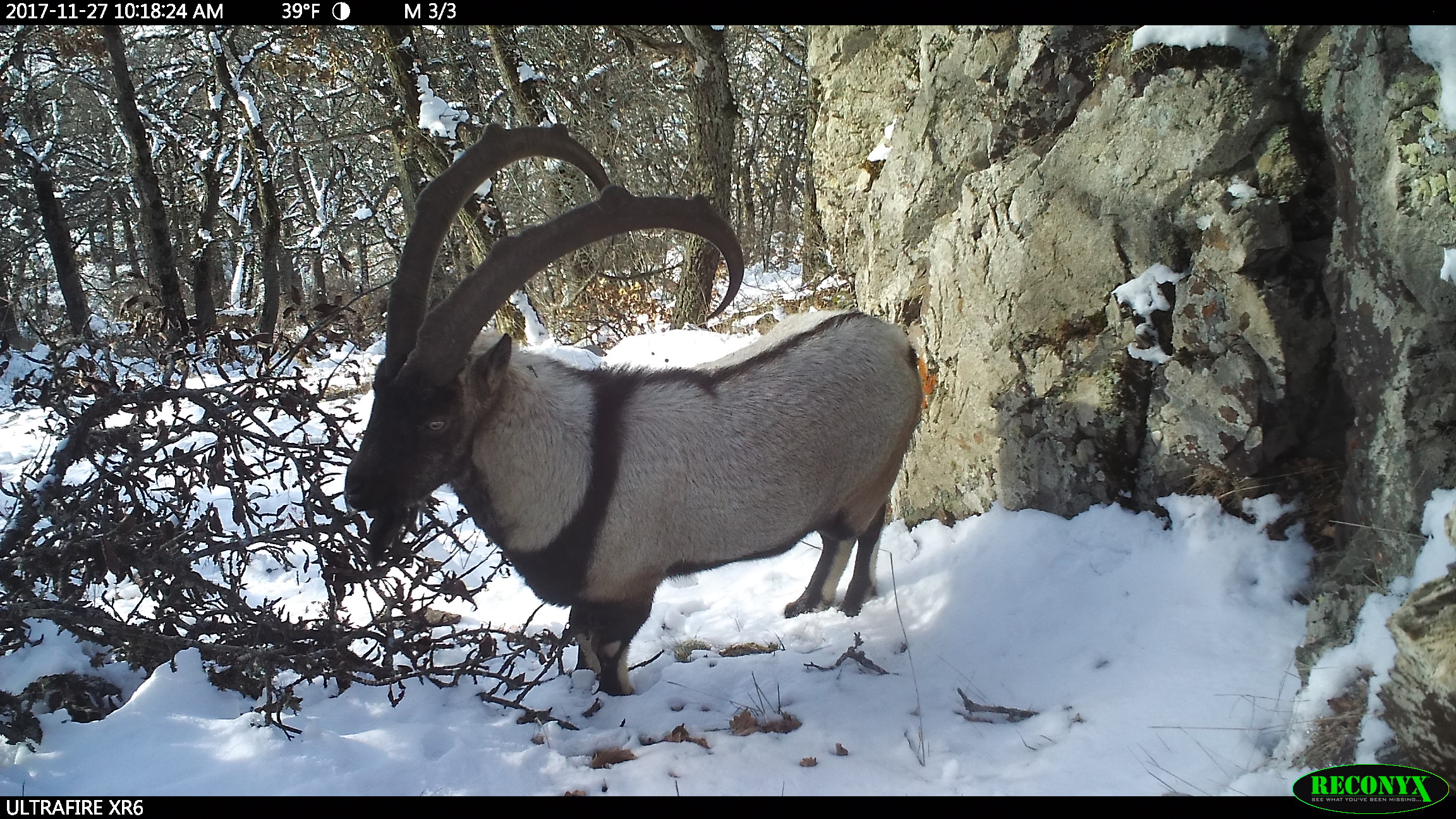
There were also many pictures that showed potential competitors for food such as lynx and wolves, as well as prey of bears including wild boar and bezoar goats. Reports from a bezoar goat viewpoint in the area that was established by the World Wildlife Fund confirmed that bears were preying on young bezoar goats.

We are now working on a manuscript that will detail the level and impact of human-bear conflicts in Armenia and encourage research into conflict mitigation, which could potentially include electric fencing, remote-triggered lights and noisemakers and compensation to farmers for their losses. In addition, we recommend exploring bear-based eco-tourism programs, which could potentially add value from the bears’ presence to the villagers.

– Paul Buzzard, PhD., is the field conservation officer for the Detroit Zoological Society.

Notes from the Field: Eurasian Otter Conservation in Armenia

The Detroit Zoological Society (DZS) recently began a new wildlife conservation project with Eurasian otters, which are classified as Endangered in Armenia and Near Threatened in the whole of their range. Their numbers have fallen dramatically in Armenia and in neighboring Azerbaijan and Iran; therefore, it is essential that we gather data on their status and work to preserve their populations.

Otters are important indicators of the health of aquatic systems. They are found in a wide variety of habitats, including highland and lowland lakes, rivers, streams, marshes, swamp forests and coastal areas. Armenia, which is a small country about the size of Vermont or New Hampshire, is located in the Caucasus Mountains of west Asia between the Black and Caspian Seas. Despite its small size, Armenia is a biodiversity hotspot important for wildlife conservation because it is located at an intersection where wildlife converge from Eurasia, Africa and the Indian sub-continent.

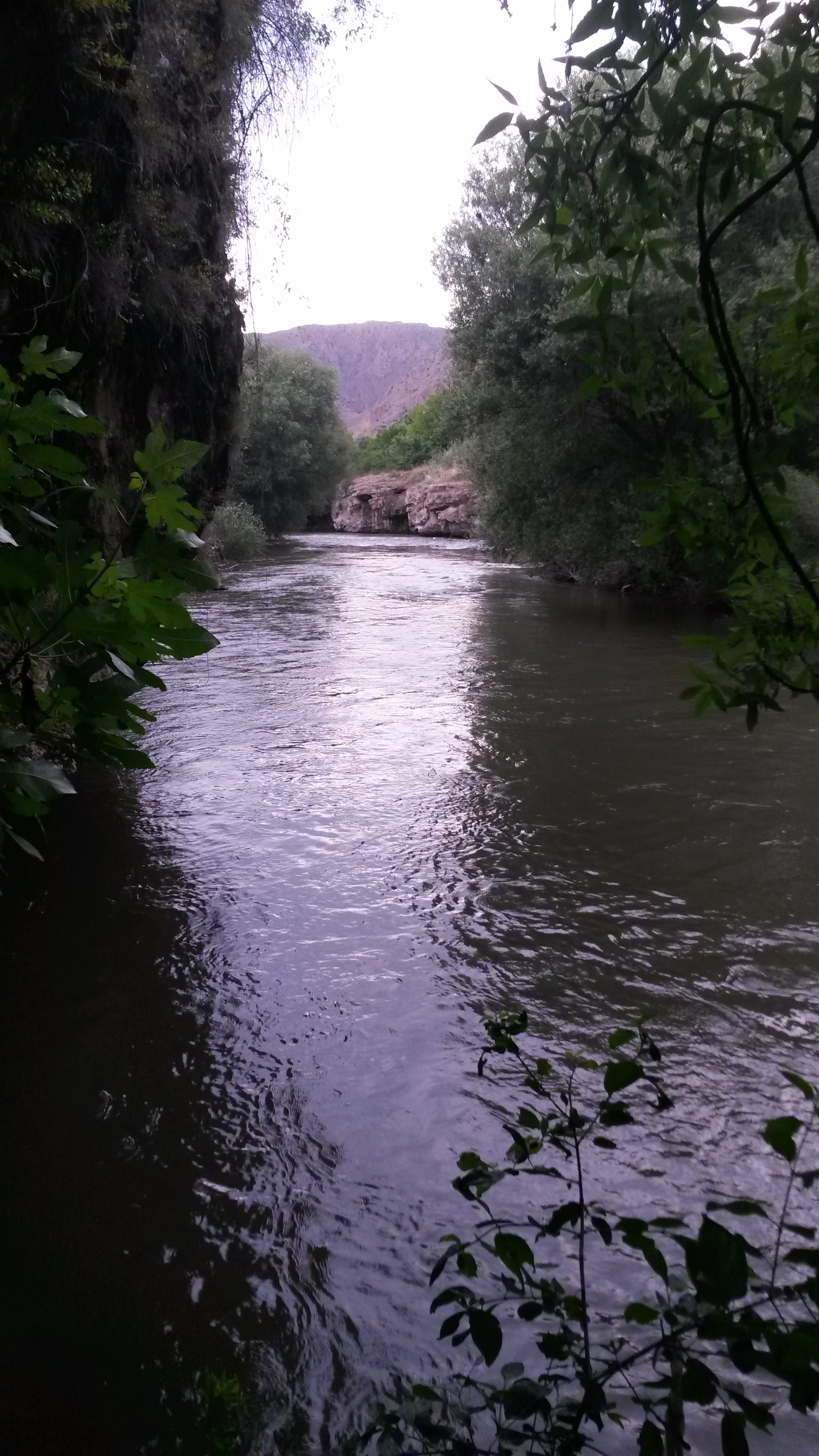
While conducting fieldwork in Armenia this summer, we walked five transects along rivers and streams in Central Armenia to look for sign of otters such as feces, tracks and/or feeding remains. In every Armenian transect, we found feces and/or feeding signs, such as crab shells, within the first 200 yards. We also set cameras along the rivers to document the otters present in those areas. We heard credible reports of otter sightings in several other areas of Central Armenia – including in urban areas – as well as in the south, west and northern parts of Armenia. It appears that otters have made a comeback, which is great news.

Most otter sightings were accompanied by reports of conflict with humans, due to the otters eating fish out of the ponds at fish farms. A major component of this project – as with many wildlife conservation initiatives the DZS is involved with around the world – will be to investigate ways to mitigate this conflict. We plan to track the success of the farmers we encountered who used dogs and/or fencing as methods to protect their fishponds.

We will also be surveying suitable habitats for otters in all of the Armenian watersheds.  This involves overlaying a 6-mile by 6-mile grid on top of a map of Armenia and noting areas within the grid that have a confirmed otter presence. We also plan to obtain robust population estimates using genetic analyses from the otter feces. With this data, we will be able to determine important locations for otters and explore the potential of setting up sustainable protected areas. This project furthers the DZS’s mission of compassionate conservation as part of the effort is to reduce human-otter conflicts and save individual otters while establishing protected areas for otter populations to thrive in the future.

– Paul Buzzard, Ph.D. is the field conservation officer for the Detroit Zoological Society.

Reading, Writing and Recycling: Go Green Back to School

Back-to-school season is in full swing as an estimated 58 million students are preparing to hit the books this fall. Parents and kids all across the nation are shopping for clothes, shoes and supplies, looking for the best bang for their buck. However, one aspect shoppers may want to consider is how their shopping affects the environment. Buying environmentally friendly school supplies and packing eco-friendly lunches can go a long way toward conserving and protecting our planet’s resources.

Here are some tips to help guide you toward a more “green” back to school experience:

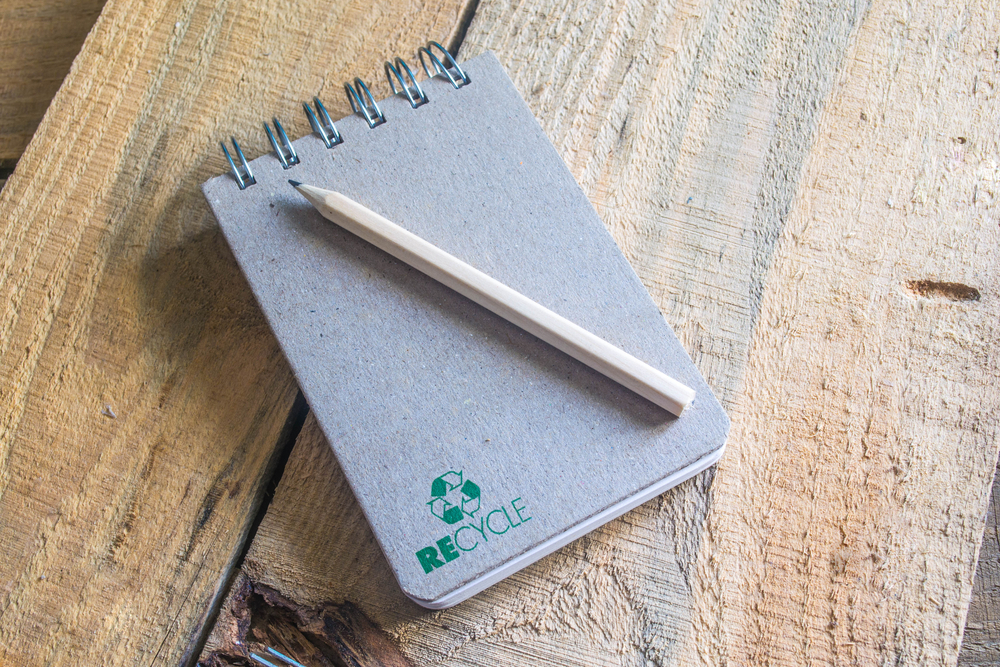
  • Buy 100 percent recycled paper and notebooks – be sure kids use both sides of the sheets whenever possible
  • Write with recycled pencils
  • Recycle while at school – Consider which trash can be saved from a landfill
  • Use refillable pens – each pen can last up to a decade

Small efforts can have big impacts. According to the U.S. Environmental Protection Agency (EPA), each school lunch generates 67 pounds of waste per school year. That means just one average-sized middle school creates more than 40,000 pounds of waste each year. Packing a waste-free lunch also saves an average student $250.

Here are some ways you can pack a more sustainable lunch this fall:

  • Adopt reusable bag practices – send lunch in a reusable bag instead of a paper or plastic one.
  • Purchase a refillable water bottle – it takes three times the amount of water that’s in a plastic water bottle to create the bottle in the first place.
  • Reach for reusable sandwich bags and containers – consider perhaps a waxed fabric sandwich bag.
  • Compost peels and pits – some students have compost programs at their schools, but for those that don’t, encourage them to bring their apple cores and cherry pits home.

There are many other ways students – with the help of their teachers – can help reach environmental goals. If 133,000 schools switched to recycled paper, they could save about 6 million trees per year, according to The Green School Initiative. America’s schools spend more than $7.5 billion annually on energy – more than they spend on textbooks and computers, according to the U.S. Department of Energy. If school districts worked to conserve 25 percent of that energy, they could save $1.5 billion per year.

Students can also make change themselves by contributing toward green goals through programs such as Michigan Green Schools, which inspires schools to adopt more sustainable practices such as recycling, installing rain gardens and planting edible or native Michigan gardens. Applying to become a Michigan Green School can be pivotal in teaching the next generation essential green practices.

Our future depends on protecting the health and well-being of our children. Educating this generation with the skills to solve the global environmental problems we face is just as important as educating them about math and history. It’s a substantial task to put on such young people, but each small step is one taken toward a more sustainable future.

Animal Welfare: Inspiring the Next Generation

Do you know what it’s like to be a giant anteater? How about what the world looks and sounds like if you are an 18-foot tall giraffe? High school students taking part in the Detroit Zoological Society’s (DZS’s) animal welfare summer camps had the unique opportunity to experience just that.

Over two weeks, 31 students participated in activities based on the Center for Zoo and Aquarium Animal Welfare and Ethics’ “From Good Care to Great Welfare” workshop, which annually draws professional animal care staff from around the world. The goal of these immersive exercises is for the students to better understand the world from the perspective of another species.

What we pay attention to in our everyday lives is based on what is meaningful to us. When we make an effort to put ourselves in the place of another being (or as close to it as we can), we become aware of the factors that may impact them, even things we had never noticed before. The students noted that when they were “anteaters”, they focused more on what they could hear and smell. When they were elevated to the height of Jabari, the male giraffe who lives at the Detroit Zoo, they could see the neighboring golf course. They wondered if that is an interesting thing for the giraffes to see. Not all humans like golf, but what do giraffes think of the view? Different species – and different individuals within a species – have different preferences, and we have to pay attention to that to ensure they experience great welfare.

In addition to the immersive exercises, the students also studied the behavior of the two giant anteaters at the Zoo to better understand how they use their habitat and which environmental features they seemed to prefer. They used all of the knowledge they gained to design a new habitat for the anteaters as their final project. It was really impressive to see everything they incorporated into their models, and the reasons they gave for the choices they made. The students participated in a lot of other activities, including working with a staff member from the Humane Society of Huron Valley on positive reinforcement training with one of the amazing adoptable dogs from the shelter. DZS staff made videos documenting the camps, and it was so great to hear how the students are going to take this information with them and apply it to their own lives, including with the animals that share their homes. We had a great time working with everyone and sharing knowledge to inspire the next generation to be aware of and champions for animal welfare.

– Dr. Stephanie Allard is the director of animal welfare for the Detroit Zoological Society and the director of the Center for Zoo and Aquarium Animal Welfare and Ethics.

Preventing Pollution? Rain Gardens are a Solution

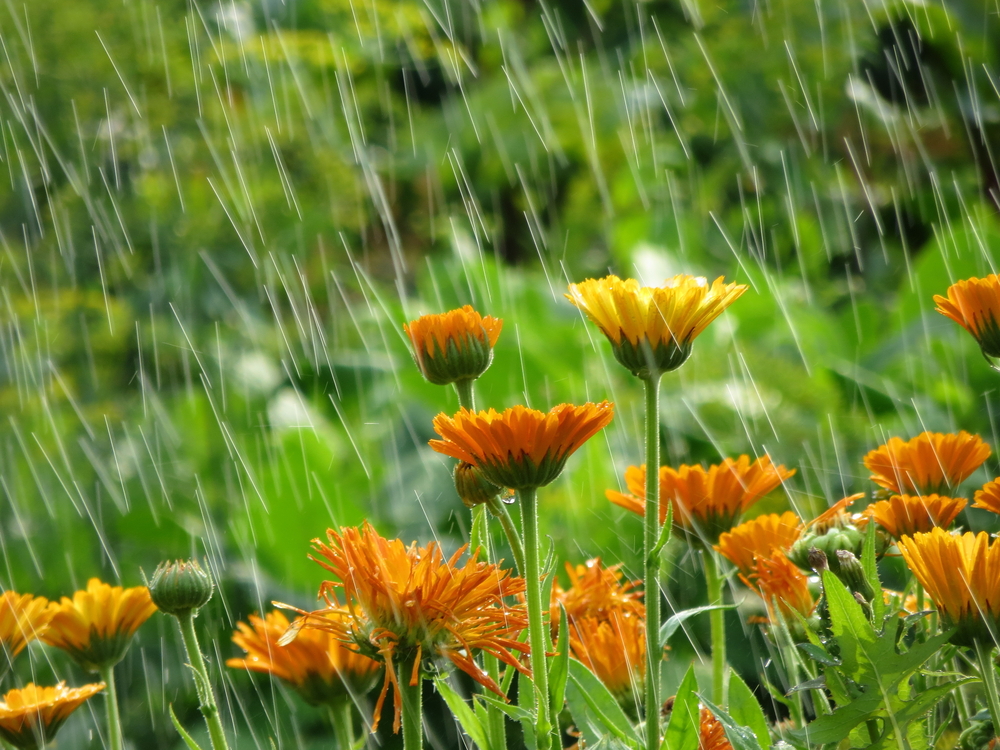
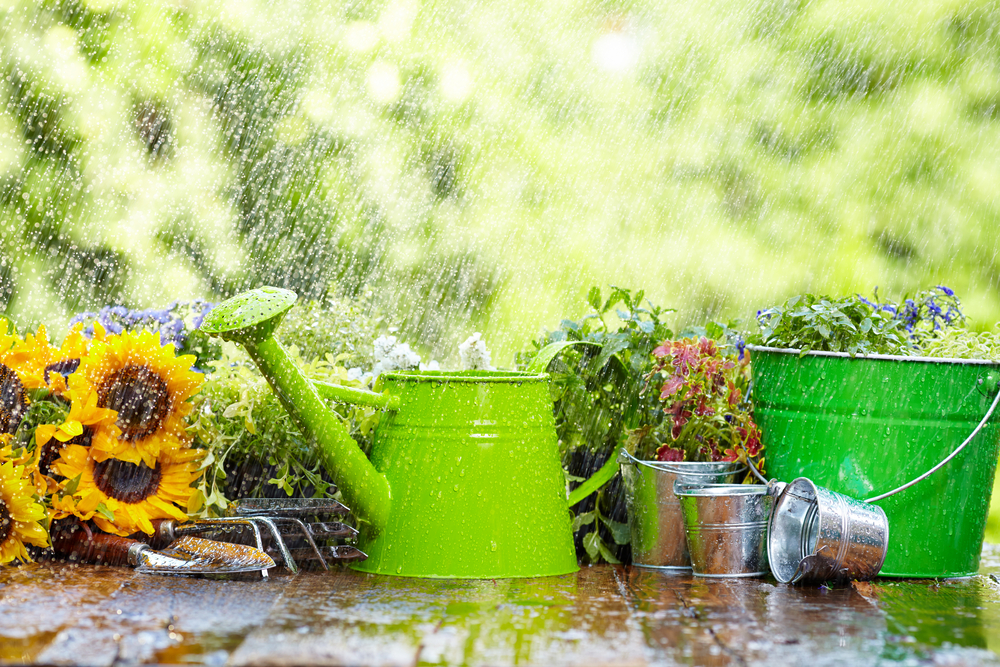
An average annual rainfall for Michigan is more than 31 inches, which equates to more than 52 million gallons of rainwater per year. That much rainwater can severely damage downspouts and create pollution. A rain garden is an environmentally friendly and attractive way to filter and return storm water runoff from surfaces such as sidewalks and roof tops, while protecting our groundwater and waterways. They can be created on your own property using just a few steps – ultimately minimizing the pollution that emerges from the rainwater gushing out of downspouts.

First, determine if you have a suitable site for a rain garden. The ideal spot is one that is:

  • Fed by only one or two downspouts
  • Far from a septic tank, drain field, or wellhead
  • Free from trees

Next, follow these easy steps:

  • Find an outdoor space that can absorb water, ranging from 100 to 400 square feet. A rain garden should be about 20 percent the size of the roof, patio or pavement area draining into it.
  • If there are trees in the area, make sure they can handle wet soil conditions for lengthy periods of time to ensure that your rain garden is set up for success.
  • Remove the grass and dig a hole at least 2 feet deep.
  • Lay an inlet pipe used for catching the storm water. These small pipes can be purchased at any hardware store for under $20.
  • Add native vegetation, and you’re all set!

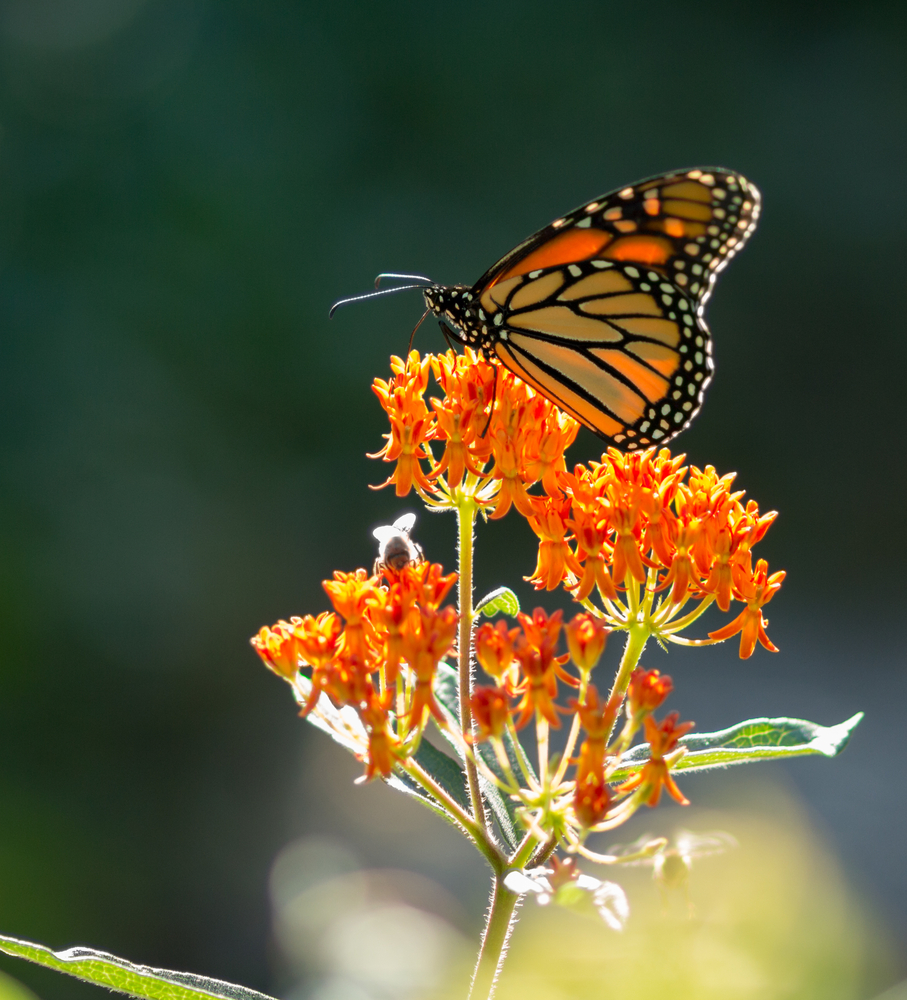
The benefits of rain gardens are tremendous. In addition to being aesthetically pleasing, they are easy to maintain and improve water quality by filtering out pollutants. And perhaps the most magnificent benefit is that they attract wildlife such as birds, butterflies and insects who use the plants as a food source.

The Detroit Zoological Society (DZS) is working to protect storm water on the grounds of the Detroit Zoo and Belle Isle Nature Center. We built a rain garden near the Ford Education Center, which collects rain water from the roof of the 38,000-square-foot building and is maintained throughout the entire year, incorporating native Michigan plant species. The downspouts drain into the garden through a pervious pipe located 3 feet below the surface. We’re in the midst of creating a second rain garden near American Coney Island. Native, drought-resistant plants have already been planted and we plan to build a mock house with gutters and rain barrels. Signage will educate guests about how they can incorporate rainwater collection and rain gardens at their homes. In addition, we have incorporated permeable pavement within parking lots and public walkways, which also reduces storm water runoff and improves water quality by filtering out pollutants.

We all have an impact on the planet – projects like these are simple steps we can take to make sure it is a positive one.

Humane Education: A Picture is Worth a Thousand Words

A selfie or photo with an exotic animal may take only a second to snap and it may even win you a few “likes” on social media, but if you could see the world through the eyes of that animal, you probably wouldn’t want to take the picture. Animals who are taken from the wild or are bred in captivity to become tourist attractions in unaccredited roadside or traveling zoos are often kept chained, isolated, fed inadequate diets, denied veterinary care and/or drugged – for their entire life. The main concern for the individuals and companies who keep these animals isn’t animal well-being but rather, the bottom line.

The good news is that people are becoming more aware of the reality of these situations. In late 2016, for example, TripAdvisor made the decision to stop selling tickets for elephant rides, swim-with-dolphin experiences and attractions that allow people to pet tigers and other exotic animals. This was the result of a campaign launched by World Animal Protection showing that these animal tourist attractions cause psychological and physical trauma, shorten the animals’ lives and also result in even more animals being taken from the wild.

In December of 2017, Instagram began notifying people of potential behind-the-scenes animal abuse for a wide range of wildlife hashtags. If you search for “#slothselfie”, for example, a message will pop up that states, “Animal abuse and the sale of endangered animals or their parts is not allowed on Instagram. You are searching for a hashtag that may be associated with posts that encourage harmful behavior to animals or the environment.” You then have the option to be routed to their website to learn more about wildlife exploitation.

In October of 2017, World Animal Protection launched the Wildlife Selfie Code campaign, asking people to commit to taking “cruelty-free selfies” in the Amazon rainforest. They’re asking people to take a pledge on their website to “help filter wildlife cruelty out of tourism, and make sure your voice is heard”. Again, this is another opportunity for us to further spread awareness of the reality behind these animal tourist attractions.

These animal photo ops are often thought of as things that happen abroad. You might be surprised to learn that these incidents occur in the Metro Detroit area as well. Just this summer, a local festival announced that they were planning to have tigers at their event, offering photo opportunities. After significant pressure from the public, they decided to forego the tiger attraction. This is a great reminder that we shouldn’t be afraid to speak up! Collectively, our voices and actions truly do make a difference.

The next time you see an animal being forced to perform or interact with people, ask yourself:

  • What does a day in the life of this animal look like?
  • What happens to the animal when he/she isn’t being shown?
  • Where did this animal come from originally?
  • How does he/she live? What does he/she do?
  • What is their circadian rhythm (the natural daily cycles we experience that affect our physiology and behavior)? Is it normal for them to be out at this time of day?
  • What is the lifetime care plan for this animal?
  • What is his/her ability to choose? Is the animal participating because he/she wants to?
  • What does the world look like from the animal’s perspective? Try to imagine the experience through their eyes, ears and nose.

Always remember to take photos of wildlife from a distance, without disturbing them, in their natural habitat. If ever you have concerns about the well-being an animal that you encounter being forced to perform or interact with people, document what you see and report the situation to the appropriate authorities. Together, we can make a positive difference in the lives animals.

– Lisa Forzley is the curator of humane education for the Detroit Zoological Society and oversees the Berman Academy for Humane Education.

At First Light: Meeting Sweet Baby Jane

As the lights gradually came on at sunrise behind the scenes at the Detroit Zoo’s Great Apes of Harambee on Saturday, July 14, 34-year-old chimpanzee Abby made her way over to the mesh that separates the neighboring stall. She knocked on the door and vocalized to the other chimpanzees, who were slowly starting to wake up. Curious chimps approached the mesh to greet Abby, and as they looked, they could see a tiny newborn chimpanzee in her arms. Abby greeted her friends and showed them her baby while keeping a safe distance to protect her from any inquisitive poking fingers.

The little one was born just after midnight on what was coincidentally the first World Chimpanzee Day. She was named “Jane” after legendary primatologist and anthropologist Dr. Jane Goodall, in honor of the anniversary of her first visit to what is now Gombe Stream National Park in Tanzania to study the social interactions of wild chimpanzees.

During the first few days, Abby remained separated from the rest of the chimpanzee troop to allow her to rest and bond with Jane and for Detroit Zoological Society (DZS) staff to monitor them. While Abby is an experienced mother, having given birth to daughter Chiana 24 years ago (who is a mother herself to 4-year-old Zuhura) it is important for staff to observe a chimpanzee mother and her infant. DZS staff immediately began documenting the frequency that Jane nurses, which should be in short durations every 60-100 minutes. They’ve also been recording maternal behaviors – some of which are simply adorable, such as when Abby holds up her baby, looks at her and then hugs her to her chest. Animal care staff are cautious to not disturb Abby as they make their observations, sitting quietly in the aisle of their holding area with mesh in between them. In those first few days, with Jane sleeping soundly on her mother’s chest between nursings, Abby’s tired eyes would grow heavy and she’d gently give Jane a few comforting pats on her back before falling asleep herself.

Jane’s grip grows stronger each day. She is now holding on tightly to her mom’s chest with both hands and feet, only occasionally needing a little extra support. After a few days of observations, staff determined that Abby and Jane were ready to move to the dayroom of the indoor habitat and meet some of the other chimpanzees. Abby greeted her friends Trixi and Tanya and began to groom with them by the windows while Jane slept in her arms. Abby denied Tanya’s request to touch Jane’s hand, so Tanya settled with looking closely at Jane while she made her nest nearby.

Over the next few days, Abby was reunited with the remaining chimpanzee troop members, including Jane’s father, Imara. They had a chance to see – and try to touch – Jane for the first time. Some were curious, including youngsters Ajua and Akira, who stared in apparent amazement and couldn’t take their eyes off of little Jane, while others such as Nyani barely seemed to notice the infant. Formerly the youngest of the group, Zuhura, almost 5, appeared unsure of what to think of Jane. Zuhura followed Abby everywhere in demand of the attention of her grandmother and curiously wanting to see Jane. Zuhura would repeatedly – and gently – reach out to touch Jane, but Abby would turn away and hold onto the little one tightly while trying to distract Zuhura with some playful tickles. With all 11 of the chimpanzees now together, they often are seen eagerly grooming in the sunlight by the windows, a way that chimpanzees maintain positive relationships with one another.

Abby and Jane ventured into their outdoor habitat for the first time just shy of Jane’s 2-week-old mark. Dad Imara escorted his family on a few investigative laps around the habitat before Abby decided it was time to lay down and rest again. With plenty of space, Abby has yet to identify a preferred spot to rest with Jane, but she can often be seen in and below the trees, as well as at the windows looking into the public viewing area.

It’s difficult to believe since she is still so tiny, but Jane has grown quite a bit in these last few weeks and is hitting all of her development milestones. After three weeks, Jane is awake more often and starting to look around and focus on her surroundings. She has been holding on to Abby’s chest tightly, rarely needing the support of her mother’s hand on her back, and can pull herself up and push with her legs to adjust her position if she is hungry. Although Jane will still appear small as the weeks go on, she will be making strides in her growth and development. We are all eager to watch her continue to grow and for her personality to begin to shine.

– Melissa Thueme is a mammal supervisor for the Detroit Zoological Society.