A Delicate Balance: Preserving the Peruvian Amazon — Part Two

Authored by Jordan Reichenbach, animal care team member for the Detroit Zoological Society.

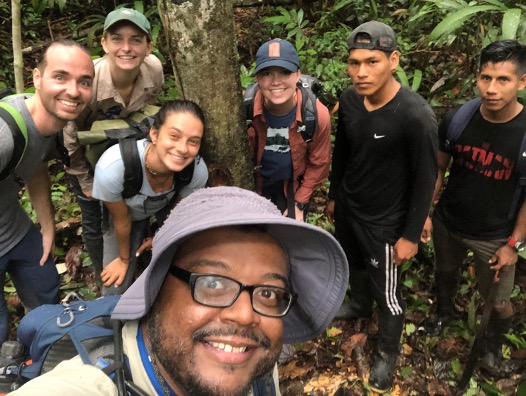
When a single sentence about a trip to Peru was uttered in our morning meeting on one gray December morning, I had no idea the kind of incredible things I would experience in the month following because of it. It was pitched to me as a two-week trip to the Peruvian Amazon to set up camera traps for a study looking at small mammal populations. The trip was the culmination of a relationship between the Detroit Zoo and OnePlanet, a nonprofit organization that works with the indigenous Maijuna people in Peru to protect the rainforest and its inhabitants. This was an opportunity I knew I could never pass on — it was the perfect combination of conservation research, language immersion and exceptional collaboration. 

Once I knew I would be going on this trip, the last two weeks of 2022 passed in a blur full of camping supplies, travel doctor appointments and plane tickets as I prepared for our time in the Amazon. The Detroit Zoo sent me, a mammal care specialist, and Thomas Benson, a curator of education, to join a handful of other researchers from OnePlanet. Although Thomas and I had not met before, we found ourselves thrown together before we knew it as we set off on our epic journey into conservation in the heart of the Peruvian Amazon.

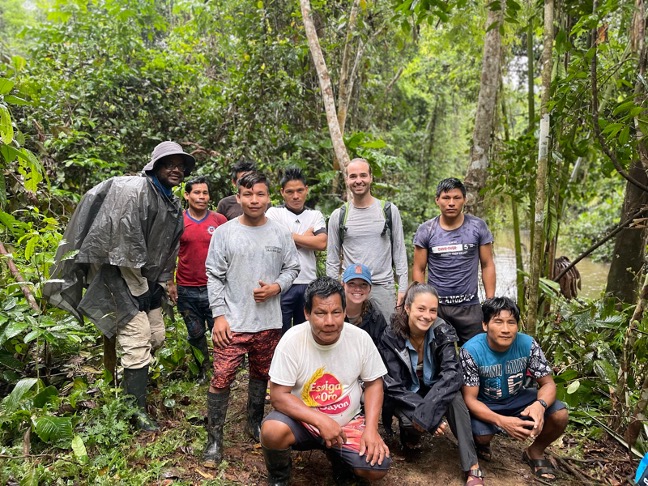
Three planes and a long boat ride later, Thomas and I were introduced to Sucusari, our home base for the next two weeks, set in northeastern Peru. Here, we were also introduced to the research we would be doing and the people we would be working with. The goal for our trip was to set up camera traps throughout this region of the Amazon to monitor game mammal populations and, ultimately, show the sustainable practices of the Maijuna. We would accomplish this goal by working with many Maijuna people who volunteered as forest guides, boat drivers, cooks and more. Our days in Sucusari started at the crack of dawn, sometimes earlier, so we could get a head start on boating to the area we would be camera trapping for the day. From there, we would walk anywhere from 3 to 9 kilometers to find the perfect spots for cameras. These “walks” occasionally turned into wades, or even swims, through flooding areas of the forest. After two weeks, we were able to help set up more than half of the cameras needed for this study. We learned so much more than just how to traverse the jungle and set up cameras, though.
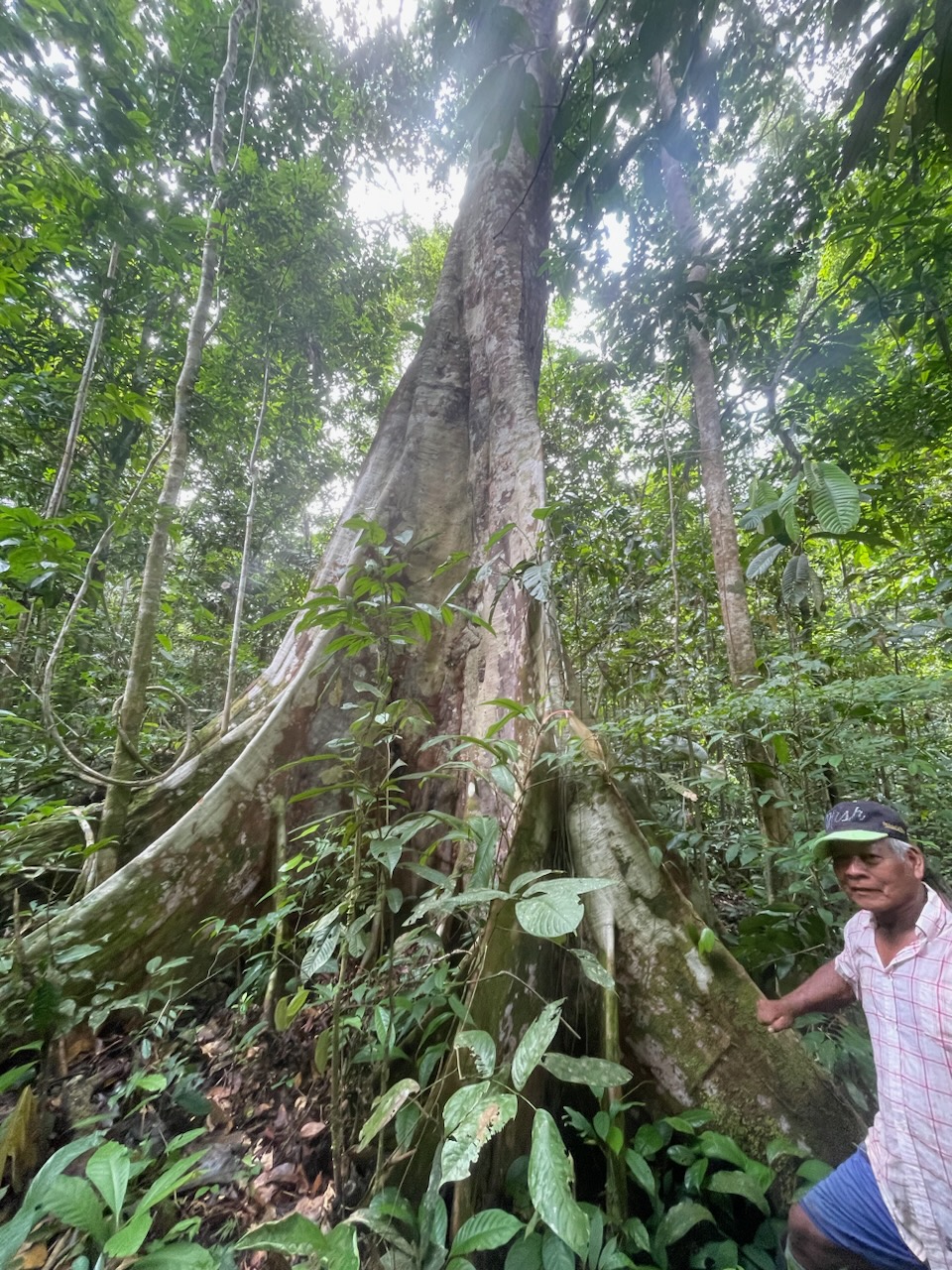
Thomas and I got the privilege of experiencing the beautiful nature of the Peruvian Amazon and learning from the incredible people who call it home. The Maijuna have lived in Sucusari for generations, which shows in their knowledge of and respect for the surrounding Amazon. When they guided us through the jungle day after day, we got to soak in a lot of this knowledge as they would tell us about the flora or fauna we would pass along the way. Nothing could match my astonishment while being able to witness how well they know this forest. We had Maijuna of all ages helping us, with the youngest being just 15 years old. Already, this boy was able to navigate through the jungle and confidently lead us to the perfect camera spots. The elders were also incredible guides because of their vast experience in the Amazon and the stories they could tell us about almost any plant we encountered. For example, we came across many samauma trees that Victorino, a well-respected elder in the community, explained were used for communication on long expeditions in the forest because the roots are hollow and are very loud when you bang on them. Many elders of the community have helped with this camera trapping study, or ones similar in the past, and some of them were even giving us helpful hints on the cameras and where to set them up for the best results. 

This relationship between the OnePlanet team and the Maijuna people is built on a trust established over many years of working together and learning from one another. This relationship has benefited and will continue to benefit the Maijuna and their ancestral land. The camera trapping project we worked on will help the Maijuna community by showing people how important and valuable their specific relationship with the Amazon is. The Maijuna hunt for food security and income, but they do so in a way that does not lead to long-term biodiversity loss. The sustainable lifestyle of the Maijuna and how they use the jungle around them is a major reason why the environment thrives. By helping with this study, the Detroit Zoo is supporting the future of the Peruvian Amazon and the Maijuna community.

I also personally learned and grew a lot from my experience in Peru. Not only did I physically push my limits with our jungle treks and long days, but I also mentally tested myself in the best way by working with people who did not speak English and lived a very different life than the one I have known. One of the highlights of this trip for me was having story time with one of the elders, Don Sebastian, who told us Maijuna stories about the origins of specific plants and animals. These tales have been passed down through generations and to hear them told firsthand was moving and awe-inspiring. Another experience I’ll forever look back on is our very first day of camera trapping. On day one in the jungle, we encountered stingless bee colonies, watched squirrel monkeys and black-mantled tamarins leap through the canopy, and even got a classic rainforest shower. These are things that I dreamed about as an animal care staff member and a general biology lover. To see and feel these things with my own eyes was an incredible start to a whole breathtaking adventure. 

Although not every day was easy, I’ll savor every moment I spent with the Maijuna and OnePlanet people in Sucusari. I feel so grateful to have gotten the chance to go on this journey, and I hope this inspires people to find out more about the Detroit Zoo and OnePlanet and how they are helping to conserve the Peruvian Amazon.

A Delicate Balance: Preserving the Peruvian Amazon — Part One

By Thomas Benson, education specialist for the Detroit Zoological Society.

As an educator, I am always looking for unique and meaningful ways to engage students in learning about the world around them. So when the opportunity presented itself for me and Jordan Reichenbach, an animal care staff member, to participate in a research project in the Amazon rainforest with the Maijuna indigenous group, we jumped at the chance.

The Maijuna are an indigenous group that has lived in the Sucusari region of Peru for centuries. They have a deep connection to the land, water and animals who call the Amazon home. This deep connection can be seen in their rich cultural heritage and made this trip a life-changing experience.

As part of the research project, in conjunction with OnePlanet, a nonprofit engaged in empowering indigenous communities to build a more sustainable future, and the Detroit Zoological Society, Jordan and I worked alongside the Maijuna to set up trail cameras in the jungle. These cameras capture images of the rich diversity of animals that have re-inhabited the Maijuna ancestral lands after the ejection of loggers, providing valuable data for conservation efforts. 

As educators, we sometimes think we have a pulse on every movement and every cause. But truthfully, I had never heard of the type of conservation work, or at least the term used for it, that I was participating in. Biocultural conservation, as I would learn, is where, by helping the indigenous people preserve their culture and way of life, you, in turn, help preserve the ecosystem around them. The Peruvian government’s proposal and effort to construct a road through the heart of Maijuna lands after removing illegal logging undermines this principle and has ignited the passion behind the continuation of the trail camera project. This project aims to help preserve an essential way of life for the Maijuna — hunting — that a road would otherwise destroy. The Maijuna hold hunting as a vital aspect of their cultural heritage and identity. For generations, hunting has provided sustenance, strengthened social bonds and preserved their traditional knowledge. They recognize the importance of sustainable hunting practices and, in turn, employ traditional techniques and closely manage their lands, ensuring the long-term preservation of both their cultural traditions and the biodiversity of the surrounding ecosystem.

In many other countries across the globe, governments are debating the delicate balance between development and environmental preservation. This same issue has pitted the Peruvian government against its indigenous people and conservationists from around the world. Environmental activists, scientists and indigenous groups have joined forces, using the data collected from projects like this one to advocate for sustainable alternatives that prioritize the protection of the Amazon’s fragile ecosystem. They emphasize the need for comprehensive environmental impact assessments, consideration of indigenous rights and investments in alternative modes of transportation and infrastructure that minimize ecological harm.

The Amazon rainforest, home to countless plant and animal species found nowhere else on Earth, plays a crucial role in maintaining global climate stability and supporting indigenous communities. Opposition to the road stems from a deep concern about the potentially irreversible damage it could inflict on one of the world’s most biodiverse and ecologically significant regions.

The Peruvian government faces the difficult task of evaluating the potential benefits against the potential consequences while considering the long-term impacts on biodiversity, climate change, and the rights of indigenous communities. The outcome of this ongoing debate will either serve as an example of preservation or as a global reminder of the pressing need to protect and preserve our planet’s invaluable natural ecosystems.

Participating in research in the jungle was a challenging but rewarding experience. The heat and humidity were intense, and there were many bugs and other animals to contend with. However, the Maijuna’s kind and welcoming spirit outweighed any of the negatives. Their willingness to teach us so many aspects of their way of life and the importance of preserving their culture was truly inspiring. Victorino Rios Torres was one of those teachers — his knowledge of the plants and animals of the forest and how his people use them for things from medicine to building houses to spiritual lore were awe-inspiring. 

One of the trip’s most memorable moments was when one of the elders and founders of Sucusari, Sebastian “Shebaco” Rios Ochoa, joined us for dinner. During the festivities, he invited all to sit and listen as he recounted the stories of his people. One such story was the origin of the giant river otters who call the Amazon River their home. According to the story, 

One day, a group of people noticed an agua jaula full of fish. They had no idea how the fish got there, and the fish could not escape. So they put some tree sap into the water to kill the fish. All the fish floated to the surface, allowing the group to catch all the fish. But one guy did not think taking the fish was a good idea. He noticed this large tree beginning to shake, along with macaws and other animals calling down to the water as the people gathered the fish. Eventually, the people gathered all the fish and took them back to their homes, where they began preparing them to eat. The one guy, who thought something was wrong, had saved one small fish for himself but forgot to grab it, so he returned to the agua jaula. When he arrived, he was horrified by what he saw; evil spirits were starting to descend out of the tree, so before they saw him, he decided to run back to his people to warn them. But they had already eaten the fish gathered from the agua jaula under this now terrifying tree and had fallen into a deep sleep. He tried everything to wake them, but he could not. As he was trying to wake his people, the evil spirits arrived, dragging their huge claws on the ground behind them. They noticed that the people that ate the fish had nice eyes, so they caused everyone who was asleep to go blind. The one who had tried to save his people hid in the roof of one of the houses. The evil spirits noticed that one person was missing, so they looked all around to find the hidden man. They could not find him, so they left; as they were walking away, the hidden man overhead one of them say, ‘The only way to harm us is to burn the tree by the agua jaula; the smoke will send us away.’ Eventually, all his people awoke to find out they could no longer see. They asked the man why they were blind, and he was not, but he replied, ‘I am blind like you, feel.’ Using a hollowed nut, the others began to feel the void and concluded that he was missing his eyes too. The man then rallied his people in order to beat the evil spirits that had taken their eyes. He gathered what he needed, guided his people back to the agua jaula, and burned the tree that the evil spirits lived in. All types of evil spirits fell out of the tree, men, women, children, old and young. But to the dismay of the blind group sitting on the burnt log of the tree, the evil spirits threw small nuts at their eyes, giving them back their eyesight, but in return, turning them all into giant river otters.”

 It was a moment of true cultural exchange, and it was an honor to learn from such a wise and knowledgeable person.

As an educator, I believe experiences like this are crucial for helping all students understand and appreciate different cultures and ways of life. By immersing myself in the Amazon Rainforest and working alongside the Maijuna, I gained a deeper understanding of them as individual people and the challenges they face in preserving their way of life. From our neighbors next door to our tambo, Jairo (Hi-ro) and Marina, to Lenora, who cooked amazing meals (many others also made amazing food for us, including the leader of Sucusari Everest Ríos Vaca) to our forest guides and new friends Jeysen (Hay-sen) and Roller (Roy-yer), The journey through the Amazon felt like a family road trip. The road was the Sucusari River and the roadside attractions were the forest’s rich biodiversity greeting us at every bend.

I hope that by sharing my experiences with students and my community, I can inspire others to think critically about the world around them and to value the diverse cultures and traditions that make our world such a rich and fascinating place.

This Just In: Kangaroos Like Working for Food, Don’t Mind an Audience

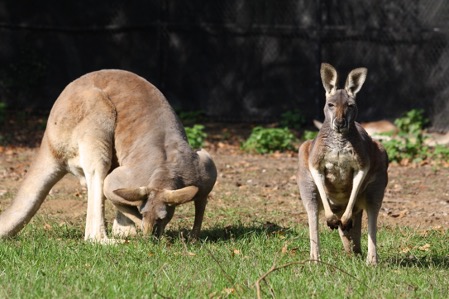
Isa (right) is certainly aware of guests – but how do they make her feel?

Authored by Julia King, external researcher from Hunter College.

The Detroit Zoo’s Australian Outback Adventure is a favorite among Zoo guests for good reason – you can follow a designated path through the habitat and view 11 red kangaroos and two red-necked wallabies without any barriers! Although the opportunity to cross paths and appreciate these marvelous marsupials up close is an exciting draw for Zoo guests, it begs the question: how do the kangaroos feel about having people in their home? 

My name is Julia King, I am a graduate student in Hunter College’s Animal Behavior and Conservation program, and I set out to answer this question in an investigation of kangaroo well-being.  

Animal well-being refers to the overall quality of an animal’s physical, mental and emotional health. Well-being can range on a continuum from great to poor and can vary over time and across individuals. Just as no two people are the same, no two animals are the same, and therefore do not have the same well-being. Two individual animals of the same species housed in the same environment may respond to the same stimuli in different ways – one kangaroo may be intrigued by a foreign object in their habitat, while another may be fearful of the same object. Because of this, well-being is best assessed at an individual level. 

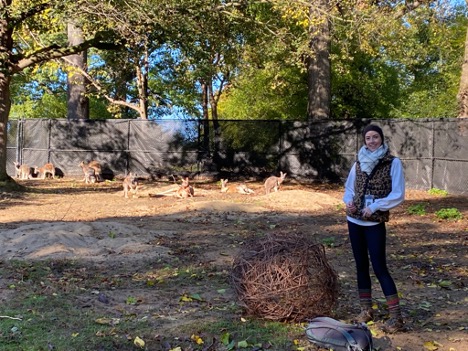
Julia King places a foraging ball in the kangaroos’ favorite spot.

The Detroit Zoological Society (DZS) strives to ensure all its resident animals have great well-being and are thriving. The unique design of walk-though habitats begs the question: how does the presence of people in the habitat affect the kangaroos? Wild kangaroos may perceive humans as threats and respond fearfully, so it is possible that captive kangaroos may feel similarly. Studies on zoo-living kangaroos, both at the Detroit Zoo and elsewhere, have looked at kangaroo behavior, levels of hormones related to the stress response and habitat use in response to visitor presence. These studies have shown that kangaroos may restrict their spatial use (i.e., use less of their habitat) with higher numbers of visitors in their habitat. However, there are no direct links to suggest visitors are a source of stress for inhabitants of walk-through marsupial habitats. 

With the help of DZS animal welfare and mammal staff, I designed a scientific study to see whether the presence of guests inside the kangaroo habitat would have an impact on the kangaroos’ emotional well-being. The idea is simple: give them treats and make them work for it! Like people, animals may be willing to work harder for a reward when they are in a positive headspace and less so when they’re experiencing negative emotions. The kangaroos were offered yummy treats (wheat grass and willow clippings) in feeders with varying levels of difficulty, and the interactions with these treats were analyzed with respect to visitor number. If the kangaroos experience negative emotions when more guests are present, they should be less willing to work for food. Therefore, I predicted that the kangaroos would not work as hard for treats when there were more people present in their habitat.

To make the treats more difficult to access, I used location and a foraging ball challenge feeder. Going to an unusual or avoided area or manipulating a foraging ball to get treats requires more work than eating treats directly off the ground in your favorite place – it’s harder to get ice cream from a shop than from your freezer, and harder still when you must pull it out of a box and unwrap it. Treats were placed out in the kangaroos’ favorite spot, either directly on the ground or hidden within the foraging ball. Treats were also placed in a location in the habitat that kangaroos used less frequently, again either directly on the ground or within the foraging ball. 

Many kangaroos seemed to enjoy engaging with and obtaining treats from the foraging ball. 

What happened? As you might expect, the kangaroos were much more likely to eat the treats placed in their favorite spot, while they rarely ventured to the less favored area. There were also no observed effects of visitor presence, meaning, the number of people in the habitat did not influence when and where the kangaroos were willing to get the treats. This may be because at the time of the study, which took place November to December 2021, there were very few guests present in general. Or it may be because many of the kangaroos were born and raised at the Detroit Zoo, and they are used to seeing people on the guest pathway in their enclosure. 

An unexpected result from this study was that the kangaroos were far more likely to eat the treats when they were hidden inside the foraging ball than presented freely on the ground. This may seem counterintuitive at first – why would you prefer to unbox and unwrap ice cream when you can just eat it right out of the carton? But it turns out that many captive animals may prefer to work for food even if they don’t have to. This well-documented phenomenon is called contra-freeloading, and it is the basis for many foraging enrichment designs. Environmental enrichment is just that—something that benefits a captive animals’ daily life, usually by eliciting natural behaviors. Food is never free in the wild. By providing an additional challenge like a foraging ball, eating becomes much more interactive and mimics some of the challenges associated with foraging in the wild.  Working for food provides mental stimulation and a sense of accomplishment, promoting positive well-being in captive animals.

This study brings some good news to the Detroit Zoo, the kangaroos and all the people who love to visit them. First, the kangaroos do not show any negative responses to the people in their habitat, confirming the results of an earlier study at the Detroit Zoo. Second, we may have inadvertently found a fun and easy way to add some enjoyment and fulfillment to these kangaroos’ lives!

Restoring Snail Populations in Tahiti

Authored by Erica Graber, snail care specialist at the Detroit Zoological Society.

On April 15, 2,413 total partula nodosa snails were released into Papahue Valley, Tahiti, making this the largest wild release that has ever happened for this species. Partula nodosa, also known as Polynesian tree snails, are considered extinct in the wild by the International Union for Conservation of Nature —making this record-breaking release extremely important. 

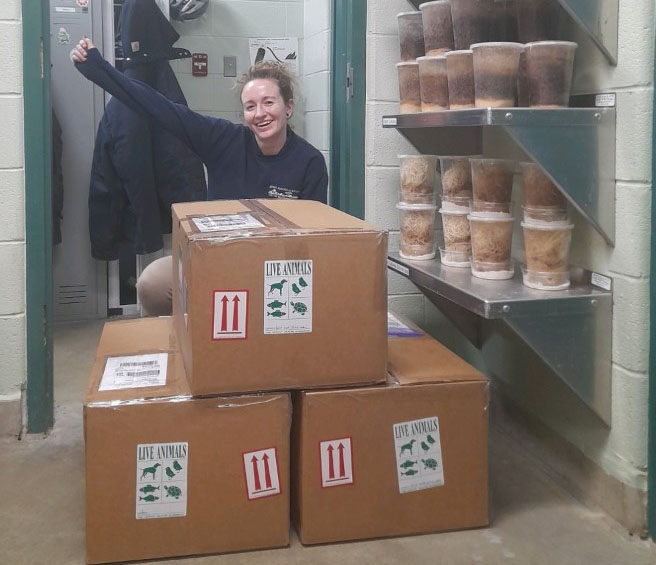
Of the 2,413 partula nodosa released, 1,449 were from our collection at the Detroit Zoo! In November 2022, we sent 1,500 snails to the St. Louis Zoo in preparation for this release. From there, we shipped the snails to Tahiti in early April. Once they arrived in Tahiti, they were all marked with UV reflective paint, making them more visible on the trees and easier to track during post-release checks — even in the dark. They were placed in slow-release containers so they could leave and head up to the tree canopies at their own pace.

The Detroit Zoo released 1,500 snails to restore populations abroad.

Multiple partula snail species were driven to near extinction after African giant land snails were introduced to the islands as a food source for the people living there. Unfortunately, the African giant land snails escaped and thrived in the island habitat, causing them to quickly become invasive and destroy the vegetation, wreaking havoc on the island’s fragile ecosystem. Predatory rosy wolf snails were introduced as biological control, which backfired when they only went after native snail species, including partula snails. Partula snails are vital to maintaining tropical forest health as they eat decaying plant matter and fungi and recycle those nutrients into the soil. They are also an important part of Polynesian culture, as their shells were used in ceremonial jewelry and the decorations of the indigenous islanders. Losing this species is devastating both to the balance of the forest ecosystem and the history of the people living there.

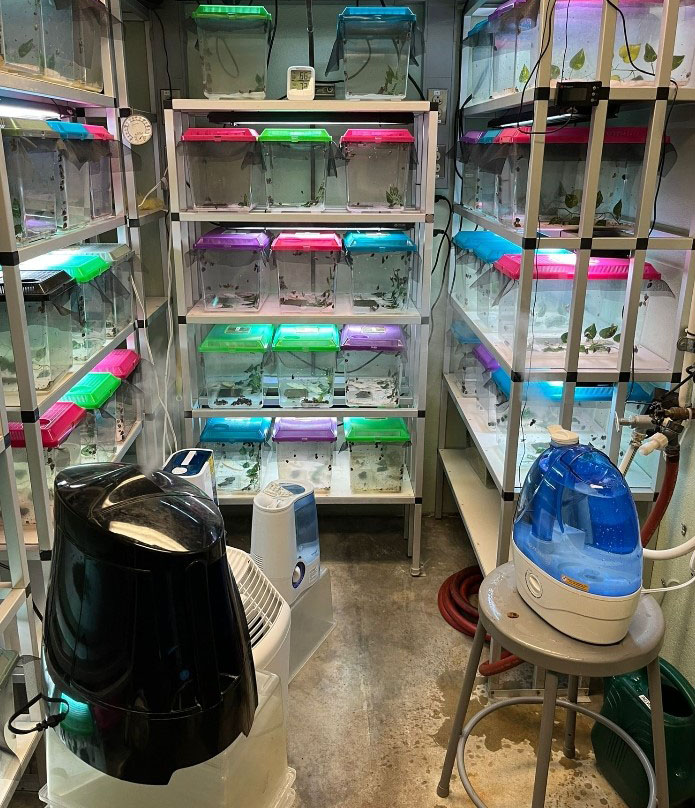
At the Detroit Zoo, we have a room dedicated to our snails. As of May 23, we have 41 Kritter Keepers housing 3,595 snails. Each tank has paper towel as substrate, a feed tray, a cuttlebone and a fake plant to hide and climb on. The food is a mixture of organic nettle powder, ground organic oats, ground trout chow, a powdered calcium supplement and Teklad snail stress powder. When ready to use, we mix it with water to create a paste that we spread across the feed tray for the snails to easily eat. We keep the humidity in the room between 60 and 80 percent, and the temperature is consistently at 68 to 72 degrees Fahrenheit. To keep the humidity up, which can be challenging in the dry winter months, up to five humidifiers run at once. We also mist the tanks daily to keep the paper towel moist. 

The snail room at the Detroit Zoo keeps the animals in optimal conditions.

As this species is extinct in the wild, we must track how many snails are in our captive population. Every month, I count all the snails and separate them based on size — newborn, juvenile, sub-adult and adult. Newborns are tiny, less than 3 millimeters. Juveniles are between 3 and 7 millimeters. Sub-adults and adults are similar in size, more than 8 millimeters, but the adults are most distinguishable by the thick white “lip” around the shell opening.

As a result of all these conditions being just right, Detroit Zoo team has been able to consistently breed this rare snail and contribute to the reintroduction process. The recent release of 1,500 snails was record-breaking for our facility — our previous record was 100 snails in May 2015. 

Our captive population is still flourishing and growing. There is talk of doing releases more frequently — as soon as September! With the commitment of Detroit, St. Louis, Akron, Woodland Park, Disney’s Animal Kingdom and all the other facilities working together to protect this species, the future is looking big and bright for these little snails.

Erica Graber helps organize this project at the Detroit Zoo.

Celebrate World Migratory Bird Day!

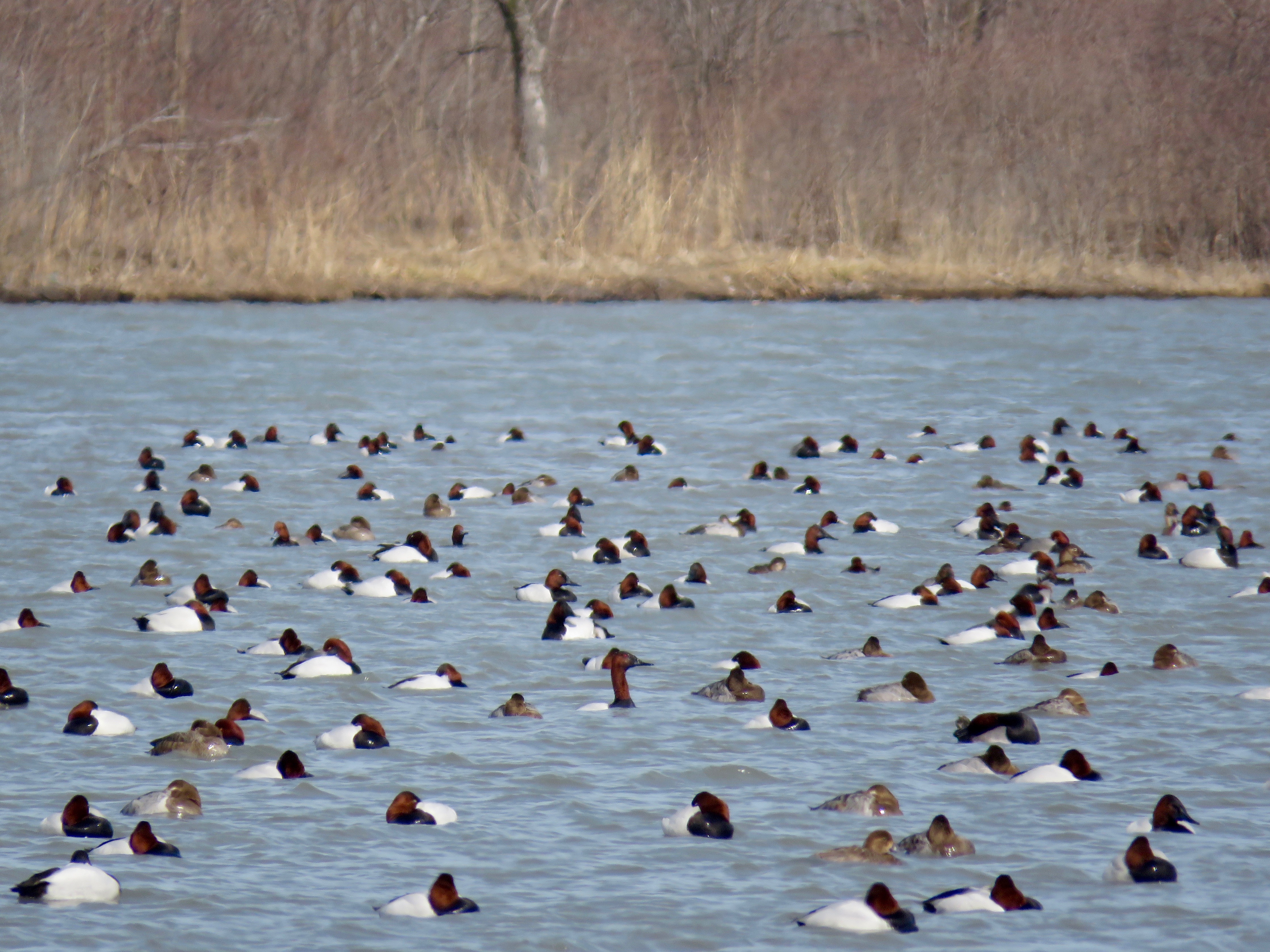
This week, hundreds of millions of birds will leave their winter habitats from as far away as the Amazon rainforest and Andes mountain range on their annual journey to reach their summer breeding grounds across North America and right here in Detroit! Migratory bird species travel along ancestral routes defined by waterways and often travel under the starlight at night. Fluttering along geographic landmarks like the Mississippi River and the shores of the Great Lakes, birds as small as the ruby throated hummingbird head to their summer homes thousands of miles further north. 

Saturday, May 13 is World Migratory Bird Day, which amplifies the critical importance for birds to have access to water throughout their journey.  Waterways serve as sources for food and habitat during migration and year round.  At the Belle Isle Nature Center, birds are celebrated on this day — and every day — through education and conservation practices that promote their right to access food, water and habitat. 

As the month of April came to a close, a time when the frequency of bird migration really picks up in the Detroit area, the Belle Isle Nature Center hosted Michigan Public Radio’s live broadcast event “Bird Nerds Unite.” This event featured a panel of local experts who discussed all things birds: the birds who are migrating through now, those who reside in southeast Michigan all year and tips for noticing birds right near your home.

You can watch or listen to a recording of the presentation here.

Even the youngest among us can appreciate the birds in their neighborhood. Don’t just take our word for it — here’s what Marlin Franklin, Brightmoor community engagement manager with Brilliant Detroit, had this to say about the Belle Isle Nature Center’s after school program, Neighborhood Nature Explorers. 

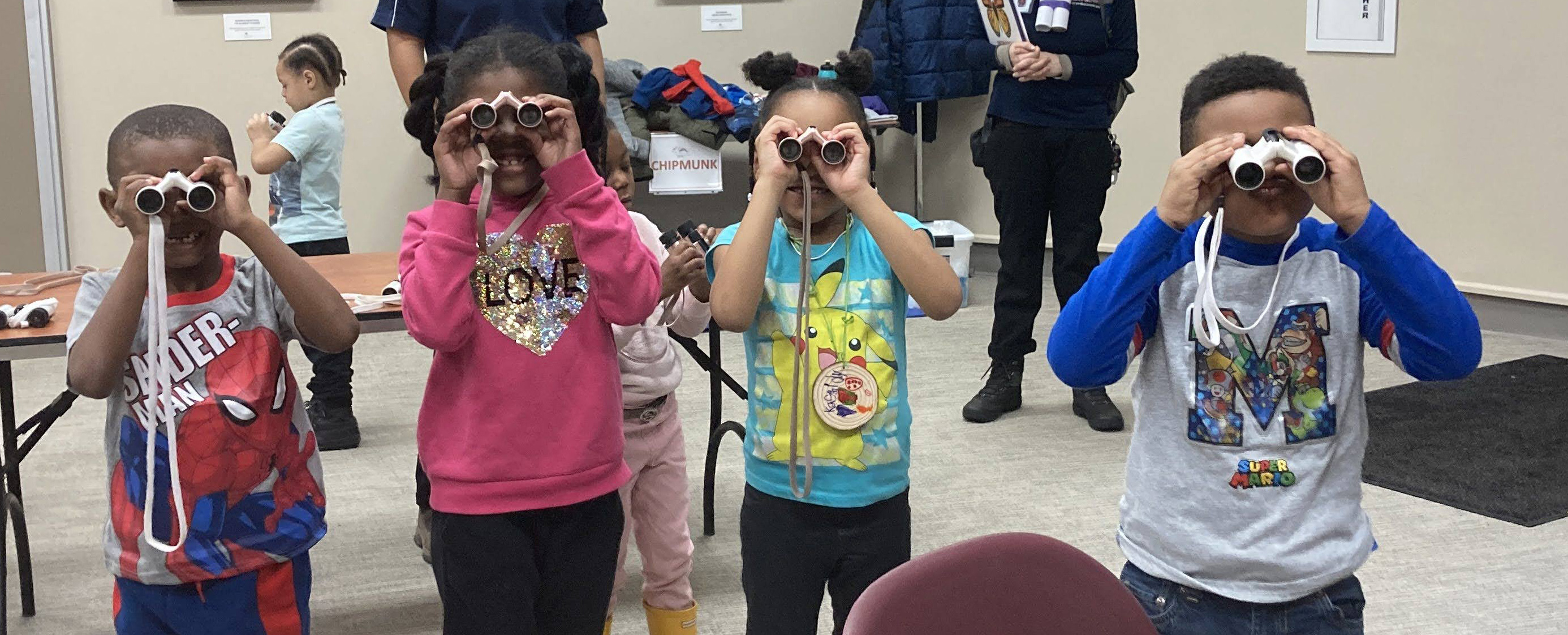
“Contrary to popular belief, bird watching is not boring! It is amazing fun for kids and adults,” he says. “We celebrated bird day at the Brilliant Detroit Brightmoor site with Micah Blake-Smith from the Belle Isle Nature Center. We learned the proper way to use binoculars. We identified birds that live and forage for food in our neighborhood, and we made feeders for those birds that we hung in the trees. Our little people will grow up to be good stewards of the earth with classes like these.”

If you think that’s something, come experience the excitement that awaits from bird watching during sunset or with the use of audio ID technology at the Belle Isle Nature Center’s free programs.

Nature at Night

A flutter of green, a jolt of red, a fleck of gold – a pheasant ducks through the underbrush in a burst of color. Whether it is the visual rainbow of feathers or a symphony of a bird chorus saluting the setting sun, hikers and bird watchers can find themselves knee deep in renewed prairie while birding on Belle Isle. Our Nature at Night program gives participants an opportunity to discover spaces that burst with life as the sun goes down. Join us for our next free hike from 5 to 9 p.m. Thursday, May 18. Guests are welcome to bring binoculars or borrow a pair from the Nature Center.

Science Hikes

More of a morning bird than a night owl? There is also a daytime Science Hike planned for 2 to 3 p.m. Sunday, May 21. This “technologically enhanced” bird walk utilizes the Merlin Bird ID app. Participants will be provided with iPads and can use the app to help them identify birds from their song. A recent walk on the Nashua Canal Trail, a 1-mile accessible pathway through the heart of Belle Isle, revealed ruby-crowned kinglets, red headed woodpeckers, white-throated sparrows and one very impressive eagle’s nest.

As spring bird migration winds down in June, the community group Black to the Land Coalition will host their annual birding event at the Belle Isle Nature Center called Blacks, Browns and Birds from 10 a.m. to 2 p.m. Saturday, June 3. This allows for Black and Brown families to come together in green spaces, connect with the land through bird watching and enjoy other outdoor activities.

For more information about upcoming, free programs and events, visit our website. The Belle Isle Nature Center is open seven days a week, and we are happy to give tips on where to head for your own bird walk. Celebrate World Migratory Bird Day on Saturday, May 13 or any day of the year by noticing where you find nature in your neighborhood.

This entry was written by a gaggle of geese: Ryan, Luke, Courty, Micah and featuring Marlin Franklin of Brilliant Detroit

Meet a Michigan Native at the Belle Isle Nature Center!

You don’t need to head up north or plan a camping trip to connect with nature – there are amazing animals all around us! Let us introduce you to three of your wild neighbors.

They call it mudpuppy love!

Mudpuppies are the second-largest salamander in the western hemisphere. These amphibians may not give off total puppy-dog vibes, but when you see them up-close and in-person, you can’t help but to fall for their charms. There is even a whole celebration in their honor called Mudpuppypalooza taking place March 26 at the Belle Isle Nature Center!

Mudpuppies have wide faces and frilly, external gills on the sides of their heads that act like filters in the water. This means they need to live in clean water to stay healthy. These pups spend most of their time under the cover of flat rocks or slabs of concrete at the bottom of rivers – including our very own Detroit River. They are an important part of Michigan’s aquatic ecosystem, and the Detroit Zoological Society has been collecting data on mudpuppies and water quality in the Detroit River since 2004. Learn more about our monitoring efforts.

Say hi to Michigan’s largest snake!

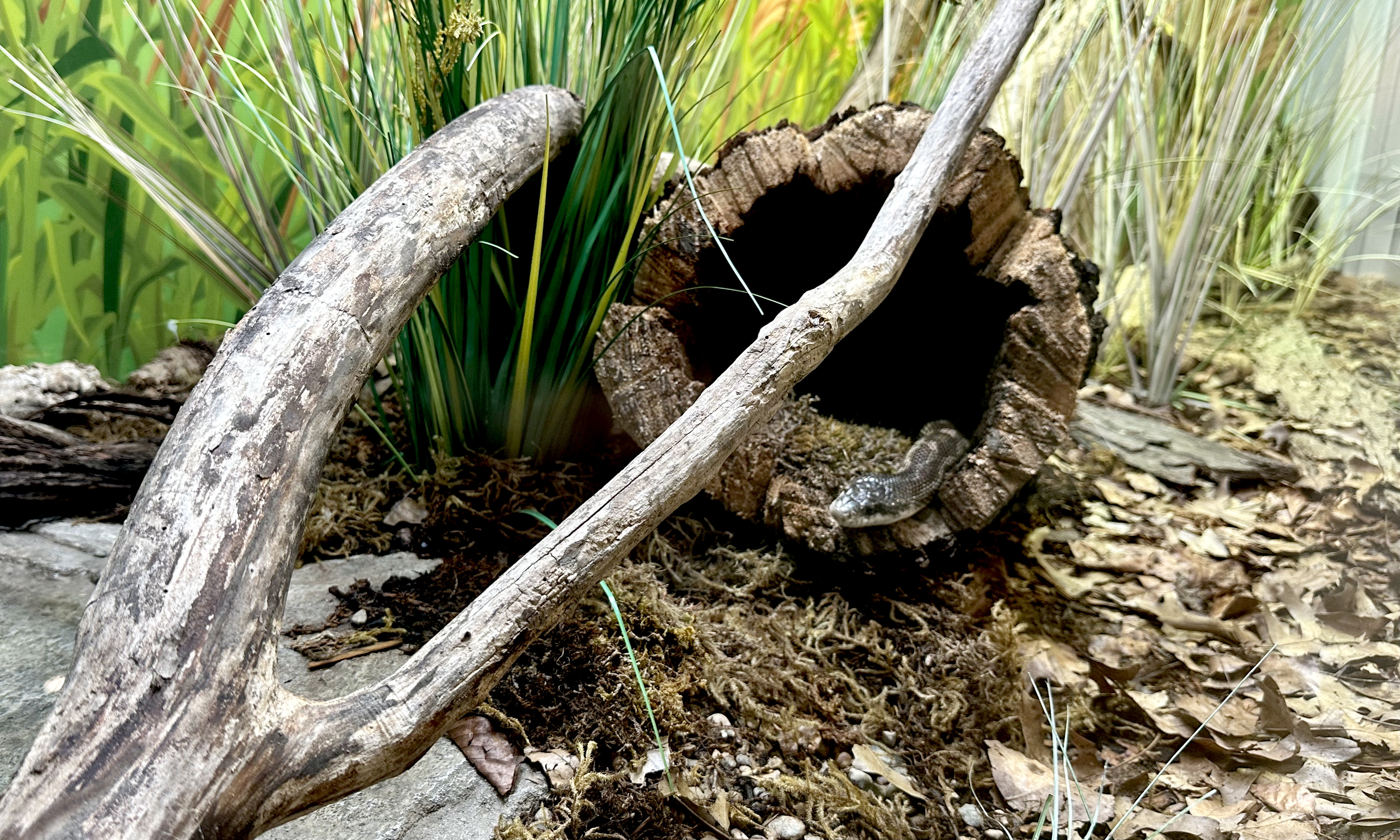
Black rat snakes can grow to be an impressive 8 feet long – but don’t worry, they are non-venomous and harmless to humans. Rodents, however, are not so lucky. As their name suggests, this species hunts rats and will often enter barns or abandoned buildings in search of food. They use the constriction method of hunting and consume their prey in a single bite! Rat snakes can also be found hiding in tall grasses, under fallen trees or in hallowed out logs, just like our friend here, who just emerging after a taking a nice afternoon nap. The habitats at the Belle Isle Nature Center are designed to mirror the landscape the species might experience in the wild – do any of the elements look familiar to you?

Do I spot a spotted turtle?

If you have visited our Nature Center before, you may be familiar with our turtle pond. This expansive indoor habitat is home to several turtle species, including this pair of spotted turtles. They may be smaller than most of their pond mates, but as you can see from this video, they make up for it in moxie! Spotted turtles can be found in bogs, marshes, swamps, ponds and woodland streams throughout Michigan. They can often be seen basking in the midday sun, but when surprised, spotted turtles will dive underwater and completely bury themselves in the mud. They also retreat to these muddy beds to stay cool on hot summer days. Spotted turtles in Michigan are threatened by habitat loss and from being removed from the wild by reptile collectors. That brings us to a rule that applies to all wild animals – look don’t touch! This is the best way to keep your new friend safe.

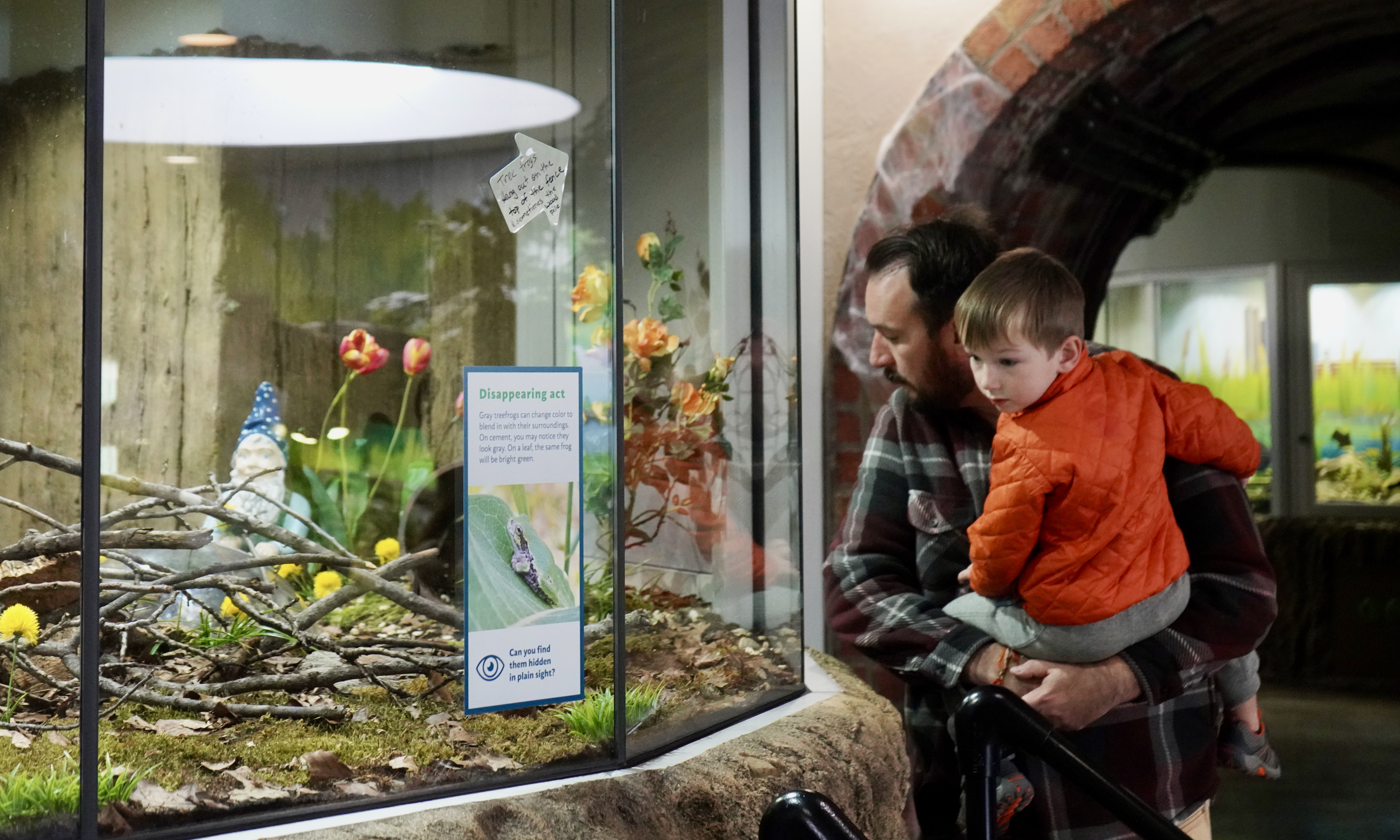
The Belle Isle Nature Center is all about making connections. People, animals, natural and unnatural landscapes are all a part of the unique tapestry that is Detroit. Visit belleislenaturecenter.detroitzoo.org to plan your visit. The Nature Center is open every day from 10 a.m. to 5 p.m. and and is always free!

Camp is Back at the Belle Isle Nature Center!

Winter Nature Camp recently took place at the Belle Isle Nature Center.

Authored by Luke Grange, senior education specialist at the Belle Isle Nature Center.

“Can we write on this?” 

The campers looked hopefully at the butcher paper-covered tables and cups of markers. When they were told that indeed the markers were for drawing on the tables, they happily got to work drawing, signing their names and making their mark. 

This was the scene at the Belle Isle Nature Center’s Winter Nature Camp on Jan. 3. Those campers had just arrived at the Nature Center’s first camp since 2019. The campers didn’t seem to mind the layoff as they drew rainbows, birds and the odd video game character as they got to know one another before breaking up into age groups to go explore outside.

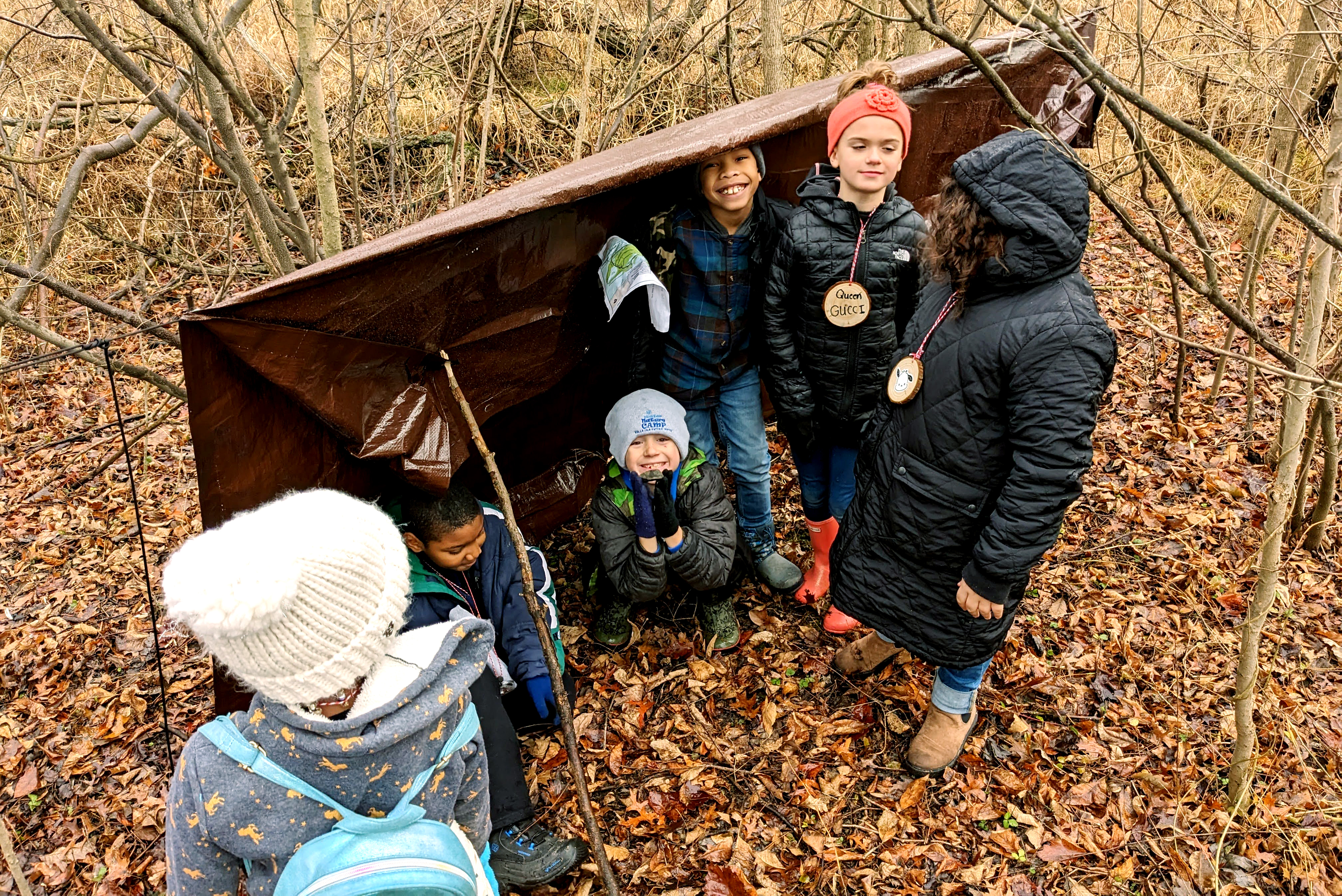
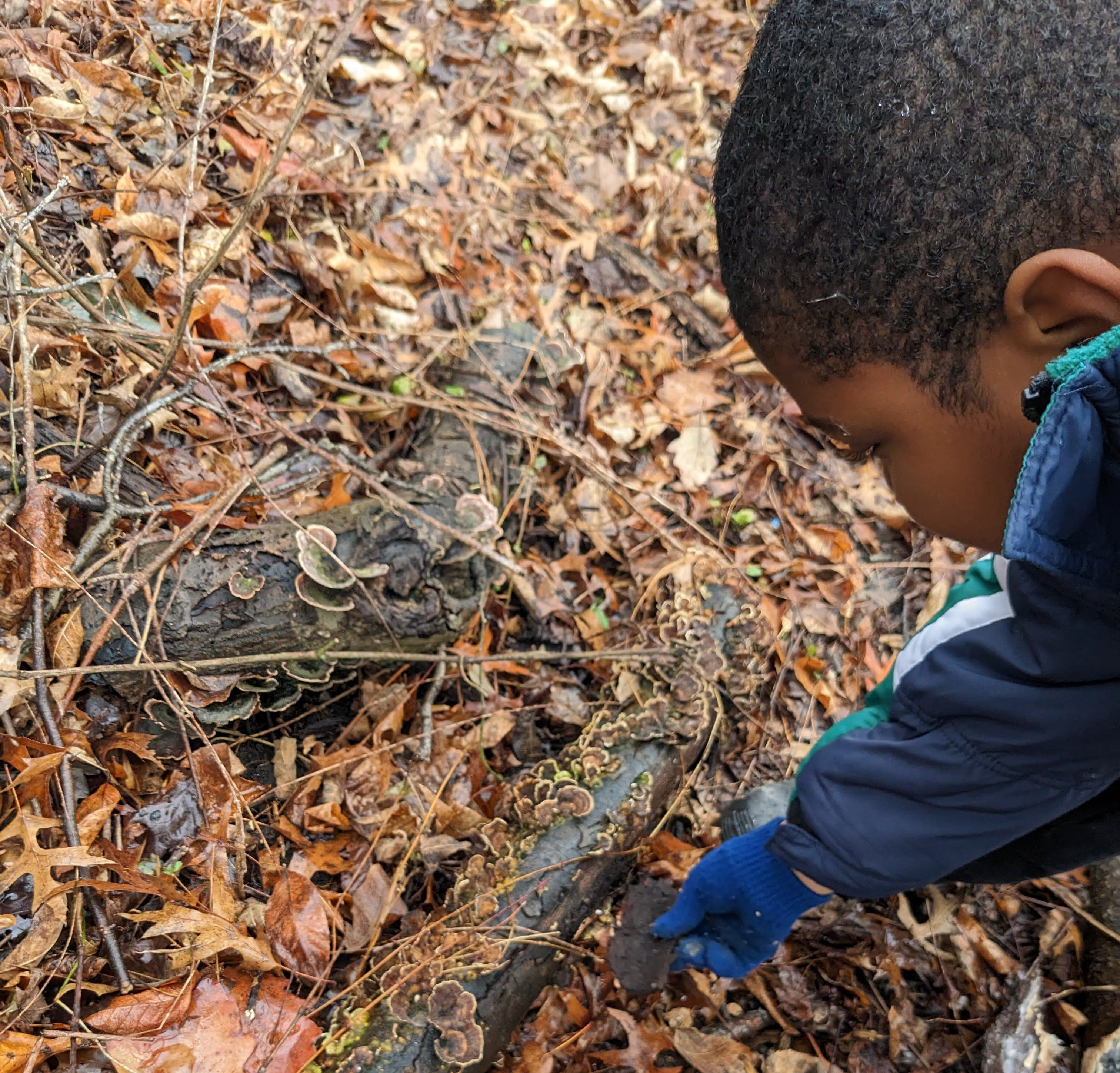
The Belle Isle Nature Center’s habitats and interactive exhibits celebrate places in the city where you can connect with the natural world. Similarly, campers experienced both the natural and man-made portions of Belle Isle ― walking on top of deer prints and under willow trees to explore the rarely seen inside of a covered footbridge. Fire hydrants poked up from alongside the trails like steel mushrooms as raptors flew overhead.

Campers loved building their beginner birding skills at Winter Nature Camp. Brittany Leick, program coordinator of the Detroit Audubon, assisted Winter Nature campers in learning to identify seven local, colorful birds and then practicing how to use binoculars. Campers also visited the bird viewing window and learned about the ultraviolet patterns inside the glass that the Belle Isle Nature Center installed to help make the windows bird safe. Campers then got to paint their own bird shapes to put on their windows at home.

The new Belle Isle Nature Center was thoroughly enjoyed by campers. Children visited the young learner’s space to act as ants and move giant seeds and dirt throughout the tunnels. They experienced life in the pollinator hallway as a bumblebee, seeing the normally invisible UV patterns that flowers advertise to insects. Each day, the campers would find something new to do in the space.

At the end of the week, campers were asked to draw their favorite camp activities. Almost everyone mentioned spending time out in nature with the new friends they made. As they had made their mark on the tables over the course of the week, adding to their drawings with each meal and snack, campers had made their own mark with the friendships they had formed.

Registration for Winter Nature Camp was done through community partners in Detroit. A waiting list was used for any remaining spots. Summer Nature Camp enrollment will happen the same way and is coming soon! Stay connected with the Belle Isle Nature Center website for updates.

The Belle Isle Nature Center is located at 176 Lakeside Dr., Detroit. 

Stay tuned to the Belle Isle Nature Center’s website for more camp opportunities!

Is Three a Crowd? DZS Research Finds Innovative Approaches in Gorilla Housing, Welfare

Authored by Dr. Kylen N. Gartland, manager of applied animal welfare science for the Detroit Zoological Society (DZS).

Making a happy home requires an abundance of care, creativity and finesse – especially when that home is for gorillas! 

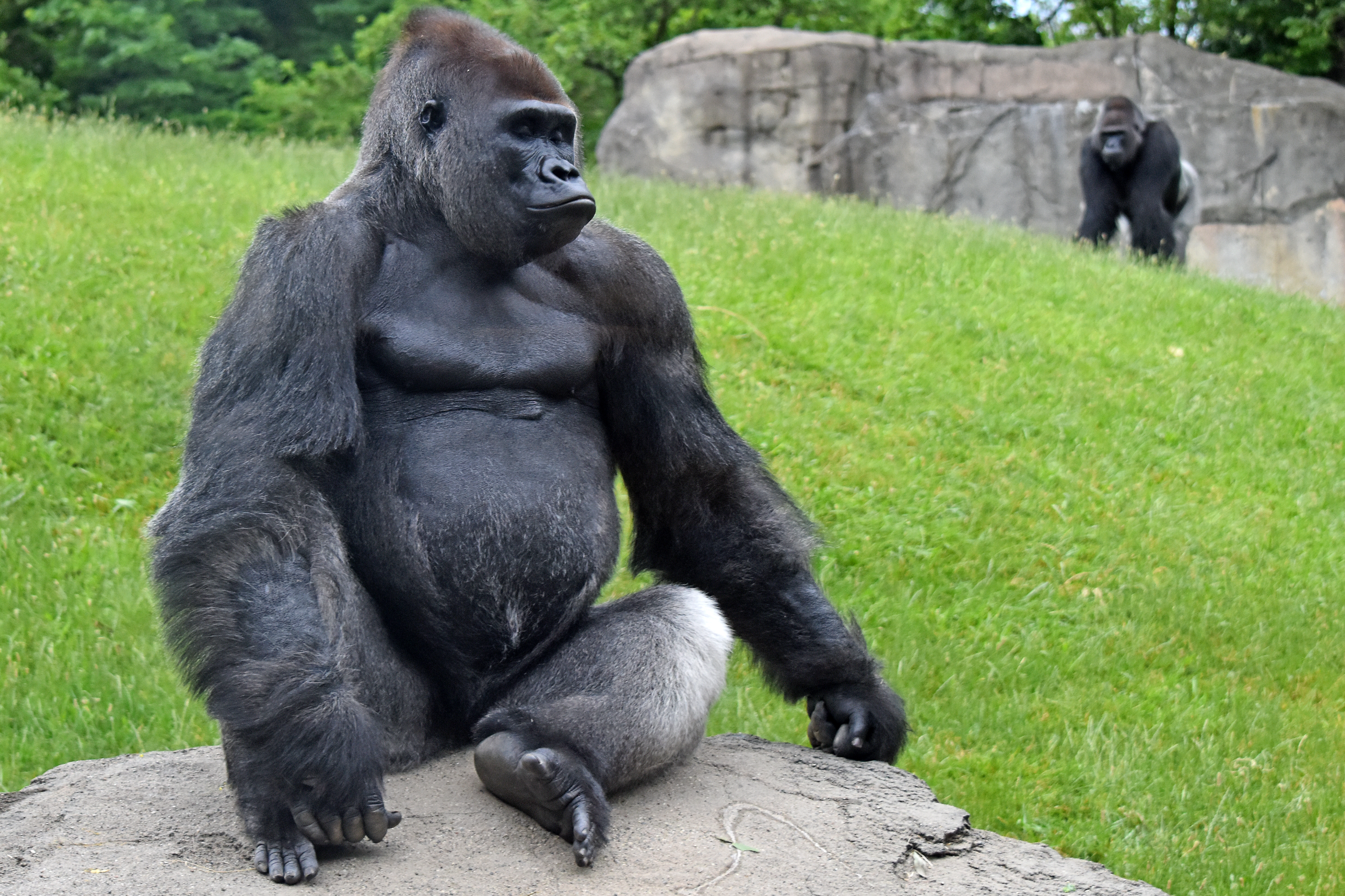
The Detroit Zoo’s Great Apes of Harambee habitat is home to three adult male gorillas, Chipua (Chip), Kong-Mbeli (Kongo) and Pendeka (Pende). You may notice something unique about this group – there are no females! Chip, Kongo and Pende are part of a bachelor group. Although gorilla family groups are generally composed of one adult male, multiple adult females and their juvenile offspring, gorillas may also form bachelor groups composed of multiple young and maturing male gorillas. These bachelor groups provide individuals with opportunities for a healthy social environment with companions with whom to form complex and lasting relationships. 

Forming a successful bachelor group is no small feat. Zoo staff and managers must consider a plethora of variables such as age, personality and family history. Although many all-male gorilla groups are formed when the individuals are juveniles, the relationships and dynamics within the group may undergo any number of changes as individuals grow and mature. The ideal management strategy for a group of 10-year-old gorillas can look very different from that for a group of 20-year-olds. What’s more, gorillas develop unique personalities and preferences, just like humans! Plans for long-term care and well-being must integrate not only group needs but individual factors as well. 

Chip, Kongo and Pende have been a cohesive social unit for more than 20 years, due in large part to the excellent care provided by the Detroit Zoological Society team! Zoo staff are always on the lookout for new information that can help us manage the complex inter-relationship between time, group-level needs and individual-level preferences that leads to a happy, healthy home. 

One way animal care staff can ensure the gorillas are living in optimal conditions is through tools such as Qualitative Behavioral Assessments (QBAs). QBAs are keeper rating tools that allow expert care staff to evaluate the well-being of a given animal based on subtle cues like movement, posture, dynamic expressions, and individualistic indicators of emotional states. Using QBAs, care staff and welfare scientists can collaboratively explore new and innovative strategies for maximizing animal well-being.  

Recent nationwide work between members of the DZS’s Center for Zoo and Aquarium Animal Welfare and Ethics (CZAAWE) and experts at other zoos accredited by the Association of Zoos and Aquariums (AZA) created opportunities to investigate overnight housing. This work suggested that groups of younger gorillas may thrive with the constant access to group members provided by social overnight housing, while groups with more mature gorillas may benefit from the space and solitude provided by individual overnight housing. Judging what is right for each individual and each group is an ever-evolving challenge, as an individual’s well-being varies over time. The gorillas at the Detroit Zoo provided a unique opportunity to investigate overnight housing, as the group has historically been managed on a rotation with three nights spent together socially and the fourth night spent solitarily. 

To make this investigation possible, CZAAWE staff members came together with mammal supervisor Melissa Thueme and other members of the primate care team to create and validate a QBA tool just for gorillas! This tool, called the Gorilla Behavioral Assessment Tool (GBAT), combined CZAAWE staff’s scientific training with the primate care team’s gorilla expertise. Using the GBAT, primate care staff conducted three months of daily evaluations of Chip, Pende and Kongo from June to August 2022. Once the primate team had collected the data, it was time for CZAAWE to step in! CZAAWE staff used statistics to analyze the data from the GBAT evaluations to look at differences between the overnight housing conditions. 

With a lot of input from the diverse supporting departments — and more than a little math — staff concluded that the gorillas generally demonstrated increased welfare from being housed separately overnight as compared to being housed socially. Individuals were more curious, less anxious and less aggressive with other gorillas! With these data in hand, the primate care team transitioned to housing the gorillas separately every night. 

The DZS is proud to invest in studies like these that support care staff in making the best possible management decisions and offer opportunities for cross-departmental collaborations. With the support of four other AZA-accredited zoos, we have set out to establish the GBAT as a reliable and useful tool for zoos across the United States and beyond! Stay tuned for more exciting updates as we continue this study. 

Take Your Birding to the Next Level with eBird! 

Many golden-crowned kinglets use Zoo grounds during migration from the end of March just into May and from the end of September into the beginning of November.

Authored by Matthew Porter, bird care team member for the Detroit Zoological Society (DZS).

Happy National Bird Day! To celebrate, let’s talk about how the Detroit Zoo takes part in one of the greatest community science projects on earth, eBird. 

The website ebird.org is home to a giant database of bird observations run by the Cornell Lab of Ornithology. Through this website, there is an abundance of information about birds across the globe.

EBird brings together the community and scientists to understand the ranges and movements of birds around the world. Once involved, we are all scientists at work. This collaborative effort harvests a massive data set that would never be attainable without the efforts of everyone involved. Our efforts compiled together advance avian science and conservation worldwide. Last year, on a single day in October, more than 34,670 people from 185 countries reported 80,000 checklists observing 7,453 bird species!

Over the last couple of years, our staff has invested lots of time to help with this worldwide effort. What we have found is that there is more avian diversity than we previously thought at the Detroit Zoo. Some birds call the Detroit Zoo home year-round. Others come here to breed in the summer, while some come here for a winter home. Many species use the Zoo from March through May and August through November as a very important migratory stopover. This land is a green island in the middle of suburbia and a great, safe stopover refuge. Our buildings have bird-friendly glass, and we continue to plant native plants to provide the appropriate food and ecosystem many species need.

Last year, more than 100 species were reported by Zoo staff and citizen scientists surveying Zoo grounds. You can join in on the fun by signing up for an eBird account at ebird.org. The website has lots of information and tutorials on surveying and best practices. There is also an easy-to-use app that can make surveying more efficient. Once enrolled, you can become part of this worldwide effort to assist with bird conservation.

Here at the DZS, we are always looking for more ways to engage with the community so that people, animals and the natural world can thrive together.

Pictured is a common yellowthroat, a species of warbler that routinely uses Detroit Zoo habitat throughout May as a migratory stopover area.

A Song in the Darkness: Audio Loggers and Panama’s Imperiled Amphibians

Authored by Mark Vassallo, Detroit Zoological Society (DZS) Amphibian Department Supervisor.

The cloud forest of central Panama is a unique and mysterious place, full of rare creatures and plants that call these moisture-laden peaks home. At night, the jungle writhes with life as the nocturnal world takes over the mountainsides. In this veil of darkness and nestled in the elevations of these dense jungles, some of the earth’s rarest amphibian species reside. Many of these species are yet to be described by science, and others are considered to be extinct.  As I gazed up at the gathering rain clouds on the volcanic peaks of El Valle, I could not help but wonder which of these potentially extinct amphibians could still be out there.

I have been traveling to El Valle, Panama for the last seven years to work with the El Valle Amphibian Conservation Center (EVACC). This organization is run by Edgardo Griffith and Heidi Ross, a husband-and-wife biologist team, who have dedicated their lives to the conservation of Panama’s most endangered amphibians. Usually during these trips, I am undertaking projects involving the installation of life support and infrastructure or helping troubleshoot specific husbandry issues that arise in one of the modified shipping containers in which EVACC houses seven species of Panama’s rare and endangered amphibians, including the iconic Panamanian golden frog (Atelopus Zeteki). 

A Warzewitsch’s frog was identified in the area.

While those types of jobs are on the docket for this trip, we also have an important task to complete that will bring us into the upper reaches of the cloud forest in the hopes to hear a sound that could mean some hope for the imperiled amphibians of Panama. The sounds we are hoping to hear are the calls of thought-to-be-extinct amphibians, including Raab’s tree frogs (Ecnomiohyla rabborum), large and highly unique arboreal frogs who lays their eggs in tree cavities and can glide through the air to evade predators. In the last year, EVACC has begun the process of deploying audio loggers in some of the area’s hard-to-reach elevations to listen for the calls of amphibians like the Rabb’s tree frog that are widely thought to be potentially extinct. 

The audio loggers are sturdy boxes that contain a microphone, batteries and SD cards accompanied by a digital screen. The idea is that these listening devices, which are programmed to turn on during the dusk and nighttime hours, will pick up the call of one of these rare frogs. If a call from one of these frogs is detected on the logger recording, this would give the biologists at EVACC a very good lead on the areas where intensive surveys could take place to potentially locate this species.

Armed with some GPS coordinates, batteries, fresh SD cards and rough information about the audio logger’s location from a member of the last group who placed it, we headed up the mountain to start our journey. As we began to climb, the heat and humidity was intense — our clothes were soaked in less than an hour.  Large biting ants were swarming our boots as the incline steepened, and we came to a crossroads in the trail. We had reached the GPS coordinates but realized that these coordinates could not be correct. At this point, we decided to attempt to leave the trail and start climbing up what seemed like a cut in the dense jungle, which may have been caused by mudslides and heavy rains, certainly nothing even resembling an actual trail. The going was difficult as the clouds began to gather. Buckets of heavy rain soon began dumping on us, causing the mud to loosen and give, making the more vertical sections especially precarious. In addition to watching your footing in the jungles of Panama, it is also important to watch where you put your hands. Eyelash vipers and stinging insects of all kinds tend to rest on branches and sticks at about eye level. All of these thoughts were keeping our senses sharp as we broke through clearing after clearing, each time hoping that this was the top of the mountain and the audio logger would appear like a shining beacon amongst the dense jungle. Yet, each time the clearings revealed even more vertical walls of vines and thick jungle vegetation to climb. Our resolve was fading, but we pressed on. At one point, my balance gave way, and I fell face first into the side of the muddy slope. As I raised my head, I noticed I was face to face with a tiny gem of a frog. It was a blue-bellied poison frog (Adinobates minutus). This toxic little frog was just staring back at me, probably wondering why a silly, hairless ape had bothered to climb this far up a mountain during a thunderstorm. 

A rainforest rocket frog was identified in the area.

The rain was finally letting up, and this gave us a little boost as we could see some sunshine emanating from what looked like a break in the jungle ahead. As we approached, sharp painful sensations started overwhelming my hands and wrists. We were wading through a large column of sharp bladed grass, which when brushed against, caused a paper cut like lacerations on the skin. Once we emerged from the brush and into the clearing, we realized we had reached the top. The jungle was so dense there was no real spot to even look out to enjoy the view. We immediately got to work searching for the audio logger.  I looked left then right and passed through some thick brush. Then I saw it — a strip of white that stood out in the landscape of green. It was one of the zip ties used to attach the logger to the tree. We had found it! After several minutes of exulted celebrations and numerous high fives, we swapped out the SD cards and batteries, the unit was reprogrammed, and we locked up the protective case. The trip down was more like a ride down a luge course made of mud. This did make the process faster but certainly not any safer. 

Once we finally arrived back at the EVACC grounds, we were exhausted and coated in mud and insect bites but satisfied and content that we had achieved a seemingly insurmountable challenge. After a shower and a cold beverage, I walked out into the moonlight on the grounds of EVACC. Once again, the clouds were beginning to gather around the El Valle mountains, and my eyes settled on the tips of those green jungle peaks, wondering if the logger we had reset for another four months would record a sound of hope.

Learn more about the EVACC foundation and make a donation online to help them ensure the survival of Panamanian amphibian species for generations to come.

Mark Vassallo is pictured with an audio logger.