Humane Education: Monitoring Frogs with Children’s Village

The Detroit Zoological Society (DZS) has conducted programming with Oakland County Children’s Village for more than eight years, instilling reverence and respect for wildlife and wild places through gardening, education and conservation programs. Children’s Village provides a safe, structured environment for children and young adults that includes secure detention, residential treatment and shelter care services. Our collaboration initially began with a humane education-focused gardening program, which is still flourishing, but our programming has evolved over the years and we’ve had the opportunity to work with hundreds of young people there in various capacities.

One of our most recent endeavors was conducting FrogWatch USA training with some of the teen girls that we work with. FrogWatch USA is an amphibian conservation and citizen science collaborative effort among the Association of Zoos & Aquariums (AZA) and AZA-accredited zoos and aquariums throughout the U.S. Citizen science programs teach volunteers to collect data using the same protocol and methods, so all data can be counted as part of a scientific research project. One scientist working alone could never collect the amount of information a group of trained citizens can.

I recently went to Children’s Village along with Rebecca Johnson, the DZS’s associate curator of amphibians, to facilitate the FrogWatch USA training onsite. Rather than a traditional four-hour training, which takes place in one sitting, we divided up the training to take place over the course of two days in late March. The girls learned all about amphibians, how to identify frogs and toads by their breeding calls and what information we need to include on the data sheet when we go out and survey. We discussed how monitoring helps provide important information for each site, such as the diversity, population size and health of the particular frog or toad species that are present; whether or not there are rare or nonindigenous species in the area and what the overall health of the wetland is. Knowing which species are present at a site can even help improve the management and protection of a wetland and all species living there.

The girls have been working hard to learn the different frog and toad calls – they’ve been listening to a practice CD and identifying key characteristics that help to distinguish the different calls from one another. For example, a Western chorus frog call sounds like someone is running their fingernails along a fine-toothed comb and a wood frog sounds similar to the quacking of a duck.

Becky and I have accompanied the girls on their first outing to conduct surveys. This work must take place at least a half hour after sunset, so we went to our selected site at 8:30 p.m. There were 10 girls, three Children’s Village staff members and the two of us. When we arrived at our designated location, we remained still and quiet for two minutes per FrogWatch USA protocol, and then we listened and collected data for three minutes immediately following.
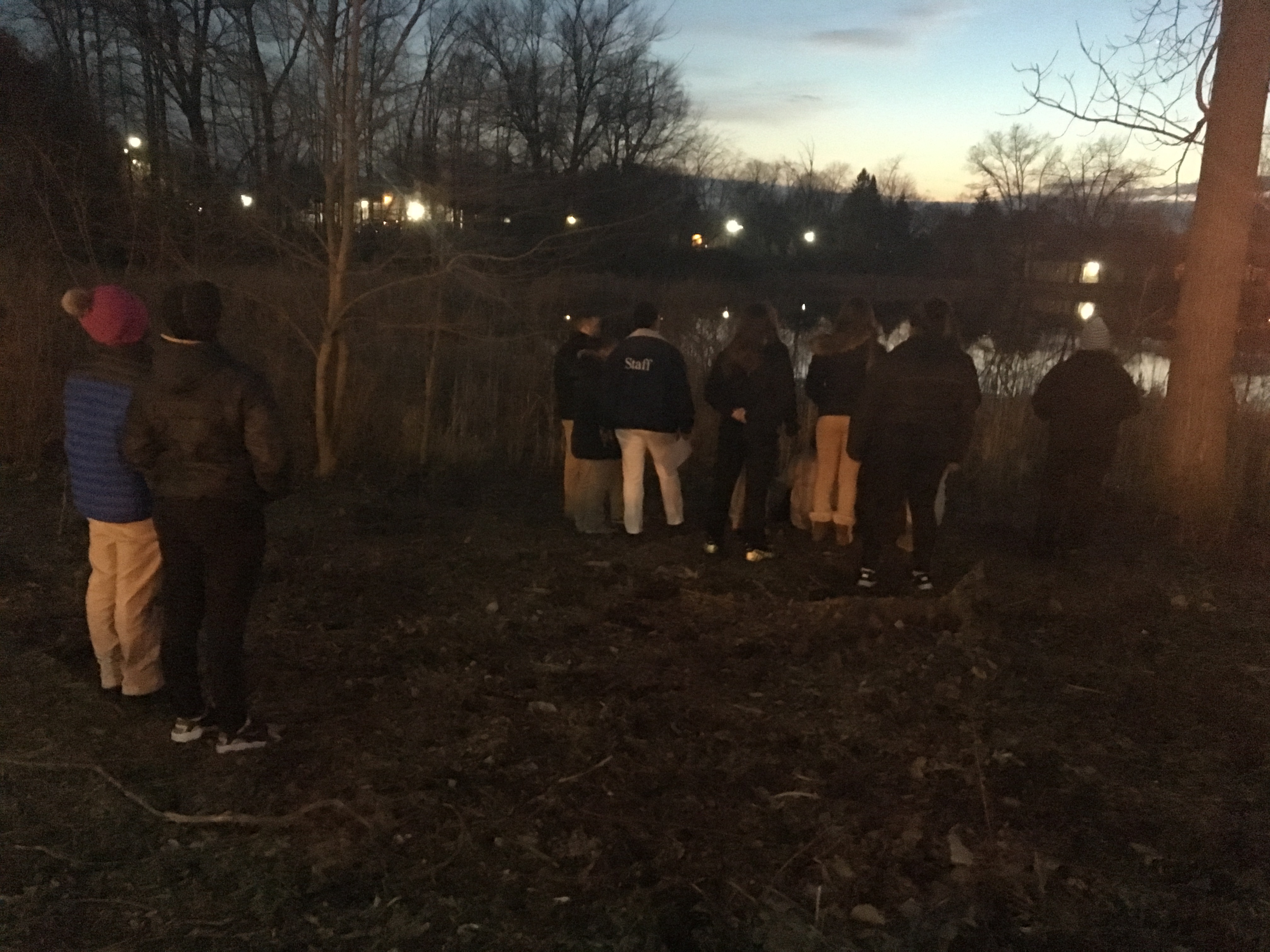
We heard a few different birds calling and something rustling in the reeds, which, much to our excitement, turned out to be a muskrat who eventually swam across the pond. A few of us even saw the space station travel overhead! But unfortunately, no frog or toad calls were heard. Fortunately, we’ve seen many American toads and even some tree frogs in the almost nine years that we’ve been facilitating the gardening program onsite, so we know we’ll hear calls soon. In the interim, it’s important for us to note on our data sheet that we didn’t hear anything, just as it will be important for us to document the calls that we will eventually hear.

To have a meaningful impact, we’ll need to collect data at least eight different times – no more than twice in one week – through August. Becky and I are planning to go out for another evening observation soon. After that, the girls and Children’s Village staff will continue on their own. I’m excited to see what unfolds this summer. It’s been an amazing experience for all involved thus far.

– Lisa Forzley is the curator of humane education for the Detroit Zoological Society and oversees the Berman Academy for Humane Education.
Education: Program Benefits Individuals with Alzheimer’s Disease

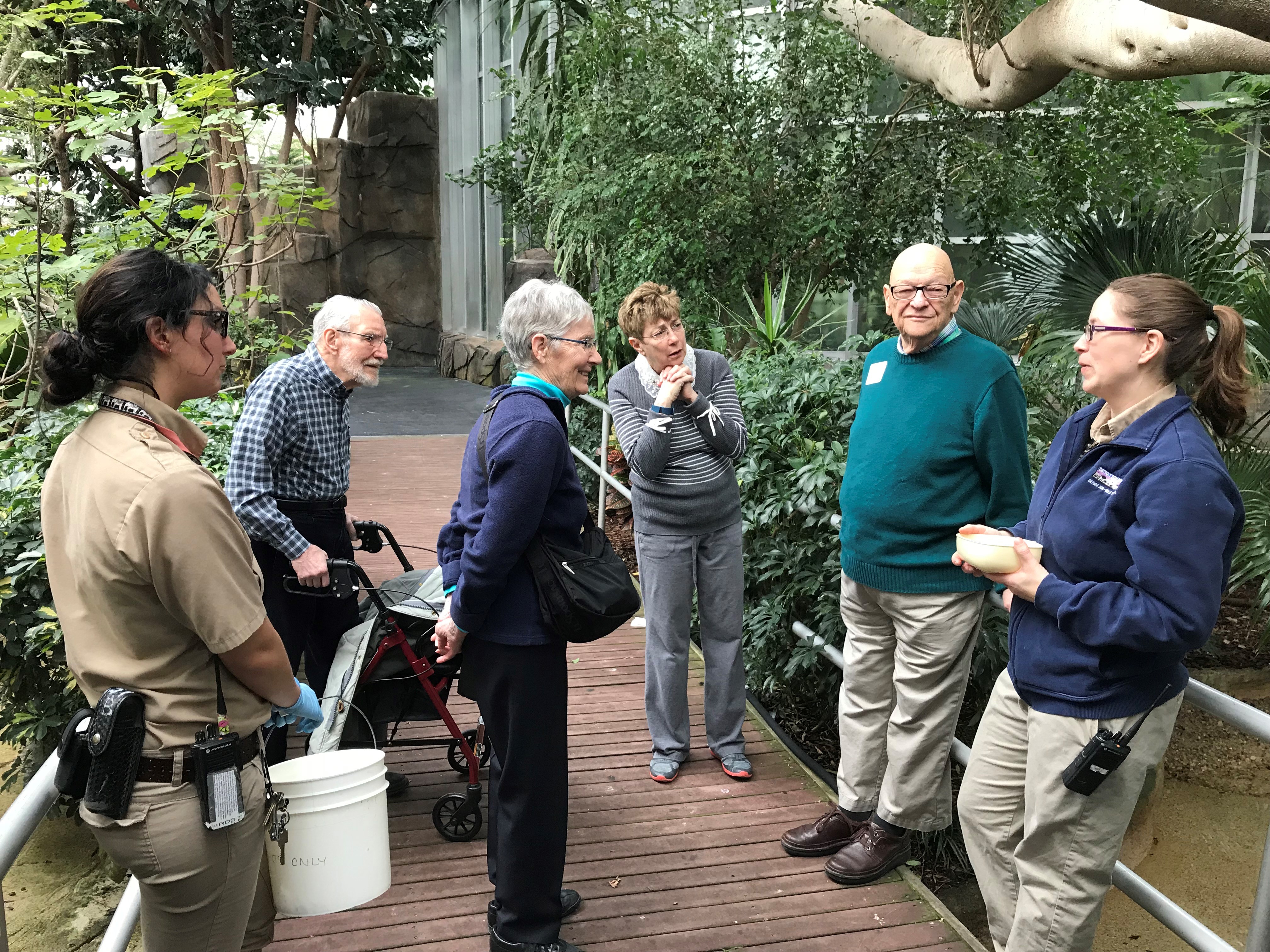
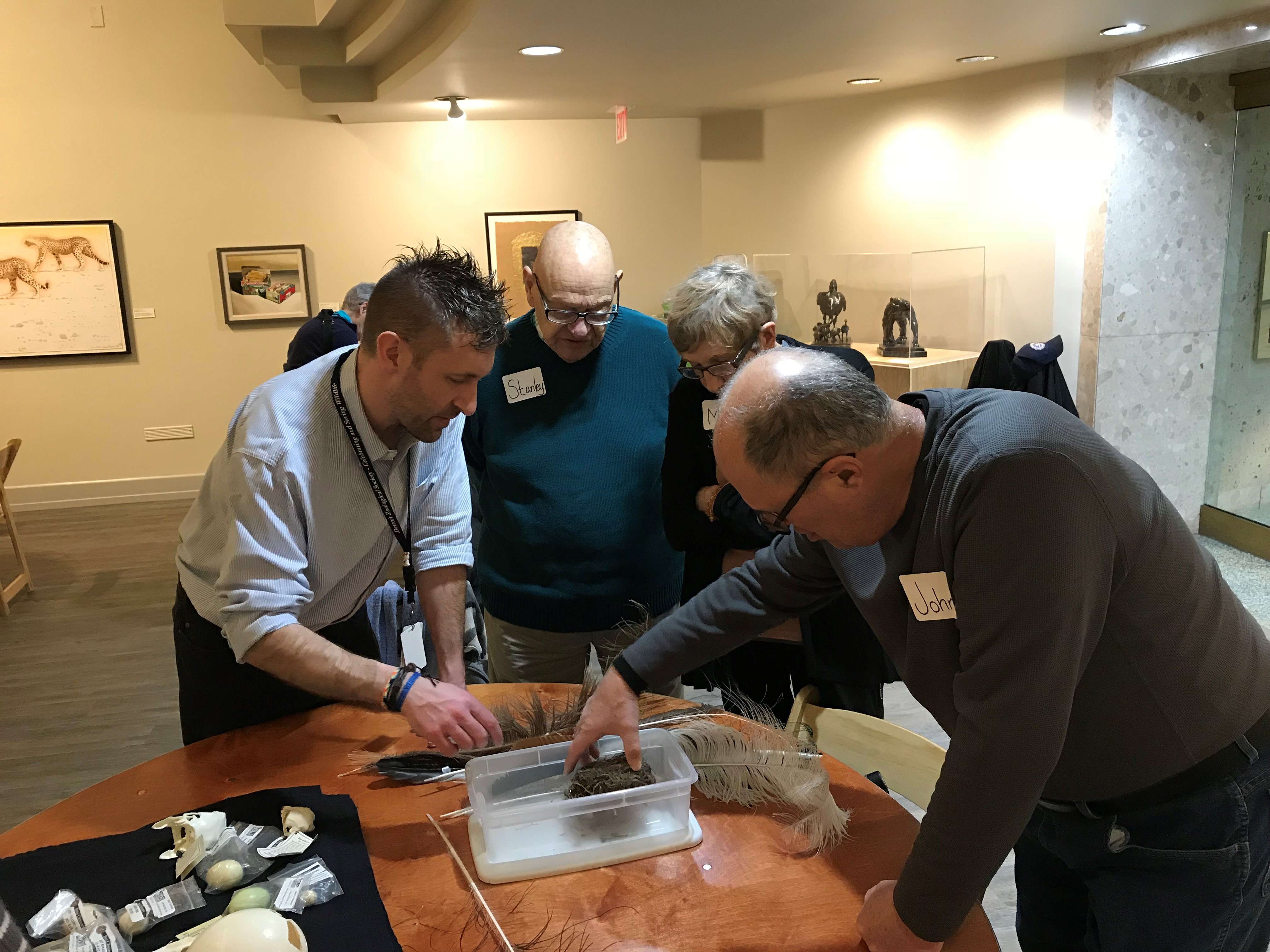
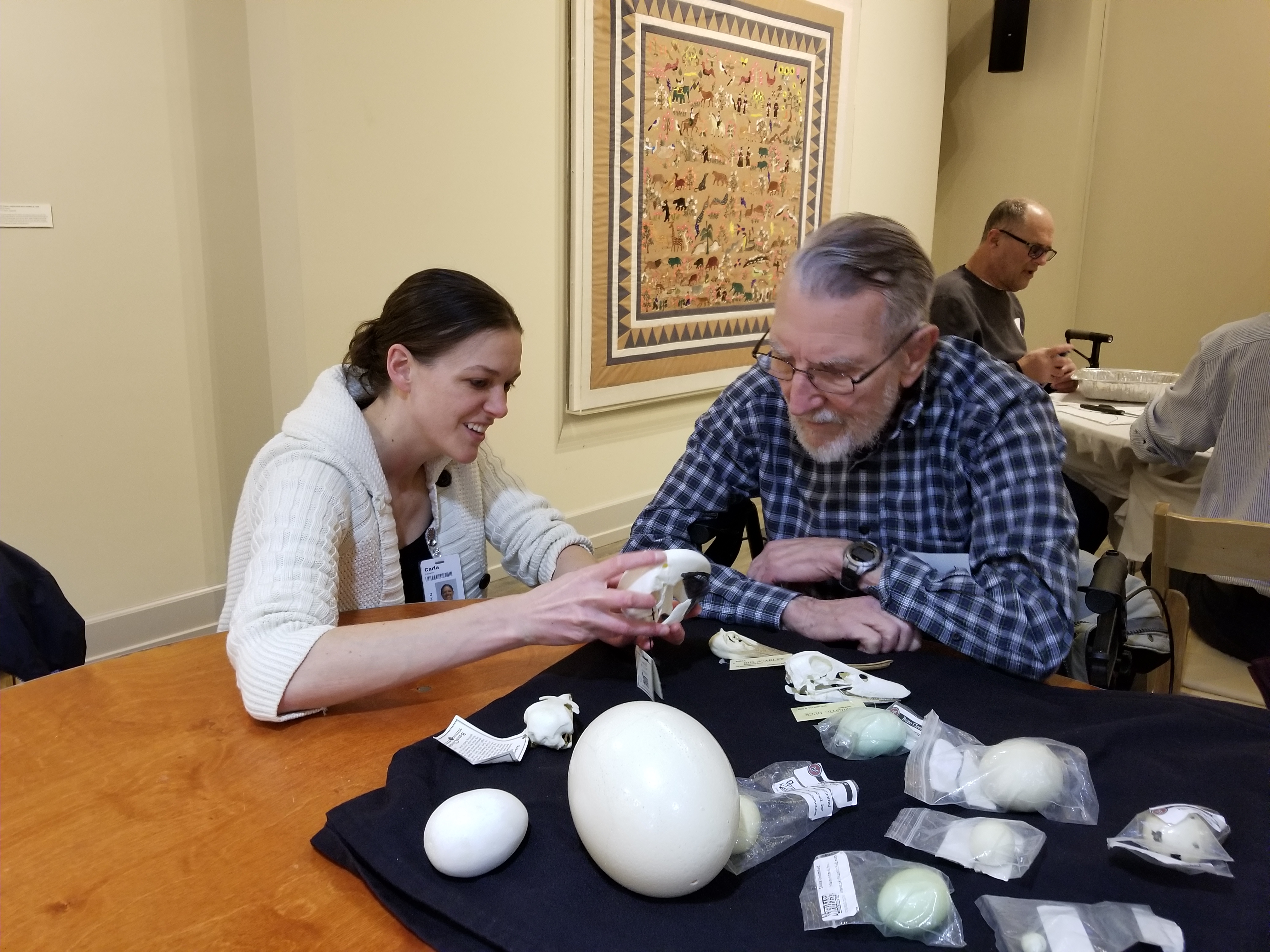
The Detroit Zoological Society (DZS) has partnered with the Alzheimer’s Association-Greater Michigan Chapter to bring its Community Connect program to the Detroit Zoo. This program provides a broad range of socialization and culturally significant events and outings for people living with Alzheimer’s disease and other forms of dementia, as well as for their care partners. As part of this effort, we developed “Minds in the Wild”, a fun learning experience at the Detroit Zoo that includes a tour, conversations with animal care staff and hands-on activities that allow for individuals to practice gross motor movement while exploring the animal world.

The Alzheimer’s Association works on a local, national and global level to not only find a cure for and prevent this debilitating and fatal disease, but also to provide care and support for the more than 5 million people affected by it.

We have seen the impacts for the people who participate. One gentleman shared a story of how discouraged he felt when he was first diagnosed with Alzheimer’s disease, but he added that this program has given him a reason to leave the house. He now looks forward to attending each month, and enthusiastically participates in the activities as he builds relationships with DZS staff.

Just as each animal in the care of the Detroit Zoological Society receives individualized attention, our education programs focus on meeting the needs of all of our learners. Every student – from toddlers to seniors and all ability levels – can experience the impact of creating connections with wildlife and wild places.

Humane Education: Ethical Consumerism

Every day we make consumer choices. We decide what to wear, what to eat and which products to use. These actions can collectively benefit the Earth and its inhabitants when we pause for a moment to reflect on their potential impacts.

A number of years ago, I read the book “Stuff: The Secret Lives of Everyday Things” as part of my graduate studies at the Institute for Humane Education. It was a huge eye opener for me. The book details the life cycle of common products, such as coffee and a T-shirt. As I read about the various facets of creating these products, it was the first time I truly began to recognize the greater impact my purchases have on people, other species and the planet.

As consumers, we’re often presented with different possibilities regarding which products we might purchase. Take coffee, for example. Upon examination, we may discover that conventional coffee is grown in areas of the rainforest that have been “clear cut”, meaning that the trees have all been removed, negatively impacting ecosystems and inhabitants. Alternatively, we might have the choice of purchasing shade-grown coffee, which is grown under the canopy layer of trees. Not only does this preserve native trees, this method also conserves the habitat for many animals. When I first began doing this research 10 or so years ago, I had a challenging time finding shade-grown coffee and actually had to order it online. I find it exciting to note that you can now find it in many local grocery stores!


We can consider the impact of our consumer choices by exploring two questions:

  • What are the effects of this item or activity, both positive and negative, on animals and the environment?
  • Are there any alternatives that may be less harmful or even provide some benefit?

Another example is that we might discover the cosmetics, toothpaste or cookies that we buy are made with palm oil. Conventional palm oil is grown in areas where the land has been cleared for oil palm plantations, which has had devastating impacts on animals such as orangutans and pygmy elephants. Alternatively, there are companies who work to produce sustainably harvested palm oil. The Roundtable on Sustainable Palm Oil works to certify those who responsibly produce palm oil.

There are a number of organizations working to gather this helpful information for consumers. There are even a number of apps available these days that help support ethical consumerism. For eample, if you want to purchase a cruelty-free product, you could check out The Leaping Bunny Program. If you’re interested in minimizing your impact on animals and the planet, you might check out The Better World Shopper, “a site dedicated to empower people to make the best choice as consumers and to help build the world we want to live in”. In addition, for those who want to research further, the Institute for Humane Education has put together an entire Pinterest board dedicated to ethical consumerism.

Our choices really do add up! When we take a moment to examine the products we’re purchasing, it empowers us to make the best choice possible for people, animals and the planet. This enables us to make knowledgeable decisions on how to walk softly and treat the Earth’s creatures gently.

– Lisa Forzley is the curator of humane education for the Detroit Zoological Society and oversees the Berman Academy for Humane Education.
Greenprint: Reducing Harmful Litter One Drink at a Time

Twisty straws, crazy straws, straws with little umbrellas on them – these may seem fun and convenient but the environmental impact of plastic straws far outweighs the benefits of sipping drinks without having to lift them. In fact, the statistics behind straw usage and plastic pollution can be difficult to digest.  According to the National Park Service, Americans alone use 500 million straws every day. Plastic straws are non-recyclable and non-biodegradable, which begs the question: Where do all these straws go?

As a part of the 91 percent of plastic waste that does not get recycled, these straws either sit in landfills or become litter that contaminates the environment. This is of special concern for an institution providing care to animals because this piece of litter can be extremely dangerous. Straws can be blown by the wind into animal habitats and ingested by the inhabitants, causing significant harm.

For many, this issue was brought to life in 2015 when a video of a scientists removing part of a straw from a sea turtle’s nostril went viral. The eight-minute video is quite painful to watch, which is why it garnered so much attention and sympathy. The video sparked several movements to reduce straw (and plastic in general) usage, but many efforts were in place long before the internet brought it to mainstream attention.

The Detroit Zoological Society (DZS) stopped providing straws and plastic lids at Detroit Zoo concessions more than 10 years ago, not only preventing some 242,000 pieces of waste from potentially entering animal habitats annually, but also keeping these out of the waste stream. Because for us, this goes beyond animal welfare – it’s about sustainability too. By cutting down on plastic usage, we contribute less to landfills and pollution while preserving oil, a depleting resource. Eight million metric tons of plastic end up in the ocean each year and at this rate, by 2050 there will be 12 billion metric tons of plastic waste in landfills. We’ve kept more than 2 million straws out of landfills in the last decade by removing them from our concessions.

Other straw-banning movements have sprung up worldwide, including London’s Straw Wars, Straws Suck, and The Last Plastic Straw Movement, asking people to reject using straws and encourage restaurants to do the same.

Animals are not the only ones who suffer.  Toxic chemicals from plastic waste seep into groundwater and flow into lakes and streams contaminating the water that is eventually consumed by humans and animals. Every piece of plastic waste comes with a negative consequence. When one part of the ecosystem is disrupted, all life suffers.

As an organization dedicated to creating a more sustainable future, the Detroit Zoological Society has taken many steps that yield a big impact on saving the environment. In 2017, the DZS received the Keep Michigan Beautiful award for our environmental contributions. We are keeping 60,000 plastic bottles out of the waste stream annually by no longer selling bottled water at Detroit Zoo concessions. Reusable bottles are available for guests at an affordable price. We are further reducing our plastic waste by no longer providing plastic bags at our gift shops. Instead, guests can purchase reusable animal-themed bags.

When we walk on this Green Journey together, it can make a big difference for the animals and the Earth. So, without a straw, let’s raise a glass to those dedicated to the cause. No litter goes unnoticed and neither do your efforts for a more sustainable planet.

Stay tuned to the Detroit Zoological Society Blog to learn more about our award-winning Greenprint initiatives and what you can do to help.

Humane Education: Do They Have a Choice?

People are often surprised to hear that the Detroit Zoological Society (DZS) does not include animals in any of our education programs – either on grounds or at community or school events. This is because programs like this – no matter how well orchestrated – can be stressful for exotic animals and can negatively impact their well-being. As a leader in animal welfare and the home of the Center for Zoo Animal Welfare and Ethics, the well-being of the animals is at the core of every decision we make.

Consider what it might be like for an animal to take part in a program with many excited children and adults nearby. Animals that are forced to be in programs often have to be physically restrained or manipulated and aren’t given a choice to opt out. The ability of an animal to make choices and to have an impact on his or her own life are fundamentally important to good welfare. As soon as the animal is handled, whether it is to put on a harness or to otherwise physically restrain him or her, any choice to participate is removed and the animal can either comply or resist, neither of which are positive choices. Additionally, regular handling of animals can actually result in a condition called learned helplessness. As the animals learn that they cannot avoid being restrained, carried around and touched, they simply stop reacting. This isn’t a sign of them being comfortable, but instead, that they have given up.

Animals used in such programs are often housed in smaller, less complex spaces and may have to be transported between venues for programs. These activities certainly impact the welfare of the individuals in a negative way. Additionally, the normal activity patterns of the animals are often disrupted, as performances are not scheduled based on their circadian rhythms (the natural daily cycles we experience that affect our physiology and behavior), and for some, such as nocturnal animals, these disruptions can have an even more drastic effect.

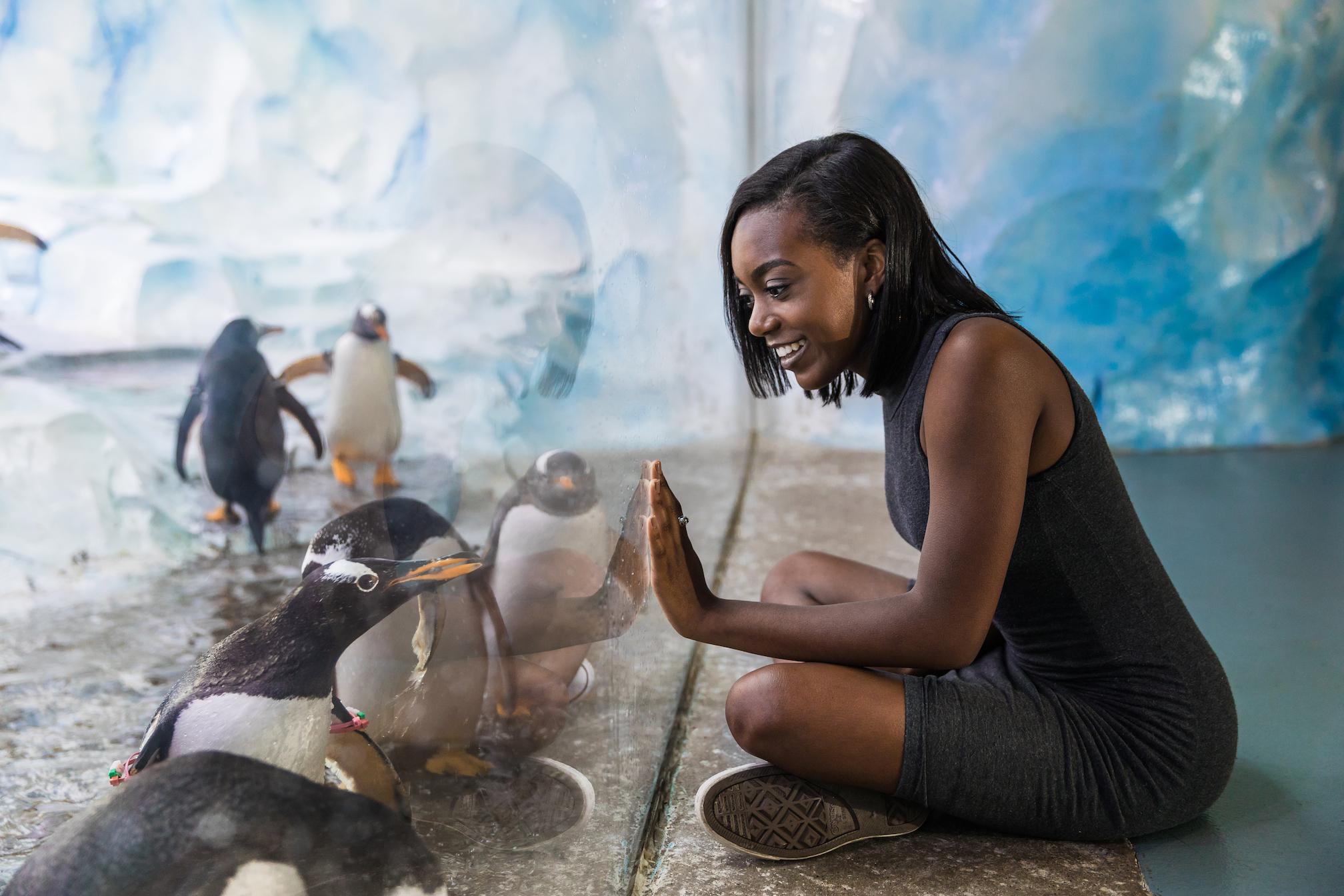
There are many ways in which humans and animals can interact, sometimes without any contact and sometimes more directly. Several of the animal habitats at the Detroit Zoo have been designed in such a way that visitors can be immersed in the experience without actually coming into contact with animals – this includes the Australian Outback Adventure, the Polk Penguin Conservation Center, the Polar Passage in the Arctic Ring of Life, the Butterfly Garden and the prairie dog habitat. We also offer two types of experiences that allow guests to directly interact with individual animals: the Giraffe Encounter and Mingle with the Macaronis.

Visitors at the Detroit Zoo have the opportunity to interact with animals in certain circumstances where each animal may choose whether to participate or not.

A very important distinction between these experiences and performance-type programs is that, at the Detroit Zoo, each animal has the choice to participate or not. This means that the animals have the opportunity to choose if they want to interact – and there are no negative consequences if they decline to participate – and they can control the amount of interaction and length of the encounter, with the option to leave at any time. Choice and control are critical to good welfare, in humans and non-humans alike.

Holding and presenting exotic animals like this also sends the message that we can do as we wish with these animals for our entertainment. This is a message we do not want to send. Promoting reverence and respect for all animals is important – for human and nonhuman species alike – and is an essential component of our mission. In addition, handling exotic animals and allowing others to interact with them may lead people to want one of their own. The experience could mislead people into thinking that exotic animals make good pets or companions.

The next time you see an animal being forced to perform or interact with people, ask yourself:

  • What does a day in the life of this animal look like?
  • What happens to the animal when he/she isn’t being shown?
  • Where did this animal come from originally?
  • How does he/she live? What does he/she do?
  • What is the lifetime care plan for this animal?
  • What is his/her ability to choose? Is the animal participating because he/she wants to?
  • What does the world look like from the animal’s perspective? Try to imagine the experience through their eyes, ears and nose.

Choosing not to participate in events or programs that force exotic animals to perform and interact with humans sends a powerful message. The DZS’s foundation of animal welfare and humane education ensures that we provide unique learning experiences without compromising the well-being of animals.

– Dr. Stephanie Allard is the director of animal welfare for the Detroit Zoological Society and oversees the Center for Zoo Animal Welfare and Ethics. Lisa Forzley is the curator of humane education for the Detroit Zoological Society and oversees the Berman Academy for Humane Education.

Education: Teenagers Learn Civic Responsibility at Detroit Zoo

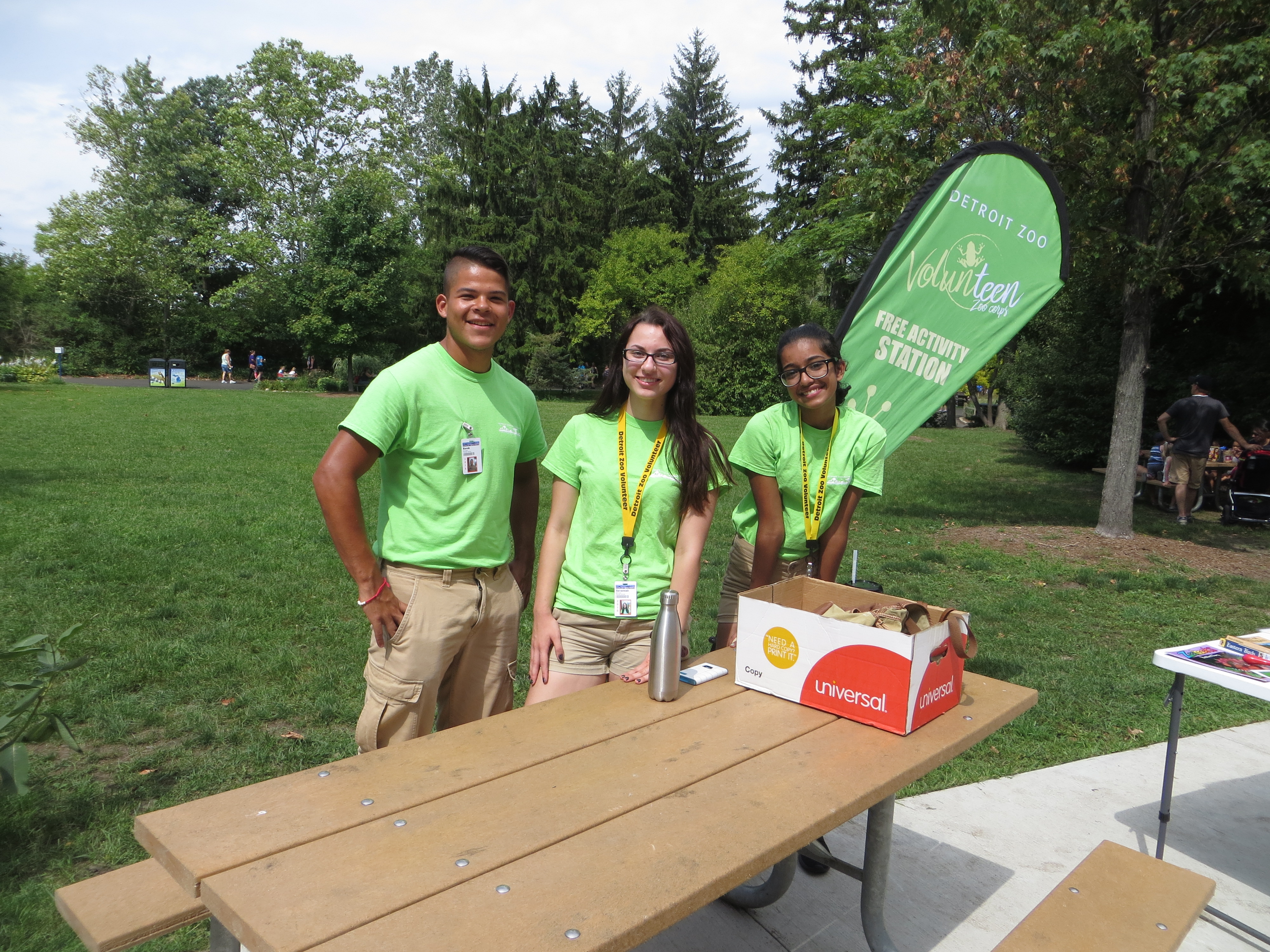
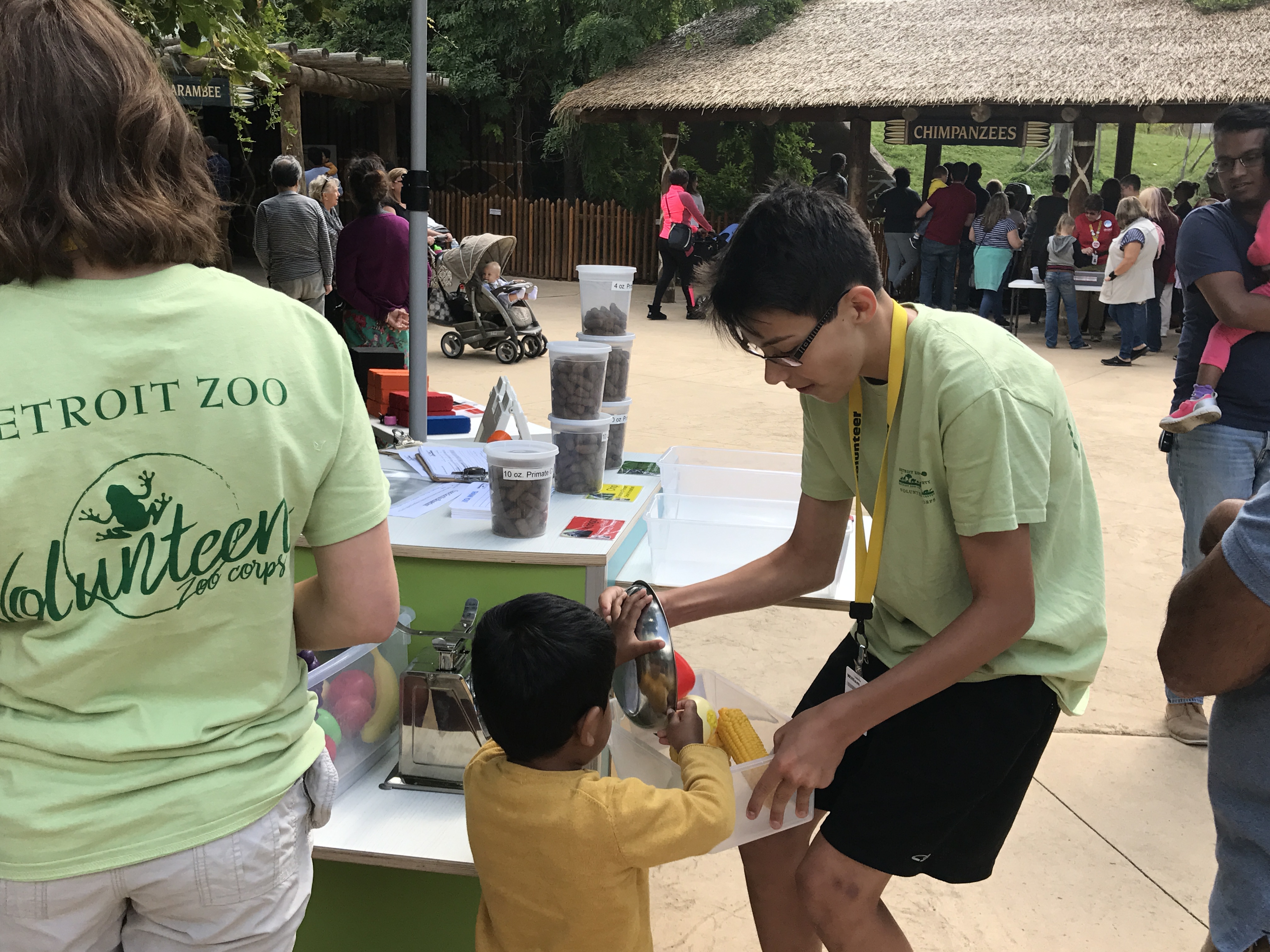
Volunteers at the Detroit Zoo and Belle Isle Nature Center play a hugely important role in our operations. They interact with visitors, pass on important stories about the animals that live here, share our mission of Celebrating and Saving Wildlife and facilitate experiences that engage our guests in creating a better tomorrow for all animals.

Our volunteer corps donates more than 100,000 hours of service every year. We have opportunities for individuals and groups 13 years of age and older to assist us during special events, to greet guests as they arrive at the Zoo and provide directions throughout our 125 acres, and to engage with visitors in areas including the Polk Penguin Conservation Center, the Wildlife Interpretive Gallery, the Australian Outback Adventure and the Arctic Ring of Life.

This past spring, we amped up our recruitment efforts for the Volunteen Corps, which resulted in our numbers tripling. This a fantastic opportunity for local teenagers to earn community service hours while gaining leadership experience and building communication skills in a professional work setting. Volunteering not only builds a teen’s resume by adding valuable skills and experience, but it helps develop a sense of civic responsibility. Volunteering at the Zoo also allows these students to spend time in nature while learning about animals and the environment and how we can all be great stewards of this planet. The Volunteens who’ve worked with us are highly engaged and enthusiastic about interacting with guests of all ages – especially children – and sharing all they have learned during their time here.

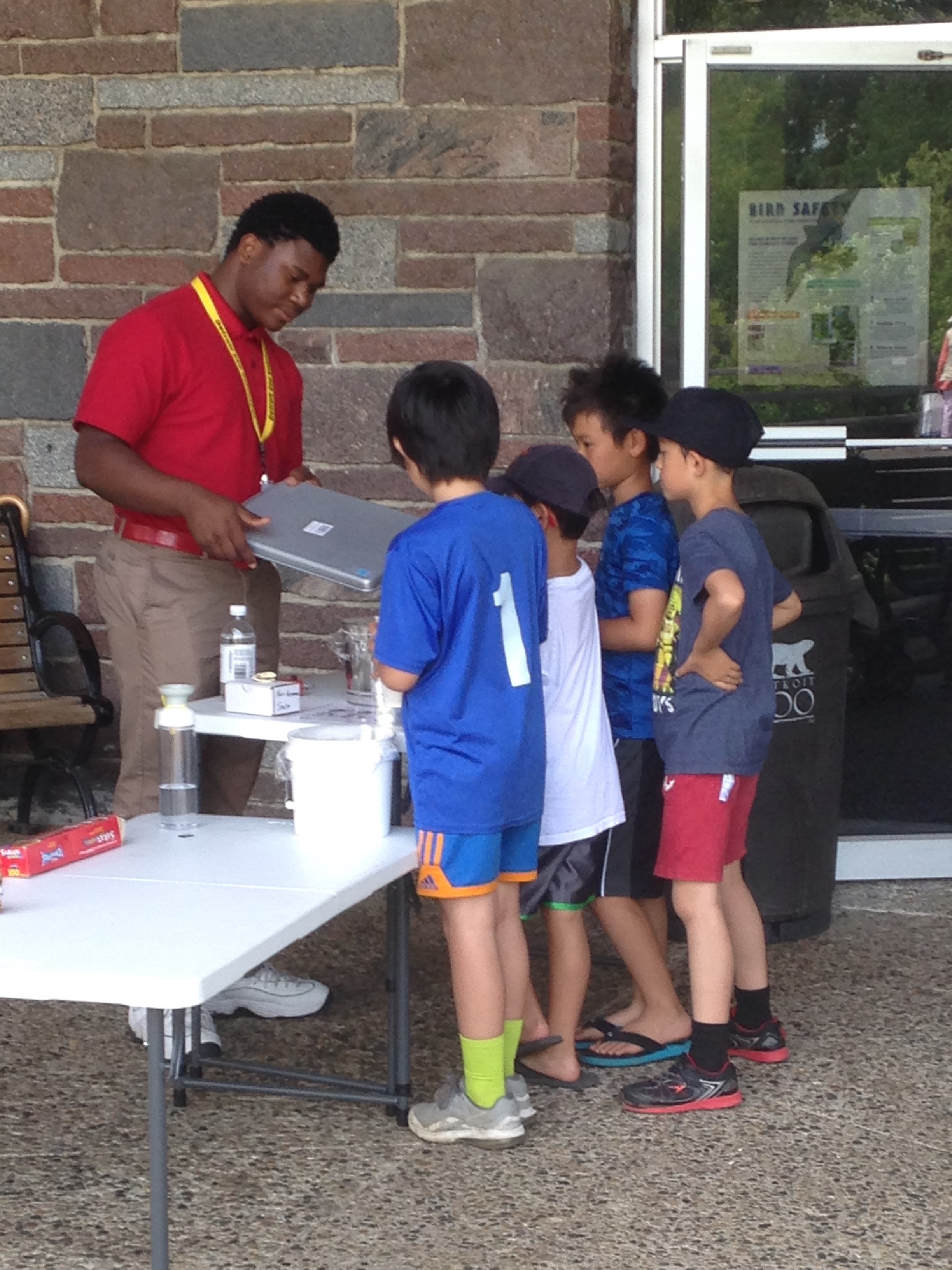
Fifteen thousand visitors have interacted with our more than 80 Volunteens since June. Many of those participated in a hands-on activity that explored how sound energy travels while sharing an important animal welfare message. Stationed just outside the entrance to the Holden Reptile Conservation Center, teens demonstrated how sound travels and allowed guests to try their hand at making sound waves move by sanding sugar on a taut plastic surface. The teens then skillfully steered the conversation toward the concept that tapping on the glass of the reptile habitats allows sound and vibrations to travel into the habitat space, possibly disturbing if not upsetting the animals that live on the other side.

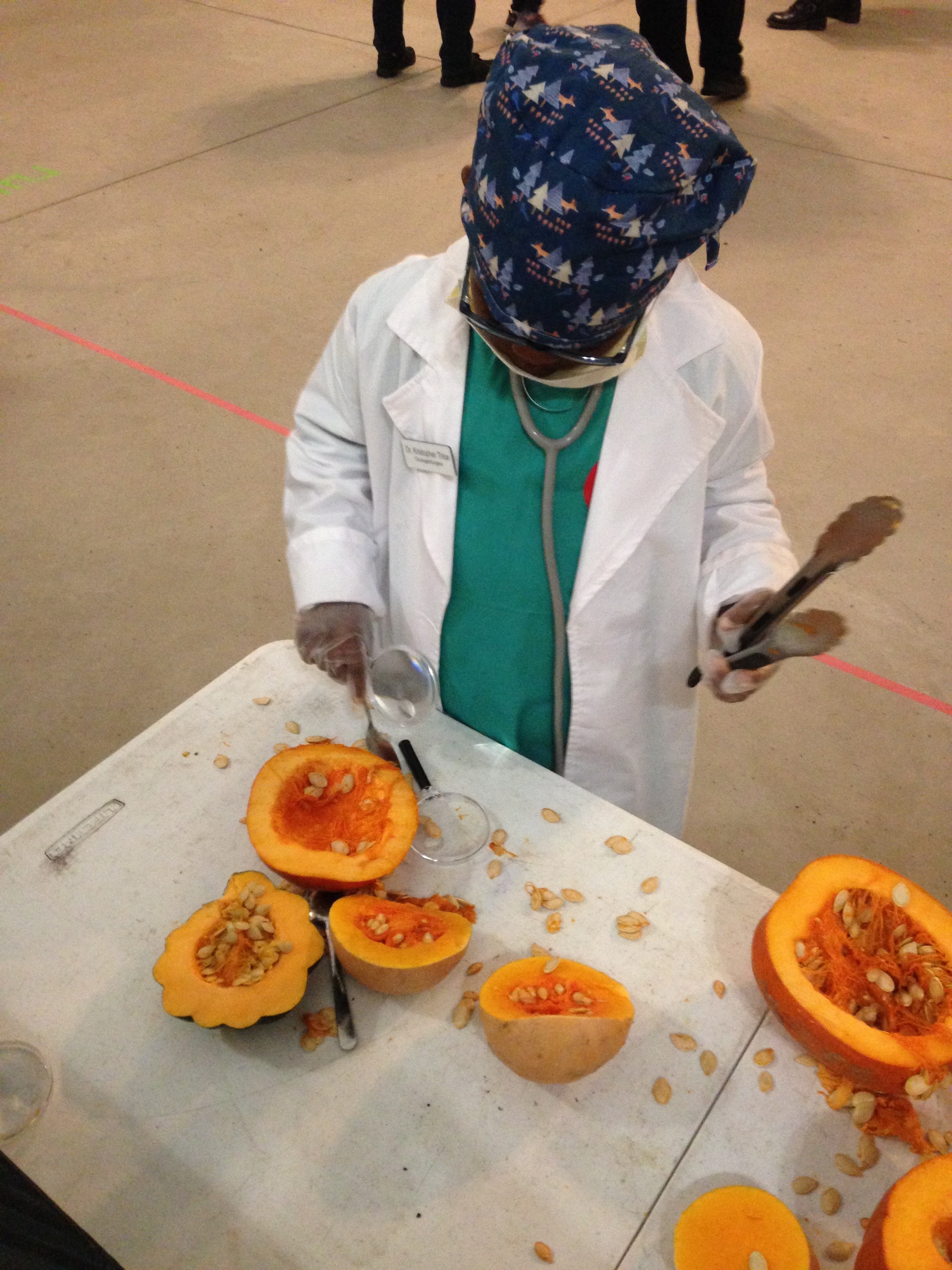
As the weather cools down, the Zoo Corps is helping us with Zoo Boo, our annual Halloween celebration held on weekends in October. The Spooky Science Laboratory is crawling with trick-or-treaters and our teen volunteers assist them as they explore pumpkin and squash guts, predict how many mosquitos a bat eats in a single night, and determine how neighborhood wildlife can do your pumpkin carving for you.


We are also working with our Zoo Corps to tell stories about our mission while building communication skills. A small cohort of teens participated in storytelling training and are sharing the real-life stories of animals that have been rescued by the Detroit Zoological Society as well as tales of wildlife conservation work we are involved in locally and internationally.

Starting in November, our teens will be doing science activities on Sunday evenings during our annual holiday celebration, Wild Lights. Hands-on activities will be sure to delight guests as they enjoy the more than five million lights illuminating buildings, trees and more than 230 animal sculptures.

If you know a teenager who would be interested in joining the Volunteen Zoo Corps, please encourage him or her to apply! We are currently recruiting teens for a mid-November training session. Learn more: https://detroitzoo.org/support/volunteer/

– Claire Lannoye-Hall is a curator of education for the Detroit Zoological Society.

Detroit Public Schools’ Student Scholars Prepare for Future in Detroit Zoo Program

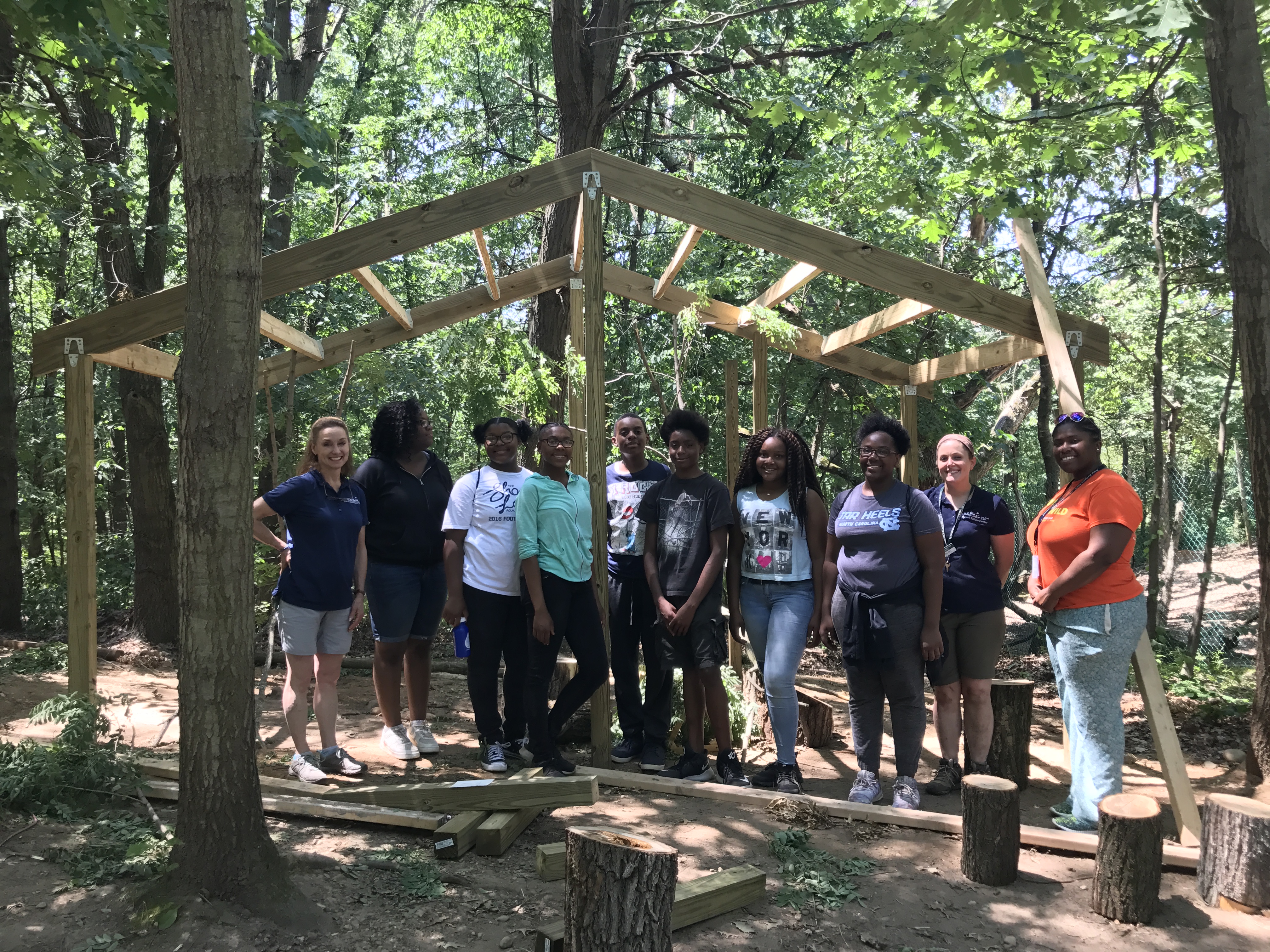
This summer, the Eugene and Marcia Applebaum Family Foundation generously provided the opportunity for seven students from Detroit Public Schools to become part of the Applebaum Scholars Education Program. The goal of this program was to prepare high-achieving youth for successful experiences in college and work through a 10-day experience at the Detroit Zoo. Students were selected after submitting an essay demonstrating their passion for animals; they were also recommended by their teachers.

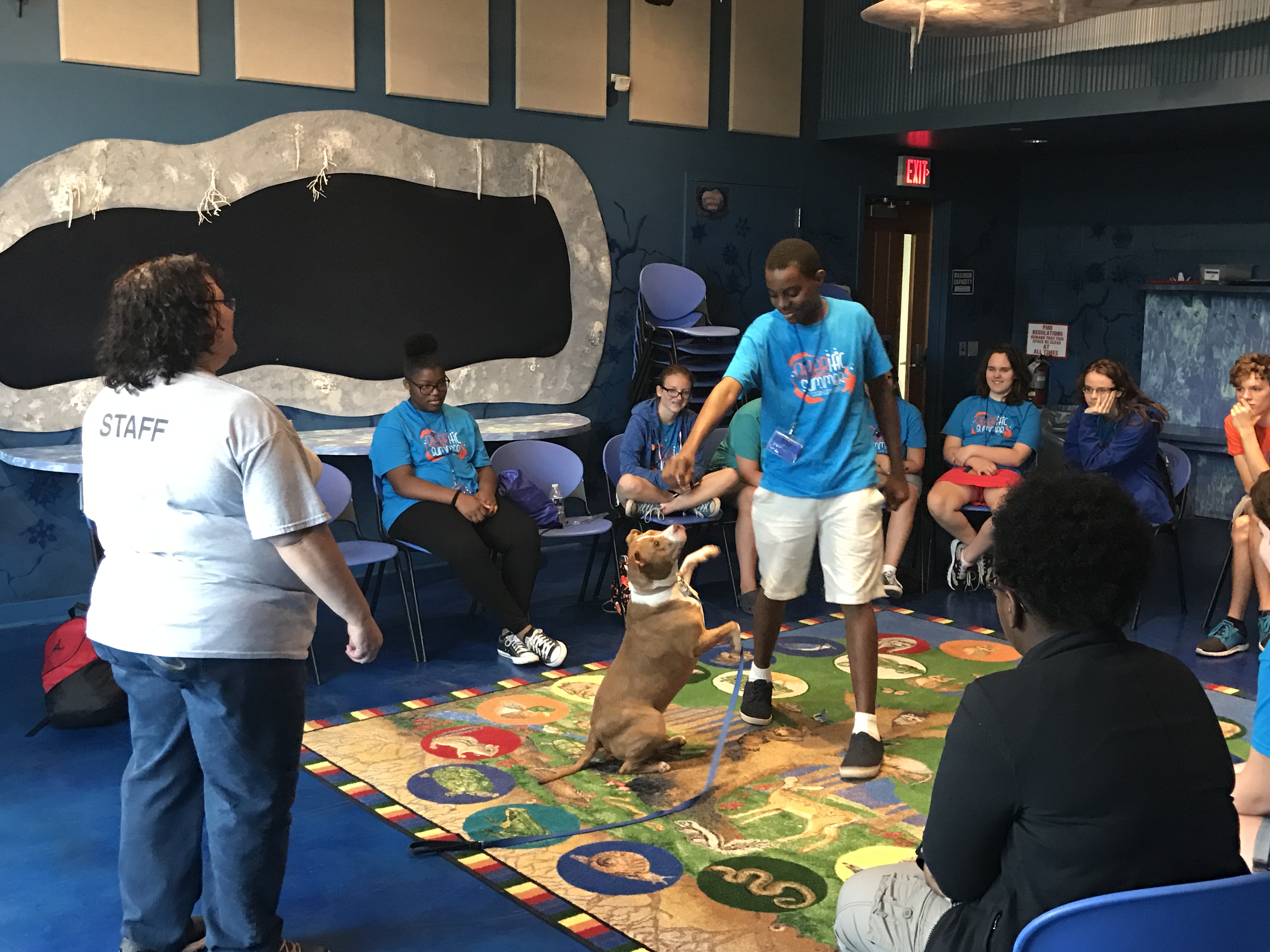
The first few days included an introduction to animal welfare through a variety of skill-building activities, including building a habitat for a crow living at the Howell Nature Center. The scholars then joined other high school students taking part in our Summer Safari Camp – Animal Welfare Workshop. During this experience, the Detroit Zoological Society’s Center for Zoo Animal Welfare and education staff worked alongside youth to facilitate experiences that allowed them to learn about behavior from the perspective of an animal. Students crawled through the anteater habitat to see how an anteater sees and climbed in a bucket truck to view the surroundings from the vantage point of a giraffe. A training demonstration with a rescue dog was so impactful that one student shared her plans to apply what she’d learned toward training her own dog at home. The campers were then asked to make presentations with recommendations on how to improve the lives of animals that live at the Detroit Zoo, using the animal welfare knowledge they’d developed during their observations and camp experience.

In the final two days of the program, the Applebaum Scholars focused specifically on college readiness. They toured Wayne State University (WSU) and met with advisors, receiving scholarships because of the visit and related activities. WSU advisors then joined the students at the Detroit Zoo on their last day to provide a workshop on SAT preparedness, college application practice and financial aid assistance.

During the culminating ceremony, the student scholars shared stories of their experiences and showed deep gratitude to the Applebaum Family for the opportunity. We look forward to witnessing these scholars grow into successful young men and women.

– Carla Van Kampen is a curator of education for the Detroit Zoological Society.

Help us Protect a Billion Birds from Untimely Deaths

Every year, thousands of avid birders flock to important birding areas in the state of Michigan, hoping to see or hear a few of the millions of birds that are migrating to their breeding grounds. Birds migrate north to their breeding grounds mid-March through May; they then migrate south to their wintering grounds mid-August through October. Unfortunately, many migratory birds will meet an untimely death by colliding with window glass or other manmade structures; a phenomenon known as a bird collision or bird strike. It has been estimated that up to 1 billion bird-collision deaths occur every year in the U.S., according to the American Bird Conservancy. As humans continue to build structures that feature glass, the threat of increases in bird collisions will also continue.

Birds and humans have a different visual system. Glass is not visible to birds, and it becomes a deadly invisible barrier they are unable to avoid. Oftentimes as a result, birds will fly directly into windows, causing fatal injuries. In some cases, a bird will fly away after the collision, but it will likely succumb to its injuries elsewhere.

The good news is that there are many things we can do to prevent collision. Keep your windows dirty! Yes, dirty windows are good for birds. You can also use dark blinds on windows and keep your blinds shut. Consider moving plants away from windows without blinds to help prevent birds from trying to land on those plants. You can also move bird feeders: either place them within 3 feet of windows or more than 30 feet away from windows to prevent collisions. There are also a variety of window films that reduce reflection on the outside of windows; ABC (American Bird Conservancy) BirdTape can be hung vertically (4 inches apart), or horizontally (2 inches apart). The most common patterns on windows are spaced in a 4 inch by 4 inch, 4 inch by 2 inch or 2 inch by 2 inch pattern, the latter being the most effective. Companies and homeowners can also build Bird-friendly buildings by incorporating specially designed bird collision glass, and even minimizing the use of glass.

The Detroit Zoological Society believes it is important to take care of all birds, not just those that are cared for by the Zoo. The DZS has been committed to tracking and preventing bird collisions on Zoo grounds since 2013. All newly hired employees are required to attend an orientation program which includes how to recognize and report bird collisions to their supervisors. Bird department personnel also work to prevent bird strikes in a number of ways including the utilization of ABC BirdTape, custom CollidEscape window film and Feather Friendly dots.

The Polk Penguin Conservation Center and Buddy’s Pizza have specially designed “fritted” glass, and ORNILUX Bird Protection Glass was used in the giraffe building expansion. Detroit Zoo visitors have access to educational flyers and displays about bird collisions at various locations throughout the Zoo.

The Detroit Zoo would like to encourage the community to take preventative measures to protect wild birds from colliding with windows in their homes, schools and businesses. Also, participating in The Detroit Audubon Society’s“Project Safe Passage Great Lakes,” members of the community and property managers of high-rise buildings, apartments, and condominiums can turn off all building lights at night on unoccupied floors and spaces; lights left on in buildings overnight are a major cause of nighttime collisions that kill millions of birds.

We appreciate everyone who makes an effort to help protect wild birds!

– Bonnie Van Dam is the associate curator of birds for the Detroit Zoological Society.

Experience a Story of Survival

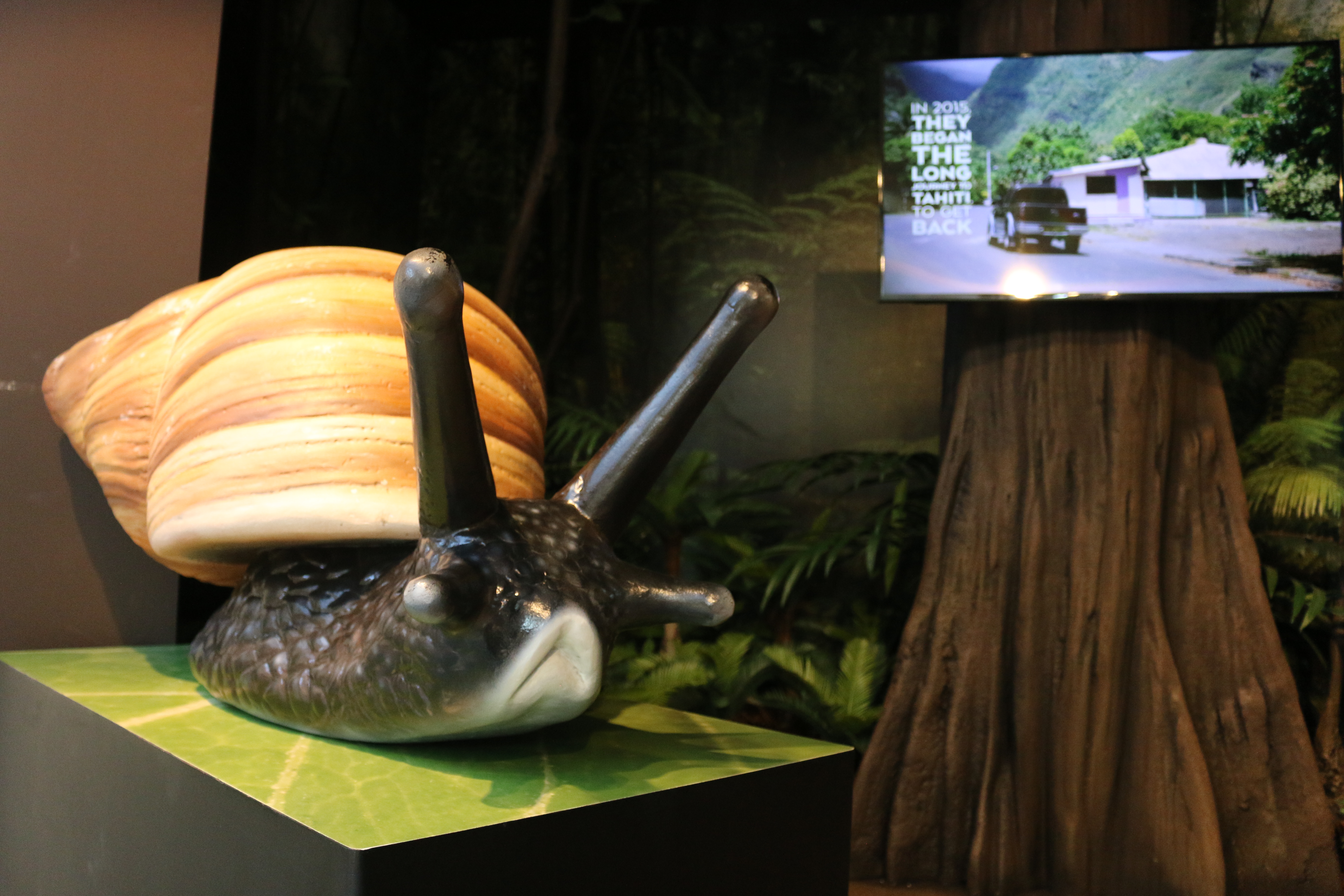
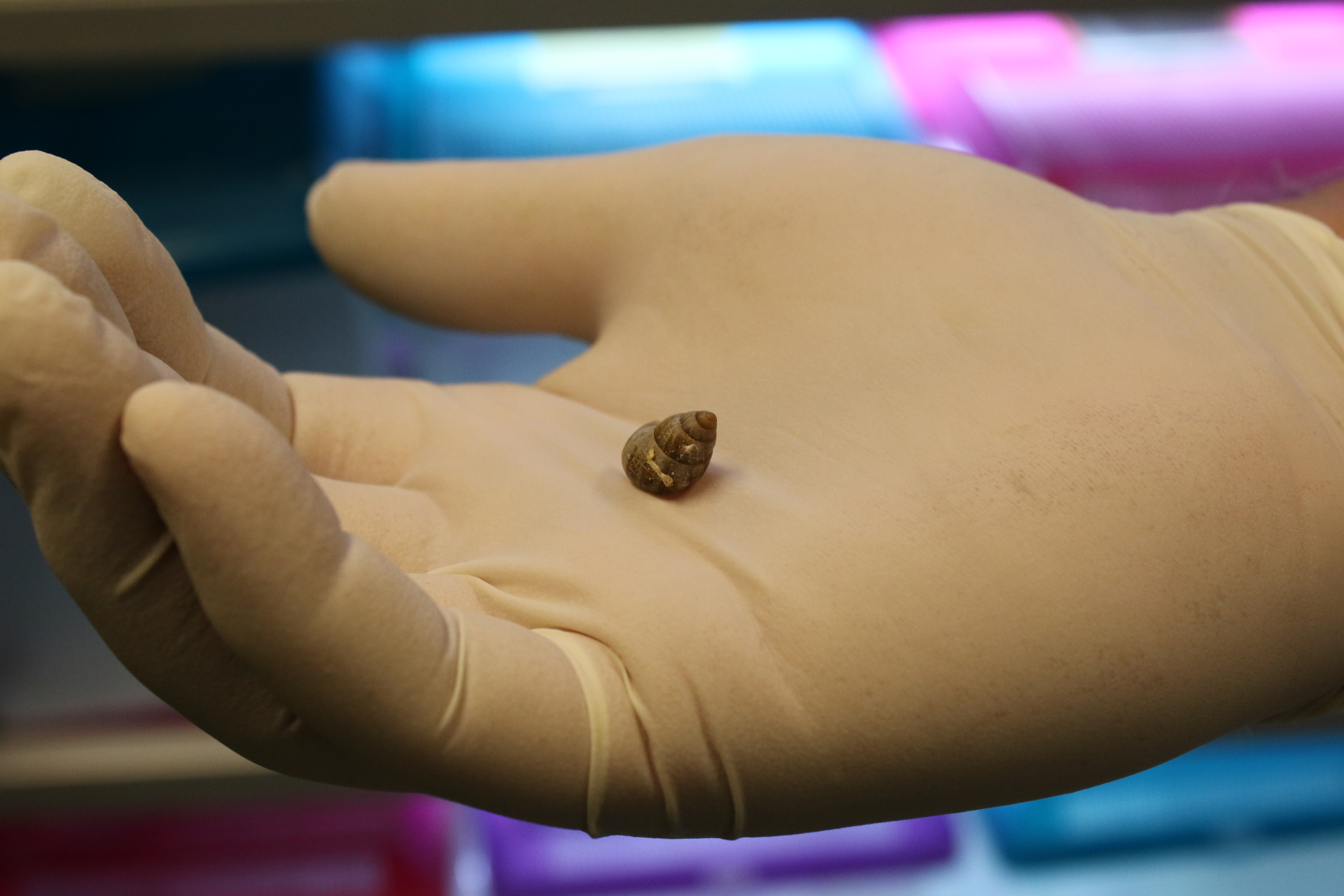
Nearly three decades ago, a tiny Tahitian land snail called the Partula nodosa was declared extinct in the wild – only 26 individual snails remained. In a final attempt to save the species from being completely wiped from the Earth, those 26 snails were sent to the Detroit Zoo as part of a cooperative breeding program.

Animal care staff worked carefully to provide the best possible living conditions for the snails while focusing on their successful reproduction, which eventually resulted in the rescue and recovery of the species. Thirty years later, there are now more than 6,000 individuals living in North American zoos, all descendants from the original group that came to the Detroit Zoo. In the last two years, 160 of these snails have been sent to Tahiti for reintroduction in the wild.

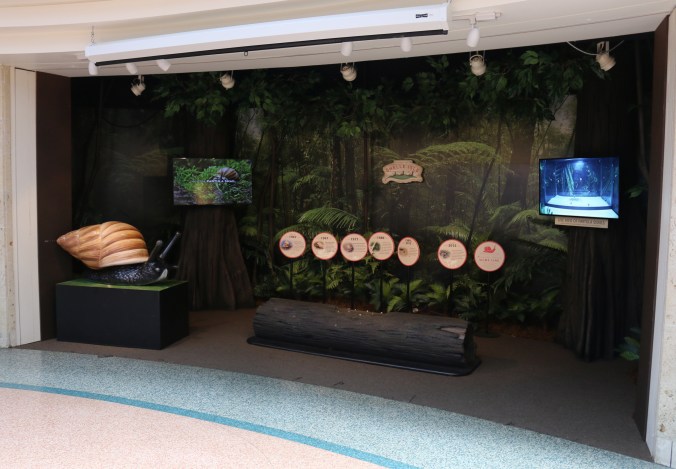
Visitors to the Detroit Zoo can become a part of this story at Shelle Isle, an exhibit in the Wildlife Interpretive Gallery that features the conservation story of these tiny mollusks. Guests are transported to the Tahitian rainforest, surrounded by tropical plants. A short video tells the snails’ story from a stable population in the first half of the 20th century to their sharp decline in the late 1970s, when an attempt to protect farmers’ crops from African land snails went awry and the Florida rosy wolf snails that were introduced to control the population preferred to eat the Partulid snails. The video also includes footage from the release of the Detroit-bred snails in Tahiti in 2015. Guests are invited to feel the shell of a giant replica of the Partula nodosa and more closely observe its structure and form. A second monitor has a live camera feed into the p. nodosa habitat in a behind-the-scenes area at the Detroit Zoo, giving guests a glimpse of the snails’ daily lives.

A favorite feature in this space is a large, “fallen” log where tiny, exact replica snails sit. Two magnifying glasses attached to the log allow visitors to get a close view of these tiny creatures. Many of them have a yellow number painted on their shell, which represents the way the snails are tagged by scientists before being released in Tahiti in order to monitor their movements and survival. The few that don’t have numbers painted on them are meant to demonstrate the successful reproduction in the wild that researchers have already observed, and the project’s continued success.

For us, an important part of this story is that it focuses not on a charismatic megavertebrate, but on a species that is not well-known, isn’t found on nursery walls or represented in the rows of stuffed animals on a toy store shelf. Conservation is not a beauty contest; all animals are important and the Detroit Zoological Society (DZS) works tirelessly to conserve species large and small – including the tiniest and slimiest of snails. By supporting the DZS, you are a critical part of this important work.

– Claire Lannoye Hall is a curator of education for the Detroit Zoological Society.

Save a Life and Find a “Fur-ever” Friend

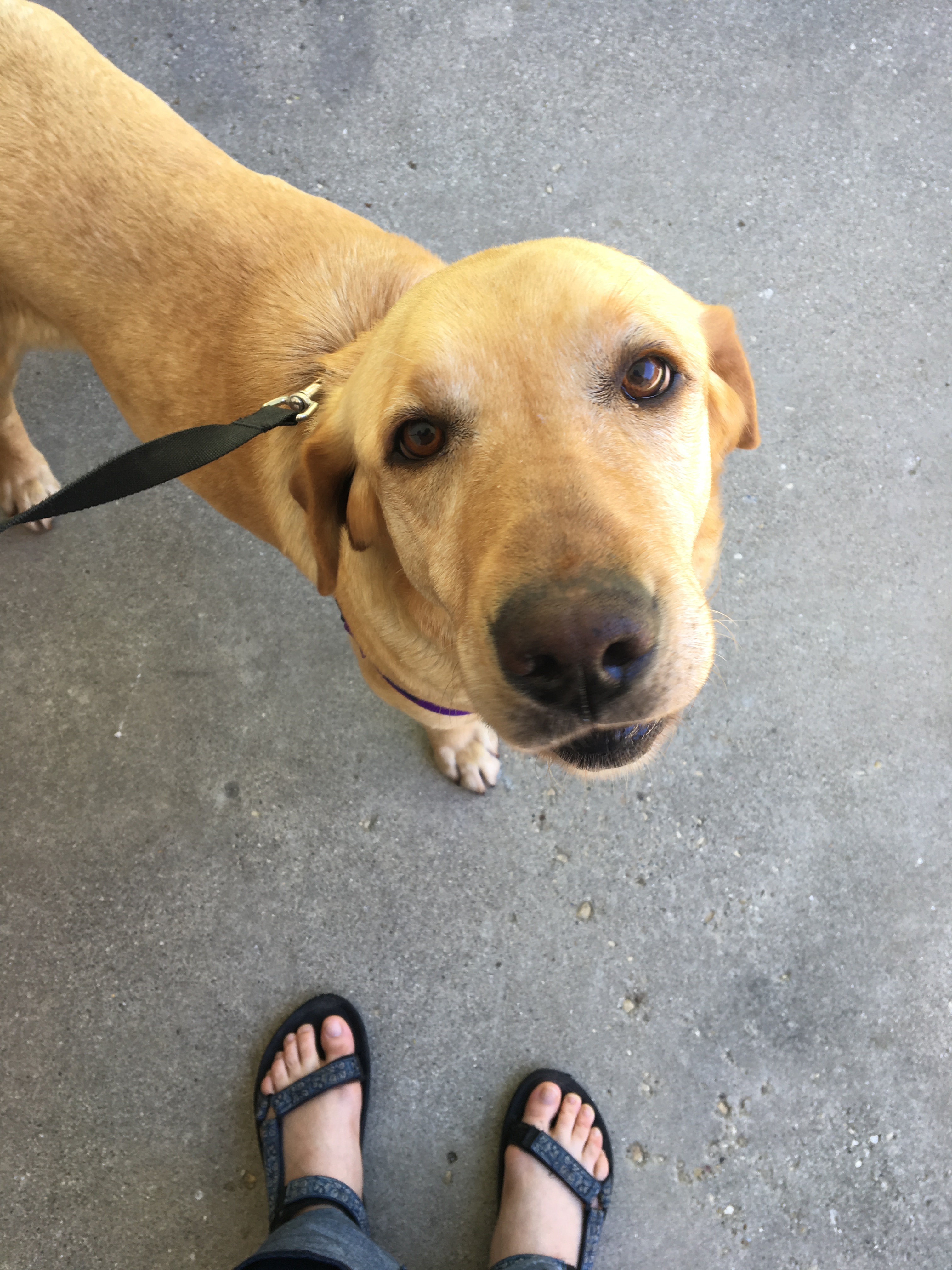
Three weeks ago, I adopted a 7-year-old female yellow Labrador retriever from a local animal shelter. I named her Clemmie, short for Clementine. She was found as a malnourished stray with protruding ribs and visible signs indicating she’d been used to breed many litters of puppies. It’s quite possible that she was dumped when she was no longer wanted by her previous owner. While I can’t undo the things that have happened to her in the past, I will do all that I can to provide the best possible life for her going forward. As Clemmie’s newly trusted guardian, I am committed to her well-being for the remainder of her life.

In the few short weeks since she joined my family, Clemmie has brought me immense joy. She greets me with tail wags and kisses each day when I return home from work. We spend time together taking long walks, meeting neighbors and enjoying our time in nature. She’s not yet certain how to play with toys, but I’ll continue to work with her on that. I’ve purchased dog food puzzles that will provide her with mental stimulation when I have to leave her at home alone. I’m also looking into playtime opportunities at local dog parks. I’m truly grateful to have found my “fur-ever” best friend. While it might appear that I rescued her, she’s brought as much happiness into my life as I have hers.

Unfortunately, an estimated 10,000 dogs and cats are euthanized in shelters each day due to a lack of homes. That adds up to 3-4 million animals in the U. S. each year. So when you adopt an animal, not only are you bringing home a new member of your family, you’re also responsible for saving that individual’s life.

Local rescue organizations and shelters can support you in finding the perfect companion animal for you. Join us this weekend for Meet Your Best Friend at the Zoo – one of the nation’s largest off-site companion animal adoption events – where hundreds of dogs, cats, puppies and kittens are available for adoption to loving homes. And don’t forget to stop by the Zoo’s humane education table while you’re there and learn more about how we work to help people help animals.

– Lisa Forzley is a curator of education for the Detroit Zoological Society and oversees the Berman Academy for Humane Education.