One Tree at a Time: DZS CARE Grant, DNR Rebuild Beloved Park 

By Melissa Thueme, primate supervisor for the Detroit Zoological Society (DZS) 

In 2022, the DZS introduced a new program to staff, the Conservation Action for a Resilient Environment (CARE) grant. The CARE grant program at the Detroit Zoo offers the opportunity for employees to engage in conservation projects that are meaningful to them while addressing conservation and environmental issues in the Detroit metro area and the Great Lakes region. When the grant program was announced in early June, I knew exactly what I wanted my project to be. Just three weeks earlier, a large wildfire devastated northern Michigan, and I knew I could help rebuild some of what was lost there.   

Pigeon River Country State Forest (PRC) in Montmorency County, Michigan, the largest block of undeveloped land in the Lower Peninsula, is home to diverse wildlife, including one of the largest elk herds east of the Mississippi. In May 2022, a wildfire caused by a lightning strike impacted 2,516 acres of forest in the PRC. Because of the intensity of the fire, a majority of the trees in the fire zone did not survive. The flames and resulting heat damaged many of the soft mast trees, including trees that produce berries such as apple and hawthorn and younger-aged hard mast that provide food sources such as nuts and acorns. Many native wildlife, such as deer, elk, black bear, squirrels and game birds, rely on both hard and soft mast trees for food.   

 My passion for involvement in this grant project goes back almost 30 years. Since I was young, my family would drive north to Pigeon River State Forest to go camping for a week during the summer. It was in the PRC that I fell in love with nature, animals and the environment.  We got up before sunrise to drive through the most remote areas in search of any animals we could spot. I learned about the elk herd, watched birds through binoculars, looked for frogs at the edges of the lakes, waited for the beavers to swim by in the river, and reclined and watched the stars in the black sky at night. A few years later, my family bought property in the area, and we went up north many weekends from spring to fall, spending holidays and making more memories in the PRC.   
In May 2022, we watched news coverage of the fire as it swept through the area.  We monitored updates as the area we loved was in flames, without knowing how much damage would occur. Thankfully, DNR firefighters were able to extinguish the wildfire, now named the “Blue Lakes Fire.” I visited the PRC the weekend following the wildfire. As I walked down the road, the transition between the lush forest to the now barren burned areas was dramatic.  Places where it had been impossible to see more than a few feet through the foliage were now nearly clear — except for a few char-barked trees trying to hang on to life. Memories of hiking and blueberry picking, and large herds of bull elk standing in these very areas, flooded back. I wondered what the future would bring for this area and how long it would take to recover. In our many years of visiting, we had seen areas of wildfire in the PRC before, but nothing to this magnitude. The devastation from the wildfire was still fresh in my mind when the call for proposals for CARE grants was announced. I knew this was a project that I wanted to pursue and something I was strongly passionate about. 

I reached out to the Pigeon River Forest Management Group of the Michigan Department of Natural Resources (DNR) with my idea for the grant project, and their team was eager to collaborate.  With the help of Mark Monroe, the PRC forest manager, and Shelby Adams, the PRC wildlife biologist, we started planning what would best be suited for the project.  After many phone and Zoom calls, we elected to plant saplings in the wildfire area. The team carefully selected trees that would most benefit the environment and the animals and mapped out the section where we would plant them. The Pigeon River Forest is important to many people, and collaboration is one of the pillars of the DZS conservation strategy, so we decided to involve the community in the project.      
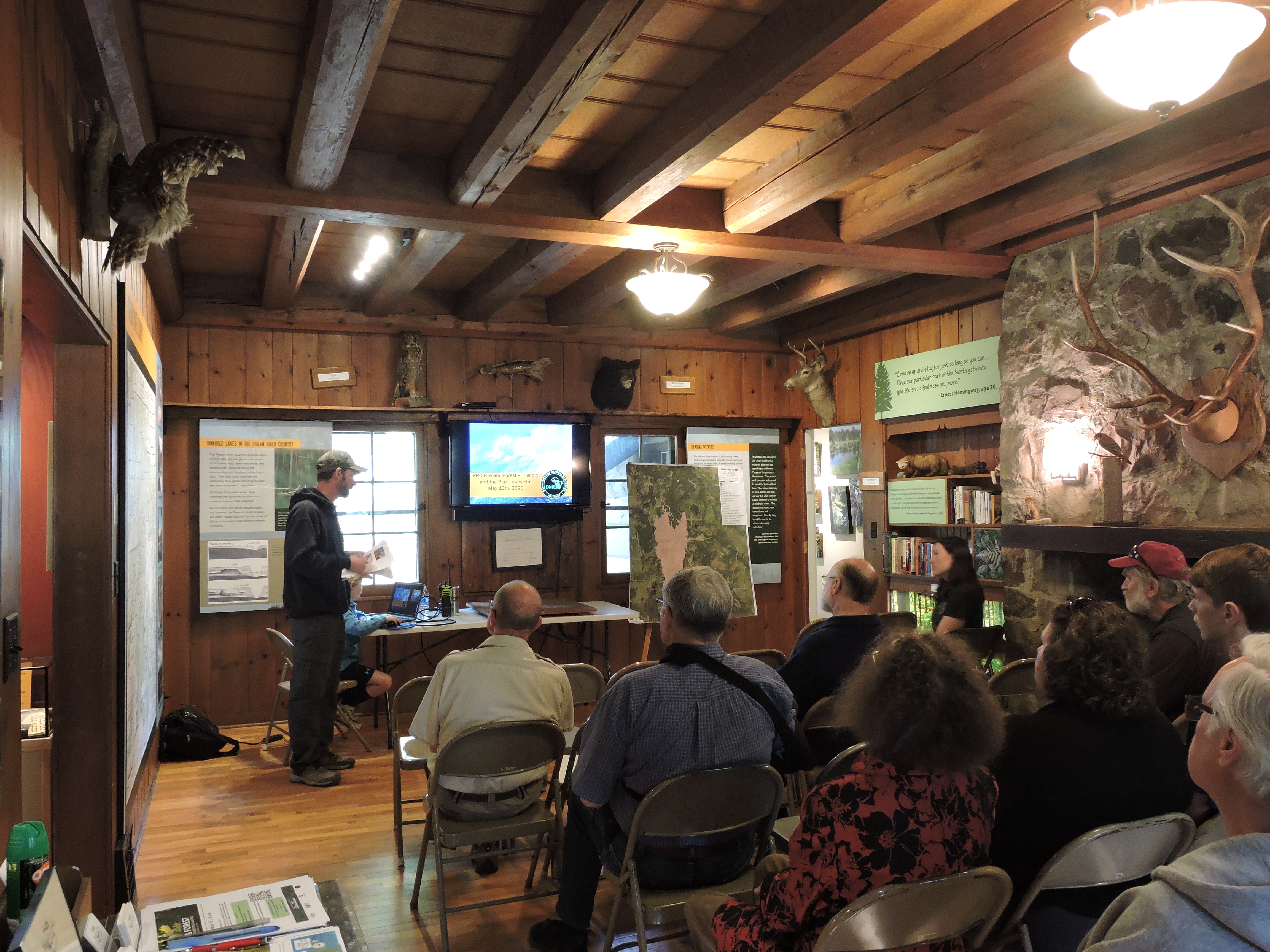
On May 13, 2023, one year after the wildfires, we gathered together in the Pigeon River Discovery Center with members of the community and others who had a connection to the PRC.  Mark, also a firefighter with the DNR, was on the front lines the day of the wildfire.  He spoke about fire history in the PRC, shared photos and his stories from the days around the fire.  Shelby talked about the effects of wildfires on wildlife, including some of the positives, such as the creation of a prime habitat for the Kirkland’s warbler, which thrives in young jack pine forests that grow because of fire. Lastly, I spoke about the Detroit Zoo CARE grant, as well as my connection to the PRC.  Everyone loaded up on Smokey the Bear swag items — pencils, stickers, magnets — before going outside to meet some of the other DNR firefighters and explore the equipment used in wildfires. Then we headed to the planting site.   

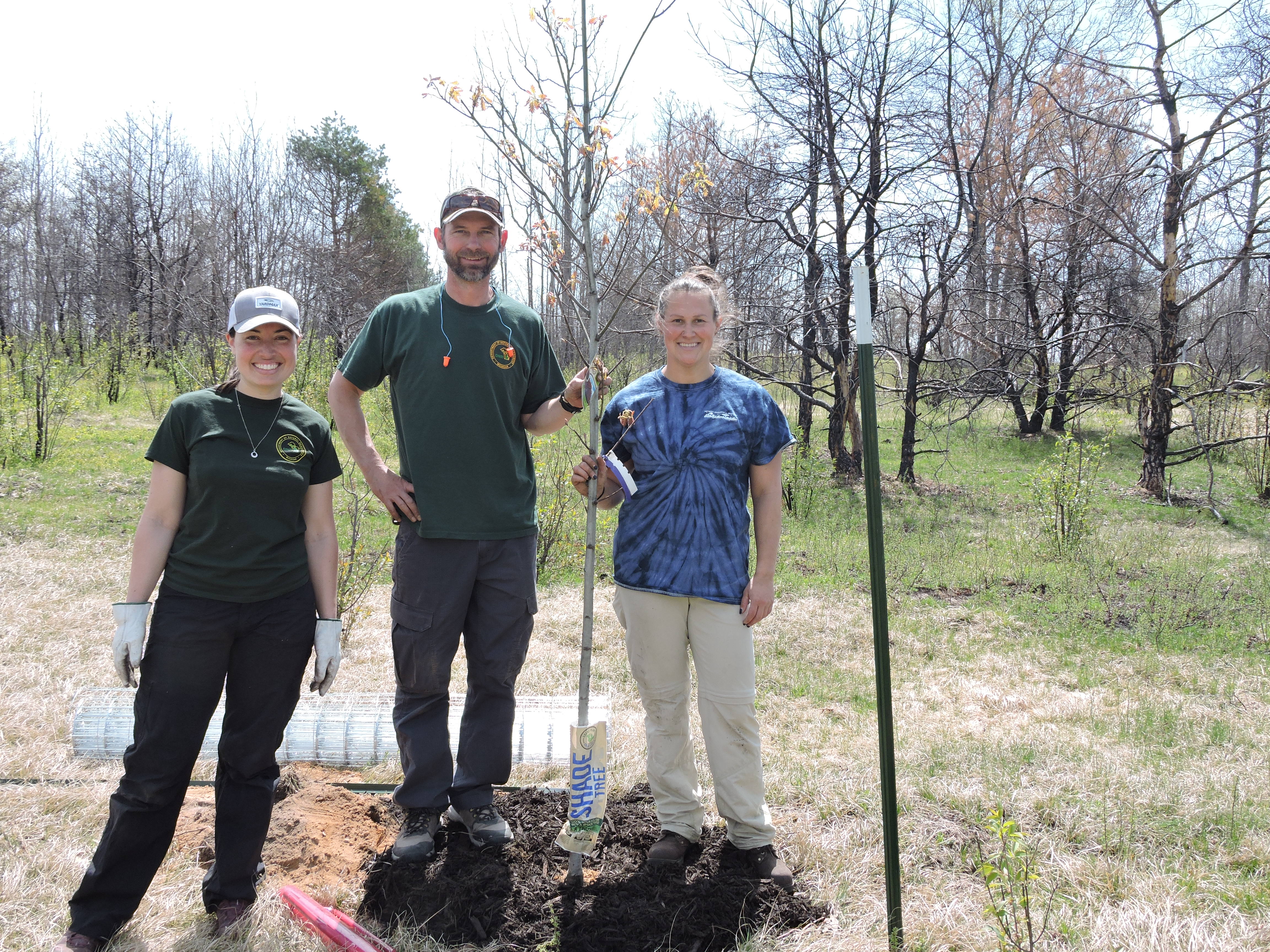
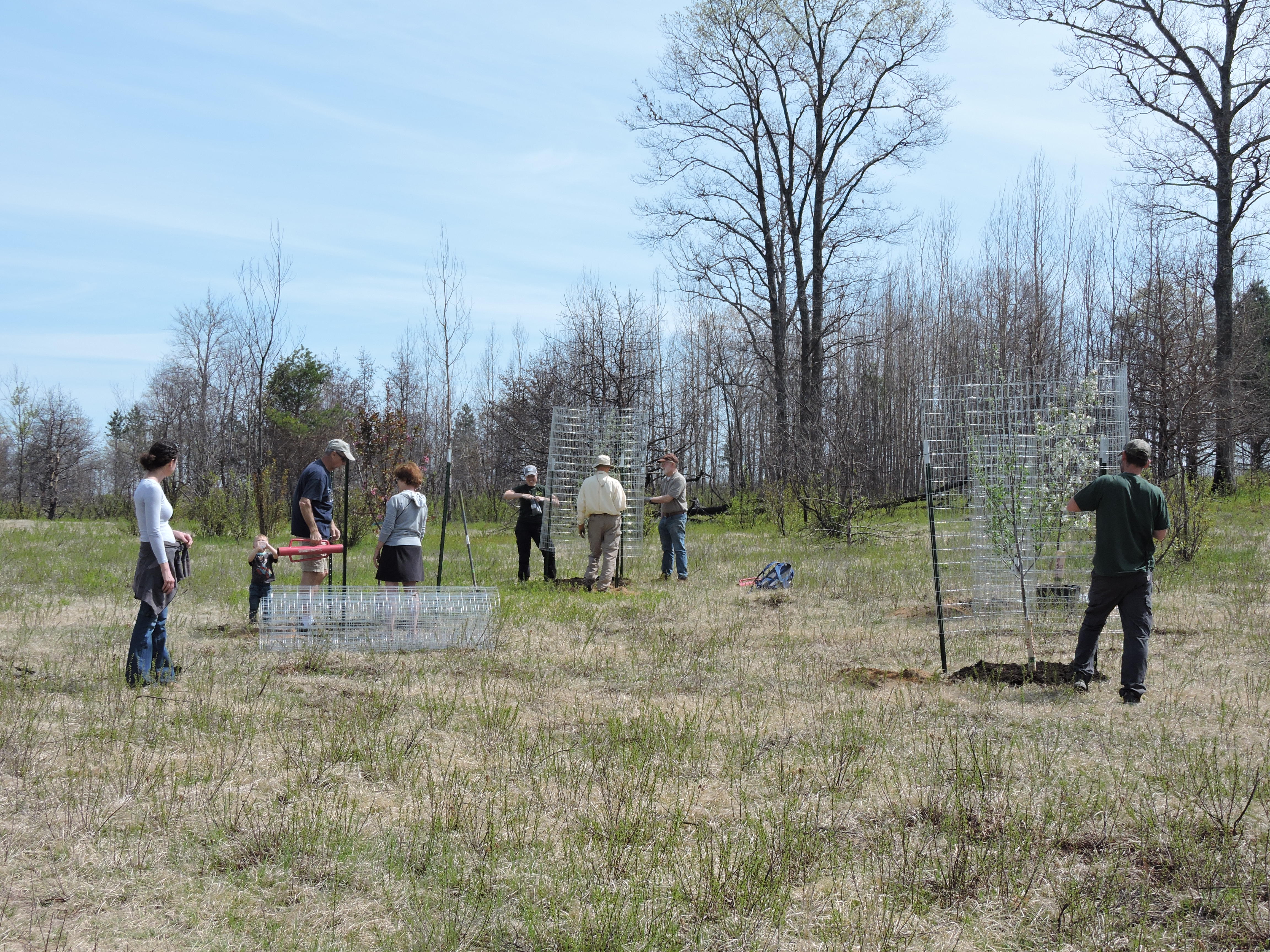
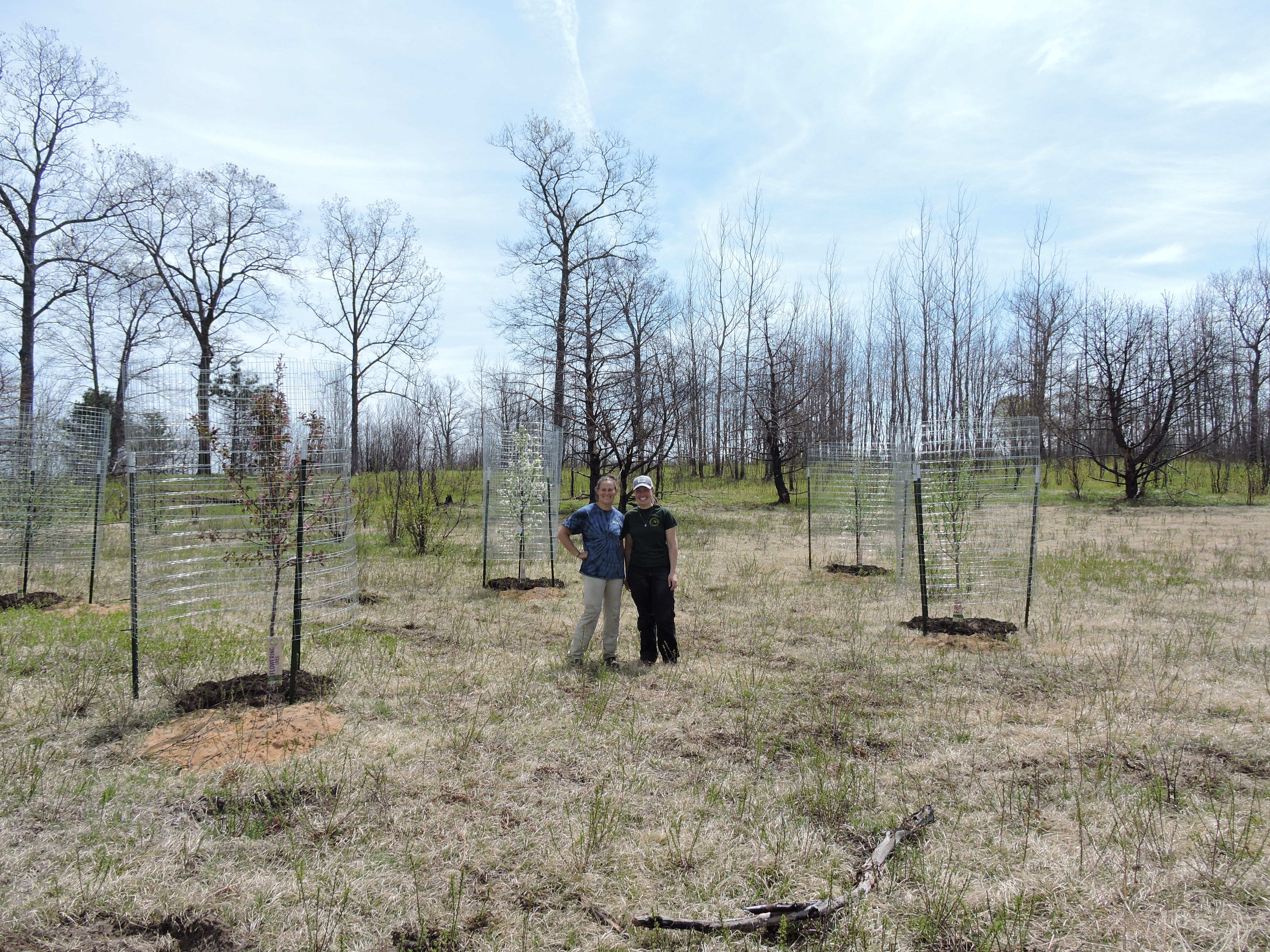
Participants divided up into a few teams and spread out amongst the pre-drilled holes. Mark gave a demonstration of how to set up the trees and everyone got to work.  We planted a total of 20 trees in four sections, surrounded them with mulch and   fencing to protect them until more established. While the volunteers worked, they shared memories of their favorite experiences in the PRC and thanked us for doing the project and letting them be involved. As we parted ways, I stood back and looked at the trees we planted amongst the low grasses starting to regenerate. It felt good to be a part of something to give back to the forest which has given me so much. I hope that 30 years from now, another young girl is hiking through the Blue Lakes area past these now-mature trees and finds herself just as inspired as I was all those years ago. 
Conservation is Sweet: DZS Plants Fruit Trees in the Heart of the Amazon

By Claire Lannoye-Hall, director of education for the Detroit Zoological Society (DZS). 

Follow Claire on her journey through Peru when you read this blog on StoryMaps!

For more than two decades, the DZS has partnered with CONAPAC, a nonprofit organization in the heart of the Peruvian Amazon Rainforest. With the generous support of Amazon Explorama Lodges, a travel company with more than 50 years of commitment to the region, the partnership supports the conservation of this globally essential ecosystem. Each year, thousands of students and teachers receive school supplies, teachers participate in professional development workshops, and families have access to clean, safe drinking water. 

In addition to the partnership’s commitment to education and safe drinking water, we support economic opportunities for interested communities. As part of this initiative, several thousand fruit trees have been planted in select communities as a source of added nutrition for families. As the trees mature and produce excess harvest, fruits are sold as a source of income. 

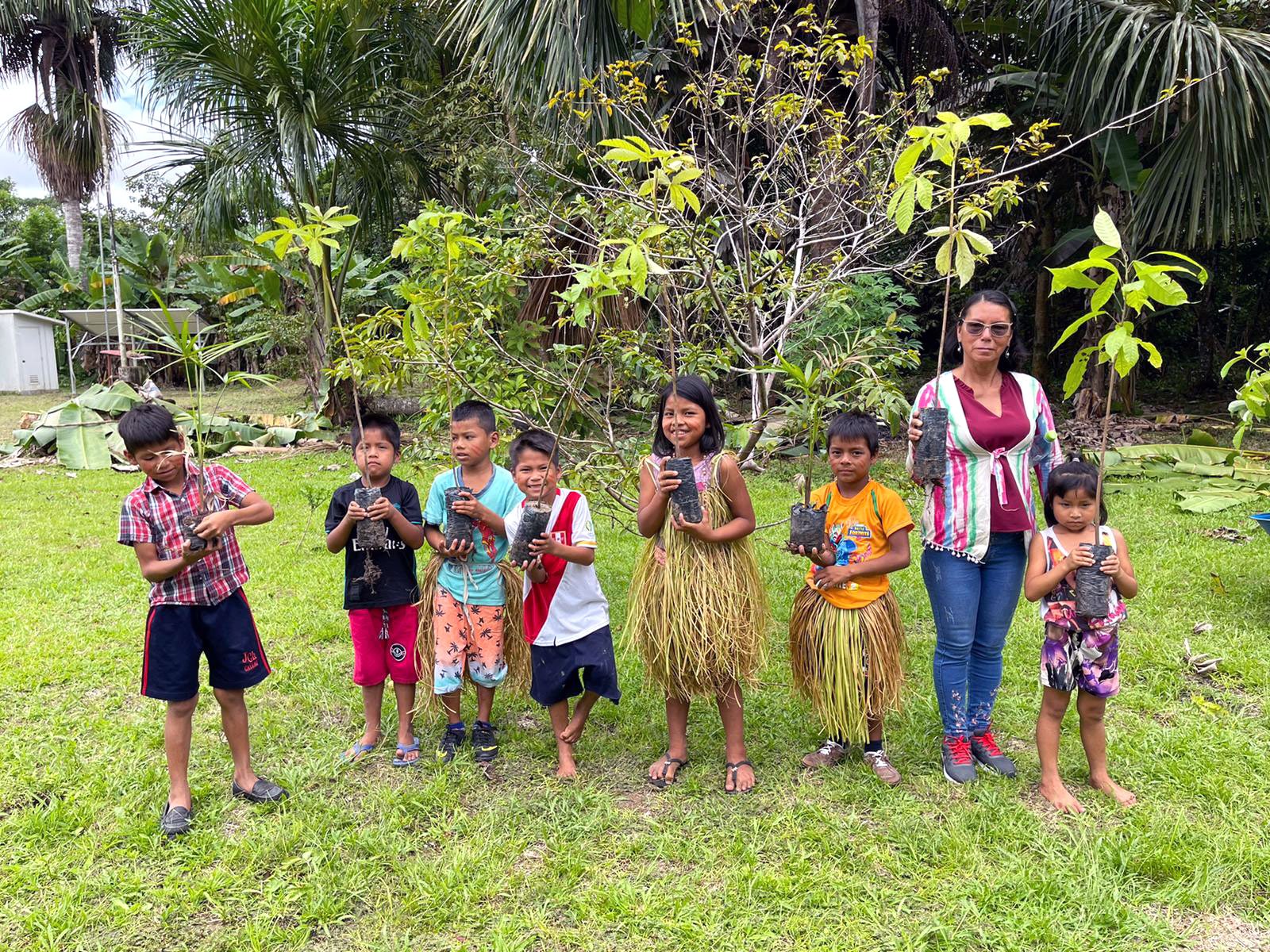
During the first week of December 2023, four team members from the Detroit Zoo traveled down to Peru to participate in fruit tree planting. The Fruit Tree Planting Foundation provided funding for fruit trees that are native to the Amazon rainforest to be grown and transported. Pedro Paurcarcaja, an arborist in Iquitos, Peru, grew the trees from cuttings and seeds. Each tree was cared for and allowed to grow to a size that could be successfully transplanted. The trees were then placed in crates by type and transported down the Amazon and Napo Rivers on a cargo barge. Thousands of trees were delivered to the designated communities. 

Each morning, we joined a group of volunteers and representatives from the Fruit Tree Planting Foundation, CONAPAC staff and an experienced guide and translator from Explorama. We all took a boat to reach the designated community. Some of the trees went to individual families who expressed their interest and commitment to growing trees on land they have available. The families were responsible for planting their trees. Several hundred additional trees were planted in community spaces and for the schools. 

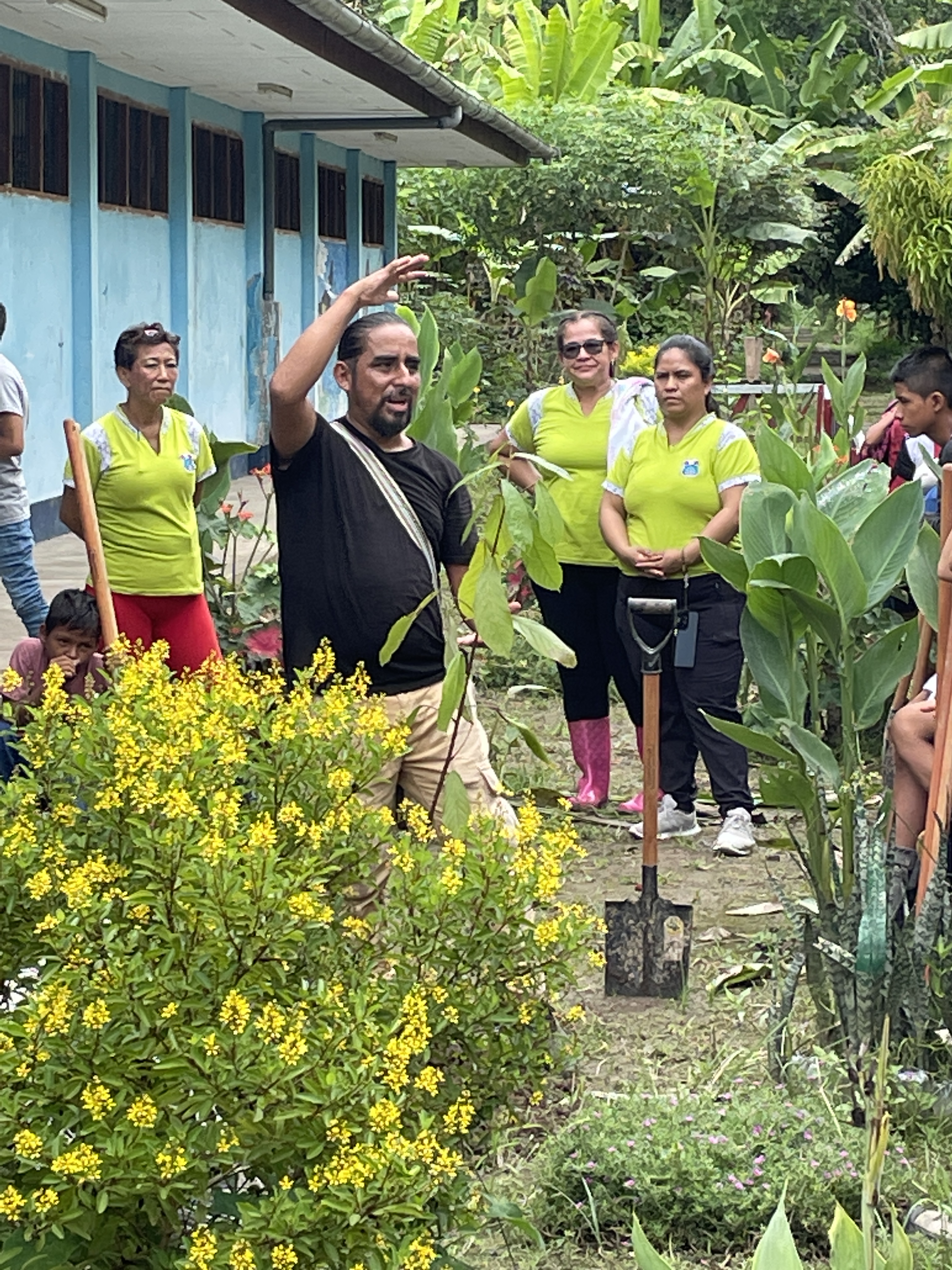
Before our arrival, the communities prepared areas previously used for agriculture, such as corn and banana palms. With shovels and post-hole diggers in hand, the FTPF representative carefully demonstrated how to plant the saplings to ensure they had the best chance of surviving. We worked alongside members of the community, especially the children, and planted the trees designated for the community and school areas. The planting wrapped up each morning shortly before lunchtime.  Spending several hours at each community provided opportunities to learn each other’s names, communicate in various forms (even if it was just smiles!), and gain a glimpse into the day-to-day life of our partners. 

For the final two days, we visited an additional community in the afternoon. Both communities planted trees several years ago through the FTPF initiative and proudly showed us the trees’ growth. Ramon Castilla shared with us that more than 90 percent of their trees had survived, which is an impressive feat considering the risk of insect and flooding damage. Their success was a testament to the trees being planted in the right areas and their commitment to caring for them. The community of Jorge Chavez treated us to fruit fresh off the trees, including papaya and star fruit. 

The community visits were also an opportunity to check in on the water purification systems, ensuring things were working correctly and the communities had access to safe, clean drinking water. For more information about CONAPAC’s clean water programming, click here.

Conservation work, especially when conducted in international settings, often does not address the needs or fundamental rights of the people who are directly impacted by laws and regulations that are put in place in the spirit of protecting animals and natural resources. While time-consuming, building meaningful relationships with individuals and communities who live adjacent to or share the same space as essential conservation areas can create vitally important allies. To do this well takes time and an investment in the wealth of knowledge and expertise of individuals who have lived for generations in the conservation areas. This partnership exemplifies the benefits of what collaborative conservation can accomplish. 

To contribute to the vital conservation work in the Amazon rainforest, click here.

Illuminate the Season by Recycling Your Holiday Lights at the Detroit Zoo

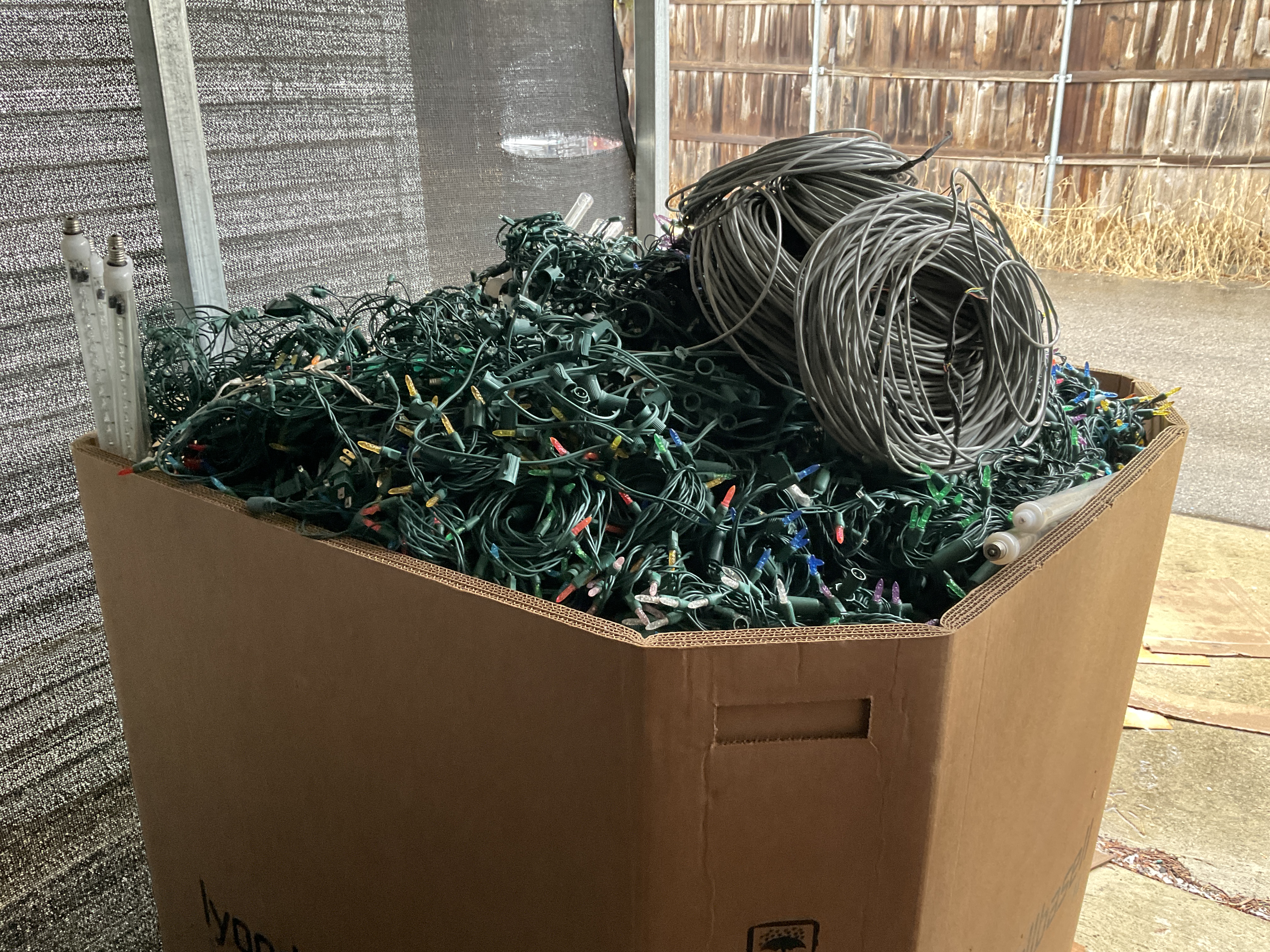
The Detroit Zoo is collecting old holiday lights throughout January.

This holiday season has been filled with twinkling lights adorning houses, trees and festive sculptures across metro Detroit. But what happens when these lights dim and burn out, their glow reduced to mere electrical waste? 

With the holiday season now drawing to a close, the Detroit Zoological Society (DZS) is welcoming community members to recycle their retired holiday lights with us! Individuals and families can bring in unwanted, burned-out or broken holiday lights to be recycled free of charge. The light collection runs through January at the guest services office near the front of the Zoo.

Wild Lights at the Detroit Zoo features millions of twinkling lights — and those that burn out will be recycled sustainably!

Through this initiative, we can work together to alleviate the burden on landfills and champion a sustainable approach to handling electrical waste. As a bonus, donated lights will help raise money to fuel the Zoo’s sustainability programs. From planting trees throughout metro Detroit to inspiring the next generation of suitability leaders through GreenPrize, our programs are helping to build a greener future for all.  

By recycling your old lights at the Zoo, you’re not just disposing of unwanted holiday décor — you’re actively participating in a larger movement. You’re nurturing a cycle where discarded lights find new purpose, contributing to the DZS’s conservation work and supporting sustainability programs. 

Recycle your lights at the Zoo to help us ignite a brighter (and greener) future!

Join the GreenPrize Award Program and be an Eco-Champion!

2022 GreenPrize Award Winning School: Renaissance High School

If you’ve ever dreamt of making your school, your community and the world a greener, more eco-friendly place, we have the program for you! The Detroit Zoological Society (DZS) is celebrating students who are on a mission to make a positive environmental impact with our GreenPrize initiative.

What is GreenPrize?

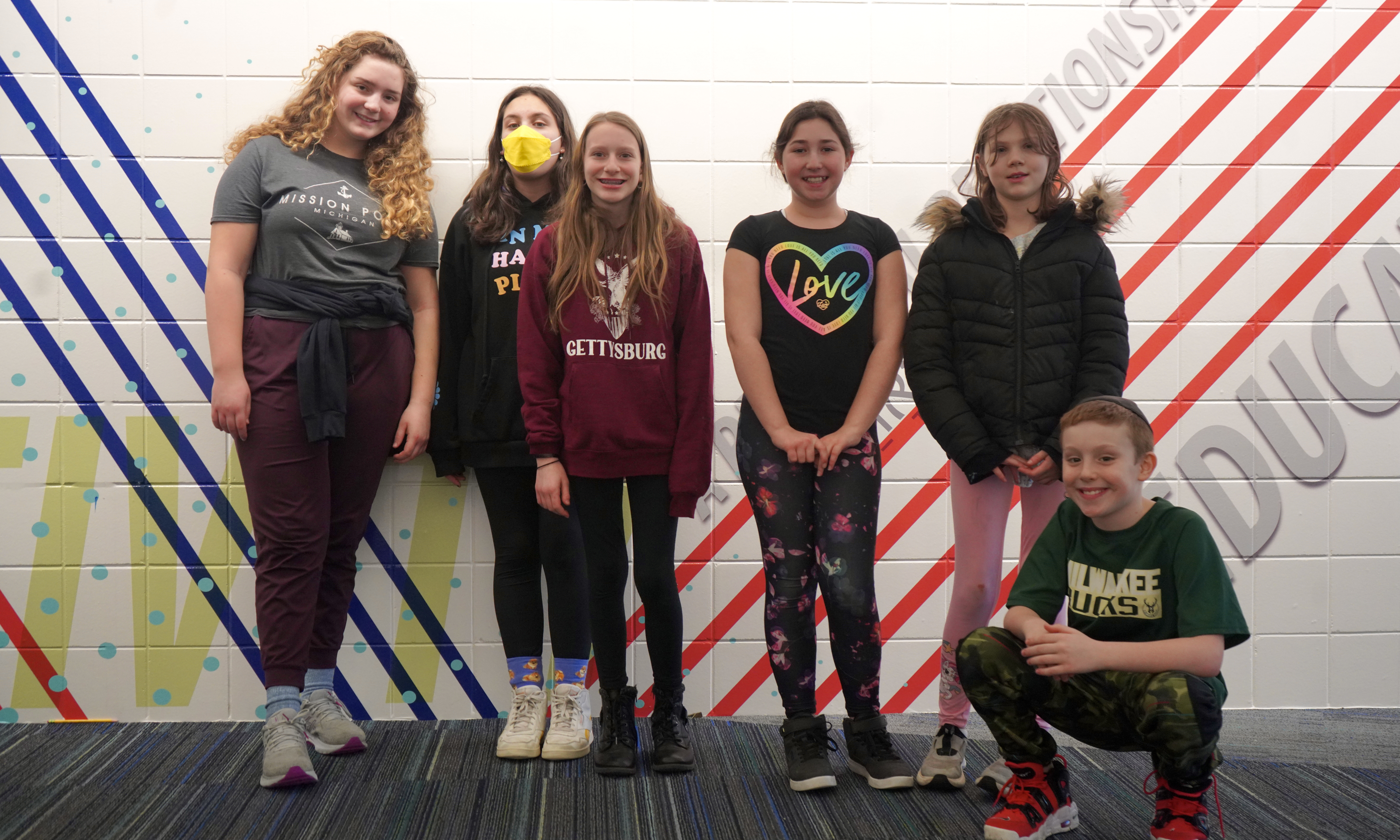
The GreenPrize Award Program is all about sustainability, student-led green initiatives and the power of Green Teams. These Green Teams are like eco-superheroes – school clubs dedicated to promoting environmental sustainability. They’re on a mission to create lasting change, both within their schools and out in the community.

2022 GreenPrize Award Winning School: Hayes Elementary

How does it work?

In a nutshell, GreenPrize participants roll up their sleeves and put their eco-passion into action. They develop and implement sustainable projects in their schools or communities that have the potential to make a lasting impact. This isn’t just about talk — it’s about tangible, positive change for our planet.

2022 GreenPrize Award Winning School: Sacred Heart Catholic School

A Glimpse Back: GreenPrize 2022

In 2022, the DZS awarded a grand total of $4,500 to Green Teams in participating schools across Macomb, Oakland, and Wayne counties. Among those awarded were Belleville High School, Hillel Day School, The Montessori School Rochester, Hayes Elementary School, Sacred Heart Catholic School and Renaissance High School. Their sustainable efforts made a real change — and yours can too.

2022 GreenPrize Award Winning School: Hillel Day School

Join the GreenPrize Movement

Now, the spotlight is on you! Don’t miss your chance to be part of the next round of GreenPrize. The 2023-2024 GreenPrize program is officially open for applications, and your school could be the next champion for the environment.

Visit detroitzoo.org/greenprize to learn more about the program, how to apply and how you can kickstart your journey as an eco-champion. It’s time to make a difference, inspire change and show the world what the next generation of environmentalists is made of!

Join the GreenPrize movement and help us paint the world green, one sustainable project at a time!

2022 GreenPrize Award Winning School: Belleville High School
2022 GreenPrize Award Winning School: The Montessori School Rochester

Arctic Sea Ice Day is July 15: Exploring the Impact of Climate Change on Arctic Ecosystems, Sea Ice, Polar Bears

Authored by Cameron Kniffen, Curator of Education for the Detroit Zoologocial Society.

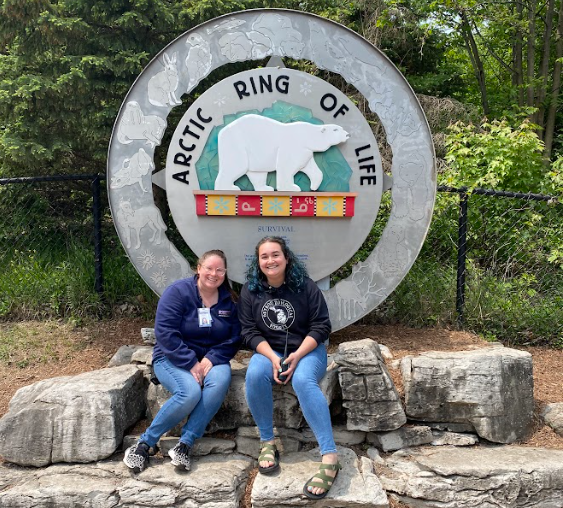
The Arctic is a delicate and intricate ecosystem that supports many species, such as polar bears and seals, who depend on the annual ice cover for hunting and resting. Additionally, the ice cover helps to reflect heat energy from the sun, which is crucial in preventing the oceans from warming too quickly.

I, Cameron Kniffen (curator of education), and Bethany Wilson (education specialist) are embarking on a summit to Manitoba, Canada, in October as part of the PBI Climate Alliance Program. Our aim is to gain a deeper understanding of the impact of climate change on the Arctic ecosystems and polar bear populations on the Hudson Bay. This opportunity is possible through a strong partnership with Polar Bears International (PBI) and the National Network for Ocean and Climate Change Interpretation (NNOCCI). By observing the effects of climate change on arctic sea ice and polar bear populations at Hudson Bay, our team will bring home first-hand experiences from time spent with local knowledge holders, scientists, and experts that will contribute to further engagement in this critical field.

Cam Kniffen and Bethany Wilson.

The Arctic ecosystem is a complex and interconnected web of life, with sea ice playing a critical role as the foundation of the food chain. It is often said that sea ice is to the Arctic ecosystem as the soil is to the forest. Channels formed in the sea ice by the expulsion of salt from the freezing process create a habitat for algae, the base of the food chain in Arctic waters. Tiny organisms, like zooplankton, feed on the algae and other larger species, like Arctic cod, feed on them. Seals, in turn, feed on Arctic cod, and polar bears prey on seals. Polar bears rely on sea ice to catch their primary prey, seals, as they can out-swim polar bears underwater, but bears have the advantage on top of the ice, using it to stalk their next meal.

In addition to the crucial role that sea ice plays in the Arctic food chain, it is also vital for transportation and access to food for people living in the North. Sea ice has a global impact, acting like a global air conditioner, reflecting the sun’s light and heat back into space and helping to cool the planet. As Arctic sea ice declines in extent and thickness due to human-caused climate warming, the planet absorbs more heat, which can disrupt the climate system, leading to more frequent and extreme weather events around the world.

Today, there is thinner seasonal ice in some parts of the Arctic instead of the thicker, multi-year ice that used to be more common. This young ice is much more vulnerable to rapid melting and moves more easily, resulting in a treadmill-like effect for polar bears trying to find their next meal or mate. The last 15 years have had the lowest 15 sea ice extents in the satellite record, and the amount of old, thick sea ice is the lowest it has ever been. Studies show that Arctic open-water periods are projected to lengthen dramatically by 2,100 without action to reduce heat-trapping emissions. Longer open-water periods would greatly reduce the polar bear’s ability to hunt during these months, impact ice seal abundance and affect people and wildlife around the world.

Despite the threats, it’s not too late to save Arctic sea ice. Studies show there is no tipping point, and the ice will rebound if we work together now to shift away from fossil fuels, replacing them with renewable energy sources like solar and wind. Not only will this help reduce the carbon emissions that are causing the planet to warm and the sea ice to melt, but it will also create jobs, strengthen the economy and improve the overall environment and our health. We all have a role to play in safeguarding the future of Arctic sea ice, and there are many ways to get involved, from reducing head-trapping gasses in our atmosphere to advocating for policies that support renewable energy. By working together, we can protect the Arctic ecosystem and the countless species that depend on it, including ourselves. There are some easy ways to introduce yourself to the fight against climate change:

• Support climate-conscious policies and legislation: Speak up for Arctic sea ice. Urge officials to support renewable energy-cut emissions, and protect the ecosystem. Write, call, and attend meetings to make your voice heard.

• Raise awareness and spread the word! Spreading awareness about the significance of Arctic sea ice can contribute to preserving the Earth’s climate. Share reliable information and news with others through social media and conversations to encourage collective action.

• Adopt sustainable lifestyle choices: Switching to a plant-based diet or cutting back on meat reduces our environmental impact. The livestock industry contributes to greenhouse gas emissions, but sustainable dietary choices can help stabilize Arctic sea ice.

• Support research and conservation organizations such as Polar Bears International (PBI), the National Network for Ocean and Climate Change Interpretation (NNOCCI), the Institute for Tribal Environmental Professionals (ITEP) and more. Support Arctic research and conservation by donating time or resources to organizations working to prevent climate change and protect Arctic sea ice. 

As part of Polar Bears International’s Arctic Ambassador Center Network, the DZS is committed to protecting polar bears and their habitat. This summit is an important step towards understanding the impact of climate change on polar bears and the Arctic ecosystem, enabling the DZS to play a vital role in mitigating the effects of climate change on polar bears and their habitat.

Our expedition to Manitoba, Canada and involvement in the PBI Climate Alliance Program are critical steps toward understanding the impact of climate change on polar bears and the Arctic ecosystem. The partnership between the DZS, PBI and NNOCCI demonstrates the power of collaboration and knowledge-sharing in promoting conservation and sustainable practices. By working together, researchers, educators and community members can pool their resources and expertise to develop innovative solutions that will enable us all to safeguard the future of our planet. 

Together, we can ensure the continued health and well-being of oceanic ecosystems and the species that rely on them, including polar bears.

Celebrate World Oceans Day by Saying ‘No’ to Microplastics!

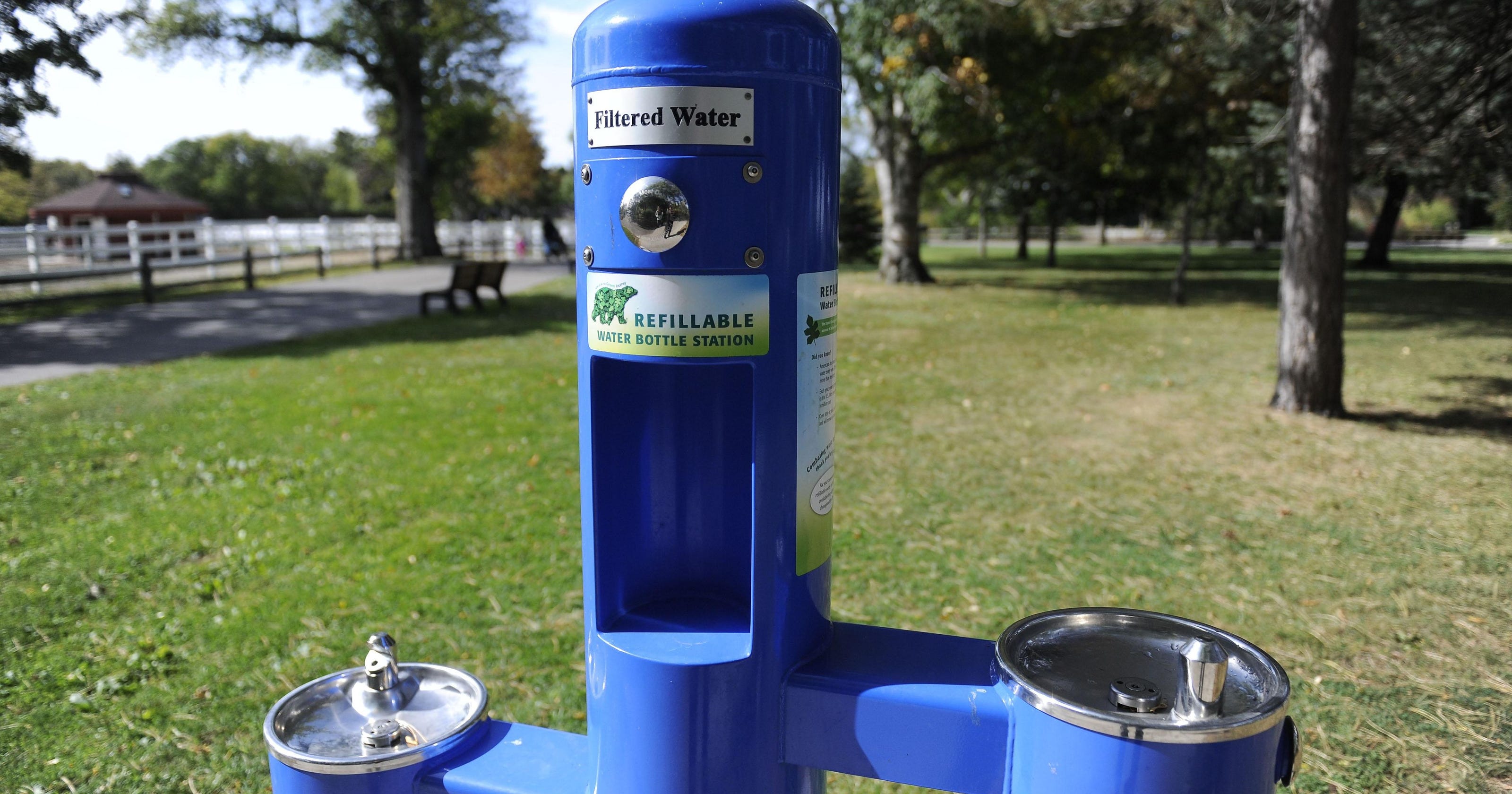
Water bottle refill stations at the Detroit Zoo help cut down on single use plastics and keep microplastics out of waterways.

Authored by Cameron Kniffen, Curator of Education for the Detroit Zoological Society (DZS).

More than 70 percent of the Earth’s surface is covered by water. As residents of Michigan, a state with beautiful, bountiful lakes and rivers, we tend to focus on freshwater systems when considering our impact on water quality, pollution and aquatic ecosystems. Many of us receive a thorough education on the vital role of the Great Lakes in our state’s history, economy and ecosystems. We are also taught to take responsibility for preserving our abundant water resources and to understand the negative effects of polluted waters on both people and the environment. It’s important to realize that our actions can impact water quality in the Great Lakes and other ecosystems outside of our freshwater sources. 

Many of us unknowingly contribute to the accumulation of microplastics in our waterways. Despite their small size, microplastics possess a significant potential to impact various species and ecosystems. Microplastics are tiny, minuscule plastic particles that can infiltrate virtually any environment — including the smallest, deepest crevasses of the ocean — and exert their harmful effects. Microplastics are produced by reducing plastic into miniature versions of its original manufactured form. While some microplastics are intentionally added to soaps and scrubs that contain microbeads, others are formed through prolonged exposure to the sun and constant movement in the water, causing the plastics to degrade into tiny particles. 

Microplastics harm ocean dwellers, like sea otters.

The accumulation of microplastics in our environment is an alarming concern due to their damaging effects on wildlife and their potential impact on human health. The ingestion of microplastics can cause physical harm to marine life. The particles can accumulate in the digestive tract, leading to blockages, ulcers and other internal injuries. This can result in severe malnutrition, starvation and even death. The presence of microplastics in marine organisms can also interfere with their feeding behavior, reproduction and growth rates.

Additionally, microplastics can have chemical and biological impacts on marine organisms. Plastic particles can contain or absorb toxic chemicals from their surroundings, such as polychlorinated biphenyls (PCBs), polycyclic aromatic hydrocarbons (PAHs) and heavy metals. When these microplastics are ingested, the chemicals can leach out and be released into the organisms’ tissues, potentially causing toxicity and disrupting physiological functions.

Penguins, like these kings, benefit from clean ocean ways.

Furthermore, the potential for microplastics to enter the food chain and eventually impact human health is a growing concern. Seafood, such as fish, shellfish and mollusks, is an important source of protein and essential nutrients for many people around the world. As microplastics are ingested by marine organisms, they can bioaccumulate and pass through the food web, eventually reaching the seafood that humans consume. If these consumed organisms have ingested microplastics, there is a risk that humans may indirectly consume these particles when consuming contaminated seafood. Once ingested by humans, microplastics can potentially have adverse health effects.

Michigan’s Great Lakes area is an excellent demonstration of this interconnectedness. As plastic travels from local watersheds to the Great Lakes, it gradually breaks down into smaller fragments of plastic materials.  Microplastics can effortlessly hitch a ride in the waterways in this region and flow with the natural motions from west to east. Lake Superior flows those same microplastics into Lake Huron through the St. Mary’s River, and Lake Huron then seamlessly flows into Lake Erie through the St. Clair and Detroit Rivers. Finally, Lake Erie deposits the microplastics into Lake Ontario via the Niagara River. Ultimately, the entire system and its pollutants eventually drain into the Atlantic Ocean through the St. Lawrence River.

Polar bears Suka and Nuka’s diet includes seafood. Microplastics in seafood is a major concern for both animals and humans.

Working collaboratively and taking a thoughtful approach to our plastic consumption can positively impact the reduction of microplastics in our water systems. It’s important to consider products with minimal packaging and express our viewpoints to local and state governments in support of stronger recycling efforts and limits on plastic usage in manufacturing. Participating in beach clean-up events can also contribute to a cleaner future. However, it’s crucial we come together as a united front and advocate for regulations on large industrial manufacturers at a national and global level. Through advocacy and voting, communities can achieve significant change. With our collective efforts, we can create a brighter and cleaner future for all. 

The DZS is passionate about lessening our impact on our aquatic ecosystems. More than 10 years ago, the Detroit Zoo stopped carrying single-use plastic straws and lids and has made many more steps in the direction of a more sustainable future since then, including stopping the use of plastics bags at our gift shops and eliminating plastic bottle sales – which were previously our largest concession sale item – meant for single-use at all Detroit Zoo concessions, replacing them with reusable water bottles and water bottle refill stations. In celebration of World Oceans Day (June 8), we welcome you to join us at the Detroit Zoo and learn more about the ocean through educational programming on Saturday, June 10.

Meet a Michigan Native at the Belle Isle Nature Center!

You don’t need to head up north or plan a camping trip to connect with nature – there are amazing animals all around us! Let us introduce you to three of your wild neighbors.

They call it mudpuppy love!

Mudpuppies are the second-largest salamander in the western hemisphere. These amphibians may not give off total puppy-dog vibes, but when you see them up-close and in-person, you can’t help but to fall for their charms. There is even a whole celebration in their honor called Mudpuppypalooza taking place March 26 at the Belle Isle Nature Center!

Mudpuppies have wide faces and frilly, external gills on the sides of their heads that act like filters in the water. This means they need to live in clean water to stay healthy. These pups spend most of their time under the cover of flat rocks or slabs of concrete at the bottom of rivers – including our very own Detroit River. They are an important part of Michigan’s aquatic ecosystem, and the Detroit Zoological Society has been collecting data on mudpuppies and water quality in the Detroit River since 2004. Learn more about our monitoring efforts.

Say hi to Michigan’s largest snake!

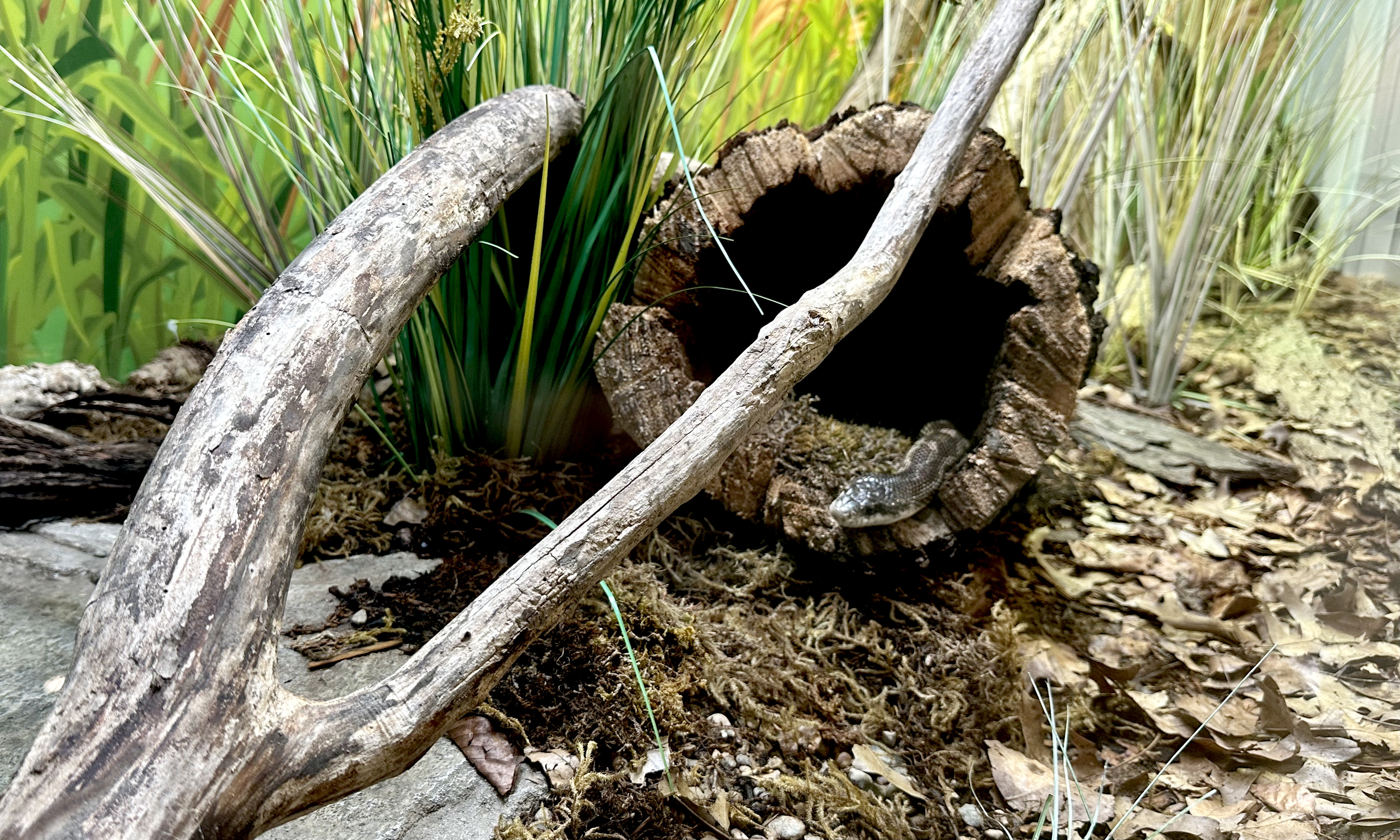
Black rat snakes can grow to be an impressive 8 feet long – but don’t worry, they are non-venomous and harmless to humans. Rodents, however, are not so lucky. As their name suggests, this species hunts rats and will often enter barns or abandoned buildings in search of food. They use the constriction method of hunting and consume their prey in a single bite! Rat snakes can also be found hiding in tall grasses, under fallen trees or in hallowed out logs, just like our friend here, who just emerging after a taking a nice afternoon nap. The habitats at the Belle Isle Nature Center are designed to mirror the landscape the species might experience in the wild – do any of the elements look familiar to you?

Do I spot a spotted turtle?

If you have visited our Nature Center before, you may be familiar with our turtle pond. This expansive indoor habitat is home to several turtle species, including this pair of spotted turtles. They may be smaller than most of their pond mates, but as you can see from this video, they make up for it in moxie! Spotted turtles can be found in bogs, marshes, swamps, ponds and woodland streams throughout Michigan. They can often be seen basking in the midday sun, but when surprised, spotted turtles will dive underwater and completely bury themselves in the mud. They also retreat to these muddy beds to stay cool on hot summer days. Spotted turtles in Michigan are threatened by habitat loss and from being removed from the wild by reptile collectors. That brings us to a rule that applies to all wild animals – look don’t touch! This is the best way to keep your new friend safe.

The Belle Isle Nature Center is all about making connections. People, animals, natural and unnatural landscapes are all a part of the unique tapestry that is Detroit. Visit belleislenaturecenter.detroitzoo.org to plan your visit. The Nature Center is open every day from 10 a.m. to 5 p.m. and and is always free!

Camp is Back at the Belle Isle Nature Center!

Winter Nature Camp recently took place at the Belle Isle Nature Center.

Authored by Luke Grange, senior education specialist at the Belle Isle Nature Center.

“Can we write on this?” 

The campers looked hopefully at the butcher paper-covered tables and cups of markers. When they were told that indeed the markers were for drawing on the tables, they happily got to work drawing, signing their names and making their mark. 

This was the scene at the Belle Isle Nature Center’s Winter Nature Camp on Jan. 3. Those campers had just arrived at the Nature Center’s first camp since 2019. The campers didn’t seem to mind the layoff as they drew rainbows, birds and the odd video game character as they got to know one another before breaking up into age groups to go explore outside.

The Belle Isle Nature Center’s habitats and interactive exhibits celebrate places in the city where you can connect with the natural world. Similarly, campers experienced both the natural and man-made portions of Belle Isle ― walking on top of deer prints and under willow trees to explore the rarely seen inside of a covered footbridge. Fire hydrants poked up from alongside the trails like steel mushrooms as raptors flew overhead.

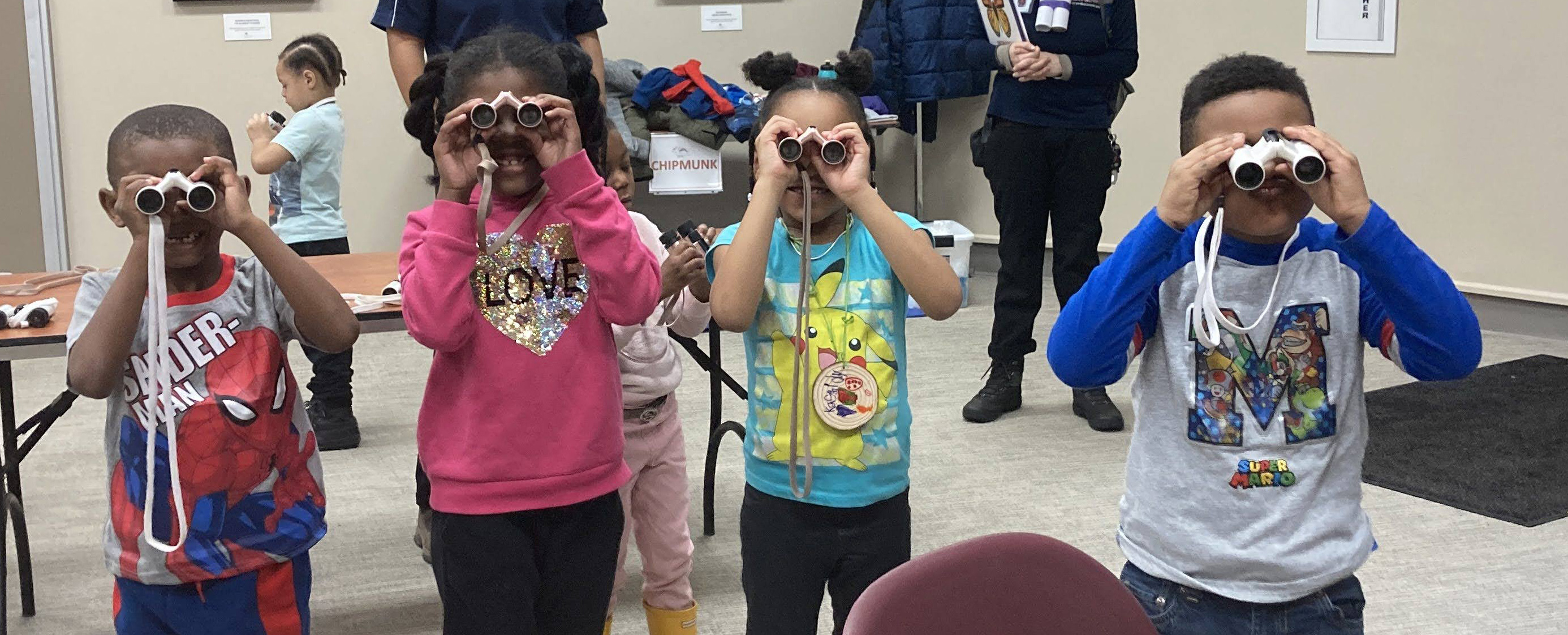
Campers loved building their beginner birding skills at Winter Nature Camp. Brittany Leick, program coordinator of the Detroit Audubon, assisted Winter Nature campers in learning to identify seven local, colorful birds and then practicing how to use binoculars. Campers also visited the bird viewing window and learned about the ultraviolet patterns inside the glass that the Belle Isle Nature Center installed to help make the windows bird safe. Campers then got to paint their own bird shapes to put on their windows at home.

The new Belle Isle Nature Center was thoroughly enjoyed by campers. Children visited the young learner’s space to act as ants and move giant seeds and dirt throughout the tunnels. They experienced life in the pollinator hallway as a bumblebee, seeing the normally invisible UV patterns that flowers advertise to insects. Each day, the campers would find something new to do in the space.

At the end of the week, campers were asked to draw their favorite camp activities. Almost everyone mentioned spending time out in nature with the new friends they made. As they had made their mark on the tables over the course of the week, adding to their drawings with each meal and snack, campers had made their own mark with the friendships they had formed.

Registration for Winter Nature Camp was done through community partners in Detroit. A waiting list was used for any remaining spots. Summer Nature Camp enrollment will happen the same way and is coming soon! Stay connected with the Belle Isle Nature Center website for updates.

The Belle Isle Nature Center is located at 176 Lakeside Dr., Detroit. 

Stay tuned to the Belle Isle Nature Center’s website for more camp opportunities!

Take Your Birding to the Next Level with eBird! 

Many golden-crowned kinglets use Zoo grounds during migration from the end of March just into May and from the end of September into the beginning of November.

Authored by Matthew Porter, bird care team member for the Detroit Zoological Society (DZS).

Happy National Bird Day! To celebrate, let’s talk about how the Detroit Zoo takes part in one of the greatest community science projects on earth, eBird. 

The website ebird.org is home to a giant database of bird observations run by the Cornell Lab of Ornithology. Through this website, there is an abundance of information about birds across the globe.

EBird brings together the community and scientists to understand the ranges and movements of birds around the world. Once involved, we are all scientists at work. This collaborative effort harvests a massive data set that would never be attainable without the efforts of everyone involved. Our efforts compiled together advance avian science and conservation worldwide. Last year, on a single day in October, more than 34,670 people from 185 countries reported 80,000 checklists observing 7,453 bird species!

Over the last couple of years, our staff has invested lots of time to help with this worldwide effort. What we have found is that there is more avian diversity than we previously thought at the Detroit Zoo. Some birds call the Detroit Zoo home year-round. Others come here to breed in the summer, while some come here for a winter home. Many species use the Zoo from March through May and August through November as a very important migratory stopover. This land is a green island in the middle of suburbia and a great, safe stopover refuge. Our buildings have bird-friendly glass, and we continue to plant native plants to provide the appropriate food and ecosystem many species need.

Last year, more than 100 species were reported by Zoo staff and citizen scientists surveying Zoo grounds. You can join in on the fun by signing up for an eBird account at ebird.org. The website has lots of information and tutorials on surveying and best practices. There is also an easy-to-use app that can make surveying more efficient. Once enrolled, you can become part of this worldwide effort to assist with bird conservation.

Here at the DZS, we are always looking for more ways to engage with the community so that people, animals and the natural world can thrive together.

Pictured is a common yellowthroat, a species of warbler that routinely uses Detroit Zoo habitat throughout May as a migratory stopover area.

A Song in the Darkness: Audio Loggers and Panama’s Imperiled Amphibians

Authored by Mark Vassallo, Detroit Zoological Society (DZS) Amphibian Department Supervisor.

The cloud forest of central Panama is a unique and mysterious place, full of rare creatures and plants that call these moisture-laden peaks home. At night, the jungle writhes with life as the nocturnal world takes over the mountainsides. In this veil of darkness and nestled in the elevations of these dense jungles, some of the earth’s rarest amphibian species reside. Many of these species are yet to be described by science, and others are considered to be extinct.  As I gazed up at the gathering rain clouds on the volcanic peaks of El Valle, I could not help but wonder which of these potentially extinct amphibians could still be out there.

I have been traveling to El Valle, Panama for the last seven years to work with the El Valle Amphibian Conservation Center (EVACC). This organization is run by Edgardo Griffith and Heidi Ross, a husband-and-wife biologist team, who have dedicated their lives to the conservation of Panama’s most endangered amphibians. Usually during these trips, I am undertaking projects involving the installation of life support and infrastructure or helping troubleshoot specific husbandry issues that arise in one of the modified shipping containers in which EVACC houses seven species of Panama’s rare and endangered amphibians, including the iconic Panamanian golden frog (Atelopus Zeteki). 

A Warzewitsch’s frog was identified in the area.

While those types of jobs are on the docket for this trip, we also have an important task to complete that will bring us into the upper reaches of the cloud forest in the hopes to hear a sound that could mean some hope for the imperiled amphibians of Panama. The sounds we are hoping to hear are the calls of thought-to-be-extinct amphibians, including Raab’s tree frogs (Ecnomiohyla rabborum), large and highly unique arboreal frogs who lays their eggs in tree cavities and can glide through the air to evade predators. In the last year, EVACC has begun the process of deploying audio loggers in some of the area’s hard-to-reach elevations to listen for the calls of amphibians like the Rabb’s tree frog that are widely thought to be potentially extinct. 

The audio loggers are sturdy boxes that contain a microphone, batteries and SD cards accompanied by a digital screen. The idea is that these listening devices, which are programmed to turn on during the dusk and nighttime hours, will pick up the call of one of these rare frogs. If a call from one of these frogs is detected on the logger recording, this would give the biologists at EVACC a very good lead on the areas where intensive surveys could take place to potentially locate this species.

Armed with some GPS coordinates, batteries, fresh SD cards and rough information about the audio logger’s location from a member of the last group who placed it, we headed up the mountain to start our journey. As we began to climb, the heat and humidity was intense — our clothes were soaked in less than an hour.  Large biting ants were swarming our boots as the incline steepened, and we came to a crossroads in the trail. We had reached the GPS coordinates but realized that these coordinates could not be correct. At this point, we decided to attempt to leave the trail and start climbing up what seemed like a cut in the dense jungle, which may have been caused by mudslides and heavy rains, certainly nothing even resembling an actual trail. The going was difficult as the clouds began to gather. Buckets of heavy rain soon began dumping on us, causing the mud to loosen and give, making the more vertical sections especially precarious. In addition to watching your footing in the jungles of Panama, it is also important to watch where you put your hands. Eyelash vipers and stinging insects of all kinds tend to rest on branches and sticks at about eye level. All of these thoughts were keeping our senses sharp as we broke through clearing after clearing, each time hoping that this was the top of the mountain and the audio logger would appear like a shining beacon amongst the dense jungle. Yet, each time the clearings revealed even more vertical walls of vines and thick jungle vegetation to climb. Our resolve was fading, but we pressed on. At one point, my balance gave way, and I fell face first into the side of the muddy slope. As I raised my head, I noticed I was face to face with a tiny gem of a frog. It was a blue-bellied poison frog (Adinobates minutus). This toxic little frog was just staring back at me, probably wondering why a silly, hairless ape had bothered to climb this far up a mountain during a thunderstorm. 

A rainforest rocket frog was identified in the area.

The rain was finally letting up, and this gave us a little boost as we could see some sunshine emanating from what looked like a break in the jungle ahead. As we approached, sharp painful sensations started overwhelming my hands and wrists. We were wading through a large column of sharp bladed grass, which when brushed against, caused a paper cut like lacerations on the skin. Once we emerged from the brush and into the clearing, we realized we had reached the top. The jungle was so dense there was no real spot to even look out to enjoy the view. We immediately got to work searching for the audio logger.  I looked left then right and passed through some thick brush. Then I saw it — a strip of white that stood out in the landscape of green. It was one of the zip ties used to attach the logger to the tree. We had found it! After several minutes of exulted celebrations and numerous high fives, we swapped out the SD cards and batteries, the unit was reprogrammed, and we locked up the protective case. The trip down was more like a ride down a luge course made of mud. This did make the process faster but certainly not any safer. 

Once we finally arrived back at the EVACC grounds, we were exhausted and coated in mud and insect bites but satisfied and content that we had achieved a seemingly insurmountable challenge. After a shower and a cold beverage, I walked out into the moonlight on the grounds of EVACC. Once again, the clouds were beginning to gather around the El Valle mountains, and my eyes settled on the tips of those green jungle peaks, wondering if the logger we had reset for another four months would record a sound of hope.

Learn more about the EVACC foundation and make a donation online to help them ensure the survival of Panamanian amphibian species for generations to come.

Mark Vassallo is pictured with an audio logger.