Detroit Zoo Earns Top Honors for Customer Service Excellence

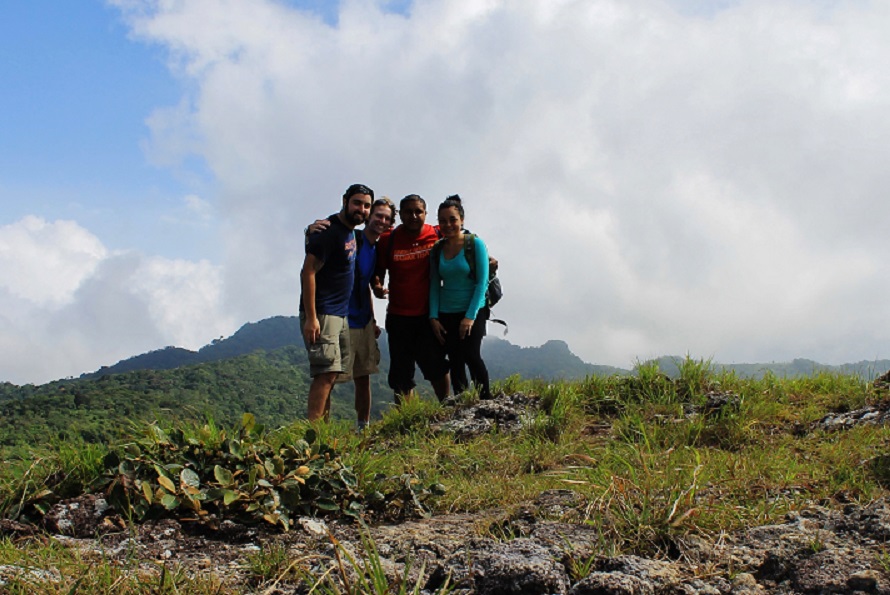
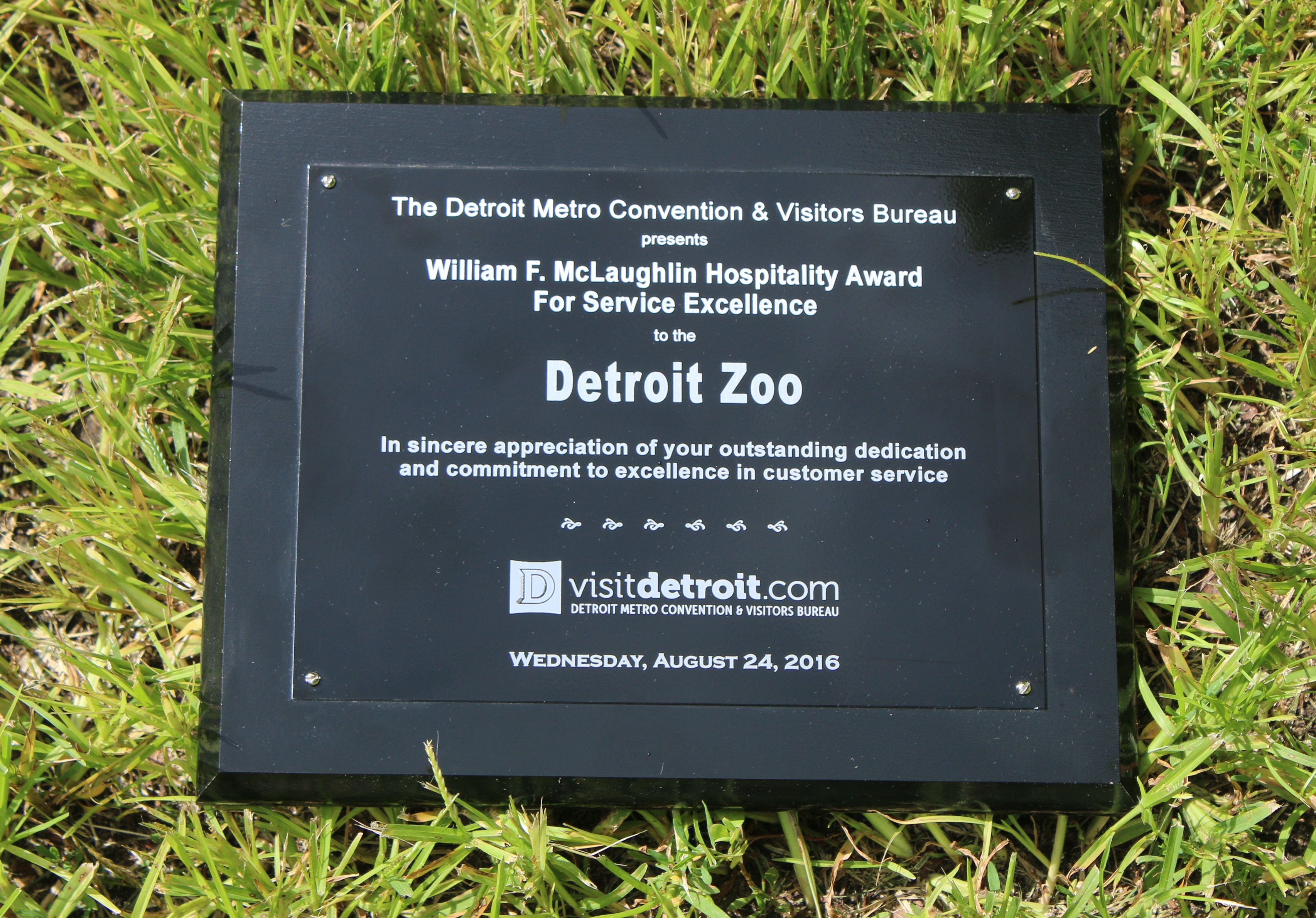
The Detroit Zoo recently received the prestigious William F. McLaughlin Hospitality Award for Service Excellence from the Detroit Metro Convention and Visitors Bureau. This is a great honor, as it is the only award in the state that recognizes customer service excellence in businesses. Detroit Zoological Society Chief Operating Officer Gerry VanAcker and Guest Relations Director Alexis Means accepted the award on behalf of the Zoo’s dedicated staff and volunteers.

The staff at the Zoo works hard on a daily basis to ensure that each and every guest has a pleasant visit. During employee training, staff learns the Zoo’s rules for great customer service.

Grin and greet within 8 feet. Smiles are contagious, so simply smiling and greeting guests can make an impact on their visit.

Be a good listener. Taking the time to listen to guests’ needs by asking questions and concentrating on what they’re saying makes them feel as if we care about their experience – and we do!

Make guests (as well as staff and volunteers) feel important. If possible, use their name and treat them as individuals. Find ways to compliment them, but be sincere. By generating good feelings about doing business with us, they will return again and again.

Always say “yes” – within reason. Look for ways to help visitors whenever possible. If they have a request, as long as it’s reasonable, we can help.

Know how to apologize. If something goes wrong, it’s easy to say “I’m sorry” and guests appreciate it. Try to remedy the situation and make sure the visitor knows what has been done. Even if they are having a bad day, there’s always something we can do to try and make them more comfortable.

Give more than expected. Because the future success of the Zoo lies in keeping visitors happy, we try to find ways to set ourselves apart from other institutions. Escorting guests to locations when asked for directions is one way we can stand out. Don’t just show…go!

Treat all employees and volunteers well. It’s not just the guests who enjoy feeling appreciated. When we feel good, we’re better at making our guests feel good!

Nature Play at the Belle Isle Nature Zoo

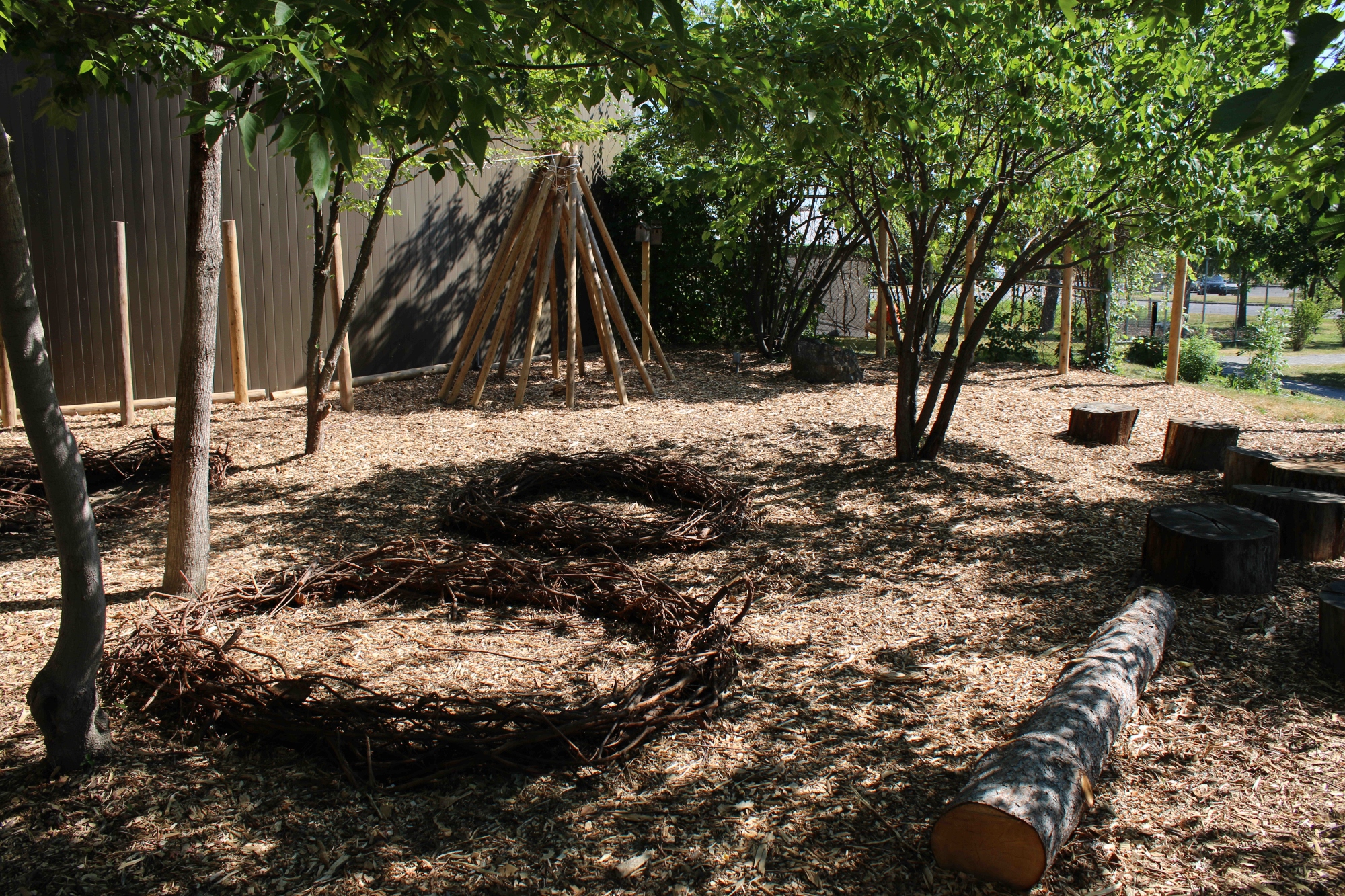
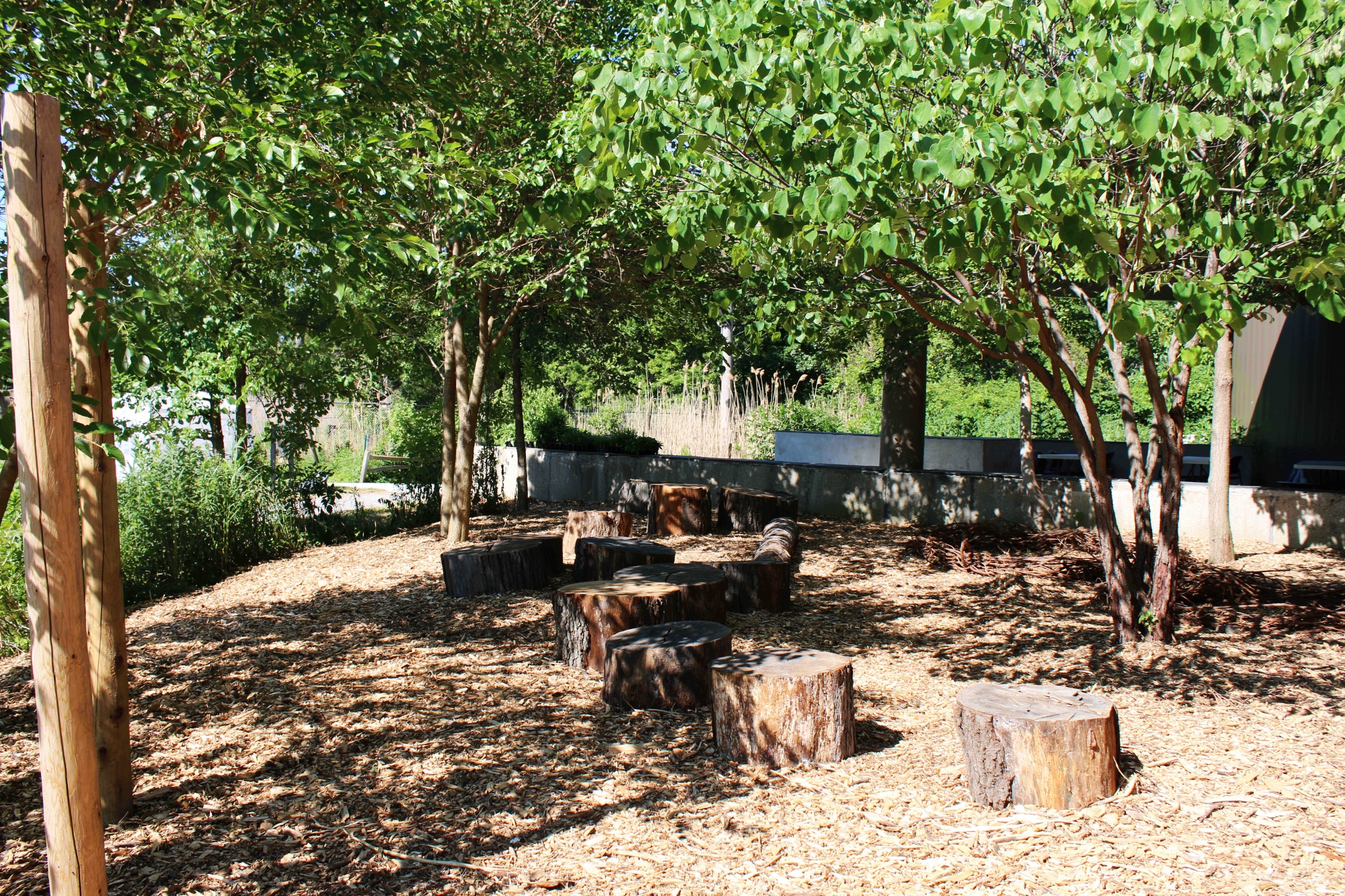
The Belle Isle Nature Zoo’s backyard is undergoing a transformation from au naturel to a natural playground area. While we believe it’s beneficial for our native flora and fauna to have natural places to grow wild and free, we also believe the same is true for local children!

What began as an ordinary space with a lot of potential is becoming an extraordinary space with a lot of possibilities for families to stay and play. While the playground environment remains filled with natural materials, the area now provides an inviting opportunity for children to exercise their imaginations, develop a sense of exploration, and enjoy some physical activity outside. Physical, mental and social health benefits flourish as a result of time spent outdoors, and we are working on designing a space that will sustain and support our guests as well as our environment.

Loose items made from natural materials inspire creative play – a balance beam from a fallen log offers a challenge of skill and concentration of gross motor skills, and a trail of tree stumps is just right for hopping, skipping, or even to be rested upon by visitors of all ages. People-sized nests are constructed and stocked with nature’s toys: sand, pebbles, stones, and “tree cookies”, which are slices of tree branches just perfect for construction play. A wooden teepee stands tall, waiting for hide-and-seekers, pretend campouts and all the creative games our small guests with big imaginations may bring.

Sensory activities are also in the works: Natural looms will build fine motor skills with a chance to use plant material to weave designs. Bamboo chimes and natural drums will inspire our natural musicians to play to the rhythm of the seasons, and colorful textural elements will reflect the beautiful palette of the natural world.

As the occasional chipmunk scampers through the playground and the birds call out their daily activities, they are at home in the natural environment (we’ve left plenty of natural “wild” spaces for our non-human animal friends around here!). Our goal with this playground is to create an opportunity for children to cultivate a sense of comfort and connection in outdoor experiences. Playing outside in nature – with nature – can help children gain respect for their environment and better understand their own place in it. And while the natural play supports the development and strength of our children, the sense of ownership they develop stands to strengthen the future stewardship of our natural world, which is vital to the health and sustainability of our planet.

We invite you to visit the Belle Isle Nature Zoo to check out our natural playground work-in-progress, hop on some logs, feel the textures and hear the sounds of nature. Tell us what you think!

– Amy Greene is a curator of education for the Detroit Zoological Society and oversees the Belle Isle Nature Zoo.

Veterinary Care: Get Ready to Run Wild

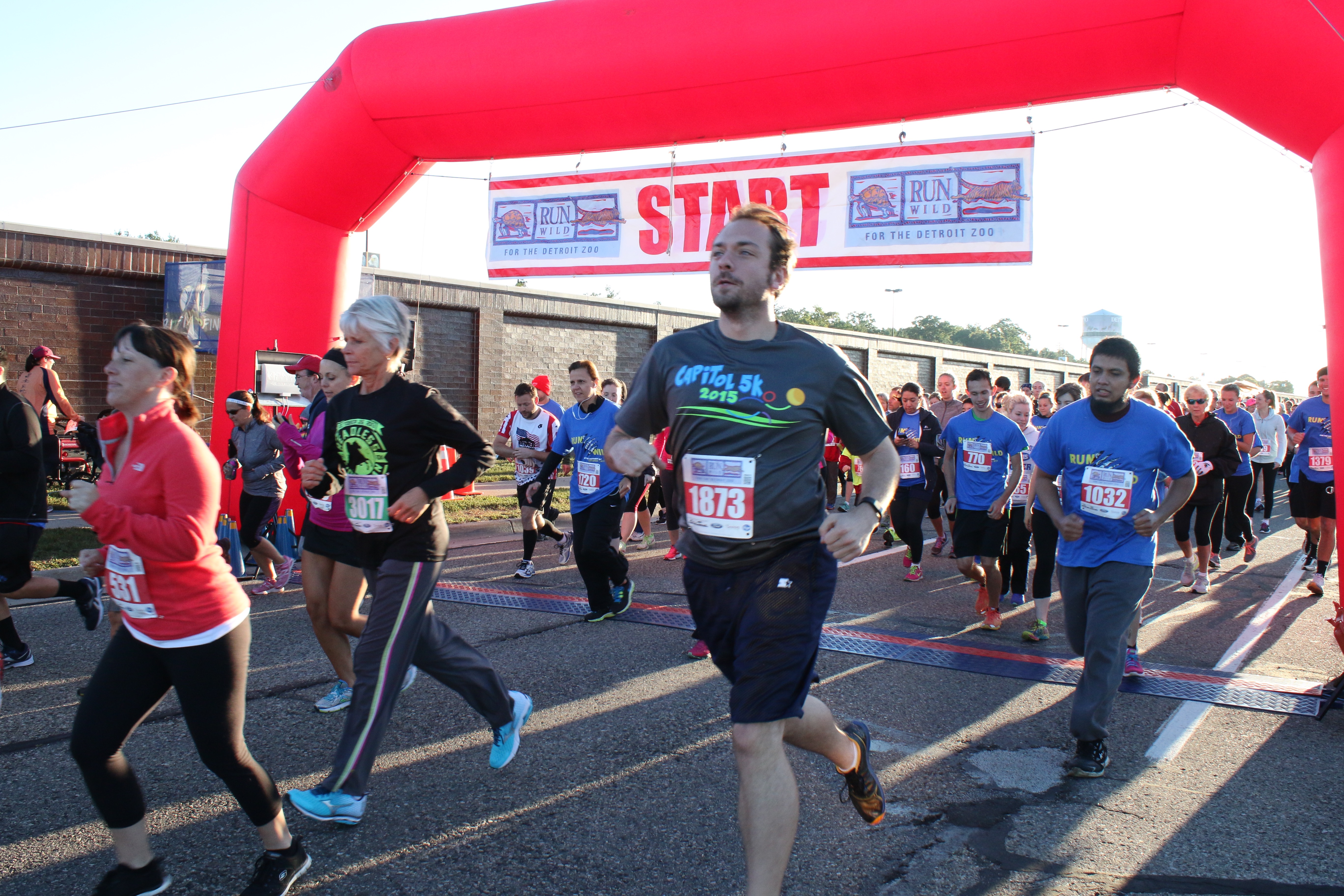
This year marks the 20th anniversary of Run Wild for the Detroit Zoo, and we anticipate it will be bigger and better than ever. This is a fun, family-friendly fundraising event that encourages our friends and Members to enjoy a healthy dose of exercise – through either a 5K, 10K, Too Wild combo or Fun Walk. Run Wild is also a great way to support the health of the animals at the Zoo.

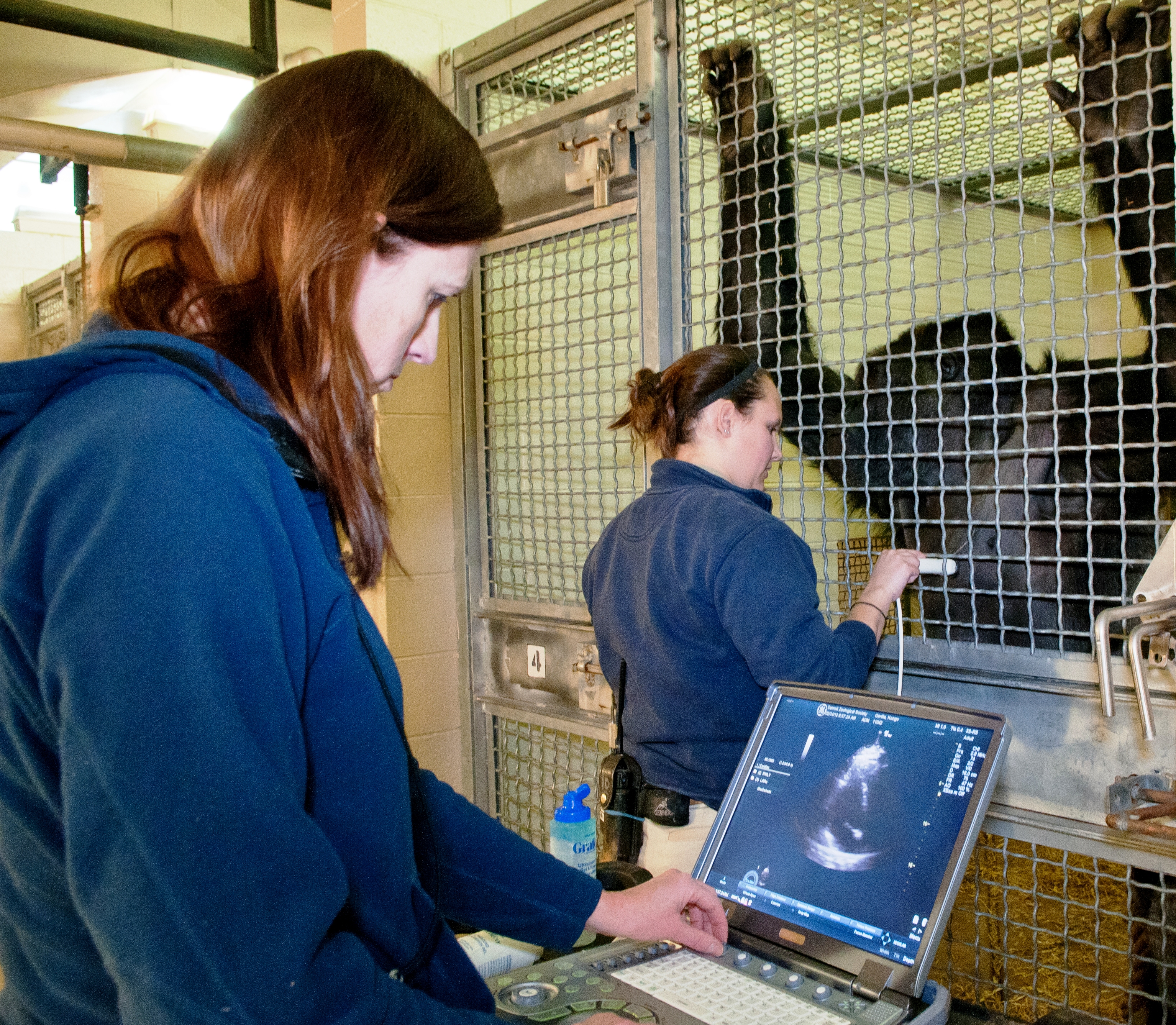
The race started as a unique collaboration between the Southeastern Michigan Veterinary Medical Association and the Detroit Zoological Society. During the first 10 years, proceeds from Run Wild were put toward a $1 million endowment dedicated to supporting the purchase of equipment for the Zoo’s Ruth Roby Glancy Animal Health Complex. Each year, the revenue from this endowment and proceeds from Run Wild are used to purchase and upgrade our diagnostic and treatment capabilities. This funding has allowed us to maintain cutting-edge health technologies in the Zoo. Over the years, we have purchased some very important equipment, including a two-headed teaching microscope, digital radiology, an ultrasound machine and a portable blood analyzer.

Last year we purchased a hand-held portable dental X-ray unit. Dental care is a very important component of our efforts to keep animals as healthy as possible. The new unit looks like a futuristic ray gun, and delivers a narrow beam of X-ray energy to a very small plate designed to be put inside the mouth of our patients. With this technology, we are able to take very detailed images of individual teeth or areas of concern, and to find dental problems early, before they become serious. The unit is small enough that it can easily be transported to our patients throughout the Zoo’s 125-acre grounds. We have used it to image teeth from wolverines to guanacos, lions and other animal patients of all shapes and sizes. We have even used it to take images of the bellies of frogs and toads!

Last year we also purchased a new patient monitoring tool called an EMMA (Emergency Mainstream Analyzer). This tiny piece of equipment provides us with very valuable information during anesthetic procedures. With each exhalation, the EMMA measures the amount of CO2 in the breath. Any change in body position or physiology that subtly compromises an animal’s ability to use oxygen is immediately known using this sensitive equipment. We use it for all of our procedures now, and find it invaluable.

I know this may all may sound very technical, but providing health care to the animals at the Zoo is a big job. The team at the Ruth Roby Glancy Animal Health Complex is very grateful to have the latest and greatest equipment to provide skilled and compassionate care. Join us for Run Wild, and know that you are supporting great care at your Zoo.

– Dr. Ann Duncan is the director of animal health for the Detroit Zoological Society and oversees the Ruth Roby Glancy Animal Health Complex.

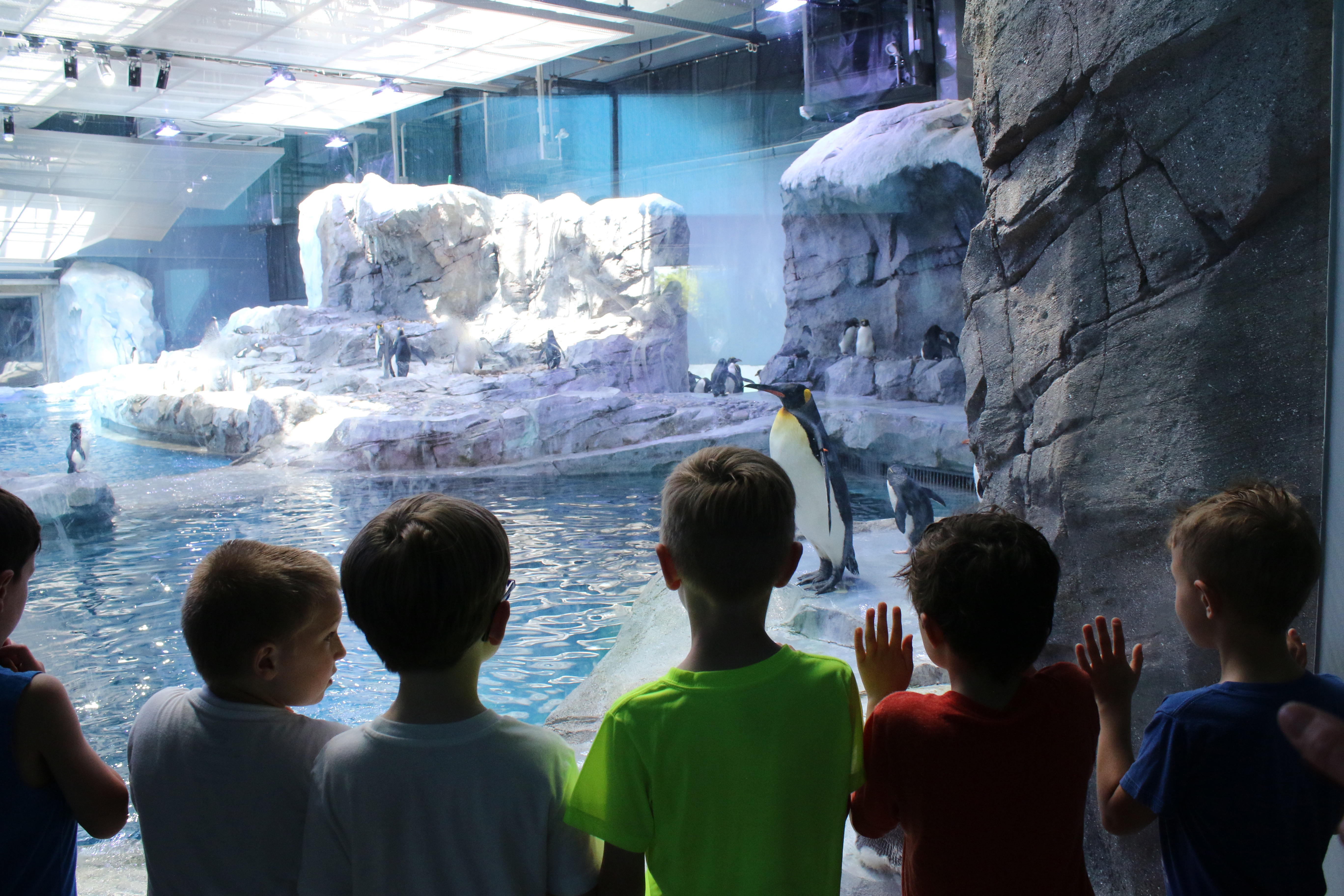
Editor’s Note: New this year, all Run Wild participants will receive finisher medals! These medals feature a penguin to celebrate the Polk Penguin Conservation Center as well as an American flag ribbon to honor the anniversary of September 11. In addition to finisher medals, all participants will receive a reusable Detroit Zoo water bottle at the finish line. These bottles can be refilled at any of the free hydration stations on Zoo grounds, and there will be additional refilling stations available on race day. This is all part of our Green Journey to create a more sustainable future; last year we eliminated the sale of disposable water bottles at Detroit Zoo concessions, an effort that has kept 60,000 plastic bottles out of the waste stream.

Greenprint: Supporting Local Farmers

Summertime provides us with a great opportunity to visit farmers’ markets and purchase local fruits, vegetables or proteins such as fish and beef jerky. Buying from your local farmer allows you to support the regional agriculture industry as well as your community.

Food in the U.S. travels an average of 1,500 miles to get to your plate. All this shipping uses large amounts of natural resources (especially fossil fuels), which contributes to pollution and creates waste with extra packaging. Conventional agriculture uses more resources than sustainable agriculture and pollutes water, land and air with toxic by-products. Food at farmers’ markets has travelled shorter distances and is generally grown using methods that minimize the impact on the earth.

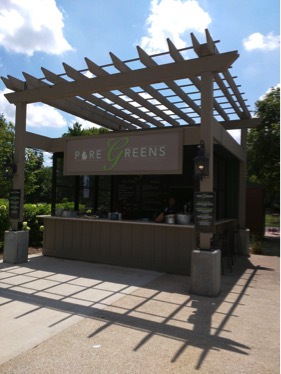
When buying from a large supermarket, only 18 cents of every dollar goes to the grower. Buying local cuts out the middleman and supports farmers in your community. The Detroit Zoo supports this mission by following a sustainable purchasing policy with an emphasis on locally made products. We recently opened Pure Greens, a 100 percent vegan café with all food purchased through Michigan farmers, supporting the state we live in.

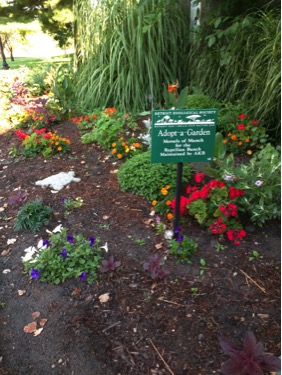
A sustainable at-home option is to grow your own food in a garden. Even with limited space, a small pot on a porch can produce tomatoes or basil. At the Detroit Zoo, there is a garden devoted to the lizards and turtles that live in our Holden Reptile Conservation Center. A few of the edible flowering plants the reptiles enjoy are nasturtiums, marigolds, pansies and geraniums. You can view the garden during your trip to the Zoo; it is located on the south side of the Holden Reptile Conservation Center.

– Rachel Handbury is the manager of sustainability for the Detroit Zoological Society.

Animal Welfare: Positive Interactions Between Humans and Animals

Humans and animals interact in different ways, and in a zoo setting, these kinds of interactions take many forms. The animals interact with the zookeepers who care for them, the animal welfare researchers who monitor them, the zoo staff who work around them, and the visitors who come to see them.

Depending on the situation, interactions with humans can be viewed by the animals as negative, neutral or positive and over time, if a certain type is most prevalent, can result in a corresponding relationship between animals and humans.

One important factor that influences the type of relationship that develops is how animals perceive humans, which is influenced by what species they are, their individual temperaments and past experiences. Some species, and some individuals, are more fearful of humans and will avoid them as much as possible. Others may see humans as something of interest. However, our behavior when we are around them can still influence how they are feeling, and if our actions are perceived as a threat or something that creates stress, the animal’s experience becomes negative.

The work zookeepers do is so critical to ensuring animals living in zoos experience good welfare. They create positive interactions through actions like feeding and positive reinforcement training, and this helps to establish positive relationships. Having these positive relationships with the humans with whom they interact the most can help the animals to be more comfortable in situations that could be stressful.

Understanding how we impact animals through our actions is incredibly important. We are ultimately responsible for ensuring each individual animal at the zoo has great welfare and we can take steps to do just that. Each one of us can treat every animal we encounter, whether it be at the zoo, in our neighborhoods and in our homes with respect, appreciating that they have needs and that our behavior can affect them.

When you visit the zoo, enjoy watching the animals living their lives, know that they are sensitive to what is happening around them, and share the same sense of awe and privilege I feel knowing that my actions can help them feel comfortable and safe.

– Dr. Stephanie Allard is the director of animal welfare for the Detroit Zoological Society and oversees the Center for Zoo Animal Welfare.

Education: Teaching in the Amazon

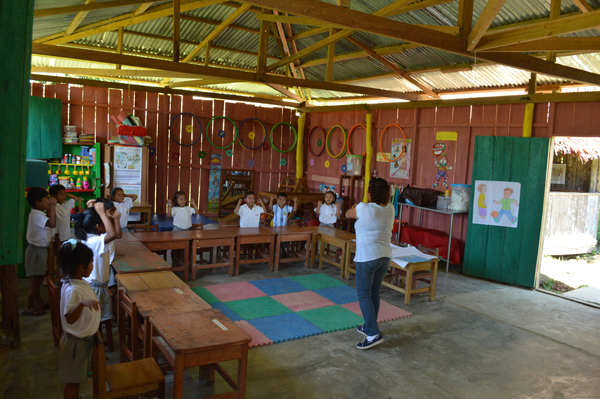
The Amazon rainforest is an incredible place, the subject of countless novels and stories. Discovered, explored and exploited for generations, millions of people call this biodiverse and globally important region home. The area is often referred to as the “lungs of the earth” as the plethora of plant life grabs carbon dioxide out of the atmosphere and replaces it with life-essential oxygen. In partnership with a Peruvian non-profit organization, CONAPAC, the Detroit Zoological Society (DZS) is preserving the rainforest, one child at a time.

The DZS has partnered with CONAPAC since 1999, supporting children and teachers in rural areas of the rainforest. Each spring, more than 3,000 students and teachers receive a year’s worth of basic school supplies, purchased with money donated by individuals from all over the world. To complement the supplies, all teachers are required to attend a professional development workshop to enhance their teaching skills and increase student literacy.

This year, the teacher workshops were held in the city of Indiana, in Loreto, Peru, during the last week of June. I attended the workshops to observe first-hand what the investment of time, energy and resources was producing. I was incredibly impressed. This year there were two sets of workshops; one for teachers working in communities on the Amazon, the other for teachers who are working in the communities off the Napo River and its tributaries. The non-profit organization, El Conocimiento Se Comparte (which roughly translates to ‘the sharing of knowledge’), facilitated the content of the workshops on mathematics, reading comprehension and linguistics.

El Conocimiento Se Comparte is a U.S. entity, composed of four siblings who were born and raised in Peru. All four moved to the U.S. as adults to pursue their individual careers. Their goal is to share their talent and passion for teaching with a broad audience, including their home country of Peru. The CONAPAC team coordinated the location and logistical aspects of the workshop, and the El Conocimiento Se Comparte group brought their passion and talent.

For the most part, I was a participant of the workshop proceedings. I sat through each session, gleaning as much information as I could, completely immersed in the native language and enjoying every moment of it. I watched as teachers engaged with one another and with the presenters, asking for more explanation when necessary, inquiring about specific student needs and adaptations, and taking copious notes every step of the way.

Over the course of the next month or two, the board of education in the region will visit the teachers in their schools to observe if they have implemented the new teaching strategies. If they have, they will be eligible for a certificate, which could earn them a raise or a future promotion. When the CONAPAC and the DZS team conducts end-of-year evaluations in November, we’ll also be looking for signs that teachers have implemented the strategies and report back to our donors and the team.

The conservation work in the Amazon continues to be incredibly rewarding, yet also challenging. By providing the opportunity for an education based in conservation, we are empowering the next generation of children who call the rainforest home to protect the ecologically vital ecosystem.

For more information on the Amazon Rainforest Adopt-A-School program, including how to participate in annual deliveries or to support a school financially, visit http://detroitzoo.org/support/give/ or email clannoyehall@dzs.org.

– Claire Lannoye-Hall is a curator of education for the Detroit Zoological Society.

Belle Isle Nature Zoo – Little Free Library

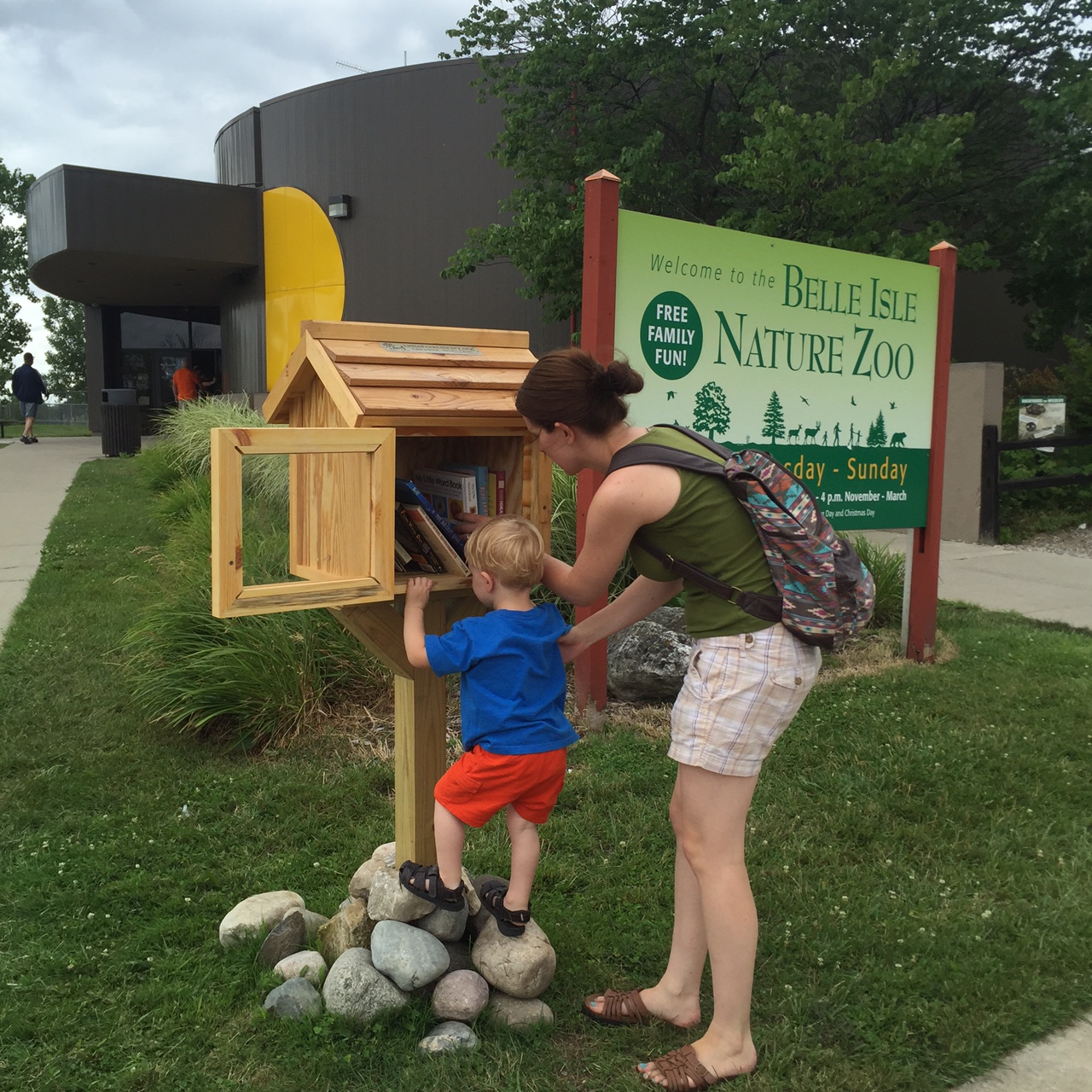
Little Free Libraries are a global phenomenon. These small, front‐yard book exchanges number nearly 40,000 in all 50 states and around the world in 70 countries — from Iceland to Tasmania to Pakistan, and now, the Belle Isle Nature Zoo! We’ve joined the movement to share books, support literacy, bring people together and create communities of readers.

What is a Little Free Library? Little Free Libraries are hand-crafted structures filled with constantly changing collections of books donated and shared by people of all ages and backgrounds. Each year, nearly 10 million books are shared in Little Free Libraries.

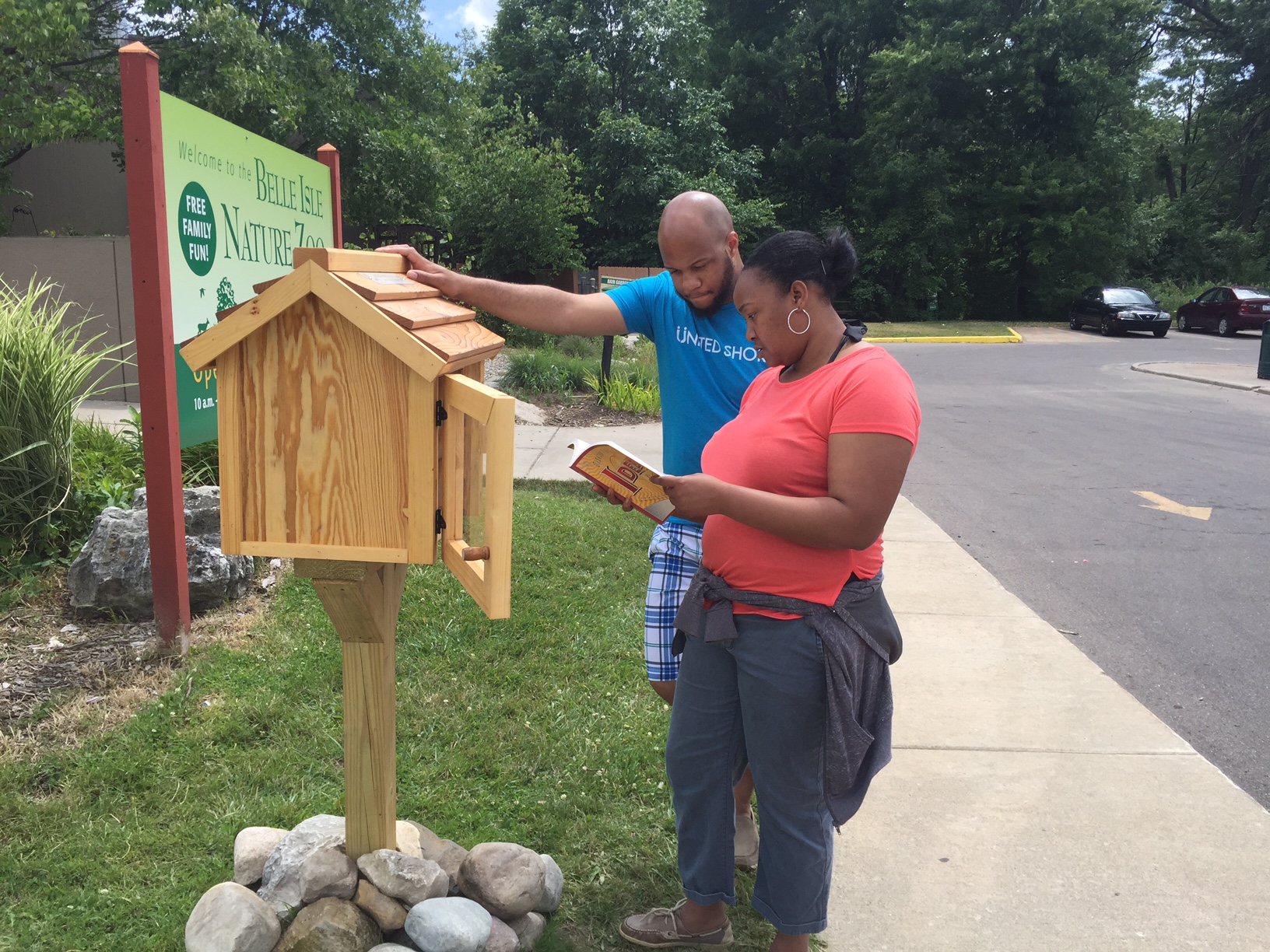
Just a few weeks ago, the Belle Isle Nature Zoo chartered and then planted a Little Free Library and seeded it with books. We’ve already observed the community and literacy-building movement blossom into a fun and shared experience for our visitors. More than 100 books have already gone home with our guests from Metro Detroit and other neighborhoods around Michigan, as well as some out-of-state visitors. Additional books for children and adults have been lovingly placed upon the shelf, shared by friendly donors, and the collection is ever-changing.

We’ve been added to the Detroit Little Libraries map as well, supporting the 313 Little Libraries action plan toward making Detroit the Little Free Library capital of the world. The 313 Little Libraries action plan has a priority of planting libraries in areas with low access to books, with a special focus on places where children congregate, supported by research that shows access to books is a powerful indicator of success in school.

Not only might our guests find a great book to take home and read (and then return or share with friends) the Little Free Library provides an opportunity to give back. It allows people who want to volunteer in some way a chance to donate books and know that they are contributing to the literacy and leisure of their community.

One of the best parts about Little Free Libraries is that they don’t require library cards or late fees, don’t insist that patrons whisper or stay quiet, and don’t mind if you do not return a book.

At the Belle Isle Nature Zoo, we are known for being stewards of nature, providing experiences that build awareness toward our local ecological health and sustainability. We are pleased to also be stewards of our neighborhood literacy and building community, offering opportunities to share good things to read with one another. It’s truly everyone’s library, and the more people who participate, the better!

– Amy Greene is a curator of education for the Detroit Zoological Society and oversees the Belle Isle Nature Zoo.

Veterinary Care: Suiting up as a Whooping Crane

My job as a veterinarian for the Detroit Zoological Society (DZS) often has its surprises; for example, one time I discovered that some species of frog turn from bright green to dark green as they become anesthestized. Typically the surprises are the interesting and sometimes unbelievable things I learn about animals. But sometimes what I do during the day is not what I thought I’d be doing when I woke up that morning – like wearing a full-size whooping crane costume and spending a day in a field with some lost birds.

A few weeks ago, the DZS bird department was contacted by the International Crane Foundation, which is based in Baraboo, Wisconsin. They’d been tracking four yearling whooping cranes that were raised at the foundation and were newbies to the whole migration thing. The cranes had made their way to the Midwest from Florida but were thought to have been blown off course on their way back to Wisconsin by a storm that came across Lake Michigan. It was their first year migrating back on their own – who could blame them?

After locating the birds near a cornfield in Michigan, the staff at the Crane Foundation needed a veterinarian’s health certificate stating that the cranes were healthy enough to travel back to Wisconsin. They reached out to the DZS. I jumped in a car with our curator and associate curator of birds and headed about an hour north of the Detroit Zoo into an area where houses were few and far between and the landscape was mostly farm fields. There, we met up with the staff from the Crane Foundation and witnessed four beautiful juvenile cranes come in for a landing just on the opposite side of the pond from us. Unfortunately, “just on the opposite side of the pond” was about 1,500 feet away, and a determination of good health cannot be made from that distance. The next thing I knew, I was handed a pair of binoculars … and a crane costume. Yes; a crane costume!

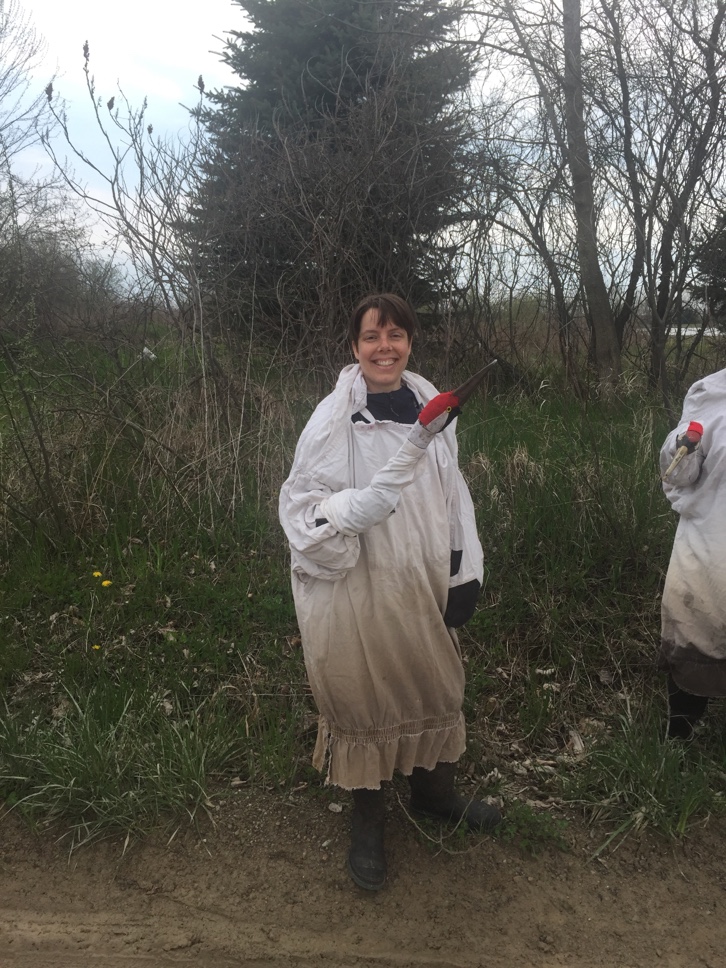
You see, whooping cranes are highly endangered, and would in fact be extinct in North America if it weren’t for the captive rearing program headed up by the International Crane Foundation. The goal of the program is to create a sustainable wild population of whooping cranes, and this only works if the crane chicks are reared by “cranes”. Thus, human “parents” will dress up in crane costumes – the human body is covered in white, like the white feathering of the crane, and the human hand holds a replica of a crane head, complete with a functional beak, which teaches the chicks how to “be” a crane.

So on this particular day, I found myself meandering across a cornfield in rural Michigan, stopping to “graze” every few minutes, preen my “feathers” and survey my surroundings alongside my fellow “crane”, one of the Crane Foundation staff members. Not long after we started our way across the field, the four juveniles began to notice us and they took interest. Gradually, they made their way over, two moving through the shallow pond while the other two came around the pond’s perimeter. In less than 30 minutes, I was face to face – or rather, beak to beak – with four amazing whooping cranes. Their beautiful yellow eyes sized me up as I looked for any signs of illness, but I found none. After I’d visited with each crane and felt assured of their health, I simply enjoyed the awe — and surprise — of unexpectedly having the opportunity to spend a few brief moments so close to these incredible birds.

– Dr. Sarah Woodhouse is a veterinarian for the Detroit Zoological Society and works in the Ruth Roby Glancy Animal Health Complex at the Detroit Zoo.

Amphibian Conservation: Saving the Panamanian Golden Frog

The Panamanian golden frog (Atelopus zeteki) is a unique and beautiful amphibian from the highlands of Panama. This yellow or orange and black “frog” is actually a type of toad that walks more than it hops. It resides in areas near fast-moving streams and rivers in the mountainous forests within the country. The International Union for Conservation of Nature (IUCN) lists the Panamanian golden frog as Critically Endangered, which is one step before becoming Extinct.

In the wild they are believed to be in such low numbers that they may no longer be able to sustain as a wild population; in fact, no one has seen a Panamanian golden frog in the wild for quite some time. Massive population decreases are believed to be caused by chytrid fungus, habitat destruction, the exotic animal trade and sedimentation of egg-laying sites in rivers and streams. Now, they exist mostly in captive zoo breeding populations.

One of these breeding populations has been housed in a bio-secure room at the Detroit Zoo’s National Amphibian Conservation Center for 16 years, and has contributed several years of offspring to the Panamanian Golden Frog Species Survival Plan (SSP). SSPs are cooperative management programs through the Association of Zoos & Aquariums (AZA) that aim to reproduce, genetically manage and possibly reintroduce endangered animals into the wild with the assistance of other wildlife management organizations. In addition to its active role in the SSP, the Detroit Zoological Society (DZS) employs several other strategies to conserve the Panamanian golden frog in the wild. At this time, there is nowhere identified in the wilds of Panama to safely release captive-bred tadpole or juvenile golden frogs to the wild.
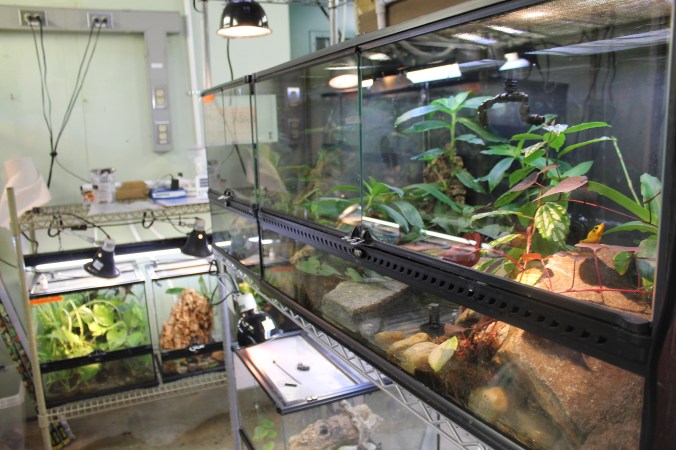
Breeding the Panamanian golden frog in captivity involves understanding the complex conditions found in their wild habitat. They have an interesting life cycle from courtship to final metamorphosis. In the wild, males of this species will perch on rock outcroppings or on top of large leaves that overhang or are near a flowing stream or river. The males then begin to call, thrusting out the vocal sacs on their throats as they produce a low trill vocalization meant to alert females to their presence as well as warn other males to stay away. Since these animals breed and live in close proximity to the loud sound of rushing water, their low-toned vocalizations can be very difficult to hear. For this reason, golden frogs have evolved a type of sign language they can use to communicate to mates as well as rivals. These amphibians have the ability to execute a “wave” using their front legs to take the place of their hard-to-hear vocalization when conditions around the stream are noisy. This type of communication is known as semaphore behavior.

Once a pair of golden frogs has successfully mated in the wild, the female will deposit up to several thousand small round white eggs underneath a rock in a steam or river and away from direct sunlight. This is done because the white eggs lack pigment entirely and would be adversely harmed by the ultra violet (UV) radiation from the sun. This same issue has to be addressed at the Detroit Zoo. The animals are bred inside aquariums in a specially modified room just for this species. After the breeding pairs are chosen for the year, the animals are placed together in an aquarium. Prior to the onset of the “wet season,” misting cycles within the frogs’ habitat are coordinated to simulate the “dry season,” giving the frogs a sense of seasonality, which helps stimulate them to breed. If eggs are laid in the aquarium, amphibian staff must protect the eggs from the naturalistic UV lighting over the breeding tanks by wrapping black trash bags around the aquarium. This simulates total darkness, which allows the light-sensitive eggs to develop unharmed. Once eggs develop pigment, the trash bags can be removed.

Eventually, the eggs develop and a small black and yellow tadpole emerges from the egg casing. These tadpoles are very well adapted to living in fast, flowing stream environments with strong mouthparts which assist them in clinging to the rocks in turbulent water as they scrape away at algae and the microorganisms they depend on for food. At the Detroit Zoo, we reproduce the golden frog food source by smearing a wet algae mix on small plastic food plates and allowing the mixture to dry. Once the algae is dry, the plates are placed in the water and the tadpoles move over and around the plate, scraping off the food with their specialized mouthpart. After several weeks, the tadpoles metamorphose into fully formed little toadlets, which are turquoise green and black in color, a color phase that camouflages them in while living in a forest habitat. They eventually turn mostly yellow or orange and black upon reaching adulthood.

Along with the extensive breeding program, conserving the Panamanian golden frog involves reaching out to the communities where these animals live and educating the public. In 2015, I assisted the staff at a small conservation center in El Valle, Panama, called the El Valle Amphibian Conservation Center (EVACC). This center is dedicated to breeding, exhibiting and educating the public on Panama’s native amphibians. While in Panama, I assisted EVACC with their amphibian exhibits and breeding programs. The DZS is also becoming involved in developing educational materials to better educate an already sympathetic public about conserving their environment and this important amphibian. Recently, DZS Curator of Education Claire Lannoye-Hall has been appointed as the SSP Education Advisor for the Panamanian Golden Frog SSP. Within this role, the Detroit Zoo will be instrumental in developing educational programs and cultural awareness within Panama.
The Panamanian golden frog holds a special place in the Panamanian culture. Signifying good luck, the golden frog can be seen on lottery tickets and in gift shops all around the country. The history of this little amphibian within Panama can be illustrated by the presence of “rana dorada” or golden frog, in some of the petroglyphs within the country dating back to pre-European contact. Perhaps those ancient artists were hoping for a little luck as they etched images of this mystical amphibian into the rocks of the cloud forest. Hopefully, with a little of that same luck and continued dedication from the Detroit Zoological Society and its conservation partners, the Panamanian golden frog will not disappear from history for good.

– Mark Vassallo is an amphibian department zookeeper for the Detroit Zoological Society, and works in the National Amphibian Conservation Center at the Detroit Zoo.
Notes from the Field: Recovering American Martens

The Detroit Zoological Society (DZS) is continuing its efforts on an American marten conservation project in the Manistee National Forest. This spring, I was given the exciting opportunity to assist collaborators from Grand Valley State University and Busch Gardens on this project. Martens are small, weasel-like carnivores that became extirpated (locally extinct) from the lower peninsula of Michigan in the early 1900s because of habitat loss and unregulated trapping. Martens were reintroduced back to the Manistee Forest more than 30 years ago, and since 2013, veterinary and animal care staff from the DZS have been helping to study the success of the marten reintroduction by looking at animal health, kit survival and habitat use. This work involves collecting martens in live traps and then anesthetizing them in order to perform physical exams and collect samples of blood, hair, urine and feces. The DZS uses Hav-A-Heart traps, humane traps that close in such a way that they do not harm the animal. The traps are set carefully to ensure that martens have a nice snug spot. We cover each trap with pine needles and leaves for warmth and nest building, and ensure the martens have a snack and a source of water. The collected samples are then tested for disease. The project also uses GPS and radio tracking collars to gather information on marten habitat use and determines which forest types they prefer.

My time spent in Manistee involved daily morning checks of approximately 30-40 live traps for martens. If a marten is in a trap, it is then transported to the bed of a pickup truck in order to induce anesthesia and be examined. Special care is taken to monitor the marten’s body temperature to be sure that it does not become too hot or too cold during the procedure, and after samples are collected, a GPS collar may be placed on the marten to track habitat use. When the procedure is complete, the marten recovers in a small, dark wooden box until it is stable enough to be released. Once stable, a staff member opens a little door on the box and the marten runs off back into the forest. This entire process usually takes about 30 minutes from beginning to end.

During my time assisting with the project, I spent many hours riding down narrow, bumpy and winding two-track forest trails. Some of these trails were quite precarious, but travelling them gave me the opportunity to see migrating birds, deer, a porcupine and even a black bear! We were able to collect samples from four martens and place GPS collars on three of those four, dramatically increasing the amount of data collected on marten habitat use. These GPS collars were purchased with financial support from the DZS, and the data will be used in collaboration with the U.S. Forest Service to decide how the forest can best be managed to facilitate recovery of the marten population. It was thrilling to be a part of this project and I am thankful to the DZS for allowing me this opportunity.

– Erica Campbell is a veterinary technician for the Detroit Zoological Society and works in the Ruth Roby Glancy Animal Health Complex at the Detroit Zoo.