Notes from the Field: Surveying Mudpuppies; Rain, Snow or Shine

We battled frigid temperatures as we entered the ice-filled water wearing insulated waders for protection against the elements.

This dramatic introduction sounds like the start of an exciting adventure story in some far-off place, but it actually describes some of the unbelievable conditions right here in Michigan where you can find one of the most fascinating creatures – the common mudpuppy (Necturus maculosus maculosus).

This four-legged, fully aquatic amphibian can be found in rivers, lakes and ponds throughout the midwestern U.S., including the waters of the Detroit River. The Detroit Zoological Society (DZS) is actively engaged in many field conservation projects, including surveying the common mudpuppy around Belle Isle. Our amphibian department has conducted surveys since 2009 as a way to learn more about the overall health and population of the salamanders found in the area. Fieldwork for the project is conducted twice monthly at two different sites, and it is never to be done alone; due to the danger posed by the elements, there must always be two people working on the survey. Depending on the weather conditions, surveys at times are limited to collecting water samples; other times it can involve trapping and processing mudpuppies.

Listed as Least Concern by the International Union of the Conservation of Nature (IUCN), little is known about the true population size of mudpuppies – not just in Michigan but also throughout its entire range. Even though this aquatic salamander has a pair of lungs, it uses blood red, feathery gills located on the sides of its head to gain oxygen from the water. It has a rather flat body and wide head and it uses its tail to move through the water. Mudpuppies prefer to hide under rocks and logs during the day and forage on aquatic insects, crayfish and fish.

Like all amphibians, mudpuppies are valuable indicators of wetland and habitat health. Since water and air move freely in and out of an amphibian’s permeable skin, they will be the first creatures to become sick or even die from the pollutants or toxins found in the habitat, warning us of any impending problems.

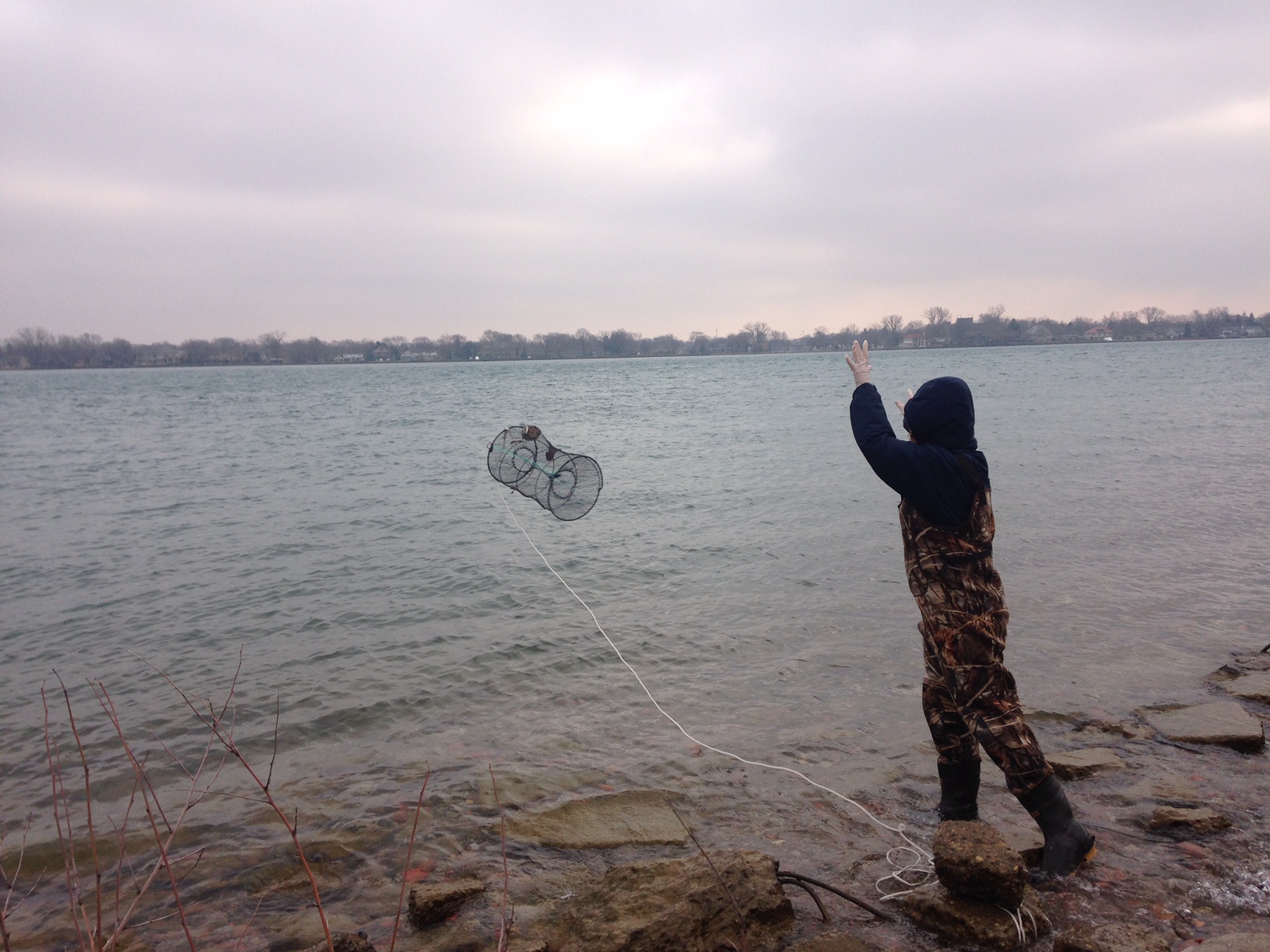
Fieldwork and data collection for this project is typically a two-day process. On Day 1, we are in the field collecting water samples and data on the weather, and also setting traps. To capture mudpuppies, we use small collapsible minnow traps that we weigh down to the bottom of the river and bait with frozen smelt. We tie the traps to the shoreline so they won’t be lost in the current of the river. We leave them overnight to allow the mudpuppies plenty of time in their undisturbed habitat to wander in, where they will remain until our return the following day.
The water samples we collect are taken back to our water quality lab where we can conduct more scientific tests. Keeping track of the water quality of the Detroit River is just as important as the data collected on the mudpuppies themselves. A database of this information will help us notice if severe changes have occurred in the water over time.

On Day 2, we return to the field to collect the traps as well as information on any mudpuppies captured overnight.

In the winter, the coast of Belle Isle can be quite treacherous. On one particular day in March, we faced some challenges as ice floes had moved into the shore overnight and were covering the traps we’d placed the day before. I was accompanied by two of the DZS’s most seasoned field researchers: Paul Buzzard, the director of conservation, and Marcy Sieggreen, curator of amphibians. Wearing insulated chest waders and long gauntlet-style gloves for protection against the icy waters, we did some ice stomping and managed to locate and recover all the traps we’d set.
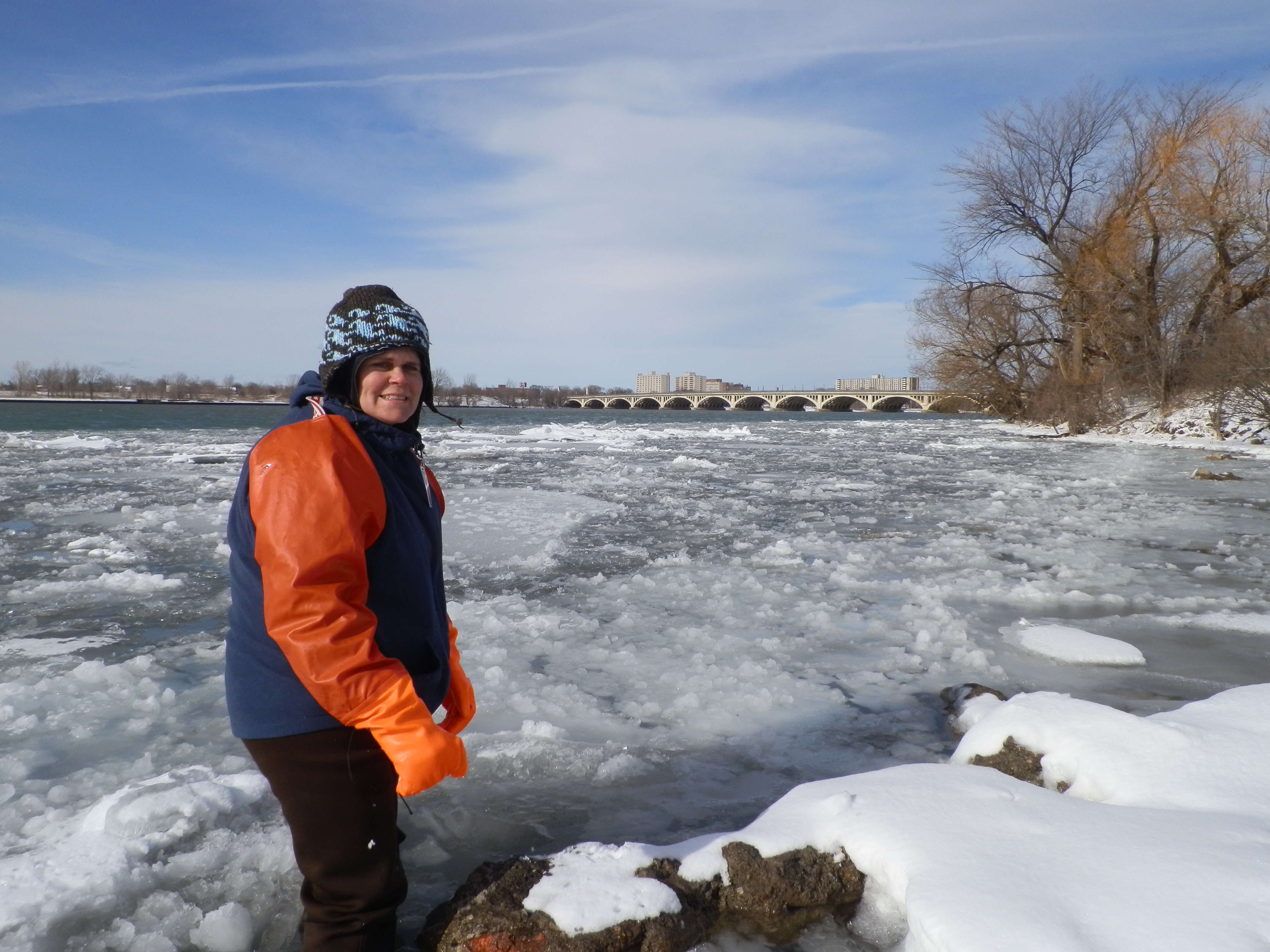
Turned out we had captured one mudpuppy, so we proceeded to gather additional data – information from the animal, weather conditions and the water. We needed to take great care to keep the mudpuppy in the water at all times; in the winter this protects the skin and gills from freezing and in the warmer days of spring, summer and autumn it protects from the heat. We take measurements, weight and pictures of the animal, and if the salamander is healthy and large enough, a small transponder is implanted in the side of the tail to help with identification if recaptured. As quickly as possible, the mudpuppy is returned to the water in the area where we found it.

On Day 2, if conditions are favorable, we also use a digital boroscope to survey the site further. A boroscope, or a “plumber’s camera” as it’s sometimes called, is a camera at the end of a flexible 5-foot-long cable connected to a video screen. We use it to peek under rocks and logs in search of mudpuppies. This tool is a non-invasive way to learn about what else is living in the river.

As we continue with these surveys, we are exploring what other things the data we collect can show us from further analysis. We also plan to return to surveying areas off the coast off the island of Grosse Ile, which are also known to have a population of mudpuppies.

– Rebecca Johnson is the associate curator of amphibians for the Detroit Zoological Society.

Marcy Sieggreen was the curator of amphibians for the Detroit Zoological Society from 2008 until her passing in 2016. The Detroit Zoological Society established the Sieggreen Amphibian Conservation Fund in Marcy’s memory to continue to advance the work she so passionately championed.
Humane Education: Helping Animals in Need

As animal lovers, when we come across an animal in need of help, we want to take action. But when we find an injured or orphaned critter, often times we’re not sure what to do.

Here at the Detroit Zoological Society, we receive emails and calls throughout the year from people who want to aid local wildlife. Although we wish we could provide sanctuary for all animals in need, we are unable to do so in nearly all cases. But we think it’s wonderful that so many people want to assist these sentient beings, so we’ve compiled a list of helpful resources.

The following links contain contact information for reputable organizations and rehabilitators that are able to provide support. Download the app and jot down the phone numbers found in the links. You can keep a copy on hand so that the information is available should a need arise.

  • Animal Help Now App – Find contact information for nearby emergency wildlife assistance across the U.S., including wildlife rehabilitators, rescues and veterinarians.
  • All Species Kinship Wildlife Hotline – (877) 596-7776

Remember if you come upon an animal that you think needs help, don’t address the situation without first reaching out to a professional for his or her advice. If ever you’re in doubt, call an expert.

– Lisa Forzley is a curator of education for the Detroit Zoological Society and oversees the Berman Academy for Humane Education. Learn more about the Academy, which was created to help people help animals and offers a broad range of engaging programs, at http://detroitzoo.org/education/humane-education.

Education: Penguin Center offers Wealth of Learning Opportunities

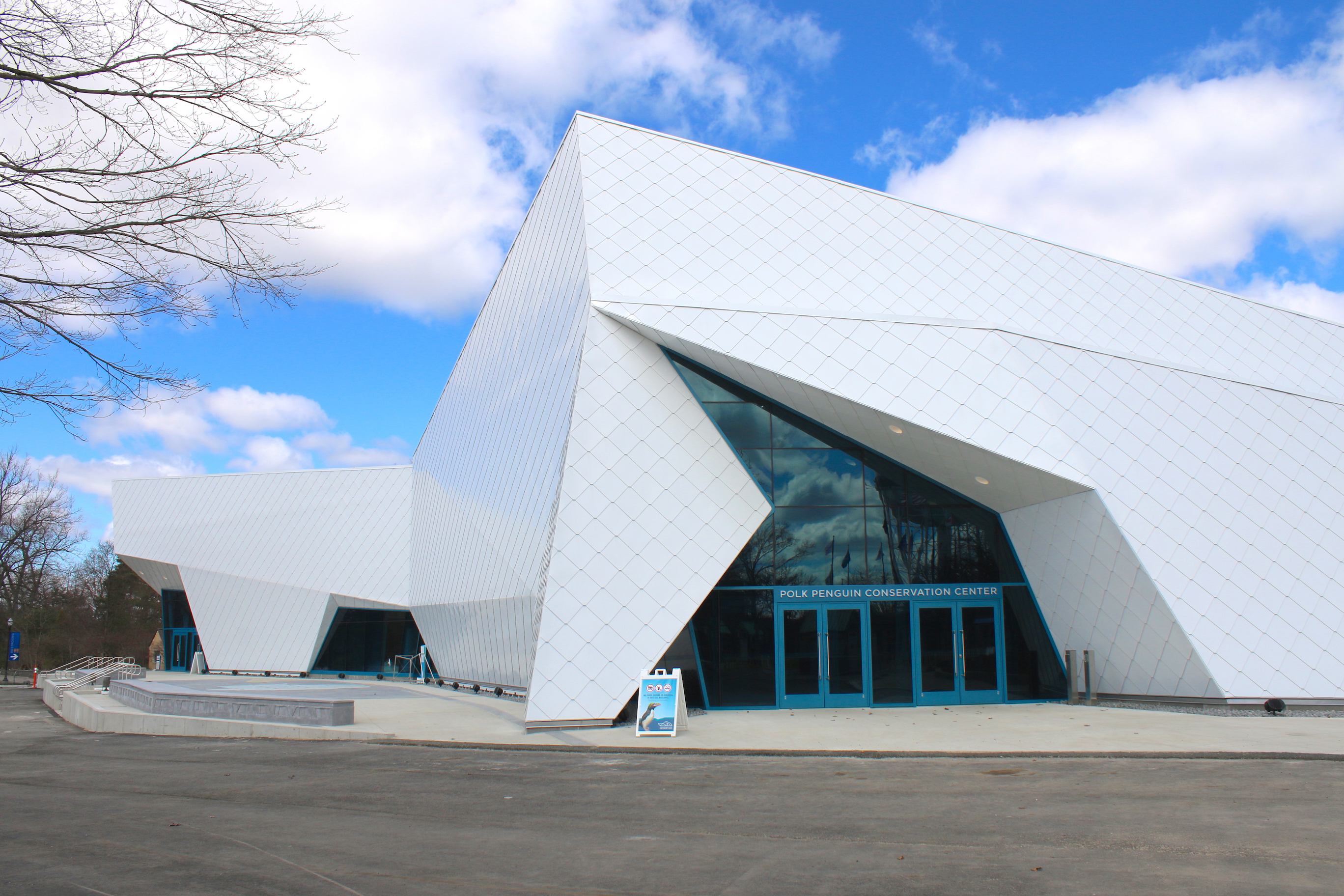
The Polk Penguin Conservation Center is not only a state-of-the-art facility for penguins – the largest of its kind in the world – but it also contains a wealth of educational information about Antarctic explorers, modern-day researchers, and the incredible, fragile ecosystems at the bottom of the Earth.

During a visit to this incredible facility, visitors first enter the South American Gallery and are “met” by Sir Ernest Shackleton and the crew of his legendary ship, the Endurance. Shackleton led the ill-fated 1914 expedition to complete a transcontinental crossing of Antarctica. The endeavor became a survival story when his ship became trapped, and eventually crushed, by ice in the Weddell Sea. A dock scene tells the incredible survival story of the Endurance crew.

As you descend the entrance ramps and venture further into the penguin center, you “board” Shackleton’s Endurance and cross the Drake Passage to Antarctica. You may be met with a calm sea at day, a starlit night sky or the Drake’s notorious rough seas. Continuing down the ramps, you cross the Antarctic Convergence, which occurs when the moist air above the Atlantic, Pacific and Indian Oceans meet the frigid air above the Southern Ocean. The mixing of warm and cold air causes the moisture to condense and create fog. As you make your way below deck, portholes show glimpses of Antarctic wildlife including orcas, krill and leopard seals.

After passing through the acrylic underwater tunnels and the Underwater Gallery, the path brings you to a world of ice. Spotlight on Science showcases the research of world-renowned polar ecologist and penguin expert Dr. Bill Fraser, head of the Polar Oceans Research Group, and the importance of sea ice for the Antarctic ecosystem. Food sources for many species in the Antarctic region require sea ice for survival. Understanding these ecological changes caused by the shifting formation of sea ice can help us protect ecosystems in the future.

Across the cavernous room, Ice Core Investigations allows guests to explore ice cores, an important tool in uncovering the history of the Earth’s climate. Ice cores are drilled and excavated from thousands of years of compressed snow that has turned to ice. The air pockets trapped between layers serve as a record of what gasses filled the atmosphere over time, allowing us to compare different periods of climate history.

Watch for calving glaciers as you climb the stairs to the Antarctic Gallery. A glacier is a very large piece of ice that is pulled across land by gravity like a slow conveyor belt. Reaching the ocean, ice breaks off from the rest of the glacier and falls into the sea during a process known as calving.

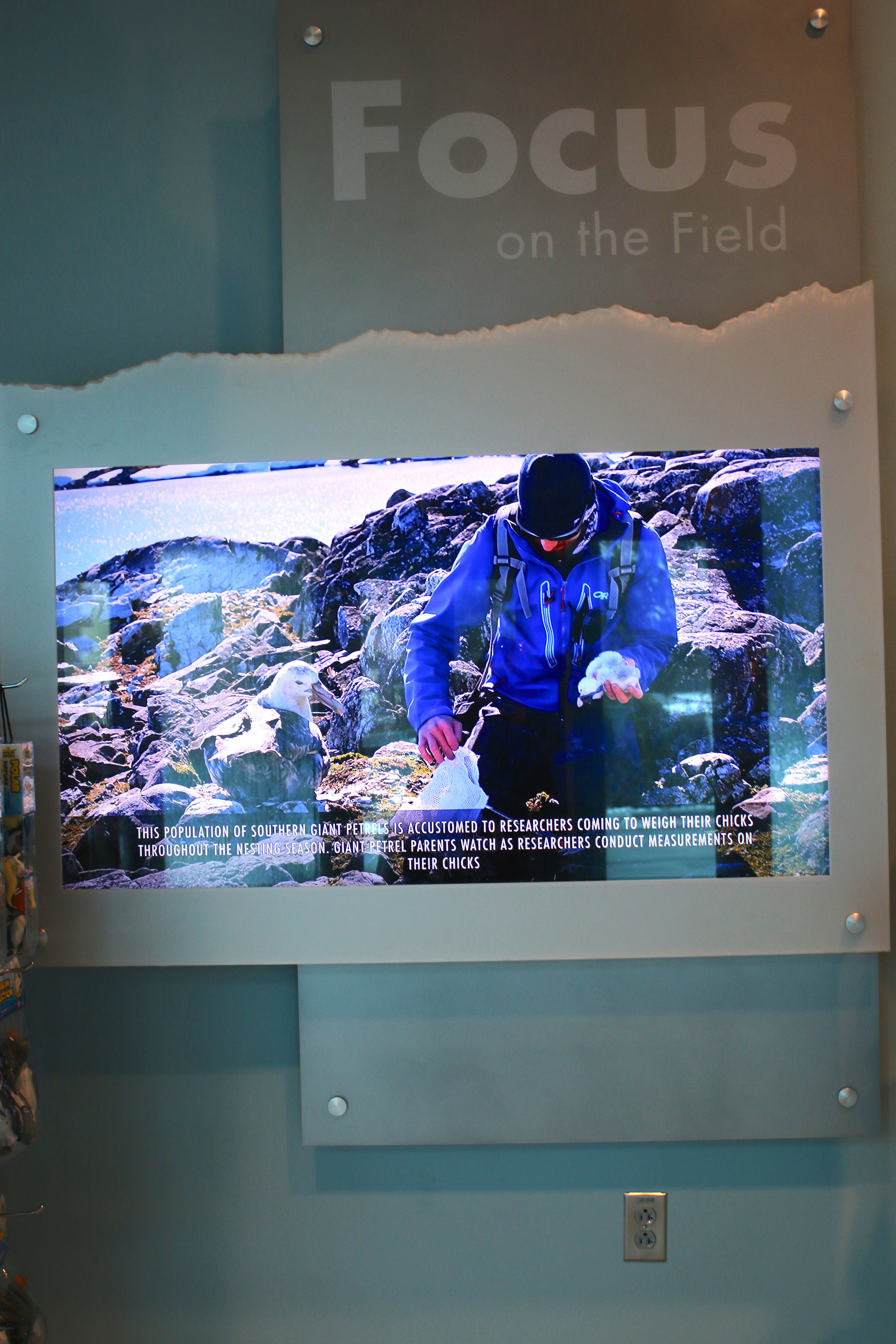
Just outside the Drake Passage Gift Shop, Focus on the Field features the Detroit Zoological Society’s own Matthew Porter, a bird department zookeeper who had the rare and extraordinary opportunity to spend the 2015-2016 austral summer doing field work for the Polar Oceans Research Group in Antarctica. Matthew studied adélie penguins, chinstrap penguins, gentoo penguins, brown skuas, south polar skuas and southern giant petrels.

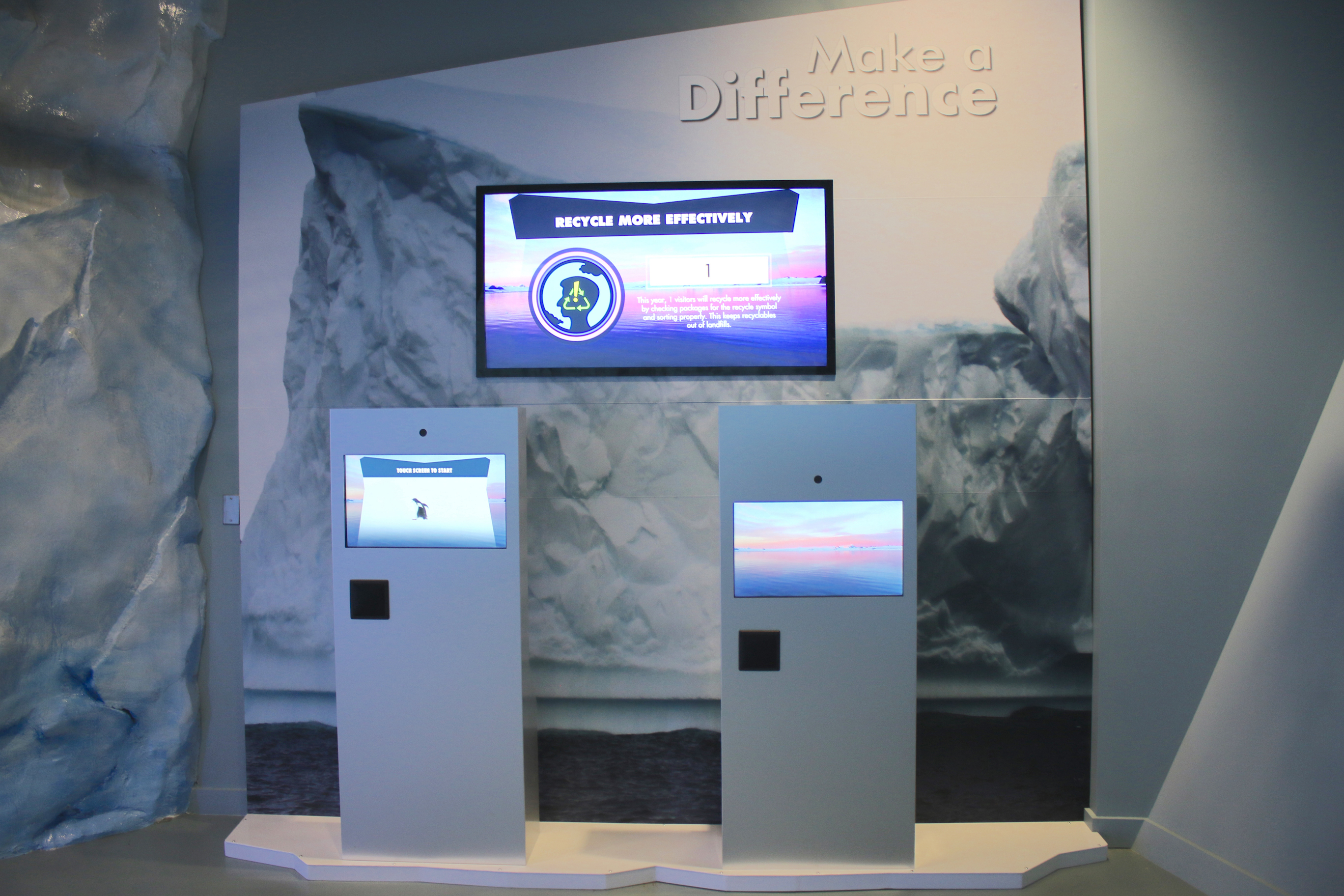
Learning about the Antarctic ecosystem while journeying through Polk Penguin Conservation Center may compel you to want to help in some way. Before exiting the penguin center, visitors have the opportunity to Make a Difference in the Antarctic Gallery. The Make a Difference kiosks guide you in finding ways to help. Whether it is buying your groceries locally, changing your home lighting to energy-efficient light bulbs, or riding your bicycle to work, you can make a difference with every step you take. The machines allow for you to take a picture of yourself, which is then placed onto a digital card that includes your pledge as well as facts about sustainability and the hashtag #MakeADifference. The digital card is emailed to you, with the option of also posting to social media sites to share with your friends and family.

All those who pass through the Polk Penguin Conservation Center have the ability and opportunity to join us in our mission of Celebrating and Saving Wildlife and leave a lasting, positive impact on the Earth.

– Claire Lannoye-Hall is a curator of education for the Detroit Zoological Society.

Animal Welfare: Educational Partnerships that Improve Animal Well-Being

In a number of instances, the work we do to enhance the welfare of the animals at the Detroit Zoo is a result of collaboration and partnerships. One such partnership is with Madonna University. Students enrolled in a class that is part of the humane education curriculum join us each semester to undertake projects that will benefit the animals.

We work with animal care staff to select projects suited to each species and the students are responsible for learning about that species to better understand the impact that their project will have on the animals’ welfare. The students are divided into three groups and each group is assigned a particular project. The groups work with mentors from the Life Sciences division and over the course of several weeks, complete their project. On the last day, all of the students get the chance to see the results of all of the projects in order to gain more appreciation of the various ways in which we can positively impact animals living in the care of humans.

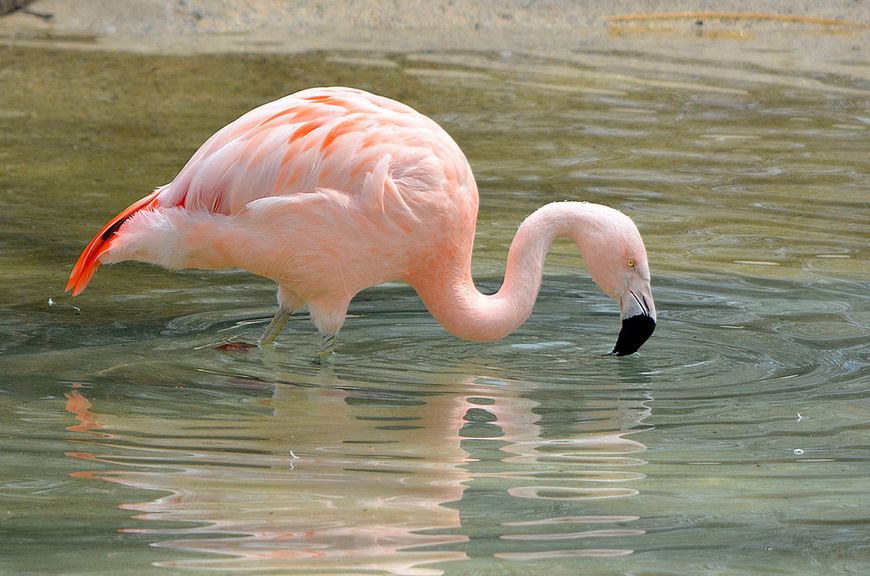
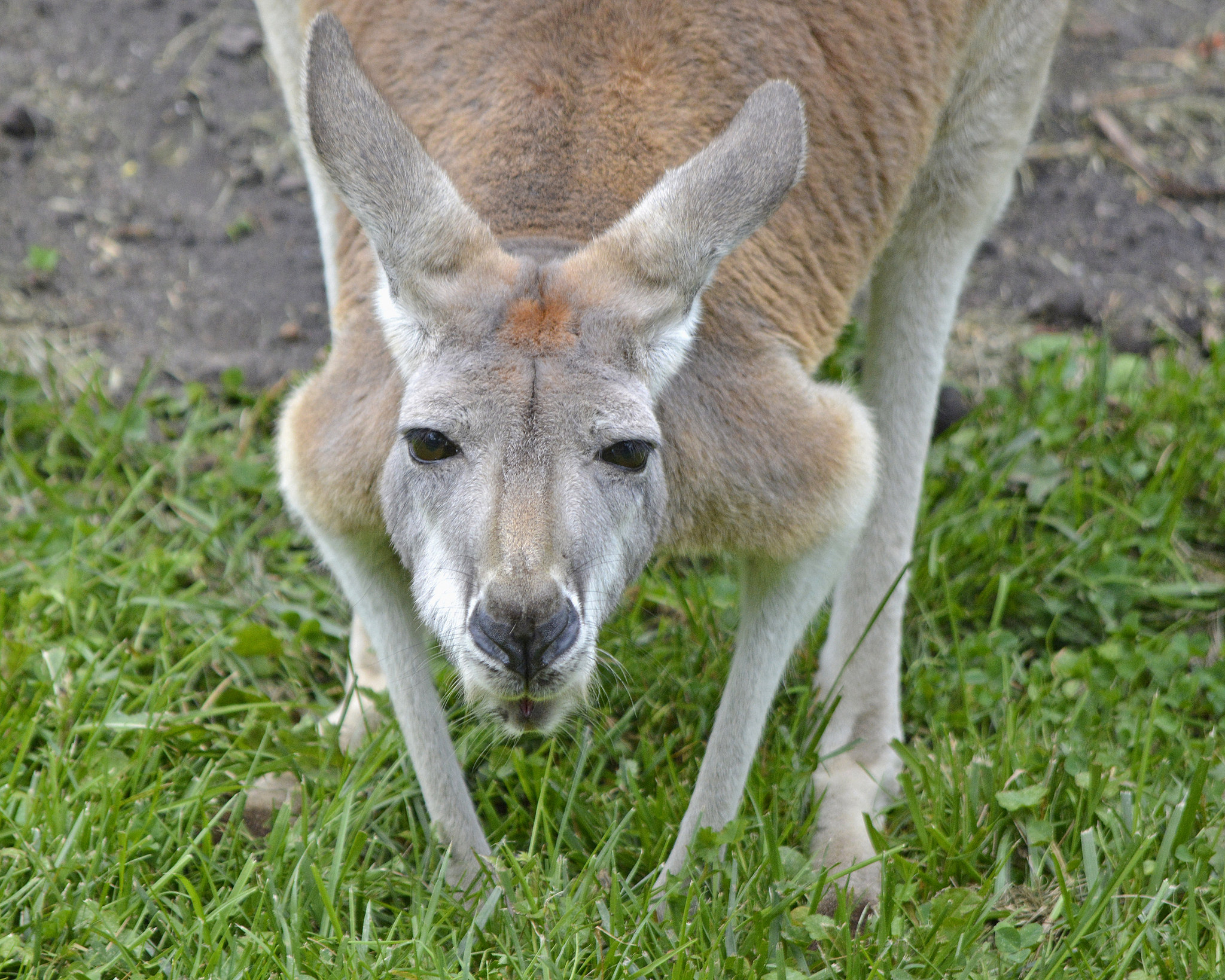
Over the course of the last few years, the Madonna University students have participated in projects benefiting warthogs, amphibians, giraffes, gorillas, reptiles, rhinos and birds living in the Free-Flight Aviary, to name a few. This year, the students will help us to modify habitats for giant anteaters, flamingos and kangaroos and wallabies in the Australian Outback Adventure. This will involve the creation of nesting areas for the flamingos, as well as planting shrubs for the anteaters and kangaroos in order to add more complexity to their environments and create additional areas of shade. These types of modifications are important to ensure that animals encounter novelty and have more opportunities to display species-typical behaviors.

This wonderful partnership is an example of how the Detroit Zoo provides educational and inspirational opportunities for students and is always finding ways to design engaging habitats for the animals.

– Dr. Stephanie Allard is the Director of Animal Welfare for the Detroit Zoological Society and oversees the Center for Zoo Animal Welfare.

Education: Constructing School Kitchens in Peru

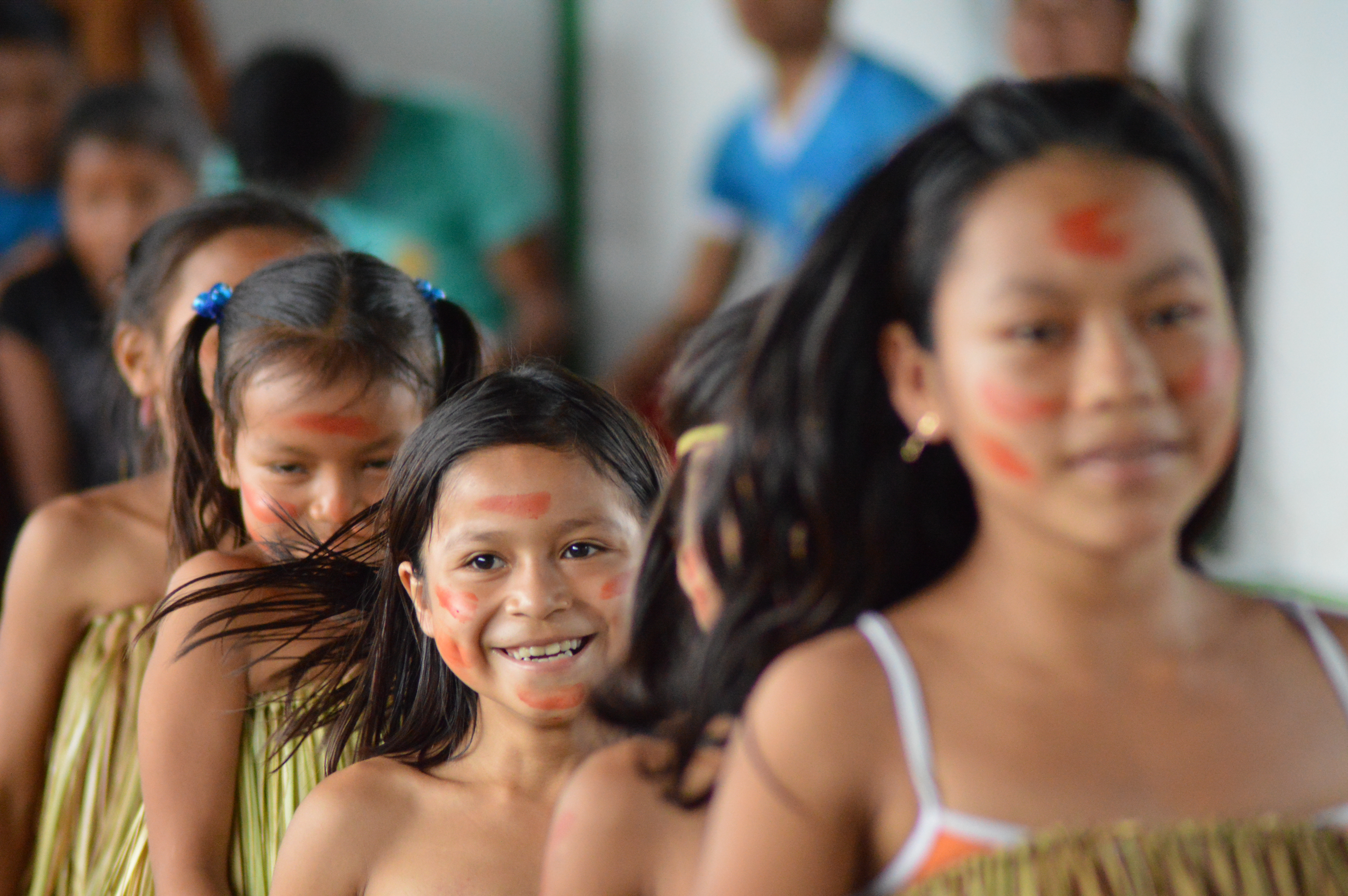
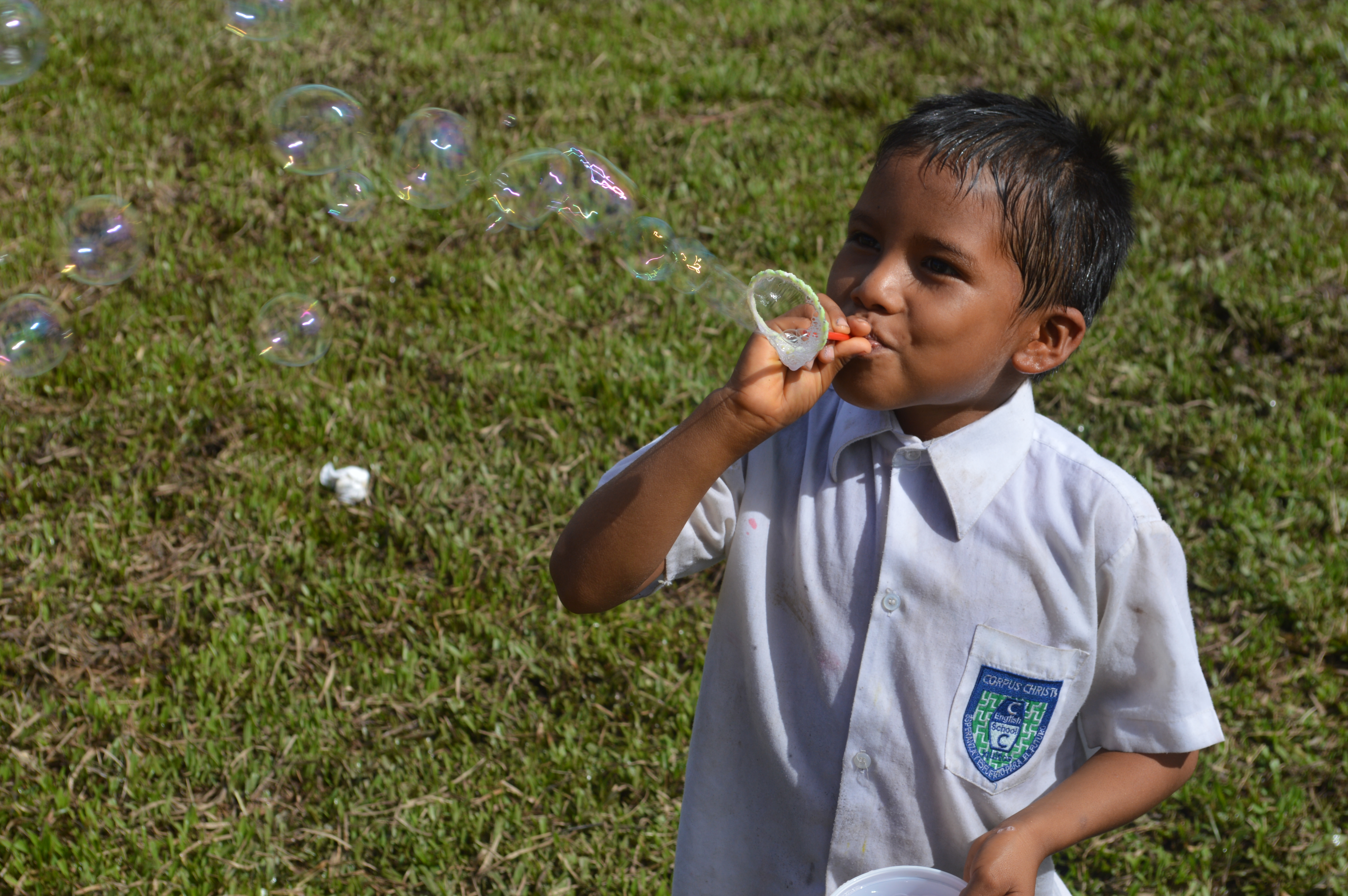
During the second week of our visit to Peru as part of the Adopt-A-School program, we continued to deliver donated school supplies to our final eight communities along the Amazon and Napo rivers. Students and teachers received pens, pencils, rulers, notebooks, textbooks and more that will assist with making learning accessible and achievable. The students showed their appreciation for this invaluable academic support by thanking the volunteers and giving presentions cultural performances, many of which include ecological messages.

As part of the Adopt-A-School program, community partners must commit to following these requirements:

  • Children must go to school regularly
  • Conservation and preservation of the Amazon Rainforest must be standard community practice
  • Communities must be kept clean
  • Productive projects such as medicinal gardens or crops must be maintained in community spaces

Creating reverence and respect for the natural world starts in childhood, is re-enforced through schools and grows into adulthood. In some of the long-standing Adopt-A-School communities, some former program participants now have children within the program, further expanding conservation and preservation as a family value.

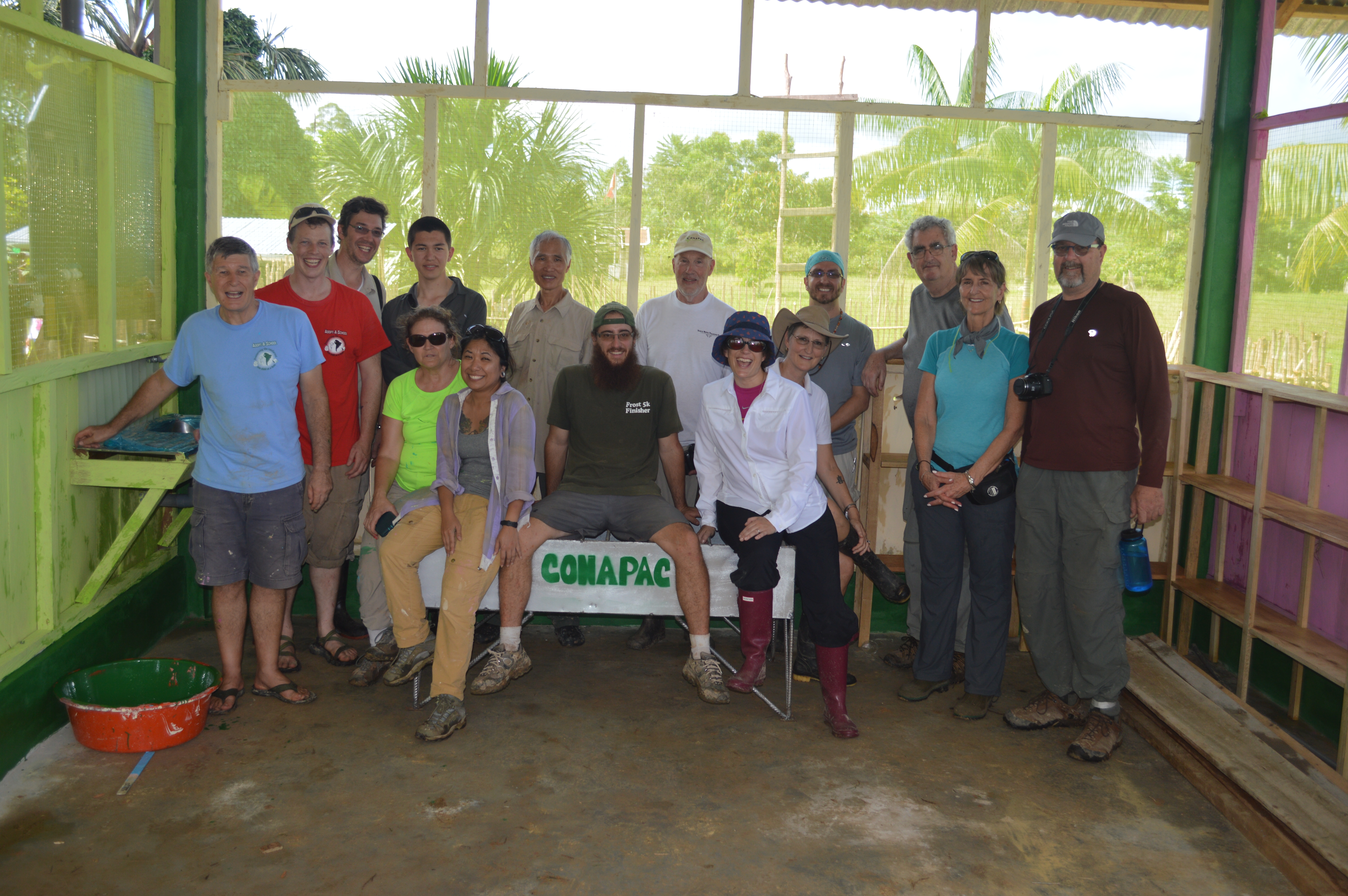
In addition to school supply deliveries, the second week of the Adopt-A-School visit includes a service project. This year’s project is taking place at Centro Unido and includes constructing a school kitchen for the government-funded Qali Warma (Quechua for “strong child”) meal program. This will allow parents to cook both breakfast and lunch every day at school to further incentivize attending class by providing meals, while making learning easier by removing hunger as a distraction.

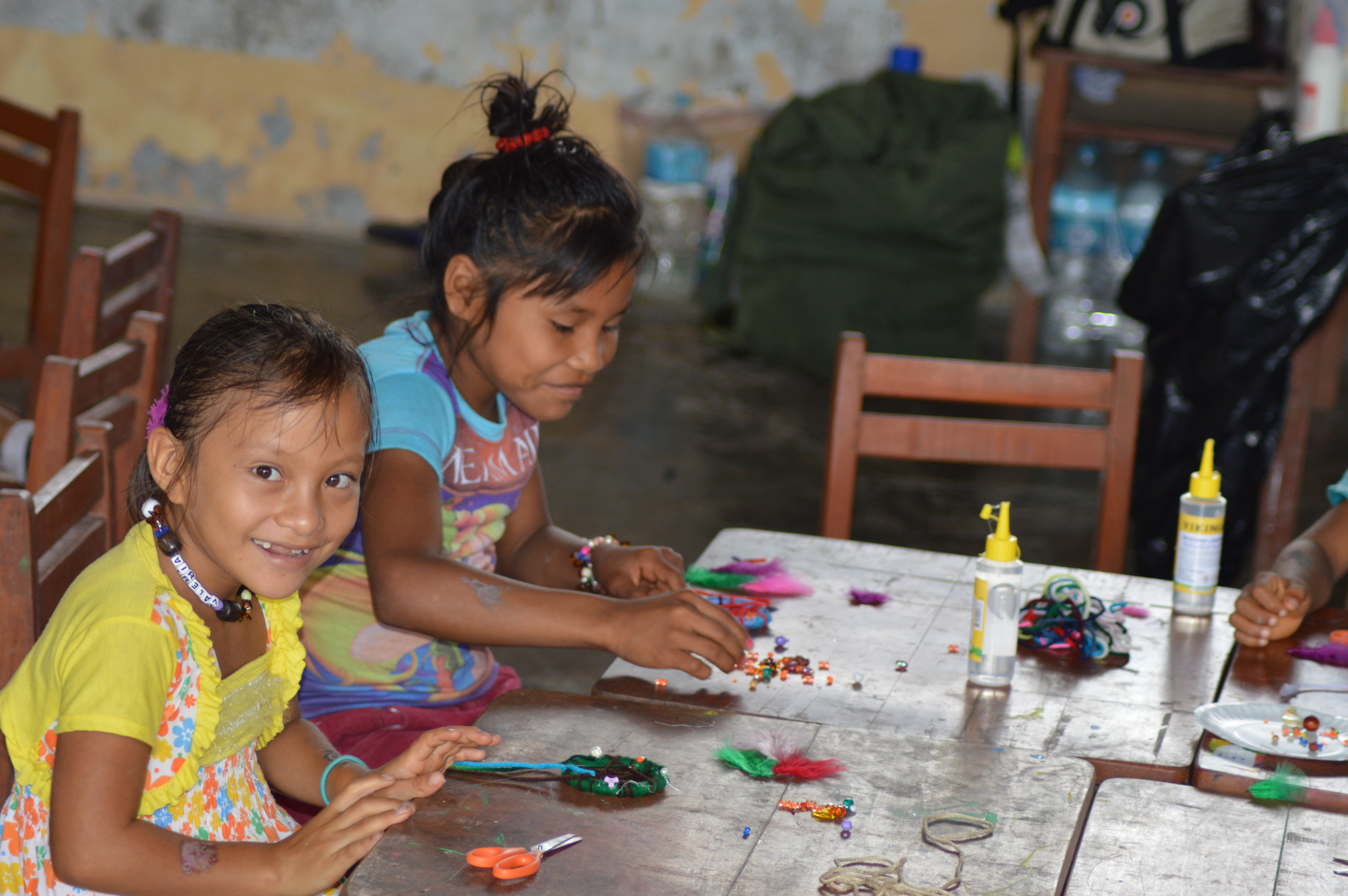
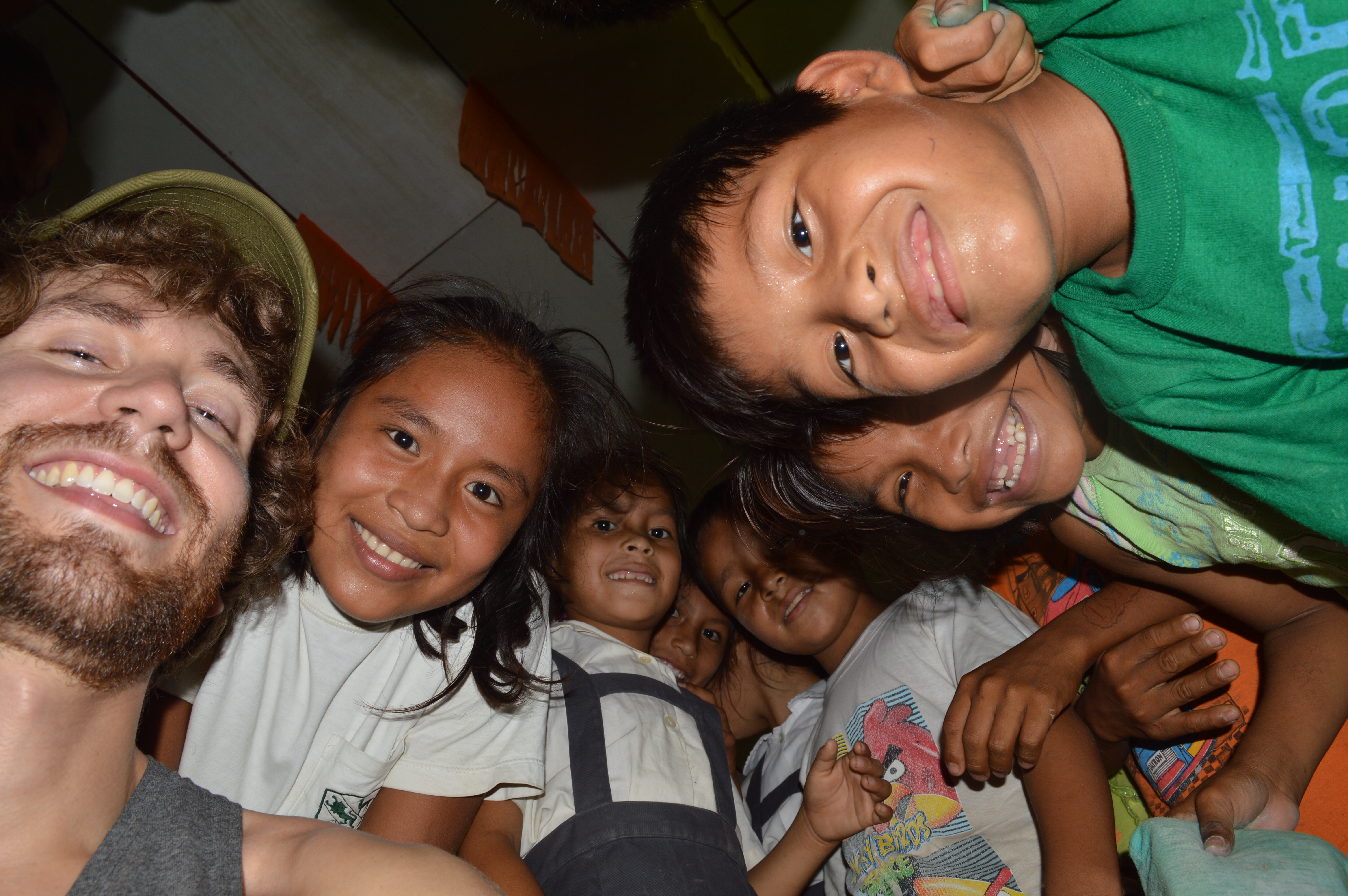
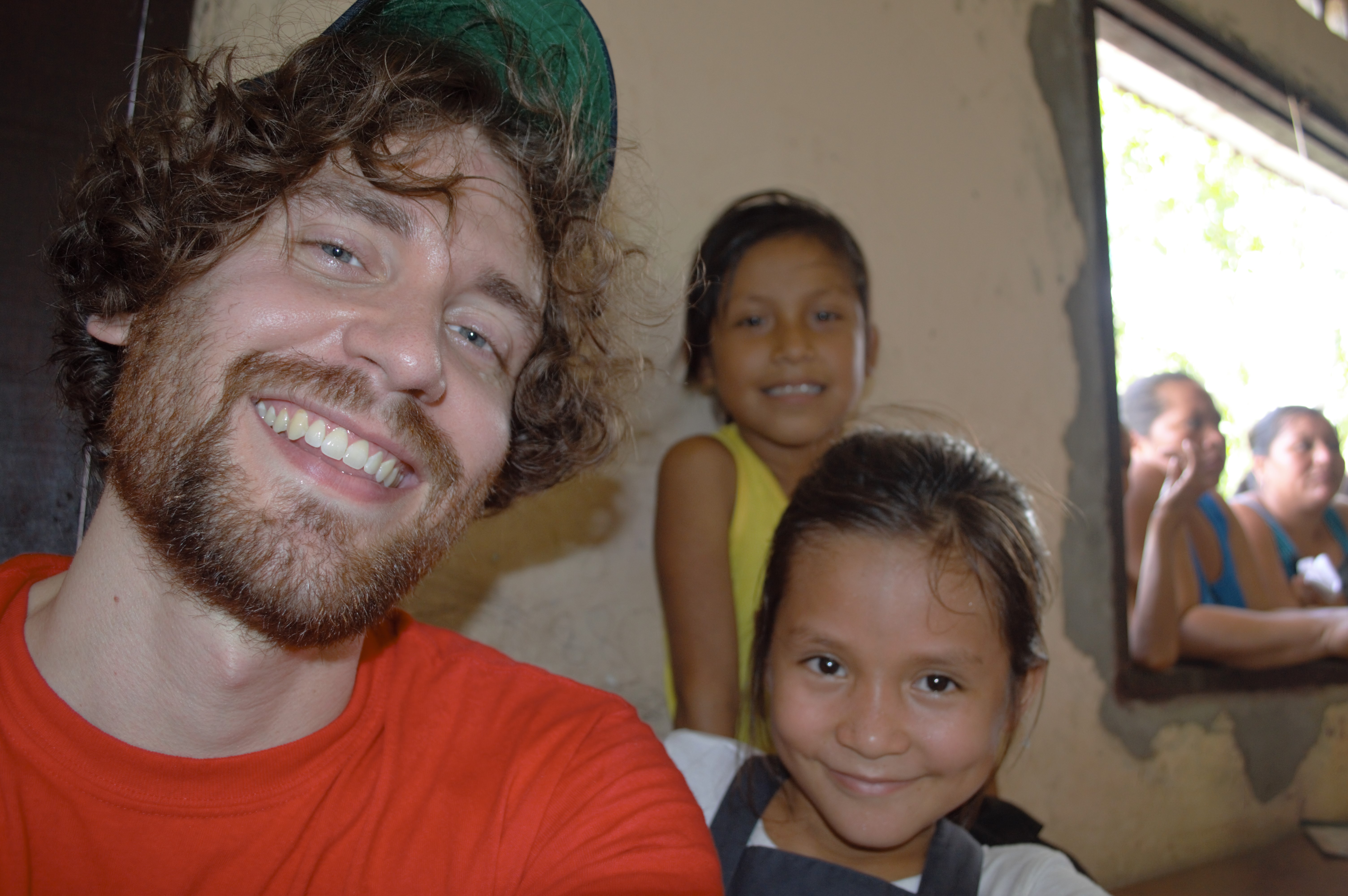
While construction is going on, some volunteers work with the children, providing individualized attention that is hard to come by in a classroom setting. We do many crafts and art projects with the students, exposing them to different learning experiences that are sometimes missing in the rote learning style of Peru. This opportunity to interact one on one with students creates new friendships and many memories.

As this Adopt-A-School volunteer trip comes to an end, it is hard to say goodbye to all of the people we’ve met in Centro Unido as well as the volunteers who have committed their time, energy and finances to making this program a possibility. A big thank you goes out to all who made the 2016 Adopt-A-School school supply deliveries and service project a great success!

Are you interested in preserving the rainforest, one child at a time? For more information on Adopt-A-School donations and volunteer opportunities, please visit http://detroitzoo.org/support/give/adopt-a-school.

– Adam Dewey is an education specialist for the Detroit Zoological Society.

Veterinary Care: Ultrasound Exams for Frogs

Spring is in the air, and as I hike and bike the trails in southeast Michigan I find myself excited to be immersed in the lovely chorus of spring peepers and tree frogs as they prepare for this year’s breeding season. This also means it won’t be long until it is amphibian breeding season at the Detroit Zoo! Each year, the veterinary team works closely with our amphibian staff to provide support for our amphibian breeding programs. Our curators and keepers set up special breeding areas and adjust the temperature, light cycles, humidity and water access to simulate conditions in the wild and encourage natural breeding. They even set up simulated rainfall and play tape-recorded sounds of breeding calls collected from the wild.

Even with all of this, some of our endangered amphibians need a little more help to breed successfully.   At the Detroit Zoo, we have over a decade of experience administering special hormones to Wyoming toads and Puerto Rican crested toads to help with breeding. We have been very successful with these programs; two years ago the amphibian staff sent 3,914 Wyoming toad tadpoles to Wyoming and last year they sent 22,571 Puerto Rican crested toad tadpoles to Puerto Rico for release into their native habitat. This is important work and we are proud to be able to help.

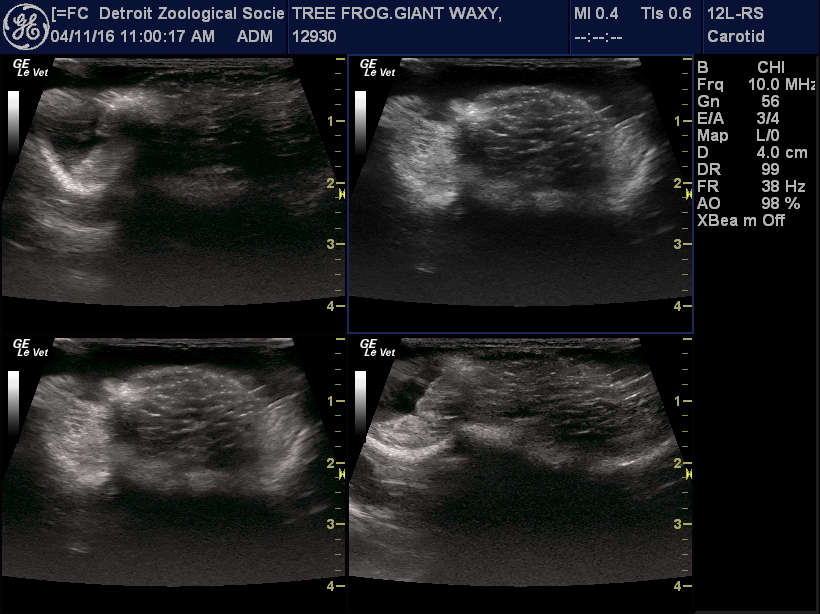
As zoo husbandry staff and amphibian reproductive experts have gained expertise, it has become clear that not all amphibians respond the same way to changes in their environment and established hormone protocols. Two years ago, we purchased a high frequency ultrasound probe, and we have found that we can monitor the appearance of the ovaries and follicles as they develop and mature within female frogs and toads. This provides a very powerful tool for understanding the impact of the husbandry and hormone treatments that we apply, and will allow us to establish assisted reproduction methods for other endangered species.

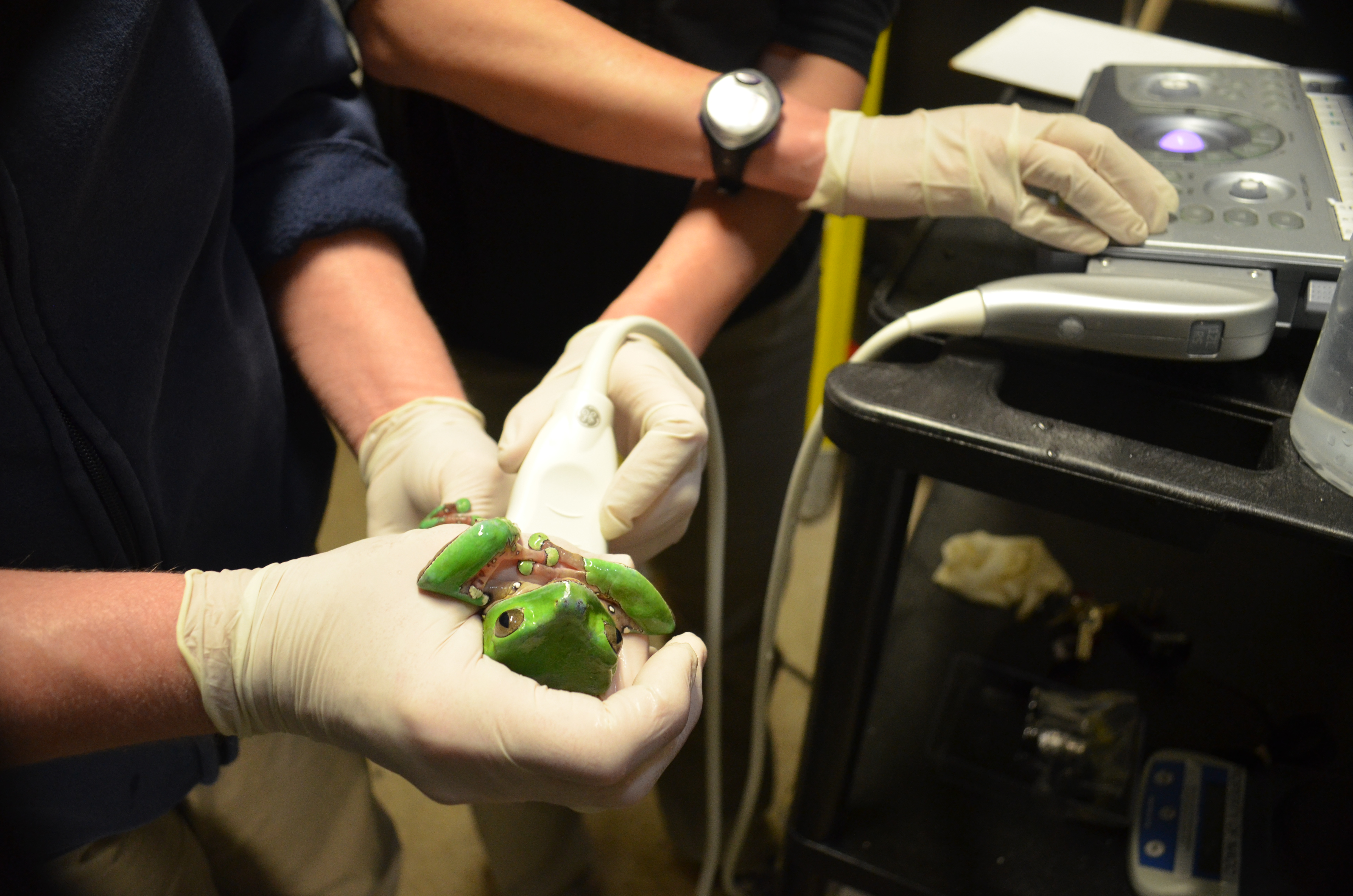
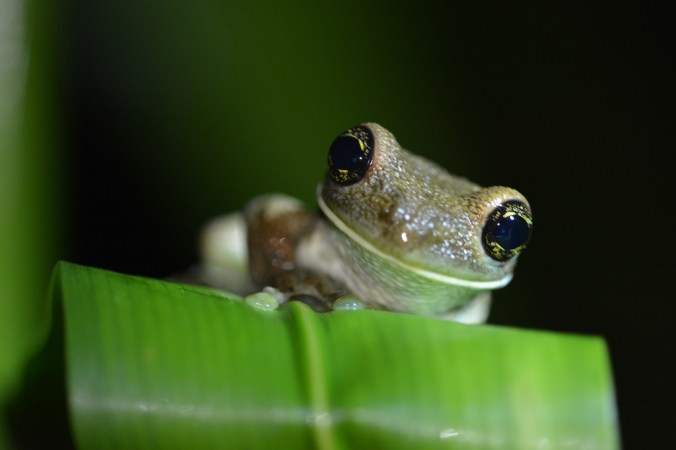
This season we have some exciting things planned, and have started the early work to check the females we are hoping to breed. Last week, we performed ultrasound exams on our three female giant waxy tree frogs, and were able to see that they are all developing large, follicle-filled ovaries. Based on the appearance of the follicles, we think that they will be ready to breed in the next few weeks to a month.

This week, we will be conducting ultrasound exams on our endangered Mississippi gopher frog females. Once we see their degree of follicle development, we’ll be able to plan a hormone and husbandry strategy for this year’s breeding season. Hopefully we will have exciting news to share in the coming months!

– Dr. Ann Duncan is the Director of Animal Health for the Detroit Zoological Society and oversees the Ruth Roby Glancy Animal Health Complex.

Amphibian Conservation: Breeding Puerto Rican Crested Toads

April is an important time for the Detroit Zoological Society’s amphibian conservation programs. Three of the four animals we work with at the National Amphibian Conservation Center (NACC) that are a part of Species Survival Plans (SSP) are preparing to take part in precisely planned and scheduled breeding events. The outcome is the release of captive-born offspring into the wild to aid in the increase of their populations.

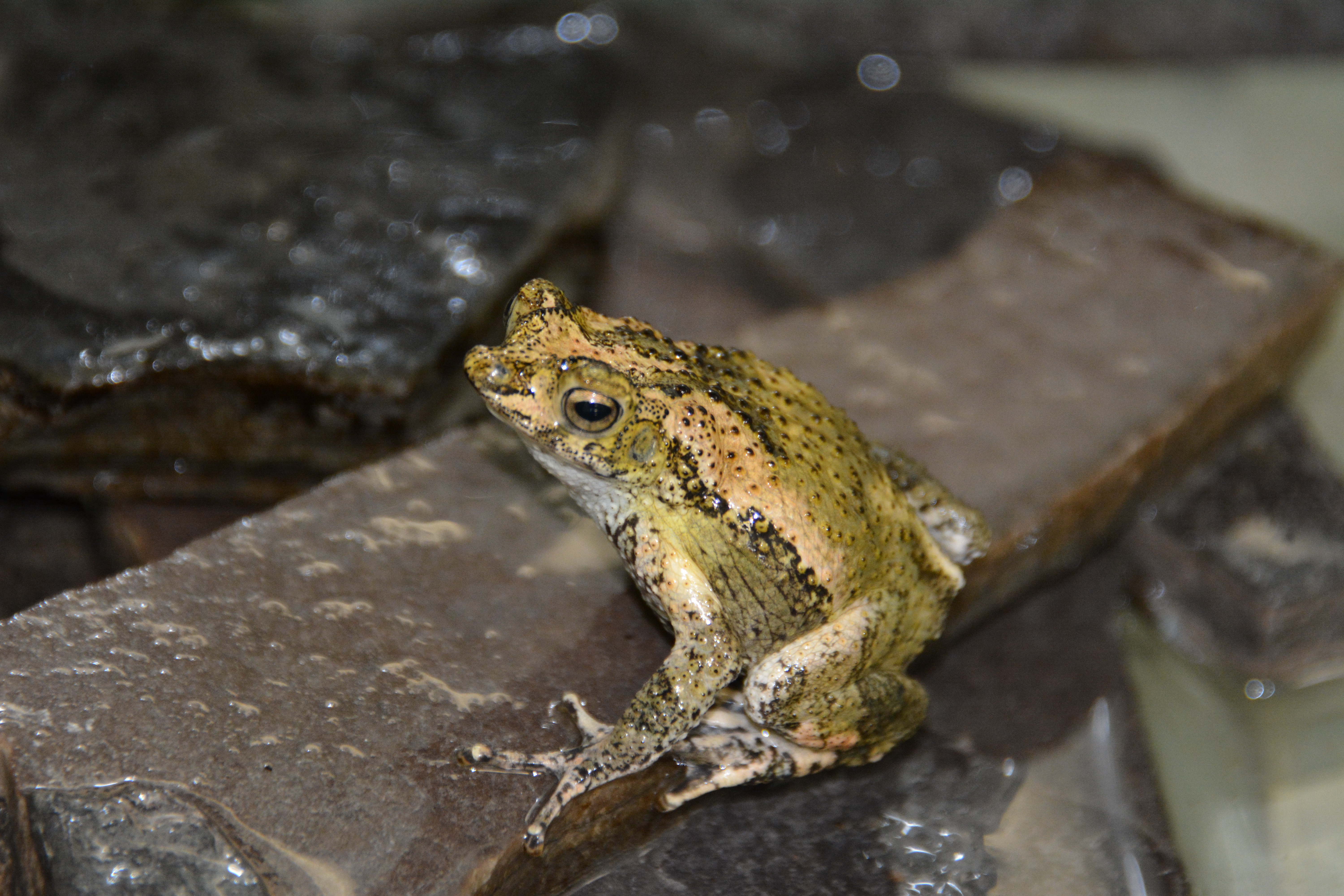
First up for the season is the Puerto Rican crested toad, Peltophryne lemur. The PRC toad, as we like to call them, has been part of a well-managed SSP since 1984. Habitat loss and competition from the invasive cane or marine toad (Rhinella marina) are believed to have been primary causes for the toad’s decline. Listed as critically endangered by the International Union of the Conservation of Nature (IUCN), collaborative efforts by the Associations of Zoos and Aquariums, U.S. Fish and Wildlife Service and the Puerto Rico Department of Natural and Environmental Resources have aided the recovery of this toad in the wild. More than 300,000 captive-bred tadpoles produced by 20 zoos have been released to the wild since 1982. Since the year 2000, the Detroit Zoological Society has produced more than 45,000 tadpoles for this program. In 2015, three clutches of eggs laid produced 22,571 tadpoles for release – the largest amount the Detroit Zoo had ever sent. Ongoing research and the creation and protection of pond habitats have also assisted in the recovery of this toad in its natural habitat.

You may be wondering what it takes to produce thousands of tadpoles from toads half the size of the palm of your hand. The breeding season starts with the assignment of four breeding pairs from the SSP. Each toad in captivity is identified and tracked using a studbook. Specialized software chooses pairs of toads that will produce the most genetically diverse offspring. By mid-March, we know who these eight toads are and we can begin preparing them for breeding.

Each toad must be easily identifiable – if you think all toads look alike you’ll be surprised to know that wart patterns and throat markings are very unique, although reading glasses are sometimes needed to make the proper ID. Toads are conditioned by slightly cooling and drying their environments out for a month-long period. A thermostat-controlled refrigeration unit keeps the toads cooled precisely at 66 degrees Fahrenheit. While the toads are “sleeping”, their primary zookeeper works diligently on preparing the breeding tanks where the pairs will breed and the eggs will develop. At this same time, veterinarians prepare a schedule of specialized breeding hormones that will further assist in ensuring that eggs are laid and fertilization happens at the right moment.

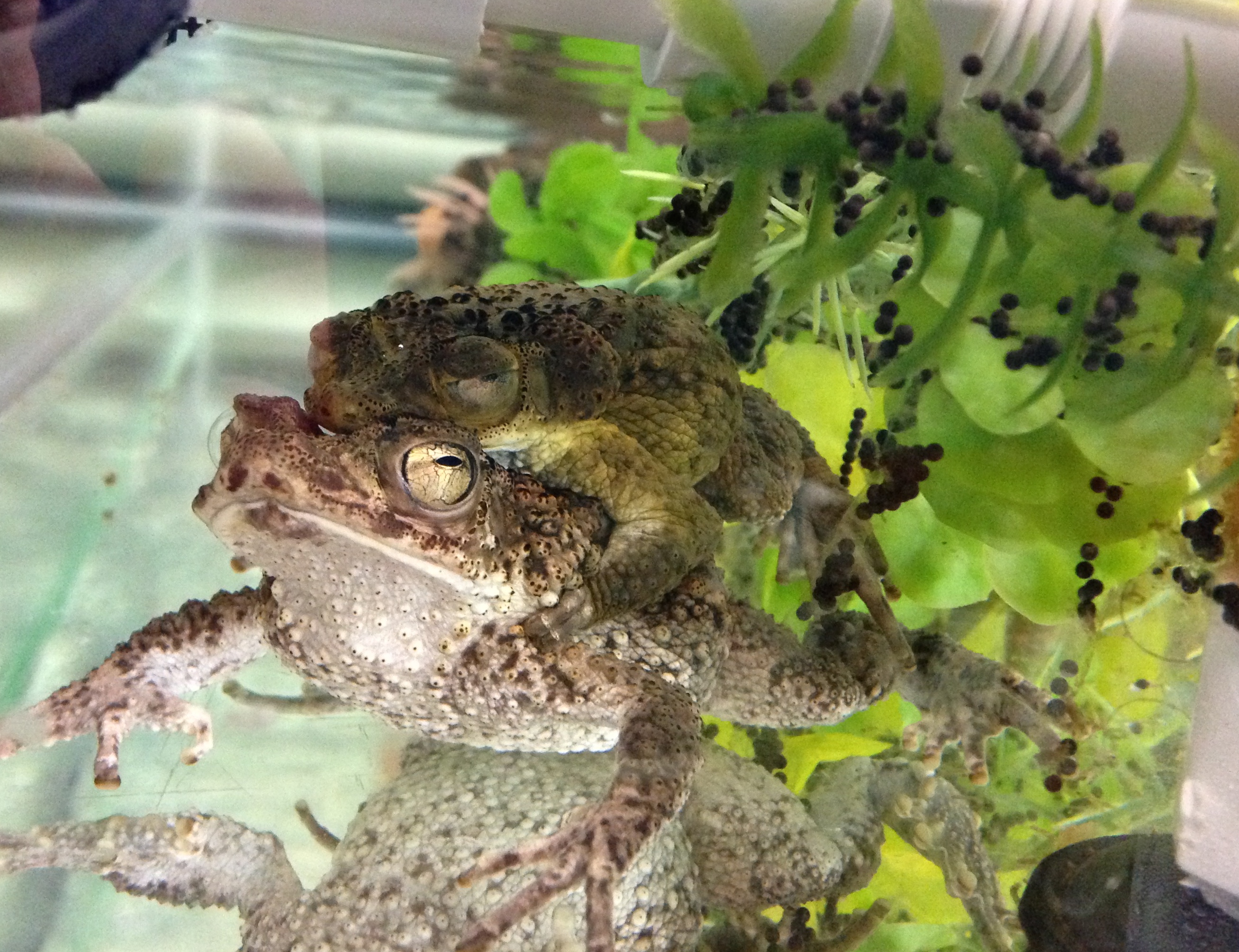
Upon their exit from cooling, they return to normal husbandry to warm up and eat for a few days. Breeding calls of male toads are played to encourage breeding behaviors. Males are first to go into the breeding tanks, followed hours later by the females. If all the preparation works, pairs of toads will be in amplexus – which happens when a male is positioned on top of a female and he squeezes her to encourage egg-laying – before we leave for the evening, followed by a morning of tanks full of eggs.

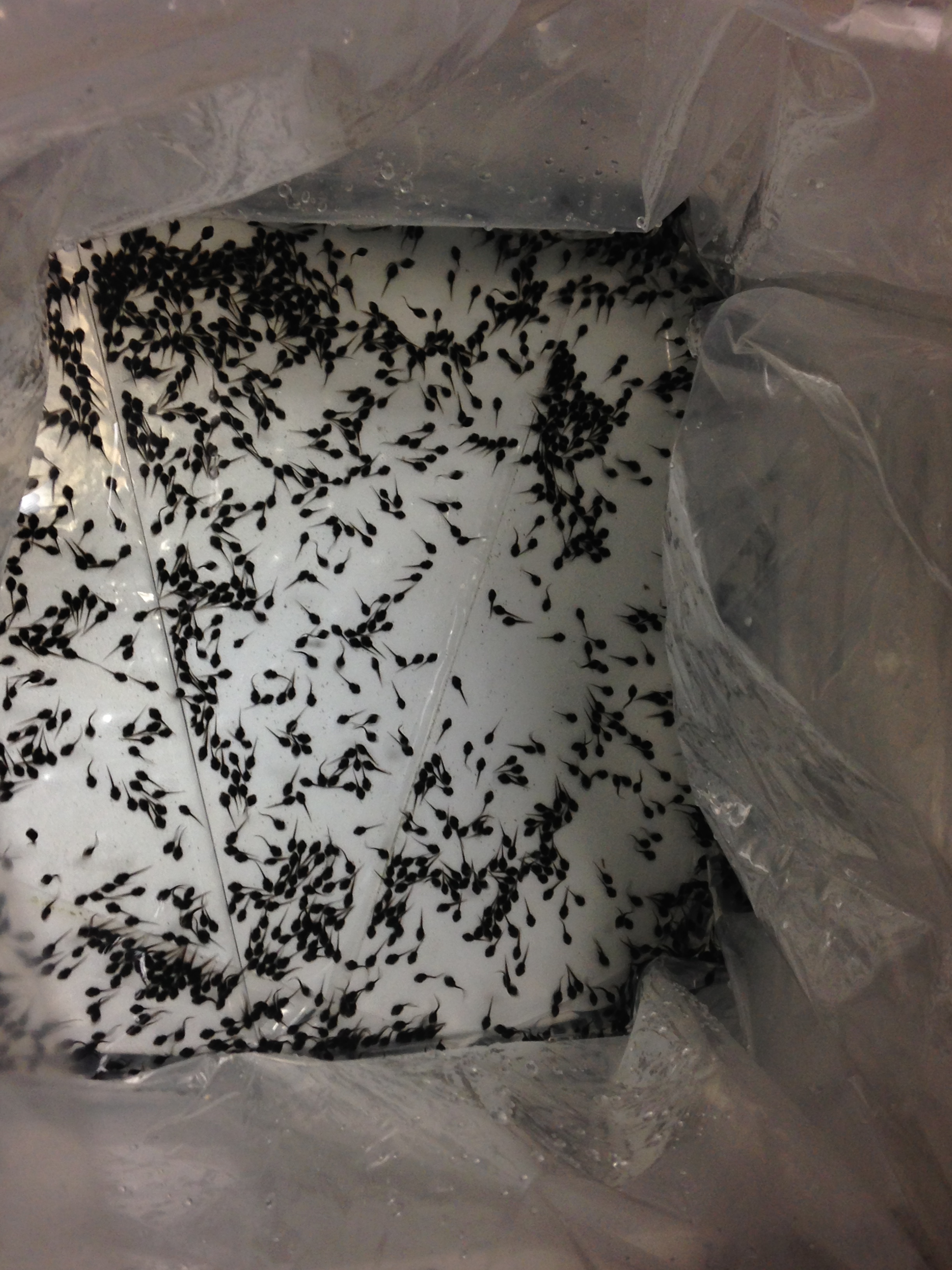
It takes two to three days for eggs to hatch and another couple of days for tadpoles to begin swimming around and actively eating. Tadpoles can be some of the hungriest creatures you will ever encounter. Keepers spend the next 10 days keeping them fully fed by offering them algae pellets, powdered diets and romaine lettuce sometimes three times a day. At the same time, all those foraging tadpoles create a lot of waste, so keepers spend the rest of their time keeping their water clean with frequent water changes.

During all of this, we keep a very important date in the backs of our minds – the last big event in our PRC toad breeding season. Any facility that breeds the PRC toad needs to ship them to Puerto Rico for release on the same date. The release of the tadpoles is timed with the season in which the tads would grow and develop the best in the wild. Tadpoles also need to be shipped at a certain age, before they get too big and begin to develop appendages.

Amphibian staff can spend well over 24 hours collectively counting and packing the tadpoles into Styrofoam-protected shipping boxes. Heavy-duty fish shipping bags are used, doubled up and filled with oxygen to keep tadpoles healthy and safe on their trip to Puerto Rico. Approximately 24 hours later, they will reach their new home in a pond located in a well-protected forest in Puerto Rico. As they develop and grow, they will add to the wild population and one day, hopefully, participate in creating many more thousands of tadpoles!

Rebecca Johnson is the associate curator of amphibians for the Detroit Zoological Society.

Education: Preserving the Rainforest, One Child at a Time

We’re off to Peru for the 24th year of Adopt-A-School, a program that empowers the citizens of the Amazon rainforest to conserve and protect this globally vital ecosystem.

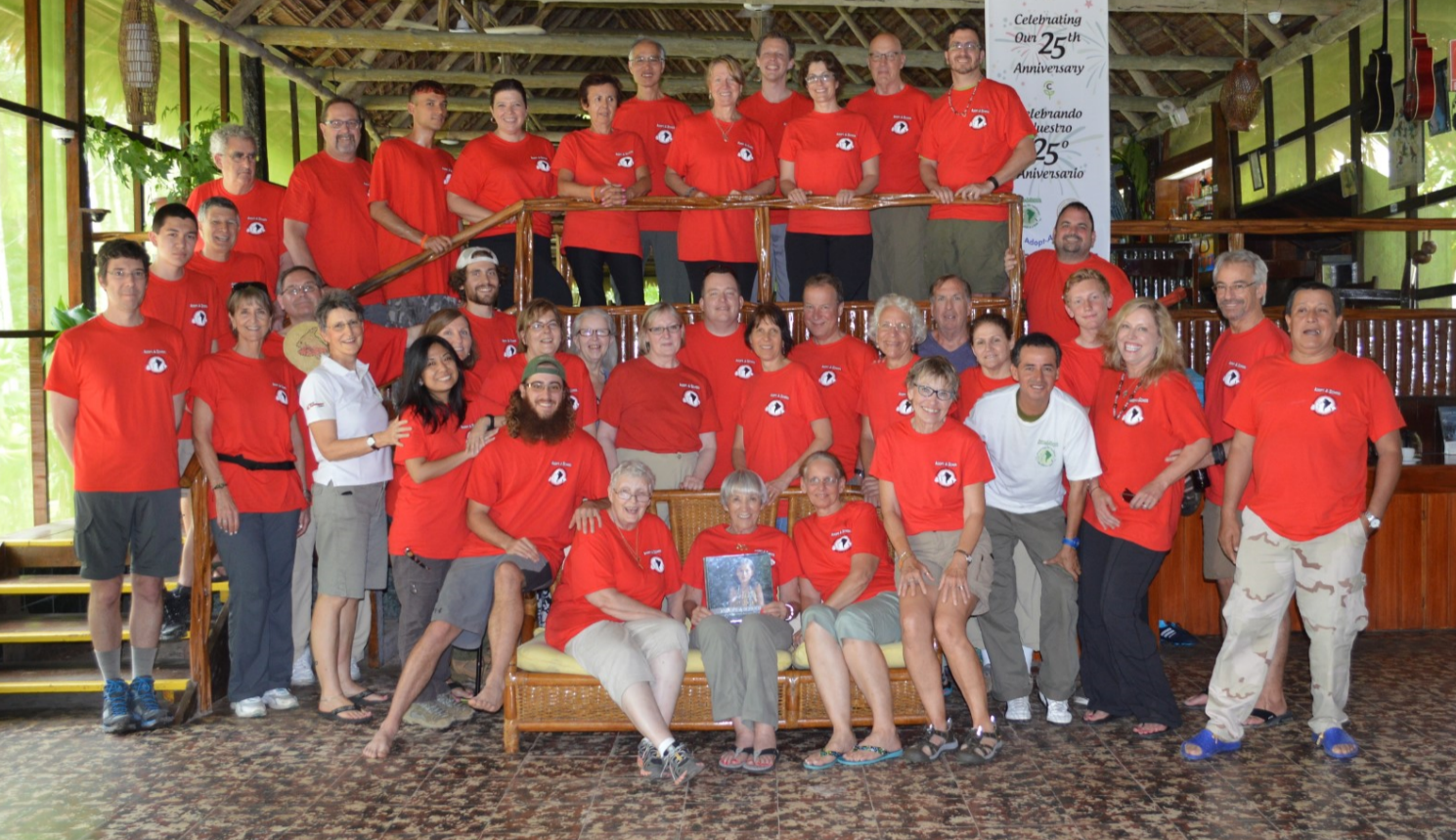
For this journey, I am joined by fellow Detroit Zoological Society Education Specialist Ben Connor Barrie and 20 volunteers from the U.S., Canada, and as far as Australia. We will be making deliveries of school supplies to communities along the Amazon and Napo rivers.

An average day begins with us packing the four “rapidos”, or fast boats, with school supplies. The volunteer team splits up into small groups and each heads out in a different direction to deliver the supplies. The children often come running to the riverbanks to greet us while adults play traditional Amazonian music on drums and flutes. Once the school supplies are moved into the schools, we begin the ceremonies with speeches, dances and more music.

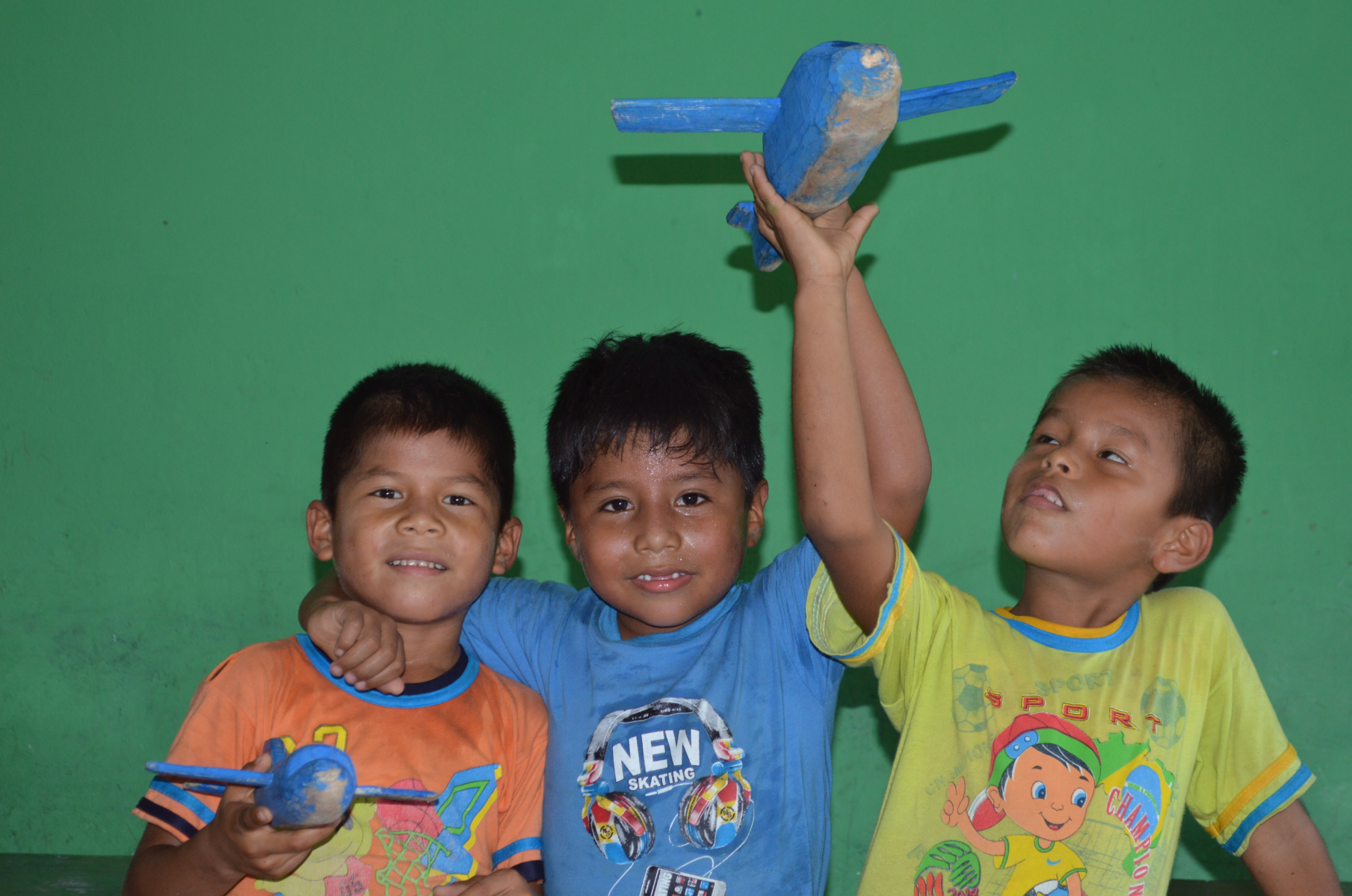
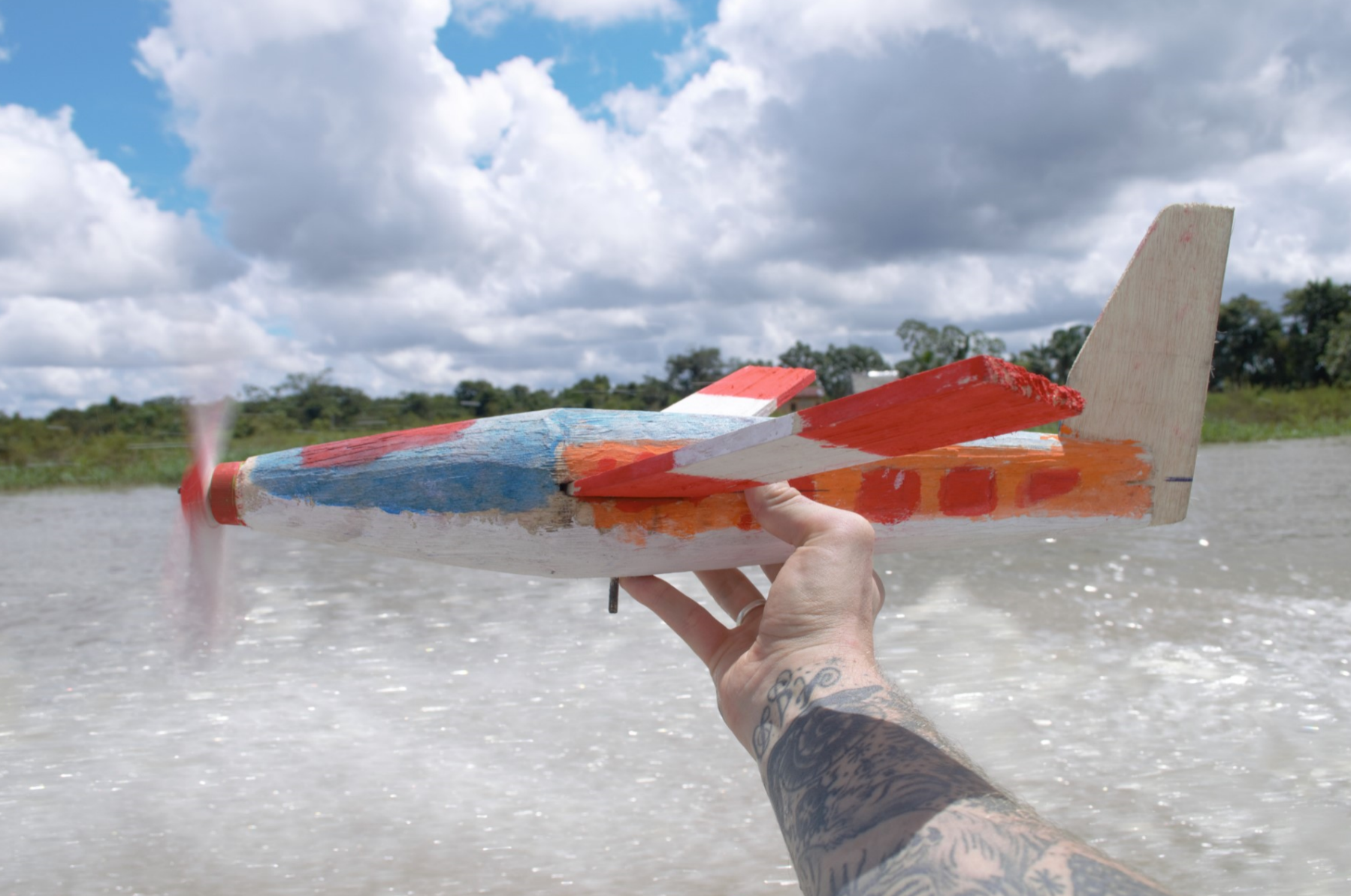
During one of these deliveries, I was lucky to return to a community that is very special to me. Pucallpa is home to many students I’ve become attached to, as it was the first location I traveled to on a service project three years ago. During my last visit to Pucallpa, I had some down time after program evaluations and took up with a few elementary-aged boys who were playing with their balsa wood airplanes. We zoomed around making plane noises through the school and into the schoolyards. One young boy remembered this and wanted me to do it again. He disappeared for a few moments before returning with one of his balsa wood airplanes. He handed it to me and said it was a gift for me. This was by far one of the most special gifts I have ever received from anyone, as it was truly given from the heart.

The global importance of this region cannot be stated enough. It is home to a massive variety of life and produces much of the world’s oxygen. The people who call this region of the world home are crucial partners in conserving the Amazon rainforest. This international collaboration is preserving the rainforest, one child at a time.

For more information on Adopt-A-School donations and volunteer opportunities, please visit http://detroitzoo.org/support/give/adopt-a-school.

– Adam Dewey is an education specialist for the Detroit Zoological Society.

Amphibian Conservation: Species in Crisis

Let’s focus our attention on the smallest residents living at the Detroit Zoo: amphibians. No other class of vertebrates has the ability to adapt and evolve as quickly in our ever-changing planet as amphibians. They have used every reproductive strategy and developed life stages influenced by environmental factors; they can be colorful, camouflaged and cryptic, regenerate limbs, and have been on Earth for the last 200 million years.

Marcy Blog 4

Currently, amphibians are the most threatened group of animals in the world with 40 percent of all species at risk. This crisis is considered the greatest extinction event in history; it’s also the Earth’s sixth mass biological extinction. While previous mass extinctions have been driven by natural planetary transformations or catastrophic asteroid strikes, the current die-off can be associated directly with human activity. This epoch started when human activities began having a significant impact on the Earth’s ecosystems.

The Detroit Zoological Society (DZS) participates in Global Assessments, which provide a comprehensive inventory of the conservation status of biological species as well as a critical dataset for evaluating the health of key elements of biodiversity and identifying threats to their survival. Newly described species emerge yet extinctions are occurring at an even faster rate. Climate change is the most dramatic cause of declines, and it affects amphibians both directly and indirectly, as reproduction is dependent on temperatures and seasonal transitions. Low pond levels expose embryos to more ultra violet (UV) light and UVB radiation is harmful to many species. The shorter periods and earlier opportunities for breeding ultimately reduce the chances of success. Amphibians are also dependent upon water, which makes them vulnerable to desecration when ponds dry too quickly. But since amphibians rely on the environment, they also are excellent storytellers. They can help us determine where pollutants are and if there is misuse of habitat.

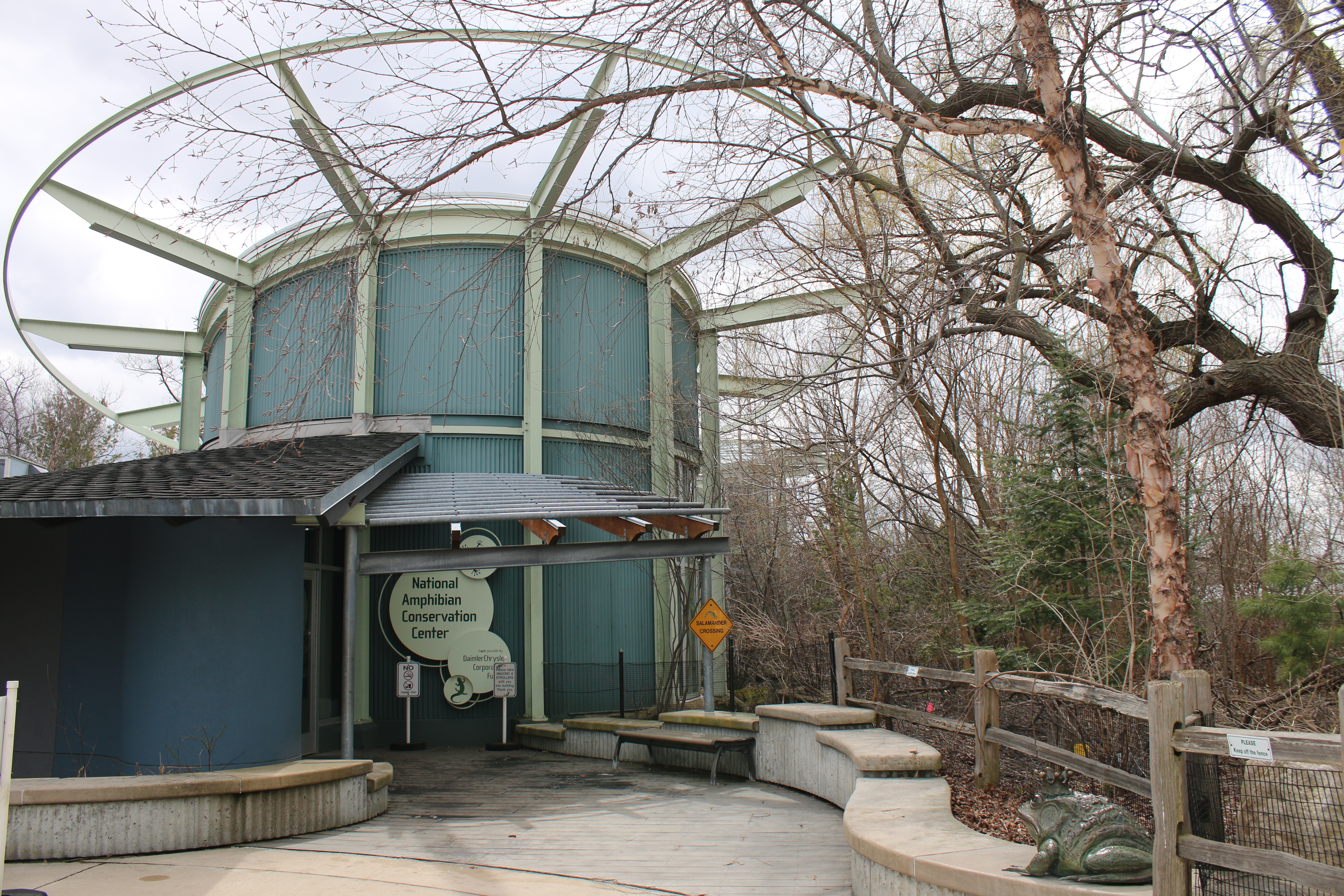
When the National Amphibian Conservation Center (NACC) opened at the Detroit Zoo in 2001, it was the first major facility dedicated entirely to conserving and exhibiting amphibians. The award-winning, state-of-the-art amphibian center is home to a spectacular diversity of frogs, toads, salamanders, newts and caecilians, many of which are the subjects of field research and part of cooperative management programs called Species Survival Plans (SSP). Amphibians selected for an SSP are generally threatened, endangered and sometimes even extinct in the wild. The DZS is actively involved in many of these programs, including for the Wyoming toad, Puerto Rican crested toad, Panamanian golden frog, crawfish frog and Mississippi gopher frog. Some amphibians bred at the Detroit Zoo have been released into the wild to boost endangered populations, and others require us maintaining a “captive assurance population” because due to factors in the wild, they cannot be released just yet. When it’s safe for these species to return to their native homes, we have a population ready to release. We have specially designed, bio-secure rooms that can hold each of these species so they won’t be exposed to other amphibians or anything else that may be harmful when they are released.

In addition to maintaining our captive amphibian population and our efforts in cooperative breeding programs, DZS staff participates in several field projects and research programs, offers citizen science training and provides support for wildlife rescues, including those from the exotic pet trade.

– Marcy Sieggreen is the curator of amphibians for the Detroit Zoological Society and oversees the National Amphibian Conservation Center at the Detroit Zoo.

Editor’s note: Marcy Sieggreen was the curator of amphibians for the Detroit Zoological Society from 2008 until her passing in 2016. The Detroit Zoological Society established the Sieggreen Amphibian Conservation Fund in Marcy’s memory to continue to advance the work she so passionately championed.

Education: What is a Species Survival Plan?

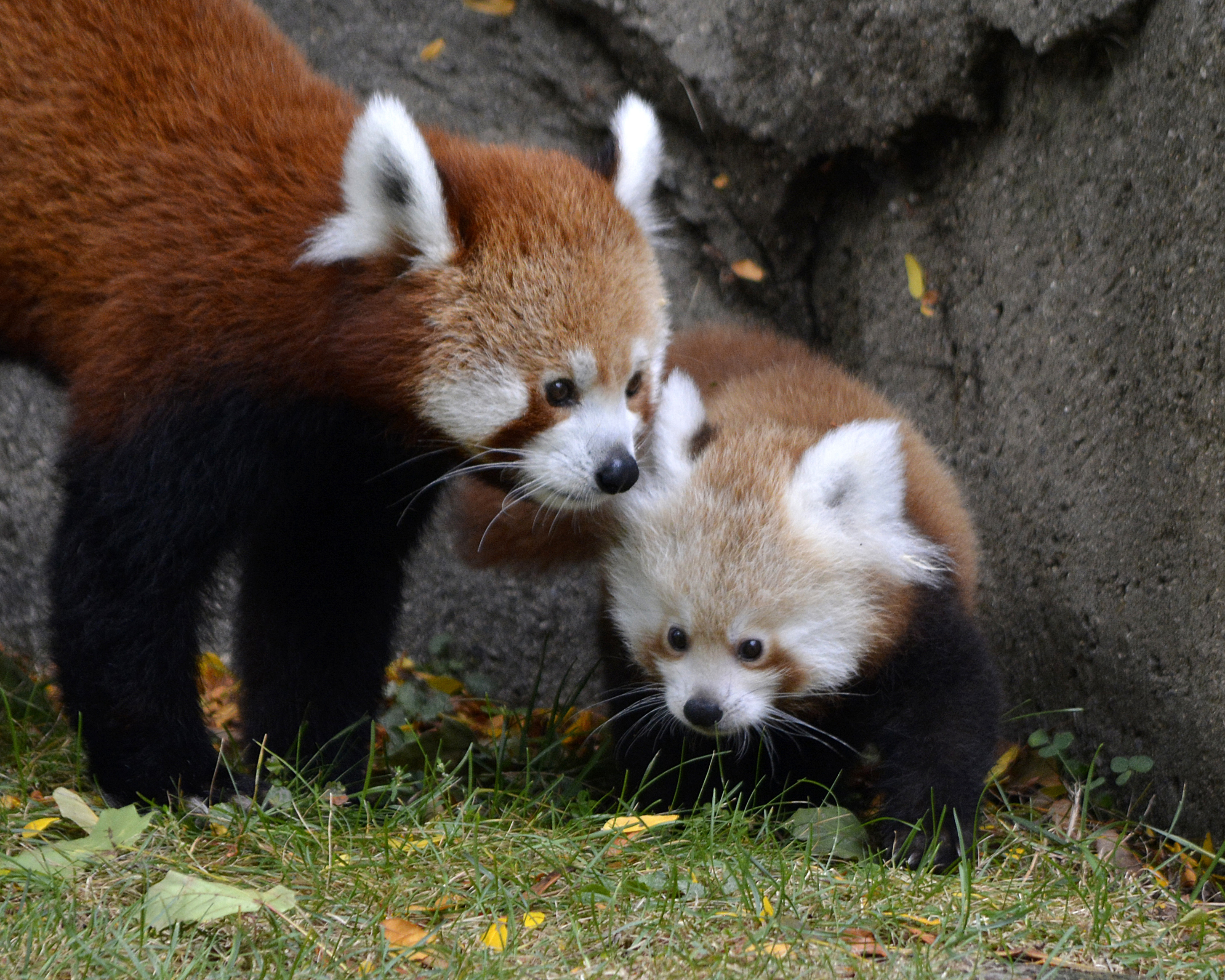
Red pandas Ta-Shi and Shifu have produced several adorable cubs at the Detroit Zoo, most recently little Tofu. North American river otters Whisker and Lucius have sired a couple pups and reticulated giraffes Kivuli and Jabari are well known for their now 13-foot-tall calf Mpenzi. Pairings like these and the offspring that follows are not by chance; each is carefully planned out and managed through what is known as a Species Survival Plan (SSP).

The 230 accredited zoological institutions that comprise the Association of Zoos & Aquariums (AZA) work together through these cooperative management programs to ensure genetically healthy, diverse and self-sustaining populations of threatened and endangered species. More than 450 species are apart of an SSP throughout zoological institutions in North America, overseen through a comprehensive population management system, which includes a Studbook and a Breeding and Transfer Plan. Each of these identifies population management goals and makes recommendations to ensure the sustainability of a healthy, genetically diverse and demographically varied animal population.

The Detroit Zoo has individuals from 98 of these species under its care, including 38 birds, 30 mammals, 24 reptiles, four amphibians, one fish and one invertebrate. Many of these species are animals that require immediate attention to save the remaining wild populations. Our cooperative breeding efforts have proven extremely successful – for example, the Detroit Zoo has been credited with restoring the population of a Tahitian land snail called partula nodosa, once extinct in the wild. Additionally, in May of last year, 22,571 Puerto Rican crested toad tadpoles bred at the Detroit Zoo were released into the wild of Cabo Rojo, Puerto Rico. In 2014, a record 3,945 Wyoming toad tadpoles bred at the Detroit Zoo were released into the wild. This long-running effort was previously recognized as No. 1 on the AZA’s list of the Top 10 wildlife conservation success stories.

AZA institutions and partners work together to carefully monitor SSP species both in the wild and in zoo populations. Organizations will often move SSP animals to other zoos and aquariums so they can mate with individuals to ensure a long-term healthy future for the species. Breeding recommendations are made with consideration given to each animal’s social and biological needs as well as transfer feasibility.

Be sure to look for the SSP logo on animal signage as you explore the Detroit Zoo on your next visit. Each time you see the logo, you’ll know that there are countless individuals working at zoos, aquariums and in the field around the world to do everything we can to save and rebuild the remaining populations of these species.