Getting a Closer Look Inside Animals: Computed Tomography Comes to the Detroit Zoological Society

As zoo veterinarians, we recognize the importance of identifying animals with health problems as early as possible. Fortunately, the Detroit Zoological Society has exceptional zookeepers who attentively look after each animal in their care and alert the veterinary team whenever they suspect there may be a problem. While subtle changes in demeanor, appetite, fecal and urinary output, and activity level can be key indicators of illness in an animal, most of our patients are very good at hiding their symptoms. In order to get a more comprehensive understanding of an animal’s health, we often rely on diagnostic tests, such as physical examination, bloodwork and cultures for bacteria.

When the Ruth Roby Glancy Animal Health Complex opened in 2004, the radiology suite was equipped with a state-of-the-art radiology unit designed for use in human hospitals.  With this upgrade, we found that we increasingly relied on diagnostic imaging (radiographs and ultrasound) to make diagnoses and shape our treatment plans.  In fact, we take x-rays during almost every diagnostic examination, on patients as small as dart frogs and as large as bison.

Since the early 2000s, imaging technology has been rapidly advancing, and by upgrading equipment and adding new technologies, the Detroit Zoological Society has stayed on the cutting edge of veterinary care.  This includes having ultrasound probes designed for patients of all shapes and sizes, digital dental radiography and portable x-ray equipment that can go out into the Zoo to image animals who are difficult to move to the hospital. Despite these advancements, we still found it necessary to take patients to off-site facilities at least a few times each year for computed tomography (CT) or magnetic resonance imaging (MRI).

In late 2019, two very exciting things happened: first, a generous donor named Thomas A. Mackey came forward with an interest in funding a project that would have an immediate impact on animal care and welfare, and, secondly, we became aware of a revolutionary new computed tomography (CT) technology that had been developed in Ann Arbor.  One of the most important features of the new CT technology is that it is portable, and much more affordable and user-friendly than a full-sized CT system. Since our hospital was already equipped with the features and space necessary to install the new system, within just a few months, we were able to bring this exciting new technology to the Zoo.

The new Xoran Portable CT has been in use for only a few months, but it has already had a tremendous impact on patient care at the Detroit Zoo.  Adding CT to our diagnostic toolbox has increased the level of care that we can provide to animals at DZS exponentially. CT works by aiming a narrow beam of x-rays at a patient, while quickly rotating around them. The CT’s computer generates cross-sectional images, or “slices” of the body.  The images contain more detailed information than conventional x-rays.  Once the slices are generated, they can be digitally “stacked” together to form a 3-D image that allows for easier identification and location of basic structures as well as possible tumors or abnormalities.

Here are just a few examples of how this technology is helping us give animals the best possible care:

CASE #1
CT imaging is especially well suited for visualizing the teeth and bones of the jaw. A male aardvark was due for a routine checkup. He had been eating fine, and there was no reason to suspect that he had dental disease. However, aardvarks often have problems with their teeth, so we decided to use the CT machine to scan his head. The images collected showed that he had areas of bone breakdown around the roots of three separate teeth. Treatment was able to be provided before his condition progressed to a point where he was showing signs of discomfort.

Picture1    2

CASE #2
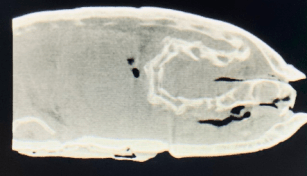
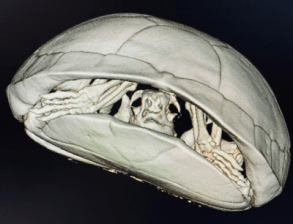
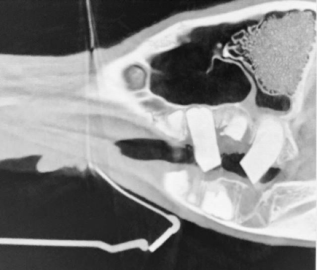
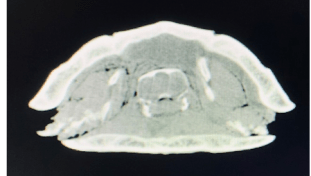
This adult McCord’s box turtle was imaged during a routine examination. The shell covering the body can make radiographs hard to interpret, but CT imaging allows us to see inside of the turtle.

McCord’s box turtle: a. Image of the head and forearms, b. image from the side showing the head and neck folded into the shell, c. 3D reconstruction of the face and front limbs seen in image a.

a. 1  b. 23                                                 c.
CASE #3
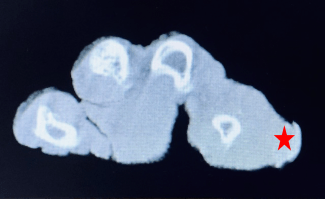
CT imaging has also proved helpful for several avian patients. One of the cinereous vultures living at the Zoo had a mass (red star) growing on the toe pictured below. The mass needed to be removed, but in order to plan for surgery, we needed to understand if the mass was superficial or more invasive and involved the soft tissues and bone beneath. CT imaging provided better detail for seeing small changes in the muscles and ligaments surrounding the mass. After evaluating the images, we were able to plan a surgical approach to remove the mass, and any adjacent tissue of concern. The vulture is doing great post-operatively and already back in his home!

Screen Shot 2020-02-12 at 10.25.27 AM    Screen Shot 2020-02-12 at 10.25.37 AM

CASE #4
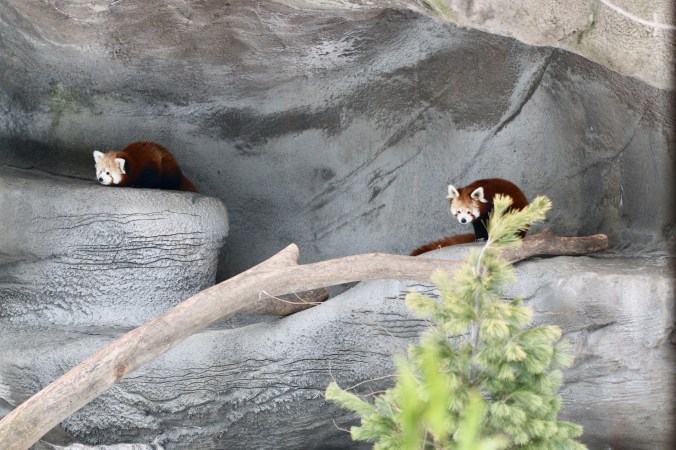
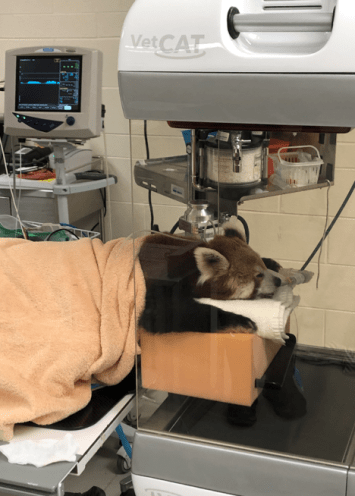
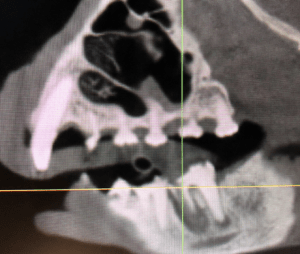
We currently have four red pandas living at the Detroit Zoo. The oldest is a 14-year-old female named Ta-Shi. During her recent routine examination, we noticed that one of her large molar teeth appeared darker than normal and was cracked on the surface. Within a few moments, we were set up and ready to collect CT images of her head and teeth. The images showed that the tooth was infected at the root, a problem that was likely causing discomfort. The tooth was also broken, meaning it needed to be removed in several pieces. After the tooth was extracted, a repeat CT showed us conclusively that all of the roots had been completely removed.
1    2

We are extraordinarily grateful to have state-of-the-art equipment at hand to care for animals at the Detroit Zoo. The recent financial gift that made the addition of CT possible has improved our ability to see small changes more clearly, detect problems earlier and fine-tune treatments. With this tool, we will continue to ensure that animals live long, healthy lives and thrive within our care. We cannot say thank you enough to Thomas A. Mackey for his incredibly generous donation!

– Dr. Ann Duncan is the director of animal health for the Detroit Zoological Society and oversees the Ruth Roby Glancy Animal Health Complex.



Share Your Love of Sustainability with Your Sweetheart

Screen Shot 2020-02-07 at 4.54.46 PM

Whether you like chocolate or candy, Valentine’s Day is a great excuse to share many delicious treats with your loved ones. There’s just one problem: not all of these treats are created equal when it comes to sustainability. Many food products, including a large amount of candy, contains an ingredient that has major effects on wildlife: palm oil.

Palm oil is a vegetable oil derived from the fruit of oil palm. It is used in a wide variety of products, especially in food and cleaning supplies. One positive aspect of palm oil is that less land is required to create the same yield as other vegetable oils. However, the demand for this product has become so high that land is being deforested at a very rapid rate to create space for these plantations. This deforestation is a direct contributor to habitat loss for many species, and it is estimated that the palm oil industry impacts 193 species with concerning conservation statuses. Among those impacted are species like orangutans, rhinos and tigers. Specifically, scientists believe that the 17% decline observed in the Sumatran subspecies of tiger over the past 20 years is heavily due to deforestation for palm oil plantations.

So, what qualifies as sustainable palm oil? The Roundtable on Sustainable Palm Oil (RSPO) is a group formed to maintain standards and certify organizations producing and sourcing sustainable palm oil. There are several RSPO-certified producers that have committed to stopping certain industry actions to create better practices for both wildlife and people. These new standards call for transparency, the elimination of deforestation and better working conditions for laborers. By making these commitments, producers and organizations can work together to create a demand for sustainably sourced palm oil in our everyday products.

Consider the following actions to decrease the demand for unsustainable palm oil:

Support sustainable companies. Buy food, such as your Valentine’s Day candy, and other products from companies that source their palm oil from sustainable farms.

Screen Shot 2020-02-07 at 4.42.53 PM

Make your voice heard. Did you notice a certain company was not committed to using sustainable palm oil? Write them a letter to share your concerns and encourage more environmentally conscious operations. Our consumer voice can be quite impactful.

Create homemade gifts. Make a batch of cookies or chocolate-covered strawberries to gift instead of purchasing something from the store. Not only are you showing someone you care, but you can ensure that each ingredient used is a sustainable one.

Marissa Ratzenberger is a sustainability coordinator for the Detroit Zoological Society


A Blossoming Friendship: Ta-Shi Teaches Keti Manners

Is there anything sweeter than making a new friend? Keti and 14-year-old Ta-Shi have become quite the dynamic duo in recent weeks.

IMG_2461

Keti, who is the offspring of 4-year-old mother, Ash, and 3-year-old father, Ravi, was hand-reared after birth by Detroit Zoological staff. Ash was a young first-time mother and a bit unsure of how to properly care for her newborn. It’s not unusual for this to occur; zoo babies do occasionally have to be cared for by staff for various reasons.

After four months of close observation in the DZS nursery, Keti was encouraged to play and learn on her own in a grassy habitat adjacent to the Holtzman Wildlife Foundation Red Panda Forest.

IMG_2487

Keti quickly became confident in her abilities — and then it was time for another first: a grand introduction.

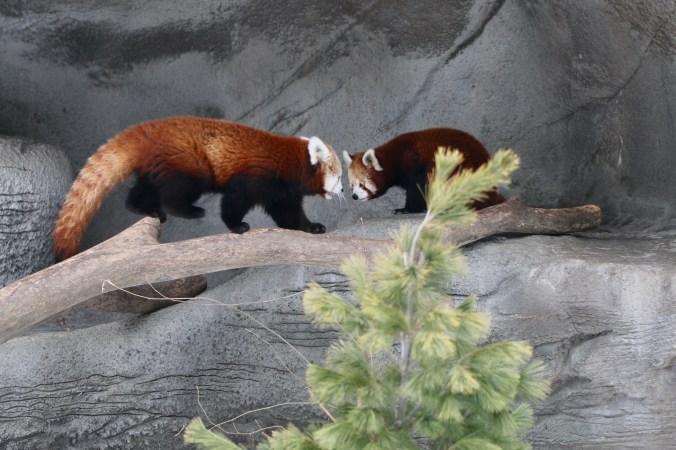
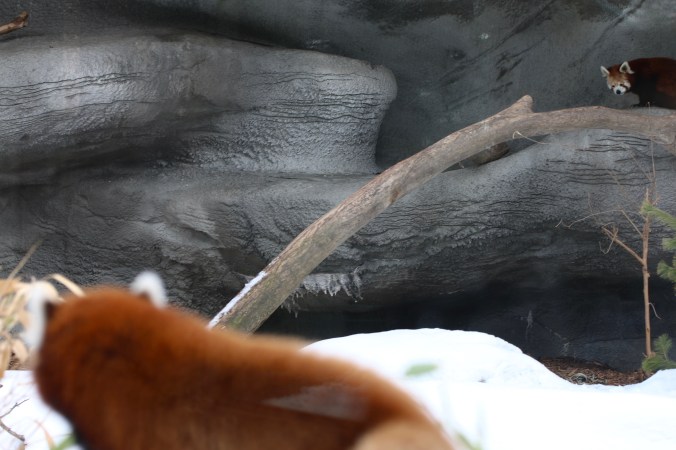
Recently, Keti was introduced to Ta-Shi in the grassy habitat. Ta, who has reared cubs multiple times, appeared curious and switched on her maternal instincts during her first meeting with the now 6-month-old. Keti seemed incredibly eager to be around another red panda and quickly took to Ta.

IMG_2498

A good companion and mentor, Ta is teaching Keti her manners — and, in a way, helping her potty train. In the wild, red pandas go to the bathroom in a specific area, similar to how a cat uses a litter box. Ta has now shown Keti where the “bathroom” is located.

The pair appear to be getting along well and last week, they were even caught snuggling.

Keti and Ta will eventually be moved to the Holtzman Wildlife Foundation Red Panda Forest to join neighbors, Ash and Ravi.

Ash and Ravi are approaching breeding season, so Keti will remain separated from them as this is the normal period when red panda babies leave their mothers in the wild.

In other words, Keti will get to spend even more quality time with her new faithful friend.

IMG_2414
-Alexandra Bahou is communications manager for the Detroit Zoological Society

Environmental E-Cycling Extravaganza

cropped

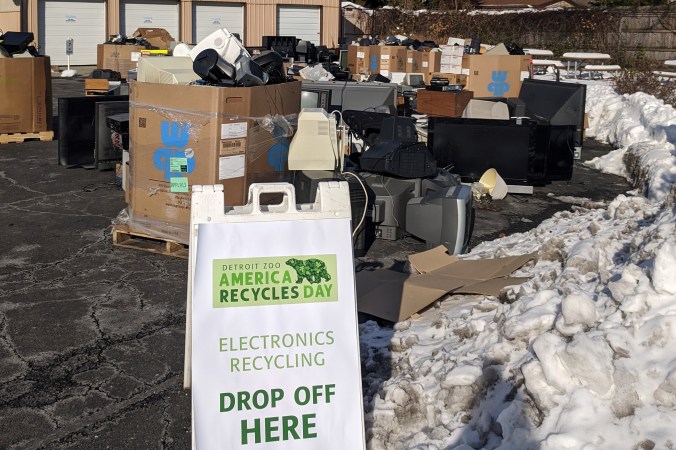
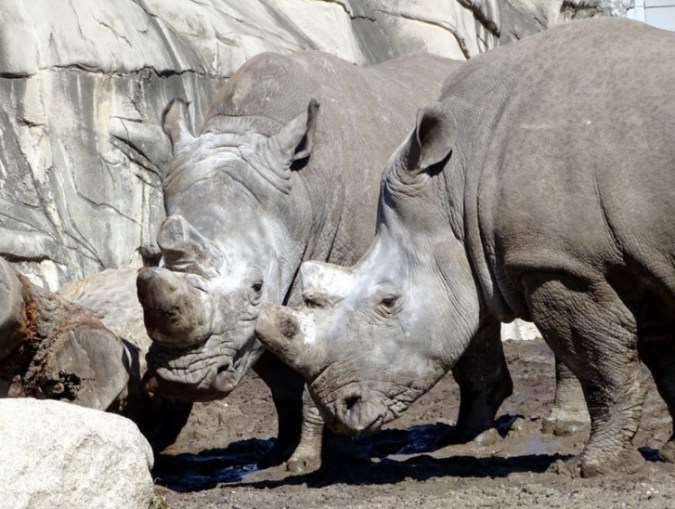
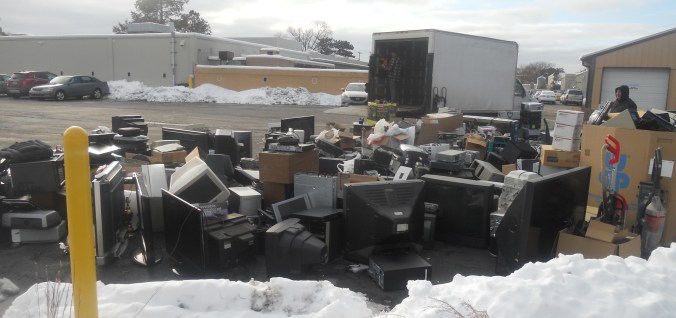
The Detroit Zoological Society celebrated America Recycles Day on November 15 by hosting a community e-cycling (electronics recycling) drive at the Detroit Zoo. We received a whopping 36,000 pounds (18 tons) of old tube televisions, outdated computer equipment and a variety of broken household electronics – the weight equivalent to seven rhinos!  All of the material was recycled responsibly, alleviating our community members’ basements and avoiding the landfill.

rhinos 2

Recycling electronics is vital to our environment since not only does it divert waste from Michigan’s landfills (according to the EPA, electronics accounts for 20-50 million tons of global waste), but it also reduces hazardous waste from seeping into the soil and groundwater.  This is significant when you consider that the average old tube TV or computer monitor contains approximately 5 pounds of lead!

Recycled electronics are also filled with valuable minerals such as silicon, tin, copper, lead and gold; all of these minerals are required for future electronics. By recovering these minerals through recycling, we can reduce our reliance on mining raw materials from the earth.  Mining creates a host of problems including deforestation, destruction of habitats and creation of pollution.  Currently, only 12.5 percent of e-waste gets recycled, according to the EPA.  Rather than focusing on mining jungles for raw materials for new electronics, perhaps we should start focusing on a more sustainable place – the urban jungle.

cropped 2

With the holiday season upon us and the latest and greatest electronic gadgets on many folks’ wish list, please consider the following actions:

  • Resist upgrading. Challenge yourself to use your current device longer (cell phone, tablet, etc.)
  • Purchase refurbished or older models. Support the recycling market and save yourself money
  • Recycle your unwanted electronics. Rather than keeping them in a drawer or your basement, recycle and return the needed minerals to use for future electronics

Many electronic manufacturers (Apple, Samsung, etc.) will take back their products for recycling.  For local recycling, SOCRRA, located at 995 Coolidge in Troy, takes electronics if you are a SOCRRA resident or business (member cities are Berkley, Beverly Hills, Birmingham, Clawson, Ferndale, Hazel Park, Huntington Woods, Lathrup Village, Oak Park, Pleasant Ridge, Royal Oak and Troy).  Research your local recycling facilities and decrease your e-waste impact.

– Rachel Handbury is the manager of sustainability for the Detroit Zoological Society.

Animal Welfare: Grizzly Bears Really Dig Their Expanded Habitat

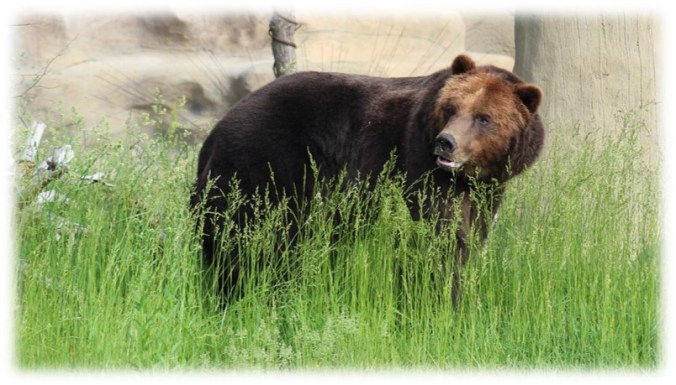
As part of the Detroit Zoological Society’s (DZS) commitment to ensuring individual animals experience great welfare, a significant expansion of the grizzly bears’ habitat was undertaken in 2018. The male grizzly bears living at the Detroit Zoo, Mike, Thor and Boo, are brothers who were rescued in Alaska after their mother was killed and the cubs began foraging too close to humans. At approximately one year of age, they were too young to properly care for themselves and the DZS provided them with a safe place to grow up. The bears are now eight years old and weigh approximately 900 pounds.

grizzly grass.jpg

The expansion doubled the amount of space for the bears and also increased the number of environmental features in the habitat, including caves and substrates such as grass and mulch. When we make changes that affect the lives of animals, it is important that we understand how those changes impact them. To that end, we collected data the fall prior to construction to obtain a baseline of the bears’ behavior and hormone levels. Observations continued during construction and ended two months after the bears moved back into their renovated home. Zookeepers also filled out surveys and collected fecal samples each day.

We were happy to see that, in general, the construction itself had little impact on the bears. We had the zookeepers keep track of things like appetite and interest in participating in positive reinforcement training, and the bears did not show any changes to these behavioral indicators of welfare. Additionally, their glucocorticoid concentrations did not change during construction, suggesting that the bears did not perceive this to be a stressful time period. We did see some fluctuation in how much time each bear was visible outside, depending on how loud the construction activities were. Only one of the bears, Mike, spent more time inside (and out of sight) when the construction noise reached higher levels. Individual animals, just like people, perceive experiences differently, and therefore may react differently.

When we compared how and where the bears spent their time before and after the expansion, we had some interesting results. The bears made use of all of the substrates and features in the expanded habitat. They were very excited to gain access to a mulberry tree that had previously been part of one of the side bear habitats. Mulberry is enjoyed by many species at the Detroit Zoo and the grizzly bears are no exception. Mike very industriously spent time trying to uproot the tree to make it easier to eat all the delicious berries! All three bears also enjoyed digging up, excavating if you will, various sections of the habitat. One thing that did not change was Thor’s affinity for his rock “pillow”. There is a large boulder-sized rock formation high up in the original habitat space on which you can sometimes find him resting his head. Thor still very much enjoys giving the rock a bear hug as he catches up on some sleep!

grizzly cave.jpg

Not only did the expansion mean the bears had more environmental choices, but the additional features had an impact on their social dynamics as well. With more space and more options within that space, the bears could spread out and all spend time in areas that met their needs, rather than sharing, or having to wait to use the features. This also translated into even more positive relationships between the brothers. We did see Boo practice his best “little brother” moves in the expanded habitat. He will come as close to Mike as possible until Mike finally swats or chases him away. I definitely experienced that with both of my little brothers growing up! It is possible that with more space, Boo enjoys getting a reaction from Mike and having plenty of room for the game of “catch me if you can” that may follow.

The expanded space has given the grizzly bears more behavioral opportunities and the ability to make more choices about how and where to spend their time, as well as how much of that time they want to spend near one another. The DZS is always striving to create habitats that promote great welfare and increased choice is an important part of that.

– Dr. Stephanie Allard is the director of animal welfare for the Detroit Zoological Society and oversees the Center for Zoo and Aquarium Animal Welfare and Ethics.


Busting Green Myths with Nine Simple Tips

In the face of the changing climate, there are small things we can do to preserve wildlife and wild places for generations to come; however, making any life change can be tough at first. Whether it is quitting a bad habit, starting a new job or even making more sustainable choices in your life, some people find themselves resistant to the unknown. So, what is getting in our way of taking action? Here are three common myths we’ve debunked that prevent people from making more sustainable choices:

Myth No. 1 – Green choices are too expensive.

How many times have you stood in the produce section deciding between an organic option and the cheaper one? Or in the cleaning supplies aisle? You’re definitely not alone. While some sustainable options might not fit your budget, there are simple ways we can go green that can actually help you save some green!

  • Buy locally and seasonally. One way to save money is to choose organic produce that is in season. You’ll pay more for berries in winter than you will in summer. For the month of August, lemons, strawberries, blueberries, potatoes, carrots and avocado are all delicious foods that you can find in abundance and, therefore, at a lower price! Heading to your local farmer’s market is a great way to support your community, see exactly where your food is coming from and buy produce that is at its peak freshness and nutrition.

  • Go meatless. Whether you live a vegan lifestyle or you participate in Meatless Mondays, reducing the amount of meat and animal products can not only save you money, but help the Earth and your health
  • Change how you do laundry. Another way to save money is by washing your clothes in cold water. This helps you avoid using the energy spent on heating the water (and yes, it still gets your clothes clean). Drying your clothes on a line or a rack saves energy too, and also helps prevent air and water pollution.

  • How often do you leave small electronics plugged in but turned off, such as your phone charger, a lamp or the TV? Approximately 50 devices and appliances in the typical American home are constantly draining power – even when you’re not using them. Unplugging is better on energy and for the environment and will save you money on your electric bill. Want to save your company money? Turn off your computer when you leave for the day.

Myth No. 2 – I’m too busy.

  •  Small changes save time. Tossing things in the trash can instead of the recycling bin is one way people try to save their time. Researching what can and can’t be recycled in your area, paying additional fees to have your recycling picked up with your trash (if it isn’t already) and cleaning out containers once they’re empty – it can be a lot of work. One way to avoid this feeling is to reduce your waste. Easier said than done, right? Start out with small changes such as bringing your own reusable bags to the grocery store and seeking out items that are free of plastic packaging. To read more on eliminating plastic waste, read our recent blog post.

Myth No. 3 – I can’t make a difference.

One of the biggest myths about sustainability is the idea that small changes don’t matter. But just think what would happen if everyone made one small change you did.

  • Buy smarter. By demonstrating a few smarter decisions each time you make a purchase, you can help make a big impact on the environment. For example, many major manufacturers are cutting down forests to make household paper goods. A switch to tea cloths or reusable cotton kitchen cloths can make a huge difference by decreasing the need for paper products. Did you know that paper towels weren’t sold in grocery stores until 1931? If generations before us could handle life without paper towels, then why can’t we? Another option is to use vinegar in place of the typical all-purpose cleaner. It’s environmentally friendly and costs less than $1 a cup.
  • Change your driving habits. The greenhouse gas emissions from a typical passenger vehicle are approximately 4.7 metric tons of carbon dioxide each year, according to the EPA . While it may be hard to avoid using your car, try making greener choices about driving. One easy option is to make a habit of not idling your car for more than 30 seconds. If you can, try using public transportation or a bike once a week. If you have plans with a friend who lives nearby, try to carpool. There are plenty of ways to lessen your carbon footprint, and how you drive is just one.

  • Add it up. Through our daily decisions, we have the power to make our lives more environmentally friendly. By choosing to bring your own bags to the store, you can save between 350 and 500 plastic bags each year. By using a reusable water bottle, you could save an average of 156 plastic bottles By choosing to line dry instead of using the dryer, you could save close to $200 a year.
  • Speak up! Remember that your voice is powerful. Talk to friends, family and coworkers and use social media to share the changes you’ve made in your life. You could also write a letter to your representative urging them to support environmentally conscious policies. Being an active voice may just inspire others around you to make similar choices.

Making more sustainable choices may seem difficult or inconvenient, but all you have to do is change your perception. Doing so will create a more sustainable future for people, animals and the environment. If you take some of these small steps now, you can save money, time and maybe even the planet.

The Detroit Zoological Society is a leader in environmental sustainability, guided by our award-winning Greenprint initiative. By taking the time to overcoming these obstacles to make changes in your life, you can help us take a step forward in our Green Journey.

Notes from the Field: Update on Eurasian Otter Conservation in Armenia

The Detroit Zoological Society (DZS) continued its field conservation work in Armenia this spring to study and preserve declining populations of endangered Eurasian otters.

Armenia is a nation slightly larger than the state of Massachusetts, but in terms of biodiversity and topographic variation, it boasts an impressive richness. A day’s drive can include visits to snowy mountain passes at an elevation of more than 8,000 feet near the spa town of Jermuk, as well as hot and arid lowlands of the Meghri Valley along the Iranian border. It is a landlocked nation in the Caucasus region between Asia and Europe, but its abundant streams and rivers provide ecological and economic lifeblood for the nation. During this spring’s expedition, we spent a little more than a week traversing the serpentine roads as we followed up on leads and evaluated potential otter habitats.

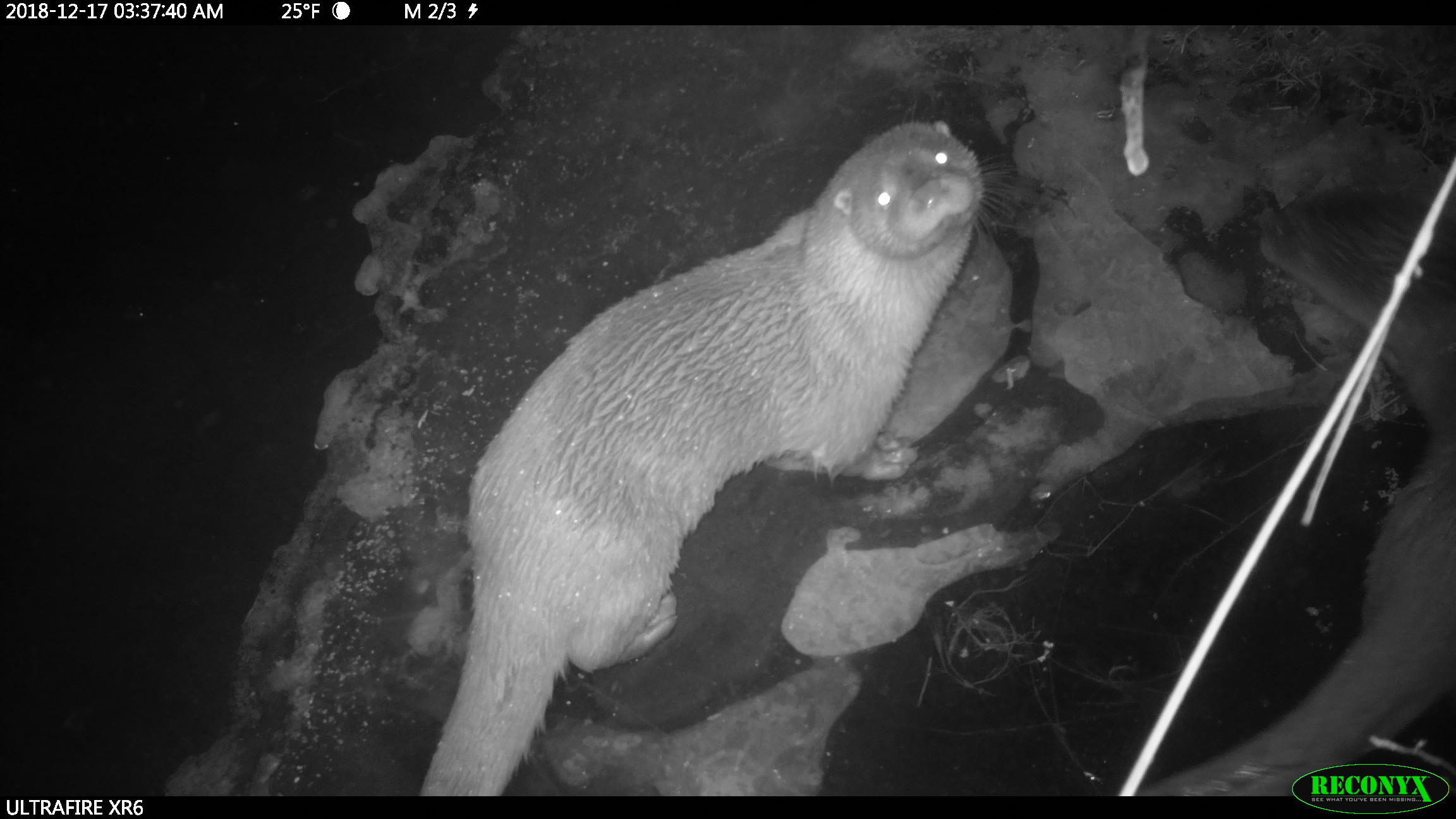
We began this trip in the capital of Yerevan and worked our way through all of the watersheds in the southern half of the country. A consistent theme throughout the week was high water due to heavy spring rains. This limited our access to the riverbanks and made it challenging to select suitable locations to deploy motion-activated cameras and conduct formal surveys. Previous trips to other watersheds in the north, such as Lake Arpi, had recently yielded numerous photographs and video clips of otters with these cameras, with in some cases as many as four individuals in a single frame. This time around, we had to rely on other methods to document the presence of otters in each of the southern watersheds.

Interviews with local conservationists, fish farmers, anglers and hunters proved to be our most valuable resources. Through these leads, we were able to locate and explore otter habitats and document signs such as footprints, feeding remains and scat. We also visited several fish farms, ranging in size from small residential ponds to larger facilities with dozens of cascading holding pools. In most cases, the fish farmers were challenged by otters raiding their stock, and in some cases, significantly threatening the viability of their entire operation. Dogs are frequently used as a deterrent, and one resident with a small fish pond showed us security camera footage of an otter taking shelter in the water until the dogs were distracted and allowed an opportunity for it to escape. In some cases, we were able to provide counsel to fish farmers regarding what type of perimeter fencing modifications would be effective in excluding otters.

The people of Armenia clearly value their biodiversity and have an openness to learning more about the important role that Eurasian otters play in it. Key challenges ahead for the species appear to be direct human conflict, pollution from mining, and habitat fragmentation due to hydroelectric dams. The DZS will continue to work with Armenian researchers to document the distribution of otters and strengthen efforts to establish protected areas for them.

– Brian Manfre is a mammal department supervisor for the Detroit Zoological Society.

A Little Goes a Long Way: Adapting to Minimalist Living

With the growing popularity of shows such as “Tidying Up with Marie Kondo,” or “Tiny House Hunters,” it has become evident that minimalist living is now mainstream. This lifestyle is centered on living with less. Minimalism is about changing the way you think about the things you own and surrounding yourself only with items that have purpose.

Experience Over Things

Minimalists stress the value of experiences over things; “things” waste time and money and may invoke joy for only a brief period. While trying new things, you have time to soak in the moment and really enjoy life. After all, as cheesy as it may sound, a memory is a souvenir that will last forever. Some take this principle of minimalism to mean that they should take as many vacations as possible, but that isn’t necessarily the case. While vacations are great opportunities to try new things, new experiences can be found right around the corner – such as a trip to the Detroit Zoo, which has been proven to reduce stress.

The Decluttering Process

To be able to shift our focus to the more important items in our lives, we must first get rid of the stuff that clutters them. Successfully decluttering requires you to go through every room in your house reexamining the things you own, from your clothes to your furniture and everything in between. This can seem like a daunting task at first, but there are a couple of great methods to help you declutter:

  • KonMari Method: Growing in popularity thanks to her popular Netflix show Marie Kondo’s “KonMari Method” involves sorting through your belongings and asking yourself if the items spark joy. For all the items that do not spark joy, Kondo suggests letting them go.
  • The 90/90 Rule: For those household items that don’t necessarily invoke happiness but still feel difficult to give up – we’re looking at you cleaning supplies – try the 90/90 rule: If you haven’t used the item in the past 90 days and can’t see yourself using it in the upcoming 90, then it is okay to get rid of.

When it comes to saying goodbye to all the clutter, try to donate and recycle as much as you can. The Salvation Army will take everything from clothes to furniture and will even pick it up right from your house!

Changing the Way You Shop

To avoid falling down the rabbit hole of “stuff” again, minimalism requires us to challenge the consumerist habits we’ve developed. To change the way you shop in-store, first take stock of what you have at home. Currently more than 30 percent of the U.S. food supply is wasted, so when grocery shopping, try to empty your fridge before buying more. Make your food last by purchasing food items that pair well with your leftovers or even find ways to reinvent them by using the left over ingredients to create a brand new dish, like baking over-ripe fruit into a delicious bread or making a sweet jam. This will save you time and money. Most importantly, create a grocery list and stick to it to avoid any impulse buys and make sure you leave the store with only what you need.

While many of us love to shop for new clothes, the fashion industry has largely become unsustainable; it takes more than 700 gallons of water just to produce one cotton T-shirt. Not only does the clothing industry use a tremendous amount of water, but it is also responsible for 20 percent of industrial water pollution. Instead of filling your closet with trendy “fast fashion” pieces that go out of style as fast as they are produced, minimalism calls for a smaller wardrobe of better-constructed, classic pieces that will last longer and won’t go out of style. In fact, many minimalists’ wardrobes consist of less than 30 items. Having a minimal wardrobe will save you money and eliminate extra time spent debating outfit choices.

The Bare Necessities

As the name suggests, minimalists only possess the bare minimum with regard to the entire household, not just the kitchen and closet. Minimalism décor is as simple as possible – bright colors, ornate patterns and art-covered walls all lead to distractions and oftentimes require frequent changes as trends evolve. Minimalists opt for more neutral color choices and fewer knick-knacks. Furniture should also be simplified; an entire minimalist bedroom can be complete with merely a bed, a nightstand and a lamp.

Many of us today have multiple niche appliances, but most of these can be pared down. For example, instead of owning a microwave, a toaster oven, and an air fryer, a minimalist home will only include a traditional oven. The same goes with electronics; instead of a TV in every room, keep only one or ditch it all together and use your laptop to watch TV, saving money and space.

When we only own the household items that are truly necessary, the amount of space in your home will significantly increase. This is why many minimalists have taken up “tiny living” by moving into homes that are often smaller than 500 square feet. Tiny homes are great for the environment because they take up less land, require less energy and can even be built inside old shipping containers.

Good for the Environment and Good for You, Too

The minimalist lifestyle can not only save you time and money, but it can benefit your health as well. Clutter has been proven to increase stress levels and lead to procrastination. By committing to a minimalist lifestyle, you can reduce unwanted stress from your life.

Consumerism has contributed to more than 60 percent of global greenhouse gas emissions, a leading cause of climate change. As minimalism aims to stop consumerism, it is a great lifestyle for reducing your impact on the environment. Additionally, by only owning and purchasing what you need, you will considerably reduce your waste output.

Through our award-winning Greenprint initiative, the Detroit Zoological Society is working to create a more sustainable future for wildlife and wild places. Choosing a minimalist lifestyle is one way you can join us on our Green Journey.

The Heat is On

Summer is in full swing, and with it comes higher temperatures. Detroit Zoological Society staff ensure the animals who live at the Detroit Zoo and Belle Isle Nature Center are comfortable, regardless of what the thermometer says.

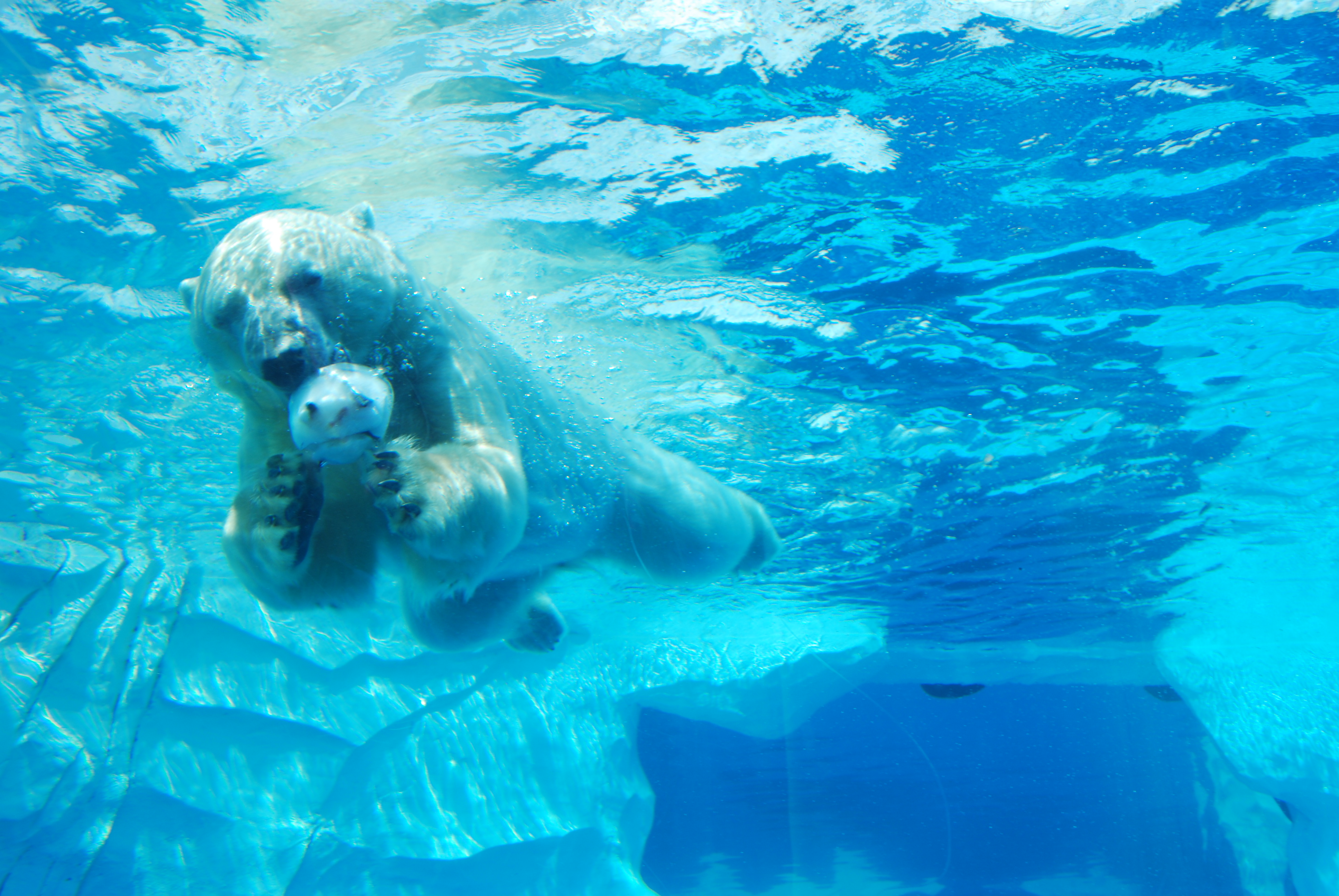
In some cases, this means giving animals the choice to either remain in their outdoor habitat or venture inside when temperatures soar. Think about how great you feel when you come into an air-conditioned building after spending time outside! But should they choose to remain outdoors, we ensure their habitats always incorporate multiple areas where the animals can find shade. The amount and location of the shaded areas change with the sun’s movement, and that stimulates the animals to move around in order to thermoregulate, just as they would in the wild. For example, you can often find the lions resting in the alcoves in the wall of their habitat, and built-in caves will serve a similar purpose in the soon-to-open Devereaux Tiger Forest. The pool on the polar bears’ “pack ice” side of the Arctic Ring of Life is even chilled!

For many of the animals, such as the eland, deer, ostrich and flamingos, animal care staff set up sprinklers and misters that can be moved around to create cool areas. Staff also make wallows for the rhinos, who cool down by covering themselves in mud. You may even see some animals enjoying “popsicles”, made by freezing pieces of fruit and vegetables or even fish, depending on the species. Keeping the animals both comfortable and stimulated is part of ensuring great welfare.

These practices are meant to not only keep the animals comfortable, but safe as well. Humans can suffer from serious heat-related issues, and the same is true for other animals. My dog really loves to go for long walks; however, during the summer, we make more of an effort to stay off the pavement and asphalt, and to walk in the shade whenever possible. Dogs don’t sweat to cool off like we do; they cool themselves through their foot pads and by panting, and pavement can heat up to 140 degrees when it is only 80 degrees outside. I also make sure to bring plenty of water with me for both of us!

My dog also enjoys going for car rides, but we have to remember that leaving any animal in a car that isn’t running can be very dangerous. Temperatures inside a parked car can rise very quickly, so leaving our animal companions at home in these instances is safer. It is our responsibility to keep the animals in our care safe, healthy and happy, whether they live at the Zoo or in our homes.

– Dr. Stephanie Allard is the director of animal welfare for the Detroit Zoological Society and oversees the Center for Zoo and Aquarium Animal Welfare and Ethics.

Join us in Supporting Legislation that will Protect Pets

As temperatures continue to rise in Michigan, we are reminded of the danger in leaving dogs in cars. On an 85-degree day, the temperature inside a car can rise to more than 100 degrees in under 10 minutes, even if the sky is cloudy and the windows are cracked. As a result, dogs can suffer heat-related illnesses and may die before help has a chance to arrive.

Unfortunately, Michigan does not currently protect those who directly intervene if they see a dog suffering in a hot car. House Bill 4092 would give immunity from criminal prosecution to those who forcibly enter a vehicle to rescue an animal. Many states have such laws, but we are not yet one of them. We encourage members of the community to contact your state representative and urge them to support this legislation. This bill can not only save lives, but protect those who stand up to help.

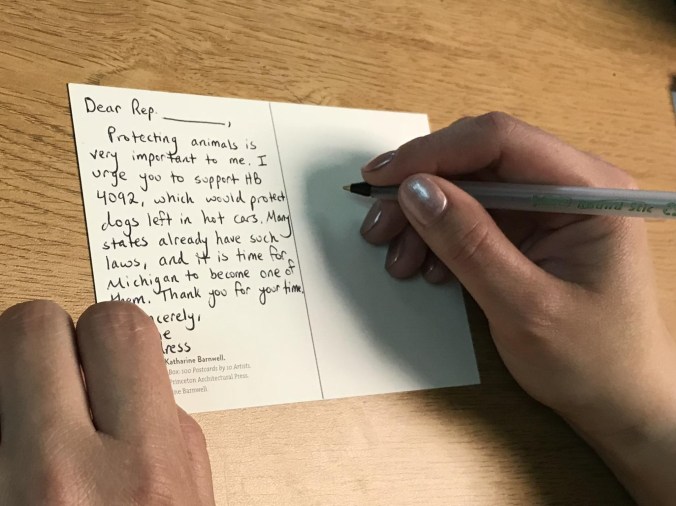
The Detroit Zoological Society recently hosted our bi-annual Meet Your Best Friend at the Zoo, the nation’s largest off-site animal adoption event, in partnership with the Michigan Humane Society. Our staff shared with attendees the dangers of leaving pets in cars and thankfully, most of them were already aware of this and the importance of calling the police if they witness this occurring. Many wanted to know how else they could help, and we provided postcards and contact information for each of their state representatives, as well as sample messaging to support House Bill 4092. We collected and distributed 165 postcards from this event.

The DZS’s Berman Academy for Humane Education exists to help people help animals. One way we do this is by providing opportunities for community members to take action in ways that have positive, lasting impacts on animals.

You can look up your state representative and their contact information here. We also encourage you to consider writing to your elected officials about other legislation that affects animals – you can find an updated list of Michigan and federal legislation here.

– Dr. Stephen Vrla is the curator of humane education for the Detroit Zoological Society and oversees the Berman Academy for Humane Education.