Notes From the Field: Conserving Common Terns

Paul Buzzard, Ph.D., is the director of conservation for the Detroit Zoological Society.

Since 2007, the Detroit Zoological Society Photo by Cher Fajardohas been working to restore the population of common terns on the Detroit River, and more recently on Lake St. Clair. DZS staff monitor, improve and create suitable nesting habitats respectively on Grosse Ile, Belle Isle and the restored lighthouses on Lake St. Clair through a partnership with the Save Our South Channel Lights organization. Each year, staff members also attach colored leg bands to common tern chicks to monitor their movements in the Great Lakes.
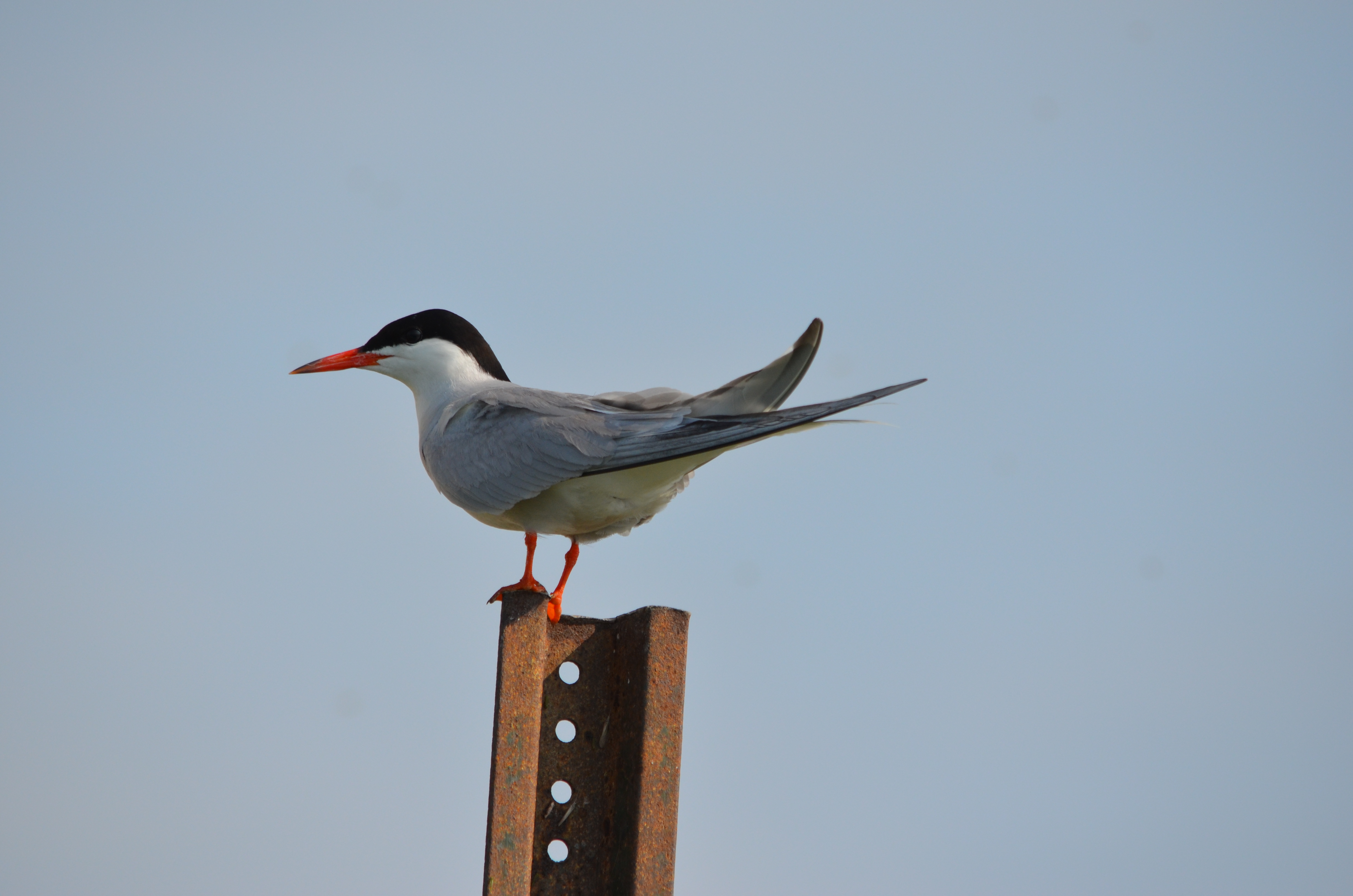
Photo by Cher FajardoIn early July, several staff members successfully attached leg bands to more than 30 chicks at one of the lighthouses on Lake St. Clair. Gathering the flightless chicks is a hazardous time for staff as the adult terns swoop down to protect their young. Amid the squawking adult terns, DZS staff quickly and gently placed several chicks at a time into small holding corrals. Other staff then attached leg bands promptly and efficiently to avoid undue discomfort to the chicks. The chicks were then released close to where they were collected to avoid additional stress. A total of 118 chicks have been banded by DZS staff over the last two years.

This year, with water levels especially high Photo by Cher Fajardoin the Great Lakes, some common tern nesting sites have been flooded out. Thus, the nesting sites at the Lake St. Clair lighthouse and also on Belle Isle are particularly important. DZS staff have improved the habitat at both of these areas by clearing vegetation and, in the case of the Belle Isle colony, establishing a predator-proof fence. So far this season, two common tern chicks have fledged (reached sub-adulthood) at Belle Isle. In addition, the first chick from Belle Isle was banded. In the past several years, only one common tern chick has fledged at Belle Isle.

This year’s high water has also delayed the life cycles of many animals – including common terns – and more than 100 eggs still remained to hatch when we banded the first chicks on July 1. DZS staff will continue banding and monitoring to enhance common tern conservation.

– Paul Buzzard

Veterinary Care: Educating Future Vets

Dr. Ann Duncan is the chief veterinarian for the Detroit Zoological Society.

Earlier this month, the Detroit Zoological Society’s veterinary team had the opportunity to work with a wonderful group of seventh graders, as we helped them explore their interest in veterinary medicine. This was the second summer that we’ve worked with our talented education department to offer this very special Summer Safari Camp experience. During this particular weeklong camp, the students learn about zoo medicine in general, hear stories about the babies we’ve cared for in our nursery, and practice placing a bandage on a limb (of a stuffed animal). They also spend some time in our laboratory to see how blood, urine, feces and other samples can provide valuable information about an individual’s health.

Summer Safari Vets 3To put into practice what they learned during camp, we challenged the students with a weeklong (pretend) case involving a female otter. The students met with a zookeeper to gather a complete medical history, and then helped develop a diagnostic plan, interpreted bloodwork and radiographs and ultimately made the decision that the otter needed surgery. To prepare for “surgery”, the students practiced their surgical and suturing skills on bananas. On the last day of camp, we invited the students to the surgical suite in the Ruth Roby Glancy Animal Health Complex. There, we showed them how they would prepare themselves and their patient for surgery and how to carefully handle surgical instruments. After our student surgeons made a delicate abdominal incision on our stuffed otter “patients”, each student was able to explore the abdomen to find a coin foreign body. Then, each student placed several sutures in both the deep “tissues” and “skin”, just like real surgeons!! And of course, all of the otters made a full recovery after their efforts.

It was fun to work with the students Summer Safari Vets 2throughout the week. They were very attentive and engaged during camp, and it was very rewarding to watch their curiosity and skills grow during their time at camp. Even if these students decide that veterinary medicine is not the career for them, I am confident that their interest in medicine and in providing the best care for animals will be lasting.

– Dr. Ann Duncan

Education: Playing with Nature

Claire Lannoye-Hall is a curator of education for the Detroit Zoological Society.

In a day and age when kids and families are spending more screen time than outdoor time, the Detroit Zoological Society is working on a project to create an outdoor space your kids won’t be able to pass up!

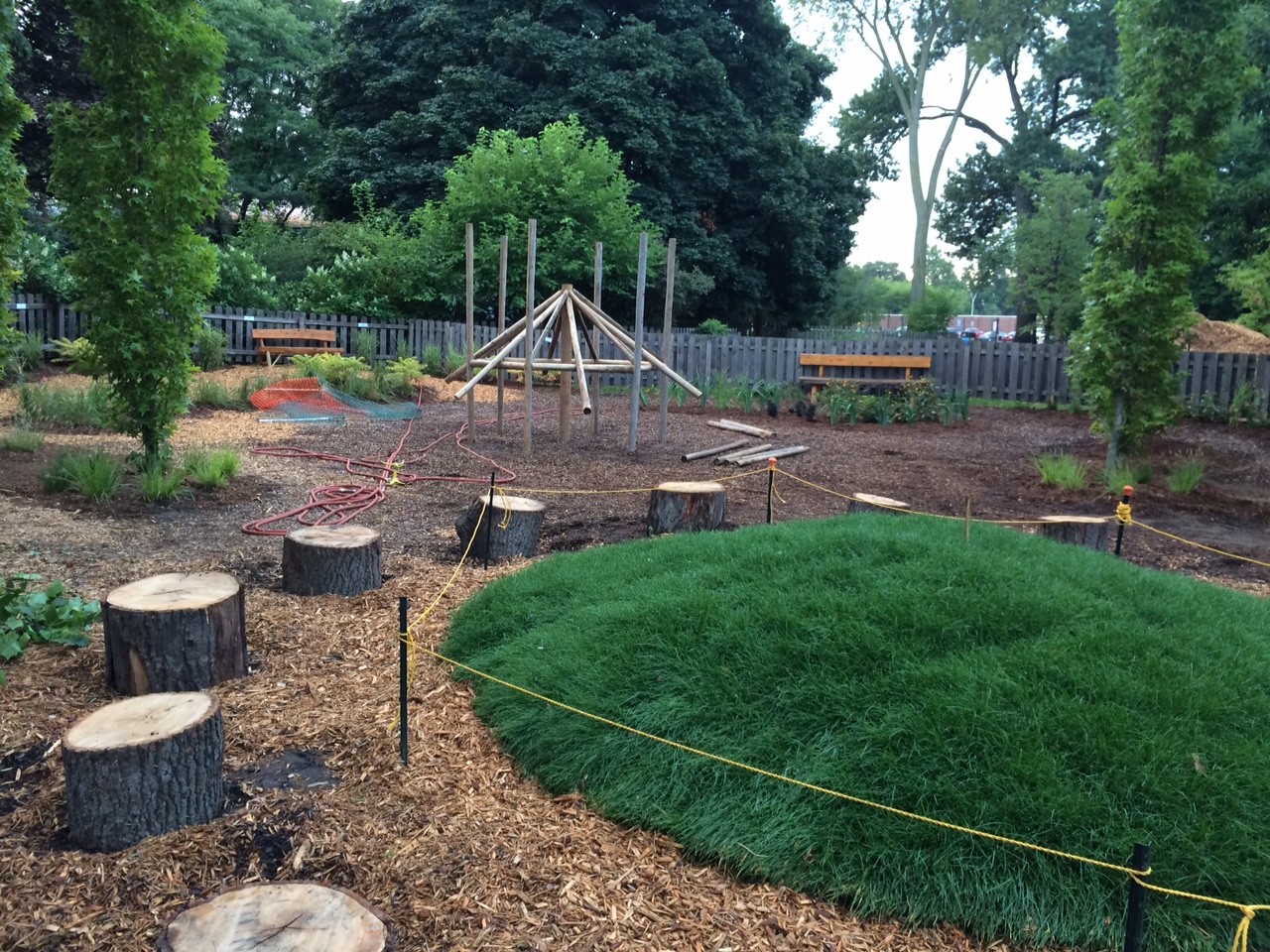
The previous play areas at the Detroit Zoo were both retired over the past two years and a new play structure was installed in the Main Picnic Grove. Our landscape team has done a tremendous job of enhancing and adding to the play area by landscaping with native plants and installing log steppers, toad stools and climbing rocks for kids to play on.Photo by Stephen Bernard

The adventure will continue as we include more natural play opportunities in the area directly east of the play structure. Kids will be able to climb through a spider web, relax in a giant bird nest, crawl through animal burrows and engage in imaginative play throughout the area. Native flowers and trees provide shady spots and smaller pockets for kids to have quiet areas to play in while parents can still easily keep an eye on all the activity from the comfort of benches.Photo by Ashley Boylan

We’re really excited about this new play space and we hope you’ll visit us early this fall to experience all it has to offer!

– Claire Lannoye-Hall

Greenprint: Lessons from the Storm

Beth Wallace is the manager of sustainability for the Detroit Zoological Society.

One year ago this month, the metro Detroit area went through some of the worst flooding in recent history when a sudden storm dumped more than 4.5 inches of rain on the region, overwhelming sewer systems and causing an estimated $1.1 billion worth of damage.

Heavy rains like this record-breaking event can have serious impacts on infrastructure – sewer overflows, pollution runoff and flooding. The Detroit Zoo experienced major flood damage during this storm, which forced us to close for a day as we evaluated systems and began cleanup efforts and repairs. It became apparent that we needed to find a better way to manage large rain events, so we started to incorporate a form of green infrastructure, called porous pavement, into major projects.

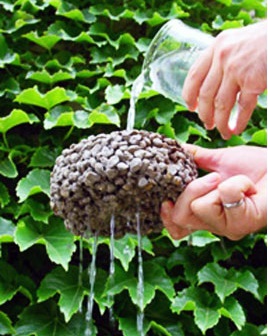
Pervious paving

Porous pavement is a material that encourages water to percolate through the surface into the ground for natural absorption. By incorporating this surface throughout the Zoo, we’re encouraging more natural absorption of water into the environment, which lessens our need for irrigation. It also prevents excess water from entering the Detroit sewer system. In addition, we have chosen a permeable surface that is light in color to reduce our urban heat island effect – a phenomenon whereby a warmer envelope of air exists over urbanized areas due to human activity – which will decrease ambient temperature to improve air quality and the health of nearby plants.Pervious pavement

Porous pavement can be in the form of brick pavers, gravel, porous concrete or even recycled rubber or glass. When you visit the new Cotton Family Wolf Wilderness, notice the colorful pathways of porous pavement. In addition, once the Polk Penguin Conservation Center opens in early 2016, the nearby parking lot will be made with porous material.

Join us on this green journey – next time you consider resurfacing your driveway or pathways, consider this application to help lessen your impact on the environment.

– Beth Wallace

Veterinary Care: Return of the Osprey

Dr. Ann Duncan is the Chief Veterinarian for the Detroit Zoological Society.

In 1998, the Detroit Zoological Society (DZS) Ospreystarted providing veterinary assistance as part of a collaborative effort to reintroduce ospreys, a fish-eating raptor, to southeastern Michigan. The Department of Natural Resources, Kensington Metropark, the DZS and DTE worked together to help this majestic species return to the area after being impacted by use of the pesticide DDT. Ospreys had historically been found in our area, but there were no known nesting pairs in southeast Michigan when the project was initiated.

Between 1998 and 2007, osprey chicks were brought down from northern Michigan, raised in elevated platforms on lakes and released at Kensington Metropark, Berry County and Stony Creek Metropark. All chicks were banded so that they could be identified by a network of volunteers and biologists devoted to their monitoring and recovery. At the end of the summer, these chicks then migrated to their winter grounds in South America and, after reaching maturity returned to the place in southeastern Michigan where they fledged, or began flying and feeding on their own. The first chick returned in 2002, and numbers have increased steadily since that time.

This year, there are more than 30 nesting pairs in southeast Michigan, most choosing to nest in cell towers. There is now a self-sustaining population of ospreys in the southern half of the Lower Peninsula. Beginning last year, funding was secured to fit a few of the chicks with backpack transmitters that send a GPS signal and allow the birds’ migration patterns to be tracked.

Ospreys - Banding at KensingtonThe DZS was initially involved in helping to feed and care for the chicks in the towers; we spent time monitoring the chicks in their nests and providing food, nutritional supplements and veterinary care. Now that we are no longer moving osprey chicks from northern Michigan, our involvement is limited to conducting exams and collecting blood samples for health monitoring and gender determination of the chicks produced by our now resident ospreys.

Over the years, the chicks have generally been incredibly healthy and robust. A few have been slightly dehydrated and some have had parasites, but none have had serious medical issues. It’s been incredibly rewarding to be a part of this successful reintroduction program. The biologists and volunteers involved in this effort are talented and dedicated to the success of this wonderful native Michigan bird.

– Dr. Ann Duncan


Education: Below the Surface of the Wetlands

Claire Lannoye-Hall is the curator of education for the Detroit Zoological Society.

Ever wonder what might be lurking below the water’s surface? Turns out, there’s much more in there than you might think!

The Cotton Family Wetlands has been providing guests with the opportunity to immerse themselves in a wetland habitat since 2012. The more than 200 feet of Trex decking walkways of the boardwalk (made from recycled plastic grocery bags and reclaimed hardwood) cross the 1.7-acre pond and wetland to bring us to the heart of this incredibly diverse habitat.

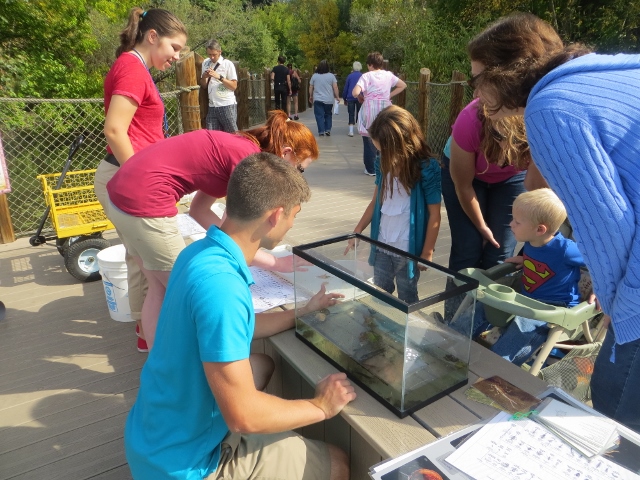
Native fish, frogs, turtles and birds are relatively easy to spot. However, some inhabitants require a closer look. The wetland is teeming with macroinvertebrates – organisms without backbones that live in water habitats. Our Volunteen Zoo Corps has been providing opportunities for guests to observe these incredible creatures through carefully collected water samples from the benthic zone of the wetland. The benthic zone is the lowest level of a body of water. Everything that is collected is returned directly to where it came from at the end of each shift.

Macroinvertebrates are present in pretty much all natural bodies of water. They are bioindicator species, meaning that some species are especially sensitive to changes in their habitat. We can count which species we find and know the general health of a body of water if the more sensitive species are present or absent. Our wetland happens to be in great shape, with a very diverse group of macroinvertebrates.

If you’re interested in learning more, there are several citizen science groups where you can join in on group studies. Friends of the Rouge is a local group that schedules benthic sampling a couple of times a year and recruits volunteers to help: http://therouge.org/fotrprograms/benthic-macroinvertebrate-sampling/.

Our Volunteens will be on the boardwalk during MemberFest and several weekends between now and early October if you would like to explore the Zoo wetland residents. For more information about how to join our Volunteen Zoo Corps Program, visit: http://www.detroitzoo.org/Volunteers/volunteering-detroit-zoo.

– Claire Lannoye Hall

Animal Welfare: A New Home for Wolves

Stephanie Allard, Ph.D., is the Director of Animal Welfare for the Detroit Zoological Society and oversees the Center for Zoo Animal Welfare.

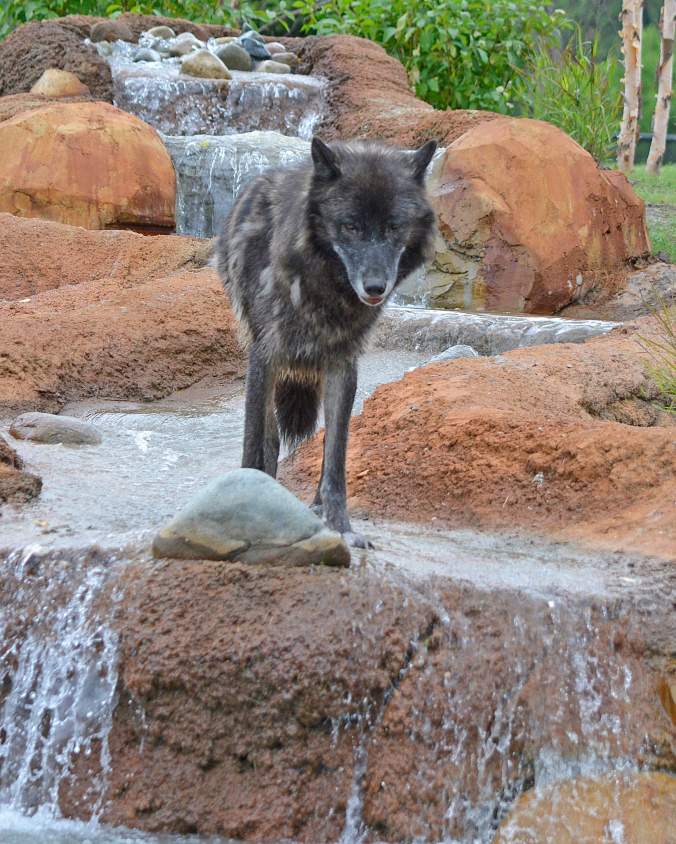
She was standing still, in front of an expansive vista full of greenery. Her eyes bounced from place to place, noting the tiered stream and pools, the variety in shrubbery and trees, and the rocky outcroppings. Sensing movement to her left, she turned to get a better look, and, through the trees she spotted Kaska, a male gray wolf with a coat of dark, smoky fur, exiting the den.Wolf - Wazi - Lee Fisher

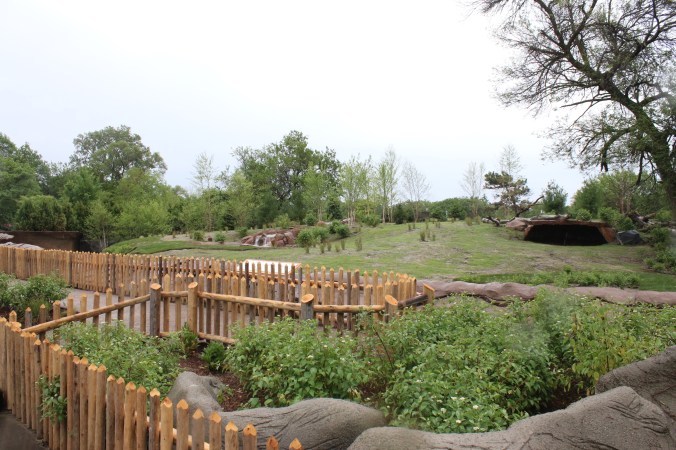
Wazi, a 7-year-old female gray wolf, is often seen exploring the terrain of her new home in the 2-acre Cotton Family Wolf Wilderness. Since it’s opening in early June, staff from the Center for Zoo Animal Welfare have been observing what the two wolves are doing and where they are spending their time as they acclimate to their new habitat at the Detroit Zoo. As the wolves interact with each other and explore their surroundings, we learn what matters to them.Cotton Family Wolf Wilderness - Jennie Miller

The process by which zoo habitats are designed is lengthy and meticulous. When architects design a home or an office building, they can talk to their clients to make sure that the design encompasses all of their wishes and meets all of their needs. When we are designing spaces for animals, we do not have the luxury of asking them questions directly. We have to rely on our understanding of the ecology and behavior of the species in question. We engage experts and ultimately construct habitats that we believe will not only meet, but exceed the needs of the animals that will inhabit them. We include opportunities for each animal to engage in species-typical behaviors, to seek shelter and privacy when desired, and to exert some measure of choice and control over their daily lives.Wolf - Kaska - Roy Lewis

When all is said and done, we must rely on what the animals “tell” us about their environment and make any adjustments accordingly. As we do with all the animals, we will continue to find ways to learn what Wazi and Kaska think about their home and their lives.

– Dr. Stephanie Allard

Greenprint: Join us as we #ditchthebottle

Beth Wallace is the Manager of Sustainability for the Detroit Zoological Society.

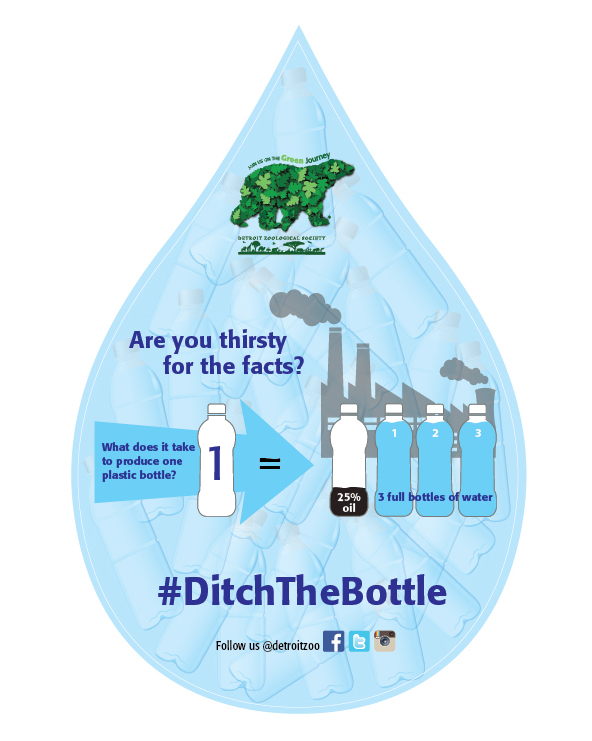
Did you know that U.S. consumers go through 1,500 bottles of water every second? Of those 1,500 bottles, only 300 of them will be recycled. Unnecessary plastic pollution is a big reason why the Detroit Zoological Society is taking the bold step of phasing out the sale of bottled water – but it’s not the only reason.

When diving into this issue, we’ve also learned that most brand-named bottled water comes directly from the tap, our Great Lakes or even the Detroit River – costing consumers around 10,000 times the cost of tap water and diverting massive amounts of fresh water from the Great Lakes basin. In addition, there are an incredible amount of resources that go into producing one bottle of water and that single-use product remains in our environment anywhere from 500 to 1000 years.

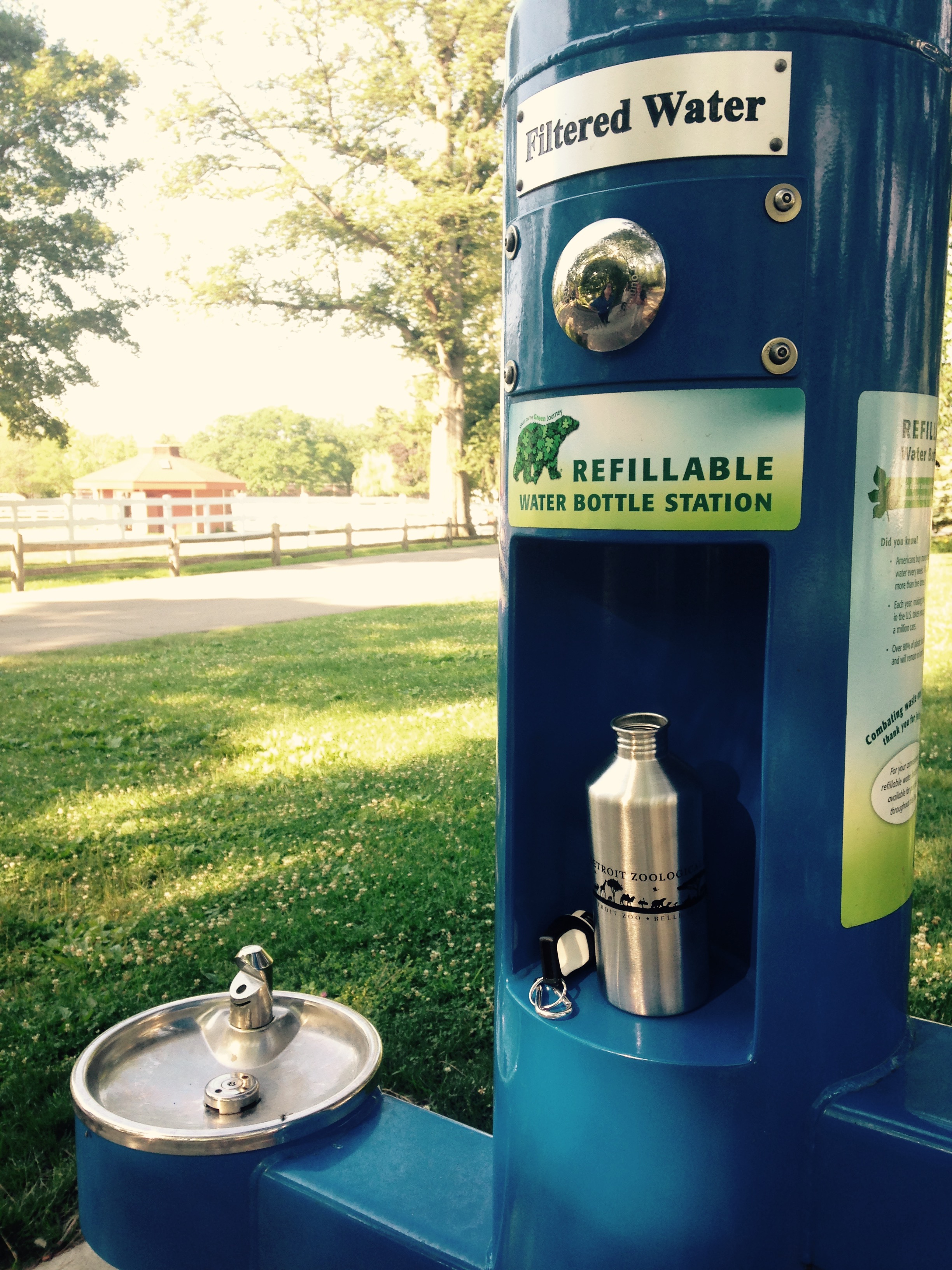
As of September 2015, the Detroit Zoo will no longer sell bottled water. We ask that you join us to #ditchthebottle here at the Zoo and in your everyday lives. We encourage you bring reusable containers that can be refilled – for free – at any of our 20 refill stations during your visits to the Zoo. To help with this transition, we’re also offering a reusable sports drink container at all our major concessions, which costs less than bottled water.

Help us spread this message! We’ll be giving away two of our premium stainless steel reusable water bottles to our supporters. To win this reusable drink container, please connect with the Detroit Zoo on social media and share a photo of a place you would like to keep clean from plastic pollution. Tag the photo with #ditchthebottle and @detroitzoo on Facebook, Instagram or Twitter. The Zoo’s Green Team will pick two winners on July 14.

– Beth Wallace

Veterinary Care: Martens in Manistee

Dr. Ann Duncan is the chief veterinarian for the Detroit Zoological Society.

One of my favorite things to do is assist with work in the field. It is very rewarding to be able to use our veterinary expertise to help animals succeed in their natural habitat. This month, I and Dr. Wynona Shellabarger each had the opportunity to spend a few days near Manistee in northern Michigan, assisting with health assessments of free-ranging martens.

The American pine marten (Martes Americana) is an important carnivore species that was originally found throughout most of our state. Habitat loss and overhunting led marten populations to drop to zero by the early 1900s. In 1986, the U.S. Forest Service and Michigan Department of Natural Resources reintroduced 36 martens into the Manistee National Forest. Early monitoring of the released animals indicated that the population was not expanding as expected. Professor Paul Keenlance from Grand Valley State University has been leading research efforts to better understand this group’s habitat range and preferences, breeding success, and the distribution of their young, known as kits.

His research team is also working to better understand what they eat and to determine the degree of genetic diversity. The Detroit Zoological Society’s (DZS) participation is in support of the work Dr. Maria Spriggs from Busch Gardens is leading to assess the overall health of the Ann Duncan - Martenpopulation. To conduct this research, the martens are captured in what are known as Hav-A-Heart traps – which are humane traps that close in such a way that they do not harm the animal. The traps are set carefully to ensure that martens have a nice snug spot. We cover each trap with pine needles and leaves for warmth and nest building, and put large pieces of bark on top to protect them from rain and snow. We also place meat bait and grapes in each trap so that they have a snack and a source of water.
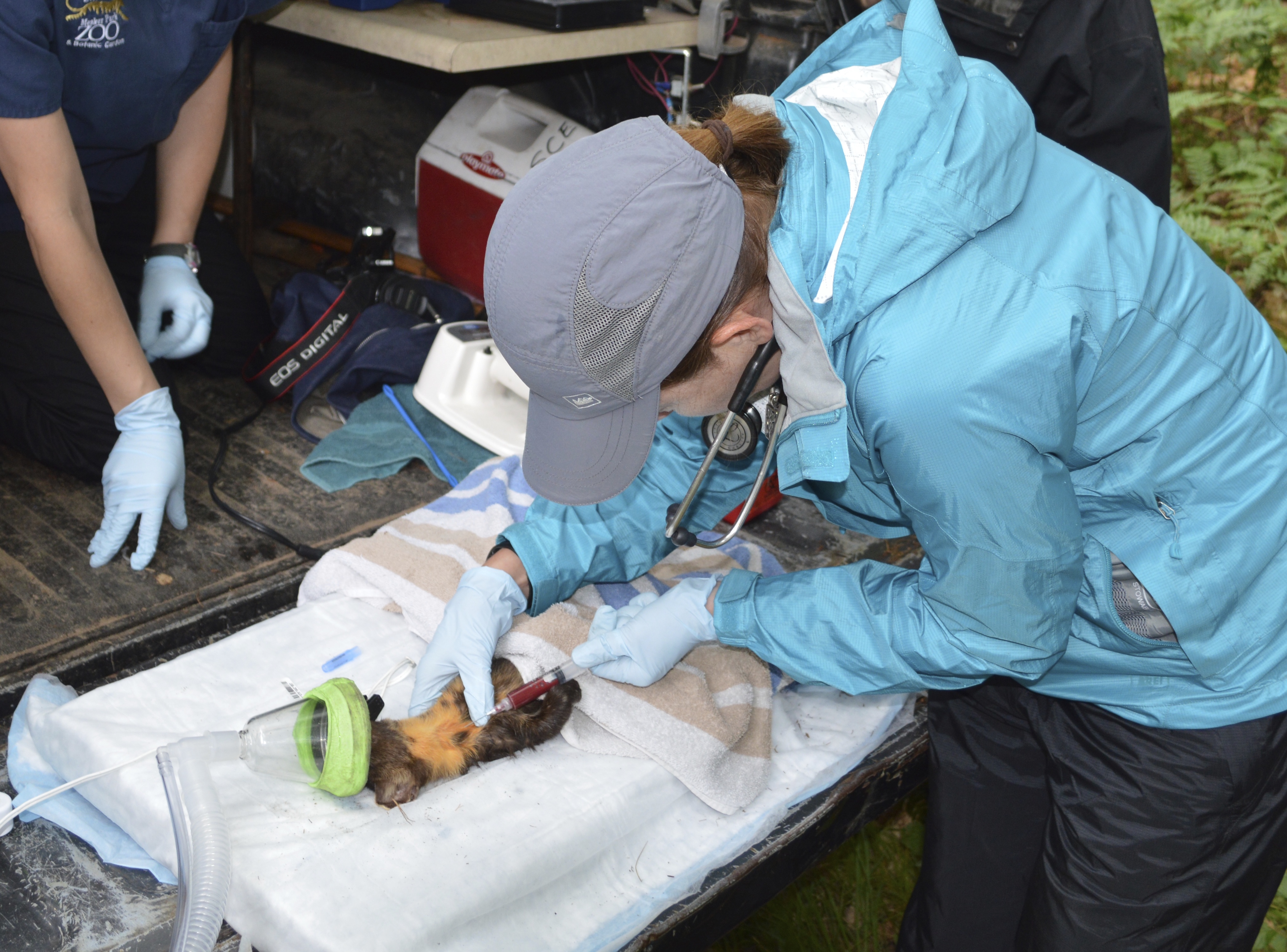
Our visit this spring marked our fifth trip to the field site. A typical day in the field starts at 7 a.m. because we want to make sure that any martens that have been captured do not have to wait long. Each trap is marked on a map with GPS coordinates and we drive from one trap to the next. Empty traps are restocked with bait and grapes as needed.

Ann Duncan - martenIf we catch a marten, things get very exciting. Each marten is given anesthetic gas with a face mask to allow an examination. During the procedure, we measure several parameters to ensure that anesthesia is safe and smooth. We measure body temperature to make sure martens are not too cold or hot. Next, we collect a body weight, perform a thorough physical exam, check the teeth to determine age and check for ticks and fleas. We collect urine, feces and hair samples, and collect blood for an overall health panel and to determine exposure to viruses. Lastly, each marten is fitted with a GPS collar. The DZS provides GPS collars that are able to provide a location every 15 minutes to an hour for many months.

During a typical week, we usually catch between five and 10 martens. Each capture expands our understanding of these amazing creatures. The information that has been gathered so far has lead to changes in the management of the forest in which they live, and will be used to inform decisions about marten protection in the future.

– Dr. Ann Duncan

Education: Protect the Pollinators

Claire Lannoye-Hall is a Curator of Education for the Detroit Zoological Society.

Summer vacation is upon us and we can’t wait for you to visit the Detroit Zoo. There are so many new things happening here – the wolves are exploring their new habitat and the dinosaurs are beckoning from the trail.

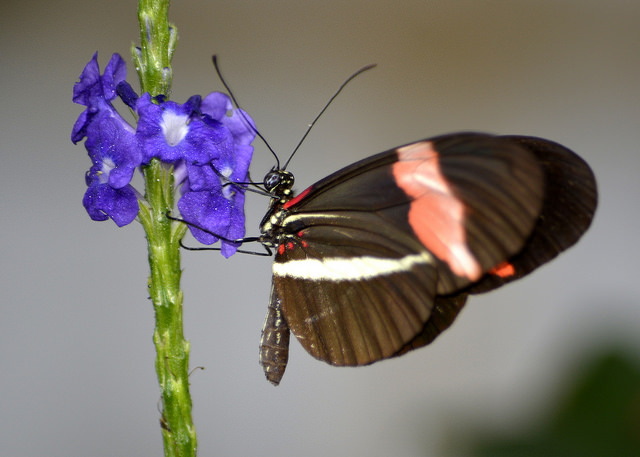
While the summer offers many great Butterfly - Roy Lewisopportunities to visit the Zoo, it also brings out bees, butterflies and other pollinators, which are very important to the environment. They help flowers bloom and fruits and vegetables grow. Without them, there wouldn’t be food for us or for the animals to eat. Fortunately, we can help them in a few simple ways.

Start by avoiding the use of pesticides and herbicides. While they may keep the weeds away and your grass a little bit greener, they are devastating to pollinator populations. Consider pulling weeds by hand or using an organic alternative such as mulch or hot water to eliminate weeds.

Honey BeeYou can also plant a pollinator garden. Native plants are easy to find, easy to take care of and are great for pollinators. For southeast Michigan, try lupine, bee balm, coneflower or cardinal flower. Bees and butterflies will likely find your garden first, but if you’re lucky, hummingbirds may stop by, too! For more suggestions on what to plant, visit: http://pollinator.org/guides.htm.

Monarch butterflies are of special concern due to habitat loss. Here at the Zoo, we have special gardens called “Monarch Waystations” that are certified by Monarch Watch, a nonprofit organization. The plants in these gardens provide food and shelter for monarchs throughout metamorphosis and as they travel to and from their overwintering grounds in Mexico. Next time you’re at the Zoo, look for one of these gardens and see if there are any Monarch butterflies visiting. You can find out more about creating your own certified waystation by visiting: http://www.monarchwatch.org/waystations.

Finally, you can help scientists by making observations and collecting data. Scientists need to know how many and what kinds of pollinators are in your backyard. Becoming a citizen scientist is easier than you might think. Visit some of the sites here for more information: http://pollinatorlive.pwnet.org/teacher/citizen.php.

We look forward to seeing you at the Zoo this summer!

– Claire Lannoye-Hall