An Expedition Through the Amazon

Pictured are 2023 Expedition participants, CONAPAC staff, DZS staff and Amazon Exlporama Guides.

Authored by Claire Lannoye-Hall, director of education for the Detroit Zoological Society (DZS).

The Amazon Rainforest is a beautiful and fascinating place to visit. An incredible variety of plants and animals make this region one of the most biologically diverse and important areas to protect in the world. 

Living in this area of the world is not easy. The remote communities are only accessible by boat, using the Amazon and Napo rivers — and their many tributaries — to get to the larger cities where medical care and material goods can be purchased. Most communities rely on the food they can grow within their communities or harvest from the rainforest. There are few opportunities to earn money — aside from selling natural resources, such as timber.

While the Peruvian government provides a school building and teachers for each community, it doesn’t have the resources to stock the shelves with books and materials — much less support each student with the materials they need to attend school and learn with their peers. In the early 1900s, CONAPAC, a nonprofit in northeastern Peru, started providing supplies to a few communities adjacent to properties owned and operated by Amazon Explorama Lodges. This was the start of the Adopt-A-School program, which has continually grown for almost three decades through the support of generous individuals from all over the world. The DZS partnered with CONAPAC in 1999 after years of the Detroit Zoo conducting field research in the area. The partnership provided a stable and reputable U.S.-based nonprofit where individuals could receive tax receipts for their donations and enhance donor confidence in the project.  

In the early 2000s, the DZS started organizing expeditions to the Amazon. Individuals can pay a fee to participate in the Adopt-A-School program by helping to distribute school supplies to the partner communities. The fee supports CONAPAC and accounts for a majority of its annual operating budget. The trip participants spend time in the rainforest, learn about its ecology and interact with families who have lived there for generations. This spring, 35 individuals from around the country participated in the Amazon Rainforest Expeditions. They paid their airfare and made a $1,500 contribution to support CONAPAC and offset a small portion of their lodging and meal expenses, which were otherwise covered by Amazon Explorama Lodges. 

Pictured is a room at ExplorNapo Lodge.

During the first week, the group visited the Canopy Walkway (a more than 1,500-foot-long aerial experience that connects 14 platforms secured to trees up to 115 feet in the air), went on night boat rides to explore the plants and animals after dark, and, most importantly, delivered school supplies to thousands of students and teachers. Each student receives a set of notebooks, pens, pencils and other materials they will use throughout the school year. Teachers also receive a set of supplies, as well as items to be used for the entire school. The school’s supplies include paper, writing and coloring utensils, text and story books, chalk or dry-erase markers, educational toys and more. 

Pictured are students with their school supplies.

A second expedition, with a new group of participants, finished the school supply deliveries to the final two communities, then spent four days working in the community of Ramon Castilla. This small community was in dire need of a new community kitchen. Most of the kitchen structure was built by a professional contractor out of concrete to ensure it will last in the climate and withstand the variety of insects that eat and destroy natural materials, like wood. Trip participants built window frames and screened them, primed and painted the concrete, and painted the community’s water purification tower. 
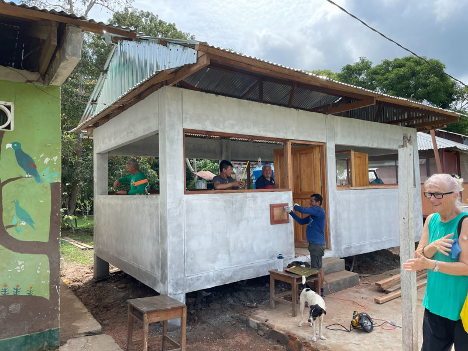
Trip participants helped construct a kitchen.

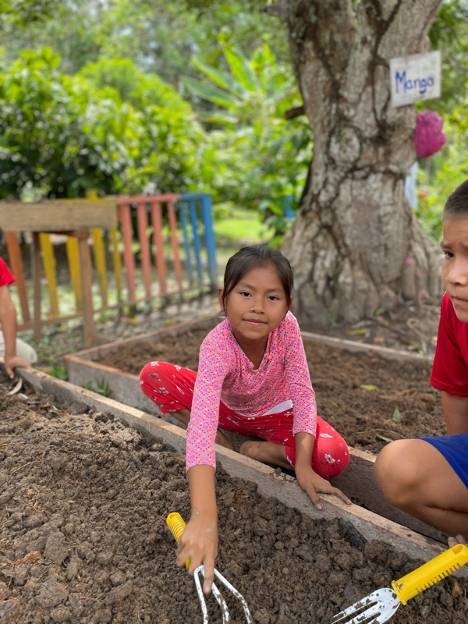
While some community members and trip participants were helping with the construction projects, the children in the community interacted with the rest of the group in the school. Together, they did environmental education activities and crafts, and they planted fruit trees and seeds in the school garden. The activities build math and science skills while reinforcing how an intact ecosystem contributes to the well-being of all who call the rainforest home. 

This international partnership continues to stand the test of time, prioritizing access to education and supporting the teachers, students and families who live in the Amazon rainforest. To support the Adopt-A-School program, click here. To sign up for information about future rainforest expeditions, click here

Celebrate World Migratory Bird Day!

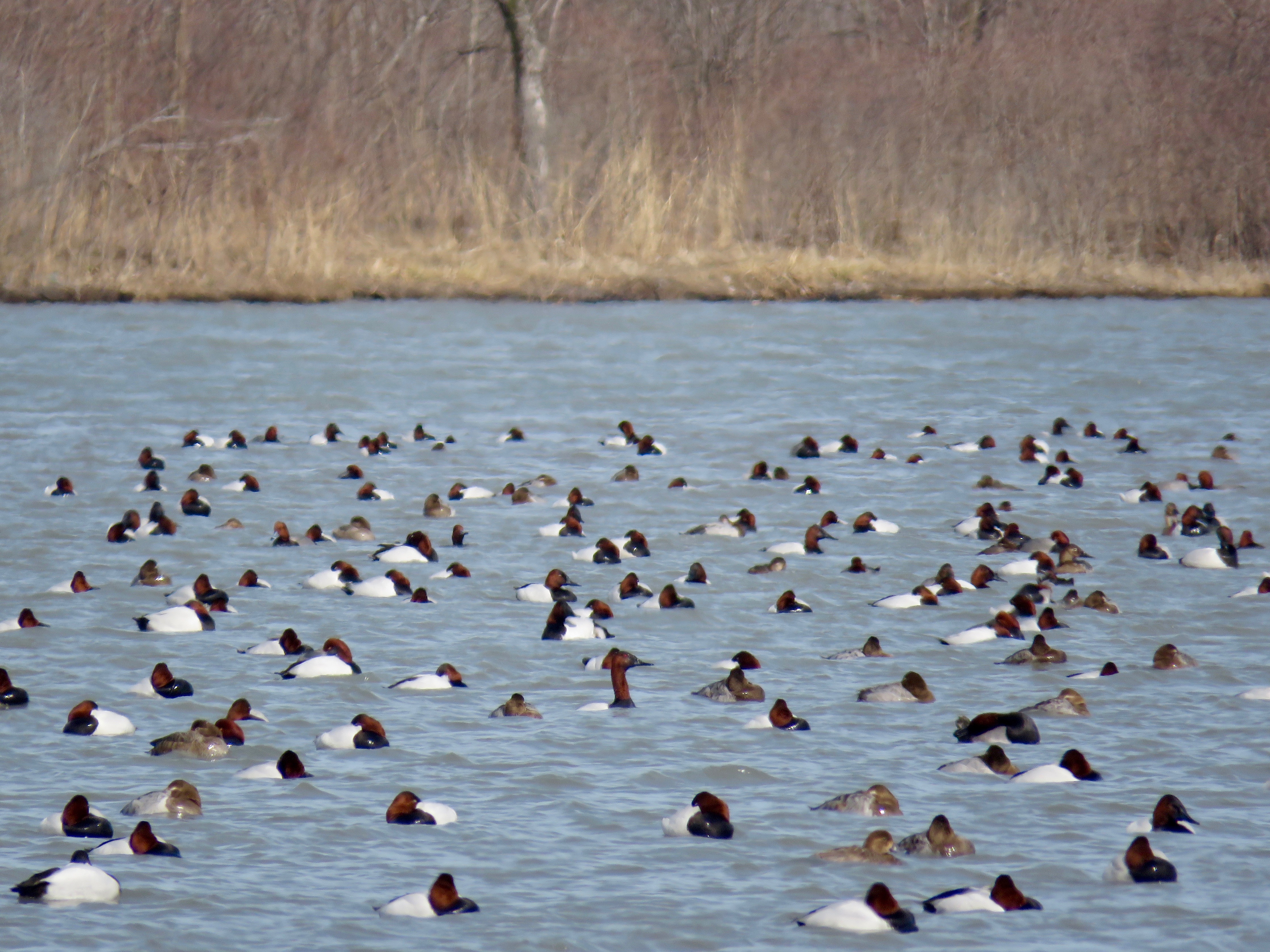
This week, hundreds of millions of birds will leave their winter habitats from as far away as the Amazon rainforest and Andes mountain range on their annual journey to reach their summer breeding grounds across North America and right here in Detroit! Migratory bird species travel along ancestral routes defined by waterways and often travel under the starlight at night. Fluttering along geographic landmarks like the Mississippi River and the shores of the Great Lakes, birds as small as the ruby throated hummingbird head to their summer homes thousands of miles further north. 

Saturday, May 13 is World Migratory Bird Day, which amplifies the critical importance for birds to have access to water throughout their journey.  Waterways serve as sources for food and habitat during migration and year round.  At the Belle Isle Nature Center, birds are celebrated on this day — and every day — through education and conservation practices that promote their right to access food, water and habitat. 

As the month of April came to a close, a time when the frequency of bird migration really picks up in the Detroit area, the Belle Isle Nature Center hosted Michigan Public Radio’s live broadcast event “Bird Nerds Unite.” This event featured a panel of local experts who discussed all things birds: the birds who are migrating through now, those who reside in southeast Michigan all year and tips for noticing birds right near your home.

You can watch or listen to a recording of the presentation here.

Even the youngest among us can appreciate the birds in their neighborhood. Don’t just take our word for it — here’s what Marlin Franklin, Brightmoor community engagement manager with Brilliant Detroit, had this to say about the Belle Isle Nature Center’s after school program, Neighborhood Nature Explorers. 

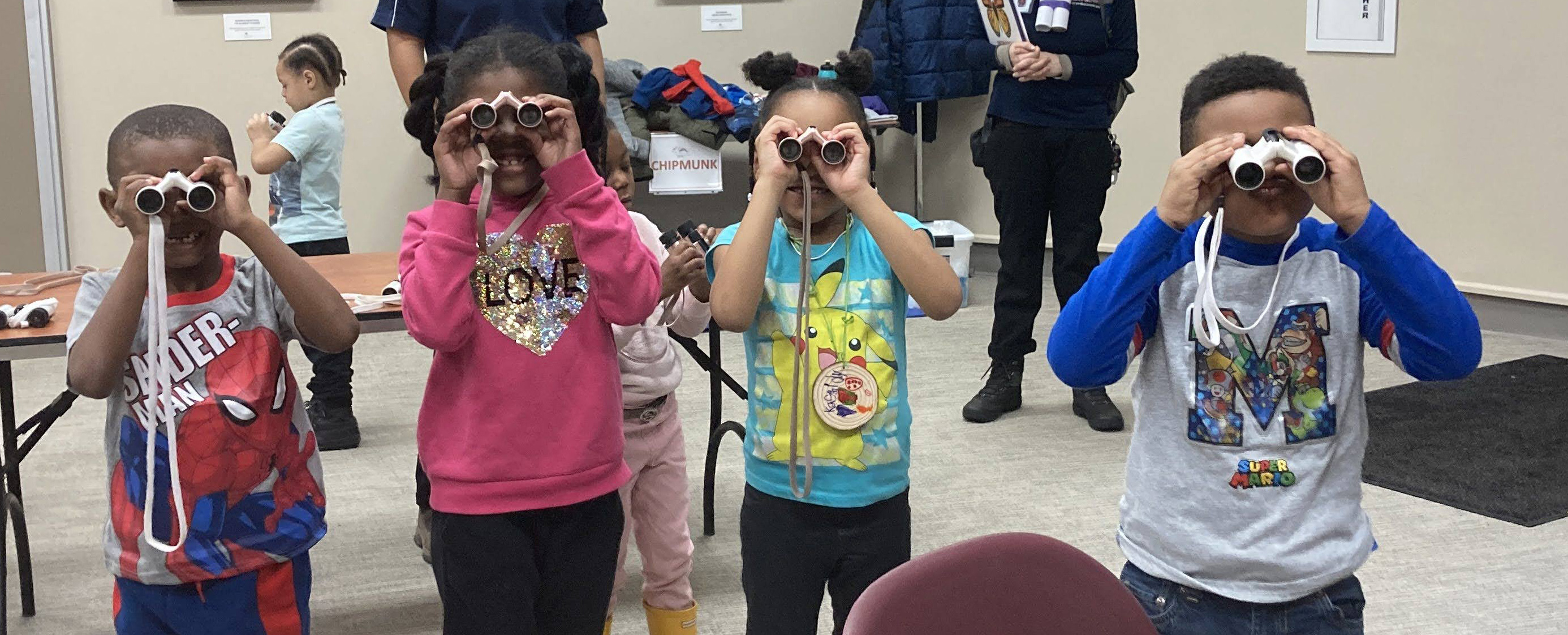
“Contrary to popular belief, bird watching is not boring! It is amazing fun for kids and adults,” he says. “We celebrated bird day at the Brilliant Detroit Brightmoor site with Micah Blake-Smith from the Belle Isle Nature Center. We learned the proper way to use binoculars. We identified birds that live and forage for food in our neighborhood, and we made feeders for those birds that we hung in the trees. Our little people will grow up to be good stewards of the earth with classes like these.”

If you think that’s something, come experience the excitement that awaits from bird watching during sunset or with the use of audio ID technology at the Belle Isle Nature Center’s free programs.

Nature at Night

A flutter of green, a jolt of red, a fleck of gold – a pheasant ducks through the underbrush in a burst of color. Whether it is the visual rainbow of feathers or a symphony of a bird chorus saluting the setting sun, hikers and bird watchers can find themselves knee deep in renewed prairie while birding on Belle Isle. Our Nature at Night program gives participants an opportunity to discover spaces that burst with life as the sun goes down. Join us for our next free hike from 5 to 9 p.m. Thursday, May 18. Guests are welcome to bring binoculars or borrow a pair from the Nature Center.

Science Hikes

More of a morning bird than a night owl? There is also a daytime Science Hike planned for 2 to 3 p.m. Sunday, May 21. This “technologically enhanced” bird walk utilizes the Merlin Bird ID app. Participants will be provided with iPads and can use the app to help them identify birds from their song. A recent walk on the Nashua Canal Trail, a 1-mile accessible pathway through the heart of Belle Isle, revealed ruby-crowned kinglets, red headed woodpeckers, white-throated sparrows and one very impressive eagle’s nest.

As spring bird migration winds down in June, the community group Black to the Land Coalition will host their annual birding event at the Belle Isle Nature Center called Blacks, Browns and Birds from 10 a.m. to 2 p.m. Saturday, June 3. This allows for Black and Brown families to come together in green spaces, connect with the land through bird watching and enjoy other outdoor activities.

For more information about upcoming, free programs and events, visit our website. The Belle Isle Nature Center is open seven days a week, and we are happy to give tips on where to head for your own bird walk. Celebrate World Migratory Bird Day on Saturday, May 13 or any day of the year by noticing where you find nature in your neighborhood.

This entry was written by a gaggle of geese: Ryan, Luke, Courty, Micah and featuring Marlin Franklin of Brilliant Detroit

Meet a Michigan Native at the Belle Isle Nature Center!

You don’t need to head up north or plan a camping trip to connect with nature – there are amazing animals all around us! Let us introduce you to three of your wild neighbors.

They call it mudpuppy love!

Mudpuppies are the second-largest salamander in the western hemisphere. These amphibians may not give off total puppy-dog vibes, but when you see them up-close and in-person, you can’t help but to fall for their charms. There is even a whole celebration in their honor called Mudpuppypalooza taking place March 26 at the Belle Isle Nature Center!

Mudpuppies have wide faces and frilly, external gills on the sides of their heads that act like filters in the water. This means they need to live in clean water to stay healthy. These pups spend most of their time under the cover of flat rocks or slabs of concrete at the bottom of rivers – including our very own Detroit River. They are an important part of Michigan’s aquatic ecosystem, and the Detroit Zoological Society has been collecting data on mudpuppies and water quality in the Detroit River since 2004. Learn more about our monitoring efforts.

Say hi to Michigan’s largest snake!

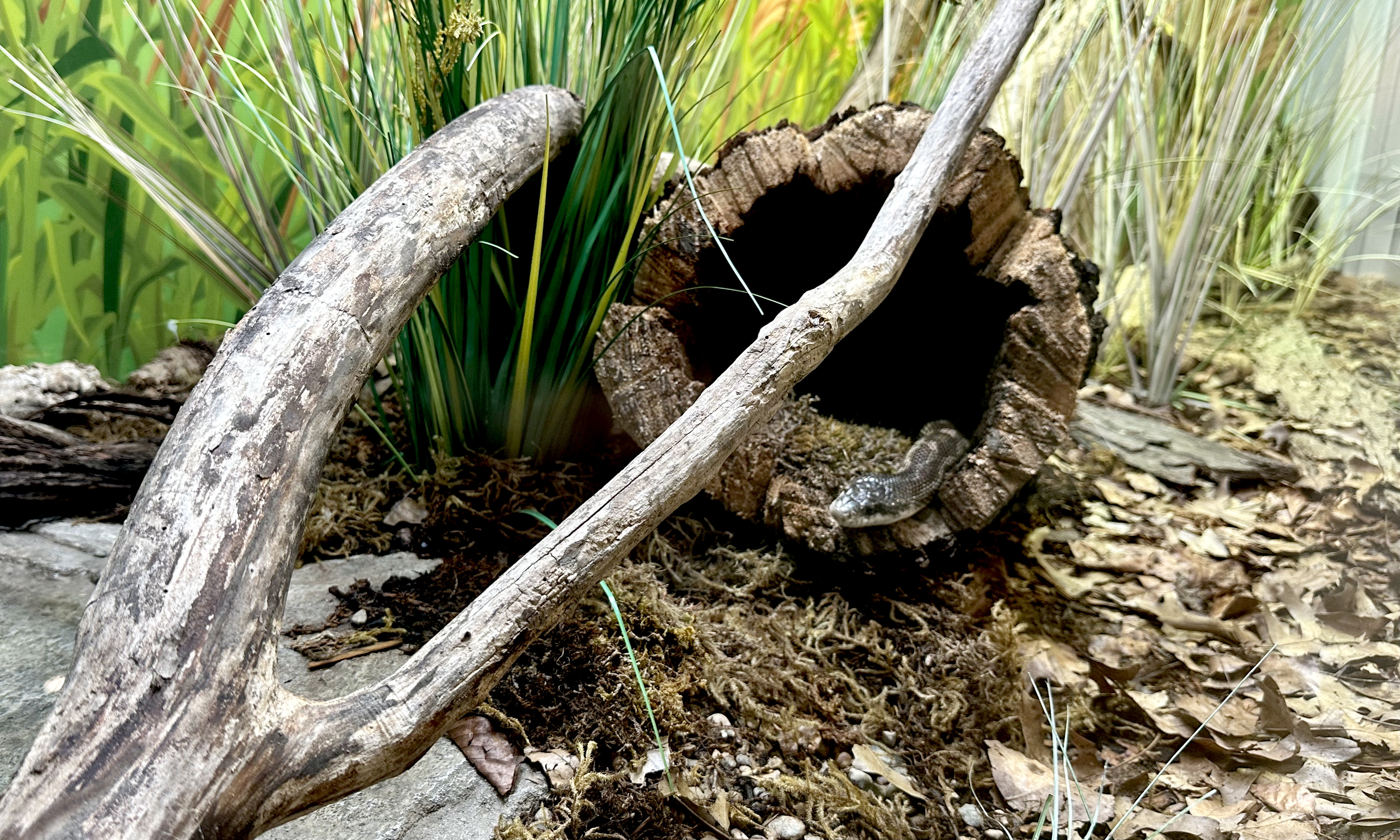
Black rat snakes can grow to be an impressive 8 feet long – but don’t worry, they are non-venomous and harmless to humans. Rodents, however, are not so lucky. As their name suggests, this species hunts rats and will often enter barns or abandoned buildings in search of food. They use the constriction method of hunting and consume their prey in a single bite! Rat snakes can also be found hiding in tall grasses, under fallen trees or in hallowed out logs, just like our friend here, who just emerging after a taking a nice afternoon nap. The habitats at the Belle Isle Nature Center are designed to mirror the landscape the species might experience in the wild – do any of the elements look familiar to you?

Do I spot a spotted turtle?

If you have visited our Nature Center before, you may be familiar with our turtle pond. This expansive indoor habitat is home to several turtle species, including this pair of spotted turtles. They may be smaller than most of their pond mates, but as you can see from this video, they make up for it in moxie! Spotted turtles can be found in bogs, marshes, swamps, ponds and woodland streams throughout Michigan. They can often be seen basking in the midday sun, but when surprised, spotted turtles will dive underwater and completely bury themselves in the mud. They also retreat to these muddy beds to stay cool on hot summer days. Spotted turtles in Michigan are threatened by habitat loss and from being removed from the wild by reptile collectors. That brings us to a rule that applies to all wild animals – look don’t touch! This is the best way to keep your new friend safe.

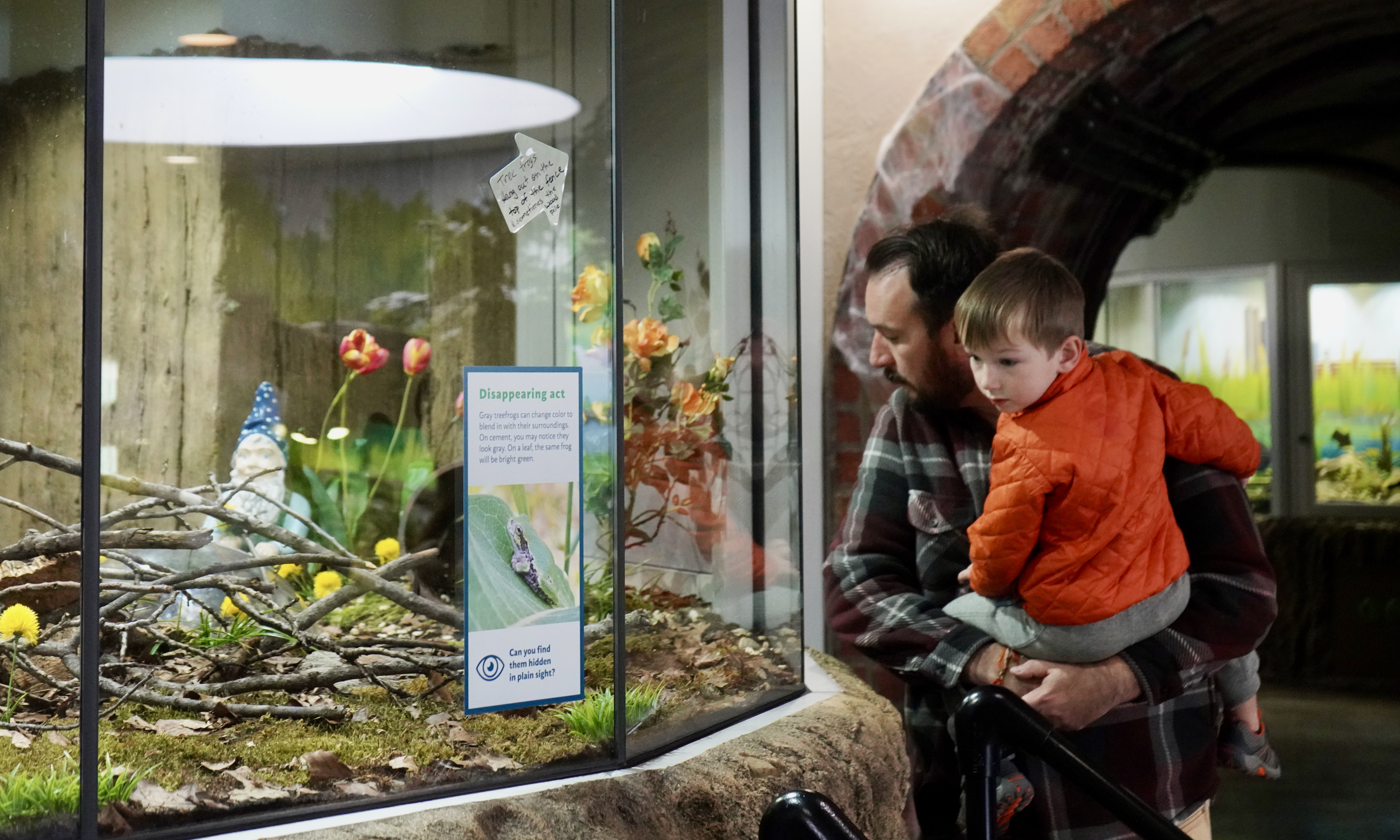
The Belle Isle Nature Center is all about making connections. People, animals, natural and unnatural landscapes are all a part of the unique tapestry that is Detroit. Visit belleislenaturecenter.detroitzoo.org to plan your visit. The Nature Center is open every day from 10 a.m. to 5 p.m. and and is always free!

Honoring DZS Trailblazers During Black History Month

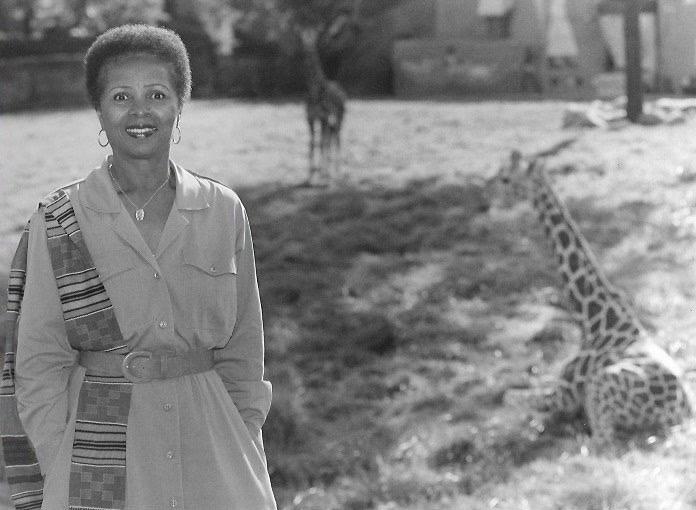
Khadejah Shelby was the first Black female deputy and acting zoo director in the United States.

Authored by Christina Ross, media coordinator for the Detroit Zoological Society (DZS).

The DZS prides itself on being an organization that is committed to celebrating the diversity — not only of wildlife and wild places — but also of our human community. This Black History Month, the DZS honored this commitment by highlighting individuals who have greatly contributed to our organization throughout the years. There is no doubt the DZS is a better place for the animals, our guests and our staff due to their dedication and fortitude. We are proud to shine a light on their accomplishments and offer our deepest gratitude. 

Meet some of the people who have helped make the DZS the organization it is today!

Khadejah Shelby

Khadejah’s influence is still felt at the Detroit Zoo today.

Ms. Khadejah E. Shelby was appointed as the deputy director of the Detroit Zoo in 1982 and held this position, along with Belle Isle Zoo director, for 12 years. She also served as acting director for the Detroit Zoo, making her the first Black woman to hold the position of zoo director in the United States. During her time at the Zoo, she developed an appreciation of all animals and worked to share her knowledge with Black children by answering all their animal-related questions. Khadejah took on the personal responsibility of educating Black people about zoo careers by helping to develop a zoo management degree at Wayne State University. 

She managed with common sense and openness, knowing the animal care team was — and still is — the foundation of the Zoo. Though she passed away in 2018, Khadejah’s impact can still be felt in our organization today.

“Ms. Shelby was a champion for change,” says Curator of Education Mike Reed, who worked closely with Khadejah. “She was a strong personality and not afraid to challenge traditional barriers. In a time when there were few Black individuals in animal care departments in zoos and aquariums throughout the United States, she worked to give everyone a fair opportunity at the Detroit Zoo.” 

C. Monique Roberson

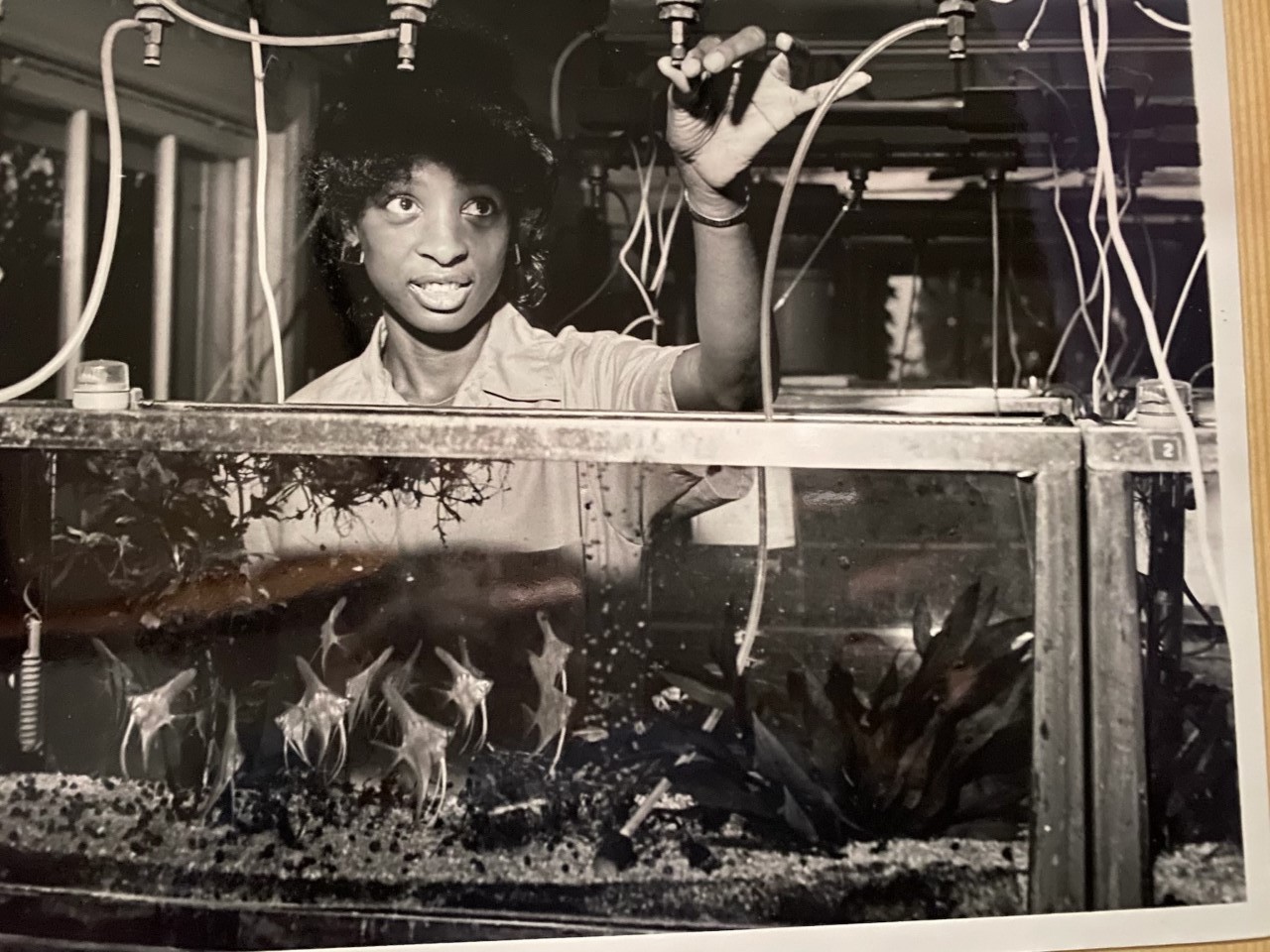
C. Monique Roberson was recognized by being the first black female zookeeper at the DZS.

In November 1976, Monique Roberson became the first full-time female zookeeper at the Detroit Zoological Society (DZS) and was later recognized as such by the City of Detroit. 

Monique began her DZS career in the guest services department before transferring to the animal care department. At the time, this was uncommon for a woman, and she faced harsh scrutiny from her male coworkers. Even though she was tasked with the hardest jobs and faced continuous discrimination, Monique was determined to make it in this “man’s” profession. 

Over the years, Monique took it upon herself to read extensively about the animals she cared for. When a testing system was put in place, she passed with flying colors and was promoted to senior zookeeper. During her time at the DZS, Monique cared for her favorite animals, the primates, and served as the union’s chief steward. 

“The DZS went from a male-dominated workplace to a welcoming environment for all,” Monique says when reflecting on her time at the DZS. “Animal care and training and enrichment have evolved practically 360 degrees from my earlier years.” 

After 48 years and 4 months of employment, Monique retired on Dec. 31, 2020. During her career, she broke down barriers and paved the way for other women and Black individuals to join the animal care field. We want to take this opportunity to thank her for her years of commitment and honor her as the first full-time female zookeeper in DZS history!

Gwen Lainer

Gwen Lainer was the heart of the guest relations team for years.

Meet the woman who was considered the heart of the Zoo’s guest relations department for years.   

Gwen Lanier worked at the Detroit Zoo for more than 48 years. During her tenure, she witnessed the DZS take great strides toward being an inclusive workplace and performed many different roles on the guest relations team. She likens working on this team to eating a box of chocolates — “you never know what you are going to get.”

“The employees are colorful with their antics, and the guests are unbelievable,” she says. “Working in guest relations will keep your brain charged, body energized and give you a passion for people and their stories.” 

One of her proudest work moments is when the DZS adopted a school on the lower east side of Detroit. There, Gwen mentored a student with whom she still stays in touch today! Gwen is also proud that she trained fellow team members how to treat people equally. She had a great rapport with staff and was a confidant for many.  

Though she is now retired, Gwen continues to serve as an ambassador for the Zoo. She has seen so many changes in her 48 years and appreciates that the DZS has gone from being a white male-dominated organization to a diverse place where jobs are filled by qualified people regardless of their race, orientation or religion.

Mike Reed

Mike Reed is a coordinator of education for the Detroit Zoo.

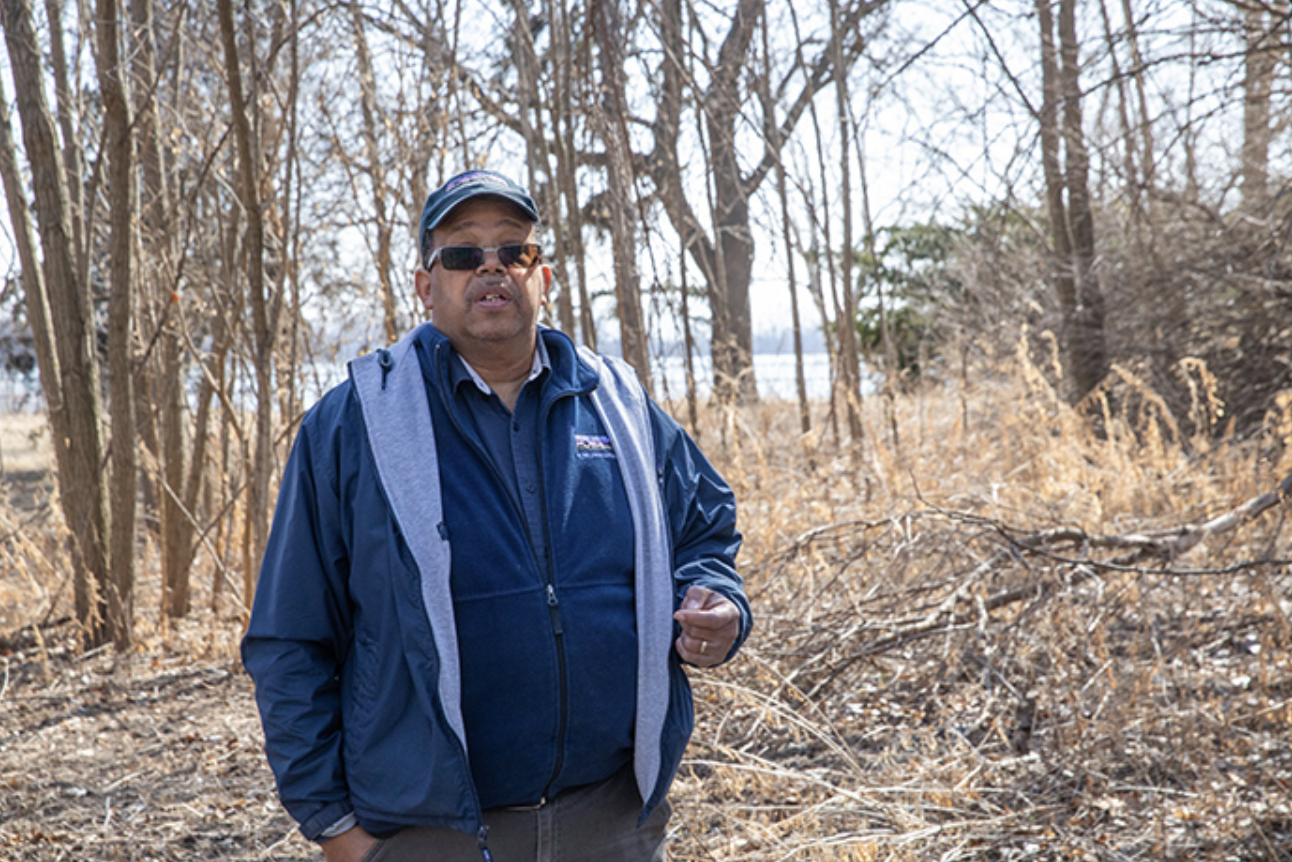
Meet Mike Reed, who says his most cherished part of working for the Detroit Zoological Society (DZS) is that he could be a part of “living Black history.”

A zoologist and coordinator of education at the Detroit Zoo, Mike is the longest-tenured member of the DZS team management group. He has spent the last 35 years caring for animals large and small at the Detroit Zoo and on Belle Isle. Throughout his career, he maintained a goal of sparking a love of nature in all youth and showing Black children that there is a place for them in animal-related fields.

Mike made history by being the first educator specifically assigned to the Belle Isle Zoo and Aquarium. There, he helped to create what was, at the time, the world’s largest spider habitat. It was the first major zoo habitat designed, built and maintained by an entirely African American staff.

Mike continued to break barriers by being elected the first Black president of the Michigan Alliance for Environmental and Outdoor Education, a statewide environmental literacy group. He was also the first African American to serve as education chair for Youth Day, Michigan’s largest one-day children’s event.

Mike has made a difference in many children’s lives by visiting schools and talking with them one-on-one at events. In 2021, he was profiled in an article by Wayne State University that shared his accomplishments. Mike hopes his story will inspire more young Black Americans to join their classmates in seeking jobs in the sciences, so they can continue to create history.

Read his Wayne State feature here.

Maurice Anderson

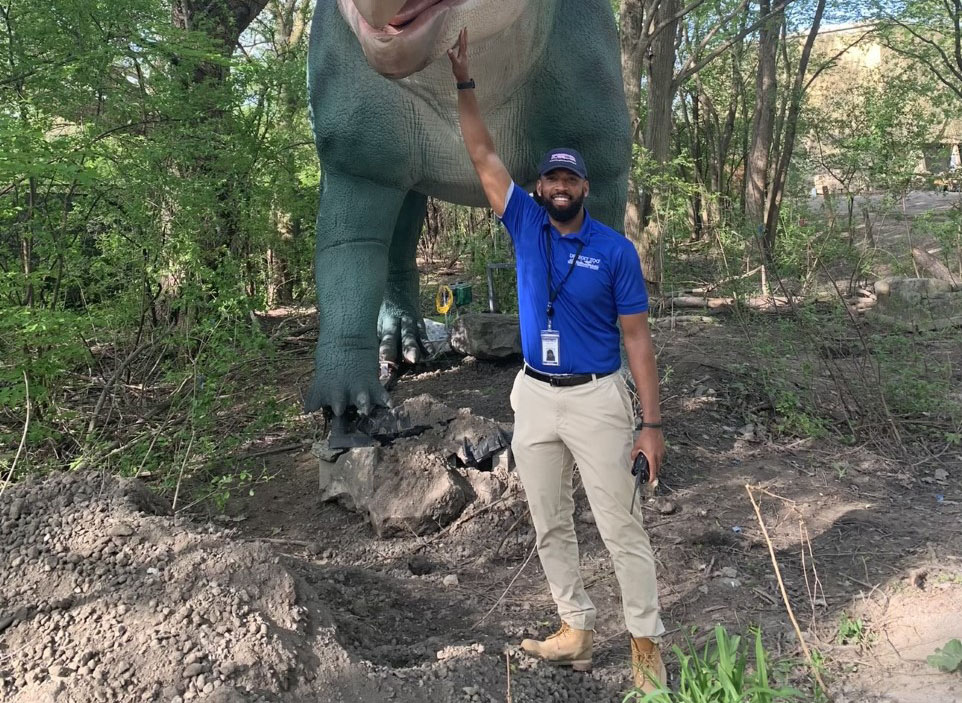
Maurice Anderson is the director of guest relations for the DZS.

Finally, let’s meet someone who making history today and moving us toward a more equitable future.

Maurice Anderson is the director of guest relations for the Detroit Zoological Society (DZS). He is responsible for everything that goes into giving guests a great Detroit Zoo experience —from hiring and training staff to managing the rides and attractions, resolving customer service feedback and much more. You are in good hands with Maurice. He embodies the DZS spirit and has risen through the ranks since his start as a public relations intern six years ago.   

“The two most important things that I’ve learned along the way on my journey from intern to my current role are the importance of building healthy relationships within the workplace and the importance of making every aspect of the business a priority,” Maurice says. “The Zoo is a hands-on organization, and we are successful because we encourage open communication, innovation, integrity, caring and equity. Each department and each employee make this organization a world-class Zoo.” 

He says his favorite part of his job is how dynamic each day is. 

“Within a given day, I am moving from project to project, meeting to meeting, and assisting the DZS team. Each day at the Zoo presents a new challenge, and it allows me to sharpen my skills.”   

Maurice is a great example of what can be accomplished at the Detroit Zoo.

Thank you, Khadejah, Monique, Gwen, Mike and Maurice! 

While we couldn’t fit everyone into this blog post, the DZS has been and continues to be shaped by countless Black and diverse individuals — we can’t thank them enough for their work and dedication.

As we turn the calendar to March, remember that Black history’s importance does not end just because February does. The DZS prioritizes diversity and inclusion 365 days a year.

Camp is Back at the Belle Isle Nature Center!

Winter Nature Camp recently took place at the Belle Isle Nature Center.

Authored by Luke Grange, senior education specialist at the Belle Isle Nature Center.

“Can we write on this?” 

The campers looked hopefully at the butcher paper-covered tables and cups of markers. When they were told that indeed the markers were for drawing on the tables, they happily got to work drawing, signing their names and making their mark. 

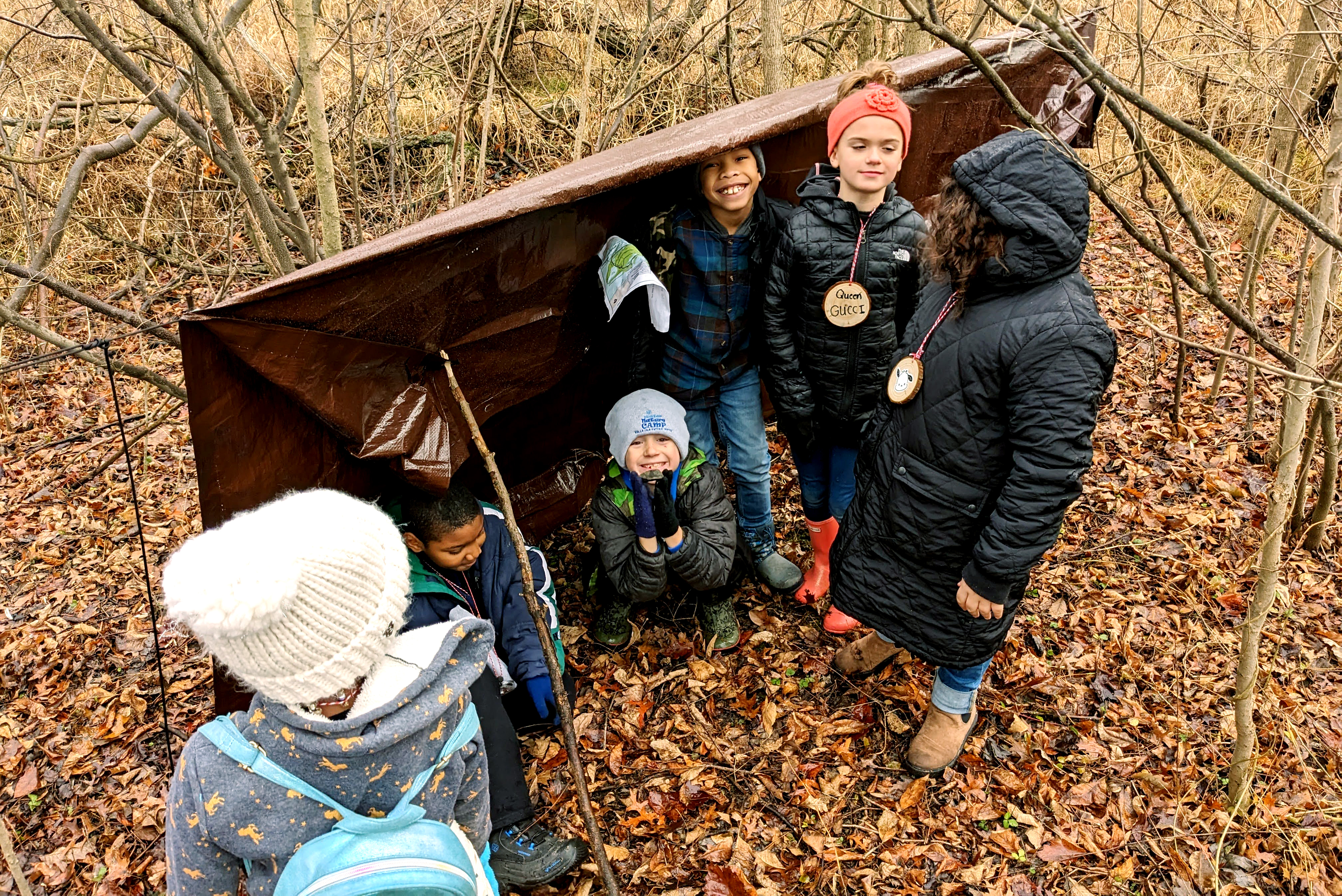
This was the scene at the Belle Isle Nature Center’s Winter Nature Camp on Jan. 3. Those campers had just arrived at the Nature Center’s first camp since 2019. The campers didn’t seem to mind the layoff as they drew rainbows, birds and the odd video game character as they got to know one another before breaking up into age groups to go explore outside.

The Belle Isle Nature Center’s habitats and interactive exhibits celebrate places in the city where you can connect with the natural world. Similarly, campers experienced both the natural and man-made portions of Belle Isle ― walking on top of deer prints and under willow trees to explore the rarely seen inside of a covered footbridge. Fire hydrants poked up from alongside the trails like steel mushrooms as raptors flew overhead.

Campers loved building their beginner birding skills at Winter Nature Camp. Brittany Leick, program coordinator of the Detroit Audubon, assisted Winter Nature campers in learning to identify seven local, colorful birds and then practicing how to use binoculars. Campers also visited the bird viewing window and learned about the ultraviolet patterns inside the glass that the Belle Isle Nature Center installed to help make the windows bird safe. Campers then got to paint their own bird shapes to put on their windows at home.

The new Belle Isle Nature Center was thoroughly enjoyed by campers. Children visited the young learner’s space to act as ants and move giant seeds and dirt throughout the tunnels. They experienced life in the pollinator hallway as a bumblebee, seeing the normally invisible UV patterns that flowers advertise to insects. Each day, the campers would find something new to do in the space.

At the end of the week, campers were asked to draw their favorite camp activities. Almost everyone mentioned spending time out in nature with the new friends they made. As they had made their mark on the tables over the course of the week, adding to their drawings with each meal and snack, campers had made their own mark with the friendships they had formed.

Registration for Winter Nature Camp was done through community partners in Detroit. A waiting list was used for any remaining spots. Summer Nature Camp enrollment will happen the same way and is coming soon! Stay connected with the Belle Isle Nature Center website for updates.

The Belle Isle Nature Center is located at 176 Lakeside Dr., Detroit. 

Stay tuned to the Belle Isle Nature Center’s website for more camp opportunities!

Take Your Birding to the Next Level with eBird! 

Many golden-crowned kinglets use Zoo grounds during migration from the end of March just into May and from the end of September into the beginning of November.

Authored by Matthew Porter, bird care team member for the Detroit Zoological Society (DZS).

Happy National Bird Day! To celebrate, let’s talk about how the Detroit Zoo takes part in one of the greatest community science projects on earth, eBird. 

The website ebird.org is home to a giant database of bird observations run by the Cornell Lab of Ornithology. Through this website, there is an abundance of information about birds across the globe.

EBird brings together the community and scientists to understand the ranges and movements of birds around the world. Once involved, we are all scientists at work. This collaborative effort harvests a massive data set that would never be attainable without the efforts of everyone involved. Our efforts compiled together advance avian science and conservation worldwide. Last year, on a single day in October, more than 34,670 people from 185 countries reported 80,000 checklists observing 7,453 bird species!

Over the last couple of years, our staff has invested lots of time to help with this worldwide effort. What we have found is that there is more avian diversity than we previously thought at the Detroit Zoo. Some birds call the Detroit Zoo home year-round. Others come here to breed in the summer, while some come here for a winter home. Many species use the Zoo from March through May and August through November as a very important migratory stopover. This land is a green island in the middle of suburbia and a great, safe stopover refuge. Our buildings have bird-friendly glass, and we continue to plant native plants to provide the appropriate food and ecosystem many species need.

Last year, more than 100 species were reported by Zoo staff and citizen scientists surveying Zoo grounds. You can join in on the fun by signing up for an eBird account at ebird.org. The website has lots of information and tutorials on surveying and best practices. There is also an easy-to-use app that can make surveying more efficient. Once enrolled, you can become part of this worldwide effort to assist with bird conservation.

Here at the DZS, we are always looking for more ways to engage with the community so that people, animals and the natural world can thrive together.

Pictured is a common yellowthroat, a species of warbler that routinely uses Detroit Zoo habitat throughout May as a migratory stopover area.

A Song in the Darkness: Audio Loggers and Panama’s Imperiled Amphibians

Authored by Mark Vassallo, Detroit Zoological Society (DZS) Amphibian Department Supervisor.

The cloud forest of central Panama is a unique and mysterious place, full of rare creatures and plants that call these moisture-laden peaks home. At night, the jungle writhes with life as the nocturnal world takes over the mountainsides. In this veil of darkness and nestled in the elevations of these dense jungles, some of the earth’s rarest amphibian species reside. Many of these species are yet to be described by science, and others are considered to be extinct.  As I gazed up at the gathering rain clouds on the volcanic peaks of El Valle, I could not help but wonder which of these potentially extinct amphibians could still be out there.

I have been traveling to El Valle, Panama for the last seven years to work with the El Valle Amphibian Conservation Center (EVACC). This organization is run by Edgardo Griffith and Heidi Ross, a husband-and-wife biologist team, who have dedicated their lives to the conservation of Panama’s most endangered amphibians. Usually during these trips, I am undertaking projects involving the installation of life support and infrastructure or helping troubleshoot specific husbandry issues that arise in one of the modified shipping containers in which EVACC houses seven species of Panama’s rare and endangered amphibians, including the iconic Panamanian golden frog (Atelopus Zeteki). 

A Warzewitsch’s frog was identified in the area.

While those types of jobs are on the docket for this trip, we also have an important task to complete that will bring us into the upper reaches of the cloud forest in the hopes to hear a sound that could mean some hope for the imperiled amphibians of Panama. The sounds we are hoping to hear are the calls of thought-to-be-extinct amphibians, including Raab’s tree frogs (Ecnomiohyla rabborum), large and highly unique arboreal frogs who lays their eggs in tree cavities and can glide through the air to evade predators. In the last year, EVACC has begun the process of deploying audio loggers in some of the area’s hard-to-reach elevations to listen for the calls of amphibians like the Rabb’s tree frog that are widely thought to be potentially extinct. 

The audio loggers are sturdy boxes that contain a microphone, batteries and SD cards accompanied by a digital screen. The idea is that these listening devices, which are programmed to turn on during the dusk and nighttime hours, will pick up the call of one of these rare frogs. If a call from one of these frogs is detected on the logger recording, this would give the biologists at EVACC a very good lead on the areas where intensive surveys could take place to potentially locate this species.

Armed with some GPS coordinates, batteries, fresh SD cards and rough information about the audio logger’s location from a member of the last group who placed it, we headed up the mountain to start our journey. As we began to climb, the heat and humidity was intense — our clothes were soaked in less than an hour.  Large biting ants were swarming our boots as the incline steepened, and we came to a crossroads in the trail. We had reached the GPS coordinates but realized that these coordinates could not be correct. At this point, we decided to attempt to leave the trail and start climbing up what seemed like a cut in the dense jungle, which may have been caused by mudslides and heavy rains, certainly nothing even resembling an actual trail. The going was difficult as the clouds began to gather. Buckets of heavy rain soon began dumping on us, causing the mud to loosen and give, making the more vertical sections especially precarious. In addition to watching your footing in the jungles of Panama, it is also important to watch where you put your hands. Eyelash vipers and stinging insects of all kinds tend to rest on branches and sticks at about eye level. All of these thoughts were keeping our senses sharp as we broke through clearing after clearing, each time hoping that this was the top of the mountain and the audio logger would appear like a shining beacon amongst the dense jungle. Yet, each time the clearings revealed even more vertical walls of vines and thick jungle vegetation to climb. Our resolve was fading, but we pressed on. At one point, my balance gave way, and I fell face first into the side of the muddy slope. As I raised my head, I noticed I was face to face with a tiny gem of a frog. It was a blue-bellied poison frog (Adinobates minutus). This toxic little frog was just staring back at me, probably wondering why a silly, hairless ape had bothered to climb this far up a mountain during a thunderstorm. 

A rainforest rocket frog was identified in the area.

The rain was finally letting up, and this gave us a little boost as we could see some sunshine emanating from what looked like a break in the jungle ahead. As we approached, sharp painful sensations started overwhelming my hands and wrists. We were wading through a large column of sharp bladed grass, which when brushed against, caused a paper cut like lacerations on the skin. Once we emerged from the brush and into the clearing, we realized we had reached the top. The jungle was so dense there was no real spot to even look out to enjoy the view. We immediately got to work searching for the audio logger.  I looked left then right and passed through some thick brush. Then I saw it — a strip of white that stood out in the landscape of green. It was one of the zip ties used to attach the logger to the tree. We had found it! After several minutes of exulted celebrations and numerous high fives, we swapped out the SD cards and batteries, the unit was reprogrammed, and we locked up the protective case. The trip down was more like a ride down a luge course made of mud. This did make the process faster but certainly not any safer. 

Once we finally arrived back at the EVACC grounds, we were exhausted and coated in mud and insect bites but satisfied and content that we had achieved a seemingly insurmountable challenge. After a shower and a cold beverage, I walked out into the moonlight on the grounds of EVACC. Once again, the clouds were beginning to gather around the El Valle mountains, and my eyes settled on the tips of those green jungle peaks, wondering if the logger we had reset for another four months would record a sound of hope.

Learn more about the EVACC foundation and make a donation online to help them ensure the survival of Panamanian amphibian species for generations to come.

Mark Vassallo is pictured with an audio logger.

Connecting With Wildlife in an Artful Way

Authored by Ashley Ciricola, curator of fine and performing arts for the Detroit Zoological Society (DZS).

The Detroit Zoo is home to many mammals, birds, amphibians, reptiles and invertebrates. But did you know the Zoo is also home to a variety of paintings, sculptures, photographs and other pieces of art?

November 9 happens to be National Go to an Art Museum Day, and we want to shine a deserving light on the the Detroit Zoological Society’s permanent art collection. Read on to learn more about these pieces and see why visitors of all ages should add an art tour to their next Zoo trip. 

Since 1995, the Wildlife Interpretive Gallery at the Detroit Zoo has been a designated space to display the permanent art collection, supporting the DZS’ mission by creating meaningful connections between people, animals and the natural world. The cultural and artistic diversity of our permanent art collection encourages guests to consider and compare the varied relationships between humans and animals across different cultures and times. 

The universal language of art is a pathway to start or continue discussions about conservation and sustainability topics within our community, and whether you are interested in local artists or ancient artifacts, the permanent art collection at the Detroit Zoo has a little something for everyone. Here are a few of the collections that are currently on display: 

But the beauty isn’t just limited to the indoors; in fact, the collection continues as you venture throughout the Zoo grounds. There are many unique pieces to see, from vibrant Pewabic tile mosaics to bronze animal statues that are at hug level for our smallest art aficionados to enjoy.  

Wherever you are in the Zoo, there is likely a meaningful piece of art that is nearby and waiting for you to explore! Plan your next trip to the Detroit Zoo and see it all for yourself – visit www.detroitzoo.org today to purchase your tickets.

Detroit Zoo Welcomes Nearly 100 Bird Species During Spring Migration

Throughout spring migration, the Detroit Zoo’s 125 acres provided refuge to many weary travelers. Now that the season is coming to a close, our staff is looking back at all the feathered friends who used our grounds as a stop on their journeys.

Read more about migration season and how you can help birds arrive at their destinations safely.

Blackpoll warbler

Over the last couple months, Detroit Zoological Society (DZS) team members have spent many hours surveying what bird species have been utilizing the habitats here at the Detroit Zoo. Some of these species live here year-round, while many species have shown up during migration and will spend the summer here breeding on Zoo grounds. Additionally, several species have used the Zoo to rest or refuel for a matter of hours or days on a long journey home to their breeding grounds.

We have seen and heard many species of songbirds, black-crowned night herons, a redhead, spotted sandpipers and much more! From March until the end of May, we accumulated at least 93 species on Zoo grounds.

Canada warbler

The incredible journeys these brave travelers make every year are hard to put into words. Many winter as far south as Central or South America and may head far north of us into the Upper Peninsula or northern Canada to breed. The blackpoll warbler is one of these extraordinary migrants who recharged at the Zoo this May. This tiny, insectivorous species only weighs around 11 grams and sings a very high-pitched song. They often travel more than 10,000 miles round trip — including an Atlantic Ocean crossing — as they head back and forth from South America to northern Canada and Alaska. 

Migrating birds overcome extreme challenges when heading back and forth between breeding and wintering grounds. Besides exhaustion and native predators, there are many human-made challenges.  Fragmented habitats, light pollution, domestic cats and windows are just some of the man-made threats that make migration even harder. Here at the Detroit Zoo, we are proud to provide these birds an excellent, protected habitat on their perilous journeys.

Learn how you can help reduce light pollution and save birds’ lives.

— Matt Porter is a member of the DZS birds animal care staff.

Amazon Rainforest Conservation Partnership Helps Rural Communities

In March 2020, my suitcases were packed, and a group of 40 volunteers was ready to fly down to Iquitos, Peru to deliver school supplies to remote communities along the Amazon and Napo rivers in the heart of the Amazon Rainforest. 

Three days before my flight, Peru closed its borders in an attempt to slow the spread of COVID-19.  The Peruvian school year starts in March, so schools didn’t open for months, and even then classes were hosted only virtually. This provided an opportunity for many of the students who lived in cities to attend but left behind the communities on the river, which had no devices or access to the internet. For two full years, Adopt-a-School community partners had no access to formal education. Even more devastating than the education gap, Peru holds the highest rate of COVID-19 fatalities out of any country in the world. 

This year, as I packed my bags again, I couldn’t help but wonder if we would be able to travel. With new variants being identified regularly, I was very conscious of the responsibility that comes with international travel. I needed to keep myself and  the communities we would be visiting healthy, as well as my family when I returned home. I took extra precautions, including wearing an N95 mask the entire time I was traveling through airports and on planes. As health care workers know all too well, wearing an N95 mask for 24 hours straight is challenging and not comfortable! 

When I arrived in Iquitos, I met with our partners at Conservación de la Naturaleza Amazónica del Peru AC (known as CONAPAC), the Peruvian nonprofit that facilitates the Adopt-a-School program and several other important projects in the rainforest. A small group of volunteers that had been scheduled for the 2020 trip joined us for the school supply deliveries. We reviewed our ambitious schedule of visiting nine schools each day for five straight days and packed all the school supplies onboard the cargo boat that would be traveling with us on the river. 

We traveled out to the farthest of Amazon Explorama’s lodges, Explor Napo, and settled in for the three nights we’d be staying there. On Monday morning, we packed our lunches, divided into three groups and headed out on the river. Each of the three boats had three to four  people aboard, plus the boat driver. The rides to the schools vary, from as little as 15 minutes to sometimes more than an hour. I was visiting one of the largest communities that first morning, and we spent about 45 minutes on the boat until we arrived at Urco Miraño. 

We spent several hours in the community, distributing a school supply packet to every kindergarten, elementary and high school student (more than 100 all together!), and their teachers. We also delivered supplies for the schools in general and notebooks for the community leaders. Access to quality learning materials is an equity issue. Most families living in rainforest communities don’t have easy access to cities to purchase materials, nor do they always have the financial means to do so. While the Peruvian government provides a school building and teachers, the gap in learning materials puts the remote communities at a distinct disadvantage from their peers in cities. Living in one of the world’s most biodiverse and ecologically important areas makes access to a quality education imperative to the future of the region. 

The process of traveling to communities and sharing school supplies repeated throughout the week. Toward the end of their school year (likely in September), we will reach out to all the teachers in the communities to ask what supplies they need for their classroom. That way, we can tailor the 2023 delivery to their needs. All the materials are purchased in Peru, which supports the local economy, ensures materials fit with local curriculum guidelines and drastically reduces shipping and customs fees. The supplies are purchased with donations from an international group of donors, many of whom have traveled to the rainforest previously. If you would like to support the Adopt-a-School program, ensuring access to educational opportunities in the heart of the Amazon Rainforest, please visit our website for more information. 

– Claire Lannoye-Hall is the director of education for the Detroit Zoological Society.