Notes from the Field: Visiting Schools Along the Napo River in Peru

We’ve traded in the “mototaxis” for boats as we moved from Iquitos into the rainforest at Explorama’s Explornapo Lodge along the Napo River in Peru. It’s interesting – when you look straight down at the water, it is a milky shade of brown, but when looking further out, the reflection of the clouds and blue sky give the impression that the Amazon River is actually blue, which it is not. The scenery is green and lush, as we expect, but now that the water level is lower, we can see how aggressive it is when the river rises. We know how fierce yet resilient nature can be. The mud is sculpted like artwork in places high above the current water line. In many places, green plants have taken over the steep mud cliffs, growing where water stands for months of the year. Birds are flying around checking out the water below, and there is a sense of tranquility from the wind and noise from the boat as we travel from place to place.
carla blog entry 2

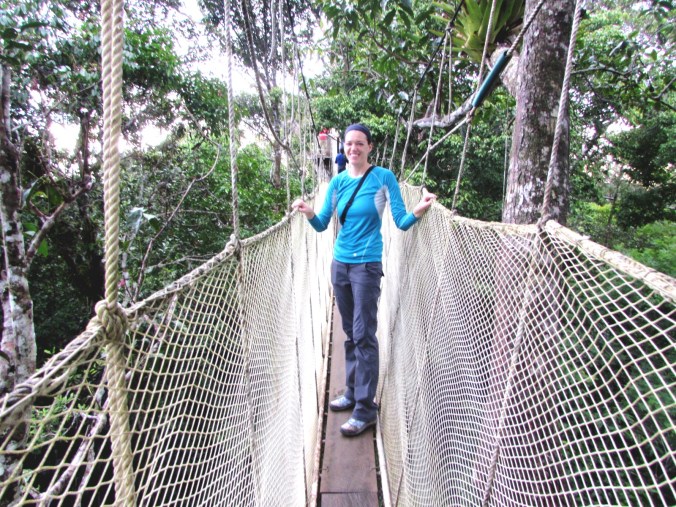
All of this boat travel means that we’ve completed the first week of evaluations, having visited 29 schools as part of the Detroit Zoological Society’s Adopt-A-School program. We can’t all visit each of these communities in this time frame, so we spread out and meet up every night for a recap of what is happening in each community. Common issues that come up revolve mostly around water. Due to flooding, some schools weren’t able to hold classes for up to four months of this school year. Some don’t have enough time to grow crops between the flooding, and almost all communities are having trouble with proper trash disposal. Being here in the rainforest and immersed in this environment leads me to question what is the best solution for this situation. There aren’t garbage boats that come through these communities to pick up trash, so what are they expected to do with it? This is one of the reasons why this program is so important – we focus on education, including education about sustainability and preservation of the environment.

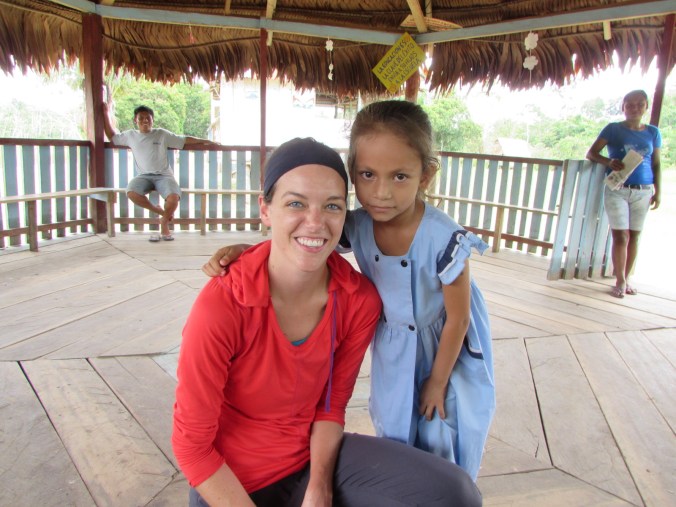
I’ve enjoyed visiting many communities this week, but Canal Pinto was one of the most impactful experiences for me. It was obvious the two teachers in the community had everything under control. You could tell by looking at the students, the classrooms, and their interactions with students that this community was in good hands. As I looked around the beautiful kindergarten classroom, I noticed something that I hadn’t seen elsewhere. Recycled plastic bottles, cut and painted, neatly labeled with student names. Inside each cup was a toothbrush. Hanging on the shelf next to each toothbrush was a washcloth. The students are learning to take care of themselves and to reuse items they have around them. This shows these children – at a very early age – the importance of helping to conserve items and take care of themselves, hopefully habits that will help them and the environment for years to come.
carla blog entry 2 - 2

We have a few days left of reviews before we head home. We will be soaking in the heat and humidity while we can before coming back to the much cooler north. Adios for now!

– Carla Van Kampen is a curator of education for the Detroit Zoological Society. The Adopt-A-School program provides donated educational materials and supplies for schools in rural Amazonia. The DZS has partnered with Conservacion de la Naturaleza Amazonica del Peru (CONAPAC) in this conservation and education program since 1999. For more information, or to donate to the program, visit: http://detroitzoo.org/support/give/adopt-a-school/


Greenprint: Understanding Green Literacy

Would you support the expansion of the Michigan bottle deposit law to include bottled water? How about requiring our public schools to include environmental education at all grade levels? Or requiring companies to use only recyclable packaging with their goods? According to a recent survey carried out through the Detroit Zoological Society’s Greenprint, these are just a few of the efforts that Detroiters support to improve our community’s environmental efforts.

Through this survey, we sought to understand “green literacy” in the community, and conducted it in partnership with local environmental organizations, educational institutions and other groups. Our goal was to determine how greater Detroit residents view and understand environmental and conservation issues. Not surprisingly, the survey highlights a community with a personal commitment to environmental concerns that is supportive of public policies to protect our environment and resources.

Michele Arquette-Palermo, program director of the Clinton River Watershed Council and one of our partner organizations on the survey, said that as an environmental educator in southeast Michigan for the last 15 years, she’s very happy to see evidence that reaffirms that environmental education influences attitudes and actions.

The survey also suggests that our community would like to have greater access to public transit, at home recycling programs and access to food with the environment in mind.

The online survey was carried out by Belden Russonello Strategists, a Washington, D.C.-based public opinion research firm, and was completed by 1,000 residents ages 18 and older who reside in a four-county area that includes Macomb, Oakland, Washtenaw and Wayne.

In addition to the DZS and the Clinton River Watershed Council, other partners include Kurt R. Metzger, mayor of Pleasant Ridge and director emeritus of Data Driven Detroit, DTE Energy, Lawrence Technological University, The Nature Conservancy and Wayne State University, among others.

To read more about this survey, including all of the questions presented, please visit: http://dzoo.org/greensurveyreport.

– Beth Wallace is the manager of sustainability for the Detroit Zoological Society.

Greenprint: Detroit Zoo is the Greenest Zoo

This year, the Detroit Zoological Society (DZS) celebrated its 13th year of strategic planning around green efforts. Lucky 13 has proven to be our year, as we’ve just been awarded the 2015 Green Award – top honors – by the Association of Zoos & Aquariums for our sustainability initiatives. This national award recognizes that being green also makes good business practice and directly contributes to the conservation of the natural world.

This honor came on the heels of the DZS completing our bottled water phase-out effort, which is helping to keep more than 60,000 single-use plastic bottles out of landfills and the environment. Over the last three years, the DZS has also invested more than $3 million into energy efficiency projects, which results in utility costs savings of nearly $275,000 annually.

The year ahead is even more exciting as we are currently breaking ground to build the first dry biodigester in Michigan, and the first zoo-based system in the country. This biodigester will compost more than 400 tons of animal waste and organic food waste while capturing methane to be used as a renewable energy source to help power the Zoo’s animal hospital.

We are also getting our feet wet (or in this case keeping them dry) with permeable pavement sidewalks and parking lots, which diverts storm water from our sewer systems to prevent flooding and sewer overflows into our rivers and lakes.

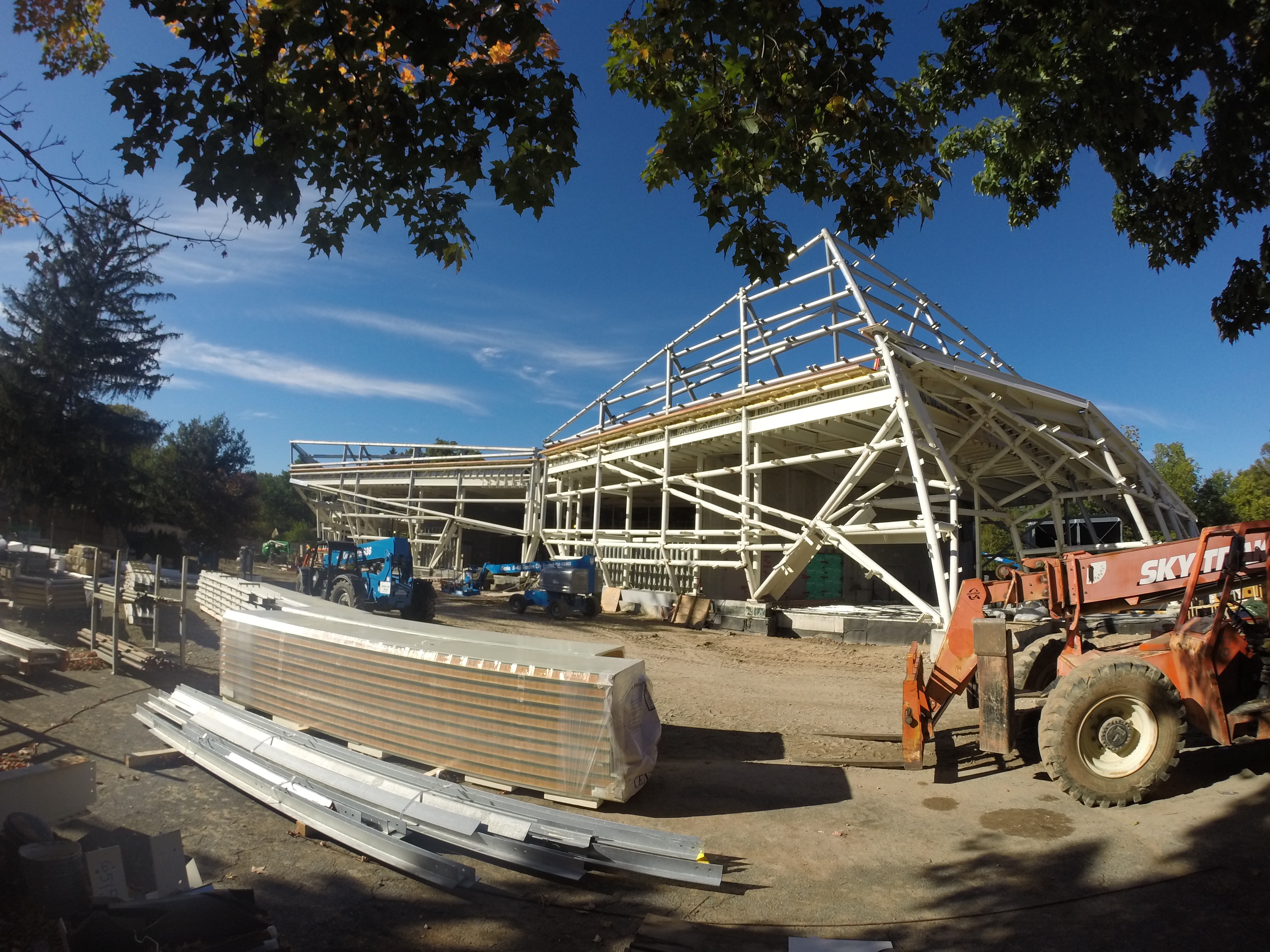
And perhaps most exciting, we will open the new Polk Penguin Conservation Center in early 2016, which will represent our most sustainable construction work to date and will provide more than 80 penguins of four species with a state-of-the-art habitat while creating a critical discussion around climate change. The entire building is being designed to meet goals of LEED and components of the Living Building Challenge, with renewable and recycled materials, daylight harvesting through solar tubes, as well as water filtration systems helping us reach net-zero water use.

Join us on our Green Journey!

Beth Wallace is the manager of sustainability for the Detroit Zoological Society.

Greenprint: Lessons from the Storm

Beth Wallace is the manager of sustainability for the Detroit Zoological Society.

One year ago this month, the metro Detroit area went through some of the worst flooding in recent history when a sudden storm dumped more than 4.5 inches of rain on the region, overwhelming sewer systems and causing an estimated $1.1 billion worth of damage.

Heavy rains like this record-breaking event can have serious impacts on infrastructure – sewer overflows, pollution runoff and flooding. The Detroit Zoo experienced major flood damage during this storm, which forced us to close for a day as we evaluated systems and began cleanup efforts and repairs. It became apparent that we needed to find a better way to manage large rain events, so we started to incorporate a form of green infrastructure, called porous pavement, into major projects.

Pervious paving

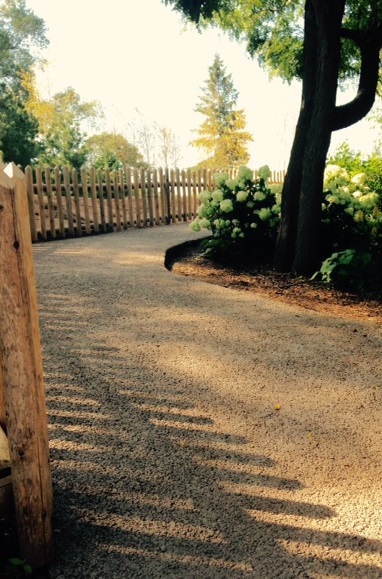
Porous pavement is a material that encourages water to percolate through the surface into the ground for natural absorption. By incorporating this surface throughout the Zoo, we’re encouraging more natural absorption of water into the environment, which lessens our need for irrigation. It also prevents excess water from entering the Detroit sewer system. In addition, we have chosen a permeable surface that is light in color to reduce our urban heat island effect – a phenomenon whereby a warmer envelope of air exists over urbanized areas due to human activity – which will decrease ambient temperature to improve air quality and the health of nearby plants.Pervious pavement

Porous pavement can be in the form of brick pavers, gravel, porous concrete or even recycled rubber or glass. When you visit the new Cotton Family Wolf Wilderness, notice the colorful pathways of porous pavement. In addition, once the Polk Penguin Conservation Center opens in early 2016, the nearby parking lot will be made with porous material.

Join us on this green journey – next time you consider resurfacing your driveway or pathways, consider this application to help lessen your impact on the environment.

– Beth Wallace

Greenprint: Join us as we #ditchthebottle

Beth Wallace is the Manager of Sustainability for the Detroit Zoological Society.

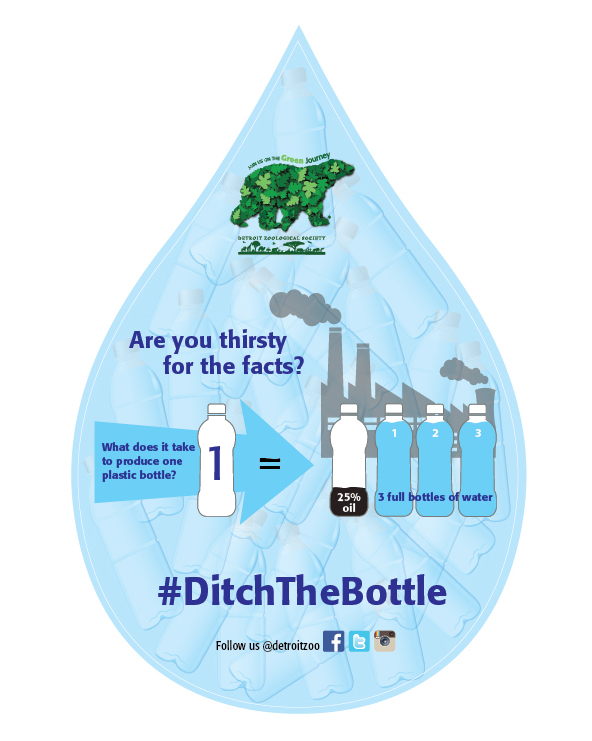
Did you know that U.S. consumers go through 1,500 bottles of water every second? Of those 1,500 bottles, only 300 of them will be recycled. Unnecessary plastic pollution is a big reason why the Detroit Zoological Society is taking the bold step of phasing out the sale of bottled water – but it’s not the only reason.

When diving into this issue, we’ve also learned that most brand-named bottled water comes directly from the tap, our Great Lakes or even the Detroit River – costing consumers around 10,000 times the cost of tap water and diverting massive amounts of fresh water from the Great Lakes basin. In addition, there are an incredible amount of resources that go into producing one bottle of water and that single-use product remains in our environment anywhere from 500 to 1000 years.

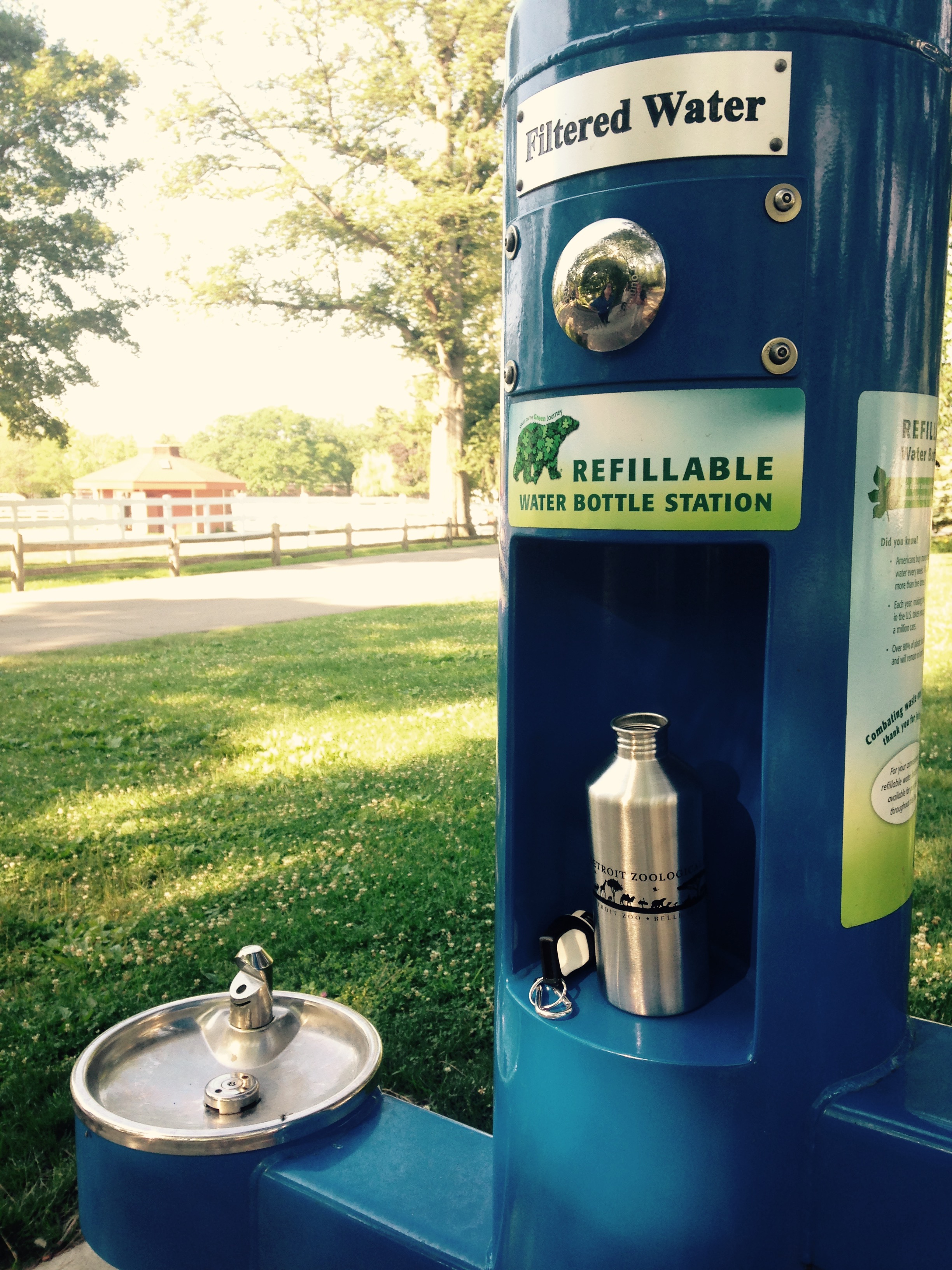
As of September 2015, the Detroit Zoo will no longer sell bottled water. We ask that you join us to #ditchthebottle here at the Zoo and in your everyday lives. We encourage you bring reusable containers that can be refilled – for free – at any of our 20 refill stations during your visits to the Zoo. To help with this transition, we’re also offering a reusable sports drink container at all our major concessions, which costs less than bottled water.

Help us spread this message! We’ll be giving away two of our premium stainless steel reusable water bottles to our supporters. To win this reusable drink container, please connect with the Detroit Zoo on social media and share a photo of a place you would like to keep clean from plastic pollution. Tag the photo with #ditchthebottle and @detroitzoo on Facebook, Instagram or Twitter. The Zoo’s Green Team will pick two winners on July 14.

– Beth Wallace

Education: Protect the Pollinators

Claire Lannoye-Hall is a Curator of Education for the Detroit Zoological Society.

Summer vacation is upon us and we can’t wait for you to visit the Detroit Zoo. There are so many new things happening here – the wolves are exploring their new habitat and the dinosaurs are beckoning from the trail.

While the summer offers many great Butterfly - Roy Lewisopportunities to visit the Zoo, it also brings out bees, butterflies and other pollinators, which are very important to the environment. They help flowers bloom and fruits and vegetables grow. Without them, there wouldn’t be food for us or for the animals to eat. Fortunately, we can help them in a few simple ways.

Start by avoiding the use of pesticides and herbicides. While they may keep the weeds away and your grass a little bit greener, they are devastating to pollinator populations. Consider pulling weeds by hand or using an organic alternative such as mulch or hot water to eliminate weeds.

Honey BeeYou can also plant a pollinator garden. Native plants are easy to find, easy to take care of and are great for pollinators. For southeast Michigan, try lupine, bee balm, coneflower or cardinal flower. Bees and butterflies will likely find your garden first, but if you’re lucky, hummingbirds may stop by, too! For more suggestions on what to plant, visit: http://pollinator.org/guides.htm.

Monarch butterflies are of special concern due to habitat loss. Here at the Zoo, we have special gardens called “Monarch Waystations” that are certified by Monarch Watch, a nonprofit organization. The plants in these gardens provide food and shelter for monarchs throughout metamorphosis and as they travel to and from their overwintering grounds in Mexico. Next time you’re at the Zoo, look for one of these gardens and see if there are any Monarch butterflies visiting. You can find out more about creating your own certified waystation by visiting: http://www.monarchwatch.org/waystations.

Finally, you can help scientists by making observations and collecting data. Scientists need to know how many and what kinds of pollinators are in your backyard. Becoming a citizen scientist is easier than you might think. Visit some of the sites here for more information: http://pollinatorlive.pwnet.org/teacher/citizen.php.

We look forward to seeing you at the Zoo this summer!

– Claire Lannoye-Hall

Greenprint: Three Easy Ways to Celebrate Earth Day

Beth Wallace is the Manager of Sustainability for the Detroit Zoological Society.

We work hard to celebrate the Earth Detroit Zoological Society Greenprint logoyear-round through the Detroit Zoological Society’s Greenprint initiative, and with Earth Day approaching, we are hoping you’ll join us on our green journey! Below is a list of actions we plan to take at the Zoo that we invite you to consider in your own lives:

Plant a tree at your home, or at a nearby park. This fun activity provides your family with a memorial and a tradition to follow for decades while giving back to the environment. Did you know that a single tree can absorb 10 pounds of air pollutants a year, and produces nearly 260 pounds of oxygen? That’s enough to support two people!

Spring clean with eco-friendly cleaning options both inside and out. Switch your surface cleaners to non-toxic and environmentally sensitive products that are better for the Earth and your family. For yard clean up, consider creating a compost pile or mulching leaves. And if you plan to minimize the clutter in your home, donate your products to a local organization and always try to recycle what you aren’t able to donate.

Join us for GreenFest on April 18 and 19, which is free with Zoo admission. Those who bring in an old cell phone for recycling receive a discount on admission – tickets are only $8 per person for each cell phone donated. The Zoo-wide celebration includes earth-friendly crafts, an endangered species scavenger hunt, zookeeper talks and exhibits by local conservation groups.

Follow the Detroit Zoo on Facebook, Twitter and Instagram, and share with us what you and your family do to celebrate Earth Day!

– Beth Wallace