Sustainability and Conservation Go Hand-in-Hand

The Detroit Zoological Society’s (DZS) award-winning sustainability initiatives go hand-in-hand with our commitment to wildlife conservation – every step we take to reduce our carbon footprint serves to protect the habitats of animals around the globe.

Wildlife are facing great challenges – from climate change and habitat loss to poaching and the exotic animal trade – leaving many species threatened, endangered or teetering on the brink of extinction. Human impact on the Earth has, in many cases, led to these dire situations they are in. More than 40 percent of all amphibians are at risk. From snow leopards to snails and from penguins to polar bears, the DZS is actively involved in wildlife conservation efforts worldwide – in the last two years alone, we were engaged in projects on six continents.

We have the power to make a difference. That’s why our inaugural Wildlife Conservation Gala on Saturday, March 18, is themed “Making a Difference”. All of us can take steps in our own lives to help reverse the crisis many animals are facing. It is our hope that our community will be motivated to join us on our Green Journey and commit to a better future for all that share this magnificent planet.
Our award-winning Greenprint initiative is a strategic plan that guides our operations and all that we do toward a more sustainable future. Our efforts include discontinuing the sale of bottled water on Detroit Zoo grounds – previously the No. 1 seller at zoo concessions – keeping 60,000 plastic bottles out of the waste stream annually. We also no longer provide plastic bags at our gift shops or souvenir stands; visitors are encouraged to bring their own bags or purchase wildlife-themed reusable bags.

We built the first zoo-based anaerobic digester in the country, which will annually convert more than 400 tons of animal manure into methane-rich gas to power the Detroit Zoo’s animal hospital. We recently unveiled a new parking lot that uses a progressive green design, reducing storm water runoff and improving water quality by filtering pollutants. Additionally, our operations are powered with 100 percent renewable electricity from wind farms, thanks to the support of the ITC Holdings Corp.

Our goal is to inspire others to join us on our Green Journey as we continuously look for ways to reduce our ecological footprint. By downloading our Shades of Green guide, you’ll find a number of actions you can do at home, including:

  • Switch to a reusable water bottle and reduce the amount of unnecessary plastic pollution
  • Bring reusable bags with you to the grocery store
  • Turn off the lights when you leave a room
  • Recycle
  • Plant native species in your garden to create a natural habitat for pollinators such as bees and butterflies

Please also consider joining us on March 18. By supporting the Wildlife Conservation Gala, you’ll help to ensure the long-term survival of critically endangered amphibians, reptiles, birds, mammals and invertebrates that represent the diversity of life on our planet. For more information or to purchase tickets to this 21-and-older, black-tie-optional affair, visit https://detroitzoo.org/events/zoo-events/conservation-gala.


Greenprint: Wild (and Efficient) Lights

As the holidays draw near, Wild Lights at the Detroit Zoo is now in full glow – more than 5 million LED lights are illuminating buildings, trees and more than 200 animal sculptures in an impressive display over 29 nights.

While this event lights up the night sky, efficient energy use is still paramount at the Detroit Zoo. All of the lights used to decorate the Wild Lights path are light-emitting diodes (LEDs), which consume 80 to 90 percent less energy than incandescent bulbs and last for up to 100,000 hours, versus just 3,000 hours for incandescents. This is a solid economic investment that reduces the amount of energy used, saves money (prices for LEDs have come down in the last couple of years), and their durability leads to a decreased number of holiday lights that end up in landfills.

For those who are considering making the switch, Home Depot and Lowes both offer recycling programs for old holiday lights. In addition, we’re offering an opportunity for Wild Lights attendees to bring in their old lights for recycling in the events pavilion at the Detroit Zoo.

tw_or_holiday_led_light_trade_in

Over the last three years, the Detroit Zoological Society has invested more than $3 million into energy efficiency projects, which results in utility costs savings of nearly $275,000 annually. Most recently, DTE Energy provided the Zoo with an energy-use assessment in order to further explore additional energy-reduction measures.

While Wild Lights uses energy, the LED lighting means it is 80 to 90 percent less wattage than it would with incandescent lighting. This is important because during these shorter, darker days, holiday lights make everything magical and well, brighter!

– Rachel Handbury is the manager of sustainability for the Detroit Zoological Society.

Make a Difference at the Zoo

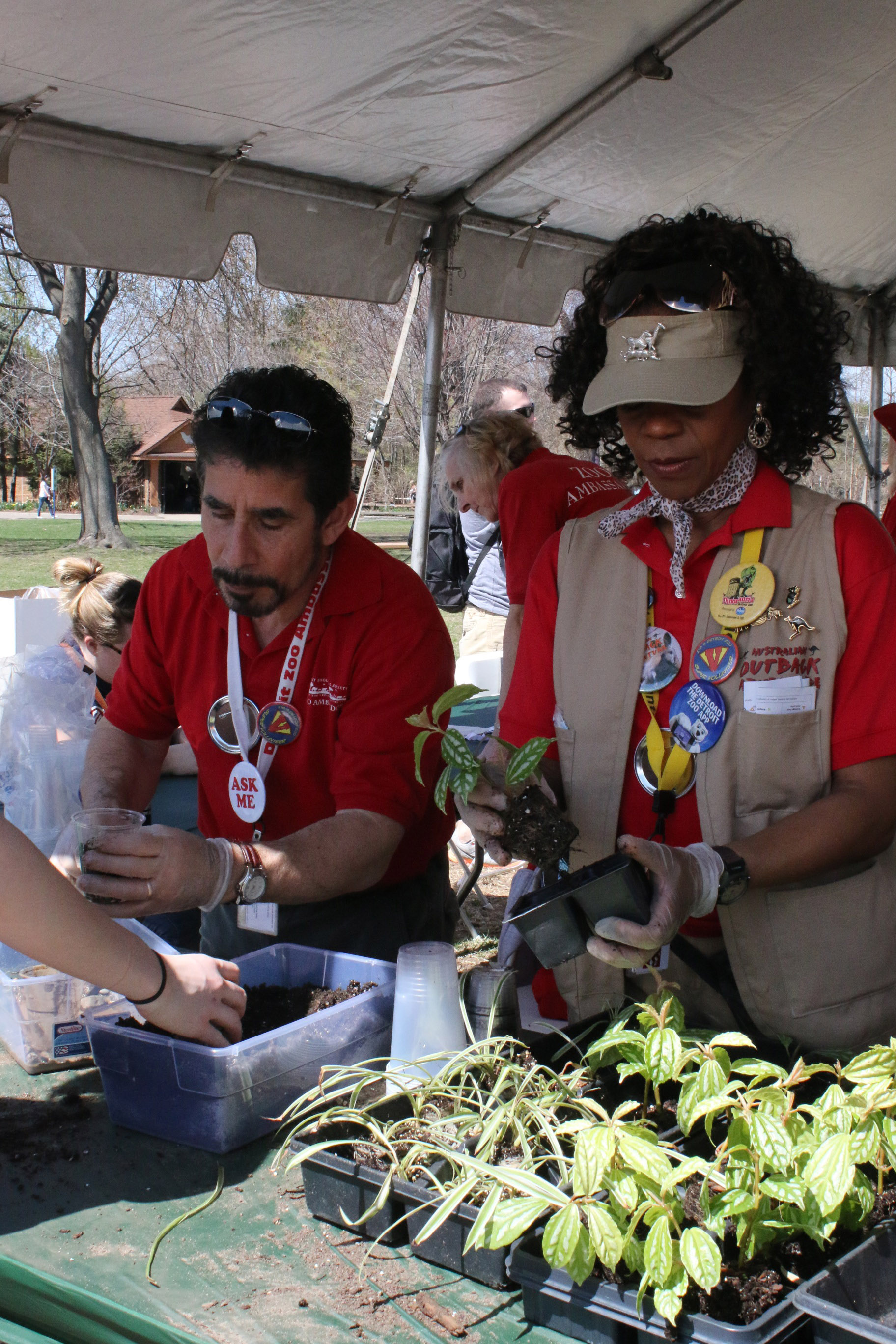
Saturday, October 22 is National Make a Difference Day and we’re celebrating with our incredible volunteer corps at the Detroit Zoo. From 10 a.m. to 2 p.m., guests can take part in a scavenger hunt as well as family-friendly hands-on activities to celebrate how volunteers make a difference at the Zoo.

Make a Difference for Birds

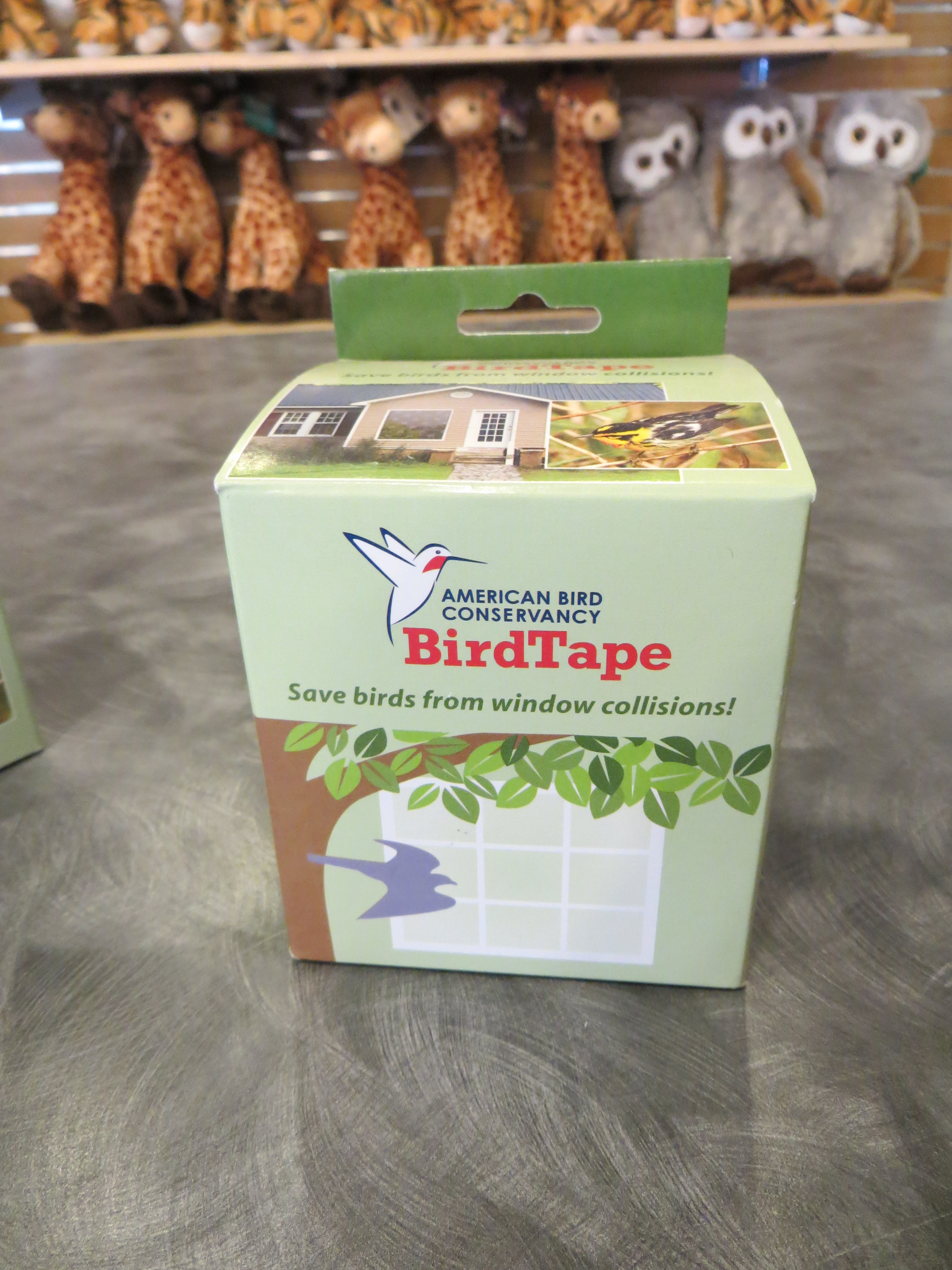
Guests can cut out window decals that help to prevent bird strikes, which kill millions of birds in the U.S. every year. One can be taken home and one will be left for use at the Zoo (while supplies last). Information will be available on other ways to help birds using items such as window tape, screens and paint.

Make a Difference for the Planet

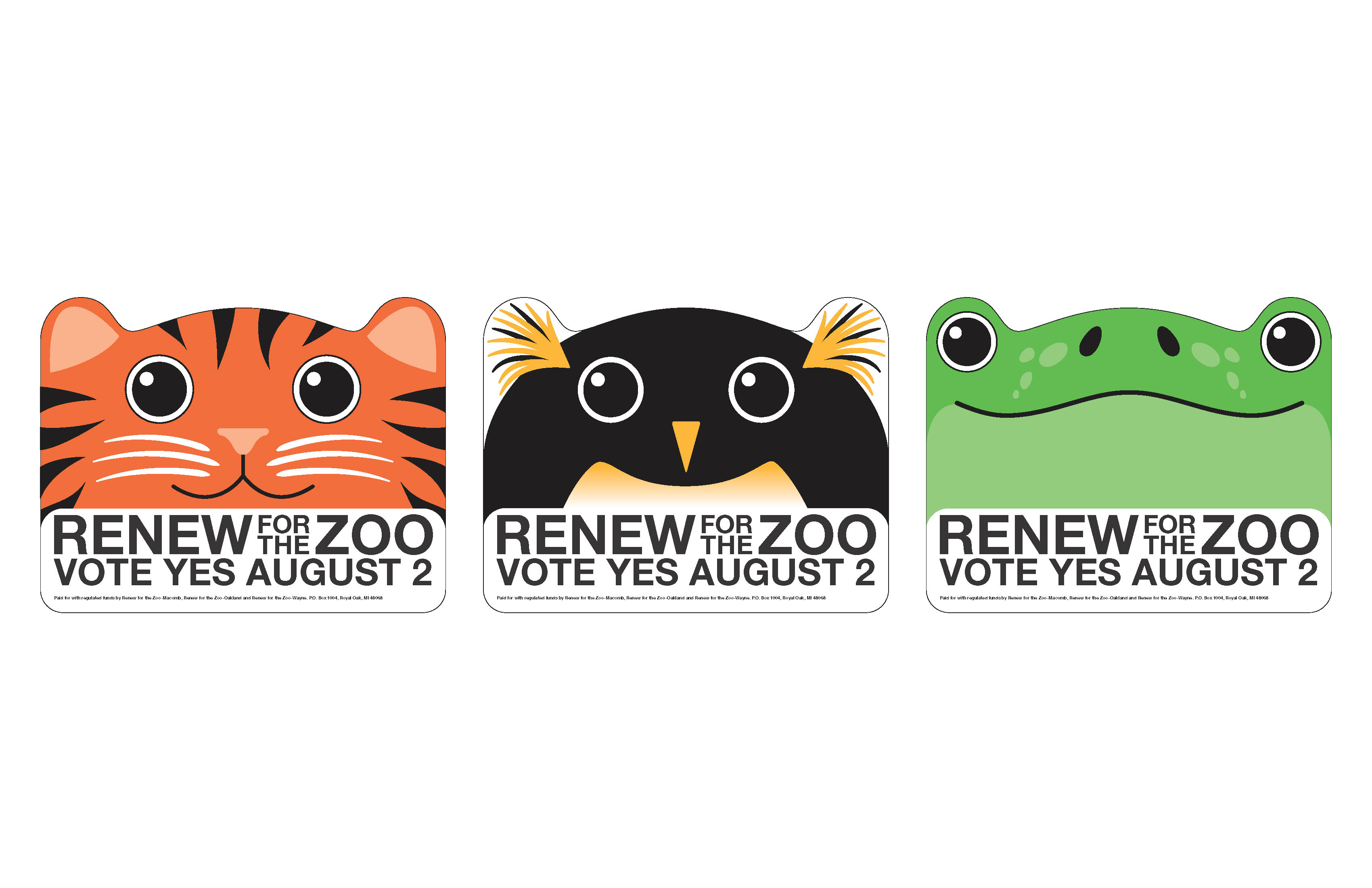
Recycled T-shirts will be available for guests to turn into tote bags. Leftover millage signs (the ones with the cute animal faces) will be available to turn into journal covers, bulletin boards and other creative uses guests can find for them (while supplies last). Recycling plastic materials such as these signs helps keep them from winding up in landfills where they don’t disintegrate.

Volunteer Scavenger Hunt

Upon arriving at the Zoo, guests will be offered to take a “discovery tour”. This tour will direct visitors to locations around the Zoo where they will meet volunteers on duty and learn about what they do. Guests who complete the tour, fill out a form and turn it in at the Ford Education Center will be entered into a drawing for two tickets to Wild Lights – six winners will be drawn at 2 p.m. Guests will also receive a token item for participating. Guests who chose to do so may also include their email address on their scavenger hunt form in order to receive more information about either the teen or adult volunteer programs for Spring 2017. Volunteer Services staff will be on hand to collect the scavenger hunt forms and talk more about volunteer opportunities at the Zoo.

We hope you join us and learn more about our fabulous volunteers and how you too can make a difference! Also taking place this day is our encore Smashing Pumpkins event, when animals including the chimpanzees, polar bears, giraffes and “grizzly boys” are given Halloween goodies to eat, play with, roll around and smash. Learn more and view the schedule here.

Greenprint: Celebrate Earth Day during GreenFest April 16-17

For the fourth year in a row, the Detroit Zoo is hosting our annual Earth Day celebration called GreenFest on April 16 and 17, from 9 a.m. to 3 p.m. This Zoo-wide event will provide visitors with environmentally friendly activities and tips that can be used throughout the year to increase environmental stewardship.

GreenFest will feature earth-friendly crafts, kids games, zookeeper talks, science experiments, a trail mix station by Kroger, interactive performances by Drummunity and exhibitions from businesses and nonprofits working to keep our planet a healthy place to live.

GreenFest is an initiative of the Detroit Zoological Society’s Greenprint, a strategic plan to improve daily practices and facilities, develop new policies and programs and improve green literacy in the community. All GreenFest activities are free with Zoo admission; each GreenFest guest who brings a cell phone for recycling will receive a reduced admission price of $9.

If you’re unable to join us for GreenFest this year, please consider these three easy activities that will greatly improve your impact on the environment:

  • Plant a tree at your home or a nearby park (with permission from park management) – a single tree can absorb 10 pounds of air pollutants a year and produces nearly 260 pounds of oxygen.
  • Upcycle, donate or recycle unwanted clothes and textiles – according to the Environmental Protect Agency, Americans send 10.5 million tons of clothing to landfills every year.
  • Commit to eating less meat throughout the year. A lot of energy and water goes into meat product; by simply cutting back on meat consumption you can greatly decrease your environmental footprint.

– Beth Wallace is the manager of sustainability for the Detroit Zoological Society.

Greenprint: Understanding Green Literacy

Would you support the expansion of the Michigan bottle deposit law to include bottled water? How about requiring our public schools to include environmental education at all grade levels? Or requiring companies to use only recyclable packaging with their goods? According to a recent survey carried out through the Detroit Zoological Society’s Greenprint, these are just a few of the efforts that Detroiters support to improve our community’s environmental efforts.

Through this survey, we sought to understand “green literacy” in the community, and conducted it in partnership with local environmental organizations, educational institutions and other groups. Our goal was to determine how greater Detroit residents view and understand environmental and conservation issues. Not surprisingly, the survey highlights a community with a personal commitment to environmental concerns that is supportive of public policies to protect our environment and resources.

Michele Arquette-Palermo, program director of the Clinton River Watershed Council and one of our partner organizations on the survey, said that as an environmental educator in southeast Michigan for the last 15 years, she’s very happy to see evidence that reaffirms that environmental education influences attitudes and actions.

The survey also suggests that our community would like to have greater access to public transit, at home recycling programs and access to food with the environment in mind.

The online survey was carried out by Belden Russonello Strategists, a Washington, D.C.-based public opinion research firm, and was completed by 1,000 residents ages 18 and older who reside in a four-county area that includes Macomb, Oakland, Washtenaw and Wayne.

In addition to the DZS and the Clinton River Watershed Council, other partners include Kurt R. Metzger, mayor of Pleasant Ridge and director emeritus of Data Driven Detroit, DTE Energy, Lawrence Technological University, The Nature Conservancy and Wayne State University, among others.

To read more about this survey, including all of the questions presented, please visit: http://dzoo.org/greensurveyreport.

– Beth Wallace is the manager of sustainability for the Detroit Zoological Society.

Greenprint: Upcycling Straw to Save Dogs in Detroit

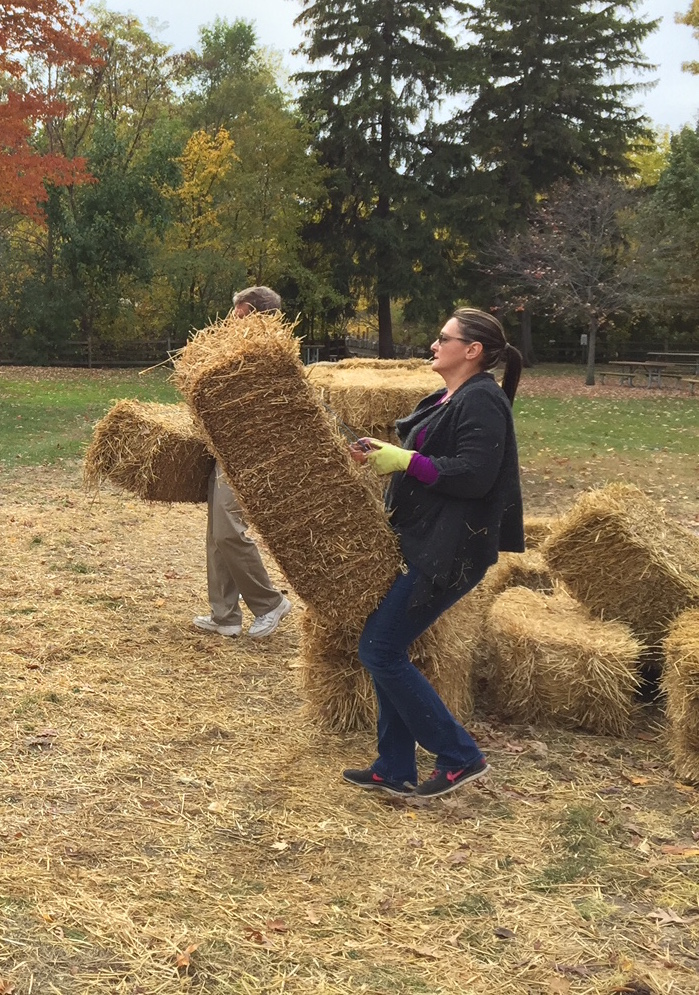
For the third year in a row, the Detroit Zoo’s Green Team has partnered with a Detroit dog rescue called C.H.A.I.N.E.D. (Continue Helping Animals in Need & Educating Dog owners) to upcycle bales of straw from our annual Halloween celebration, Zoo Boo. This year, we also began a partnership with Dog Aid. We donated more than 150 dry bales of straw to these organizations this week, which will be used throughout the winter to insulate outdoor shelters for dogs left outside by their owners.

Both organizations also take the time to properly educate pet owners on the risk of leaving pets outdoors in the winter, and in some cases they will rescue animals they believe are in dangerous situations.

By simply donating these bales of straw for reuse, the Zoo is greatly extending the useful life of this material, while potentially saving a dog’s life. Additionally, C.H.A.I.N.E.D and Dog Aid are able to redirect the approximately $700 they are saving on straw between them that can be used to purchase other supplies, such as dog food.

In addition, the Zoo donated any remaining bales of straw that might have been exposed to the elements to Detroit Dirt for composting.

This effort reduces waste while also educating the public, both of which are elements of our Greenprint initiative. Among the many steps on our Green Journey, the Zoo has a bold goal to be zero waste by 2020. We are continuing to develop important partnerships like these in order to be successful on our journey.

We would love to know how you’re upcycling fall decorations at your house. Follow the Detroit Zoo on Pinterest to learn more about the different ways to upcycle, such as turning your fall pumpkins into birdfeeders.

– Beth Wallace is the manager of sustainability for the Detroit Zoological Society.

Greenprint: Becoming a Zero-Waste Organization

The Detroit Zoological Society (DZS) is gearing up for our ambitious goal of becoming a zero-waste organization by 2020! We are currently performing waste and recycling audits to have a better understanding on where we stand. This process is causing us to re-think our consumption and how we can develop a more closed-loop approach, which means that zero waste is created.

One major challenge we will have here at the Detroit Zoo is trying to get our 1.3 million visitors on board with this effort. There’s no better way to do that than to share the new five “R’s”, which is the brainchild of Zero Waste Home.

  • REFUSE – Start by evaluating the items you consume and if they are truly needed – things like bottled water, plastic bags, and paper towels/napkins at home.
  • REDUCE – Purchase goods only when absolutely necessary. At the Zoo we’re replacing less sustainable lighting with LED lighting, which helps us with energy costs, but also reduces the quantity of light bulbs we use.
  • REUSE – Find a creative second life for as many items as possible, even if it’s something that is easy to recycle. It’s always better to reuse a product first – Pinterest has a treasure-trove of ideas for upcycling, many of which are fun for kids.
  • RECYCLE – Always recycle plastic, metal, paper and glass. If you don’t have a curbside option, the state of Michigan has a resource for drop-off locations near you. In addition, recycling and donation bins are popping up all across the state for clothing, books, and even electronics recycling.
  • ROT – Ask your neighborhood recycler if they have composting available or start a compost pile in your backyard.

One extra “R” developed by the DZS Greenprint is REPLENISH — find ways to give back. This could involve anything from joining an adopt-a-beach program or volunteering to help an environmental nonprofit. You can also donate to the Detroit Zoological Society to support our mission of Celebrating and Saving Wildlife.

Join us on our Green journey!

Beth Wallace is the manager of sustainability for the Detroit Zoological Society.

Greenprint: Detroit Zoo is the Greenest Zoo

This year, the Detroit Zoological Society (DZS) celebrated its 13th year of strategic planning around green efforts. Lucky 13 has proven to be our year, as we’ve just been awarded the 2015 Green Award – top honors – by the Association of Zoos & Aquariums for our sustainability initiatives. This national award recognizes that being green also makes good business practice and directly contributes to the conservation of the natural world.

This honor came on the heels of the DZS completing our bottled water phase-out effort, which is helping to keep more than 60,000 single-use plastic bottles out of landfills and the environment. Over the last three years, the DZS has also invested more than $3 million into energy efficiency projects, which results in utility costs savings of nearly $275,000 annually.

The year ahead is even more exciting as we are currently breaking ground to build the first dry biodigester in Michigan, and the first zoo-based system in the country. This biodigester will compost more than 400 tons of animal waste and organic food waste while capturing methane to be used as a renewable energy source to help power the Zoo’s animal hospital.

We are also getting our feet wet (or in this case keeping them dry) with permeable pavement sidewalks and parking lots, which diverts storm water from our sewer systems to prevent flooding and sewer overflows into our rivers and lakes.

And perhaps most exciting, we will open the new Polk Penguin Conservation Center in early 2016, which will represent our most sustainable construction work to date and will provide more than 80 penguins of four species with a state-of-the-art habitat while creating a critical discussion around climate change. The entire building is being designed to meet goals of LEED and components of the Living Building Challenge, with renewable and recycled materials, daylight harvesting through solar tubes, as well as water filtration systems helping us reach net-zero water use.

Join us on our Green Journey!

Beth Wallace is the manager of sustainability for the Detroit Zoological Society.

Greenprint: Back-to-School Sustainably

Beth Wallace is the manager of sustainability for the Detroit Zoological Society.

Back-to-school time can be exciting but also stressful when you’re staring down the lists of needed school supplies. According to the 2014 Google report card, back-to-school is now the second-largest retail event of the year. When making our purchases, several factors can come into play, like the latest trends or cost-saving, but now is the time to instill in our children – even college students – that sustainability should always play a key part in consumer decision-making.

  • First and foremost, take stock in what you have from the previous school year and try to reuse supplies as much as possible. The most important part of this action is to communicate with your kids about why it is important to reuse as much as possible. It not only saves your family money, but you’re helping consume less, which helps to protect the environment. Also consider donating any unwanted, lightly used school gear and/or winter wear to a local charity or school that accepts materials for the upcoming school year.
  • For any purchases you need to make, always consider the environmentally responsible goods first. Look for binders made from recycled plastic and notebooks made from recycled or FSC (Forest Stewardship Council) paper. Below are key symbols to keep in mind:

Screen Shot 2015-08-26 at 10.32.37 AMlogo - 100recycledmateriallogo - scs_certified  logo - FSClogo - scs_responsiblesource_fcp


  • Pack a sustainable lunch that focuses on reusable options. Check out the Detroit Zoological Society’s ZooperHero waste-free lunch guide.
  • If your home is not along the school bus route, or public transportation is not an option, consider setting up a car pool with other classroom parents or even a bike route.
  • Encourage your school to take up composting or to create a certified habitat. The National Wildlife Federation has a great certification program that also provides how-to-guides.

Please share your sustainable back-to-school photos in social media and tag @detroitzoo on Instagram, Facebook or Twitter.

– Beth Wallace

Greenprint: Join us as we #ditchthebottle

Beth Wallace is the Manager of Sustainability for the Detroit Zoological Society.

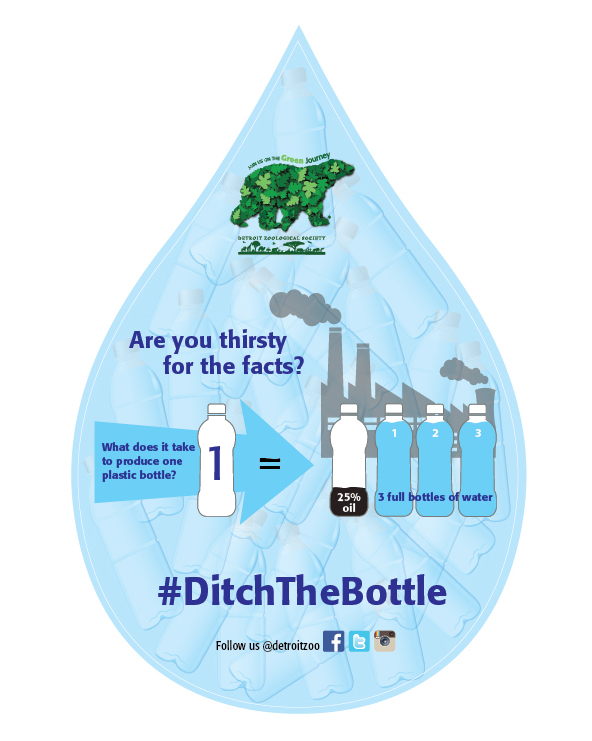
Did you know that U.S. consumers go through 1,500 bottles of water every second? Of those 1,500 bottles, only 300 of them will be recycled. Unnecessary plastic pollution is a big reason why the Detroit Zoological Society is taking the bold step of phasing out the sale of bottled water – but it’s not the only reason.

When diving into this issue, we’ve also learned that most brand-named bottled water comes directly from the tap, our Great Lakes or even the Detroit River – costing consumers around 10,000 times the cost of tap water and diverting massive amounts of fresh water from the Great Lakes basin. In addition, there are an incredible amount of resources that go into producing one bottle of water and that single-use product remains in our environment anywhere from 500 to 1000 years.

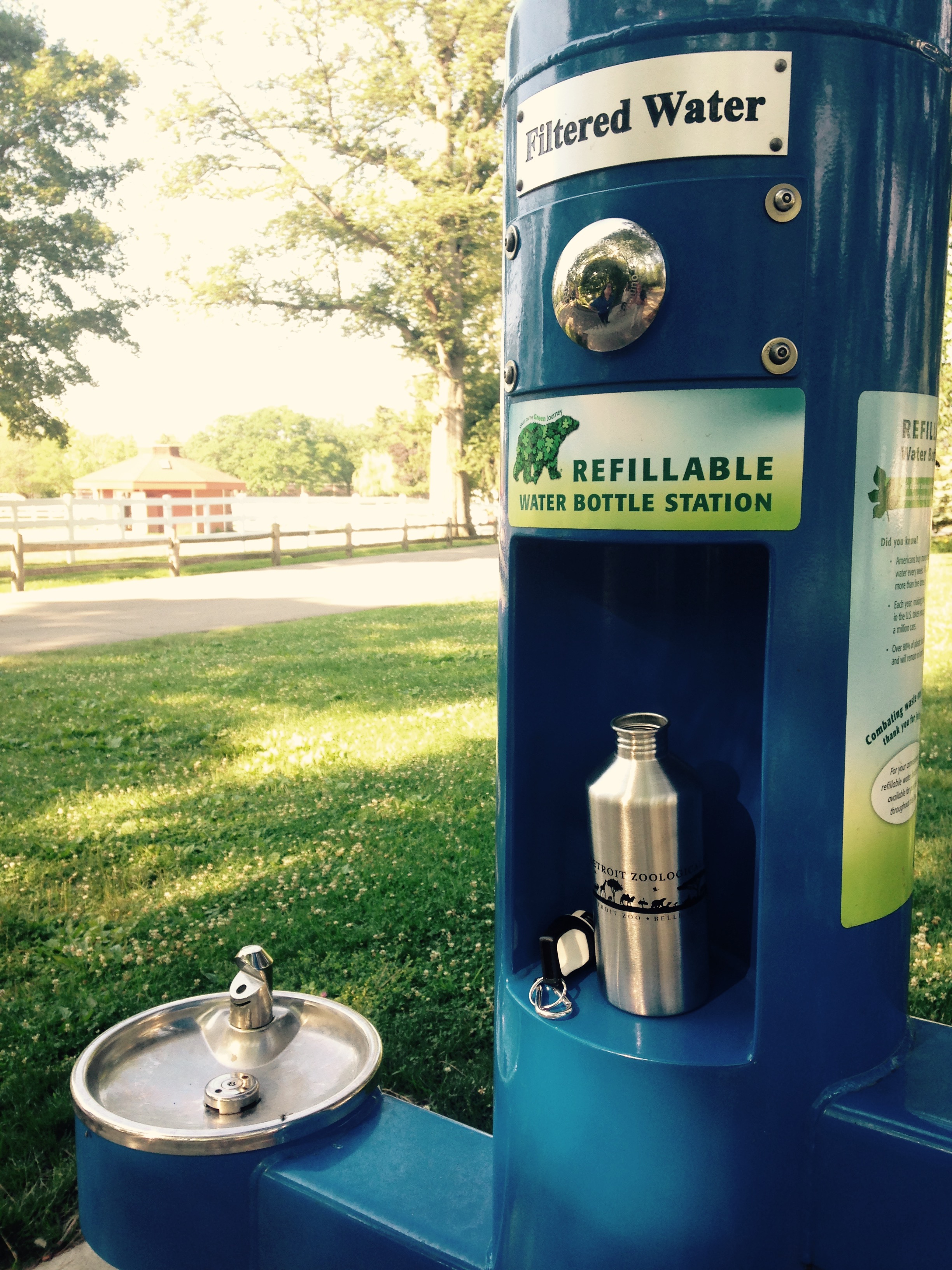
As of September 2015, the Detroit Zoo will no longer sell bottled water. We ask that you join us to #ditchthebottle here at the Zoo and in your everyday lives. We encourage you bring reusable containers that can be refilled – for free – at any of our 20 refill stations during your visits to the Zoo. To help with this transition, we’re also offering a reusable sports drink container at all our major concessions, which costs less than bottled water.

Help us spread this message! We’ll be giving away two of our premium stainless steel reusable water bottles to our supporters. To win this reusable drink container, please connect with the Detroit Zoo on social media and share a photo of a place you would like to keep clean from plastic pollution. Tag the photo with #ditchthebottle and @detroitzoo on Facebook, Instagram or Twitter. The Zoo’s Green Team will pick two winners on July 14.

– Beth Wallace