Toss Out Your Old Spring-Cleaning Routine and Bring in the Green

The grass may always be greener, but you can be too! As you begin your annual spring-cleaning routine, consider making some changes that will impact the environment in a positive way. Some simple modifications will help keep your home fresh and clutter-free while also creating a sustainable future for people and animals. From choosing the right cleaning products to watching your water usage, here are some helpful tips you can adopt to clean the green way:

Purchase environmentally friendly cleaning products. Popular cleaning products often contain chemicals that are harmful to you and the environment. Next time you purchase your spring-cleaning necessities, double check the ingredients for harsh chemicals, including phthalates or triclosan, which can poison our bodies and our aquatic ecosystems. Phthalates can cause disruptions in our endocrine system while triclosan is an antibacterial that kills algae in more than half of the streams in the U.S. Instead, look for eco-friendly, plant-based products. They offer the same cleaning benefits with less risk to our health and the Earth’s water.

Make your own cleaning products. Save money and the environment by creating homemade soaps and disinfectants – it’s easier than you might think. There are many simple recipes you can follow to clean your bathrooms, floors, counters and cabinets. Try substituting chemical-filled cleansers with white vinegar or baking soda and water. Adding a couple drops of essential oil to your natural concoctions produces a great scent and has cleaning benefits of its own. Tea tree oil is a natural disinfectant; peppermint and lemon also have natural and powerful cleaning agents and they will leave your home smelling fresh.

Declutter clothing and household items the right way. Channel your inner Marie Kondo while sorting through old clothes and instead of throwing these items away, toss them into the hands of someone who might find your trash as their treasure! You can gather your items and have a garage sale or donate them to charity. This eliminates waste in our landfills and you could earn some extra cash. But if you do decide to toss some items, there are environmentally friendly ways to do so. Recycle or reuse what you can to try to eliminate as much waste as possible.

Watch your water usage. We can accidentally waste a lot of water by leaving the faucet on longer than is necessary. By being conscious of this, we can help preserve this important resource. When cleaning areas of your house, a bucket full of water works to rinse out the mop or rag and uses far less water than taking it to the tub. These few changes can help you not only save water, but also your hard-earned dollars!

Purify the air with houseplants. Not only are plants beautiful décor, they can also purify the air and provide health benefits to those who reside in the home. Houseplants reduce the amount of carbon dioxide in our homes while also keeping air temperatures down. They even eliminate dust levels, making spring-cleaning a little easier! Having plants around us creates a sense of comfort and lowers stress levels, too.

Together, we can make small changes to our yearly spring-cleaning routine that can make a huge difference in our lives and the lives of Earth’s wonderful creatures. By incorporating these few tips and tricks, we can take another step forward on our Green Journey and help create eco-friendly communities. Spring is in the air, but harmful chemicals don’t have to be.

Detroit Zoological Society’s Online Resource Center Expands Knowledge of Animal Welfare and Ethics

When the Detroit Zoological Society (DZS) created the Center for Zoo and Aquarium Animal Welfare and Ethics (CZAAWE), one of the main goals was to increase the knowledge about the welfare of animals living in the care of humans. We developed an online resource center, which is regularly updated, to ensure as much information about animal welfare and ethics can be easily found. Dr. Matt Heintz, an animal welfare research associate for the DZS, stays up to date on newly published articles and is responsible for growing this incredible resource.

The database now contains more than 7,000 references, with some dating back as far as 1932. It represents a broad range of topics as the expansive field of animal welfare continues to grow. Users can search for specific topics, species and authors. Each entry includes a summary of the publication and a link to where the full article can be found. Some are made freely available to anyone by the journal publishers, while others may require a fee or access through subscriptions. The CZAAWE online resource center and the searches that can be performed are entirely free, as access to knowledge is important in our collective efforts to better understand animal welfare and ethics. This database has proven to be a valuable resource and in just the last four years, it has been accessed more than ten thousand times by people in 102 countries.

Dr. Heintz analyzed the database to look for trends in the literature and to help identify gaps in the knowledge currently available. Although a wide breadth of welfare topics are represented, much of the published literature is focused on mammalian species. This tells us that more research needs to center on amphibians, birds, fish, invertebrates and reptiles. He also found a fun way to visually represent the trends using a word cloud image. The terms that are more commonly found in the references are shown in a larger font.

The goal of increasing knowledge about animal welfare and ethics is an important one and we will continue to dedicate ourselves to increasing the usefulness and accessibility of this resource. If you want to learn more about animal welfare and ethics, we encourage you to check out the online resource center, which can be found at www.czaw.org/resources. The more we know, the more we can contribute to promoting great animal welfare.

– Dr. Stephanie Allard is the director of animal welfare for the Detroit Zoological Society and oversees the Center for Zoo and Aquarium Animal Welfare and Ethics.

Detroit Zoological Society Spreads Cheer at Local Hospitals

The Detroit Zoological Society (DZS) has provided regular programming for children at local hospitals for a number of years. The monthly, hands-on activities provide a welcome distraction from short or long hospital stays as young patients receive treatment at both Beaumont Children’s Hospital in Royal Oak and Detroit Medical Center Children’s Hospital of Michigan in Detroit. With a goal of reaching as many pediatric patients as possible, and thanks to generous donations from DZS guests, staff and volunteers, we are sharing a new experience with these children that is filling hospital activity rooms with smiling faces.

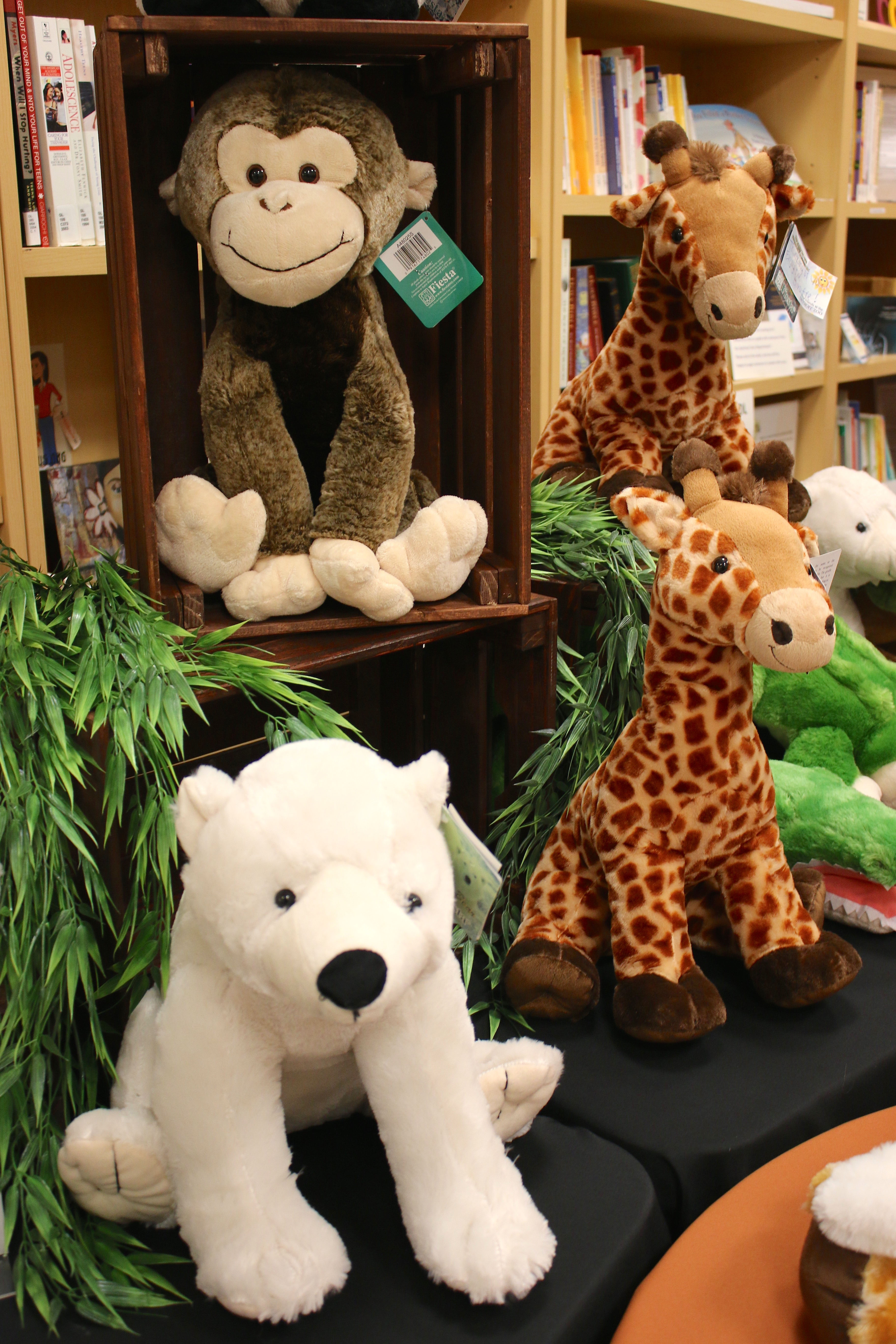
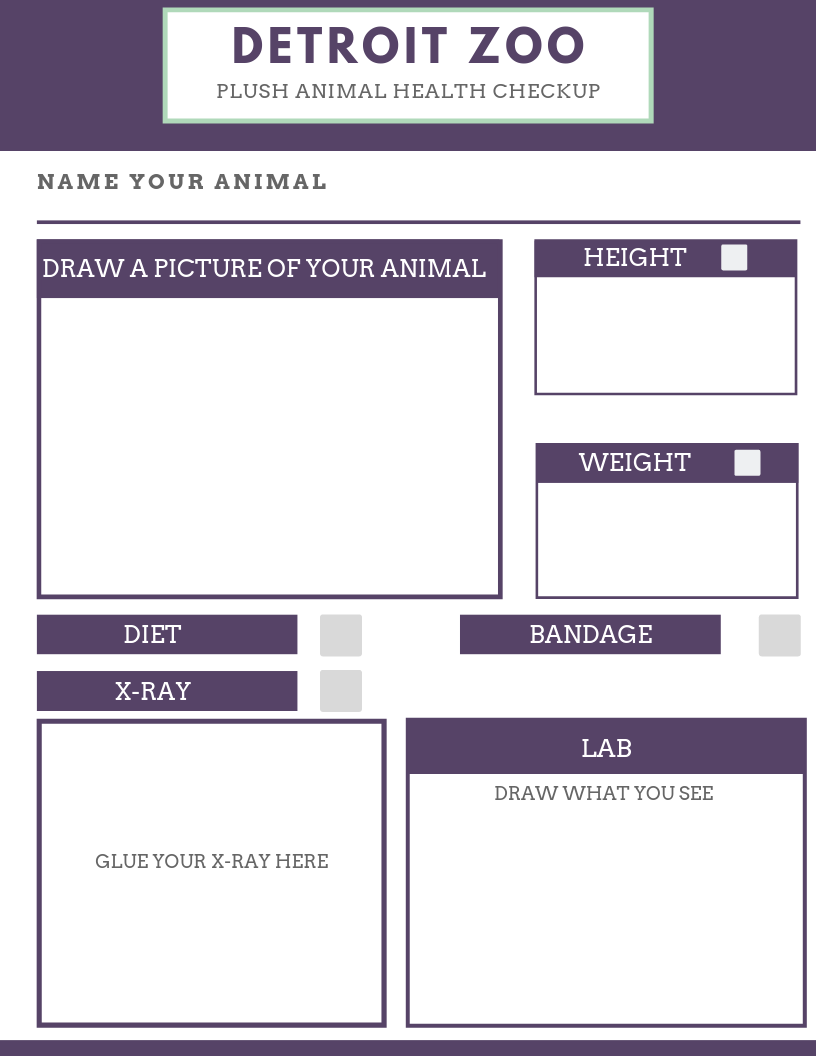
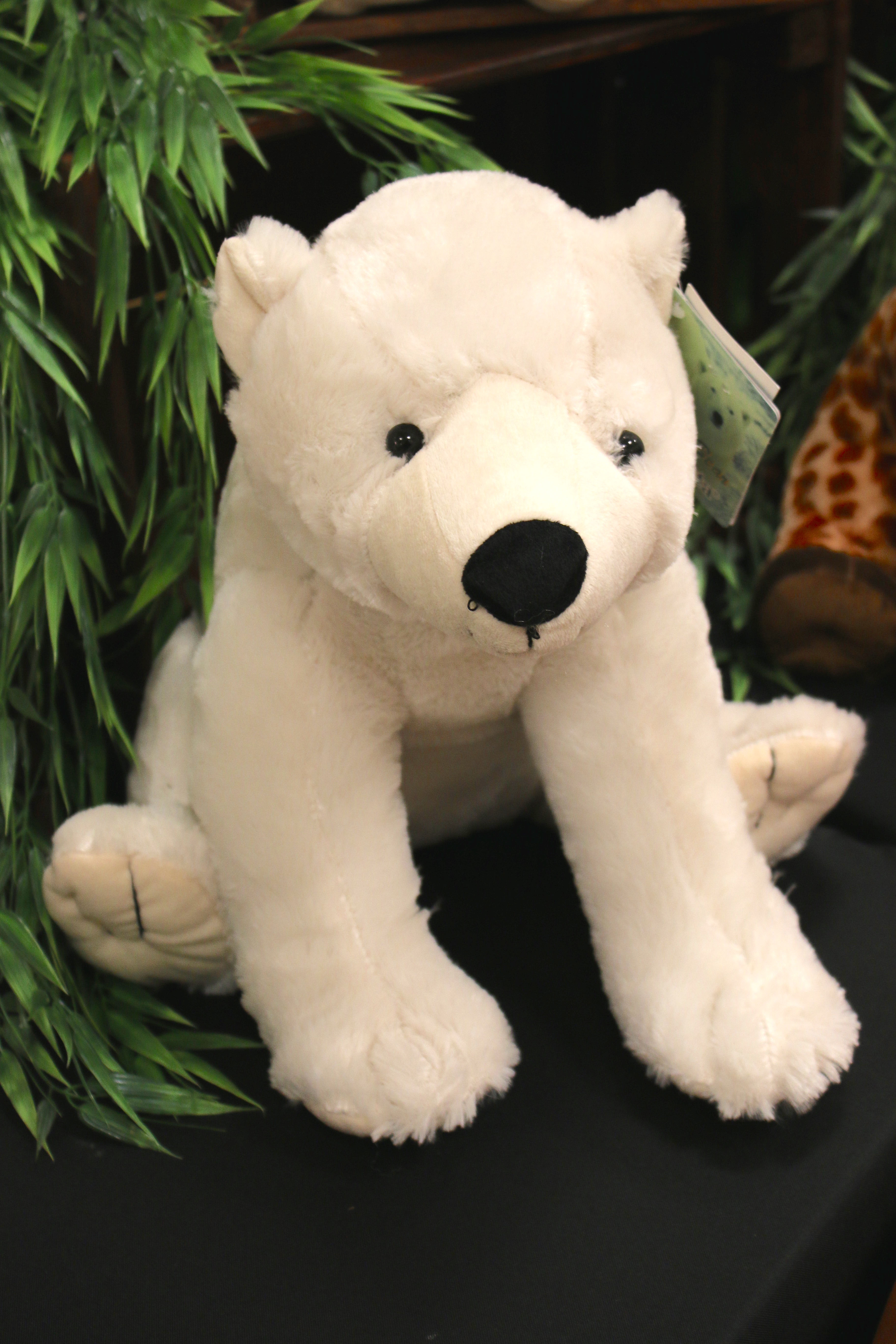
This interactive experience allows them to step into the role of a veterinarian or wildlife conservationist. As children enter the room, they have the opportunity to choose and “adopt” a plush animal. They take the animal through a series of health check-ups, including weighing, measuring, food preparation and X-ray review, carefully charting the information they collect. At the end of the examination, the child is able to keep the plush animal as a forever friend.


The stations are intentionally designed to be flexible and meet the diverse needs of each child. If a patient does not want to or is unable to move from station to station, the activities can be easily brought to them. The experience can be shortened or lengthened depending on the interest and stamina of each child. The activities can also be made more challenging for older children or simplified for younger patients.

The process of completing the animals’ health check-ups provides an opportunity for hospital staff to communicate with patients about their own treatment. Physical therapy and patient aide staff are also able to take advantage of these activities to help patients move from station to station.

The plush animals have been available for purchase at a discounted price in the Detroit Zoo’s gift shop, Zoofari Market, since 2014. The philanthropic idea was the brainchild of employees of Service Systems Associates, which operates the Zoo’s concessions and retail services.

Our pediatric hospital programs are creating memorable moments for children during their hospital stays, which can be a difficult time for many. Because of those who have so generously donated to this program, we are able to make a real difference in their lives.

– Carla Van Kampen is a curator of education for the Detroit Zoological Society.

Notes from the Field: Scientists Set Sail on Seabird Study

This is Part II of a series about a recent conservation expedition to the Falkland Islands by the Detroit Zoological Society to understand the threats facing populations of wild penguins and seabirds. For Part I, click here.

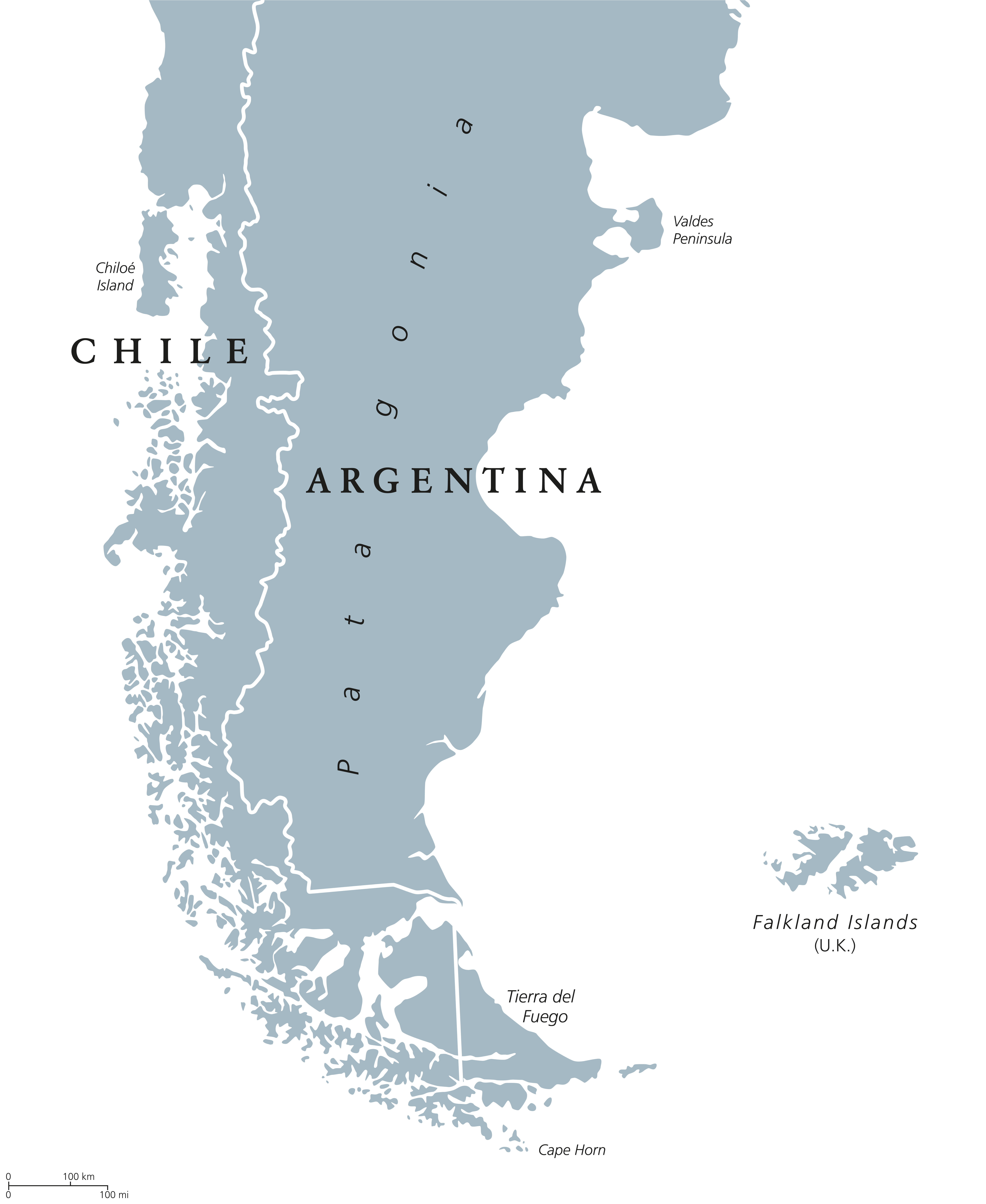
Conducting scientific research in the Falkland Islands can be logistically challenging. Located 300 miles to the east off the southern tip of South America, this remote territory consists of two main islands and several hundred smaller islands dotting the South Atlantic. Some of these islands have rocky cliffs at the ocean’s edge. Others are completely inaccessible.

With this said, the Falkland Islands provide critical habitats for several species of penguins, seabirds and other wildlife, and such fieldwork is necessary to preserve these populations and understand the risks they face. Threats are looming from oil extraction and increasing ecotourism in the area.

The Detroit Zoological Society (DZS) was asked by a partner organization called Falklands Conservation to develop a project that would explore the impacts of infectious disease, pollution and tourism on these populations. After months of preparation, a DZS veterinary team embarked on the mission.

Traveling to the Falklands from Detroit is a 50-hour journey. First, you fly to Atlanta and then to Santiago, Chile. The next day, you fly to Punta Arenas, Chile and then continue on to Stanley, the largest city in the Falklands. Stanley has a population of roughly 2,000 people, and about 900 people live elsewhere in the islands. By comparison, there are approximately 450,000 sheep spread over the islands, which amounts to more than 150 sheep per human. There is also an estimated 800 miles of coastline in the Falklands, which is home to four species of penguins and numerous other seabirds.

The DZS’s goal was to take blood and feather samples from penguins living in different locations within the Falkland Islands. Some had experienced the presence of humans, industrial shipping and oil activity and others were far removed from these potential impacts. The team also set out to examine two penguin species, one that tends to forage closer to land and one that travels far out to sea.

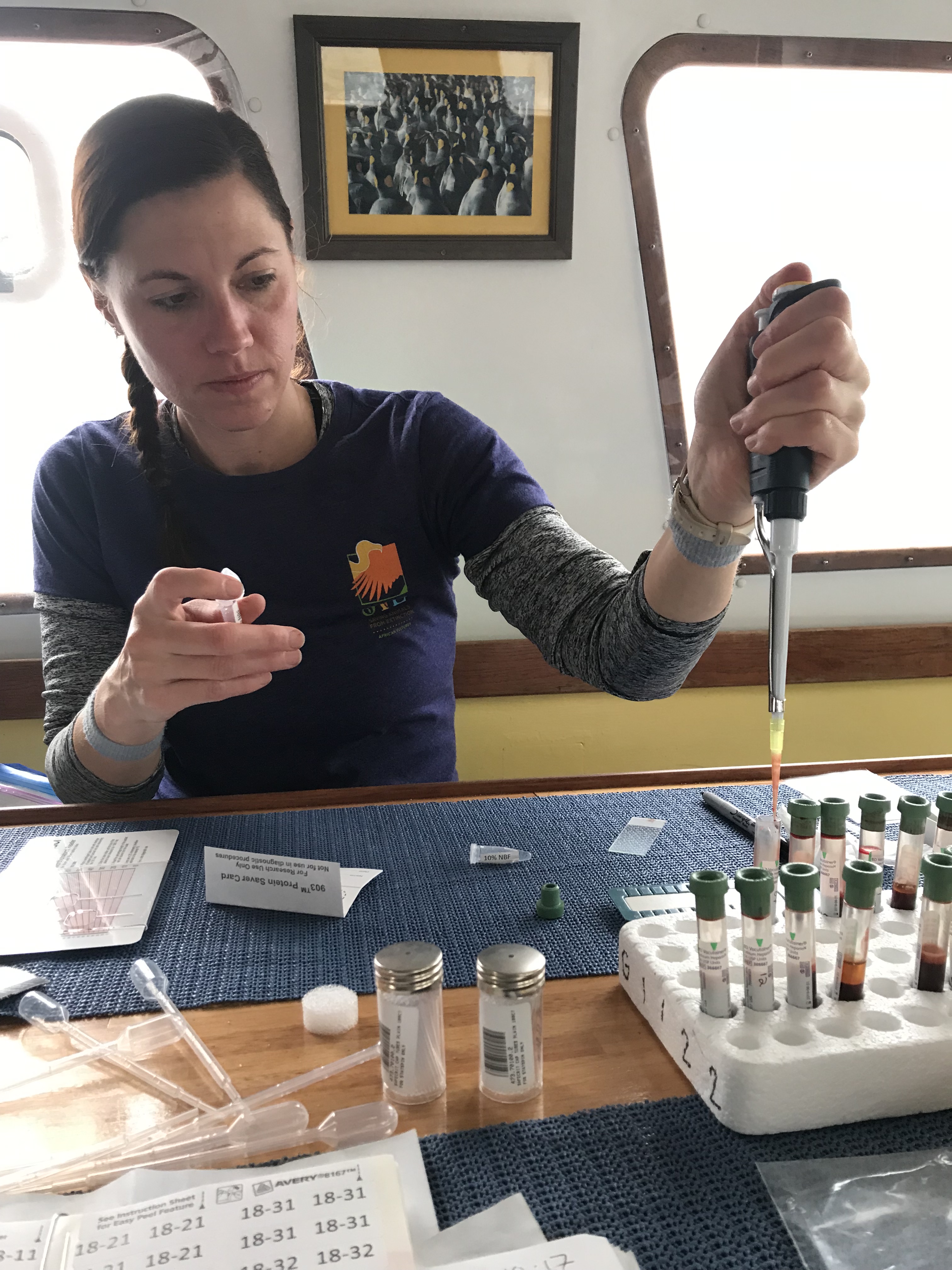
The research team’s home base for the expedition was a 55-foot sailboat. Each morning, the team would pack supplies into backpacks, get dropped off on an island and hike to various penguin colonies to collect the samples over an eight-hour period. One day, the team was set up on a beach near a gentoo colony and the next was spent on rocky cliff near a rockhopper colony.

Each penguin was handled for less than 10 minutes, during which time the team conducted a physical exam, took swabs to test for viruses and bacteria, collected blood and used scissors to trim a few feathers for toxicology testing. Afterward, each of the penguins went right back to their colonies and continued their regular activities of grooming and socializing.

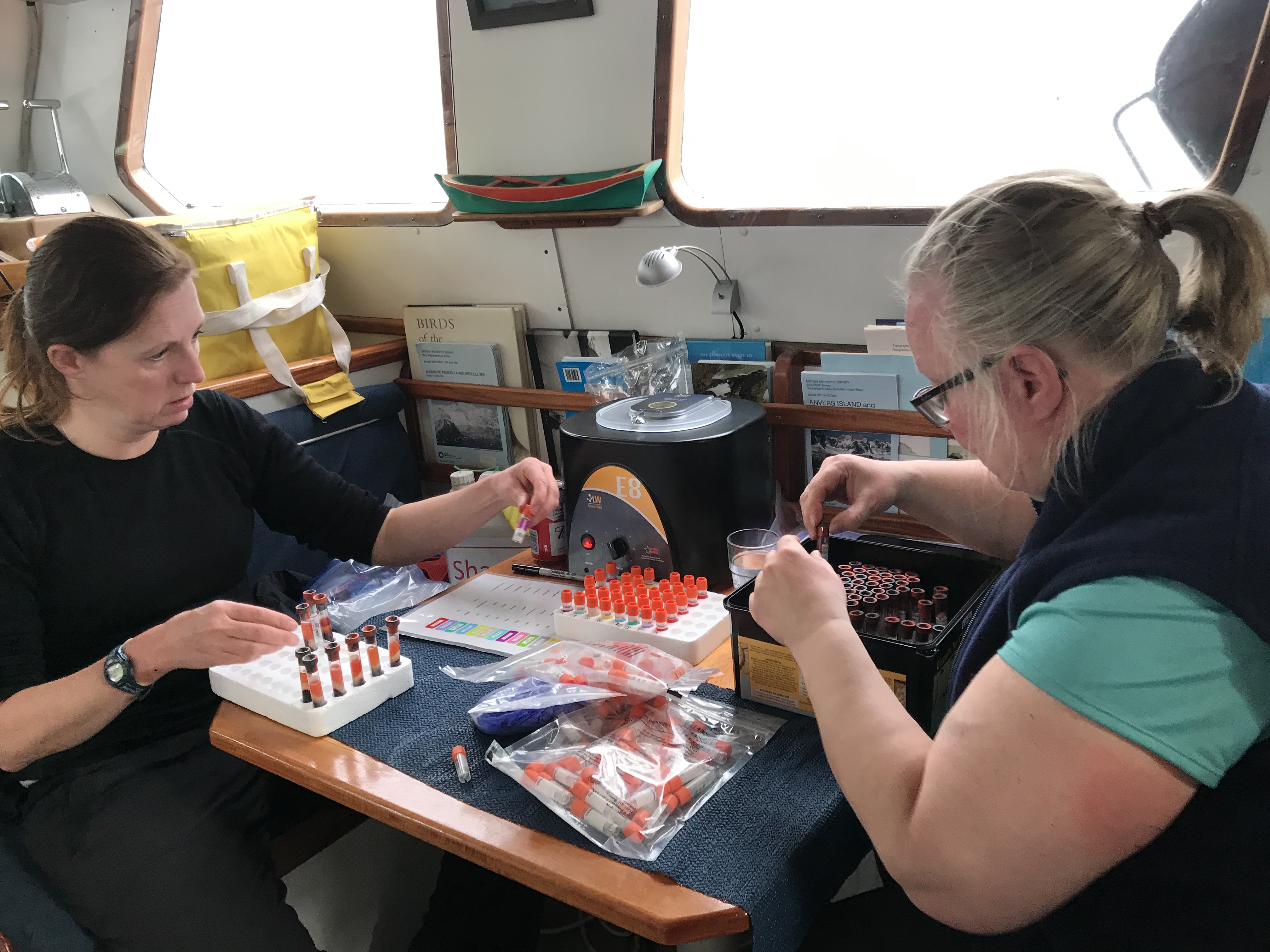
In the evenings, our researchers took over every surface of the boat and spent three or four hours centrifuging the blood, making slides and getting samples ready for storage in liquid nitrogen tanks for preservation until our return to Michigan.

In all, the team examined 95 penguins. Our hope is that we can better understand the current health status of these penguins as well as the impacts disease and exposure to environmental toxins and humans may have on wildlife. Ultimately, measures could be taken in this region to ensure important marine habitats – and the wildlife who rely on them – are protected.

– Dr. Ann Duncan is the director of animal health for the Detroit Zoological Society and oversees the Ruth Roby Glancy Animal Health Complex.

Foster Empathy While Spending Time Indoors

The days may be shorter, the weather colder, and our lives might be spent mostly indoors during this time of the year, but it can still be a valuable, educational time for families. There are a number of activities we can do with our children to follow and support the Detroit Zoological Society’s humane education goals of fostering empathy for others and developing respect for wildlife and wild places.

Empathy is the ability to understand another person or animal’s experience from their perspective. It’s being able to place yourself in some else’s shoes/paws and mirror what they are feeling which, in turn, is known to increase positive social behaviors. While it can be innate for some of us, empathy is actually a learned behavior.

One way to help nurture empathy in children is through stories, which can help them process thoughts and information. Stories allow us to put on different hats, try out new experiences, think through future actions and develop our moral compass – all of which can be done from the comfort of our own home.

We do this in a number of our humane education programs offered by the Detroit Zoological Society. We share experiences of people helping animals and books that enable us to explore the world around us from an animal’s perspective. Even after a story has been read, there’s still an opportunity to continue building empathy by taking action.

For example, you could read “Stranger in the Woods”, a beautiful picture book about local wildlife, and then build a wildlife-friendly snowperson by incorporating decorations that can feed animals. Examples include a carrot nose, potato eyes, a birdseed scarf, etc.

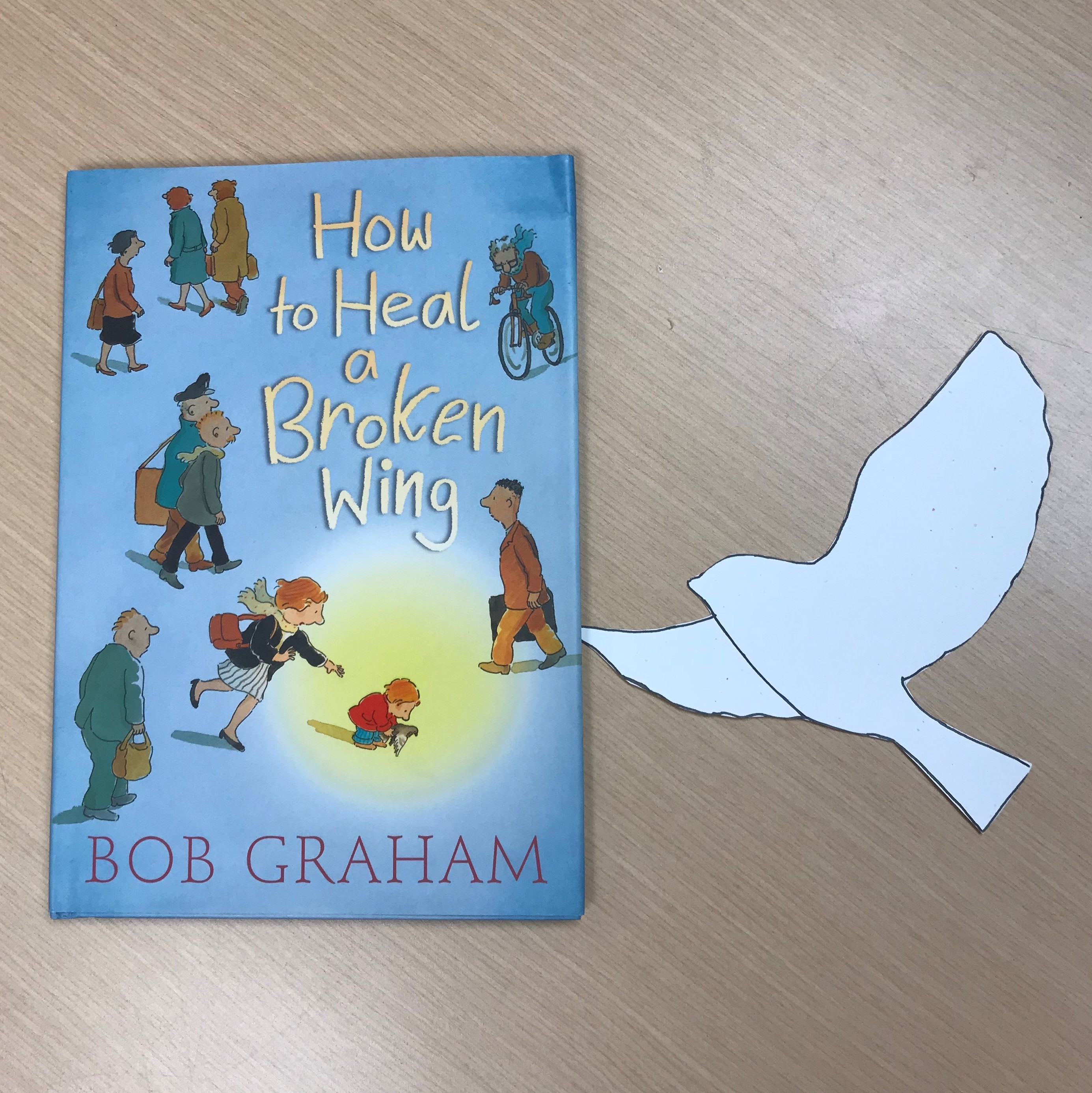
After reading “How to Heal a Broken Wing”, a book about helping an injured bird who flew into a window, you could make window decals to prevent bird collisions. You could also learn how to humanely deter ants from your home after reading “Hey Little Ant”, a book that sheds light on an ant’s perspective. Fostering empathy in children can start at a young age. Together, we can help instill values of walking softly and treating the Earth’s creatures gently.

– Carla Van Kampen is a curator of education for the Detroit Zoological Society.

Celebrate your Sweetie Sustainably this Valentine’s Day

While Valentine’s Day is usually a sea of pink and red, let’s add some green to our celebrations this year. Date nights and gifts that show your significant other how much you care can easily include a little love shown to the Earth as well. Options abound for eco-friendly ways to revel in the romance.

Date Night. Embrace the weather and spend time in nature by bundling up and heading outside. Go skiing, ice skating, find a local winter festival, or head to the Detroit Zoo with your significant otter for a Valentine’s Day date.

Cook at home. Some restaurants require reservations weeks in advance. Instead of hitting the town, cook dinner together at home using locally sourced food. It’s a fun activity that’s more intimate than being surrounded by other couples; plus, it will save you money. Finding fresh ingredients can be challenging during Michigan winters, but a trip to your local farmers’ market could produce everything you need. Many vegetables are ripe this time of year in their extended season, including onions, potatoes and carrots – learn more about what grows when in this handy guide. Get creative in the kitchen by finding recipes incorporating these in-season foods. And don’t forget about maple syrup! It’s a delicious staple of Michigan’s agriculture industry and can be tapped as early as February. This can make for a delicious breakfast in bed for your partner.

Gifts for your sweetie and the environment. This year, consider giving your loved one something a little more environmentally friendly. Jewelry and perfume can be expensive – and toxic. Instead, choose a gift that shows your love for both your partner and the Earth. Here are some ideas:

  • A potted plant or flower seeds for those with a green thumb
  • An indoor herb garden to spice things up for those who love to cook
  • A sustainably sourced bouquet of flowers – either from a local grower and/or one that uses green methods of growth and production
  • Reusable snack bags and travel cups for those always on the go
  • A “date night jar” with ideas for outings to pick at random throughout the year
  • Fair trade candy and chocolate

Skip the pricey wrapping paper – instead, reduce, reuse and recycle! Reduce the cost of wrapping paper by purchasing reusable gift bags. Reuse your cookie tins and jars to present a gift instead of cardboard boxes. Recycle old newspapers and magazines as a sustainable alternative to fancy paper. And for this category, let’s add another “R” – romance. A hand-written card can be more sentimental than a store-bought greeting card.

Crafts for children. Children’s arts and crafts can be good for the environment too. Skip the messy glitter and make a heart-shaped bird feeder! It’s a fun craft to do together while fostering respect for wildlife and providing food for birds. Other options for home-made gifts for the young people in your life rather than pricey presents include friendship bracelets made out of colorful yarn or snow globes made out of recycled baby food containers.

There are countless creative ways we can demonstrate our devotion to each other and to the Earth on Valentine’s Day. Love is in the air, so let’s keep the air clean and safe for all of us who share this planet.

Students Showcase Sustainable Solutions in 2019 Green Prize Competition

The Detroit Zoological Society (DZS) is seeking inventive ideas from local students who wish to join us on our Green Journey toward a more sustainable future. K-12 classes, green teams and schools in Macomb, Oakland and Wayne counties may enter the DZS’s 2019 Green Prize competition now through March 1 and be eligible for cash prizes and a field trip to the Detroit Zoo.

Students are encouraged to research green practices – from incorporating renewable solar energy to eliminating plastic water bottles – and then create and implement ideas that lead to a better tomorrow. The winners of the 2018 competition were members of the West Bloomfield High School EARTH Club, who came together as a team to determine how much energy the science department was using and develop strategies to reduce this rate. Ultimately, they switched to LED lights and installed solar panels to completely power the department. Their project – from inception to execution – exemplified environmental stewardship.

To enter the DZS’s 2019 Green Prize competition, students are asked to complete the following:

  • Identify an environmental or sustainability issue
  • Propose a solution that will address the issue
  • List the material and labor needed to implement the solution
  • Describe the positive impact this solution would have on the environment
  • Submit a video, artistic rendering of the project or any other method that portrays your green journey

Prizes will be awarded for first, second and third place. First-place winners will receive $1,000 and a class field trip to the Detroit Zoo, which includes an in-depth look at the DZS’s Greenprint initiatives that are already in action. Second-place winners will receive $600; third-place winners will receive $400. All entries will receive a certificate of participation for their efforts in making the world a greener place.

The top three entries will be selected and notified on March 15. The winners will be showcased during GreenFest, the DZS’s celebration of Earth Day on April 27 at the Detroit Zoo. Visitors will have the chance to see how these students are paving the way to a more sustainable environment.

All 2019 Green Prize entries should be submitted to rhandbury@dzs.org

The Detroit Zoological Society is a leader in environmentally sustainability, with all operations guided by our award-winning Greenprint initiative. As part of our Green Journey, we are working to create a healthier environment for all animals, visitors and the planet. We’re doing this through initiatives such as our waste-to-energy anaerobic digester, keeping 60,000 plastic bottles out of the waste stream annually by no longer selling bottled water, using permeable pavement in our new pathways and parking lot, and installing a solar panel system called the smartflower. Learn what you can do to lessen your footprint by downloading our Shades of Green Guide.

Answer the Call – Gorillas are on the Line

Information for our 2020 cell phone recycling program can be found here.

Grab your cell phone (if it’s not already in your hand) and go to your most recent calls. Scroll through your list. How many calls did you receive? How many minutes did you spend talking? What about texts – how many have you sent today? What if I told you, that every time you grab your phone, whether it be for a call, a text or to browse your social media accounts, you’ve held the fate of a gorilla in the palm of your hand?

A little heavier than you thought? The topic – not the gorilla. While gorillas can weigh upwards of 500 pounds, a cell phone typically only weighs about 4 ounces. But the actual weight of this issue is so much larger than what can be measured with a scale.

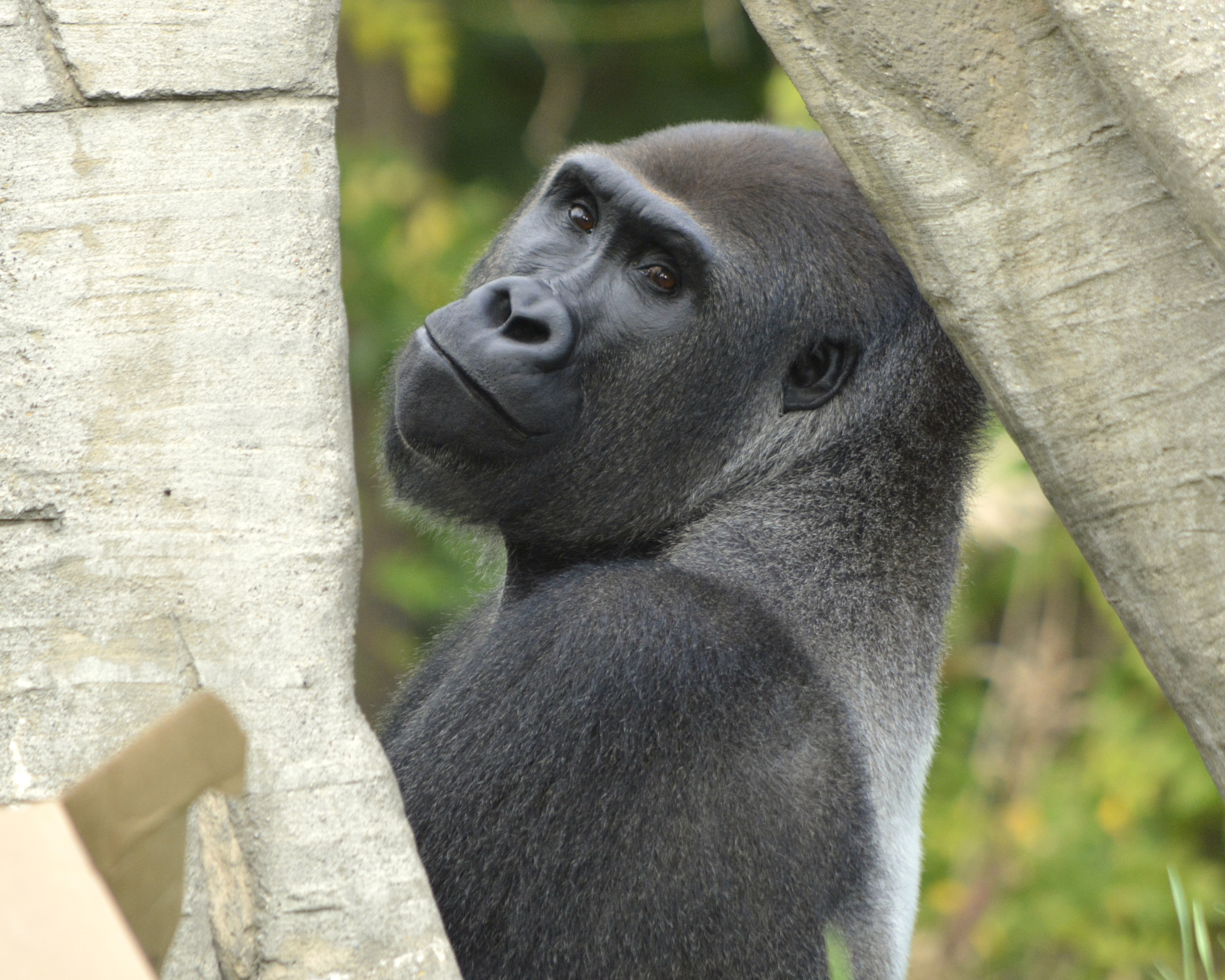
While materials like plastic, nickel, copper and zinc are common in most cell phones, there’s one rare and valuable mineral, coltan, in all cell phones and small electronics that directly impacts the survival of gorillas. Eighty percent of the world’s supply of coltan is found in Central Africa, which is prime gorilla habitat. Imagine having the cell phone equivalent of gold in your backyard. There would be a lot of people showing up at your house with shovels in their hands and dollar signs in their eyes. That’s the situation for coltan and the gorillas.

Coltan is luring miners into the forests, which causes trouble for these animals. Their habitat is becoming logged and dug up so the miners can reach the coltan, and people are bringing in diseases, which the gorillas can easily contract. People are also illegally hunting gorillas – either to eat, sell or trade for more supplies. The more cell phones people buy, the more coltan needs to be mined, and more gorillas are becoming homeless. With their numbers dwindling in the wild as it is, let’s work together to save them.

The Detroit Zoological Society is partnering with other accredited zoos within the Association of Zoos & Aquariums to launch a cellphone recycling program from February 1 through April 30. Our collective goal is to gather 10,000 mobile phones and engage 10,000 children and community members to help save gorillas. In addition to mobile phones, we will also accept iPads, iPods, cameras, chargers, etc., because they, too, contain coltan.

Fewer than 20 percent of old cell phones are recycled. So, whether yours are collecting dust in the garage or in a junk drawer somewhere in your house, consider bringing your old phones and electronics to the Detroit Zoo during the next three months. Donation bins will be set up at the Main Entrance; you can also deliver them to the guest relations associates manning the ticket booths. We’re also looking for local schools to join us in this venture and make a direct impact on saving species. If your school or classroom is interested in helping us protect gorillas, you can email cvankampen@dzs.org. Also, mark your calendar for our World Gorilla Day celebration at the Detroit Zoo on Tuesday, September 24.

– Aaron Jesue is a zookeeper for the Detroit Zoological Society.

Notes from the Field: Seabird Research Reveals Impact of Ice Decline in Antarctica

Where to begin!? I recently returned from a six-week expedition to Antarctica, living and working at the U.S. Palmer Research Station to study the populations of penguins and other seabirds. I’m still in awe of the whole experience.

Palmer Station is the base for a long-term ecological research program, where scientists are studying all aspects of the Antarctic ecosystem. The fieldwork conducted there through the Polar Oceans Research Group has been ongoing for 40 years, resulting in the collection of a lot of data. While scientists have determined that the climate is severely warming and affecting all regions in the world, the greatest effects are seen in Antarctica. Declining sea ice levels are negatively impacting many species of wildlife that depend on it.

Sea ice is crucial to the Antarctic ecosystem, and its loss can have profound effects. One example of this can be found by examining a small crustacean called krill. This animal feeds on the algae that grows underneath the ice and is a primary staple in the diets of many species, including penguins. Declining sea ice means fewer krill, which means less food for the fish that eat them and as a result, a depleted food supply for penguins and the rest of the food chain.

Sea ice losses can occur from both warmer air above it and warmer water below, and increased air and water temperatures means more snow. This makes it difficult for penguins to build their nests and when the snow melts, the nests are at risk of flooding and these birds may find their eggs floating in puddles.

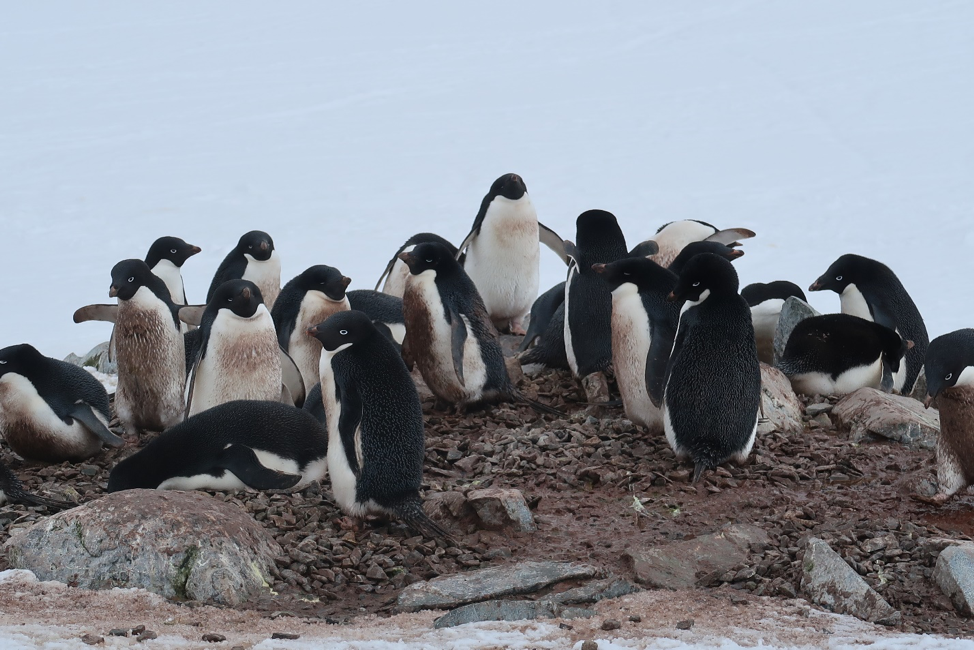
Upon my arrival at Palmer Station, we began conducting a breeding chronology study with two colonies of Adélie penguins on two local islands. We selected a few nests to observe throughout the season – our observations included periods of birds laying their eggs, the chicks hatching, and the chicks heading off on their own. These nests were monitored daily for predation and for the exact dates of chicks hatching. We also chose nests to be assessed for body condition and egg morphometric data. We took measurements and weights of birds and eggs to obtain a sampling data size of a larger population.

As part of another aspect of the program, we counted the number of individual birds in colonies of Adélie, gentoo and chinstrap penguins. One island was home to 6,000 gentoo penguins! Boy, did my thumb hurt that day from using a clicker counter. Unfortunately, most Adélie colonies were in decline from recent years’ data while gentoo numbers were increasing. One of the reasons for this is Adélie penguins rely more on sea ice than gentoos for feeding.

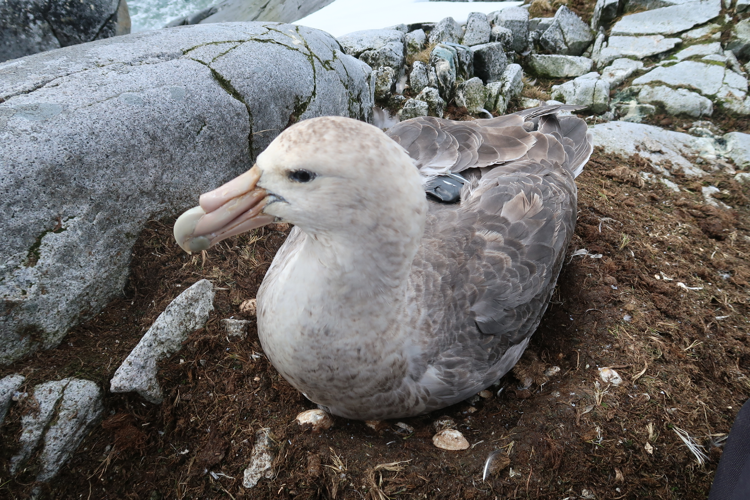
The sea bird program not only involves the study of penguins, but also every other species of bird surrounding Palmer Station, including giant petrels, brown and south polar skuas and kelp gulls. These species were monitored in various ways including mark-recapture, leg band re-sights and nest observation. We even deployed satellite transmitters on southern giant petrels – the data from the first transmitter we analyzed showed that the bird had traveled 1,500 miles in just 10 days!

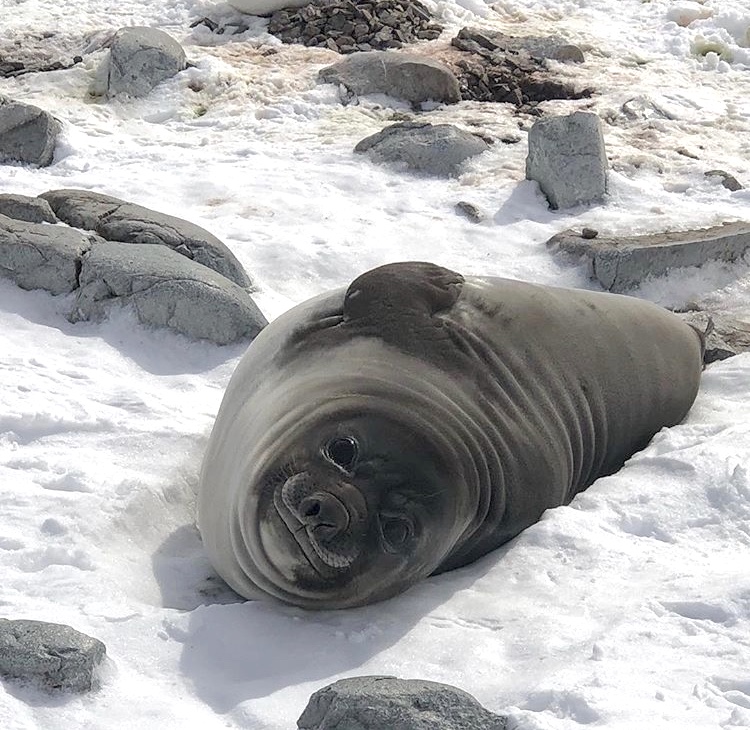
In addition to bird surveying, we were asked to conduct a marine mammal census by identifying species, behaviors and group size. As a seal keeper, seeing various seal species in the wild was just beyond anything I could have imagined – Antarctica is home to crabeater seals, weddell seals, ross seals, elephant seals, fur seals and the infamous – and dangerous – leopard seals.

The Detroit Zoological Society has worked with the Polar Oceans Research Group for a number of years – its founder, the world-renowned polar ecologist and penguin expert Dr. Bill Fraser, was a consultant on the design of the Polk Penguin Conservation Center. This is the second time a member of our animal care team has been invited to take part in this rare and extraordinary opportunity to conduct scientific research in Antarctica during the austral summer.

– Flo Yates is a zookeeper for the Detroit Zoological Society.

Jane Begins to Explore her New World

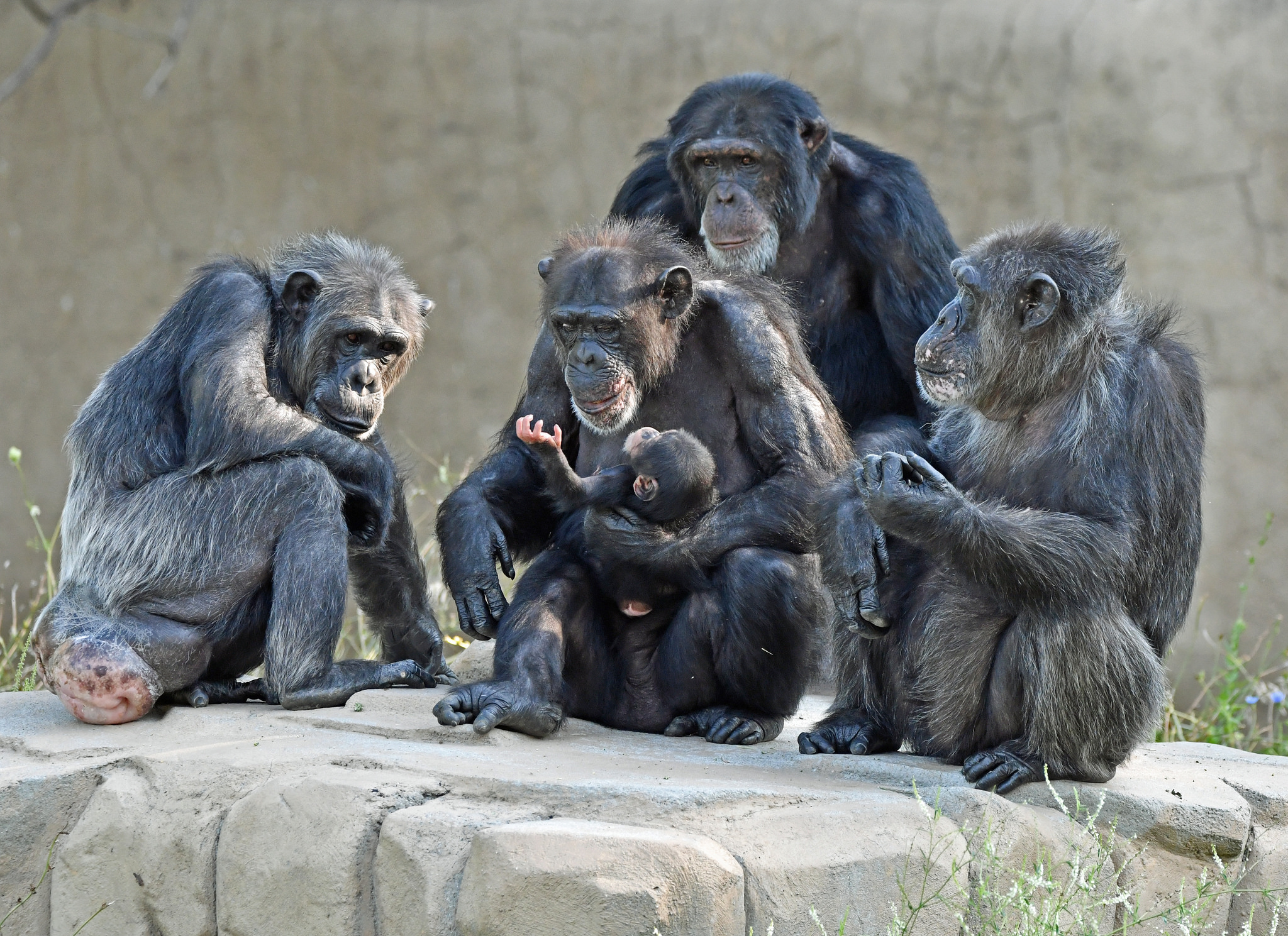
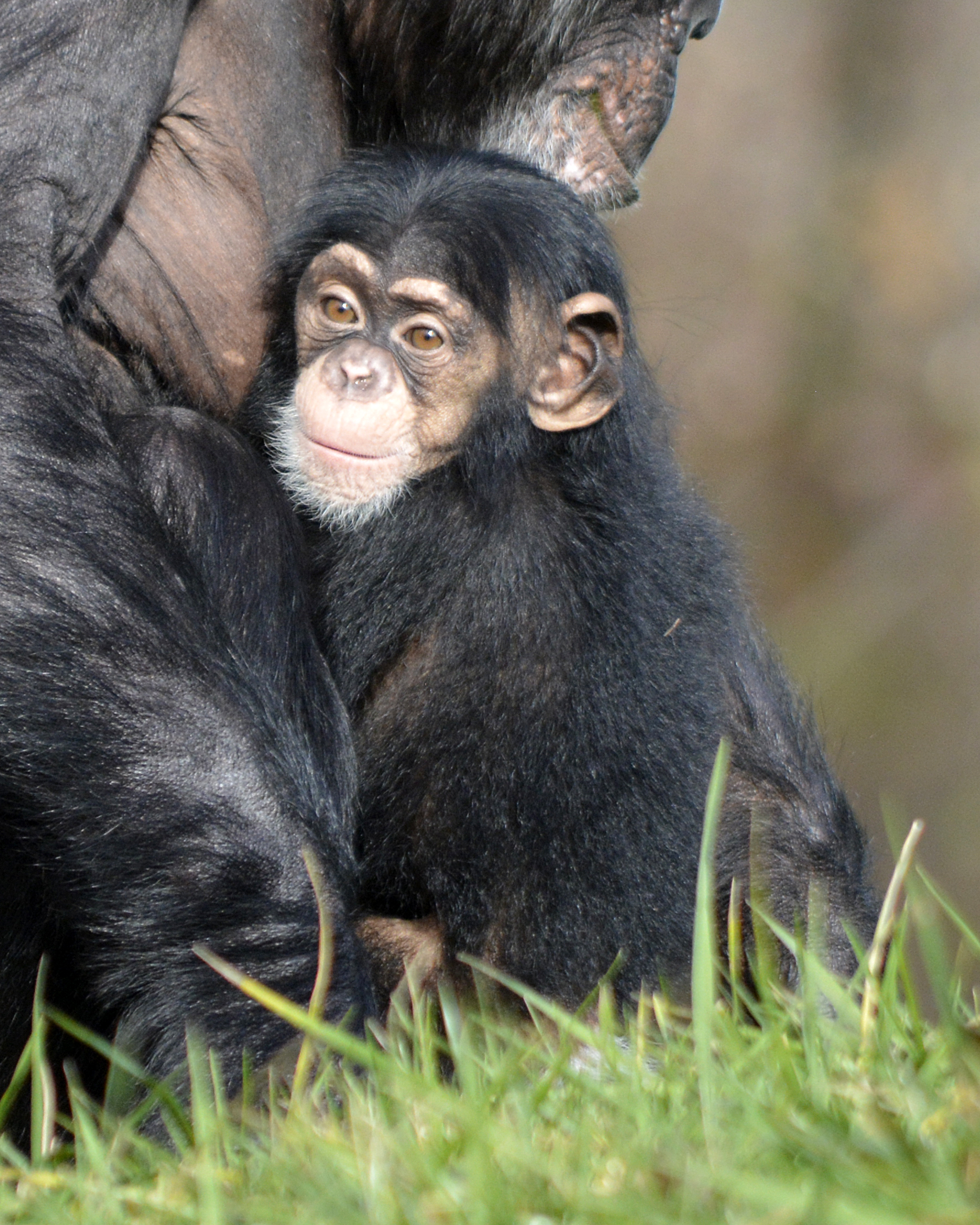
Animal care staff recently noticed two new white teeth peeking out through the gums of infant chimpanzee Jane. Now 6 months old, when the baby yawns, she reveals six pearly whites. As Jane wakes up, laying on her mom Abby’s chest, she stretches out her spindly legs, releases her grip on her mother’s hair and looks around. Everything in her world is something new to explore and we’ve already started to see Jane’s curious and intelligent nature.

Jane took her first steps tentatively. Holding on to Abby with one hand for support, she tried to reach forward to grab onto something sturdy to balance herself. It took the little one about a week to be coordinated and confident enough to move her foot to take a step, but after that she was ready to explore! Climbing was her next big feat. At first, she held onto Abby for extra support but she soon was ready to reach new heights without mom’s help. Each day, Jane would venture a little bit higher and test out her strength and balance by letting go of one of her hands.

The rest of the troop is still enamored with their newest addition. Many individuals can be seen sitting near Abby and grooming her, just to get a closer look at their youngest member. Occasionally, with her stumbling walk, Jane will reach out her hand to them to greet them, a chimpanzee communication she has learned from watching her mom and others. Some of the chimpanzees are gentle with her and will lightly place a hand onto Jane’s back while she sits between the adults or gently, with one finger, touch the top of her head. Abby is popular in the troop now that she is carrying a little one on her chest as all of the other chimpanzees want to spend time around Jane.

While others admire the little girl without touching, her half-sister Zuhura is overjoyed to have a young playmate. It’s clear Zuhura cannot wait until Jane gets older and can follow her around the habitat and play. Still young herself at age 5, Zuhura can be a little rough when she plays with her youngest sister. When Jane seems to have had enough, Abby disciplines her granddaughter (Zuhura) with a quick grunt and shake of her hand, which tells her to stop.

Play is an important part of a young chimpanzee’s life as they learn important skills for when they reach adulthood, such as running, climbing, wrestling and displaying. Play bouts also teach young chimpanzees social skills such as dominance, submission, confidence and reconciliation. So, although sometimes Zuhura can appear to be rough with Jane, don’t worry! Jane is learning new behaviors from this playtime and if you look closely, you might even see both of them laughing just like human children do. For now, Abby is always just an arm’s reach away in case Jane needs support or to get away from her stronger, older sister.

Jane has also started to pick up objects such as sticks, tiny handfuls of bedding, pieces of primate chow and orange peels that Abby discards. Every item she picks up seems to promptly go to her mouth for inspection or to use as a teething toy. Animal care staff use a small plastic spoon used to feed mashed bananas and baby food to Jane each meal. Occasionally, Abby shares small bites of her own produce. Romaine lettuce appears to be Jane’s new favorite, as she typically takes the whole piece from her mother’s mouth and although she’s not yet consuming it, she shreds it and bites it into tiny pieces for Abby to forage for when Jane is through with it. Although Jane is sampling food items, she still nurses and relies on her mother as her primary source of nutrition.

In the coming months, Jane will be more easily visible as she will transition to being carried on Abby’s back and venture a little further away from her mom, but not yet out of reach. If you’re lucky, you’ll spot Jane playing with her sisters, Zuhura and Akira, 7, or see the elder chimpanzees gently grooming her. The newest chimpanzee has brought much excitement to the troop and she continues to grow in size and personality every day.

– Melissa Thueme is a mammal supervisor for the Detroit Zoological Society.