Greenprint: Trash from Great Lakes Turned into Art at Detroit Zoo

The Detroit Zoological Society (DZS) recently partnered with ArtRoad Nonprofit, an organization that provides art-based activities, instruction and supplies to elementary schools in southeastern Michigan that are lacking in art programs.

In addition to the incredible educational opportunities this organization shares with hundreds of students annually, they also reuse donated items within their art projects in order to reduce waste. This aspect of the organization especially appeals to us as we continue with our Greenprint initiatives and award-winning efforts to create a more sustainable future.

I recently had the opportunity to volunteer in an ArtRoad classroom, where we worked with students on repurposing various items into works of art. The students greeted me with a warm welcome, and knowing that I work at the Detroit Zoo, created penguin art using recycled vinyl for the birds’ feet.
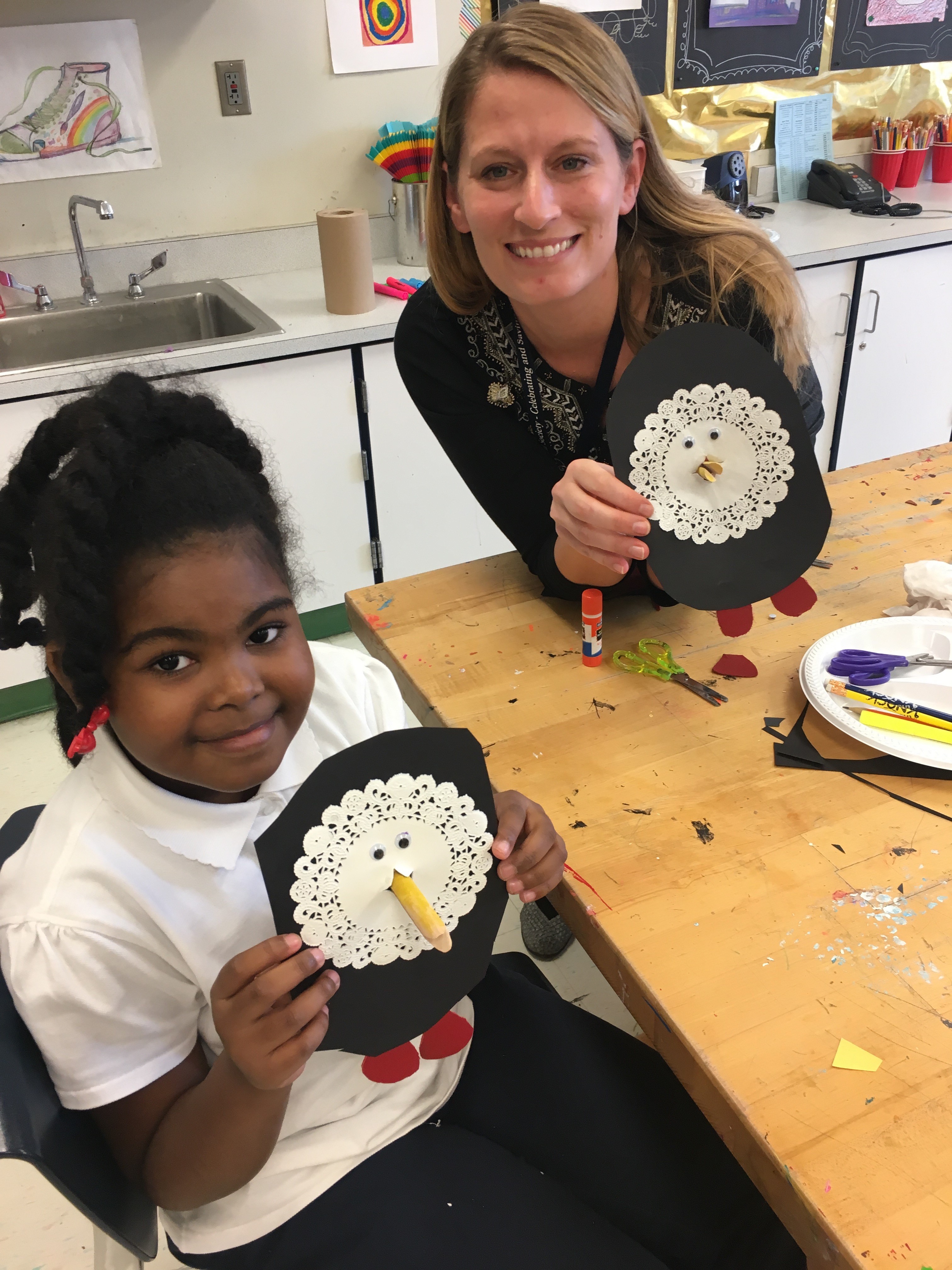
In turn, I provided the students with journals that DZS staff created using recycled millage signs. We hope these journals will help the budding artists capture their imaginations on paper.
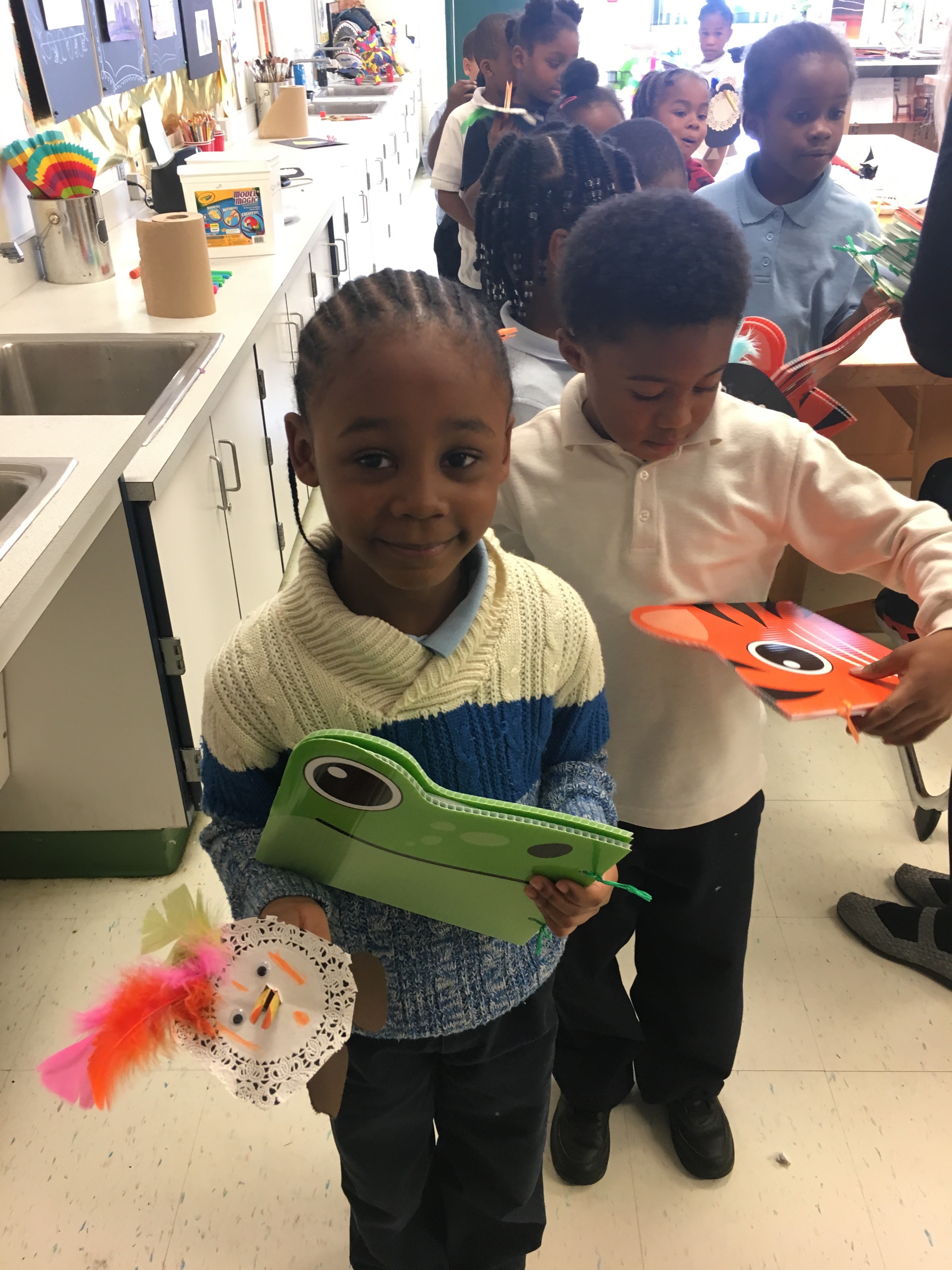
Recently, ArtRoad collaborated with the Alliance for the Great Lakes to collect recyclable materials and debris from the shorelines of Lake Michigan. Using these items, more than 150 elementary school students spent two months creating five fish sculptures, one for each of the five Great Lakes. This effort aims to bring awareness about the effects plastic pollution has on freshwater ecosystems.

We are excited to be able to share this educational and impactful project with Detroit Zoo visitors – these fish sculptures will be on display April 22-July 9. It’s only fitting that the art exhibition will be unveiled during GreenFest, our Earth Day celebration, and will be on display during Sunset at the Zoo, our annual fundraising gala that carries a theme this year of “Green is the New Black”, celebrating our groundbreaking efforts in sustainability.

Our recent initiatives include discontinuing the sale of bottled water on Zoo grounds – keeping 60,000 plastic bottles out of the waste stream annually – and building an anaerobic digester which will convert more than 500 tons of animal manure annually into methane-rich gas to power the Zoo’s animal hospital.

Be sure to check out the ArtRoad exhibition on your next visit to the Detroit Zoo!

– Rachel Handbury is the manager of sustainability for the Detroit Zoological Society and oversees the Greenprint initiatives.

GreenFest – A celebration of Earth Day

“You cannot get through a single day without having an impact on the world around you. What you do makes a difference, and you have to decide what kind of difference you want to make.” – Jane Goodall

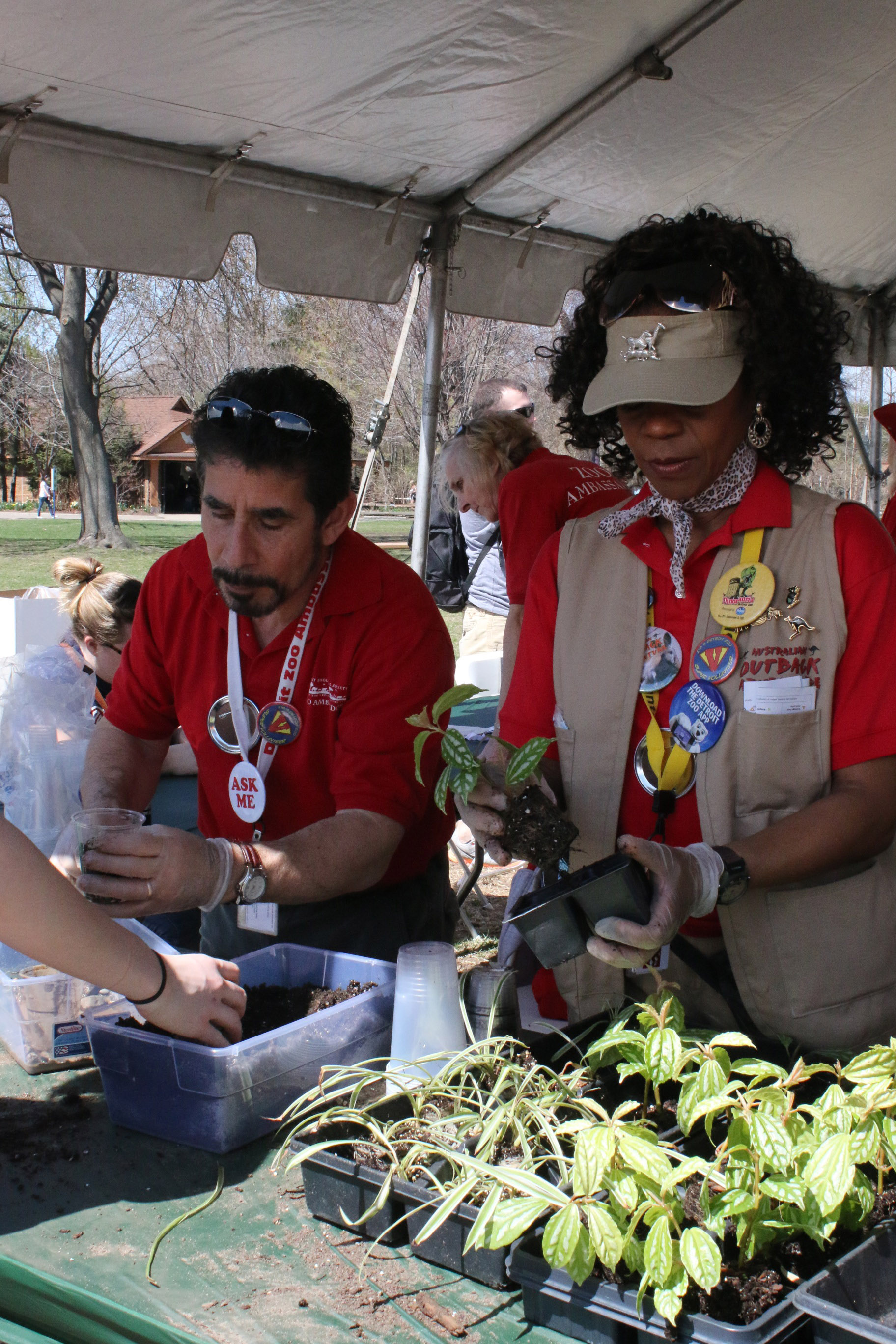
For nearly 50 years, millions of people around the globe have been celebrating Earth Day. Held annually on April 22, Earth Day represents the birth of the modern environmental movement and a worldwide demonstration of support for environmental preservation. As a leader in sustainability, guided by our award-winning Greenprint initiatives, the Detroit Zoological Society (DZS) annually holds GreenFest at the Detroit Zoo as a celebration of Earth Day. This year’s event is scheduled for Saturday, April 22, from 9 a.m. to 3 p.m.

The event is free with Detroit Zoo admission and includes a variety of engaging activities as well as a sustainability tour – complete with 10 stations that showcase our Green Journey. Upon arrival, guests will be given a “passport” that can be stamped at each of the stations. The passports were created by DZS staff using recycled millage signs and can be taken home and used as a journal.

These stations will provide guests with information about our anaerobic digester – the first zoo-based system of its kind that will annually convert more than 500 tons of manure into electricity that will power our animal hospital – as well as permeable pavement, bird-strike reduction, vehicle maintenance, recycling and native-species gardening, among others. In addition, we will be sharing information on how visitors can incorporate these initiatives at home. For example, not everyone can build an anaerobic digester in their backyard, but many can choose to compost their food scraps; we will provide information on how to start doing so.

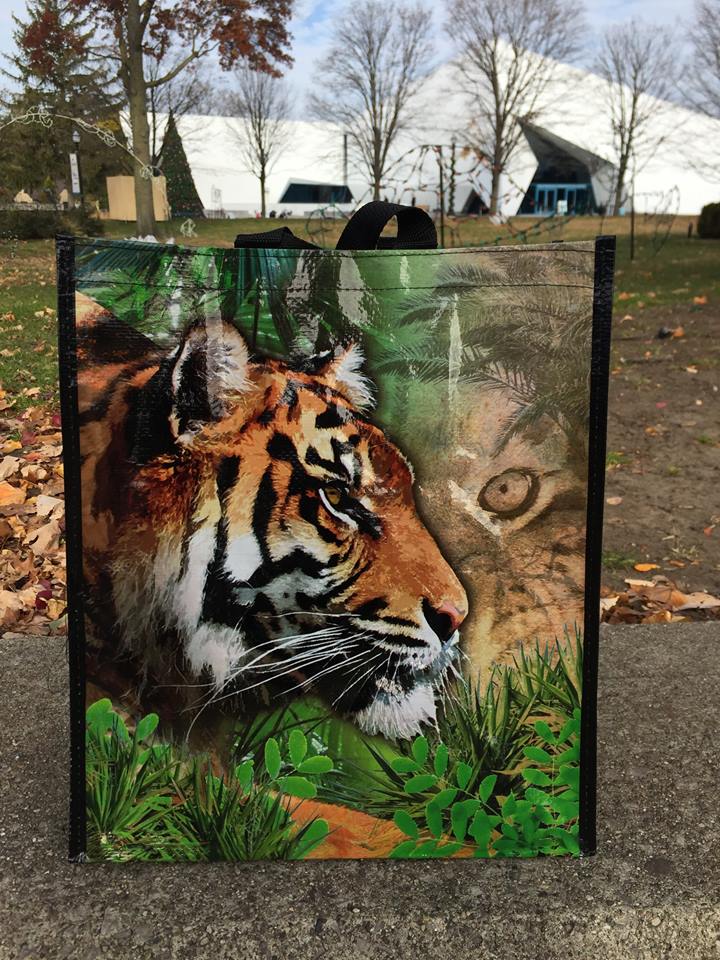
The first 3,000 guests who complete the sustainability tour will receive a reusable bag to help them as they join us on our Green Journey. There will also be a station for folks to take our Green Pledge – several pledges will be selected in a raffle to win a Detroit Zoo reusable water bottle.

GreenFest will also include chemistry demos, worm composting education, zookeeper talks, and much more.  Additionally, a travelling art exhibition by ArtRoad Nonprofit will be unveiled during the event, illustrating the impact of plastic pollution in the Great Lakes.

Attendees who bring a cell phone for recycling to GreenFest will receive a reduced admission price of $9. Admission is free for DZS members.

The DZS will also host Green Day at the Belle Isle Nature Center on April 22 from 10 a.m. to 2 p.m. Green Day will feature crafts, games, storytelling, zookeeper talks and exhibits by local conservation groups.

Both GreenFest and Green Day events are initiatives of the DZS Greenprint, a strategic plan to refine and improve green practices and facilities at the Detroit Zoo and Belle Isle Nature Center, incorporate sustainability in all policies and programs and improve green literacy and action in the community.

Rachel Handbury is the manager of sustainability for the Detroit Zoological Society and oversees the Greenprint initiatives.
Sustainability and Conservation Go Hand-in-Hand

The Detroit Zoological Society’s (DZS) award-winning sustainability initiatives go hand-in-hand with our commitment to wildlife conservation – every step we take to reduce our carbon footprint serves to protect the habitats of animals around the globe.

Wildlife are facing great challenges – from climate change and habitat loss to poaching and the exotic animal trade – leaving many species threatened, endangered or teetering on the brink of extinction. Human impact on the Earth has, in many cases, led to these dire situations they are in. More than 40 percent of all amphibians are at risk. From snow leopards to snails and from penguins to polar bears, the DZS is actively involved in wildlife conservation efforts worldwide – in the last two years alone, we were engaged in projects on six continents.

We have the power to make a difference. That’s why our inaugural Wildlife Conservation Gala on Saturday, March 18, is themed “Making a Difference”. All of us can take steps in our own lives to help reverse the crisis many animals are facing. It is our hope that our community will be motivated to join us on our Green Journey and commit to a better future for all that share this magnificent planet.

Our award-winning Greenprint initiative is a strategic plan that guides our operations and all that we do toward a more sustainable future. Our efforts include discontinuing the sale of bottled water on Detroit Zoo grounds – previously the No. 1 seller at zoo concessions – keeping 60,000 plastic bottles out of the waste stream annually. We also no longer provide plastic bags at our gift shops or souvenir stands; visitors are encouraged to bring their own bags or purchase wildlife-themed reusable bags.

We built the first zoo-based anaerobic digester in the country, which will annually convert more than 400 tons of animal manure into methane-rich gas to power the Detroit Zoo’s animal hospital. We recently unveiled a new parking lot that uses a progressive green design, reducing storm water runoff and improving water quality by filtering pollutants. Additionally, our operations are powered with 100 percent renewable electricity from wind farms, thanks to the support of the ITC Holdings Corp.

Our goal is to inspire others to join us on our Green Journey as we continuously look for ways to reduce our ecological footprint. By downloading our Shades of Green guide, you’ll find a number of actions you can do at home, including:

  • Switch to a reusable water bottle and reduce the amount of unnecessary plastic pollution
  • Bring reusable bags with you to the grocery store
  • Turn off the lights when you leave a room
  • Recycle
  • Plant native species in your garden to create a natural habitat for pollinators such as bees and butterflies

Please also consider joining us on March 18. By supporting the Wildlife Conservation Gala, you’ll help to ensure the long-term survival of critically endangered amphibians, reptiles, birds, mammals and invertebrates that represent the diversity of life on our planet. For more information or to purchase tickets to this 21-and-older, black-tie-optional affair, visit https://detroitzoo.org/events/zoo-events/conservation-gala.

Education: 100 Hopeful Days

We could all use a little hope sometimes, especially when it comes to the environment. That’s why the National Network for Ocean and Climate Change Interpretation (NNOCCI) has launched the #100HopefulDays campaign. NNOCCI is a collaborative effort to establish a network of professionals who are skilled in communicating climate science to broad audiences. These efforts are led by the New England Aquarium, in conjunction with some other amazing organizations, including the Association of Zoos & Aquariums (AZA).

The #100HopefulDays campaign will highlight the ways the NNOCCI community is making positive changes in the world. There are people all over this planet who are working together and battling longstanding obstacles to make the world a better place for future generations. We feel it is our responsibility to take care of our natural resources by making practical and feasible choices – however great or small – to protect our environment. Through this campaign, the NNOCCI is sharing all of these actions and aiming to inspire, engage and focus on reasons to hope.

Creating a sustainable future is one of the pillars of the Detroit Zoological Society. Through our Greenprint initiative, our goal is to inspire others to join us on our Green Journey as we continuously look for ways to reduce our ecological footprint. Recent efforts include discontinuing the sale of bottled water on Zoo grounds – keeping 60,000 plastic bottles out of the waste stream annually – and building an anaerobic digester which will convert 400 tons of animal manure annually into methane-rich gas to power the Zoo’s animal hospital.

Our 20th annual fundraising 10K/5K event, Run Wild for the Detroit Zoo 2016, became one of the first races in the country to eliminate bottled water – instead, disposable bottles filled with fresh H20 were provided to participants after the race. We also no longer provide plastic bags at our gift shops or souvenir stands; visitors are encouraged to bring their own bags or purchase wildlife-themed reusable bags. We also recently unveiled a new parking lot that uses a progressive green design. Permeable pavement was incorporated into the lot with 215 new spaces, which reduces storm water runoff and improves water quality by filtering pollutants.

For all of these efforts and more, the Detroit Zoo was named one of Michigan’s and the nation’s 2016 Best and Brightest Sustainable Companies by the National Association for Business Resources as well as the 2015 Best-Managed Nonprofit by Crain’s Detroit Business.

Learn more about our Green Journey and download our Shades of Green guide to help lighten your impact on the Earth and the animals that share it with us. If you’re looking for reasons to feel hopeful and be inspired, follow the #100HopefulDays campaign at @_NNOCCI on Twitter. We can all make a difference and we need to start today.

– Carla Van Kampen is a curator of education for the Detroit Zoological Society.

Greenprint: Wild (and Efficient) Lights

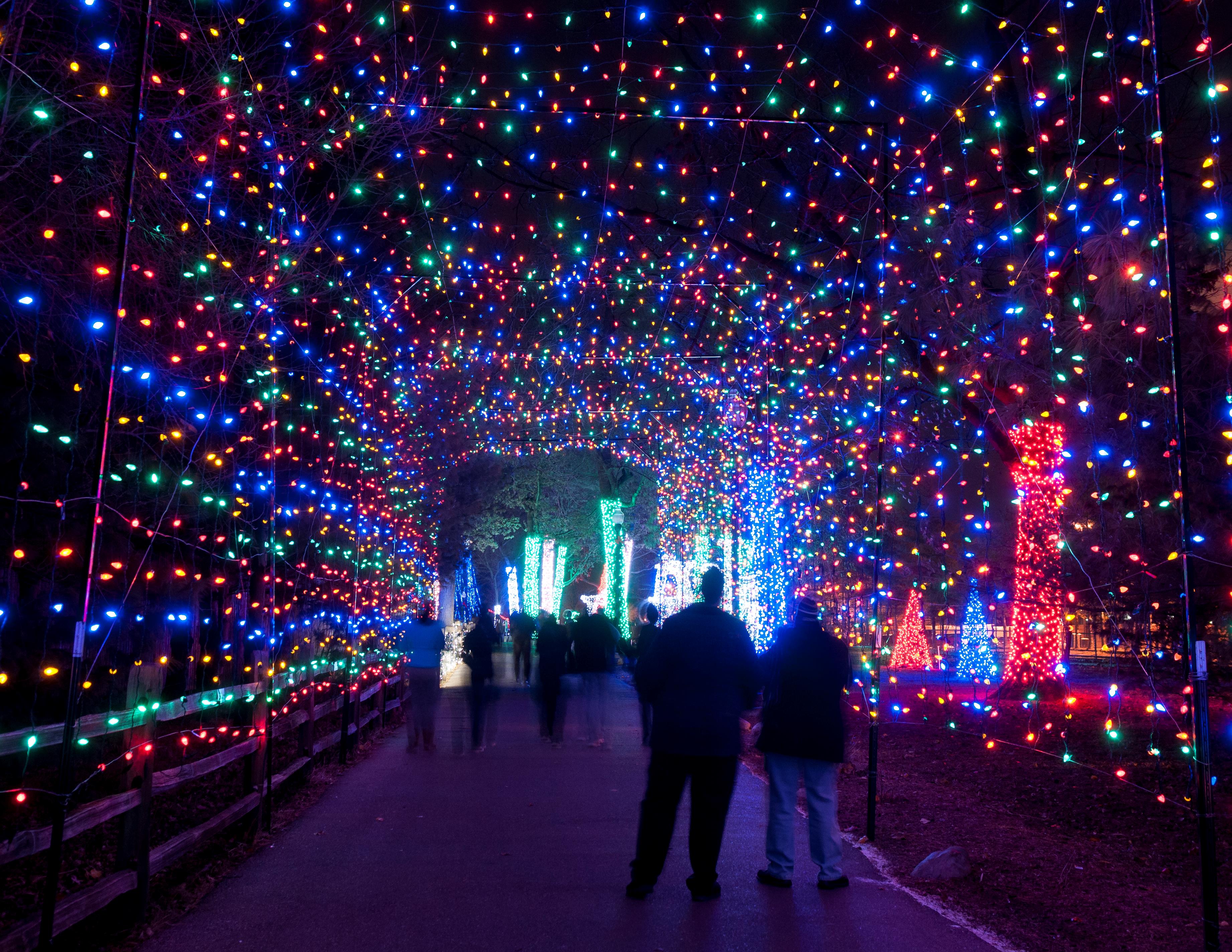
As the holidays draw near, Wild Lights at the Detroit Zoo is now in full glow – more than 5 million LED lights are illuminating buildings, trees and more than 200 animal sculptures in an impressive display over 29 nights.

While this event lights up the night sky, efficient energy use is still paramount at the Detroit Zoo. All of the lights used to decorate the Wild Lights path are light-emitting diodes (LEDs), which consume 80 to 90 percent less energy than incandescent bulbs and last for up to 100,000 hours, versus just 3,000 hours for incandescents. This is a solid economic investment that reduces the amount of energy used, saves money (prices for LEDs have come down in the last couple of years), and their durability leads to a decreased number of holiday lights that end up in landfills.

For those who are considering making the switch, Home Depot and Lowes both offer recycling programs for old holiday lights. In addition, we’re offering an opportunity for Wild Lights attendees to bring in their old lights for recycling in the events pavilion at the Detroit Zoo.

tw_or_holiday_led_light_trade_in

Over the last three years, the Detroit Zoological Society has invested more than $3 million into energy efficiency projects, which results in utility costs savings of nearly $275,000 annually. Most recently, DTE Energy provided the Zoo with an energy-use assessment in order to further explore additional energy-reduction measures.

While Wild Lights uses energy, the LED lighting means it is 80 to 90 percent less wattage than it would with incandescent lighting. This is important because during these shorter, darker days, holiday lights make everything magical and well, brighter!

– Rachel Handbury is the manager of sustainability for the Detroit Zoological Society.

Greenprint: Supporting Local Farmers

Summertime provides us with a great opportunity to visit farmers’ markets and purchase local fruits, vegetables or proteins such as fish and beef jerky. Buying from your local farmer allows you to support the regional agriculture industry as well as your community.

Food in the U.S. travels an average of 1,500 miles to get to your plate. All this shipping uses large amounts of natural resources (especially fossil fuels), which contributes to pollution and creates waste with extra packaging. Conventional agriculture uses more resources than sustainable agriculture and pollutes water, land and air with toxic by-products. Food at farmers’ markets has travelled shorter distances and is generally grown using methods that minimize the impact on the earth.

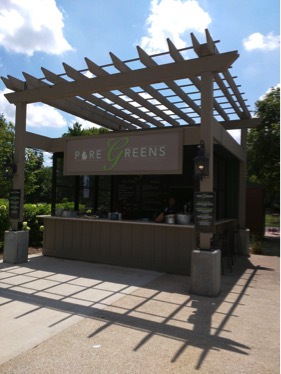
When buying from a large supermarket, only 18 cents of every dollar goes to the grower. Buying local cuts out the middleman and supports farmers in your community. The Detroit Zoo supports this mission by following a sustainable purchasing policy with an emphasis on locally made products. We recently opened Pure Greens, a 100 percent vegan café with all food purchased through Michigan farmers, supporting the state we live in.

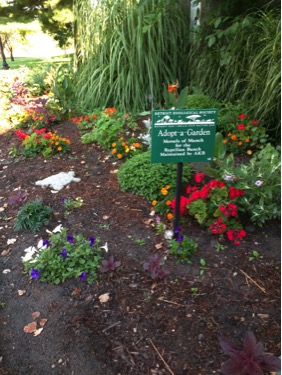
A sustainable at-home option is to grow your own food in a garden. Even with limited space, a small pot on a porch can produce tomatoes or basil. At the Detroit Zoo, there is a garden devoted to the lizards and turtles that live in our Holden Reptile Conservation Center. A few of the edible flowering plants the reptiles enjoy are nasturtiums, marigolds, pansies and geraniums. You can view the garden during your trip to the Zoo; it is located on the south side of the Holden Reptile Conservation Center.

– Rachel Handbury is the manager of sustainability for the Detroit Zoological Society.

Greenprint: The Zoo That Could Conserve

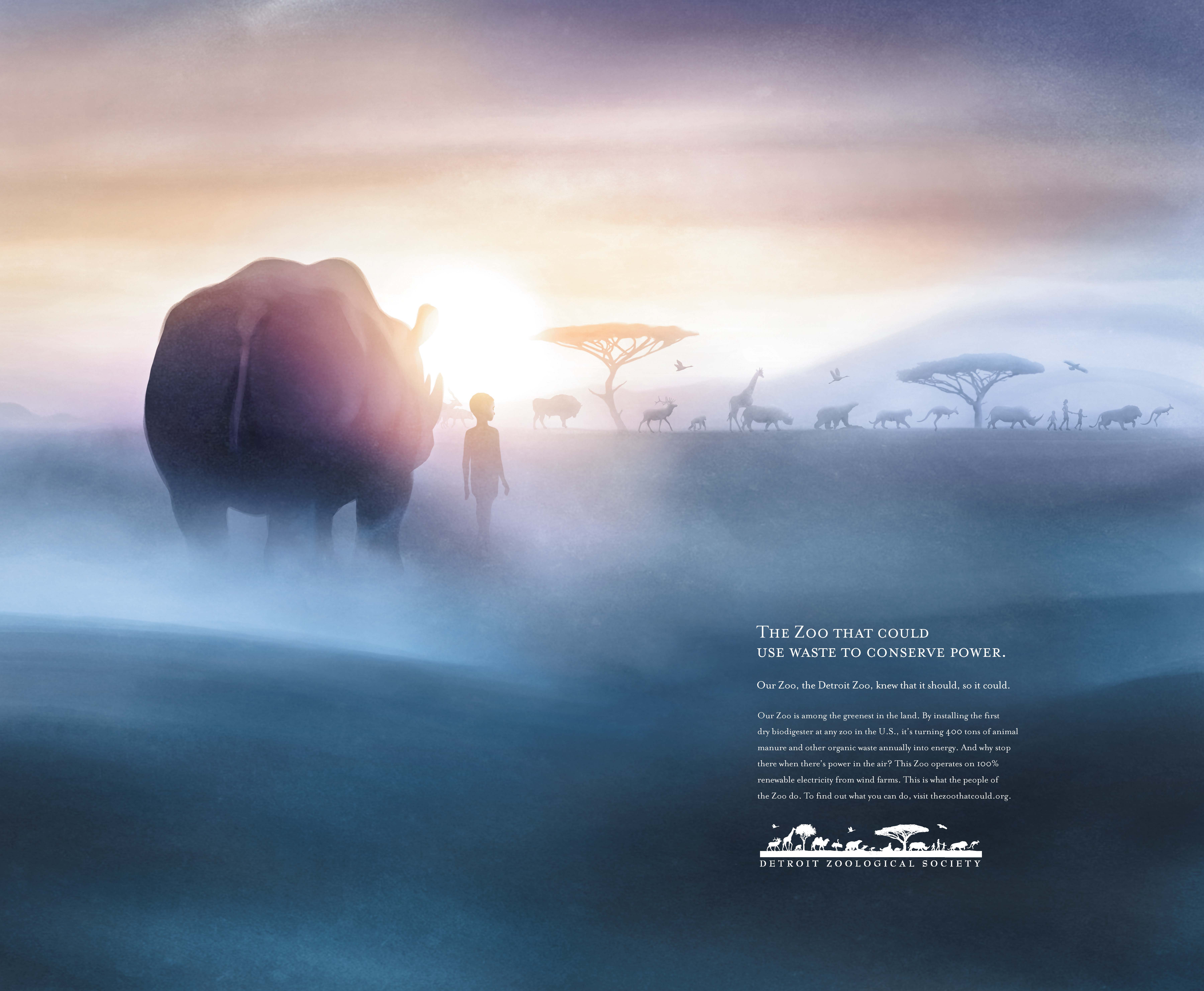
Thinking globally.
Acting endlessly.
Who would?
Our Detroit Zoo.
Because it knew that it should, so it could.

The Detroit Zoological Society (DZS) recently launched a new marketing campaign that highlights the many things we do beyond the Detroit Zoo’s 125 acres to advance sustainability, wildlife conservation, animal welfare and education, as well as our impact on the community.

In ecology, sustainability is the capacity to endure; it is how biological systems remain diverse and productive indefinitely. The DZS’s Greenprint initiative was founded on the desire to lessen our ecological footprint. This unique, green roadmap guides our operations and is the plan by which we refine and improve our facilities and daily practices, develop new policies and programs and improve green literacy and action in our community.

Our extensive efforts in sustainability have received national recognition – we were named among the greenest Zoos in America by the Association of Zoos & Aquariums as well as the Best-Managed Nonprofit by Crain’s Detroit Business, focusing on our green initiatives.

The animals that we are dedicated to celebrating and saving serve as the motivation and inspiration for us to create a sustainable environment. As part of our efforts, we are offsetting our electricity use with 100% certified energy from U.S. Wind; constructing an anaerobic digester to compost more than 400 tons of animal waste annually to generate electricity that will power our animal hospital, and no longer selling bottled water in an effort to reduce plastic waste. We have also embarked upon an ambitious zero-waste initiative as part of our commitment to reducing landfill waste, thus reducing our Green House Gas (GHG) emissions.

We can all be part of the solution for habitat and resource conservation by keeping our precious wildlife habitats free of plastic waste. Currently, 1.8 billion plastic bags are used and discarded in America every week and an estimated one million birds, 100,000 turtles, and countless other sea animals die each year from ingesting plastic.

Small changes such as using reusable water containers and reusable bags have such a huge impact. Please join us on our Green Journey!

– Rachel Handbury is the manager of sustainability for the Detroit Zoological Society.

Greenprint: Celebrate Earth Day during GreenFest April 16-17

For the fourth year in a row, the Detroit Zoo is hosting our annual Earth Day celebration called GreenFest on April 16 and 17, from 9 a.m. to 3 p.m. This Zoo-wide event will provide visitors with environmentally friendly activities and tips that can be used throughout the year to increase environmental stewardship.

GreenFest will feature earth-friendly crafts, kids games, zookeeper talks, science experiments, a trail mix station by Kroger, interactive performances by Drummunity and exhibitions from businesses and nonprofits working to keep our planet a healthy place to live.

GreenFest is an initiative of the Detroit Zoological Society’s Greenprint, a strategic plan to improve daily practices and facilities, develop new policies and programs and improve green literacy in the community. All GreenFest activities are free with Zoo admission; each GreenFest guest who brings a cell phone for recycling will receive a reduced admission price of $9.

If you’re unable to join us for GreenFest this year, please consider these three easy activities that will greatly improve your impact on the environment:

  • Plant a tree at your home or a nearby park (with permission from park management) – a single tree can absorb 10 pounds of air pollutants a year and produces nearly 260 pounds of oxygen.
  • Upcycle, donate or recycle unwanted clothes and textiles – according to the Environmental Protect Agency, Americans send 10.5 million tons of clothing to landfills every year.
  • Commit to eating less meat throughout the year. A lot of energy and water goes into meat product; by simply cutting back on meat consumption you can greatly decrease your environmental footprint.

– Beth Wallace is the manager of sustainability for the Detroit Zoological Society.

Greenprint: Detroit Zoo Powered by Renewable Electricity from Wind Farms

The Detroit Zoological Society (DZS) is excited to start the New Year off in the right direction, thanks to a generous donation of Renewable Energy Credits (RECs) from ITC Holdings Corp., which offsets our electricity use 100% with certified energy from U.S. wind.

wind farm

In partnership with ITC Holdings Corp., we have purchased RECs through Green-e, an independent certification and verification program for renewable energy. RECs allow businesses, organizations and homeowners to invest in renewable energy when direct installation is not yet possible. 

To learn more about RECs, check out this EPA video on how energy enters the grid and how renewable energy is certified for investment.

Because the DZS is unable to install large-scale wind turbines on-site (we’re in the processes of evaluating solar applications throughout our grounds) this investment in RECs is an amazing opportunity to support renewables while offsetting our energy use. These certificates show energy developers and our regulators that we demand renewable energy, which should in turn incentivize additional supply to the grid.

In addition to the purchase of RECs, the DZS continues to focus on our Greenprint goals to decrease our energy use, increase our energy efficiency and invest in on-site energy generation. By early spring, the first zoo-based biodigester will be coming online, which will supply the DZS with biogas from compost that we will use as an energy source for the animal hospital.

When switching your lights on at home, do you understand the source of your energy? Check in with your electricity provider to learn more. Most providers, include DTE and Consumers Energy, offer their customers green energy options similar to the program mentioned above. It’s not too late to include this in your New Year’s resolutions!

– Beth Wallace is the manager of sustainability for the Detroit Zoological Society.

Greenprint: Understanding Green Literacy

Would you support the expansion of the Michigan bottle deposit law to include bottled water? How about requiring our public schools to include environmental education at all grade levels? Or requiring companies to use only recyclable packaging with their goods? According to a recent survey carried out through the Detroit Zoological Society’s Greenprint, these are just a few of the efforts that Detroiters support to improve our community’s environmental efforts.

Through this survey, we sought to understand “green literacy” in the community, and conducted it in partnership with local environmental organizations, educational institutions and other groups. Our goal was to determine how greater Detroit residents view and understand environmental and conservation issues. Not surprisingly, the survey highlights a community with a personal commitment to environmental concerns that is supportive of public policies to protect our environment and resources.

Michele Arquette-Palermo, program director of the Clinton River Watershed Council and one of our partner organizations on the survey, said that as an environmental educator in southeast Michigan for the last 15 years, she’s very happy to see evidence that reaffirms that environmental education influences attitudes and actions.

The survey also suggests that our community would like to have greater access to public transit, at home recycling programs and access to food with the environment in mind.

The online survey was carried out by Belden Russonello Strategists, a Washington, D.C.-based public opinion research firm, and was completed by 1,000 residents ages 18 and older who reside in a four-county area that includes Macomb, Oakland, Washtenaw and Wayne.

In addition to the DZS and the Clinton River Watershed Council, other partners include Kurt R. Metzger, mayor of Pleasant Ridge and director emeritus of Data Driven Detroit, DTE Energy, Lawrence Technological University, The Nature Conservancy and Wayne State University, among others.

To read more about this survey, including all of the questions presented, please visit: http://dzoo.org/greensurveyreport.

– Beth Wallace is the manager of sustainability for the Detroit Zoological Society.