Notes from the Field: Urumqi, China

Paul Buzzard is the Director of Conservation for the Detroit Zoological Society.

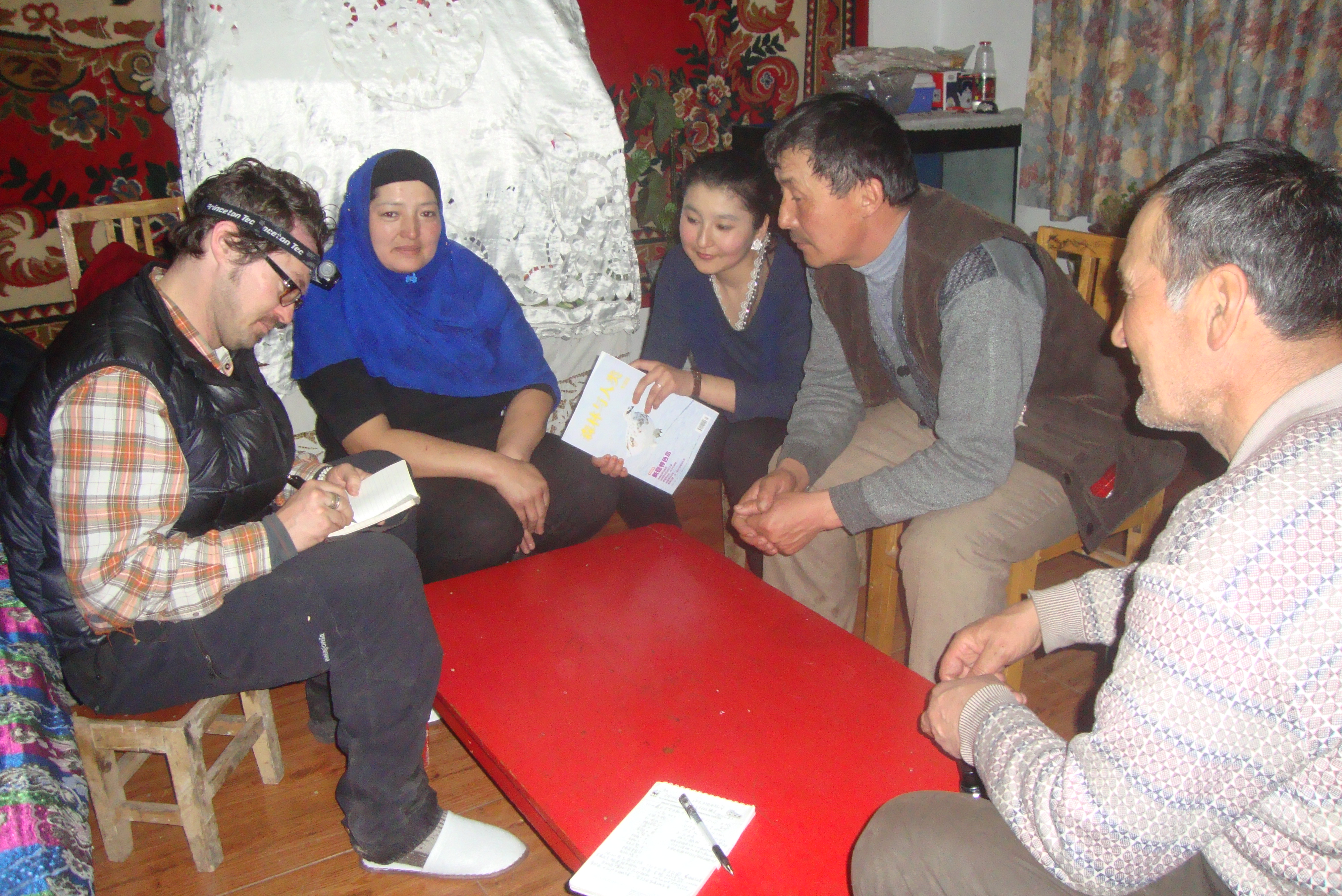
Ni hao! I am in Urumqi, China, working on our snow leopard conservation project.  Our goal is to learn more about the current status of snow leopards in the Tien Shan Paul Buzzard in Tianshan by MaMing 2015Mountains.  We are using trail cameras and interviewing herders to assess the snow leopard population and the population of their potential prey, including ibex, and to learn about human-leopard conflict. Conflict arises when leopards kill livestock, like sheep, which sometimes results in herders killing leopards.
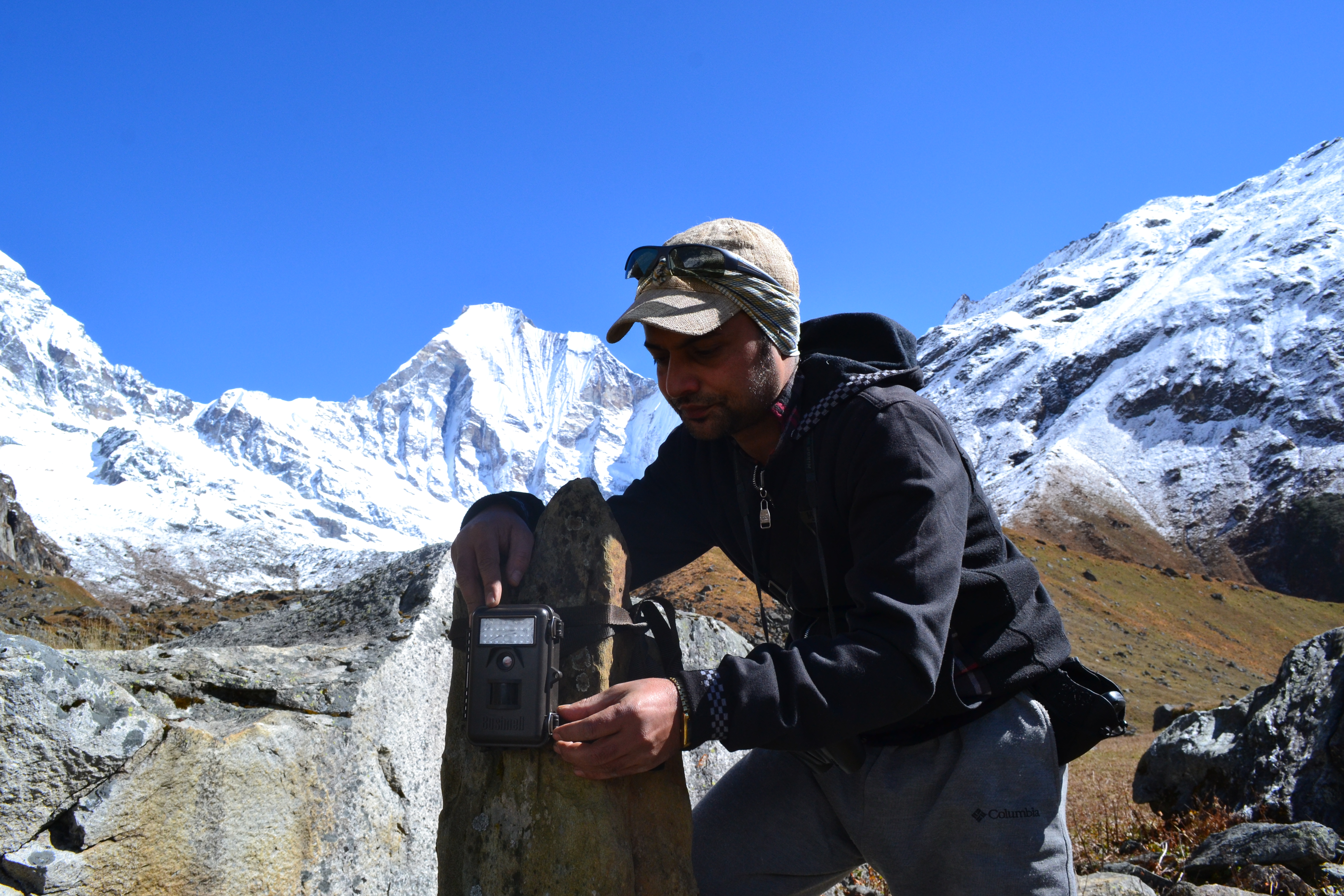
We set up trail Snow leopards trail camera - Chinacameras when I was here in December, so I returned to check them and to set up additional cameras in new areas in the western Tien Shan.
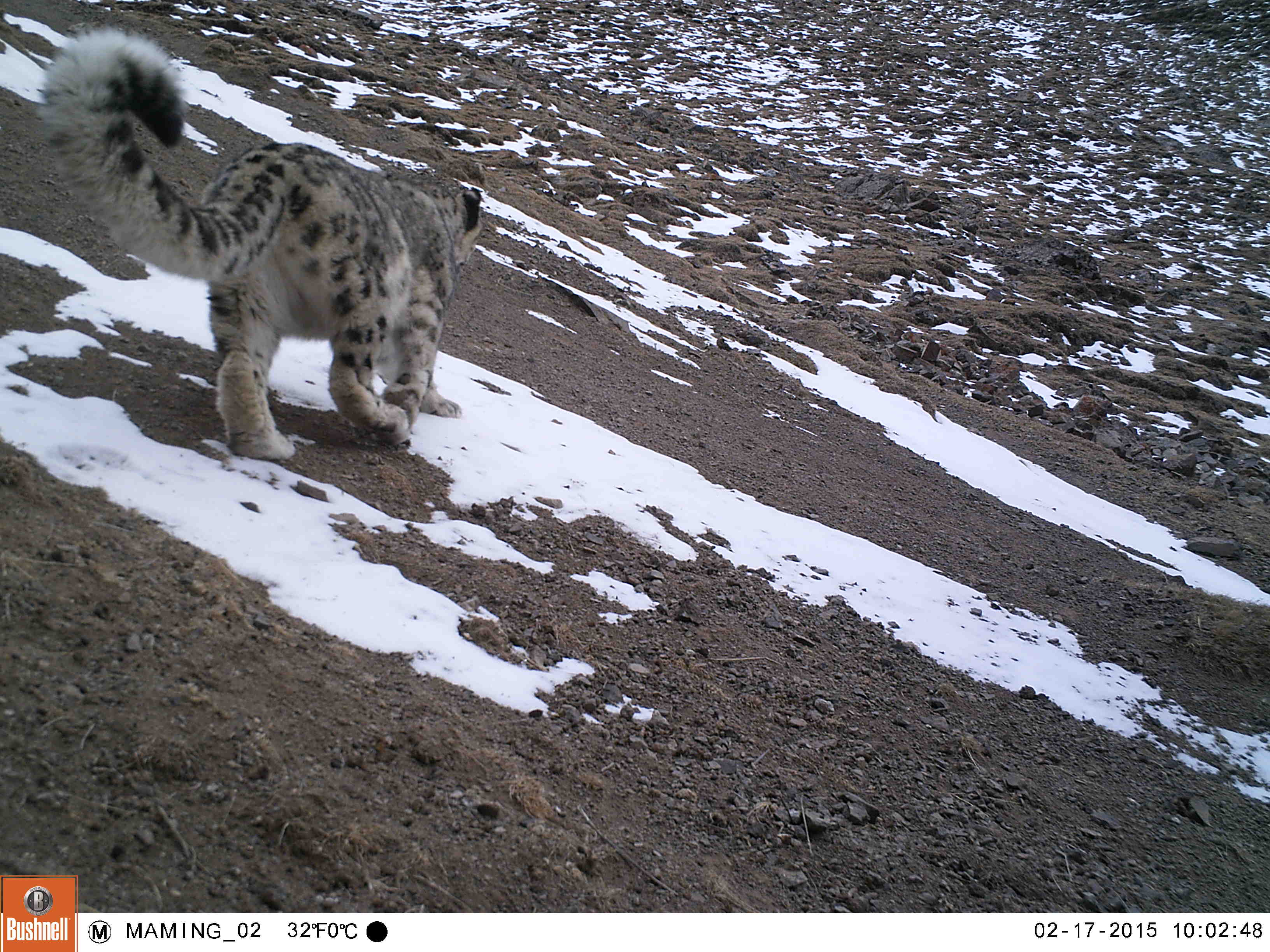
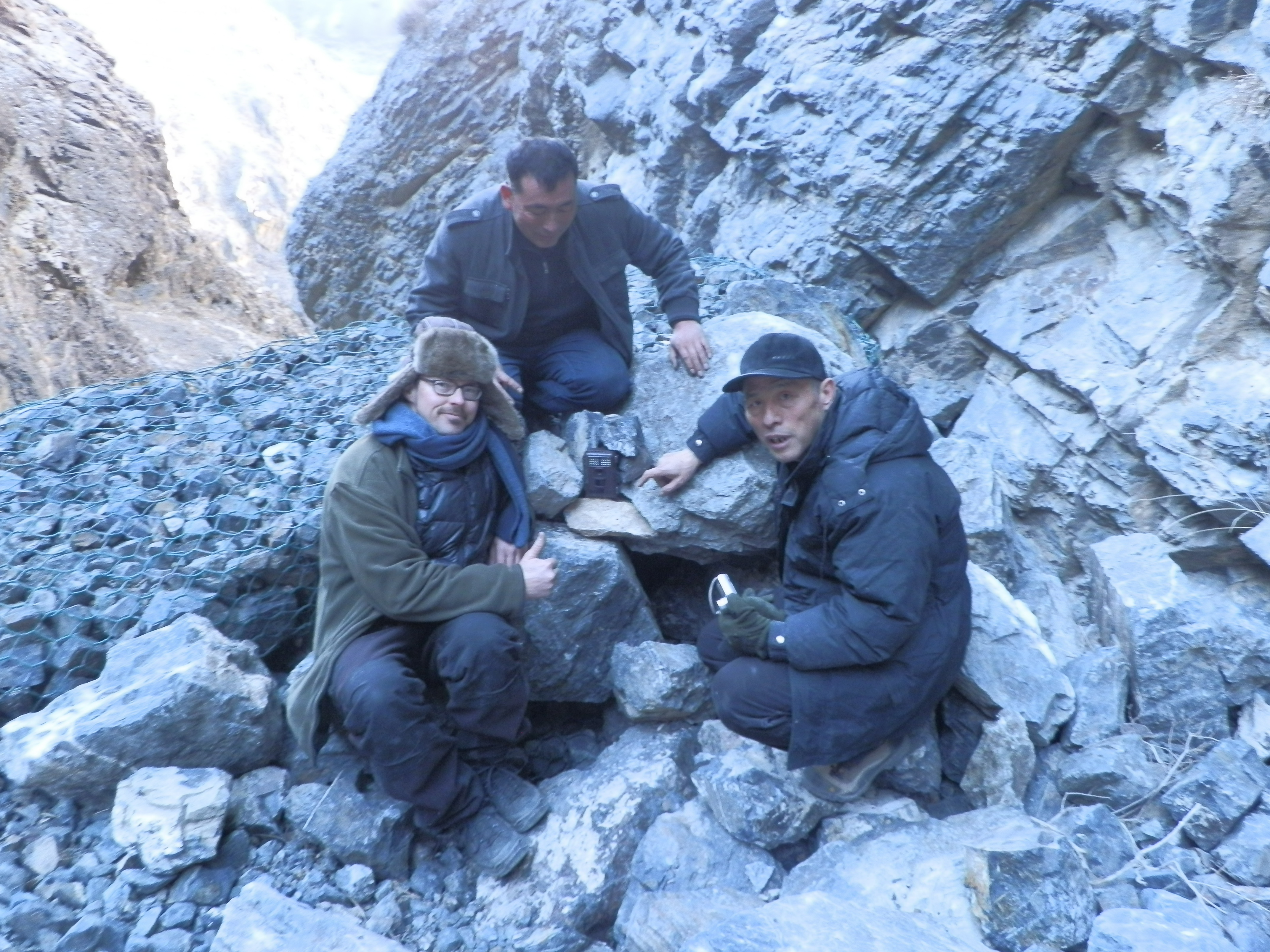
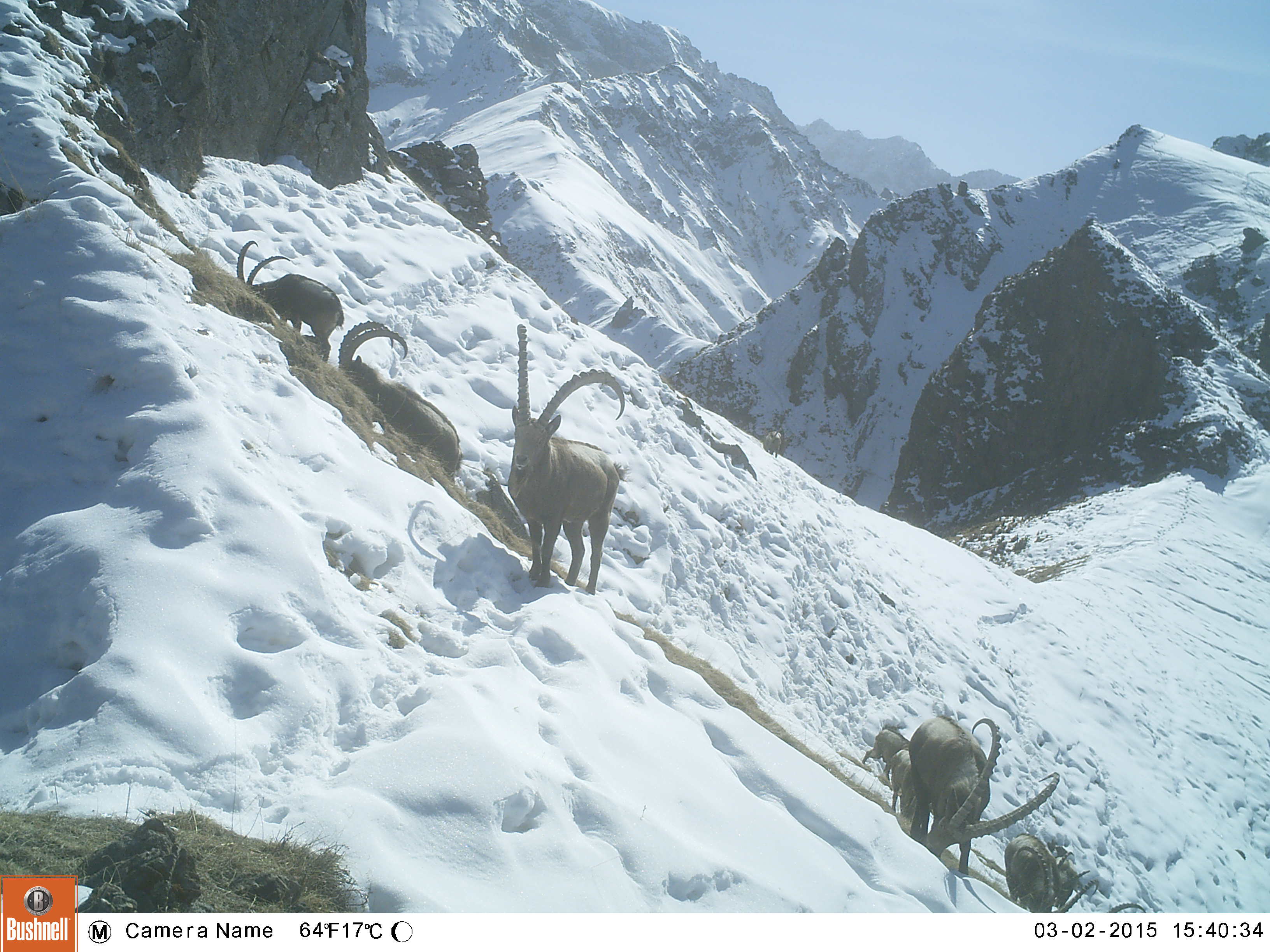
The first two cameras we checked had pictures of snow leopards – including one with two leopards! The next seven cameras didn’t have any pictures of leopards, though most had pictures of other wildlife, including ibex, wolves and foxes. Because of heavy snowfall, we weren’t able to Trail camera - China ibexcheck all of the cameras, but we reset the ones we did and set up additional cameras in other promising areas. We also made plans to move two of the cameras that were unsuccessful in capturing leopard pictures several miles further into the mountains, which we will do on horseback.
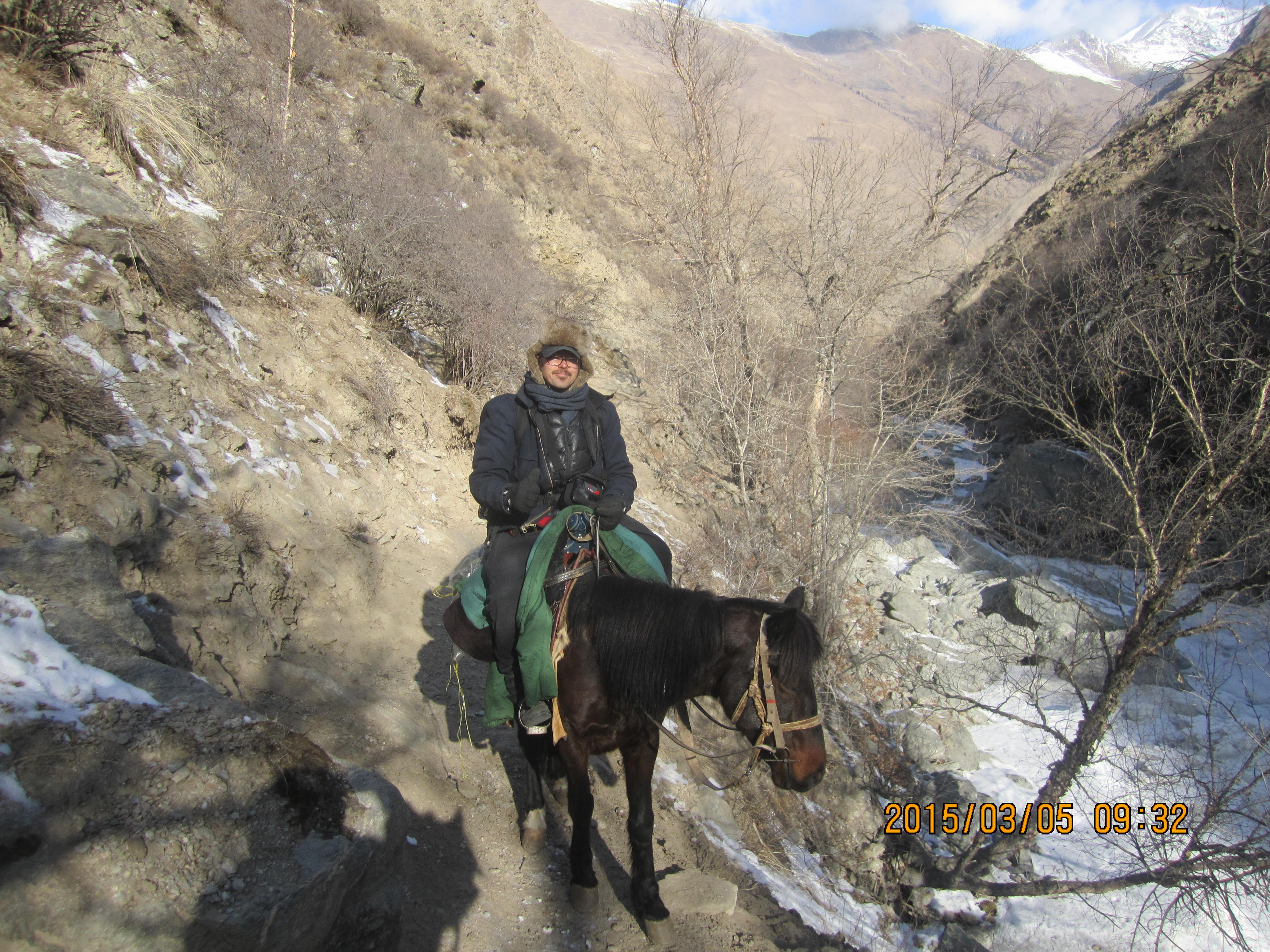
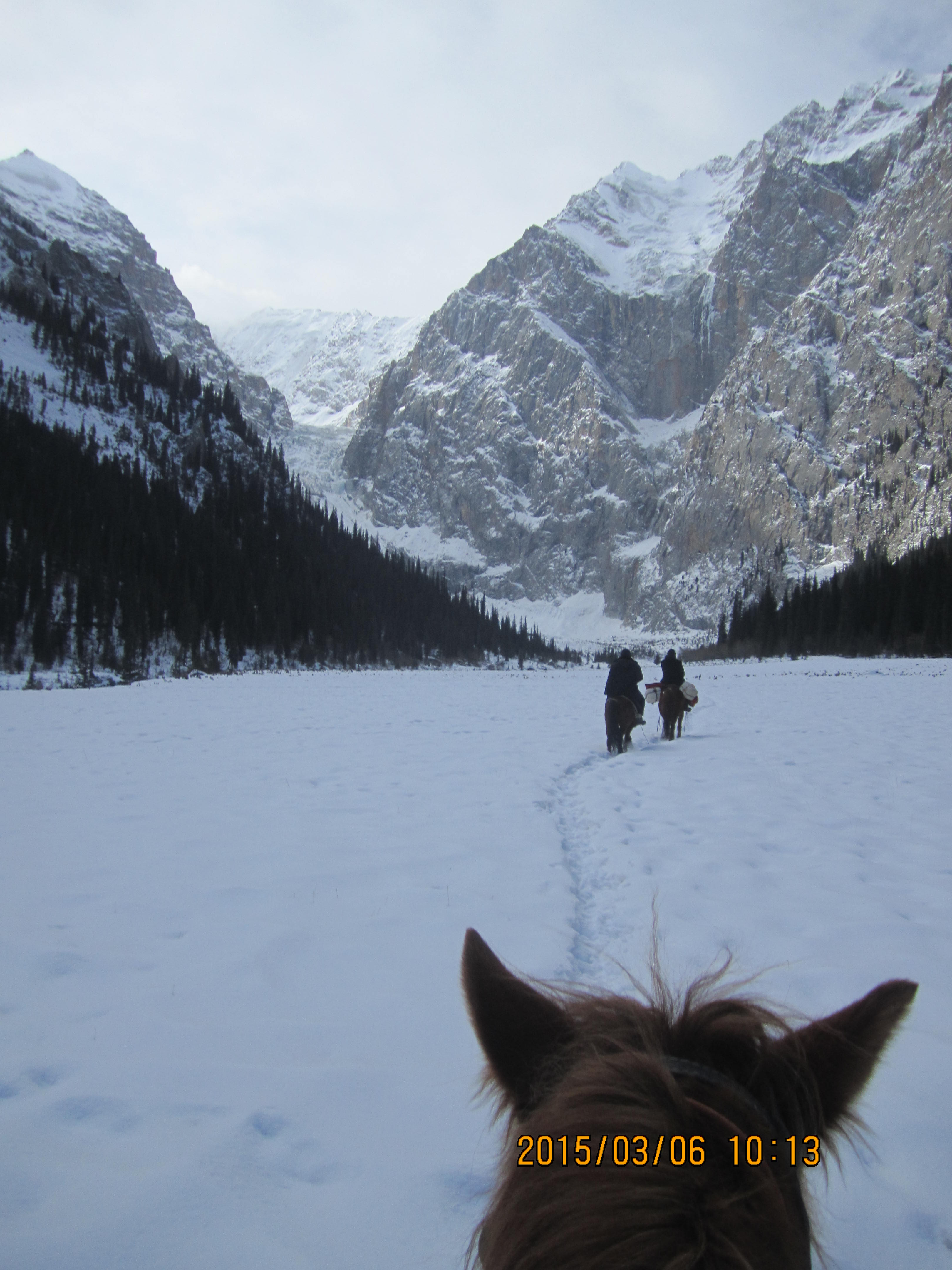
In the west, near the Kazakhstan border, Paul Buzzard - China horsebackit was much, much more remote: I was the second foreigner and the first American to visit the county seat in more than 25 years. It was a four-hour drive to the protection station and then a seven-hour horseback ride to a Kazakh herder winter house. This cozy oasis, though simple, was a warm retreat after trail-riding up and down rocky and icy trails. Plus, the noodles and butter tea really hit the spot.
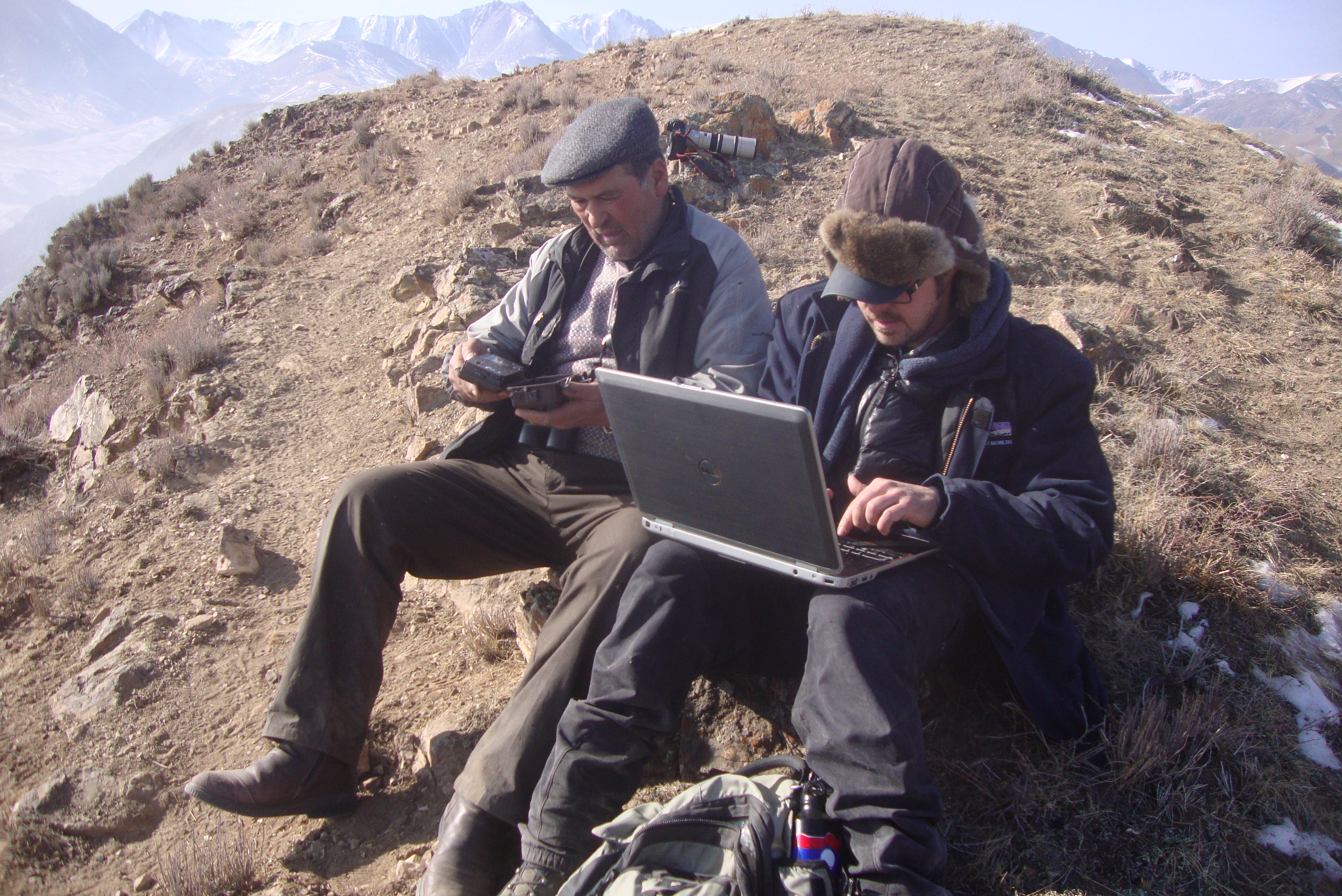
Unfortunately, the accommodations were not particularly restful with six to eight people sleeping side-by-side, some of whom were aggressive snorers. It was ultimately Paul Buzzard in Tianshan by MaMingworth any discomfort because we retrieved cameras containing more snow leopard and ibex pictures and reset the cameras that were on high passes and overlooking some stunning valleys. We left 12 cameras with our Chinese colleagues to set in additional valleys.
The Tien Shan Mountains, from east to west, Paul - China - Mountains on horsebackis clearly an important area for snow leopards. There is much interest from our Chinese colleagues in setting up protected areas, such as provincial or national reserves. To do this, more snow leopard pictures are needed to robustly document the importance of certain regions.  It is also important to address the human-wildlife conflict in some areas.
For example, it was reported in one place that five snow leopards are killed per year for eating approximately 100 sheep per year (out of nearly 200,000 total sheep). Such claims need to be confirmed, but if anywhere near this much conflict is occurring, it needs to be reduced.

– Paul Buzzard
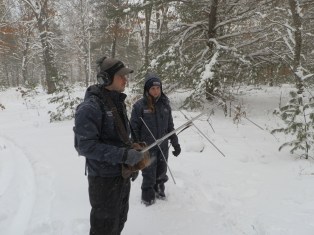
Notes from the Field – Manistee National Forest, MI

Detroit Zoological Society staff, including Director of Conservation Paul Buzzard, are doing fieldwork in the Manistee National Forest in central Michigan.

Greetings from cold and snowy Manistee National Forest in central Michigan.  We are studying the behavioral ecology and conservation of American martens with Grand Valley State University and the University of Michigan-Flint. American martens are small carnivores that are weasel-like and largely arboreal. They were hunted out in Michigan’s Lower Peninsula by the early 1900’s and reintroduced to the Manistee Forest nearly 30 years ago. We are studying the success of the marten reintroduction by looking at marten health, kit survival and habitat use. These data will be used to see how the forest can be better managed by the Forestry service to benefit martens.

Detroit Zoological Society (DZS) veterinarians have helped in the past to put radio-telemetry collars on the martens to track their locations. This technique is very labor intensive, though, and provides information on marten locations only a few times per week. DZS provided funds for GPS collars that use satellite positioning data to record marten locations every half hour and get much more accurate information on marten ranging and habitat use. We are here to help attach the GPS collars, and have for the last several days set up some snug and inviting live traps with plenty of venison for the martens to feast on and lots of straw to make a cozy marten nest. But alas no martens were captured.

OLYMPUS DIGITAL CAMERAThere has been a lot of snowfall recently and most of the traps had to be visited via snowmobile so the martens are likely not moving much now. However, we were still able to use the radio-telemetry equipment to track down three martens.
One was hunkered down deep in a fallen log; the other two were high up in squirrel nests and we got some good looks at them before they disappeared into the tree canopy.  Despite the disappointment of not catching any martens, it’s great to continue working to help save some of Michigan’s wildlife. We plan to return in the spring and summer.

– Paul Buzzard


Notes from the Field – Xinjiang, China

Detroit Zoological Society Director of Conservation Paul Buzzard is doing fieldwork in Xinjiang, China.

This conservation project in China’s northwest Xinjiang province focuses on getting a better understanding of the snow leopard population in the Tien Shan Mountains. We are interested in estimating how many snow leopards are left in the Tien Shan as well as assessing the local attitudes toward snow leopards and the threats from poaching. To get this information, we use camera traps to get pictures of leopards and the animals they prey on and conduct interviews with the local herders.

It’s been a very successful if short trip to the field this time. My plan was to travel to Xinjiang in northwest China primarily for meetings with local collaborators in snow leopard and wild camel research. We had originally planned to set camera traps for snow leopards near Xinjiang’s capital of Urumqi the day after my arrival. However, when I was picked up at the airport, we decided to head out immediately to a much more interesting area several hours to the west in the Central Tien Shan mountains.  I was very excited to spend the majority of the trip in the field and to visit the Tien Shan for the first time.

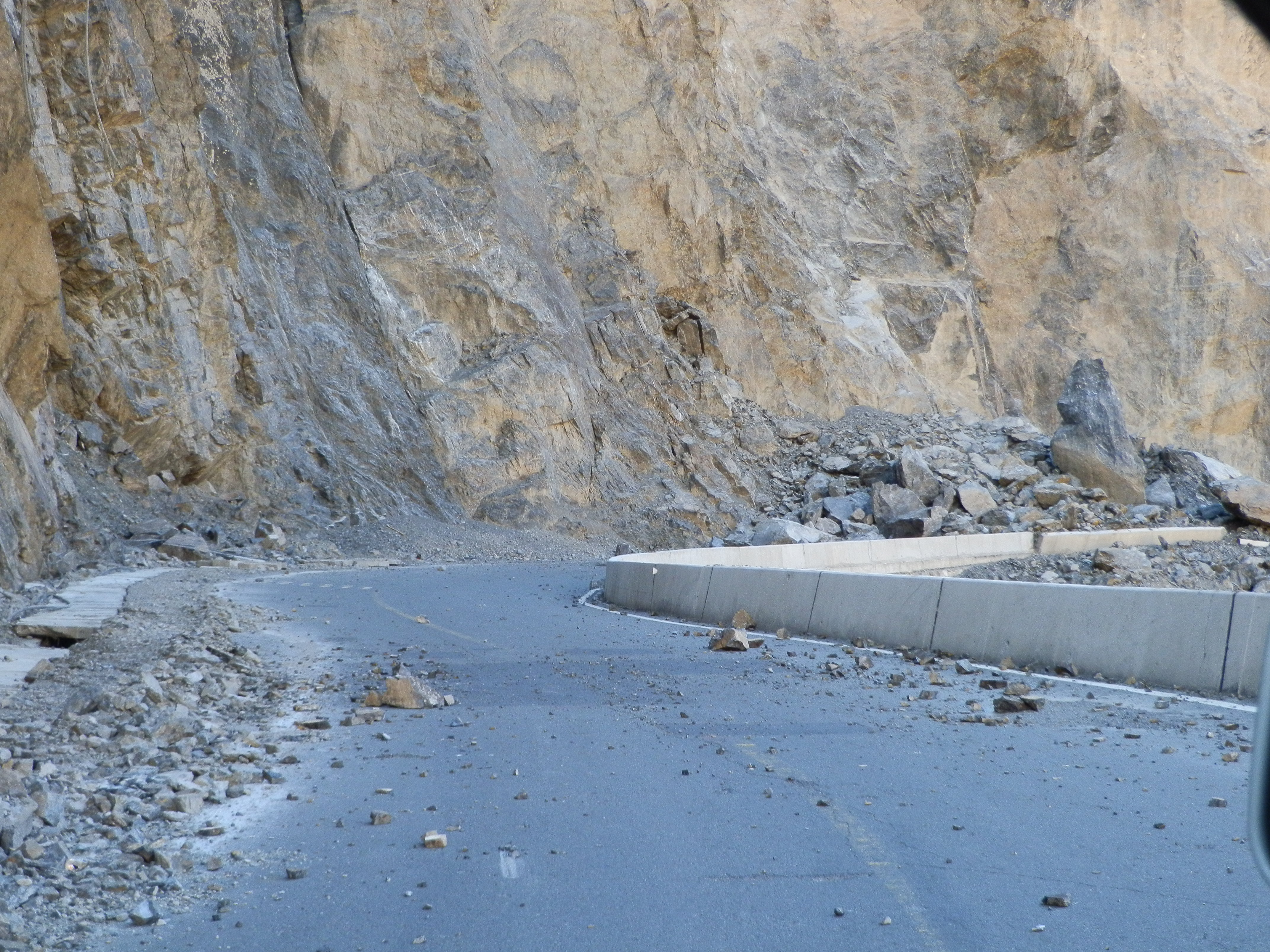
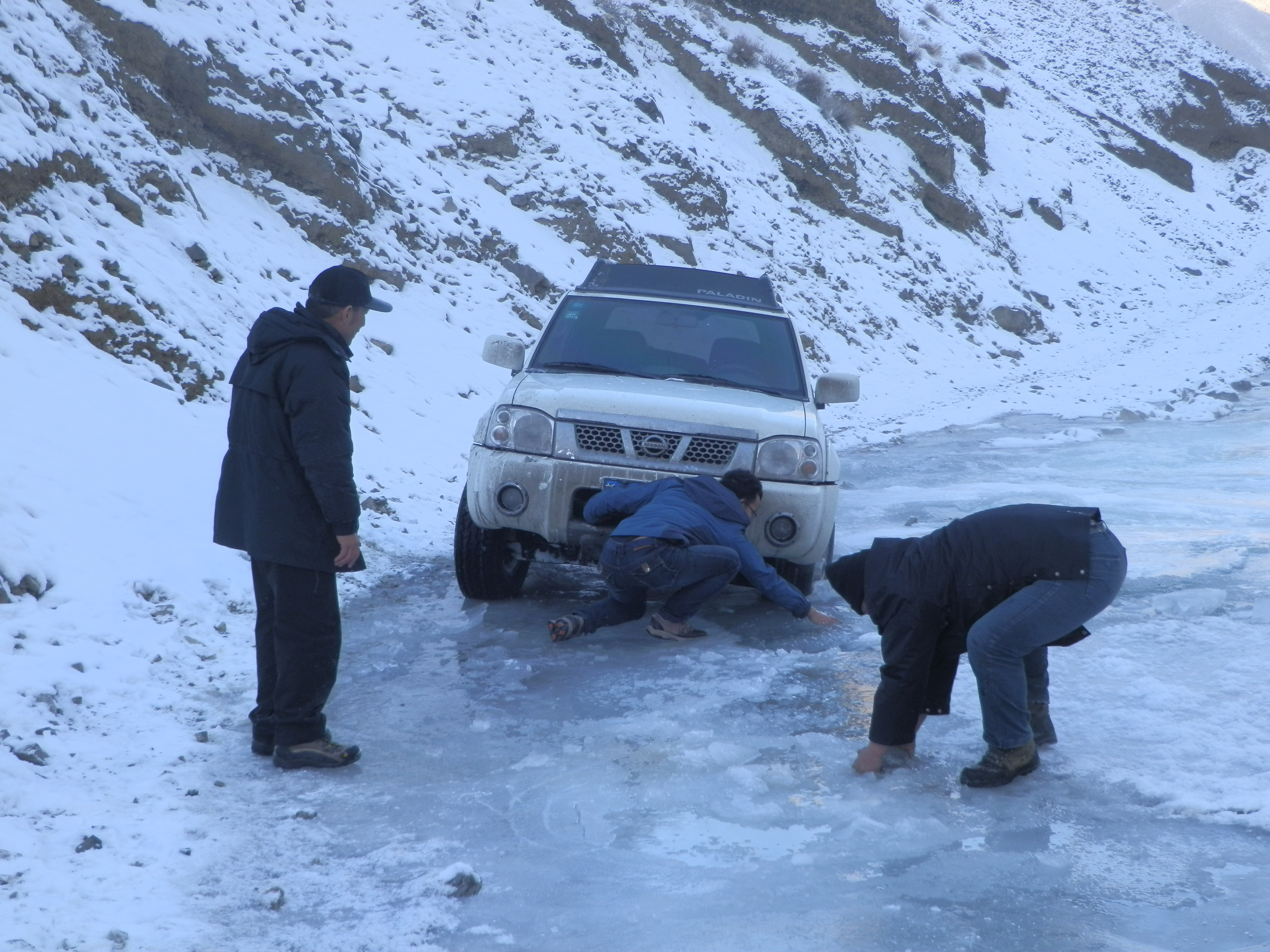
We set up camera traps despite the below zero temperatures, several flat tires and hazardous road conditions. We drove south from the city of Wusu into the valleys until rock slides or icy rivers impeded further progress and then hiked up side valleys to set the traps.

OLYMPUS DIGITAL CAMERA     OLYMPUS DIGITAL CAMERA

OLYMPUS DIGITAL CAMERA    OLYMPUS DIGITAL CAMERA

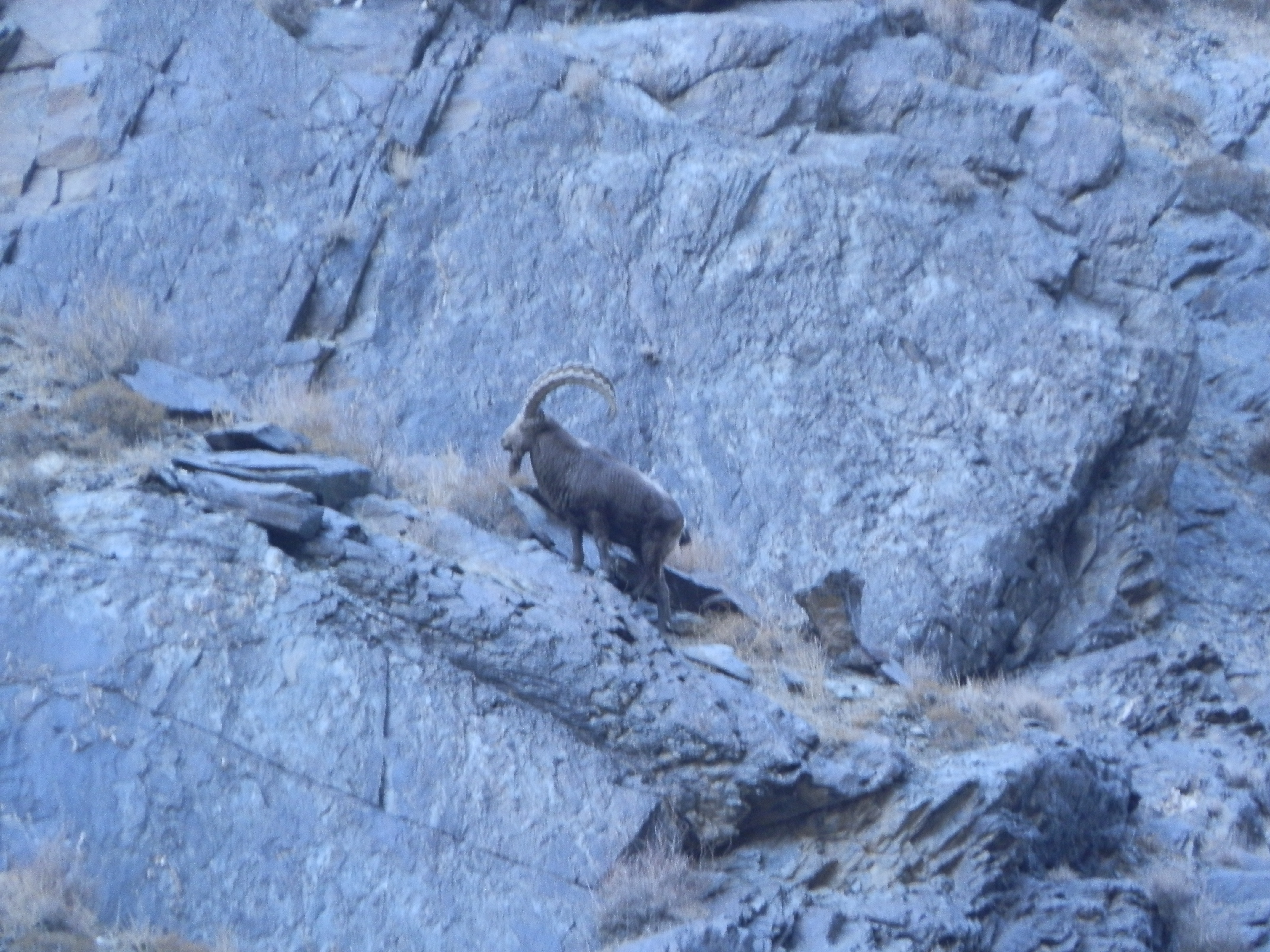
Once we got into the mountains we almost immediately started seeing herds of Siberian ibex, a wild goat that is a favorite prey of snow leopards.

We also heard reports of many argali big horn sheep, so it definitely appeared to be prime snow leopard habitat. This was confirmed when we saw the remains of an ibex likely killed by a leopard as well as lots of snow leopard tracks and droppings. The ibex were so common that they were literally falling from the sky. One day when we were driving back one of the forestry officials yelled for us to stop because at the side of the road was a dead ibex. It was frozen stiff but it had no puncture wounds from a leopard and it looked like it had slipped and fallen to its death. Ibex are normally very sure footed, so it is possible that it was fleeing from a snow leopard when it lost its footing. We only had time to set up five of the camera traps and the remaining 15 will be set up by colleagues.

OLYMPUS DIGITAL CAMERA

I plan to return next February or March to check the traps and also investigate the conflict between herders and leopards. The Kazak and Uygur herders sometimes lose sheep to leopards and it is necessary to determine if a compensation program can be established so herders are paid for lost livestock and leopards are not killed in retaliation.

Before the return trip to Detroit, I stopped off in Urumqi to meet with the director of the Lop Nur Nature Reserve in southwest Xinjiang. The Lop Nur Reserve has one of the largest sub-populations of the wild Bactrian camel, which is one of the most critically endangered mammals in the world.  We are exploring the potential for the Detroit Zoological Society to collaborate in wild camel research and help save them from extinction. Domestic Bactrian camels, like the ones living at the Detroit Zoo, have been changed from their wild ancestors over two thousand years as humans have bred them to be pack animals. Domestic Bactrian camels are somewhat larger than wild Bactrian camels, and they lack the ability of wild camels to survive drought by drinking saltwater.

– Paul Buzzard

Notes from the Field – Peru

Hola amigas y amigos!

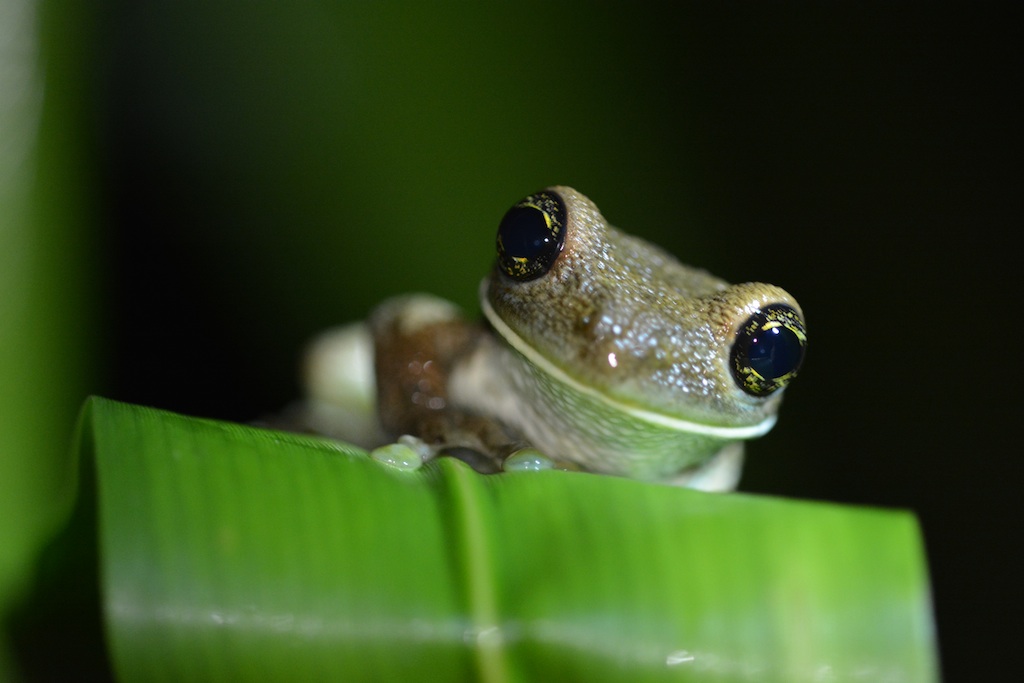
Alas, my work this season is almost completed, today is my last day in the rainforest. Since my last post, I ran into staff from the Detroit Zoological Society education department, who were in Peru for the Adopt-a-School program, and who assisted in an overnight adventure with the amphibian club. We all spent the night at a research station where we were able to enjoy an evening walk through the jungle looking for amphibians, the canopy walkway and the next day a morning walk back to the boats. We saw salamanders, several species of frogs and they have been very busy with their observations while I was back in the states.

Marcy - rainforest     Marcy - canopy rainforest

During November, the season begins where the rain becomes heavier and frequent, almost daily. This is when the rivers start to rise. Since I landed in Peru the river has already had a noticeable increase. However, one of the many lakes we visit in high water was still dry enough we could walk to it.

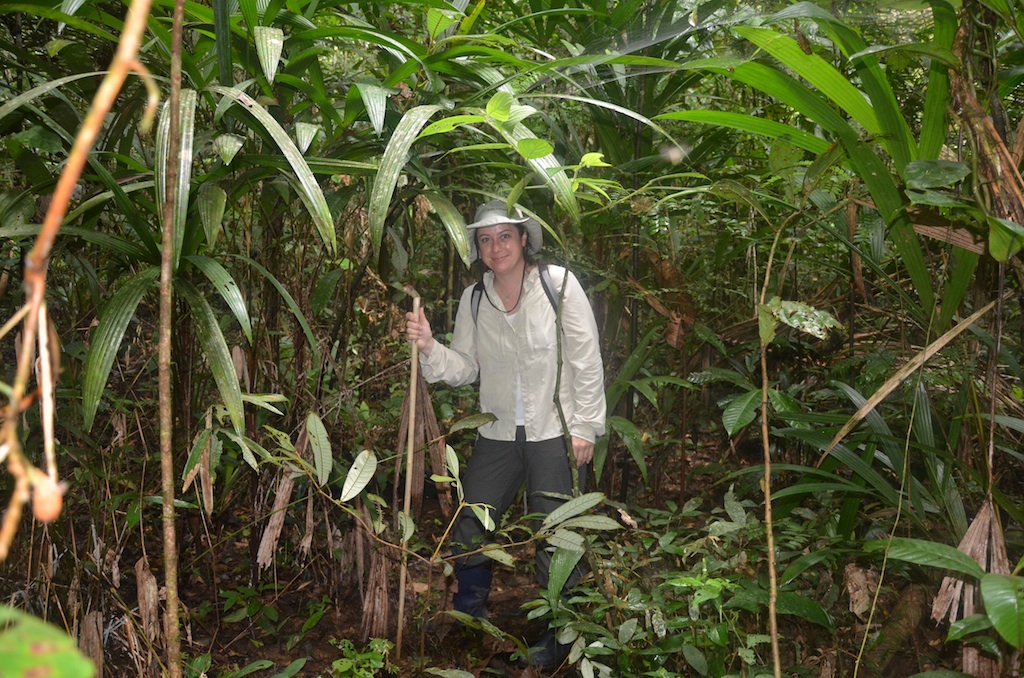
Last night, we traveled by boat to the edge of the narrow stream to hike to the place called Lorenzo Lake. This is one area that we monitor twice a year and expect to see hundreds of amphibians and calls that are nearly deafening. We were not expecting to see so many of the giant hunting ants (locals call bullet ants for the pain they inflict when they bite), we had to be especially careful passing brush from the narrow path carved out by our machete. Many scorpions and beautiful moths plagued the long hike to lake, but the calls we could hear before we docked could even dock the boat. It was a beautiful night!

– Detroit Zoological Society Curator of Amphibians Marcy Sieggreen is doing fieldwork in Peru, studying amphibians in the lower elevations of the Amazon River to see how they are faring with increased human populations and impacts in their habitats.

Editor’s note: Marcy Sieggreen was the curator of amphibians for the Detroit Zoological Society from 2008 until her passing in 2016. The Detroit Zoological Society established the Sieggreen Amphibian Conservation Fund in Marcy’s memory to continue to advance the work she so passionately championed.

Notes From the Field – Peru

Detroit Zoological Society Curator of Amphibians Marcy Sieggreen is doing fieldwork in Peru, studying amphibians in the lower elevations of the Amazon River to see how they are faring with increased human populations and impacts in their habitats.

Hola mi amigas y amigos!

It has been nearly over a week since my last post and a lot has happened. We have seen several species of frogs at night. There has not been much activity during the day but it is still important to look and make note of what is or is not seen. We have travelled to all of the islands that we usually observe that are surrounded by the Napo but have also found another uninhabited island that is underwater during most of the year.

Marcy - Peru 2      Marcy - Peru

What a pleasure it was to jump out off the boat and find hard sand (like what we know as a beach) with marine toads everywhere. Some of you may have heard that these toads are now found in several places in the world and are considered invasive species, making them a nuisance. Here in South America, they are native and an important part of the ecosystem. Since I had not seen many on this trip, I had a growing concern. The island also had a bog that was home to several tree frogs. There were no species I had not seen before but a positive confirmation that species I would expect to see I had.

I have seen many caimans, snakes and most recently a mammal, which I believed to be a Paca. Animals this size (about the size of a 30 lb dog) is not frequently seen and is very fast. Although amphibians are the most fun to track down, seeing other wildlife is always a treat.

This upcoming week, I will be working with our Amphibian Protectors Club on an overnight observation through a small portion of the rainforest and along the canopy walkway.  My colleagues from the Detroit Zoological Society’s education department are taking time out from their schedule to join us. We are hoping to be able to see lots of animals and document our findings back at the research station. Buenos noches!

– Marcy Sieggreen

Notes from the Field – Peru

Detroit Zoological Society Curator of Amphibians Marcy Sieggreen is in Peru, studying amphibians in the lower elevations of the Amazon River to see how they are faring with increased human populations and impacts in their habitats.

Hola mi amigas y amigos!

Greetings from the rainforest! Since this is a new blog, let me explain a little of what the Detroit Zoological Society is doing in Peru. We have several projects that occur in the lower elevations of the Amazon River and its tributaries. My part is monitoring the stability of amphibians in this area and more recently looking how climate change impacts species vulnerability.

Marcy Blog 4

I also work with a community that helps monitor what is going on while we are at home. “Anfibios de Club de Protectores” or “Amazon Amphibian Protectors Club” is a group of 15 kids and two professors that showed a great interest in learning about and doing what they can to raise interest in amphibians. Planes, bus, a boat ride and then here, which is off of a tributary of the Napo River.

Woke up with another day in paradise! This morning I started to plot transects that I will use for amphibian surveys, same areas as I do each year but still need to scope them out. I only saw a handful of toads that the locals all call leaf mimics. They are different species but all resemble leaves and get lumped into that category. After several hours on foot, I caught up with a boat driver that took me across the Napo to another smaller lake.

Marcy Blog 3

Since the water is lower right now we drove up to a sandbar and as I jumped out of the boat into what resembled quicksand, I saw many toadlets (juvenile toads after metamorphosis) hopping away. Getting “unstuck” was challenging. My afternoon was spent bush-wacking with a machete to La Cocha Loca and walking along the Yarina Trail. Locals call it “Crazy Lake” because you never know what you will see. Last year we saw juvenile electric eels and this year we were told caimans, we’ll find out when we come back tomorrow night. Not too many amphibians during the day though however had some other wonderful finds.

Marcy Blog 1 - small

Evenings are the most productive so we headed out shortly after we had something to eat. We took a boat to another island on the other side of the river that we routinely monitor. As expected, we saw many beautiful treefrogs. We were rained out shortly after 1 a.m., so time to call it quits (metal boat across large river in a lightning storm could be a disaster). Buenas noches!

– Marcy Sieggreen

Notes from the Field – Lao PDR

Detroit Zoological Society Director of Conservation Paul Buzzard is doing fieldwork in Lao PRD.

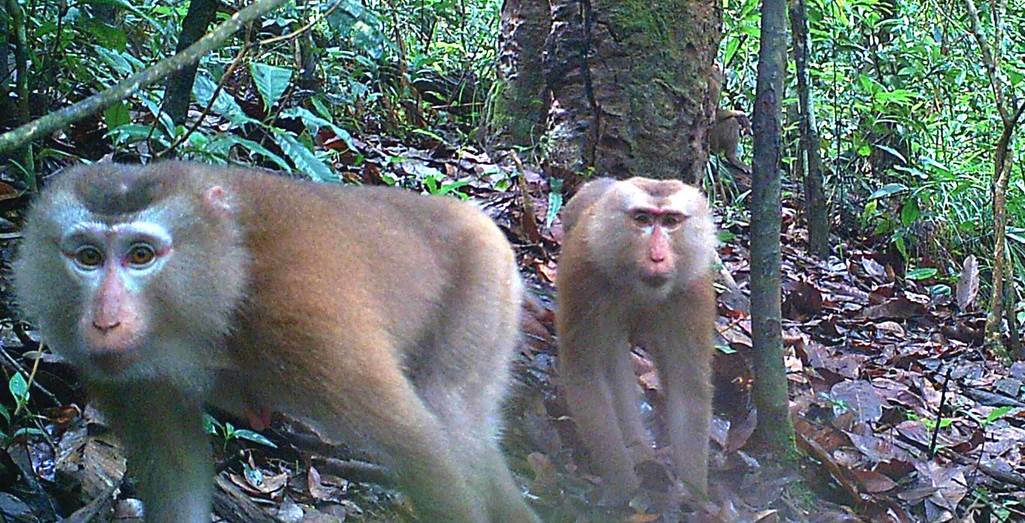
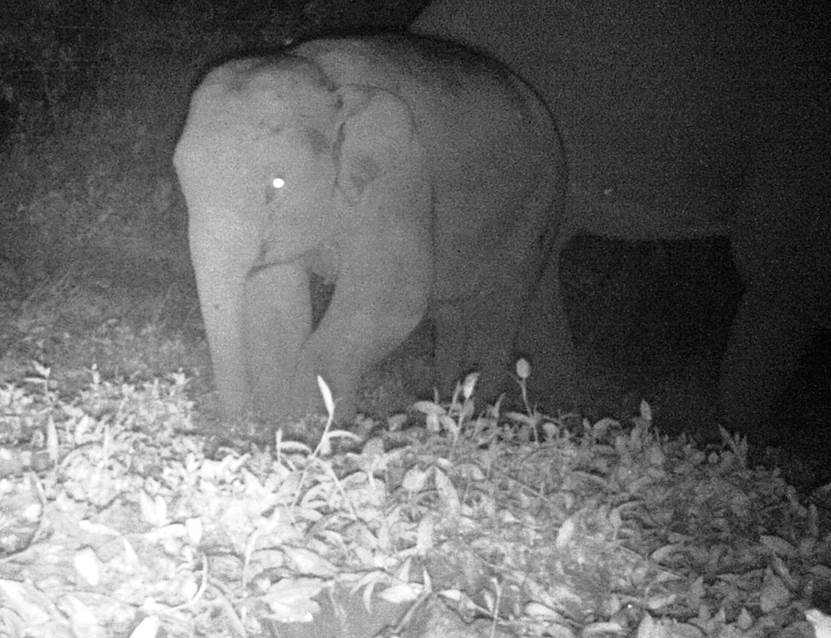
Greetings from Luang Namtha, northern Lao PDR. I have been here in Lao PDR for several days enjoying the tropical weather and checking on a project that uses camera trapping to document the presence of wildlife at the Nam Ha protected area and enhance the eco-tourism program here. I was able to get the pictures of several mammals and larger birds that can still be found at Nam Ha, such as binturong, elephants and grey peacock pheasants among many others.

Paul - N pigtail Macaque      Paul - Asian elephant

I also heard some interesting stories about tigers still being in the area.  However, we were not able to investigate these claims because the local guides are away now either hunting or farming, and it is sometimes a challenge working with local partners. Nevertheless, I made plans with collaborators here and over Skype to set camera traps in the area where tigers have been reported, so hopefully next year we can obtain confirmation of tiger presence. We also made plans to investigate the extent of human-elephant conflict and continue the community outreach and education program.

– Paul Buzzard

Notes from the Field – Nepal

Detroit Zoological Society Director of Conservation Paul Buzzard is doing fieldwork in Nepal. Using camera traps set up in Shivapuri National Park and Api Nampa Conservation Area, he is studying snow leopard and common leopard conservation and behavioral ecology.

My trip to Nepal has been very productive because I’ve had some great meetings with our Nepali colleagues. They had recently returned from setting camera traps for snow leopards and musk deer in the Himalayas of northwest Nepal. There have been some recent deaths from blizzards and avalanches at nearby Annapurna so I was very relieved to hear they were all right and had a productive trip. The camera traps will allow us to get pictures of snow leopards and the animals they prey on, like musk deer and blue sheep, to allow us to estimate the snow leopard population in the Api Nampa Conservation Area.

I was eager to get out in the field myself, though, and it was a fantastic day today setting a few camera traps at Shivapuri National Park adjacent to Kathmandu.

OLYMPUS DIGITAL CAMERA      Paul Buzzard - Nepal 5

We set two of the traps near tracks of leopard, wild boar and sambar deer so we are hopeful to get some pictures of leopards. It was also nice because we saw troops of macaques and several interesting birds. I also heard about a leopard or leopards that have been killing livestock and dogs around the U.S. embassy so learning more about leopard ecology in Shivapuri and Kathmandu is essential to avoiding human-leopard conflict.

OLYMPUS DIGITAL CAMERA

The only challenges today were the mosquitoes and the few remaining leeches in the forest. My next step is to go to Lao PDR to check on a project that is also using camera traps to document the wildlife remaining around Luang Namtha, northern Lao PDR and improve eco-tourism, so it’s a red-eye tonight to Hong Kong than another red-eye to Luang Namtha via Hanoi and Vientiane.

– Paul Buzzard

Notes from the Field – Kaktovik, Alaska

Detroit Zoological Society Director of Conservation Paul Buzzard visited Kaktovik, Alaska, studying polar bears in the wild.

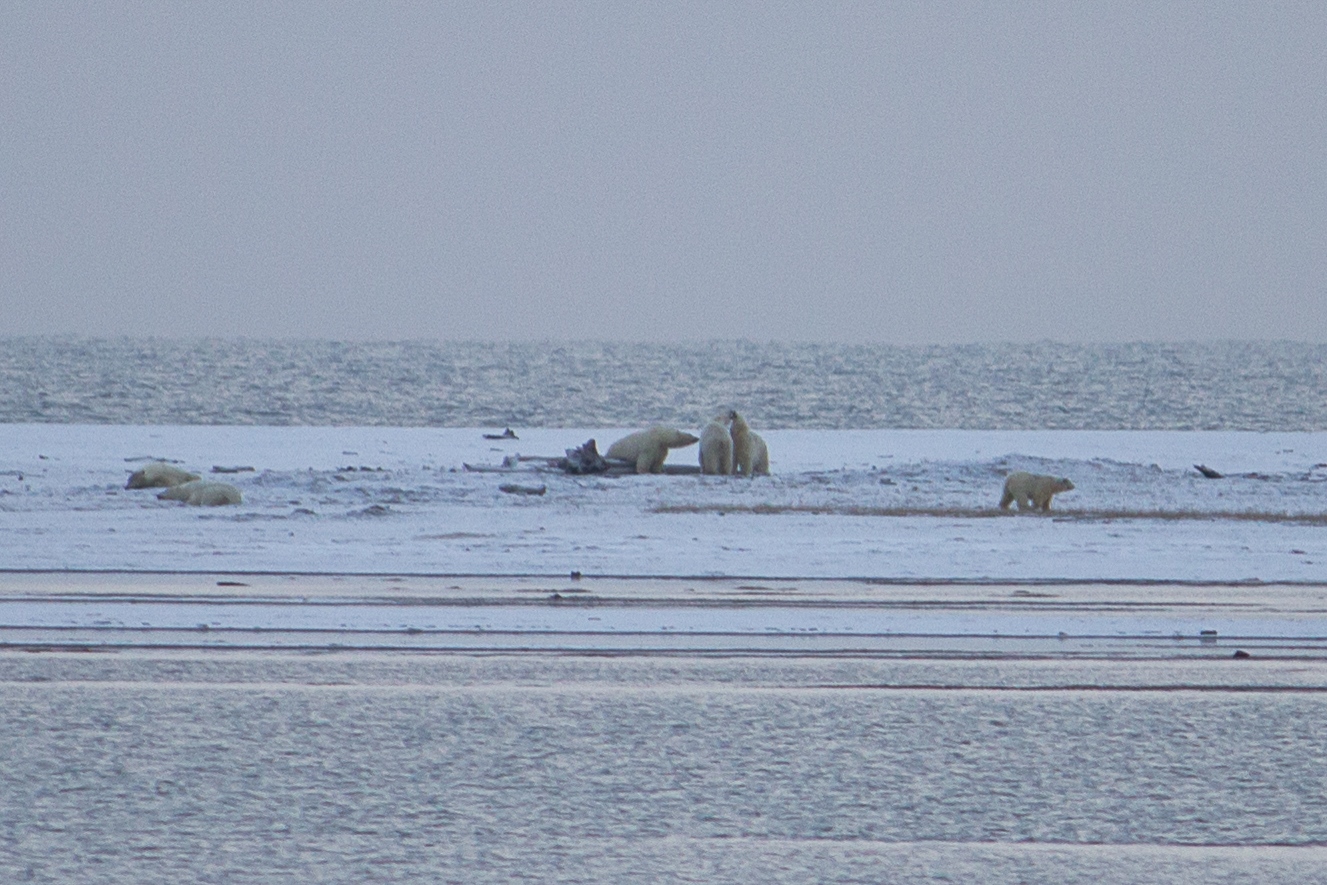
The Detroit Zoological Society has supported polar bear research for many years, and now we are becoming more directly involved in polar bear research and conservation. This morning, we saw 15 polar bears on the small barrier island off of Kaktovik, Alaska.

Paul - Polar Bears

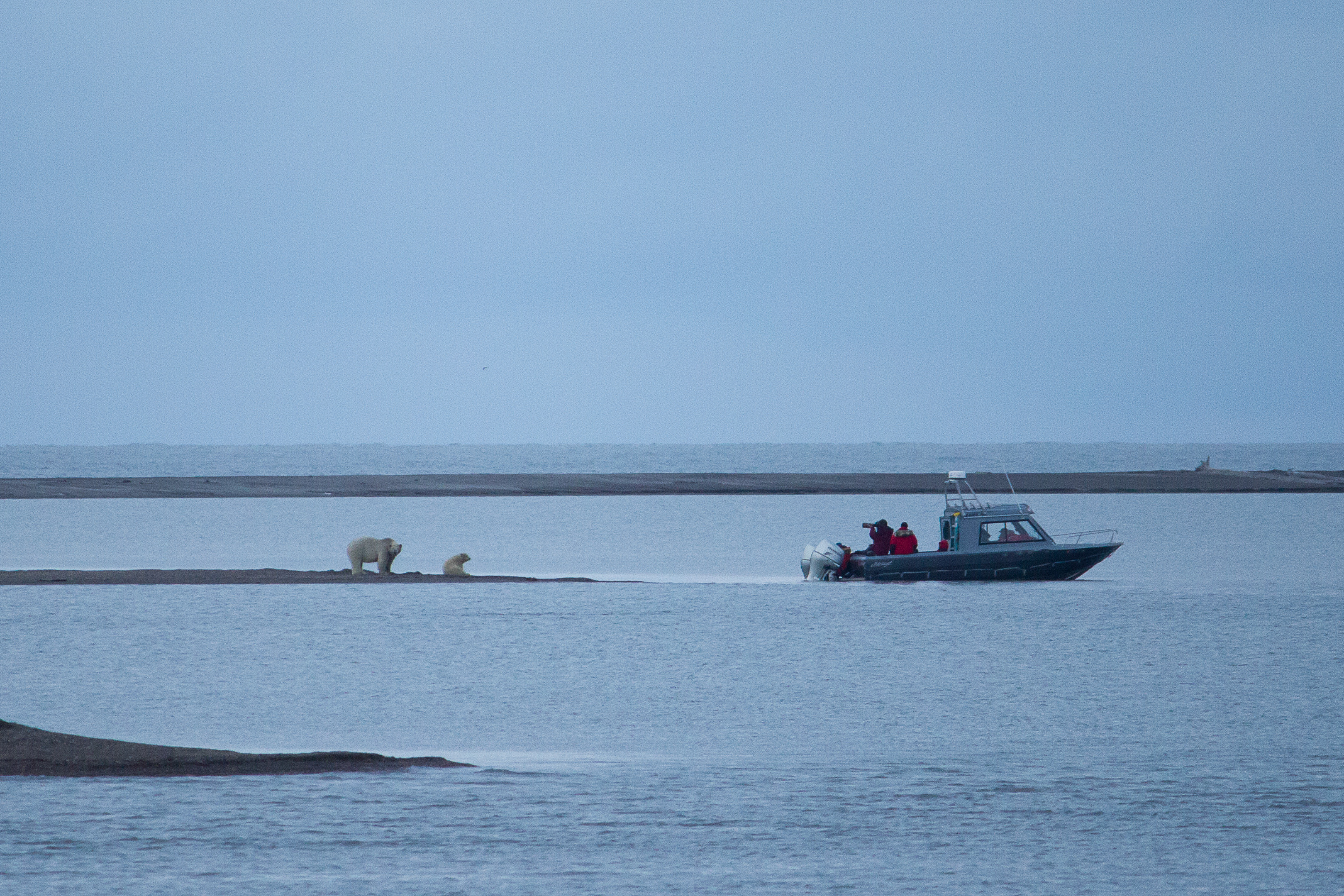
The goal is to go out on a small boat to get closer to the polar bears but we must wait and see if conditions will allow for it.

Paul Buzzard - boat and bears

In the afternoon, I joined staff from the United States Geological Survey to visit a local school to discuss polar bear research. I also had a chance to discuss my work in Nepal and China with snow leopards and red pandas with one of the classes.  I learned local Inupiat dances. I also found so many great Detroit connections – one of the Arctic Refuge staff is from Livonia, two of the teachers here are from Detroit, and I met a Detroit Zoological Society Renaissance Circle member on vacation here.  And one more Michigan connection:  There was an Alaska Fish and Wildlife researcher originally from Muskegon; she was stuck in Prudhoe Bay waiting for the weather to clear to census polar bears by helicopter.

At night, we went to the bone pile, which is the remains from the recent bowhead whale harvest, and we saw several bears scavenging. We learned to never walk outside at night because of polar bears in town.  Every night there is a polar bear patrol to scare away bears in town that might be feeding on whale meat scraps or dog feed and pose a potential threat to humans.  I heard two shots right before I went to bead a couple hundred meters from our house and this morning saw some huge tracks from the bear.

– Paul Buzzard